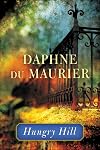
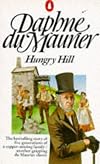
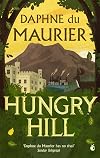
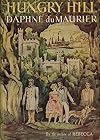
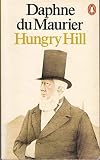
Hungry Hill
by Daphne du Maurier
On This Page
Description
The story of a deadly curse that afflicted an Irish family for a hundred years. "I tell you your mine will be in ruins and your home destroyed and your children forgotten . . . but this hill will be standing still to confound you." So curses Morty Donovan when Copper John Brodrick builds his mine at Hungry Hill. The Brodricks of Clonmere gain great wealth by harnessing the power of Hungry Hill and extracting the treasure it holds. The Donovans, the original owners of Clonmere Castle, resent show more the Brodricks' success, and consider the great house and its surrounding land theirs by rights. For generations the feud between the families has simmered, always threatening to break into violence . . . show lessTags
Recommendations



















Member Reviews
By the time this novel was released, I was in my buy-the-King-book-and-lock-myself-in-a-room-and-no-one-disturbs-me-until-it's-done stage. King was...well...king.
I remember reading this in one large gulp back then, and declaring it good. But I have no memory of precisely why I thought it was good. Yeah, there was the cat coming back, yeah, there was the kid coming back, but...why? All that stuff had been done before.
This time around, for me, there's two distinct scenes of horror, and three gut-wrenching sections.
The first scene of horror is Louis Creed's constant circling of Gage's final moments and trying to play out a different ending. King caught that frustrating moment of a child not realizing this isn't a game, and the parent stuck show more in that why can't you just understand what I'm saying? loop.
The next is the sections from Louis leaving the gravesite with his broken child until he's got him situated in the car, simply because we know now, we know that, as a parent, this could be any of us.
For me, the gut-wrenching sections were...
When Rachel relates the death of her sister Zelda. I wanted to hug her. I wanted to beat her parents.
When we realize that Rachel, despite her past, is finally, somehow, coming to grips with death overall, and we see that she would somehow survive the death of her son.
And when Rachel's father Irwin actually makes a legitimate attempt at an apology to Louis when it's just too late.
These, and some other notable sections such as at Gage's funeral, Goldman's attempt to buy Creed off, and almost any scene with Jud, really elevate this retelling of The Monkey's Paw into so much more.
In fact, for me, the weakest part was the actual return of Gage. It felt like King had spent so much time and effort ruminating on life and death, what it means to get old, what happens to those that outlive their loved ones...all of it written well and observed accurately and touchingly, that he either didn't have enough gas in the tank, or didn't have the heart to go beyond a basic, phoned-in rendition of an evil killer kid.
Overall, though, his writing here, for one of the last times outside of his short stories and the odd later novel like Joyland, is clean and direct, with virtually no unneeded diversions. There's a sense of horrible dread that runs from the very first pages and never lets up until that last line of dialogue.
And, about that last line. King gives us The Twilight Zone ending, which, to be honest, I wish he'd utilize more. He delivers that last line, then drops the mic. No waiting around, no drawing it out.
King has a fine eye for detail, but this book, about life and death, was one of his best in that regard. show less
I remember reading this in one large gulp back then, and declaring it good. But I have no memory of precisely why I thought it was good. Yeah, there was the cat coming back, yeah, there was the kid coming back, but...why? All that stuff had been done before.
This time around, for me, there's two distinct scenes of horror, and three gut-wrenching sections.
The first scene of horror is Louis Creed's constant circling of Gage's final moments and trying to play out a different ending. King caught that frustrating moment of a child not realizing this isn't a game, and the parent stuck show more in that why can't you just understand what I'm saying? loop.
The next is the sections from Louis leaving the gravesite with his broken child until he's got him situated in the car, simply because we know now, we know that, as a parent, this could be any of us.
For me, the gut-wrenching sections were...
When Rachel relates the death of her sister Zelda. I wanted to hug her. I wanted to beat her parents.
When we realize that Rachel, despite her past, is finally, somehow, coming to grips with death overall, and we see that she would somehow survive the death of her son.
And when Rachel's father Irwin actually makes a legitimate attempt at an apology to Louis when it's just too late.
These, and some other notable sections such as at Gage's funeral, Goldman's attempt to buy Creed off, and almost any scene with Jud, really elevate this retelling of The Monkey's Paw into so much more.
In fact, for me, the weakest part was the actual return of Gage. It felt like King had spent so much time and effort ruminating on life and death, what it means to get old, what happens to those that outlive their loved ones...all of it written well and observed accurately and touchingly, that he either didn't have enough gas in the tank, or didn't have the heart to go beyond a basic, phoned-in rendition of an evil killer kid.
Overall, though, his writing here, for one of the last times outside of his short stories and the odd later novel like Joyland, is clean and direct, with virtually no unneeded diversions. There's a sense of horrible dread that runs from the very first pages and never lets up until that last line of dialogue.
And, about that last line. King gives us The Twilight Zone ending, which, to be honest, I wish he'd utilize more. He delivers that last line, then drops the mic. No waiting around, no drawing it out.
King has a fine eye for detail, but this book, about life and death, was one of his best in that regard. show less
Set in Ireland and covering the time span of a century, from 1820 to 1920, the story follows five generations of the Anglo-Protestant Brodrick family from the moment John Brodrick of Clonmere prepares to establish a copper mine on Hungry Hill. But because he neglects to ask permission of the hill first, the family is cursed by the descendant of the previous land-owning family, the Donovans, evicted to make room for the Brodricks. As we follow the fate of each successive generation, it becomes clear that the mine has given the Brodricks their fortune, but not their happiness.
I agree with another reviewer that the extent of the novel (just over 400 pages) doesn’t allow for each of the five generations to be followed in depth; instead, show more the narrative zooms in and out of an individual’s story at will, often missing out several months or years at a time, and a member of the family, whose fate the reader has followed for a long time in the novel’s time frame, is then suddenly and unceremoniously dispatched in the course of a sentence. Additionally, the plot, with the exception of the last featured member of the Brodricks, appears to be set in a historical and political bubble so that the characters concerned are seemingly unaffected by events unfolding in Ireland and Great Britain at the time and aren’t interacting with each other in a historical context (e.g. colonial wars and the Crimean War only get a fleeting mention, and the Irish potato famine in the 1840s and early ’50s, which would have had an enormous impact on the rural population, doesn’t warrant a mention at all). Where the progression of decades does make itself felt is in the subtle progress being made in terms of miners’ rights and their use of machinery and mining processes, though the latter are seen as a natural investment in order to march with the times, and the former are only grudgingly granted by the Brodricks, keen to obtain the greatest margin of profit. And though the plight of the miners is acknowledged, I couldn’t help shake the suspicion that du Maurier’s political and class affiliations were lodged firmly with the gentry on the whole, as throughout the novel the reader repeatedly encounters the stereotypical images of the lazy and work-shy Irishman with a fondness for drink and racing who can’t be trusted, whereas the English generally are well educated, disciplined and/or hard workers.
The novel is written firmly from the male point of view, and yet it is the women who prove the stronger characters and the men, the weaker (John Brodrick, ‘Copper John’, excepted). There were a number of occasions when I wanted to yell at the (male) member of the Brodricks to get his act together and do something, rather than just sit in an armchair and mope, full of self-pity. And yet at the turn of the last page I felt strangely ambivalent: glad for the book to be finally over but also feeling that several characters linger on in the mind. show less
I agree with another reviewer that the extent of the novel (just over 400 pages) doesn’t allow for each of the five generations to be followed in depth; instead, show more the narrative zooms in and out of an individual’s story at will, often missing out several months or years at a time, and a member of the family, whose fate the reader has followed for a long time in the novel’s time frame, is then suddenly and unceremoniously dispatched in the course of a sentence. Additionally, the plot, with the exception of the last featured member of the Brodricks, appears to be set in a historical and political bubble so that the characters concerned are seemingly unaffected by events unfolding in Ireland and Great Britain at the time and aren’t interacting with each other in a historical context (e.g. colonial wars and the Crimean War only get a fleeting mention, and the Irish potato famine in the 1840s and early ’50s, which would have had an enormous impact on the rural population, doesn’t warrant a mention at all). Where the progression of decades does make itself felt is in the subtle progress being made in terms of miners’ rights and their use of machinery and mining processes, though the latter are seen as a natural investment in order to march with the times, and the former are only grudgingly granted by the Brodricks, keen to obtain the greatest margin of profit. And though the plight of the miners is acknowledged, I couldn’t help shake the suspicion that du Maurier’s political and class affiliations were lodged firmly with the gentry on the whole, as throughout the novel the reader repeatedly encounters the stereotypical images of the lazy and work-shy Irishman with a fondness for drink and racing who can’t be trusted, whereas the English generally are well educated, disciplined and/or hard workers.
The novel is written firmly from the male point of view, and yet it is the women who prove the stronger characters and the men, the weaker (John Brodrick, ‘Copper John’, excepted). There were a number of occasions when I wanted to yell at the (male) member of the Brodricks to get his act together and do something, rather than just sit in an armchair and mope, full of self-pity. And yet at the turn of the last page I felt strangely ambivalent: glad for the book to be finally over but also feeling that several characters linger on in the mind. show less
I close this book with sadness. (Spoiler? Not sure how far to take that definition.) It is a dense book covering the lives of several generations of men and women--though pretty much all told from the male POV--of a landlord family that was imposed on the Irish countryside in the 1700s and has been imposing itself on the people in small ways and large ever since. The period covered is 1820-1920, from the building of a copper mine to its end. Du Maurier doesn't get into the heads of the Irish people, despite letting the injustices be known, and at times we wonder "whose side" she's on. The protagonists are not always sympathetic characters, but neither are they utterly without our sympathy. They are sometimes aware of the injustice of show more their relationship to the land and people, but never enough to do anything about it. I found myself crying out for one life to be wholly well lived; there is sorrow in every generation, but there is triumph as well, on a small, personal scale, and there is love, even when misunderstanding is there as well. The resentment of the family that was displaced by the newcomers twists them into unpleasant characters; but are not our arrogant landowners unpleasant, too? A complex, subtle novel, weighty and sorrowful, and yet not without ever-unfurling hope. show less
This was a bit of a slog for me. It reads as if the author was extremely uninterested or bored with the people she's writing about. I started skimming, which is usually a prelude to me skipping to the end and then dumping a book. Not actually sure if it is the book or my mood, but for my purposes it doesn't matter.
I finished this in spite of my lack of enthusiasm. I did that because while I was trying to decide whether or not to continue, I read the reviews on LT. I don't usually do that until I've finished a book, but there were only 12 or so and I thought it might help me decide if it was worth continuing. They confirmed my thoughts about the book, that it was a multi-generational saga in Ireland from the late 1700s to the early show more 1900s and not very uplifting. This is not "Trinity", or any of the other comprehensive books which have been written. It is subtle, it doesn't go into detail on any of the major events, only touching lightly as they affect the family of the novel.
I'm not entirely sure how to say this, I certainly don't want to be offensive, and I don't know a whole lot about the history, only the bits I've read about here and there. It is quite possible I am giving du Maurier more credit than she deserves. One reviewer lambasted her as basically a tool of the English establishment and that the book is warped. That may be, I don't know. But here is how an American of average education and intelligence read it. I think she was trying to point out the follies on both sides of the long feud. Whatever her intentions, when I finished the story I did not love the Irish, I did not have respect for the English, I closed the book and said, "To Hell with them all." Meaning the characters, not the actual people of Ireland, England and such. I am glad times have moved forward, because those times sucked. show less
I finished this in spite of my lack of enthusiasm. I did that because while I was trying to decide whether or not to continue, I read the reviews on LT. I don't usually do that until I've finished a book, but there were only 12 or so and I thought it might help me decide if it was worth continuing. They confirmed my thoughts about the book, that it was a multi-generational saga in Ireland from the late 1700s to the early show more 1900s and not very uplifting. This is not "Trinity", or any of the other comprehensive books which have been written. It is subtle, it doesn't go into detail on any of the major events, only touching lightly as they affect the family of the novel.
I'm not entirely sure how to say this, I certainly don't want to be offensive, and I don't know a whole lot about the history, only the bits I've read about here and there. It is quite possible I am giving du Maurier more credit than she deserves. One reviewer lambasted her as basically a tool of the English establishment and that the book is warped. That may be, I don't know. But here is how an American of average education and intelligence read it. I think she was trying to point out the follies on both sides of the long feud. Whatever her intentions, when I finished the story I did not love the Irish, I did not have respect for the English, I closed the book and said, "To Hell with them all." Meaning the characters, not the actual people of Ireland, England and such. I am glad times have moved forward, because those times sucked. show less
One of the fun things about coming to a new book is figuring out what kind of story is being told, and I like it when the author doesn't telegraph it too much. Here, for instance, I wasn't sure if this was gonna be a gothic tale of Morty Donovan's curse on the Brodricks, or a "classy romance" like Rebecca, or social commentary on the miners and their plight and the hard obtuse men in the high castle, or an epic-sweep potboiler like Edward Rutherfurd or James Michener. It comes closest to the last, but Du Maurier has too classical a sense of pacing and structure to throw in the kitchen sink, like those worthies--she limits it by and large to the story of one family, and because it's the family that owns the whole bundle and she doesn't show more try to make them better than they are, I mean were, I mean could have been if they had really existed, it doesn't come across either as self-indulgent class apologetics, which would have been the major danger. Instead, the main theme of the novel turns out to be education, and how raising a family is like growing a garden or maintaining a stately house or expanding a copperworks. (Hint: If you're lucky, you won't get a parent who gravitates toward the last of those metaphors.) Each generation and each individual patriarch brings a certain orientation to the baffling task of investing in flawed human capital on which th whole firm depends but which is also fallible and which, most importantly, you love--and as we see by the end, that sequestered, pater-dominated Victorian vision of the family not only owes a lot to Victorian capitalism, a moral philosophy whose central metaphor is investment of resources in anticipation of return, but also to the world of ealry industrial capitalism, where the family still looms so large and the fundamental social situation we have today, based not on investment but consumption--the malleable, self-creating individual still yet embedded in uncontrollable social forces--has not yet emerged. It's clear by the end, even, that the long Victorian dream is over and Henry-John, the last head of the family we meet, has been shaped by the intrusion of history in the form of the Irish uprising and Word War I into a character who will never have the springloaded sense of agency of his great-great-grandfather, Copper John. The mine closes because we're not builders anymore. But in the meantime there was that period where the capitalist classes thought they could build a clan of lions and scions withthe same kind of patience they did a mine, and it's fascinating enough to watch here that I don't give more than a mild shudder at the privilege that neither they nor, unfortunately, the author, really knows how to examine; a mild shrug reading about Hal working in the mine as it's closed down and all it amounts to for him is an "authentic experience" of poverty that would be as dispiriting as a rich kid's Africa volunteer trip if he didn't get beaten up and devoured by the mine and made into a kind of "copper Jesus," a much more twisted view of things but one which we can't be surprised at from Du Maurier, who also wasn't any better than she should have been and had the middle-class worship of property and the people to whom it arbitrarily accrues--and thus, a relatively accepting attitude as the last opportunity for this to become a novel with a social conscience sails by. show less
AN Anglo-Irish family builds their fortune on the copper found in Hungry Hill. But they never come to understand the people of the area. Personal failings and tragedies eventually bring the family down. But I wonder how one can write a novel set in Ireland spanning 1820-1920 without once mentioning the Great Famine? There are occasional mentions of poor crops and the need for employment and some people choosing to emigrate, but no sense of a national emergency. Guess that is what you get when an English person writes about Ireland.
A wee bit drawn out for my taste. This is the 4th random book choice in 2 month's time that just so happen to dwell on the wealthy gentried class, and we get to witness their steady decline.....most often due to basically, poor parenting! My assumption was this took place in Ireland...or Northern Ireland most likely...... We witness the Brodrick family in their castle Clonmere near Doonhaven....and we witness the beginning of the Copper Mines on Hungry Hill, mines that will dramatically increase this family's fortune.....or does it? Endless 'tragedies' ensue......mostly due to very poor decisions made for all the wrong reasons.....leading to the feeling of a curse. Somewhat predictable, certainly a bit sappy with the love interests, show more etc......and far too often populated with people i just did not like .....and witnessing their abhorrent behavior became a bit tedious. Of course there were always good guys to root for....but again....it went on and on...... Certainly not DuMaurier's best, but as always, i learned....about mining in the1800's......the political strife in the region leading to rebellion, etc. etc. Proceed with caution. show less
Members
- Recently Added By
Lists

Favourite Virago Modern Classics
183 works; 38 members

Best family sagas
244 works; 34 members

Summer Reads 2014
207 works; 70 members

Publisher's Weekly Bestsellers - Part II - 1940 - 1979
355 works; 5 members
Author Information

206+ Works 57,636 Members
Daphne Du Maurier was born in London on May 13, 1907 and educated in Paris. In 1932, she married Lieutenant-General Sir Frederick Browning. She began writing short stories of mystery and suspense for magazines in 1928, a collection of which appeared as The Apple Tree in 1952. Her first novel, The Loving Spirit, was published in 1931. Her tightly show more woven, highly suspenseful plots and her strong characters make her stories perfect for adaptation to film or television. Among her many novels that were made into successful films are Jamaica Inn (1936), Rebecca (1938), Frenchman's Creek (1941), Hungry Hill (1943), My Cousin Rachel (1952), and The Scapegoat (1957). Her short story, The Birds (1953), was brought to the screen by director Alfred Hitchcock in a treatment that has become a classic horror-suspense film. She died on April 19, 1989 at the age of 81. (Bowker Author Biography) show less
Some Editions
Awards and Honors
Distinctions
Series
Belongs to Publisher Series
Work Relationships
Is contained in
Has the adaptation
Common Knowledge
- Canonical title
- Hungry Hill
- Original title
- Hungry Hill
- Original publication date
- 1943
- People/Characters
- John Brodrick, aka Copper John; Robert Lumley; Simon Flower; Henry Brodrick, the elder; John Brodrick, the elder; Fanny-Rosa Flower (show all 37); Barbara Brodrick; Eliza Brodrick; Jane Brodrick; Captain Nicholson; John Brodrick, the younger, aka Wild Johnnie; Henry Brodrick, the younger; Katherine Eyre; Molly Brodrick; Hal Brodrick; Kitty Brodrick; Lizette Brodrick; Dr William Armstrong; Herbert Brodrick; Edward Brodrick; Fanny Brodrick; Ned Brodrick; Morty Donovan; Sam Donovan; Jack Donovan; Pat Donovan; Dennis Donovan; Kate Donovan; Mary Kelly, née Donovan; Tom Callaghan; Harriet Callaghan; Jinny Callaghan; John-Henry Brodrick; Jim Donovan; Eugene Donovan; Adeline Price; Bill Eyre
- Important places
- Doonhaven, Ireland (fictional); Clonmere, Ireland (fictional); Slane, County Meath, Ireland; London, England, UK; Eton, Berkshire, England, UK
- Related movies
- Hungry Hill (1947 | IMDb)
- First words
- Book One, Chapter 1 (Copper John, 1820 - 1828): On the third of March, 1820, John Brodrick set out from Andriff to Doonhaven, intending to cover the fifteen miles of his journey before nightfall.
- Quotations
- Like her, he chatted of trivialities, being amusing for the sake of being amusing, exaggerating often, skimming over the surface of things because it was easier than finding the depths. (p. 296)
- Last words
- (Click to show. Warning: May contain spoilers.)Through a rift in the clouds there came, for a brief instant, a white shaft of sunlight on the face of Hungry Hill.
- Original language
- English UK
Classifications
- Genres
- General Fiction, Fiction and Literature, Historical Fiction
- DDC/MDS
- 823.912 — Literature & rhetoric English & Old English literatures English fiction 1900- 1901-1999 1901-1945
- LCC
- PZ3 .D8916 — Language and Literature Fiction and juvenile belles lettres Fiction and juvenile belles lettres Fiction in English
- BISAC
Statistics
- Members
- 834
- Popularity
- 33,042
- Reviews
- 16
- Rating
- (3.68)
- Languages
- 9 — Czech, Dutch, English, Finnish, French, German, Norwegian (Bokmål), Russian, Swedish
- Media
- Paper, Audiobook, Ebook
- ISBNs
- 29
- ASINs
- 41