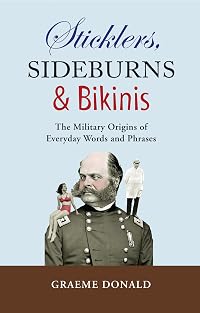
Sticklers, sideburns and bikinis: The military origins of everyday words and phrases
by Graeme Donald
On This Page
Description
Did you know they started 'hearing through the grapevine' during the American Civil War, that 'ghettos' originated in Venice or that 'deadline' has a very sinister origin? Jam-packed with many amazing facts, Fighting Talk is a fascinating trip through the words and phrases that came to us from the military but nowadays are used by soldier and civilian alike. The sources of many are surprising and their original use is often far removed from that of today. From 'duds' to 'freelancers' and show more 'morris dancing' to 'bikini' this enthralling book describes the military origins of words and phrases that we use on a daily basis. show lessTags
Recommendations















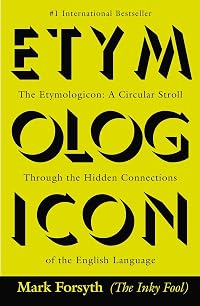


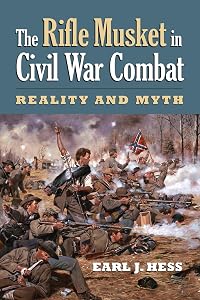
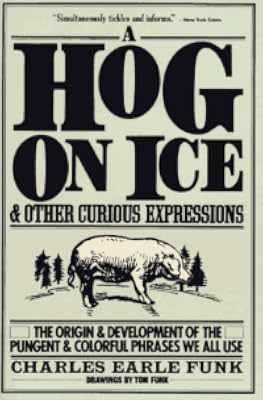
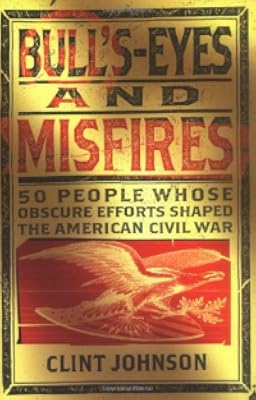








Member Recommendations
Joles If you enjoy finding out where words come from, you may also be interested in how our places were named the way they are. Along the same vein of Sticklers, Sideburns & Bikinis is Names on the Land (although it isn't set up quite as accessibly as the former.)
Member Reviews
Interesting read.
Probably meant more for browsing more than reading thru A-Z. But you know what I found? Along with the usual word derivation information through a military and historical lens, the author spends no small amount of time discrediting inaccuracies and misconceptions.
A few of my favorites include Jeep (from the cartoon Popeye in the 1920's) , cold shoulder (from the 1700's hospitality courtesy), and concentration camp (19th century Cuba).
In reality the entries all have some thing to capture even the most casual reader. In other words, you don't need to be a linguist or etymologist to find something of interest here. Give it a try!
Probably meant more for browsing more than reading thru A-Z. But you know what I found? Along with the usual word derivation information through a military and historical lens, the author spends no small amount of time discrediting inaccuracies and misconceptions.
A few of my favorites include Jeep (from the cartoon Popeye in the 1920's) , cold shoulder (from the 1700's hospitality courtesy), and concentration camp (19th century Cuba).
In reality the entries all have some thing to capture even the most casual reader. In other words, you don't need to be a linguist or etymologist to find something of interest here. Give it a try!
This is a great collection of words and phrases that are (mostly) in everyday use. There are some "facts" in the book that are told differently in textbooks, some of these are widely disputed, while others I had never heard conflicted before. (I realize that history is in the eye of whomever wrote it down, so it's hard to say sometimes which version of things is the truth.)
I enjoyed the stories greatly and felt some of them could have been a bit longer (such as the one about blackmail, which could have led to the origin of redneck) but maybe the author deemed that too much of a discretion and avoided it for that reason.
Other than the possible conflict of fact and fiction, some of the words that the author chose to define made me feel show more like I was dumb. Some of the words were so blatantly obvious that they could have no meaning outside of the military. (Perhaps the author chose to include them for purposes of telling the story behind them--that I'm not quite sure.)
The book was a fun read and there were many things I learned. I got a kick out of where Ammonia came from...among others. show less
I enjoyed the stories greatly and felt some of them could have been a bit longer (such as the one about blackmail, which could have led to the origin of redneck) but maybe the author deemed that too much of a discretion and avoided it for that reason.
Other than the possible conflict of fact and fiction, some of the words that the author chose to define made me feel show more like I was dumb. Some of the words were so blatantly obvious that they could have no meaning outside of the military. (Perhaps the author chose to include them for purposes of telling the story behind them--that I'm not quite sure.)
The book was a fun read and there were many things I learned. I got a kick out of where Ammonia came from...among others. show less
 This review was written for LibraryThing Early Reviewers.
I don't know about you, but some of the first things that I consider when purchasing a book, especially one that is essentially a reference book, is who wrote it and why. After which I try to determine what their approach was in ferreting out the information that they set forth in their book.
The answer to the first question, is that Graeme Donald was/is a newspaper columnist with a love of words and word-play. He wrote for "Today" magazine for 10 years, among others, as well as played the key role in devising questions for a word-y game show for the BBC.
I have not uncovered the answer to the question "why" Mr. Donald wrote this book, although I have to say that he seems quite the word enthusiast, and perhaps that is enough.
The answer show more to the third, and most important question, is that he appears to have been sufficiently vigorous in trying to ascertain his definitions. Donald began with the standard reference sources and primary works, and then branched out to ask the experts. And he didn't restrict his research to university professors, but went to whomever appeared to have the most knowledge, even if it was a retired engineer in Leeds --listed in the ASLILB Director of Information Sources in the United Kingdom-- who specializes in all things catapult.
To give you an idea of his approach, I'll tell you a little about what he says about Amazons. He starts out by giving the modern usage: "Statuesque woman and a South American river". After that Donald points out what academicians have thought over the centuries. Everything from the once popular academic notion of such lofty figures as Skeat, Brewer and Gibson, that the name derived from the Greek "mazos" or "without a breast" and that some sort of cauterization was implied; to the suggest that perhaps the term came from another Greek word that means "without cereal" implying that perhaps these women were nomads rather than disfigured. Other derivations are considered, before Donald settles down to the Old Persian work "hamazon" which simply means "a warrior".
He supports that notion by pointing out that there were female Persian warriors and that archeologists and anthropologists have dug their gravesites.
He goes on at some length to explain why the river was named Amazon, as well as how the story of the fierce warriors percolated through European history... but I won't. Instead I'll say that I thought he did a good job of elucidating and clarifying the origins of these military derived words.
Conclusions :::
This is a wonderful, funny book. Donald's sense of humor is marvelous and his book is not only useful and authoritative, but there isn't a thing boring about it.
That said, it cannot REALLY be considered a definitive 'library-style', R-section, reference book because there aren't footnotes. An excellent place to start, however.
Good resource. Excellently entertaining. Obviously I liked it. I gave it 4.5 Stars.
Pam T. for http://www.PageInHistory.com show less
The answer to the first question, is that Graeme Donald was/is a newspaper columnist with a love of words and word-play. He wrote for "Today" magazine for 10 years, among others, as well as played the key role in devising questions for a word-y game show for the BBC.
I have not uncovered the answer to the question "why" Mr. Donald wrote this book, although I have to say that he seems quite the word enthusiast, and perhaps that is enough.
The answer show more to the third, and most important question, is that he appears to have been sufficiently vigorous in trying to ascertain his definitions. Donald began with the standard reference sources and primary works, and then branched out to ask the experts. And he didn't restrict his research to university professors, but went to whomever appeared to have the most knowledge, even if it was a retired engineer in Leeds --listed in the ASLILB Director of Information Sources in the United Kingdom-- who specializes in all things catapult.
To give you an idea of his approach, I'll tell you a little about what he says about Amazons. He starts out by giving the modern usage: "Statuesque woman and a South American river". After that Donald points out what academicians have thought over the centuries. Everything from the once popular academic notion of such lofty figures as Skeat, Brewer and Gibson, that the name derived from the Greek "mazos" or "without a breast" and that some sort of cauterization was implied; to the suggest that perhaps the term came from another Greek word that means "without cereal" implying that perhaps these women were nomads rather than disfigured. Other derivations are considered, before Donald settles down to the Old Persian work "hamazon" which simply means "a warrior".
He supports that notion by pointing out that there were female Persian warriors and that archeologists and anthropologists have dug their gravesites.
He goes on at some length to explain why the river was named Amazon, as well as how the story of the fierce warriors percolated through European history... but I won't. Instead I'll say that I thought he did a good job of elucidating and clarifying the origins of these military derived words.
Conclusions :::
This is a wonderful, funny book. Donald's sense of humor is marvelous and his book is not only useful and authoritative, but there isn't a thing boring about it.
That said, it cannot REALLY be considered a definitive 'library-style', R-section, reference book because there aren't footnotes. An excellent place to start, however.
Good resource. Excellently entertaining. Obviously I liked it. I gave it 4.5 Stars.
Pam T. for http://www.PageInHistory.com show less
This review was written for LibraryThing Early Reviewers.An interesting compilation of words and phrases that originated in the military but became commonly used in every day conversation at one point in time or another. Many of the true definitions of these words are a far cry from the way civilians use them, which in itself is quite interesting.
Jam packed with words it could be considered a dictionary, if it weren't for the lack of substantiating data, footnotes and the author's own admission that he abandoned some reference texts for "expert" opinion instead. Who are these experts and why weren't they given their due? Perhaps the full-release version will have them, as it most definitely should!
That said, this was still an entertaining read. I found the explanation on the true origins of show more the Amazons particularly interesting as it offered an entirely different, and plausible, explanation to the source of the name these legendary warriors had.
Anyone who has a love of history or a passion for word definitions should get a kick out of this book, even if the definitions can't be backed up by hard fact. The average Joe, however, might be bored to tears by it. Definitely a book geared for a certain reading audience, but aren't all books that way ultimately? show less
Jam packed with words it could be considered a dictionary, if it weren't for the lack of substantiating data, footnotes and the author's own admission that he abandoned some reference texts for "expert" opinion instead. Who are these experts and why weren't they given their due? Perhaps the full-release version will have them, as it most definitely should!
That said, this was still an entertaining read. I found the explanation on the true origins of show more the Amazons particularly interesting as it offered an entirely different, and plausible, explanation to the source of the name these legendary warriors had.
Anyone who has a love of history or a passion for word definitions should get a kick out of this book, even if the definitions can't be backed up by hard fact. The average Joe, however, might be bored to tears by it. Definitely a book geared for a certain reading audience, but aren't all books that way ultimately? show less
This review was written for LibraryThing Early Reviewers.This book is not only fascinating, it is also a whole lot of fun to read. Whether you choose to read it cover to cover, or simply skim through selected entries the book does not disappoint. Many of these words and phrases have origins you would never imagine. The book includes terms used in our ancient military past all the way up to the modern day; terms such as "Al-Qaeda" and "Ground Zero". A perfect resource for sermon or public speaking illustrations.
This review was written for LibraryThing Early Reviewers.This book is a lot of fun. It's neat to discover the military origins of popular phrases (and some not so popular). There have been several times when I thought I knew where a phrase came from only to be VERY wrong.
I'm sure that since this book already came out someone noticed that though it's mentioned on the back cover, the word "ghetto" is not actually listed in the book.
I'm sure that since this book already came out someone noticed that though it's mentioned on the back cover, the word "ghetto" is not actually listed in the book.
This review was written for LibraryThing Early Reviewers.I'm going to have to be honest with this book and say that I haven't read all of it yet. Its basically a dictionary and I don't tend to read those cover to cover. On the other hand, I have read about 10% of this book so far, and do intend to read it all.
This book is great. The content is interesting, well laid out, and excellently written. That's probably made a lot easier by how interesting the content is -- the stories behind various works tend to be short and novel, which is fun. The book is also useful -- it's already ended an office debate over the origin of the word "hooker".
http://www.stillhq.com/book/Graeme_Donald/Sticklers_Sideburns_and_Bikinis.html
This book is great. The content is interesting, well laid out, and excellently written. That's probably made a lot easier by how interesting the content is -- the stories behind various works tend to be short and novel, which is fun. The book is also useful -- it's already ended an office debate over the origin of the word "hooker".
http://www.stillhq.com/book/Graeme_Donald/Sticklers_Sideburns_and_Bikinis.html
This review was written for LibraryThing Early Reviewers.Members
- Recently Added By
Author Information

26 Works 549 Members
Graeme Donald is the author of Loose Cannons: 101 Myths, Mishaps, and Misadventures of Military History (Lyons Press). He has written and broadcast on the origins of words, nursery rhymes, superstitions, and popular misconceptions for many years and has appeared on numerous radio and television shows. He lives in the United Kingdom.
Common Knowledge
- Canonical title
- Sticklers, sideburns and bikinis: The military origins of everyday words and phrases
Classifications
Statistics
- Members
- 109
- Popularity
- 297,614
- Reviews
- 10
- Rating
- (3.82)
- Languages
- English
- Media
- Paper, Ebook
- ISBNs
- 4
- ASINs
- 1