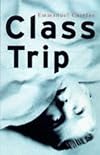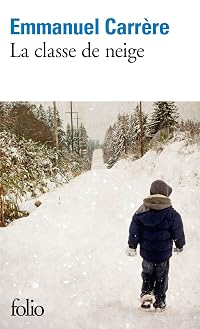
Class Trip
by Emmanuel Carrère
On This Page
Description
Two harrowing tales of pyschological suspense -- hailed as "stunning" (John Updike) -- from the mathematician of horrorTwo by Carrere brings together the greatest works of Emmanuel Carrere, "the Stephen King of France" (Mirabella), two novels that are at once gripping suspense stories and laser probes into the modern psyche.In Class Trip, little Nicolas embarks on an ill-fated overnight excursion. Prone to lurid imaginings of kidnappings and organ thefts, Nicolas watches his fantasies grow show more horrifyingly real when a local child disappears. Nicolas takes it upon himself to investigate, fearlessly playing detective -- until he uncovers the devastating truth. Dramatic, taut with intensity, Carrere's depictions of the terrifying anxieties and shifting realities of modern life are marvels of concentrated emotion. show lessTags
Recommendations























Member Reviews
Emmanuel Carrère - [La Classe de neige]
Emmanuel Carrères short novel was published in 1995 and made into a film Class Trip (English title) in 1998. It is an atmospheric mystery story of a pre-teen schoolboy's disastrous school trip for a week of ski-ing lessons. Nicholas the small and overprotected boy knows he will not fit in and dreads the week ahead. The mystery story tinged with horror works well enough, but it is the authors pertinent depiction of a nervous boy that is the real star of this book.
Nicholas is a compulsive collector of free gifts from petrol stations when we meet him, probably immature for his age and frightened that his occasional bed-wetting will cause him acute embarrassment when he has to undergo his school show more trip. He compensates for his immaturity with a vivid sense of imagination, he is learning how the adult world works and knows enough to manipulate issues to his own advantage, but comes horribly unstuck when he misjudges events in the ski resort. His sensitive nature elicits care from some adults around him, but opens him up to ridicule from his peer group.
His school trip gets off to a bad start when his father insists on making a 400km round trip to save him travelling on the school bus and then driving off without unloading his suitcase. He immediately becomes the odd boy out and it is only when Hodkann the largest boy in the group and something of a loner himself, offers to lend him nightclothes that Nicholas is saved further embarrassment. Nicholas has his first wet dream that night and wakes up thinking he has wet the bed. In his shame and anxiety he wanders outside in the snow where he would have frozen to death if he had not been able to get inside the parked car of Patrick, one of the teachers. Nicholas immediately develops a fever and is separated from the rest of the group with a camp bed made up in the head teachers office. Nicholas loves the attention from the adults and when he overhears that his diagnosis might be somnambulism he acts up his symptoms. From this point on Nicholas can do what he does best and that is to invent a slightly imaginary world with himself at the centre. A horrible murder of a young boy in the ski resort fires his fantasies and his exaggeration of the events leads him to invent stories that involves Hodkann.
The closeted warmth of Nicholas' world in the cafe, where he can watch the other boys sk-ing and the office contrasts with the first snows that blanket the world outside. Nicholas' vivid imagination fires the mystery and the reader searches for clues as to what has happened. Much of what is happening comes from Nicholas' point of view, where adult conversations, huddled shapes merge with Nicholas' fears and obsessions. One short chapter three quarters of the way through the book has Nicolas meeting up with Hodkann by accident in Paris some twenty years later. Nicolas fears for his life. This sharpens the mystery as to what is happening in the ski-resort.
This is a well written story of a sensitive boy's first real experience in an adult world. Nicolas will learn much of what has happened, but the reader must work a little, to piece it together. I enjoyed the hot-house atmosphere created, the insight into the thoughts and actions of young Nicholas and the mystery story and so 4 stars. show less
Emmanuel Carrère’s Class Trip was first published in French 1995 as La Classe de Neige. This new edition issued by Vintage uses the 1997 English translation by Linda Coverdale.
Although the novella is narrated in the third person, its viewpoint is that of Nicolas, a young boy in the early years of secondary school, who joins his classmates for a fortnight at a skiing resort. Nicolas is not exactly bullied, but it is clear from the first pages that he is considered as an outsider. We soon sense that this is largely the result of his parents’ over-protectiveness. Indeed, his father insists on driving him to the chalet despite its being three hundred miles away, rather than letting him board the bus hired by the school. Nicolas show more arrives late, already marked as the “weird” one, and is mortified even further when his father leaves with Nicolas’ luggage still in the car boot. Throughout the novel there are other clues that the relationships within his family are not entirely normal.
Nicolas has an over-active imagination, fuelled by his solitude and by his father’s penchant for telling nightmarish stories about kidnapped children and organ theft. For much of the novella he wallows in self-pity. The disappearance of a young boy gives him the opportunity to play the detective and achieve the popularity he craves. It’s hardly a spoiler to state that, in this, Nicolas will be disappointed although I will not state the how or why.
Class Trip has often been described as a horror novella. I’m not sure I agree, but the work does have enough elements in common with the genre to make this classification a reasonable one. Throughout there is a sense of morbidity, a feeling of dread which reaches a climax in the final pages. The work starts off as a coming-of-age novel but soon morphs into something much darker. What is particularly unsettling (and quite Gothic in approach) is that, throughout, the truth seems to be just out of our grasp. There is a constant interplay between fantasy and reality, wakefulness and sleep (or the lack thereof), truth and falsehood. Much is suggested, little is revealed. Class Trip is a chilling, yet understated, read. show less
Although the novella is narrated in the third person, its viewpoint is that of Nicolas, a young boy in the early years of secondary school, who joins his classmates for a fortnight at a skiing resort. Nicolas is not exactly bullied, but it is clear from the first pages that he is considered as an outsider. We soon sense that this is largely the result of his parents’ over-protectiveness. Indeed, his father insists on driving him to the chalet despite its being three hundred miles away, rather than letting him board the bus hired by the school. Nicolas show more arrives late, already marked as the “weird” one, and is mortified even further when his father leaves with Nicolas’ luggage still in the car boot. Throughout the novel there are other clues that the relationships within his family are not entirely normal.
Nicolas has an over-active imagination, fuelled by his solitude and by his father’s penchant for telling nightmarish stories about kidnapped children and organ theft. For much of the novella he wallows in self-pity. The disappearance of a young boy gives him the opportunity to play the detective and achieve the popularity he craves. It’s hardly a spoiler to state that, in this, Nicolas will be disappointed although I will not state the how or why.
Class Trip has often been described as a horror novella. I’m not sure I agree, but the work does have enough elements in common with the genre to make this classification a reasonable one. Throughout there is a sense of morbidity, a feeling of dread which reaches a climax in the final pages. The work starts off as a coming-of-age novel but soon morphs into something much darker. What is particularly unsettling (and quite Gothic in approach) is that, throughout, the truth seems to be just out of our grasp. There is a constant interplay between fantasy and reality, wakefulness and sleep (or the lack thereof), truth and falsehood. Much is suggested, little is revealed. Class Trip is a chilling, yet understated, read. show less
Emmanuel Carrère’s Class Trip was first published in French 1995 as La Classe de Neige. This new edition issued by Vintage uses the 1997 English translation by Linda Coverdale.
Although the novella is narrated in the third person, its viewpoint is that of Nicolas, a young boy in the early years of secondary school, who joins his classmates for a fortnight at a skiing resort. Nicolas is not exactly bullied, but it is clear from the first pages that he is considered as an outsider. We soon sense that this is largely the result of his parents’ over-protectiveness. Indeed, his father insists on driving him to the chalet despite its being three hundred miles away, rather than letting him board the bus hired by the school. Nicolas show more arrives late, already marked as the “weird” one, and is mortified even further when his father leaves with Nicolas’ luggage still in the car boot. Throughout the novel there are other clues that the relationships within his family are not entirely normal.
Nicolas has an over-active imagination, fuelled by his solitude and by his father’s penchant for telling nightmarish stories about kidnapped children and organ theft. For much of the novella he wallows in self-pity. The disappearance of a young boy gives him the opportunity to play the detective and achieve the popularity he craves. It’s hardly a spoiler to state that, in this, Nicolas will be disappointed although I will not state the how or why.
Class Trip has often been described as a horror novella. I’m not sure I agree, but the work does have enough elements in common with the genre to make this classification a reasonable one. Throughout there is a sense of morbidity, a feeling of dread which reaches a climax in the final pages. The work starts off as a coming-of-age novel but soon morphs into something much darker. What is particularly unsettling (and quite Gothic in approach) is that, throughout, the truth seems to be just out of our grasp. There is a constant interplay between fantasy and reality, wakefulness and sleep (or the lack thereof), truth and falsehood. Much is suggested, little is revealed. Class Trip is a chilling, yet understated, read. show less
Although the novella is narrated in the third person, its viewpoint is that of Nicolas, a young boy in the early years of secondary school, who joins his classmates for a fortnight at a skiing resort. Nicolas is not exactly bullied, but it is clear from the first pages that he is considered as an outsider. We soon sense that this is largely the result of his parents’ over-protectiveness. Indeed, his father insists on driving him to the chalet despite its being three hundred miles away, rather than letting him board the bus hired by the school. Nicolas show more arrives late, already marked as the “weird” one, and is mortified even further when his father leaves with Nicolas’ luggage still in the car boot. Throughout the novel there are other clues that the relationships within his family are not entirely normal.
Nicolas has an over-active imagination, fuelled by his solitude and by his father’s penchant for telling nightmarish stories about kidnapped children and organ theft. For much of the novella he wallows in self-pity. The disappearance of a young boy gives him the opportunity to play the detective and achieve the popularity he craves. It’s hardly a spoiler to state that, in this, Nicolas will be disappointed although I will not state the how or why.
Class Trip has often been described as a horror novella. I’m not sure I agree, but the work does have enough elements in common with the genre to make this classification a reasonable one. Throughout there is a sense of morbidity, a feeling of dread which reaches a climax in the final pages. The work starts off as a coming-of-age novel but soon morphs into something much darker. What is particularly unsettling (and quite Gothic in approach) is that, throughout, the truth seems to be just out of our grasp. There is a constant interplay between fantasy and reality, wakefulness and sleep (or the lack thereof), truth and falsehood. Much is suggested, little is revealed. Class Trip is a chilling, yet understated, read. show less
The best Carrère book I've read so far. His talent for building up the tension even as narrating banal events sometimes rivals Ian McEwan's. The ending, when Carrère reveals the atrocity the reader has been expecting all along without ever spelling it out, is superb. If contemporary French literature has one masterpiece, this is it.
It was pure coincidence that I should read this book after re-reading Albert Camus' 'The Outsider'. This story is of a ten year old boy, Nicholas, who is, to quote the blurb, 'a fussed-over, yet unloved and sadly doomed child'.
Carrere was either the most haunted child ever to come out of France, with an exceptional memory, or a brilliant novelist because, each of Nicholas' fears seem to be of a childlike origin. The tale is clearly written for an adult audience, but Nicholas' understanding is never greater than that of a child: we are allowed to have more knowledge as to the situation but are never spoonfed.
Whilst Nicholas is the main charater, Hodkann is pretty significant too. He is the class bully, bigger than others of his age, his show more father has died and he is given extra leeway by the teaching staff on the ski trip, which forms the background to the yarn. He befriends weedy Nick and, particularly in a short scene when both children have grown up, it is hard to tell which is most affected by the incident at ski camp.
This really is a first rate novel, leaving many unanswered questions for future pondering. show less
Carrere was either the most haunted child ever to come out of France, with an exceptional memory, or a brilliant novelist because, each of Nicholas' fears seem to be of a childlike origin. The tale is clearly written for an adult audience, but Nicholas' understanding is never greater than that of a child: we are allowed to have more knowledge as to the situation but are never spoonfed.
Whilst Nicholas is the main charater, Hodkann is pretty significant too. He is the class bully, bigger than others of his age, his show more father has died and he is given extra leeway by the teaching staff on the ski trip, which forms the background to the yarn. He befriends weedy Nick and, particularly in a short scene when both children have grown up, it is hard to tell which is most affected by the incident at ski camp.
This really is a first rate novel, leaving many unanswered questions for future pondering. show less
This was an enjoyable French translated novella from 1995, which also won a prize in film at the Cannes Film Festival in 1998.
The novella opens with Nicholas arriving to his school ski trip by car with this overbearing father, on the back of his father's paranoia about the safety of school buses. When his father forgets to leave off his suitcase, timid Nicholas' anxieties multiply, and when a young boy in the area goes missing Nicholas is sure he has been taken by the organ thieves his father has warned him about.
I enjoyed this slim novel, which had great atmosphere and a suitably dark ending.
4 stars - a quick but fun read.
The novella opens with Nicholas arriving to his school ski trip by car with this overbearing father, on the back of his father's paranoia about the safety of school buses. When his father forgets to leave off his suitcase, timid Nicholas' anxieties multiply, and when a young boy in the area goes missing Nicholas is sure he has been taken by the organ thieves his father has warned him about.
I enjoyed this slim novel, which had great atmosphere and a suitably dark ending.
4 stars - a quick but fun read.
It's too bad that the first sentence of this book gives away the plot. Actually, in the common knowledge part of this title the first sentence should be hidden instead of the last.
The strong side of the novel is that it is written entirely from the child's point of view. (Except for one short chapter) You live through his fears and through his dark fantasies. Fantasy and reality intertwine up to a point where as a reader you are not entirely sure which is which. Then again, from sentence one onwards it is quite clear what has really happened. Which kind of lessens the tension.
The strong side of the novel is that it is written entirely from the child's point of view. (Except for one short chapter) You live through his fears and through his dark fantasies. Fantasy and reality intertwine up to a point where as a reader you are not entirely sure which is which. Then again, from sentence one onwards it is quite clear what has really happened. Which kind of lessens the tension.
Members
- Recently Added By
Author Information

52+ Works 6,930 Members
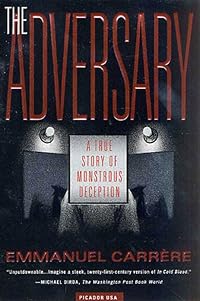
Emmanuel Carrere is one of France's most critically acclaimed writers, author of screenplays, a biography of Philip K. Dick, and two novels, including CLASS TRIP, which won the prestigious Prix Femina. A major bestseller in France, THE ADVERSARY is being published in eighteen countries. Carrere lives in Paris (Bowker Author Biography)
Some Editions
Awards and Honors
Awards
Series
Belongs to Publisher Series
Gallimard, Folio (2906)
Work Relationships
Common Knowledge
- Canonical title
- Class Trip
- Original title
- La classe de neige
- Alternate titles*
- Schneetreiben : Roman
- Original publication date
- 1997 (English translation) (English translation); 1995
- People/Characters
- Nicolas; Hodkann; Nicolas's father; Nicolas's mother; The teacher; Patrick (show all 10); Marie-Ange; Maxime Ribotton; René; The policemen
- Important places
- France
- Related movies
- La classe de neige (1998 | IMDb)
- Epigraph*
- /
- Dedication*
- /
- First words
- For a long time afterward—even now—Nicolas tried to remember the last words his father spoke to him.
- Last words
- (Click to show. Warning: May contain spoilers.)The carpet inside the apartment muffled the sound of footsteps, but Nicolas knew that the door would open, that in an instant his life would begin, and that in this life, for him, there would be no forgiveness.
- Blurbers
- Myerson, Julie; Duncker, Patricia
- Original language
- French
*Some information comes from Common Knowledge in other languages. Click "Edit" for more information.
Classifications
Statistics
- Members
- 454
- Popularity
- 67,628
- Reviews
- 16
- Rating
- (3.55)
- Languages
- 11 — Dutch, English, Finnish, French, German, Italian, Lithuanian, Norwegian (Bokmål), Portuguese, Spanish, Swedish
- Media
- Paper, Ebook
- ISBNs
- 33
- ASINs
- 7