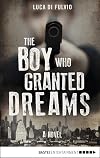
The Boy Who Granted Dreams
by Luca Di Fulvio
On This Page
Description
Sweeping saga, about a young boy and his mother, and their search for a better life in the United States of America, from the beginning of the 20th century, to the Great Depression.Tags
Recommendations
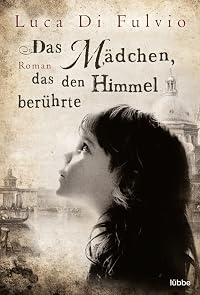


























Member Reviews
Zugegeben, 784 Seiten sind einiges mehr als nur "eine Handvoll Worte". Aber in dieser teils tragischen aber schönen Liebesgeschichte zu Personen, zum Leben und zu einer Lebensweise ist jedes einzelne hervorragend investiert. Der amerikanische Traum basiert auf Schmerz und Tränen. Aber es gibt ihn, diesen Traum. Und entsprechend ist der Titel deutbar.
Es ist ein absolut großartiges Buch! Mit offener, ehrlicher, prägnanter aber auch wundervoll um malender Sprache erzählt Luca Di Fulvio eine Geschichte, die sich sofort ins Herz brennt. Zur spielenden Zeit und den dortigen, sozialen Gegebenheiten passend, wird nicht romantisiert sondern berichtet, erzählt und umschrieben. Ehrlich, direkt, ab und an verletzend und erschütternd aber show more nie ohne Hoffnung.
Schnell nehmen die Protagonisten Farbe an und wachsen einem so sehr ans Herz, das man um eine Verlängerung und Zugabe der Geschichte bittet. Alle Handlungen und erzählten Begebenheiten sind mehr als nachvollziehbar und das spitzbübische und naiv verbrämte Auftreten des träumeschenkenden Jungen ist sehr erfrischend. Aber auch die tiefe Traurigkeit mancher Szenen wird dermaßen lebendig vermittelt, das eben diese auch besitz von einem selbst ergreift.
Der Klappentext hatte mich bisher ein wenig abgeschreckt, dieses Buch in die Hände zu nehmen. Suggeriert er doch kindliche Zauberei und Magie. Aber wieder einmal mehr habe ich gelernt, das man auf Klappentextautoren nicht zu viel geben sollte.
5* show less
Es ist ein absolut großartiges Buch! Mit offener, ehrlicher, prägnanter aber auch wundervoll um malender Sprache erzählt Luca Di Fulvio eine Geschichte, die sich sofort ins Herz brennt. Zur spielenden Zeit und den dortigen, sozialen Gegebenheiten passend, wird nicht romantisiert sondern berichtet, erzählt und umschrieben. Ehrlich, direkt, ab und an verletzend und erschütternd aber show more nie ohne Hoffnung.
Schnell nehmen die Protagonisten Farbe an und wachsen einem so sehr ans Herz, das man um eine Verlängerung und Zugabe der Geschichte bittet. Alle Handlungen und erzählten Begebenheiten sind mehr als nachvollziehbar und das spitzbübische und naiv verbrämte Auftreten des träumeschenkenden Jungen ist sehr erfrischend. Aber auch die tiefe Traurigkeit mancher Szenen wird dermaßen lebendig vermittelt, das eben diese auch besitz von einem selbst ergreift.
Der Klappentext hatte mich bisher ein wenig abgeschreckt, dieses Buch in die Hände zu nehmen. Suggeriert er doch kindliche Zauberei und Magie. Aber wieder einmal mehr habe ich gelernt, das man auf Klappentextautoren nicht zu viel geben sollte.
5* show less
(Reprinted from the Chicago Center for Literature and Photography [cclapcenter.com]. I am the original author of this essay, as well as the owner of CCLaP; it is not being reprinted illegally.)
So what's the biggest drawback to our current revolution in indie presses and self-publishing, when things like digital printing plants and places like Amazon now allow pretty much anyone on the planet to publish a manuscript as a finished, polished paperback whenever they want? Surprisingly, it's not the proliferation of terrible novels; as I've been learning more and more this fall, as I burn my way through this unending pile of basement-press books that were sent to me earlier this year while I was in computer coding bootcamp, the biggest show more drawback is actually the proliferation of "just okay" novels, ones that are not terrible enough that you can out-and-out dismiss them but certainly not good enough to bring even one new wrinkle or insight to their readers that they haven't already seen in a million novels previously. And here's the latest to add to the bonfire, an utterly by-the-books historical tale about young Italian immigrants in early-20th-century New York City, which its promotional material says is "perfect for fans of Gangs of New York" but should actually say, "If you've already seen Gangs of New York, there's not a single solitary reason to read this book as well." Perhaps it's because I'm exposed to so many more books like these than the typical pleasure reader out there, but it seems to me like in just the last year or two, the literary industry has started developing a troubling new problem that it's never had before; namely, this explosion in cheap consumer technology is producing a virtual flood of mediocre books that is literally drowning out the increasingly smaller proportion of titles out there that are actually worth your time. And I don't know as a full-time critic how to handle this, because like I said, I can't just dismiss such books and say that they're too terrible to bother reading, because they're not; they're just exactly good enough to justify their existence, kind of like how a piece of iceberg lettuce just barely technically counts enough as "food" to justify being grown. I'll keep making my way through them; but I have to admit, for the first time since CCLaP opened eight years ago, I'm starting to rethink our policy of reviewing any and every book that someone takes the time to send us. A decade ago, it was still difficult enough to publish a paperback that typically a person would only go to the trouble for a title that's truly worth reading (or conversely, is so terrible that the experience becomes weirdly pleasurable in its own right); but in the age we live in now, where anyone can take a Microsoft Word document and deliver a slick bound book to my mailbox literally a week later, the level of barely worthwhile books we're receiving is starting to reach an intolerable level, a development that benefits neither you nor I.
Out of 10: 7.0 show less
So what's the biggest drawback to our current revolution in indie presses and self-publishing, when things like digital printing plants and places like Amazon now allow pretty much anyone on the planet to publish a manuscript as a finished, polished paperback whenever they want? Surprisingly, it's not the proliferation of terrible novels; as I've been learning more and more this fall, as I burn my way through this unending pile of basement-press books that were sent to me earlier this year while I was in computer coding bootcamp, the biggest show more drawback is actually the proliferation of "just okay" novels, ones that are not terrible enough that you can out-and-out dismiss them but certainly not good enough to bring even one new wrinkle or insight to their readers that they haven't already seen in a million novels previously. And here's the latest to add to the bonfire, an utterly by-the-books historical tale about young Italian immigrants in early-20th-century New York City, which its promotional material says is "perfect for fans of Gangs of New York" but should actually say, "If you've already seen Gangs of New York, there's not a single solitary reason to read this book as well." Perhaps it's because I'm exposed to so many more books like these than the typical pleasure reader out there, but it seems to me like in just the last year or two, the literary industry has started developing a troubling new problem that it's never had before; namely, this explosion in cheap consumer technology is producing a virtual flood of mediocre books that is literally drowning out the increasingly smaller proportion of titles out there that are actually worth your time. And I don't know as a full-time critic how to handle this, because like I said, I can't just dismiss such books and say that they're too terrible to bother reading, because they're not; they're just exactly good enough to justify their existence, kind of like how a piece of iceberg lettuce just barely technically counts enough as "food" to justify being grown. I'll keep making my way through them; but I have to admit, for the first time since CCLaP opened eight years ago, I'm starting to rethink our policy of reviewing any and every book that someone takes the time to send us. A decade ago, it was still difficult enough to publish a paperback that typically a person would only go to the trouble for a title that's truly worth reading (or conversely, is so terrible that the experience becomes weirdly pleasurable in its own right); but in the age we live in now, where anyone can take a Microsoft Word document and deliver a slick bound book to my mailbox literally a week later, the level of barely worthwhile books we're receiving is starting to reach an intolerable level, a development that benefits neither you nor I.
Out of 10: 7.0 show less
Ein wirklich angehnehmes BUch - ein richiger Shcmöker, der bestimmt verfilmt werden wird!
Sono qui davanti alla pagine bianca e non so bene cosa raccontarvi di questo romanzo. Non perché debba raccogliere le idee, ma proprio perché mi è parso un libro inutile. Pare brutto scriverlo, ma davvero non ho capito dove volesse andare a parare Di Fulvio.
Voleva scrivere un romanzo sull'immigrazione negli Stati Uniti nella prima metà del Novecento? O sui bassifondi di New York? Oppure un romanzo di formazione? È forse un romanzo sul potere della fantasia? O sull'amore? Oppure sull'importanza dell'amicizia?
C'è un po' di tutto questo in La gang dei sogni, ma ogni argomento, o filone narrativo, è sgradevolmente annacquato. Ci sono dei momenti nei quali ho pensato che il romanzo stesse decollando, ma l'autore è ricaduto ben presto show more nel grigiore. Porca miseria!
Di Fulvio, non so cos'altro hai scritto o se ho beccato il tuo lavoro più brutto, ma, per favore, smetti di usare cliché come se non ci fosse un domani. Non c'è stato un momento in cui mi sia sorpresa e, giusto per farvi un esempio, il livello di cliché scende fino a robe come “è il Vero Uomo che ti fa sentire una Donna Completa”. Ma va' a cagare, va'! Tutto questo poi non si giustifica nemmeno con l'ambientazione storica, che c'è più per far colore che altro...
E poi, gente, 576 pagine di cliché stenderebbero anche il più benintenzionato dei lettori: e io lo ero. Ma dopo l'ennesima pagina nella quale Ruth ripeteva gli stessi pensieri, non ho potuto far altro che pensare: speriamo finisca presto. show less
Voleva scrivere un romanzo sull'immigrazione negli Stati Uniti nella prima metà del Novecento? O sui bassifondi di New York? Oppure un romanzo di formazione? È forse un romanzo sul potere della fantasia? O sull'amore? Oppure sull'importanza dell'amicizia?
C'è un po' di tutto questo in La gang dei sogni, ma ogni argomento, o filone narrativo, è sgradevolmente annacquato. Ci sono dei momenti nei quali ho pensato che il romanzo stesse decollando, ma l'autore è ricaduto ben presto show more nel grigiore. Porca miseria!
Di Fulvio, non so cos'altro hai scritto o se ho beccato il tuo lavoro più brutto, ma, per favore, smetti di usare cliché come se non ci fosse un domani. Non c'è stato un momento in cui mi sia sorpresa e, giusto per farvi un esempio, il livello di cliché scende fino a robe come “è il Vero Uomo che ti fa sentire una Donna Completa”. Ma va' a cagare, va'! Tutto questo poi non si giustifica nemmeno con l'ambientazione storica, che c'è più per far colore che altro...
E poi, gente, 576 pagine di cliché stenderebbero anche il più benintenzionato dei lettori: e io lo ero. Ma dopo l'ennesima pagina nella quale Ruth ripeteva gli stessi pensieri, non ho potuto far altro che pensare: speriamo finisca presto. show less
Sep 19, 2023Italian
Il suffit de quelques pages à Luca di Fulvio pour nous emmener dans un voyage où la limite entre le rêve et le cauchemar se trouble. Ses nombreux personnages ont tous suffisamment d'épaisseur pour que l'on s'y attache et découvre leur existence avec avidité. De New York à Los Angeles, l'auteur nous décrit l'espoir d'Ellis Island, la violence des quartiers loin de Manhattan, la prohibition rouge sang et les coulisses sans projecteurs d'Hollywood. Mais au-delà de l'amour, c'est bien l'art – la radio, la photographie, l'écriture et le théâtre – qui sauvera les âmes en peine de ses héros. Un roman que l'on empoigne et qui ne nous lâche qu'à ses derniers mots. Merry Christmas !
Oct 18, 2020French
New York und etwas Hollywood, Anfang des 20. Jahrhunderts, Bandenkriege, Zuhälter, Vergewaltigung und Liebe
Ein emotional und etwas sentimental, aber fesselnd und gut geschriebener Roman über das Aufwachsen und Erwachsenwerden von Christmas. Dem Sohn einer italienischen Einwanderin. Gewalt, Armut und Korruption auf vs. Phantasie, Loyalität und Liebe.
Ein emotional und etwas sentimental, aber fesselnd und gut geschriebener Roman über das Aufwachsen und Erwachsenwerden von Christmas. Dem Sohn einer italienischen Einwanderin. Gewalt, Armut und Korruption auf vs. Phantasie, Loyalität und Liebe.
Oct 13, 2025German
New York dans les années 1920 est une ville multiple, on y croise des immigrés de fraîche date, des mafieux et des prostituées, des enfants en vadrouille et des familles brisées, des riches hautains et des pauvres au grand cœur. Une ville de rêves et de cauchemars. Une ville où une innocente soirée peut mal tourner et où une enfance pauvre peut mener à une carrière à Hollywood. Un roman captivant et sensible, violent et émouvant, et une grande histoire d’amour.
Mar 18, 2019French
Members
- Recently Added By
Author Information

31 Works 712 Members
Some Editions
Awards and Honors
Distinctions
Series
Belongs to Publisher Series
Bastei Lübbe Taschenbuch (16061)
Common Knowledge
- Canonical title
- The Boy Who Granted Dreams
- Original title
- La gang dei sogni
- Original publication date
- 2008 (original Italian) (original Italian)
- Important places*
- New York, USA; Hollywood, Los Angeles, California, USA
- Epigraph*
- In dromen begint verantwoordelijkheid.
W.B. Yeats, Responsibilities
Young girl, they call them the Diamond Dogs.
David Bowie, Diamond Dogs - Dedication*
- Voor mijn lot, dat me naar Carla heeft geleid, zonder wie ik nooit de liefde had kunnen schrijven.
- First words*
- Eerst hadden ze haar samen zien opgroeien, de moeder en de baas.
- Last words*
- (Click to show. Warning: May contain spoilers.)'Goedenacht, New York.'
- Disambiguation notice
- Original title: La gang dei sogni
*Some information comes from Common Knowledge in other languages. Click "Edit" for more information.
Classifications
- Genres
- Fiction and Literature, General Fiction, Historical Fiction, Romance
- DDC/MDS
- 853.914 — Literature & rhetoric Italian, Romanian & related literatures Italian fiction 1900- 20th Century 1945-1999
- LCC
- PQ4864 .I3553 .G36 — Language and Literature French, Italian, Spanish and Portuguese literatures Italian literature Individual authors, 1961-2000
Statistics
- Members
- 289
- Popularity
- 111,060
- Reviews
- 15
- Rating
- (4.07)
- Languages
- 9 — Czech, Dutch, English, French, German, Hungarian, Italian, Portuguese, Spanish
- Media
- Paper, Audiobook, Ebook
- ISBNs
- 20
- ASINs
- 8