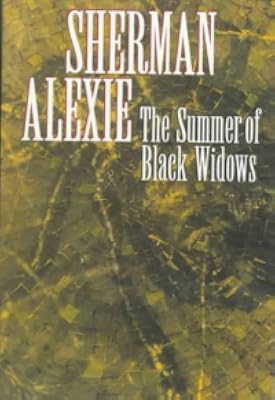
The Summer of Black Widows
by Sherman Alexie
On This Page
Description
Collection of poems revealing the spirit of North American Indian attitudes on life, love, and other experiences.Tags
Recommendations








Member Reviews
The poems here are varied and powerful, with the ones carrying the most impact (for me) being the ones that either marry the sacred and the profane/contemporary, or else bring Alexie's personal history to bear on the world around him. The sequences in the first half of the book are especially striking, moving from image to image with a sort of tragic momentum that can't be ignored. For me, many of the last poems in the collection felt less successful and inspired than the poems that came in the first two thirds of the collection, but if so, that's only because the incredibly high standards that early poems in the collection set.
On the whole, I'd recommend this collection, and there are certainly poems here which I'll revisit in the future.
On the whole, I'd recommend this collection, and there are certainly poems here which I'll revisit in the future.
Alexie's poetry is amazing . . . funny, yet political, yet sarcastic, yet thought-provoking. I love it.
A hodgepodge of poems and other writings. I don't get his popularity.
Alexie, Sherman. The Summer of Black Widows. Hanging Loose Press, Brooklyn, New York, 1996. Poetry. Autographed.
Ratings
Members
- Recently Added By
Author Information

60+ Works 30,984 Members
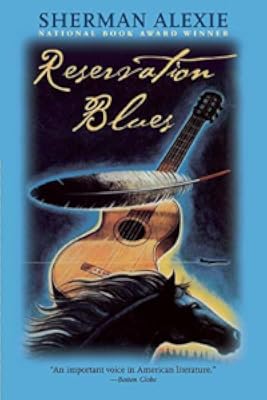
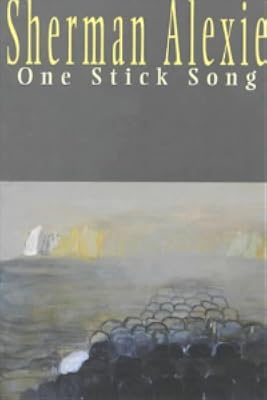
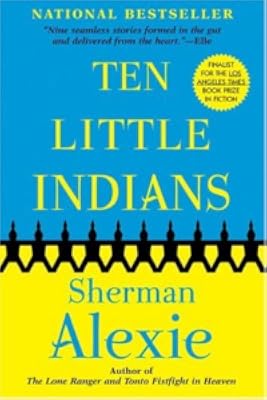
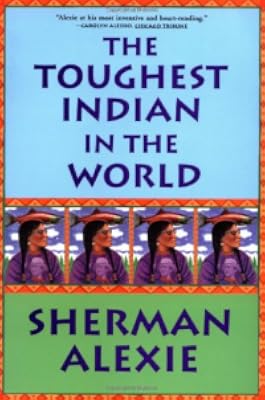
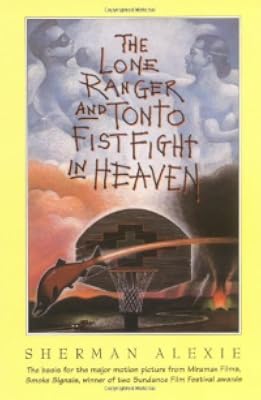
Sherman J. Alexie Jr. was born on October 7, 1966. His mother was Spokane Indian and his father was Coeur d'Alene Indian. Alexie grew up on the Spokane Indian Reservation in Wellpinit, Washington. He decided to attend high school off the reservation where he knew he would get a better education. He was the only Indian at the school, and excelled show more academically as well as in sports. After high school, he attended Gonzaga University for two years before transferring to Washington State University, where he graduated with a degree in American studies. He received the Washington State Arts Commission Poetry Fellowship in 1991 and the National Endowment for the Arts Poetry Fellowship in 1992. His collections of poetry included The Business of Fancydancing, First Indian on the Moon, The Summer of Black Widows, One Stick Song, and Face. His first collection of short stories, The Lone Ranger and Tonto Fistfight in Heaven, received a PEN/Hemingway Award for Best First Book of Fiction and a Lila Wallace-Reader's Digest Writers' Award. His other short story collections included The Toughest Indian in the World, Ten Little Indians, and War Dances. His first novel, Reservation Blues, received the Before Columbus Foundation's American Book Award and the Murray Morgan Prize. His other novels included Indian Killer, The Absolutely True Diary of a Part-Time Indian, and Flight. He won the Andrew Carnegie Medal for Excellence in Nonfiction in 2018 for You Don't Have to Say You Love Me: A Memoir. Alexie and Jim Boyd, a Colville Indian, collaborated on the album Reservation Blues, which contains the songs from the book of the same name. In 1997, Alexie collaborated with Chris Eyre, a Cheyenne/Arapaho Indian, on a film project inspired by Alexie's work, This is What it Means to Say Phoenix, Arizona, from the short story collection The Lone Ranger and Tonto Fistfight in Heaven. Smoke Signals debuted at the Sundance Film Festival in January 1998, winning two awards: the Audience Award and the Filmmakers Trophy. In 1999 the film received a Christopher Award. (Bowker Author Biography) show less
Classifications
Statistics
- Members
- 178
- Popularity
- 183,482
- Reviews
- 4
- Rating
- (3.83)
- Languages
- English
- Media
- Paper
- ISBNs
- 3