On This Page
Description
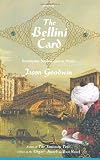
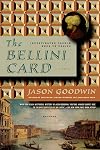
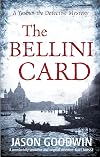
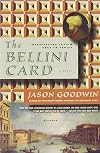
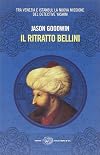
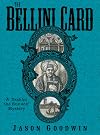
Istanbul, 1840: the new sultan, Abdulmecid, has heard a rumor that Bellini's vanished masterpiece-a portrait of Mehmed the Conqueror-may have resurfaced in Venice. Yashim, our eunuch detective, is promptly sent to investigate, but-aware that the sultan's advisers are against any extravagant repurchase of the painting-decides to deploy his disempowered Polish ambassador friend, Palewski, to visit Venice in his stead. Palewski arrives in disguise in down-at-the-heel Venice, where a killer is show more at large, as dealers, faded aristocrats, and other unknown factions seek to uncover the whereabouts of the missing Bellini.But is it the Bellini itself that endangers all or something associated with its original loss? And how is it that all of the killer's victims are somehow tied to the alluring Contessa d'Aspi d'Istria? Will the Austrians unmask Palewski, or will the killer find him first? Only Yashim can uncover the truth to the manifold mysteries. show lessTags
Recommendations

































Member Reviews
Rumours reach the new sultan of a portrait by Bellini of his illustrious ancestor, Mehmed the Conqueror, being offered for sale in Venice. He asks Yashim to go to discreetly find out more, but the vizier, Reshid, warns Yashim not to go. So Yashim sends Count Palewski instead, disguised as an American. But when Palewski arrives in Venice the body count starts mounting.
Another of these excellent mysteries -- a good dash of suspense and a beautiful Italian contessa with a secret or three. For a eunuch, Yashim seems to have an awful lot of sex with beautiful women.
Another of these excellent mysteries -- a good dash of suspense and a beautiful Italian contessa with a secret or three. For a eunuch, Yashim seems to have an awful lot of sex with beautiful women.
In the third book in the series the action moves to 1840, Istanbul, and there is a reshuffling of power as a new sultan succeeds the old. The young sultan has heard a rumour that a portrait of his ancestor, Mehmet the Conqueror, by Gentile Bellini has surfaced. Yashim, a palace eunuch and detective, is charged with finding the missing masterpiece which is rumoured to be somewhere in Venice. Not wanting to draw attention to sultan’s interest, Yashim in turn enlists his friend Palewski, the Polish ambassador to Istanbul, to travel to Venice in his stead. Palewski goes undercover and adopts the disguise of a rich American seeking masterpieces to take back to the new world.
Venice is a shadow of its former glory, it is a city of empty show more palazzos and silent canals but its people still possess the guile that made it a key Mediterranean trading port. Palewski is soon begins to mingle with Venetian aristocrats, countesses, art dealers and cunning guides. But when two bodies turn up in the canal Yashim realises that there is also a killer a trail of the painting and that it is up to him to rescue his friend from forces bigger than he had imagined.
Once again this book contains all the features of a decent whodunit, a hero, a killer, a mastermind, a tart with a heart and a femme fatale but what raises this series above the humdrum is the sense of place and historical detail, the long history between two cities past their best. Goodwin places the reader in the landscape and architecture, the sights, sounds and smells, and the social strata of both Istanbul and Venice. This is aided ably by a group of nicely drawn characters - a mix of fading aristocrats, bureaucrats, servants and criminals. Yashim is an likable and interesting characters who certainly seemed to enjoy cooking, however, despite a number of twists and turns I felt that the murders were almost incidental. As a result whilst I enjoyed the tale for its rich portrait of people and places, the plot became increasingly incidental. show less
Venice is a shadow of its former glory, it is a city of empty show more palazzos and silent canals but its people still possess the guile that made it a key Mediterranean trading port. Palewski is soon begins to mingle with Venetian aristocrats, countesses, art dealers and cunning guides. But when two bodies turn up in the canal Yashim realises that there is also a killer a trail of the painting and that it is up to him to rescue his friend from forces bigger than he had imagined.
Once again this book contains all the features of a decent whodunit, a hero, a killer, a mastermind, a tart with a heart and a femme fatale but what raises this series above the humdrum is the sense of place and historical detail, the long history between two cities past their best. Goodwin places the reader in the landscape and architecture, the sights, sounds and smells, and the social strata of both Istanbul and Venice. This is aided ably by a group of nicely drawn characters - a mix of fading aristocrats, bureaucrats, servants and criminals. Yashim is an likable and interesting characters who certainly seemed to enjoy cooking, however, despite a number of twists and turns I felt that the murders were almost incidental. As a result whilst I enjoyed the tale for its rich portrait of people and places, the plot became increasingly incidental. show less
(Listened to this on audio, so some of my gripes pertain to the reader) The cover says "Investigator Yashim goes to Venice." Well, he does eventually, but for nearly half of the book he isn't in it much at all. His friend, Palewski, former Polish Ambassador to the Ottoman Court, goes to Venice in Yashim's place on a mission for the new young sultan, searching for a painting which may or may not exist. I couldn't seem to get caught up in this story. This often happens to me in Venice--I don't think I'd like it there, and am not susceptible to its intrigue. Much of the time I found myself zoning out, but it didn't seem I ever missed much of consequence. Lengthy descriptions of fencing in the sport's unfamiliar lingo left me bewildered. show more The segments involving the Venetian police didn't have much bearing on the story, as far as I could tell. I think there was too much book for the amount of story here. And the narration sometimes distracted me. I understand the need to distinguish character's voices on audio, but I think there's something fundamentally wrong with using stereotypical accents to accomplish that. All of the narrator's Italian accents struck me as cheesy; his women always sounded whiny, even when they were threatening someone at sword-point; and then there was that beggar who sounded like Stanley Holloway's Alfred P. Doolittle. Hoye also tended to be melodramatic with dialog, especially with the Venetian characters. He did better when the story line took us back to Istanbul, as did I. I don't think it was entirely the fault of the narrator that this book did not captivate me as the first two Yashim adventures did. I took a print copy out of the library so I could look back to see if I had missed things while listening, and I read the last third from the page. I didn't care for the setting; parts of the story were overdone, tedious, or even pointless; there was too much Palewski and not enough Yashim. The foodie bits were wonderful, though. show less
This book is another entry in Goodwin's series following 19th Century eunich, Yashim. However it, too, is susceptible to the flaws that have prevented his previous books from being top-tier.
A new sultan is ruling the Ottoman empire, and he's heard tell of a portrait, by Bellini, of the Sultan Mehmet. The ever-discrete Yashim is instructed to find it in Venice, but instead puts his friend Palewski to the task. But once Palewski arrives in Venice, art dealers start dropping like flies - what is going on?
First, to the positives. As ever, Goodwin has used his considerable knowledge and research chops to summon up an almost tactile vision of the canal city. The descriptions of faded - if not actively decrepit glory - echo contemporary show more impressions of the Venice and it gives the book an elegiac mood at odds with the fiery determination of the city's residents to survive and flourish under their new Austro-Hungarian masters.
Palewski himself is less tragicomic away from his beloved Istanbul, and - unlike previous entries in the series - Goodwin paces the narrative quite well, and seems to be building to a genuine mystery.
Alas, its third act is the great undoing. As in previous books, the climax is a hurried mix of implausible action and hasty exposition - both rendered in an elliptical, confusing fashion. Worse, Goodwin can't resist his typical, truly stupid and arbitrary love interest (Yashim, a eunich, always seems to have sex with women who barely know him).
Compounding these errors is his habit of piling twists on top of twists, with a hefty garnish of coincidence. Maybe Goodwin feels the rug-yanking is apropos in a story of Turks, but the machinations are more Byzantine than Ottoman, and - crammed into the last thirty pages - all they do is confuse, and reduce reader investment. It's hard to care about the conclusion when you're not entirely sure what's going on, it's liable to change three times in a paragraph, and it bears little relationship to any clues or information contained in the first two thirds of the novel.
If I sound aggrieved, it's because I'm frustrated: there's a decent mystery lurking in The Bellini Card - as there was in his previous books. The unique settings, likable characters, and - until the last third - engaging plots are the perfect ingredients for a satisfying book. But they are overpowered by flashy shenanigans every time. Seeing Goodwin sacrifice his plot, the credibility of his characters, and the pace of his narrative for such unworthy, glib third acts is a let-down. Likely to be the last Yashim book I read; they aren't developing. show less
A new sultan is ruling the Ottoman empire, and he's heard tell of a portrait, by Bellini, of the Sultan Mehmet. The ever-discrete Yashim is instructed to find it in Venice, but instead puts his friend Palewski to the task. But once Palewski arrives in Venice, art dealers start dropping like flies - what is going on?
First, to the positives. As ever, Goodwin has used his considerable knowledge and research chops to summon up an almost tactile vision of the canal city. The descriptions of faded - if not actively decrepit glory - echo contemporary show more impressions of the Venice and it gives the book an elegiac mood at odds with the fiery determination of the city's residents to survive and flourish under their new Austro-Hungarian masters.
Palewski himself is less tragicomic away from his beloved Istanbul, and - unlike previous entries in the series - Goodwin paces the narrative quite well, and seems to be building to a genuine mystery.
Alas, its third act is the great undoing. As in previous books, the climax is a hurried mix of implausible action and hasty exposition - both rendered in an elliptical, confusing fashion. Worse, Goodwin can't resist his typical, truly stupid and arbitrary love interest (Yashim, a eunich, always seems to have sex with women who barely know him).
Compounding these errors is his habit of piling twists on top of twists, with a hefty garnish of coincidence. Maybe Goodwin feels the rug-yanking is apropos in a story of Turks, but the machinations are more Byzantine than Ottoman, and - crammed into the last thirty pages - all they do is confuse, and reduce reader investment. It's hard to care about the conclusion when you're not entirely sure what's going on, it's liable to change three times in a paragraph, and it bears little relationship to any clues or information contained in the first two thirds of the novel.
If I sound aggrieved, it's because I'm frustrated: there's a decent mystery lurking in The Bellini Card - as there was in his previous books. The unique settings, likable characters, and - until the last third - engaging plots are the perfect ingredients for a satisfying book. But they are overpowered by flashy shenanigans every time. Seeing Goodwin sacrifice his plot, the credibility of his characters, and the pace of his narrative for such unworthy, glib third acts is a let-down. Likely to be the last Yashim book I read; they aren't developing. show less
All through the book I felt that I was missing the undercurrents - a typical ugly American being confronted with Eastern subtlety. But if someone more subtle than I can follow the unspoken story, it's no less enjoyable for that. The twists and turns are - there is no other word for it - Byzantine, and the scenic descriptions of both Istanbul and Venice bring a great deal of realism to the story. Recommended for anyone who likes their mysteries with a dash of Eastern spice, a sprinkling of historical fact, and just a pinch of the mysteries of the ages.
I read the first book in this historical mystery series last year (actually I listened to it) so when I was looking for some more audiobooks to download I was happy to see the next two were available. However, I ended up listening to this one first and now I have to go back to Book 2. I wasn't as happy with this novel as I was with the first one mostly because Yashim doesn't really come into the action until the last half.
A new and young Sultan has taken over the throne in Istanbul. It remains to be seen how he will conduct himself. He has learned that a painting done by Gentile Bellini during the reign of Sultan Mehmet II (Mehmet the Conqueror) of the Sultan is for sale in Venice. He instructs Yashim to go to Venice and buy the show more painting. However, the Sultan's vizier, Reshid Pasha, warns Yashim against going so Yashim talks his friend, the Polish ambassador Palewski, into going. Palewski poses as an American, Mr. Brett, in Venice. An impoverished nobleman, Count Ruggierio, befriends Brett and circulates his card. Two art dealers are killed right after Palewski arrives and then Ruggierio is also killed. The police suspect Palewski but he is provided an alibi by a beautiful young courtesan, Maria. Palewski is shown a painting in a darkened palazzo but then a gunfight breaks out and he has to swim the Grand Canal. He is beginning to wonder if his search is going to end in his own death.
There is a lot going on in this book and I'm not sure if it was all necessary to the plot. Yashim is an interesting character but he is not in evidence until close to the end. I also did not care for the Italian accent the narrator used for the Venetians. All in all, I wouldn't recommend this unless you have read the first two and just have to have another fix. show less
A new and young Sultan has taken over the throne in Istanbul. It remains to be seen how he will conduct himself. He has learned that a painting done by Gentile Bellini during the reign of Sultan Mehmet II (Mehmet the Conqueror) of the Sultan is for sale in Venice. He instructs Yashim to go to Venice and buy the show more painting. However, the Sultan's vizier, Reshid Pasha, warns Yashim against going so Yashim talks his friend, the Polish ambassador Palewski, into going. Palewski poses as an American, Mr. Brett, in Venice. An impoverished nobleman, Count Ruggierio, befriends Brett and circulates his card. Two art dealers are killed right after Palewski arrives and then Ruggierio is also killed. The police suspect Palewski but he is provided an alibi by a beautiful young courtesan, Maria. Palewski is shown a painting in a darkened palazzo but then a gunfight breaks out and he has to swim the Grand Canal. He is beginning to wonder if his search is going to end in his own death.
There is a lot going on in this book and I'm not sure if it was all necessary to the plot. Yashim is an interesting character but he is not in evidence until close to the end. I also did not care for the Italian accent the narrator used for the Venetians. All in all, I wouldn't recommend this unless you have read the first two and just have to have another fix. show less
Jason Goodwin's entertaining third installment of his unique Investigator Yashim series takes our Turkish eunuch detective from Istanbul to Venice (after The Janissary Tree: A Novel and The Snake Stone: A Novel). The young new sultan Abdulmecid receives a whispered invitation from Venice to purchase Gentile Bellini's 15th century portrait of Mehmut the Conqueror. A new sultan means a new vizier and this one intends to be the power behind the throne. When Abdulmecid dispatches Yashim to Venice to find the seller and bring back the painting, Resid Pasha intimates that Yashim should forgo the trip; the weakening Ottoman Empire cannot afford to waste precious coin on old paintings.
Yashim seeks to please both masters and craftily sends his show more friend Palweski, the nominal Polish ambassador to the Ottomans to find, acquire, and retrieve the painting (`Nominal' because Poland was enduring one of its periodic disappearing phases). Venice turns out to be every bit as Byzantine as Istanbul. Who, if anyone, really has the painting? Is it for sale? Is it even genuine? Why are dead men turning up around Palewski? The Austrian stadtmeister especially wants that question answered. And around that point, Yashim turns up to lend a hand.
The answers are all delivered in due course along with some solid action, loads of intrigue, a beautiful woman, and a satisfying conclusion. Despite the occasional violence, Goodwin's novels are comfortable. Yashim makes the reader feel that `all is right in the end' - or much as possible in the declining Ottoman Empire.
Yashim indulges his passion for cooking a bit less than in the first two books. Goodwin's extensive knowledge of Byzantine history solidly grounds this work of historical detective fiction. We learn a bit about painting, a bit about fencing, a good bit about Venice (as Goodwin tells us, Venice and Istanbul do have long connected histories) - in many ways the star of the book. The other star, the portrait of Mehmut the Conqueror can be visited in the 21st century at the National Gallery in London. The plotting gets a bit hectic, but the real strength of the Yashim books is the aura of historical reality that Goodwin creates. To the book's detriment, fewer pages are spent on the historical setting in The Bellini Card than in the first two books. I also found myself wishing that more time was spent in Istanbul (one hopes Goodwin still has a few Istanbul based story lines). On the other hand, the development of the Palewski character was a positive.
There is a drop off from the first two books, but the Bellini Card is still worth a read for fans of historical detective fiction or anyone interested Istanbul or Venice. show less
Yashim seeks to please both masters and craftily sends his show more friend Palweski, the nominal Polish ambassador to the Ottomans to find, acquire, and retrieve the painting (`Nominal' because Poland was enduring one of its periodic disappearing phases). Venice turns out to be every bit as Byzantine as Istanbul. Who, if anyone, really has the painting? Is it for sale? Is it even genuine? Why are dead men turning up around Palewski? The Austrian stadtmeister especially wants that question answered. And around that point, Yashim turns up to lend a hand.
The answers are all delivered in due course along with some solid action, loads of intrigue, a beautiful woman, and a satisfying conclusion. Despite the occasional violence, Goodwin's novels are comfortable. Yashim makes the reader feel that `all is right in the end' - or much as possible in the declining Ottoman Empire.
Yashim indulges his passion for cooking a bit less than in the first two books. Goodwin's extensive knowledge of Byzantine history solidly grounds this work of historical detective fiction. We learn a bit about painting, a bit about fencing, a good bit about Venice (as Goodwin tells us, Venice and Istanbul do have long connected histories) - in many ways the star of the book. The other star, the portrait of Mehmut the Conqueror can be visited in the 21st century at the National Gallery in London. The plotting gets a bit hectic, but the real strength of the Yashim books is the aura of historical reality that Goodwin creates. To the book's detriment, fewer pages are spent on the historical setting in The Bellini Card than in the first two books. I also found myself wishing that more time was spent in Istanbul (one hopes Goodwin still has a few Istanbul based story lines). On the other hand, the development of the Palewski character was a positive.
There is a drop off from the first two books, but the Bellini Card is still worth a read for fans of historical detective fiction or anyone interested Istanbul or Venice. show less
Members
- Recently Added By
Lists

Books Read in 2016
4,666 works; 199 members

The 100 Best Crime Novels and Thrillers since 1945
100 works; 6 members
Author Information

17 Works 4,809 Members
A historian, journalist and travel writer, Jason Goodwin lives in West Sussex, England, with his wife and two sons. His first book, The Gunpowder Gardens, was short-listed for the Thomas Cook Award; his second, On Foot to the Golden Horn, received the John Llewellyn Rhys Prize in 1993.

Jason Goodwin is a LibraryThing Author, an author who lists their personal library on LibraryThing.
Some Editions
Series

Work Relationships
Is contained in
Common Knowledge
- Canonical title
- The Bellini Card
- Original title
- The Bellini Card
- Original publication date
- 2008
- People/Characters
- Inspector Yashim; Stanislaw Palewski; Sultan Abdulmecid I
- Important places
- Istanbul, Turkey; Venice, Veneto, Italy
- Epigraph
- Com'era, dov'era [As it was, where it was] - Venetian motto
Never judge a painting or a woman by candlelight. - Venetian proverb - Dedication
- For Bibby
- First words
- He sank slowly through the dark water, arms out, feet pointed: like a Christ, or a dervish, casting a benediction on the sea.
- Last words
- (Click to show. Warning: May contain spoilers.)Overhead, the workmen stared down into the clear water.
- Blurbers
- O'Donoghue, Heather; Stasio, Marilyn
- Original language
- English
Classifications
Statistics
- Members
- 492
- Popularity
- 61,570
- Reviews
- 23
- Rating
- (3.52)
- Languages
- 9 — Dutch, English, Estonian, Finnish, French, German, Italian, Spanish, Swedish
- Media
- Paper, Audiobook, Ebook
- ISBNs
- 28
- ASINs
- 9