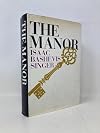
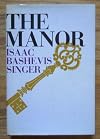
The Manor
by Isaac Bashevis Singer
On This Page
Description
"Constitutes part one of the complete saga of The manor."Tags
Recommendations



















Member Reviews
We are in Poland, this time in the later decades of the 19th century. The novel begins just after an 1863 uprising by the Polish nobility against what had become ongoing Russian rule has ended in humiliating disaster. With this nationalist movement quashed, Poland instead turns to business, and the modern world begins seeping into Poland: mines, factories, railroads begin appearing. For Poland's Jews, the period is one of liberalism. In the town of Jampol, one of the insurrectionists, Count Wladislaw Jampolski, has been banished to Siberia, and a Jew, Calman Jacoby, has managed to win the right to lease the count's large landholding and manor house. He judiciously allows the count's family to continue living in the manor house, in order show more to avoid offending the local Poles, and he begins making money growing and selling crops on the land and, in particular, selling timber to be used as railroad ties. So begins our tale, with Calman at the center of what becomes a whirlwind of cultural and religious change and the personal crises and moral choices, both good and bad, of an expanding group of characters.
Calman himself is an observant Jew. He expects his children to stay within that community and some do. But the Jewish community as a whole does not stand apart from the modernism taking hold in Poland, and Calman, to his woe, has lived to see a growing divide among Poland's Jews: those who demand adherence to the old ways, and those who look westward with approval at the assimilation of the Jews of France, Germany and elsewhere. To them, the exotic, "Asiatic" dress, the standing apart from Polish society as a whole, is a self-defeating lifestyle of superstition, destined to bring down further antisemitism on all of their heads. To the traditionalists, antisemitism is a constant, sure to come in future waves however they're dressed and however they worship. Faith in God and loyalty to the commandments is the only path. Calman's children, as they grow to adulthood, more or less split down the middle of this divide. One of his daughters goes so far as to run off with the count's son. But the world of the Polish nobility is on no more solid ground than the world of the Hassids. In the meantime, socialism, Zionism, nihilism, anarchism and more are debated and sometimes adopted. The roles of women in this world are changing as well. Although this topic is not made specific, the limitations faced by The Manor's female characters, and the extremely unsatisfactory choices they're forced into, become an undeniable theme of the novel.
I don't want to give the idea that Singer's presentation here is devoid of sympathy and even love for the ways and tribulations of the observant Jews. Indeed, his portrayal is laced strongly with affection and understanding. The storyline is a tapestry, or perhaps labyrinth is a better description, of interrelationships between members of the old world and the new, the Jewish society and the Polish Christians, interwoven amongst and strengthened by family, marriage, business and religion. The old world's concerns are offered with as much detail as those more modern leaning. This is a vivid picture of a complex society at a tipping point, full of memorable characters. And of course Singer was writing, and we are reading, within the context of hindsight. In the end, modernization did not save the Jews of Europe.
Here is a good example of the issues Singer is dealing with. Ezriel, Calman's son-in-law, has mostly left the old ways and is studying at university to become a doctor:
"Ezriel had had great hopes that progress could be achieved through education. Yet knowledge itself turned out to be extremely precarious. The entities which were said to constitute matter seemed to have almost magical properties. Moreover, the various materialistic theories, and Darwinism in particular, had put almost all values in jeopardy: the soul, ethics, the family. Might was right everywhere. Man's ancient beliefs had been bartered for the telegraph. But what could Ezriel do about it? For him the old traditions were already destroyed. He was left with nothing but examinations and dread. He had forsaken God but he was dependent upon all kinds of bureaucrats. He had made a mistake, Ezriel felt. But what exactly had been his error? How could it be rectified? As he lay in the darkness, it occurred to him that the young man who had been found hanging in an attic room in the Old City and whose dissection Ezriel had witnessed must have had much the same thoughts as he was having now."
Here's one more quote I like a lot, one that shows more accurately the range of human emotion and reverence for the natural world that Singer displays through the novel, as Calman, about a third of the way through the story, contemplates his situation:
"Calman sighed. He heard his grandson, Shaindel's Uri-Joseph-Yosele, awake and cry. Burek, the dog, barked. The cows in the stall rubbed their horns against the door. The spring was a warm one, and after two years of drought there were signs that the coming harvest would be fruitful. The winter crops had sprouted early, rain and sunshine had been plentiful: the life of the soil was as unpredictable as the life of man. Scarcity followed plenty. When the earth seemed to have grown barren, the juices of life flowed through her again and she blossomed once more. Who could tell? Perhaps God would still grant Calman some comfort."
When I first began reading The Manor, I wasn't particularly enamored. But the more I read, and the more the branches of Singer's story reached outward, the more absorbed I became, and in the end I can say it's a book I recommend highly. show less
Calman himself is an observant Jew. He expects his children to stay within that community and some do. But the Jewish community as a whole does not stand apart from the modernism taking hold in Poland, and Calman, to his woe, has lived to see a growing divide among Poland's Jews: those who demand adherence to the old ways, and those who look westward with approval at the assimilation of the Jews of France, Germany and elsewhere. To them, the exotic, "Asiatic" dress, the standing apart from Polish society as a whole, is a self-defeating lifestyle of superstition, destined to bring down further antisemitism on all of their heads. To the traditionalists, antisemitism is a constant, sure to come in future waves however they're dressed and however they worship. Faith in God and loyalty to the commandments is the only path. Calman's children, as they grow to adulthood, more or less split down the middle of this divide. One of his daughters goes so far as to run off with the count's son. But the world of the Polish nobility is on no more solid ground than the world of the Hassids. In the meantime, socialism, Zionism, nihilism, anarchism and more are debated and sometimes adopted. The roles of women in this world are changing as well. Although this topic is not made specific, the limitations faced by The Manor's female characters, and the extremely unsatisfactory choices they're forced into, become an undeniable theme of the novel.
I don't want to give the idea that Singer's presentation here is devoid of sympathy and even love for the ways and tribulations of the observant Jews. Indeed, his portrayal is laced strongly with affection and understanding. The storyline is a tapestry, or perhaps labyrinth is a better description, of interrelationships between members of the old world and the new, the Jewish society and the Polish Christians, interwoven amongst and strengthened by family, marriage, business and religion. The old world's concerns are offered with as much detail as those more modern leaning. This is a vivid picture of a complex society at a tipping point, full of memorable characters. And of course Singer was writing, and we are reading, within the context of hindsight. In the end, modernization did not save the Jews of Europe.
Here is a good example of the issues Singer is dealing with. Ezriel, Calman's son-in-law, has mostly left the old ways and is studying at university to become a doctor:
"Ezriel had had great hopes that progress could be achieved through education. Yet knowledge itself turned out to be extremely precarious. The entities which were said to constitute matter seemed to have almost magical properties. Moreover, the various materialistic theories, and Darwinism in particular, had put almost all values in jeopardy: the soul, ethics, the family. Might was right everywhere. Man's ancient beliefs had been bartered for the telegraph. But what could Ezriel do about it? For him the old traditions were already destroyed. He was left with nothing but examinations and dread. He had forsaken God but he was dependent upon all kinds of bureaucrats. He had made a mistake, Ezriel felt. But what exactly had been his error? How could it be rectified? As he lay in the darkness, it occurred to him that the young man who had been found hanging in an attic room in the Old City and whose dissection Ezriel had witnessed must have had much the same thoughts as he was having now."
Here's one more quote I like a lot, one that shows more accurately the range of human emotion and reverence for the natural world that Singer displays through the novel, as Calman, about a third of the way through the story, contemplates his situation:
"Calman sighed. He heard his grandson, Shaindel's Uri-Joseph-Yosele, awake and cry. Burek, the dog, barked. The cows in the stall rubbed their horns against the door. The spring was a warm one, and after two years of drought there were signs that the coming harvest would be fruitful. The winter crops had sprouted early, rain and sunshine had been plentiful: the life of the soil was as unpredictable as the life of man. Scarcity followed plenty. When the earth seemed to have grown barren, the juices of life flowed through her again and she blossomed once more. Who could tell? Perhaps God would still grant Calman some comfort."
When I first began reading The Manor, I wasn't particularly enamored. But the more I read, and the more the branches of Singer's story reached outward, the more absorbed I became, and in the end I can say it's a book I recommend highly. show less
The Manor is the first part of a family epic novel that begins in Poland in 1863, immediately following a Polish insurrection against Russian. Poland loses and the aristocracy is largely displaced. This leaves an opening for Calman Jacoby, a Jewish man living in the countryside outside of Warsaw, to make his mark. His leases the local Count's manor and begins to thrive. He and his four daughters and their soon-to-be husbands and lovers create the story in this novel.
There are many themes that are present in most family epics - happy and unhappy marriages, illness and death, can wealth bring happiness, etc. One of the things that makes this book particularly interesting is the historical background. The conflicts between Russia and the show more rest of Eastern Europe and the new scientific and philosophical ideas emerging create a rich backdrop for the family's story. Also important, of course, is Calman's traditional Hassidic Jewish faith. As the book progresses, the Jacoby family experiences tension as some members keep strictly to traditions and some throw them out the window. And some suffer between living in the world and wishing they could more easily keep the old ways.
This is part one of a two part novel, clearly conceived as one long book. I will read the Estate after a very short and easy fiction novel to give my brain a little break. I feel, though, that if I wait long between them, I would easily forget the complicated relationships that have been developed in The Manor. show less
There are many themes that are present in most family epics - happy and unhappy marriages, illness and death, can wealth bring happiness, etc. One of the things that makes this book particularly interesting is the historical background. The conflicts between Russia and the show more rest of Eastern Europe and the new scientific and philosophical ideas emerging create a rich backdrop for the family's story. Also important, of course, is Calman's traditional Hassidic Jewish faith. As the book progresses, the Jacoby family experiences tension as some members keep strictly to traditions and some throw them out the window. And some suffer between living in the world and wishing they could more easily keep the old ways.
This is part one of a two part novel, clearly conceived as one long book. I will read the Estate after a very short and easy fiction novel to give my brain a little break. I feel, though, that if I wait long between them, I would easily forget the complicated relationships that have been developed in The Manor. show less
Reason read: botm Septemer 2024, Reading 1001. The story is set in Poland during the late 19th century and is the story of Calman Jacoby, a pious Jew, his daughter's and their husbands. During this time period, the Jewish large family is breaking up and Jewish people are becoming modernized. I think it is an important book but I did not like most of the female characters. Apparently the author is showing us the limitations of women during this time. I did not like most of these women, I did not like Claire because she was a spendthrift with lose morals, I did not like Zelda and Shaindel, etc as they manipulated their husbands with wretched moods. During this time, Russia has taken over and Calman was able to take over managing the Manor show more which led to his becoming wealthy and all the troubles that come with wealth. It also shows how commerce has ebbs and flows suh as railroads need to be built but then they no longer do. Calman was a respected man until he gained wealth. He was regarded because of his wealth but lost some of the favorable respect he had enjoyed. Isaac Bashevis Singer won the Nobel Prize for Literature in 1978.
"One's own children were born of pain, but grandchildren were sheer profit."
"...various materialistic theories, and Darwinism in particular, had put almost all values in jeopardy: the soul, ethics, the family." show less
"One's own children were born of pain, but grandchildren were sheer profit."
"...various materialistic theories, and Darwinism in particular, had put almost all values in jeopardy: the soul, ethics, the family." show less
Opening paragraphs could be a description of Count Silingas after 1863 uprising.
inscribed by the author
Der Jude Kalman Jacobi pachtet 1863 das Landgut eines polnischen Adligen, der wegen seiner Teilnahme am Januaraufstand 1863 nach Sibirien verbannt wird. Singers Werk beschreibt Kalmans Aufstieg zum reichen Unternehmer und die Geschichte seiner Familie.
Detailreich beschreibt Singer das polnische Judentum im 19. Jahrhundert auf dem Scheideweg zwischen Tradition und Moderne. Er verwebt das Familienepos mit der Geschichte Polens während der russischen Besetzung und den aufkeimenden ideologischen Strömungen, welche letztlich das 20. Jahrhundert prägen sollten. Singers Werk überzeugt vor allem dort, wo er die Lebensumstände seiner Hauptprotagonisten lebensecht und detailgetreu wiedergibt und Einblicke in mittlerweile untergegangene show more Sitten, Gebräuche und Lebensumstände gibt. show less
Detailreich beschreibt Singer das polnische Judentum im 19. Jahrhundert auf dem Scheideweg zwischen Tradition und Moderne. Er verwebt das Familienepos mit der Geschichte Polens während der russischen Besetzung und den aufkeimenden ideologischen Strömungen, welche letztlich das 20. Jahrhundert prägen sollten. Singers Werk überzeugt vor allem dort, wo er die Lebensumstände seiner Hauptprotagonisten lebensecht und detailgetreu wiedergibt und Einblicke in mittlerweile untergegangene show more Sitten, Gebräuche und Lebensumstände gibt. show less
Dec 20, 2023German
Calman Jacoby gör goda affärer i ryska Polen: han har kunnat använda sig av det vakuum som uppstod efter januariupproret och ta över förvaltningen av ett mindre gods. Han har fyra döttrar, men inga söner, och han försöker hitta bra män åt dem. Det går sådär: Jochebed blir förvisso gift med en god jude som också har affärssinne, och Tsipele med en religiöst hängiven son till en berömd rabbin, men Scheindel blir gift med en tvivlare och Miriam Lieba rymmer hemifrån, konverterar och gifter sig med den minst sagt ostadige greve Lucjen. Själv har han inte mycket bättre tur när han skall gifta om sig, utan väljer en högst världslig kvinna.
Om denna familj handlar Jacobys hus, och inte mycket annat: det är mer eller show more mindre olyckliga äktenskap och otrohetsaffärer, samt Lucjens tilltagande våldsamhet och paranoia. Få saker blir som någon tror eller hoppas, och även om någonting någon gång kan bli lyckat så intresserar inte det Singer nämnvärt. Introduktion och baksida pratar om ideologier och tidsanda, men det som främst skildras är det lilla livet. Det finns en andra del, och det är bara att hoppas att den når ett lite tydligare mål. show less
Om denna familj handlar Jacobys hus, och inte mycket annat: det är mer eller show more mindre olyckliga äktenskap och otrohetsaffärer, samt Lucjens tilltagande våldsamhet och paranoia. Få saker blir som någon tror eller hoppas, och även om någonting någon gång kan bli lyckat så intresserar inte det Singer nämnvärt. Introduktion och baksida pratar om ideologier och tidsanda, men det som främst skildras är det lilla livet. Det finns en andra del, och det är bara att hoppas att den når ett lite tydligare mål. show less
Sep 8, 2024Swedish
Members
- Recently Added By
Lists

The Guardian's 1000 Novels Everyone Must Read
1,005 works; 552 members

Harold Bloom - The Western Canon: D. The Chaotic Age
833 works; 24 members
Author Information

389+ Works 24,050 Members
Isaac Bashevis Singer (1904-91) was the author of many novels, stories, children's books, and memoirs. He received the Nobel Prize in Literature in 1978. (Publisher Provided) Isaac Bashevis Singer was born in Radzymin, Poland on July 14, 1904. He received a traditional Jewish education, including training at the rabbinical seminary in Warsaw. He show more began writing in Hebrew while he worked for 10 years as a proofreader and translator in Warsaw. In 1935, he immigrated to New York, where he became a journalist for the Daily Forward, America's largest Yiddish newspaper. Most of his stories were originally published in this newspaper in serial form. His first novel, The Family Moskat, was published in 1950. His other works include The Magician of Lublin, The Spinoza of Market Street, The Slave, and A Friend of Kafka. A Day of Pleasure: Stories of a Boy Growing Up in Warsaw won the National Book Award for children's literature. He received numerous awards during his lifetime including the Nobel Prize for Literature in 1978 and the Gold Medal for Fiction in 1989. He died after suffering a series of strokes on July 24, 1991. (Bowker Author Biography) show less
Some Editions
Awards and Honors
Series
Belongs to Publisher Series
Work Relationships
Has the (non-series) sequel
Common Knowledge
- Canonical title*
- Het landgoed
- Original title
- The Manor
- Alternate titles
- Het landgoed
- Original publication date
- 1967 (English translation) (English translation); 1952 (Yiddish) (Yiddish)
- Original language
- Yiddish
*Some information comes from Common Knowledge in other languages. Click "Edit" for more information.
Classifications
Statistics
- Members
- 634
- Popularity
- 46,039
- Reviews
- 9
- Rating
- (3.85)
- Languages
- 9 — Dutch, English, Finnish, French, German, Italian, Polish, Spanish, Swedish
- Media
- Paper, Audiobook
- ISBNs
- 32
- ASINs
- 27