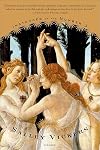
Instances of the Number 3
by Salley Vickers
On This Page
Description
Sequel To The Hugo Award-Winning Bestseller The Snow QueenThe Summer Queen is the extraordinary sequel to one of science fiction's most celebrated novels,The Snow Queen. Set in a fully realized universe of wonders, this spectacular space epic, itself a finalist for the Hugo Award, is one of the most remarkable novels in the field.A story that spans millennia, from the ruins of an ancient interstellar empire to the planets of the Hegemony that rules human space,The Summer Queen is the show more multi-layered story of Tiamat, a world where the dolphin-like mers are harvested for the youth-prolonging serum extracted from their blood. But Tiamat is much more, for beneath Carbuncle, its capital, lies the old empire's greatest secret: an enormous forgotten technology which, though decaying, continues to affect the fates of the fallen empire's remnant cultures via the sybil-network--a data bank that binds the past and the future in its web of knowledge, As the Smith, genius mastermind of the hidden interstellar Brotherhood, tries feverishly to unlock its secrets, BZ Gundhalinu desperately strives to save the Hegemony, while the Summer Queen herself dares to create a new future for her people and her planet. And though each is acting alone, their fates will entwine in an astonishing climax that will change the universe forever. show lessTags
Recommendations





















Member Recommendations


Member Reviews
I read and enjoyed Vickers' Miss Garnet's Angel years ago as a book club selection and thought that I should try revisiting her novels. Opening after the accidental death of Peter Hansome, this is the story of the two women who loved him: his wife and his mistress. When Bridget, his wife, finds evidence of Peter's long suspected duplicity, she contacts Frances and the two begin a wary relationship, tied because of their feelings towards Peter. As the women develop a friendship of sorts, they are watched over by the speechless but generally benevolent ghost of Peter himself. An Iranian boy claiming to be Peter's protege appears and moves in with Bridget and then with Francis and then again with Bridget becoming the third in the newly show more reconfigured combination. And this doesn't begin to unravel even half of the plot. Although my accounting is terribly disjointed, the narrative hangs together beautifully as more truths are slowly unveiled about each character and each of their former places in Peter's compartmentalized world.
Vickers' characters, and indeed the book itself, are restrained, carefully guarded, and proper. Her impressively fluid writing lulls the reader so that the major plot twists come not as shocking surprises but organic growths out of the story itself. She plumbs the depths of relationships with these characters and plays with the characters in variations of threes of which Bridget, Francis, and Peter are only the most obvious set. The back cover copy of the book suggests that this is "a modern drawing room comedy" and while there were flashes that drew a chuckle, this is not comedy in the guffawing sense. It has a subtle, well-thought out, sly sort of humor interwoven into precisely drawn situations. None of the characters are particularly forthcoming to each other, nor even to the careful reader, who must mine the text for deeper revelations. I enjoyed the book but the slow pacing and restraint might put off some readers. show less
Vickers' characters, and indeed the book itself, are restrained, carefully guarded, and proper. Her impressively fluid writing lulls the reader so that the major plot twists come not as shocking surprises but organic growths out of the story itself. She plumbs the depths of relationships with these characters and plays with the characters in variations of threes of which Bridget, Francis, and Peter are only the most obvious set. The back cover copy of the book suggests that this is "a modern drawing room comedy" and while there were flashes that drew a chuckle, this is not comedy in the guffawing sense. It has a subtle, well-thought out, sly sort of humor interwoven into precisely drawn situations. None of the characters are particularly forthcoming to each other, nor even to the careful reader, who must mine the text for deeper revelations. I enjoyed the book but the slow pacing and restraint might put off some readers. show less
A good novel about three-way relationships that "tend to collapse into two — or expand into four . . ." The writing is quite good, even if the sun does lay a "benediction" on some spring wheat (p. 102). There are a few offbeat uses of the inverse of negative-prefix adverbs, as in "She felt accountably shy" (p. 244). But the rapport between certain characters is unbelievably perfect, giving the feel of a romance novel for intellectuals — a sense of escapism. It would have been better without that. I still liked it very much.
Bridget, the widow, and Frances, the mistress, bond through grief of Peter. Peter is killed in a car accident and is a shadowy figure in the novel, both literally and narratively. These two women, living in London, are left to find a way to live after his death. The mysterious Zahin comes in to their lives and seems to have an even more mysterious sister. Zahin is shared between them, as Peter had been and his housework skills are phenomenal. Dry and witty at times, the novel has a timeless quality and occasional mentions of the modern world made me stop and remember that this was published in 2001 and is presumably set in the late 1990s. With many references to Shakespeare, it is a thoughtful novel that focuses on the two women and how show more they move forward in grief. show less
Fascinating and clever (despite the irritation of ghostly visits) story of widow and mistress befriending each other. Poignant in places, but never mawkish. Doesn't go for the obvious and easy ending.
Sally Vickers' novel Instances of the number 3 reads like a kaleidoscope of possible combinations of people in relationships. Shortly after her husband, Peter Hansome, has died, Bridget discovers that he had a mistress, Frances. Honoring Peter's choice, she decides to be friends with Frances. Soon after that, an Iranian boy, Zahin, described as very beautiful literary shows up on her doorstep, and she takes him in. The young man claims to be friends with Peter, who also provided him with accommodation. Throughout the book, there is the vague sense that Peter may or may not have had a relation of sorts with Zahin, who is probably bisexual, if not gay. In the broader context of the stories, the two women also explore other relationships, show more with men they meet. In addition to that, Peter haunts them, as his ghost observes the action of the story, initially only "visible" to the reader, but later also showing himself to the female characters in the book.
Originally, I did not like the idea of a "ghost" appearing, observing events and revealing itself to the characters. However, if viewed in the sense that deceased loved ones probably "haunt" people, they stay in their minds, or the thought of them keeps the "alive" in our mind, in our lives, there is something poetic to the idea. (although the suggestion in the novel is that the initiative of appearing seems to lie more on the part of the ghost.)
Very well written, and a joy to read. show less
Originally, I did not like the idea of a "ghost" appearing, observing events and revealing itself to the characters. However, if viewed in the sense that deceased loved ones probably "haunt" people, they stay in their minds, or the thought of them keeps the "alive" in our mind, in our lives, there is something poetic to the idea. (although the suggestion in the novel is that the initiative of appearing seems to lie more on the part of the ghost.)
Very well written, and a joy to read. show less
Intriguing novel about a widow, a mistress and the ghost of the man who brought them together, but all slightly too pretentious for my taste. The characters, particularly Bridget, are amusing if nothing else, and the supernatural subplot satisfied my reason for choosing this novel in the first place. I just couldn't stand all the blather about religion, and the endless quoting of Shakespeare. Sort of Evelyn Waugh meets Barbara Pym, which is not my idea of an enjoyable story.
Intriguing and absorbing. study of love, death and bereavement. Much preferred this to her subsequent novel. Characters are fully rounded. The plot is slightly contrived, but this didn't spoil the enjoyment.
Members
- Recently Added By
Published Reviews
Sober, solitary, middle-aged heroines would, you might think, have bedroom drawers crammed with sensible, well-laundered M&S underwear. But imagine rooting through the cupboards of an Anita Brookner heroine and finding a saucy pair of split-crotch knickers: that's where Salley Vickers's second novel is coming from.
added by KayCliff
Author Information

21+ Works 4,293 Members
Some Editions
Common Knowledge
- Canonical title
- Instances of the Number 3
- Original publication date
- 2001
- People/Characters
- Bridget Hansome; Frances Slater; Peter Hansome
- Important places
- London, England, UK
- First words
- After Peter Hansome died, people were surprised that his widow seemed to be spending so much time with his mistress.
- Quotations
- For weeks after Peter's death Bridget was unable to do anything about his things. Reluctant to move so much as a paper clip from his desk, she walked about the house playing old records, opening and putting down books, eating... (show all) cold baked beans, keeping unusual hours.
What Bridget found she disliked most, in the weeks after Peter's death, was having to talk about him.
Peter gave Frances the sapphire ... Opening the compact leather box she had exclaimed, "Notre-Dame blue!"
Outside the kitchen window a flock of goldfinches made a vivid zigzag across the pale wintry field.... Outside, she surveyed the field where the striking looking finches with their gold-flashed wings and crimson foreheads had... (show all) flown.... "Why do Renaissance painters of the Virgin have goldfinches in them?" she asked.... "The red spot at the top of their heads, isn't it? The goldfinch fled from the crown of thorns and Christ's blood anointed its head; I think that's the story." - Last words
- (Click to show. Warning: May contain spoilers.)I doubt not of my own salvation; and in whom can I have such occasion of doubt as in my Self? When. . .
Classifications
Statistics
- Members
- 462
- Popularity
- 65,691
- Reviews
- 11
- Rating
- (3.21)
- Languages
- Dutch, English, German, Swedish
- Media
- Paper, Audiobook, Ebook
- ISBNs
- 18
- ASINs
- 3