On This Page
Description
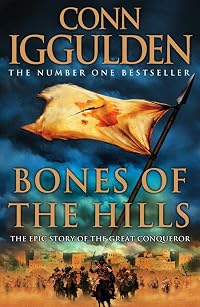
Fiction. Historical Fiction. HTML:"Iggulden's trilogy [is] a feat of rousing, adventure-packed storytelling ... a kind of fictionalized Dangerous Book, loaded with the lore of warfare, horsemanship, strategy, and exotic geography and history, along with the perils as well as the virtues of an unrelenting ethos of manliness.". "The exciting third novel in Iggulden's Genghis Khan series ... is epic historical fiction at its finest: exciting, suspenseful, colorful and well-grounded in fact.... show more Iggulden's vivid descriptions of bloody battles, masterful sieges and political intrigue are gripping.... With this tale, it is easy to see why the name Genghis is synonymous with conquest and military genius.". HTML:From the author of the bestselling The Dangerous Book for BoysBONUS: This edition contains an excerpt from Conn Iggulden's Khan: Empire of Silver.
From Conn Iggulden, #1 bestselling author of six historical epics and coauthor of the international sensation The Dangerous Book for Boys, comes a magnificent new work of fiction. Here, the Mongol conqueror Genghis Khan, stalked by enemies seen and unseen and plagued by a divided family, leads a sprawling force of horsemen beyond the realm of their known world. He will bring a storm to Arab lands and face the armies of the shah in all their strength.
From the fierce cold plains of Mongolia to the Korean Peninsula, Genghis's brothers, sons, and commanders have made emperors bow, slaughtering vast armies of fighting men. But as Genghis enters a strange new land of towering mountains and arid desert, he stirs an enemy greater than any he has met before. Under his command, Shah Ala-ud-Din Mohammed has thousands of fierce Arab warriors, teeming cavalry, and terrifying armored elephants. When Genghis strikes, the Arabs prove their mettle. On the verge of defeat, Genghis is forced to leave his own vast encampment, and the women and children in it, in the path of an enraged, savage enemy.
While the Mongols--men, women, and children--fight back, as secret assassins are sent into the night, another battle is taking shape. Two of Genghis's sons, Jochi and Chagatai, are steeped in enmity. Warriors choose between them, and a murderer commits an unspeakable crime. Soon the most powerful man in the world, who has brought devastation to this land, must choose a successor. And when he does, it will touch off the most bitter conflict of all.
In a novel that ranges from the fertile lands of the Chin to the dust and rock of Afghanistan, Conn Iggulden weaves the epic story of history's most enigmatic conqueror --those who feared him, those who defied him, and those whose bones he left behind.
. show less
Tags
Recommendations











Member Recommendations
Member Reviews
Having lived in Central Asia for 3 years, I was disappointed with Bones of the Hills. While the battle descriptions and drama between Genghis and his sons was well written and compelling, this book was far more fantasy and less historical fiction. Describing the Turkic and Persian people of Central Asia as "Arabs" was not only inaccurate, it was unnecessary. Would the reader really be turned off if the "souks" of Central Asia had been written as "bazaars" as they are known in Turkic and Persian. Labeling all the people and rulers of Central Asia as "Arabs" bothered me every time. It was as if you wrote a book about Scotland, and the author labeled the people living there as Irish or English. Berbers and Bedouins don't live in Central show more Asia, they live thousands of miles away in North Africa. For me the draw of historical fiction is to educate and entertain at the same time, this novel did little of both. A missed opportunity... show less
Iggulden further develops his series to paint Genghis and his followers in a mixed light - with the capability of greatness and destruction at the same time. Where the first two works painted Genghis' exploits as against a heavily armed and repressive enemy, this work instead shows how the Mongol Empire evolved into a destructive and terrifying force in its own right.
The third volume in the series brings Genghis to the west and sees him head to head with the armies of Islam. Well written and thought it out we see the generals and Genghis growing and learning. Tsubodai is an amazing character. His ability to work around the enemy and use their own tactics is unparalleled. The stories in general seem to kind of gravitate towards him. Well, without him the Mongols might not have achieved all they did. Conflicts from within and from the outside put all the characters in precarious situations. I found myself seriously mad at the Khan for his treatment of Jochi. But what can you do. You cannot blame Genghis for feeling the way he did, but the overall treatment of his son, regardless of his lineage is sad show more to watch as it unfolds. This is a great series. I will be glad when they are done, not because I am tired of reading them...but because I have an entire shelf of Iggulden books to devour. show less
С третата книга от поредицата за Чингис хан, описваща неговите подвизи в арабския свят, качеството видимо започва да спада.
Книгата не е толкова добре написана като предните и освен еднотипни описания на битки и безкрайни диалози друго не предоставя. Освен това, задълбочава недостатъка на предишната, да не може да обхване мащаба на живота и стореното от Чингис на световната историческа сцена. Макар да show more говори за стотици хилядни армии, авторът не успява да опише какво всъщност представлява наистина монголската инвазия за околните държави, някои от които са най-големите империи в Азия, каква опустошителна напаст от скакалци представляват войните на Чингис, нито последиците от неговите завоевания.
Четейки книгата, човек няма да има никаква представа, че Чингис избива около 40 милиона души (избива, в битки и последвали кланета, без да включваме измрелите от глад и т.н. вследствие на войните) което е около 10% от населението на света тогава, и 1/3 от всички хора в Азия. Избива толкова много хора, че е трябвало да измисли специална система за екзекуции, за да могат хората му за по-кратко време да изколят населението на завладения този ден град, без нещата да се проточат до вечерта. Толкова много хора, че специално за него е бил измислен изразът "издигнал планини от черепи", защото наистина го е правил. Е, може би не точно планини, а хълмове, но все пак... show less
Книгата не е толкова добре написана като предните и освен еднотипни описания на битки и безкрайни диалози друго не предоставя. Освен това, задълбочава недостатъка на предишната, да не може да обхване мащаба на живота и стореното от Чингис на световната историческа сцена. Макар да show more говори за стотици хилядни армии, авторът не успява да опише какво всъщност представлява наистина монголската инвазия за околните държави, някои от които са най-големите империи в Азия, каква опустошителна напаст от скакалци представляват войните на Чингис, нито последиците от неговите завоевания.
Четейки книгата, човек няма да има никаква представа, че Чингис избива около 40 милиона души (избива, в битки и последвали кланета, без да включваме измрелите от глад и т.н. вследствие на войните) което е около 10% от населението на света тогава, и 1/3 от всички хора в Азия. Избива толкова много хора, че е трябвало да измисли специална система за екзекуции, за да могат хората му за по-кратко време да изколят населението на завладения този ден град, без нещата да се проточат до вечерта. Толкова много хора, че специално за него е бил измислен изразът "издигнал планини от черепи", защото наистина го е правил. Е, може би не точно планини, а хълмове, но все пак... show less
The third book in the Conqueror series is again first rate historical fiction though considering quite how impressive the first two were, this is the weakest offering. Still, that is only because Wolf of the Plains and Lords of the Bow were quite so impressive that Bones of the Hills is a poorer relation. In its own right, the concluding part of the tale of Temujin is a gripping, fast paced, and emotionally involved epic.
Genghis Khan's incursion into the settled world had seen China defeated but not eliminated. This book charts the events that took place when his eyes were cast west and the mighty Persian society of Khorosan. I'll state up front that I had real difficulty with Iggulden's continued description of these as an Arab show more people. Historical fiction should not make such obvious mistakes. Right from the start with the description of Pashtuns as being Arab, this was a problem. I would have thought given the current western interest in the Afghan region, this was easy to spot as an error and why an editor did not fix this is beyond me. Even the Shah of Khwarazem himself was not an Arab in reality.
With this unnecessary faux pas in mind, Bones of the Hills is still awesome. The battle scenes are often a little reminiscent of those from Lords of the Bow but what is excellent is the way Iggulden adapts the conflicts to meet the Shah's tighter discipline and more advanced tactics. The Mongols had conquered at will before but now they faced up to some of the mightiest armies in the world and to Iggulden's credit he does not portray his characters as all-conquering heroes and at times they are lost. Iggulden recognises the skill of the Persians - after all these were the people who had kept an empire alive right next to the most powerful nation on Earth in the Abbasid Caliphate - and Ala-ud-Din and Jalal-ud-Din are given as much character as many of the Mongols are themselves.
The battlefields are so different from those of the Orient, and their features are described effectively. The winding path up to the stronghold of the Old Man of the Mountains is a world away from the plains the first battles of Wolf took place on and Iggulden's battles reflect those differences.
Despite this being the defining campaign of Genghis Khan's lifetime, the book is really about Genghis as a father. The loyalty of Jalal-ud-Din to his father Ala-ud-Din is a clear and stark contrast to the relationship between Genghis and his eldest son Jochi. Iggulden portrays Jochi as a hugely sympathetic character, a man who was as strong and with more potential even than his own father but who was denied the ability to take up his father's place because Genghis believed Jochi to be illegitimate. The conflict between father and son is seldom exercised in physical form but it is the most cruel and heart rending element of the entire series.
In reality it is Ogedei who succeeds Temujin as the head of the Mongol forces and Iggulden gives the second son Chagatai short shrift. Chagatai went on to found a reasonable dynasty of his own so perhaps Iggulden's character portrayal is a little too unsympathetic. Other characters though are extraordinary. The development of Tsubodai into the foremost general of his age, one of the few generals that history recognises in spite of a great leader above him, Tsubodai's generalship skills are drawn by Iggulden alongside a person who understands the motives and expectations of his enemy. This skill is seen elsewhere in the series but not in a person granted dignity and strength. This is the eastern view of wisdom and Iggulden reflects it brilliantly. The western view of the wormtongued villain is not the only portrayal of cunning in history. Tsubodai's character reflects the symbol of intelligence and ruthlessness in a man of great honour. This character is a real treasure to read.
Ultimately though this is only a good, not a great book. It is torn between the descriptions of the battles against the Shah and the internal battles bewteen father and son. Though the link in the relationship between the Shah and his first born and the Khan and his first born underlie much of the book, the focus is not all that effective. The battle against the Hashashins for instance, the quelling of rebellion and the destruction that took place in Afghanistan that still impacts today are underplayed far too much. The internal politics were superb in books 1 and 2 but book 3 loses its way marginally.
The role of women and the challenges of leadership are again excellently exposed in Bones. The death of Temulun comes in a raid by the Khwarazem against a camp of women and children and this is rightly cast as a terrible act though it is just one of many in the world of the Conqueror series. As a leader, Genghis has to make horrific decisiosn and he does not shy away from them. The survival of his nation is at stake against a formidable foe and these decisions are reflected in the deaths of named characters whose lives are almost discarded by the decisions Genghis makes for the good of the wider community. This plays into Iggulden's understanding of the people and the times.
Despite the shortcomings of the book, this is still terrific historical fiction because it generates emotional attachments to the characters involved. This is not some faceless horde of monsters, it is a group of people who have to make tough decisions and who forge relationships with one another. The series as a whole is magnificent and it is because of Iggulden's fantastic blending of realistic people with the historical events of the times. As a whole, this series is a must read for anyone who enjoys historical fiction. show less
Genghis Khan's incursion into the settled world had seen China defeated but not eliminated. This book charts the events that took place when his eyes were cast west and the mighty Persian society of Khorosan. I'll state up front that I had real difficulty with Iggulden's continued description of these as an Arab show more people. Historical fiction should not make such obvious mistakes. Right from the start with the description of Pashtuns as being Arab, this was a problem. I would have thought given the current western interest in the Afghan region, this was easy to spot as an error and why an editor did not fix this is beyond me. Even the Shah of Khwarazem himself was not an Arab in reality.
With this unnecessary faux pas in mind, Bones of the Hills is still awesome. The battle scenes are often a little reminiscent of those from Lords of the Bow but what is excellent is the way Iggulden adapts the conflicts to meet the Shah's tighter discipline and more advanced tactics. The Mongols had conquered at will before but now they faced up to some of the mightiest armies in the world and to Iggulden's credit he does not portray his characters as all-conquering heroes and at times they are lost. Iggulden recognises the skill of the Persians - after all these were the people who had kept an empire alive right next to the most powerful nation on Earth in the Abbasid Caliphate - and Ala-ud-Din and Jalal-ud-Din are given as much character as many of the Mongols are themselves.
The battlefields are so different from those of the Orient, and their features are described effectively. The winding path up to the stronghold of the Old Man of the Mountains is a world away from the plains the first battles of Wolf took place on and Iggulden's battles reflect those differences.
Despite this being the defining campaign of Genghis Khan's lifetime, the book is really about Genghis as a father. The loyalty of Jalal-ud-Din to his father Ala-ud-Din is a clear and stark contrast to the relationship between Genghis and his eldest son Jochi. Iggulden portrays Jochi as a hugely sympathetic character, a man who was as strong and with more potential even than his own father but who was denied the ability to take up his father's place because Genghis believed Jochi to be illegitimate. The conflict between father and son is seldom exercised in physical form but it is the most cruel and heart rending element of the entire series.
In reality it is Ogedei who succeeds Temujin as the head of the Mongol forces and Iggulden gives the second son Chagatai short shrift. Chagatai went on to found a reasonable dynasty of his own so perhaps Iggulden's character portrayal is a little too unsympathetic. Other characters though are extraordinary. The development of Tsubodai into the foremost general of his age, one of the few generals that history recognises in spite of a great leader above him, Tsubodai's generalship skills are drawn by Iggulden alongside a person who understands the motives and expectations of his enemy. This skill is seen elsewhere in the series but not in a person granted dignity and strength. This is the eastern view of wisdom and Iggulden reflects it brilliantly. The western view of the wormtongued villain is not the only portrayal of cunning in history. Tsubodai's character reflects the symbol of intelligence and ruthlessness in a man of great honour. This character is a real treasure to read.
Ultimately though this is only a good, not a great book. It is torn between the descriptions of the battles against the Shah and the internal battles bewteen father and son. Though the link in the relationship between the Shah and his first born and the Khan and his first born underlie much of the book, the focus is not all that effective. The battle against the Hashashins for instance, the quelling of rebellion and the destruction that took place in Afghanistan that still impacts today are underplayed far too much. The internal politics were superb in books 1 and 2 but book 3 loses its way marginally.
The role of women and the challenges of leadership are again excellently exposed in Bones. The death of Temulun comes in a raid by the Khwarazem against a camp of women and children and this is rightly cast as a terrible act though it is just one of many in the world of the Conqueror series. As a leader, Genghis has to make horrific decisiosn and he does not shy away from them. The survival of his nation is at stake against a formidable foe and these decisions are reflected in the deaths of named characters whose lives are almost discarded by the decisions Genghis makes for the good of the wider community. This plays into Iggulden's understanding of the people and the times.
Despite the shortcomings of the book, this is still terrific historical fiction because it generates emotional attachments to the characters involved. This is not some faceless horde of monsters, it is a group of people who have to make tough decisions and who forge relationships with one another. The series as a whole is magnificent and it is because of Iggulden's fantastic blending of realistic people with the historical events of the times. As a whole, this series is a must read for anyone who enjoys historical fiction. show less
I read the first three novels in Conn Iggulden's Conqueror series, which cover the life of Genghis Khan and his conquests from China to Eastern Europe. This series is enjoyable for anyone interested in the Mongol period of history who isn't looking for a deep or complex story. The novels will take readers to the steppes of 12th-century Mongolia, immersing them in a world of tribalism, survival, and raw ambition. I would have liked to see more development of female characters, and a couple of the plot arcs seem superfluous. These books may target a specific audience (men?), heavily emphasizing combat and high honor. A quick check on Wikipedia shows they are reasonably accurate historically, making good historical fiction. I'm sure I will show more read the last two books covering the grandson, Kublai, at some point. show less
Genghis Khan and his Mongol horde have conquered the Chin in the East and they now turn their forces West towards the cities of central Asia along the fabled Silk Road. Genghis' sons are growing up but rivalry between them to be named heir is coming to the surface. Whilst the cities of the Arabs are rich, Genghis does not want to give up the nomadic lifestyle yet is finding it harder to control his vast empire. Meanwhile the son of the defeated Shah has gathered a vast army capable of defeating the Mongols.
Again Iggulden has taken the very bare bones of history and woven an exciting tale of politics, hardship and war from them. The battle scenes are brilliantly imagined but this book offers a little more in terms of (imagined) narrative show more and relationships. There is a real understanding of the lifestyle of the nomadic tribes and, whilst sketchy, a genuine attempt to breathe life into characters known for their successes in war rather than their opinions. This is a strong series of books which thoroughly engages the reader. show less
Again Iggulden has taken the very bare bones of history and woven an exciting tale of politics, hardship and war from them. The battle scenes are brilliantly imagined but this book offers a little more in terms of (imagined) narrative show more and relationships. There is a real understanding of the lifestyle of the nomadic tribes and, whilst sketchy, a genuine attempt to breathe life into characters known for their successes in war rather than their opinions. This is a strong series of books which thoroughly engages the reader. show less
Members
- Recently Added By
Lists

Historical Fiction
889 works; 91 members

Books Read in 2020
4,379 works; 123 members

Kindle Historical Re-Read
68 works; 1 member
Author Information

96+ Works 23,714 Members
Conn Iggulden is a British fiction writer, born in 1971. He studied at English at the University of London. Iggulden headed the English Department at St. Gregory's Roman Catholic School in London and taught English there for seven years. He left teaching to write his first novel, The Gates of Rome. Iggulden has also co-authored the #1 New York show more Times bestseller, "The Dangerous Book for Boys". His title Trinity is the second of the series of books covering the Wars of the Roses, when the English noble families were at war with each other. Book 4, Ravenspur: Rise of the Tudors, was released in May 2016 show less
Series

Work Relationships
Is contained in
Common Knowledge
- Canonical title
- Bones of the Hills
- Original title
- Bones of the Hills
- Alternate titles
- Genghis: Bones of the Hills (North America) (North America)
- Original publication date
- 2009
- People/Characters
- Genghis Khan
- Important places
- Khwarezm Empire
- Dedication
- To my son, Arthur
- First words
- The fire roared at the center of the circle.
- Last words
- (Click to show. Warning: May contain spoilers.)"My father has gone and I will accept the oaths of my people"
- Original language*
- Englisch
*Some information comes from Common Knowledge in other languages. Click "Edit" for more information.
Classifications
Statistics
- Members
- 1,253
- Popularity
- 19,533
- Reviews
- 27
- Rating
- (4.05)
- Languages
- 12 — Arabic, Danish, English, Finnish, French, Italian, Norwegian (Bokmål), Portuguese, Russian, Slovenian, Spanish, Swedish
- Media
- Paper, Audiobook, Ebook
- ISBNs
- 48
- ASINs
- 9