On This Page
Description
When she is cast out of Wonderland by her evil aunt Redd, young Alyss Heart finds herself living in Victorian Oxford as Alice Liddell and struggles to keep memories of her kingdom intact until she can return and claim her rightful throne.Tags
Recommendations
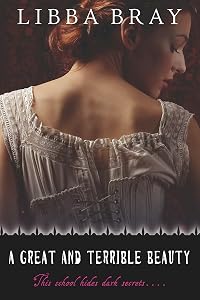
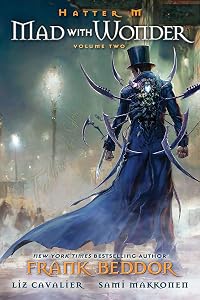
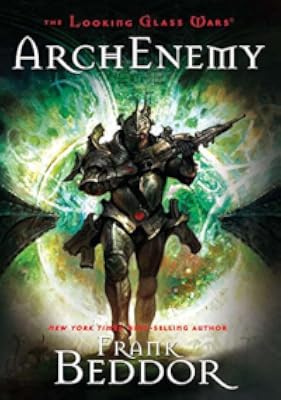
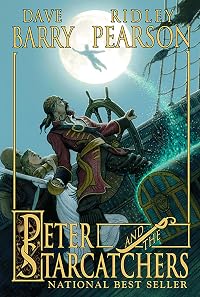
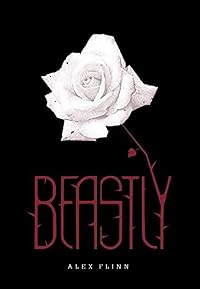
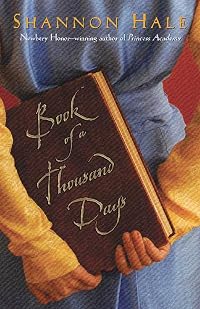
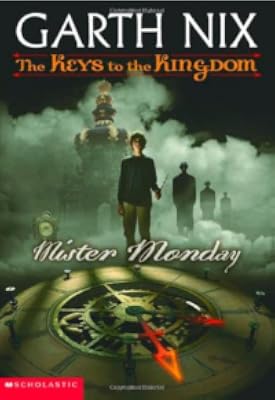
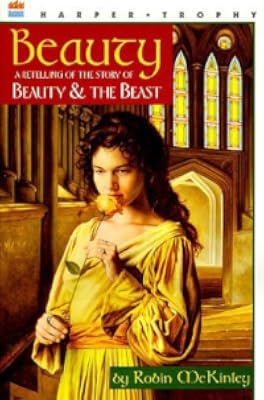
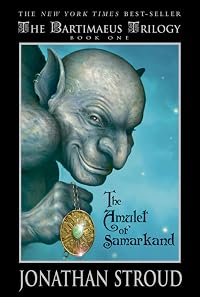

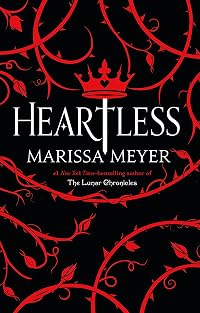
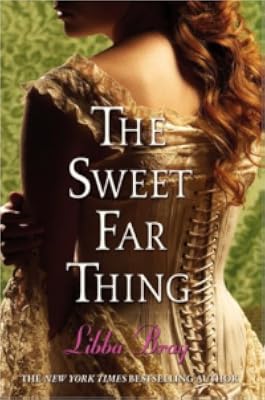

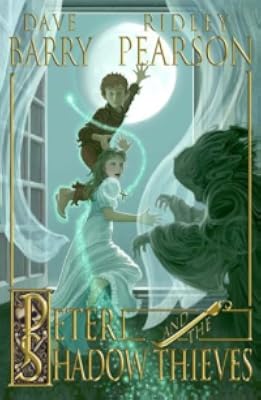
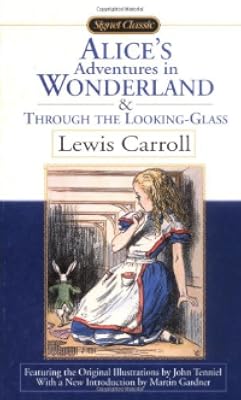
Member Recommendations
elbakerone Beddor takes an alternative look at Alice's story. Fans of the original may appreciate the new telling and fans of Beddor's reworking will likely enjoy Carroll's classic.
Also recommended by joyfulgirl, Kerian
121
PghDragonMan A slightly twisted version of Alice in Wonderland, perhaps even more off beat than the Tim Burton movie version.
23
Member Reviews
What an utter disappointment. The concept of a dark Wonderland is, of course, exhilarating, and the idea of fictional characters learning to grow up by association with the real world - particularly if they're children or teenagers - has a long and storied history in fiction.
Unfortunately, Frank Beddor is not really interested in these concepts, at least not from a literary perspective, and his writing style indicates a limited understanding of basic structural tenets of creative writing. As with most youth-oriented books that I read, I try to view it from the perspective of my cousins in that age group. This book, however, would barely satisfy them, written as it is in such a startlingly underplayed prose.
Beddor's main issues are show more threefold. First, his dialogue is woefully stilted, with all characters sounding like they walked out of the same Edwardian era children's book. Similar to my issues with the (overall more successful) Taran Wanderer series, characters speak in the same manner regardless of whether they are holding court or running from a maniacal killer. It severely limits audience engagement with the text, completely cutting side-swiping any attempts at paciness or narrative energy.
Second, the text has a bizarre approach to which parts of the narrative are crucial. While there are some beautiful ideas here (for instance, the Mad Hatter's decade spent searching for his mistress, where he becomes a kind of mythical figure in the lives of 19th century Europeans), many of the key character moments are rushed through (notably, young Alyss' relationship with Lewis Carroll) while we spend a tiring amount of time with the oppressed people back in Wonderland. I don't like to review works by saying what they should have done (honest, I don't!), but "The Looking Glass Wars" smacks of a missed opportunity to tell a cohesive story instead of a set of images.
Because, ultimately, that is the issue here. My third issue with the book encompasses all the problems (and occasional solid moments) mentioned above. Beddor wants to write a comic book or a graphic novel. There's a great concept here for a truly gorgeous visual world, one unifying Victorian decor with gothic fantasy. The story beats are adequate, if not extraordinary, but they would have made far more sense in a visual format. Instead, this feels as if a comic writer is trying to become a novelist by literally transferring the skills of one medium into another - and that almost never works.
I'm going to have to read a few of the rave reviews of this series in an attempt to understand what people see in this - perhaps they, too, have an overactive imagination and are able to overlay this empty husk of a story with some perceived depth from their own mind. I don't have any problem with readers doing that; we all have! (It's how many academics make a living, after all.) But it's always a shame when a book with an intriguing concept leaves me with such a sour taste. show less
Unfortunately, Frank Beddor is not really interested in these concepts, at least not from a literary perspective, and his writing style indicates a limited understanding of basic structural tenets of creative writing. As with most youth-oriented books that I read, I try to view it from the perspective of my cousins in that age group. This book, however, would barely satisfy them, written as it is in such a startlingly underplayed prose.
Beddor's main issues are show more threefold. First, his dialogue is woefully stilted, with all characters sounding like they walked out of the same Edwardian era children's book. Similar to my issues with the (overall more successful) Taran Wanderer series, characters speak in the same manner regardless of whether they are holding court or running from a maniacal killer. It severely limits audience engagement with the text, completely cutting side-swiping any attempts at paciness or narrative energy.
Second, the text has a bizarre approach to which parts of the narrative are crucial. While there are some beautiful ideas here (for instance, the Mad Hatter's decade spent searching for his mistress, where he becomes a kind of mythical figure in the lives of 19th century Europeans), many of the key character moments are rushed through (notably, young Alyss' relationship with Lewis Carroll) while we spend a tiring amount of time with the oppressed people back in Wonderland. I don't like to review works by saying what they should have done (honest, I don't!), but "The Looking Glass Wars" smacks of a missed opportunity to tell a cohesive story instead of a set of images.
Because, ultimately, that is the issue here. My third issue with the book encompasses all the problems (and occasional solid moments) mentioned above. Beddor wants to write a comic book or a graphic novel. There's a great concept here for a truly gorgeous visual world, one unifying Victorian decor with gothic fantasy. The story beats are adequate, if not extraordinary, but they would have made far more sense in a visual format. Instead, this feels as if a comic writer is trying to become a novelist by literally transferring the skills of one medium into another - and that almost never works.
I'm going to have to read a few of the rave reviews of this series in an attempt to understand what people see in this - perhaps they, too, have an overactive imagination and are able to overlay this empty husk of a story with some perceived depth from their own mind. I don't have any problem with readers doing that; we all have! (It's how many academics make a living, after all.) But it's always a shame when a book with an intriguing concept leaves me with such a sour taste. show less
I'll confess first thing that I did not finish this book. I had heard of it and thought it sounded fun, an expansion of Wonderland that would seek to preserve Carroll's wonderful cleverness and sense of random dreaminess. Well, it didn't.
The first problem is how the book thumbs its nose at the original story of Alice in Wonderland. The opening scene of this book portrays Charles Dodgson in a very ugly light, showing him as a liar and a thief. Beddor's whole premise is that Alice Liddell, Dodgson's muse, was actually a fugitive from Wonderland and was sorely disappointed with his "re-imagining" of her adventures. She calls him "cruel" for lying about her story, with some angry denunciations of the poetry. She thinks "he'd transformed show more her memories of a world alive with hope and possibility and danger into make-believe, the foolish stuff of children" (p. 3, my emphasis). Alice in Wonderland is, according to Alice, a "stupid, nonsensical book" (p. 4).
Wow, can't you just feel the respect for Dodgson here? Nice. You would think Beddor would show a little respect for the genius he's piggybacking. But no, to make his book work he has to make Dodgson look bad, so Beddor can tell the "real" story.
I can't get along well with a book that starts off by calling its source stupid, when that source has been an undisputed classic of children's literature for well over a century. Alice in Wonderland is not stupid, or nonsensical in a negative way; in fact, it's far more imaginative and clever than Beddor's lackluster, clichéd re-imagining could ever hope to be.
And Alice in Wonderland has far more interesting characters than The Looking Glass Wars. I started rolling my eyes when we read how the king loves his wife, the Queen, because of her (politically correct) strength and firm decisions — oh spare me. Lame! The characters have about as much dimension as paper dolls. Alyss is a brat and everyone around her is so stereotypical and boring, stock characters lifted ineptly from better works.
Don't even get me started on the abysmal prose. When we come to the first battle and Beddor starts writing about "adrenaline-induced war cries" and "agony-infused moans," I almost gave an agony-infused moan myself (p. 27). And these two doozies came in the same sentence, no less! You have to wonder if Beddor is TRYING to hurt his readers. Wouldn't "agonized moans" be so much better? "Agony-infused" makes me think of someone injecting agony into the moans with a needle. (Hand me that moan, would you? I've got to infuse it.) And the book is full of similar problems: jerky sentence structure, unintentionally funny word choices, and clichéd descriptions.
With the ugly disrespect for Charles Dodgson, the flat characters, and the horrible prose, I found I just couldn't force myself to keep going. It was quite a pity because I'd been looking forward to this series for awhile, and even waited until I had procured the second book before starting this one. That was a mistake! Both are going up on PaperBackSwap pronto, in hopes that someone else will be able to enjoy them. But I doubt it. show less
The first problem is how the book thumbs its nose at the original story of Alice in Wonderland. The opening scene of this book portrays Charles Dodgson in a very ugly light, showing him as a liar and a thief. Beddor's whole premise is that Alice Liddell, Dodgson's muse, was actually a fugitive from Wonderland and was sorely disappointed with his "re-imagining" of her adventures. She calls him "cruel" for lying about her story, with some angry denunciations of the poetry. She thinks "he'd transformed show more her memories of a world alive with hope and possibility and danger into make-believe, the foolish stuff of children" (p. 3, my emphasis). Alice in Wonderland is, according to Alice, a "stupid, nonsensical book" (p. 4).
Wow, can't you just feel the respect for Dodgson here? Nice. You would think Beddor would show a little respect for the genius he's piggybacking. But no, to make his book work he has to make Dodgson look bad, so Beddor can tell the "real" story.
I can't get along well with a book that starts off by calling its source stupid, when that source has been an undisputed classic of children's literature for well over a century. Alice in Wonderland is not stupid, or nonsensical in a negative way; in fact, it's far more imaginative and clever than Beddor's lackluster, clichéd re-imagining could ever hope to be.
And Alice in Wonderland has far more interesting characters than The Looking Glass Wars. I started rolling my eyes when we read how the king loves his wife, the Queen, because of her (politically correct) strength and firm decisions — oh spare me. Lame! The characters have about as much dimension as paper dolls. Alyss is a brat and everyone around her is so stereotypical and boring, stock characters lifted ineptly from better works.
Don't even get me started on the abysmal prose. When we come to the first battle and Beddor starts writing about "adrenaline-induced war cries" and "agony-infused moans," I almost gave an agony-infused moan myself (p. 27). And these two doozies came in the same sentence, no less! You have to wonder if Beddor is TRYING to hurt his readers. Wouldn't "agonized moans" be so much better? "Agony-infused" makes me think of someone injecting agony into the moans with a needle. (Hand me that moan, would you? I've got to infuse it.) And the book is full of similar problems: jerky sentence structure, unintentionally funny word choices, and clichéd descriptions.
With the ugly disrespect for Charles Dodgson, the flat characters, and the horrible prose, I found I just couldn't force myself to keep going. It was quite a pity because I'd been looking forward to this series for awhile, and even waited until I had procured the second book before starting this one. That was a mistake! Both are going up on PaperBackSwap pronto, in hopes that someone else will be able to enjoy them. But I doubt it. show less
I have never been interested in Lewis Carroll's books, Alice's Adventures in Wonderland and Through the Looking Glass. I saw the Disney movie, as I'm sure most kids in my peer group had, but the movie didn't make me want to read the books. When I grew older and went looking for books to read I picked up both books, gave them a look through and decided they weren't for me. The story just was too outlandish for me (which is saying something considering my reading tastes). I was fascinated by the Disney Channel show (Adventures in Wonderland), but that show was so very different from other shows of the time (Tweedle Dee and Tweedle Dum as hip hop artists for instance) that it was hard not to be interested I think.
Upon meeting the author at show more this past New York Comic Con however, I have revised my opinion slightly and read both books (to compare). Still not interested in the original novels, but it gave me a better appreciation of The Looking Glass Wars!
Princess Alyss Heart suffers quite a bit--though not so much physically, but more mentally and emotionally. Its understandable that she would want to fit in, after being so cruelly mocked for years and her one vindication--the book--just making matters worse, I don't blame her. Equally though I was relieved to see her not play the priss for too long once things settle back to normalcy. It would have been heartily annoying to have her go from such a lively, spirited young girl to a spoiled, bratty whiner.
Beddor certainly did his best to alter each familiar character with just the right twist so as to make you wonder how you ever saw them otherwise. Hatter Madigan for instance--or rather the Mad Hatter or Bibwit Harte--the White Rabbit or even Redd. Oh Redd. I really enjoyed her theatrics--so vicious, so petty, so imperfect, I loved her despite being the 'evil' of the book. I rather less enjoyed the Cat, her half-feline/half-human assassin (the Cheschire Cat). The Cheschire Cat was the only character of the original novel I liked even a little bit. The Caterpillar definitely stayed the same--right down to his nonsensical, stuffy and obnoxious ways.
The story moves at a quick pace, alternating event viewpoints from Alyss' adventures, to Hatter Madigan's search for her, to Redd's tyrannical rule and some time is spent on Dodge Anders (Alyss' childhood friend) and Jack of Diamonds (a worm of a boy who plays both sides) so we get a very well rounded view of things. We never see Redd alone, but then such a paranoid personage as herself wouldn't trust to be alone (who knows what her subordinates are scheming if she isn't there to watch?).
The end sets up for the next book, obviously as this is a trilogy, but is satisfactory in tying up the loose ends that could be tied up and giving us a glimpse of things to come. show less
Upon meeting the author at show more this past New York Comic Con however, I have revised my opinion slightly and read both books (to compare). Still not interested in the original novels, but it gave me a better appreciation of The Looking Glass Wars!
Princess Alyss Heart suffers quite a bit--though not so much physically, but more mentally and emotionally. Its understandable that she would want to fit in, after being so cruelly mocked for years and her one vindication--the book--just making matters worse, I don't blame her. Equally though I was relieved to see her not play the priss for too long once things settle back to normalcy. It would have been heartily annoying to have her go from such a lively, spirited young girl to a spoiled, bratty whiner.
Beddor certainly did his best to alter each familiar character with just the right twist so as to make you wonder how you ever saw them otherwise. Hatter Madigan for instance--or rather the Mad Hatter or Bibwit Harte--the White Rabbit or even Redd. Oh Redd. I really enjoyed her theatrics--so vicious, so petty, so imperfect, I loved her despite being the 'evil' of the book. I rather less enjoyed the Cat, her half-feline/half-human assassin (the Cheschire Cat). The Cheschire Cat was the only character of the original novel I liked even a little bit. The Caterpillar definitely stayed the same--right down to his nonsensical, stuffy and obnoxious ways.
The story moves at a quick pace, alternating event viewpoints from Alyss' adventures, to Hatter Madigan's search for her, to Redd's tyrannical rule and some time is spent on Dodge Anders (Alyss' childhood friend) and Jack of Diamonds (a worm of a boy who plays both sides) so we get a very well rounded view of things. We never see Redd alone, but then such a paranoid personage as herself wouldn't trust to be alone (who knows what her subordinates are scheming if she isn't there to watch?).
The end sets up for the next book, obviously as this is a trilogy, but is satisfactory in tying up the loose ends that could be tied up and giving us a glimpse of things to come. show less
This book was so much fun to read! I loved how Alyss (as she is called in this version) was stuck in our world, and she told her story to Lewis Carrol, but instead of the "truth" (which is the story that the novel describes), he comes out with "Alice's Adventures in Wonderland". What follows is a re-imagined, Steampunky (the card soldiers are mechanical) version of the classic story, told through the eyes of young Princess Alyss Heart (each of the ruling families in Wonderland are called Heart, Spade, Club, and Diamond). There's so many new and re-imagined elements in the story! Looking glasses are used to travel to different worlds! The (Chesire) Cat is an assassin! The Millinery is Wonderland's security force! (I could go on, but I show more don't want to give away all the cool stuff).My favorite character is Hatter Madigan, Alyss' bodyguard (bet you can guess which character he's supposed to be...). The Queen of Hearts takes shape in this story as Alyss' Aunt Redd, and she's such a delicious villain (read more abouther in the second book of the series, Seeing Redd). What really brings the story to life is the inclusion of several full-color paintings of the characters in the novel. I loved being able to fully imagine the characters as I was reading.
"The Looking Glass Wars" adds a whole new element to the classic story we thought we knew. It's fun figuring out which character in this version represents the classic characters. I actually found myself falling in love with these new characters more...
I highly recommend this book, and the rest of the Looking Glass Wars series! show less
"The Looking Glass Wars" adds a whole new element to the classic story we thought we knew. It's fun figuring out which character in this version represents the classic characters. I actually found myself falling in love with these new characters more...
I highly recommend this book, and the rest of the Looking Glass Wars series! show less
Thought you knew the story of Alice's Adventures in Wonderland? Well, think again, because that story was wrong.
The Looking Glass Wars is the first installment of Frank Beddor's clever retelling of Alice's Adventures in Wonderland and Through the Looking Glass. Here we meet Alyss Heart, heir to the throne of Wonderland, where all imagination in the universe is born from. On her seventh birthday, her deranged aunt, Redd Heart, storms Heart Palace, killing Alyss' father and mother, taking control of the kingdom that she feels is rightfully hers. Alyss' mother, Queen Genevieve, sends Alyss away with Hatter Madigan to the Pool of Tears, through which they escape to Earth, but are separated. Meanwhile, General Doppelganger and what few show more survivors that still back Alyss and White Imagination, begin their counterattacks against Redd and her forces of Black Imagination. Thinking Alyss dead, they called themselves Allyssians in tribute and for 13 years try to overthrow Redd.
During this time, Alyss is marooned on Earth, not knowing how to return to Wonderland and slowly loosing her powers of Imagination, where she is eventually adopted by the Lidells, and eventually she meets Charles Dodgson, who she feels will believe her tale when all others haven't. When he produces the book, Alice's Adventures Underground to her, she then realizes that he was her last hope, and begins to acclimate herself to life forever on Earth. Hatter Madigan eventually discovers here whereabouts and the two return to Wonderland, just in time to help reinvigorate the rebels and their fight against Redd.
The story is incredibly clever, and you will recognize all the characters from Lewis Carroll's stories here, but completely re-imagined. I love how Beddor takes Carroll's stories and completely reworks them into this civil war between the forces of White Imagination and Black Imagination in the first part of the book, then uses Alyss telling Charles Dodgson the story and his reworking this story into Alice's Adventures in Wonderland, and then Beddor taking the story even farther from there with Alyss' return to Wonderland and the eventual battle between her and Redd. It's a fast-paced story that moves right along almost immediately in the book and doesn't really let up throughout. Die hard Alice fans may or may not like the changes to the story, but as a huge fan of Carroll's original stories, I can honestly say that I loved these reworkings! show less
The Looking Glass Wars is the first installment of Frank Beddor's clever retelling of Alice's Adventures in Wonderland and Through the Looking Glass. Here we meet Alyss Heart, heir to the throne of Wonderland, where all imagination in the universe is born from. On her seventh birthday, her deranged aunt, Redd Heart, storms Heart Palace, killing Alyss' father and mother, taking control of the kingdom that she feels is rightfully hers. Alyss' mother, Queen Genevieve, sends Alyss away with Hatter Madigan to the Pool of Tears, through which they escape to Earth, but are separated. Meanwhile, General Doppelganger and what few show more survivors that still back Alyss and White Imagination, begin their counterattacks against Redd and her forces of Black Imagination. Thinking Alyss dead, they called themselves Allyssians in tribute and for 13 years try to overthrow Redd.
During this time, Alyss is marooned on Earth, not knowing how to return to Wonderland and slowly loosing her powers of Imagination, where she is eventually adopted by the Lidells, and eventually she meets Charles Dodgson, who she feels will believe her tale when all others haven't. When he produces the book, Alice's Adventures Underground to her, she then realizes that he was her last hope, and begins to acclimate herself to life forever on Earth. Hatter Madigan eventually discovers here whereabouts and the two return to Wonderland, just in time to help reinvigorate the rebels and their fight against Redd.
The story is incredibly clever, and you will recognize all the characters from Lewis Carroll's stories here, but completely re-imagined. I love how Beddor takes Carroll's stories and completely reworks them into this civil war between the forces of White Imagination and Black Imagination in the first part of the book, then uses Alyss telling Charles Dodgson the story and his reworking this story into Alice's Adventures in Wonderland, and then Beddor taking the story even farther from there with Alyss' return to Wonderland and the eventual battle between her and Redd. It's a fast-paced story that moves right along almost immediately in the book and doesn't really let up throughout. Die hard Alice fans may or may not like the changes to the story, but as a huge fan of Carroll's original stories, I can honestly say that I loved these reworkings! show less
The sheer awfulness of this book defies all description. Frank Beddor definitely wins first prize for smuggest author of the century, hands-down. Do you want to know how bad it was? It was worse than the Tim Burton film, that's how bad it was.
Has this so-called author even read the original books? Judging from the extreme bastardisation of them, probably not. I'm guessing he's probably skimmed through the first one a bit, watched the Disney film, got drunk and attempted to write an actual novel. And failed miserably.
Beddor's pathetic attempts at metafiction are soon forgotten. I was not for one minute convinced that there was any grain of truth in what he was saying, especially when he gets his facts wrong IN THE PROLOGUE. The Tweedles show more only appear in Through the Looking-Glass, not Alice's Adventures in Wonderland. Do the bloody research! And while he has done some research, he hasn't done nearly enough. Anyone up-to-date on Carrollian history can see through it easily enough.
Now, Beddor claims that his book contains graphic violence that may be unsettling for some readers. Apart from one solitary scene, it doesn't.
Beddor has made it clear he doesn't even like Carroll's books. So why bother deliberately insulting them and their fans? Beddor's smugness is disgusting, the way he barges in claiming his is the "true story of Wonderland" and Lewis Carroll's is inferior and false. And the way Dodgson is portrayed in the story... The less said of that the better.
Beddor has no knowledge of the books, their characters or themes. Many do not even appear, and when they do they barely even resemble the ones they were based on. Hatter Maddigan is for some reason a good guy. The Cheshire Cat is for some reason a bad guy. The White Knight (one of the most important characters) is depressingly wasted and characters like the Duchess do not even appear.
This book shall only be enjoyabe to those who have no knowledge of Wonderland whatsoever, as it shall otherwise cause extreme wallbangers the whole way through. Read a good Alice-inspired work instead, such as Pandora Hearts, Alice in Sunderland, Night of the Jabberwock or Automated Alice. Or the original books themselves.
Funny, isn't it, how a book that puts so much emphasis on the powers of imagination has so little imagination itself. show less
Has this so-called author even read the original books? Judging from the extreme bastardisation of them, probably not. I'm guessing he's probably skimmed through the first one a bit, watched the Disney film, got drunk and attempted to write an actual novel. And failed miserably.
Beddor's pathetic attempts at metafiction are soon forgotten. I was not for one minute convinced that there was any grain of truth in what he was saying, especially when he gets his facts wrong IN THE PROLOGUE. The Tweedles show more only appear in Through the Looking-Glass, not Alice's Adventures in Wonderland. Do the bloody research! And while he has done some research, he hasn't done nearly enough. Anyone up-to-date on Carrollian history can see through it easily enough.
Now, Beddor claims that his book contains graphic violence that may be unsettling for some readers. Apart from one solitary scene, it doesn't.
Beddor has made it clear he doesn't even like Carroll's books. So why bother deliberately insulting them and their fans? Beddor's smugness is disgusting, the way he barges in claiming his is the "true story of Wonderland" and Lewis Carroll's is inferior and false. And the way Dodgson is portrayed in the story... The less said of that the better.
Beddor has no knowledge of the books, their characters or themes. Many do not even appear, and when they do they barely even resemble the ones they were based on. Hatter Maddigan is for some reason a good guy. The Cheshire Cat is for some reason a bad guy. The White Knight (one of the most important characters) is depressingly wasted and characters like the Duchess do not even appear.
This book shall only be enjoyabe to those who have no knowledge of Wonderland whatsoever, as it shall otherwise cause extreme wallbangers the whole way through. Read a good Alice-inspired work instead, such as Pandora Hearts, Alice in Sunderland, Night of the Jabberwock or Automated Alice. Or the original books themselves.
Funny, isn't it, how a book that puts so much emphasis on the powers of imagination has so little imagination itself. show less
Summary: A retelling of Alice in Wonderland, with the pretense that Wonderland is real, and that one Mr. Charles Dodgson (Lewis Carrol) tamed the story down and turned it into a silly children's book. Alyss Heart, heir to the throne of Wonderland, is having her seventh birthday party when her banished Aunt Redd returns, killing Alyss's parents and seizing control. Alyss must flee for her life, winding up in our world, where she becomes Alice Liddell and forces herself to forget her previous life. However, Wonderland is slowly deteriorating under Redd's power, which is resisted only by a band of rebels, who must wait for Alyss to return, realize her full power, and reclaim the throne from her evil aunt.
Review: This book tries to do for show more Alice in Wonderland what Wicked did for The Wizard of Oz: remove the children's-story-fairy-tale aspects and make it into a real world. However, Wicked (more or less) succeeded at that whereas this book just... did not. The Looking Glass Wars suffered from exceedingly shallow characterizations, an overly facile resolution, a lack of a driving message, and an overabundance of "pointless imagination". There's a fine line to walk in the retelling of classic stories between changing not enough (boring, no point in doing a cover version that's the same as the original) and too much (risks tampering with parts that are good or essential). This book gleefully ignores that line as it goes skipping past; elements of Wonderland are changed, updated, and added seemingly just because they sounded cool, certainly not because they add anything to the plot.
This book kind of reads like it was written as a movie script - lots of fights and chases and explosions and pretty CGI effects in the background, while the more complex issues and emotions were quickly glossed over. I thought Alice's time spent in our world and her relationship with Dodge were the two most interesting (and mature) bits of the book, but whenever they started to get interesting, it'd cut back to another explosion. I wouldn't be at all surprised to see this optioned for a movie, and I'd probably go to see it, but in book form, it was lacking the complexity and depth (even considering that it was a YA novel) to really make it worthwhile.
Recommendation: Interesting idea and plenty of potential, but faulty execution. A quick read, but not one I'd really recommend if you're looking for anything beyond some Wonderland-themed fight scenes. show less
Review: This book tries to do for show more Alice in Wonderland what Wicked did for The Wizard of Oz: remove the children's-story-fairy-tale aspects and make it into a real world. However, Wicked (more or less) succeeded at that whereas this book just... did not. The Looking Glass Wars suffered from exceedingly shallow characterizations, an overly facile resolution, a lack of a driving message, and an overabundance of "pointless imagination". There's a fine line to walk in the retelling of classic stories between changing not enough (boring, no point in doing a cover version that's the same as the original) and too much (risks tampering with parts that are good or essential). This book gleefully ignores that line as it goes skipping past; elements of Wonderland are changed, updated, and added seemingly just because they sounded cool, certainly not because they add anything to the plot.
This book kind of reads like it was written as a movie script - lots of fights and chases and explosions and pretty CGI effects in the background, while the more complex issues and emotions were quickly glossed over. I thought Alice's time spent in our world and her relationship with Dodge were the two most interesting (and mature) bits of the book, but whenever they started to get interesting, it'd cut back to another explosion. I wouldn't be at all surprised to see this optioned for a movie, and I'd probably go to see it, but in book form, it was lacking the complexity and depth (even considering that it was a YA novel) to really make it worthwhile.
Recommendation: Interesting idea and plenty of potential, but faulty execution. A quick read, but not one I'd really recommend if you're looking for anything beyond some Wonderland-themed fight scenes. show less
Members
- Recently Added By
Lists

Best Fantasy Novels
821 works; 361 members

Parallel Novels
37 works; 6 members

Readers Guide to Steampunk
65 works; 1 member

SantaThing 2014 Gifts
299 works; 17 members

Great Audiobooks
96 works; 10 members

Alternative Alices
96 works; 4 members

Jean's Sci Fi/Fantasy Reading list
189 works; 12 members

Puffin Books 70th anniversary handbook recommendations
537 works; 10 members

Books Read in 2021
5,361 works; 113 members

Books Read in 2016
110 works; 1 member
Talk Discussions
Past Discussions
The Looking Glass Wars by Frank Beddor in Fairy Tales Retold (April 2009)
Author Information

24 Works 10,428 Members
Some Editions
Awards and Honors
Series

Work Relationships
Was inspired by
Has as a reference guide/companion
Has as a supplement
Common Knowledge
- Canonical title
- The Looking Glass Wars
- Original publication date
- 2004 (UK) (UK); 2006 (USA) (USA)
- People/Characters
- Alyss Heart; Dodge Anders; Hatter Madigan; Redd Heart; General Doppelganger; Genevieve Heart (show all 27); Bibwit Harte; The Cat; Alice Liddell; Lewis Carroll; Prince Leopold, Duke of Albany; King Nolan; Jack of Diamonds; The White Rook; The White Knight; Homberg Molly; Quigly Gaffer; The Lord of Diamonds; The Lady of Diamonds; The Lady of Spades; The Lord of Spades; The Lady of Clubs; The Lord of Clubs; Mrs. Liddell; Lorina Liddell; Edith Liddell; Dean Liddell
- Important places
- London, England, UK; Wonderland
- Important events
- Victorian Era; 19th century
- Dedication
- Dedicated to my niece
Sarah
for her sense of wonder - First words
- Everyone thought she had made it up, and she had tolerated more taunting and teasing from other children, more lectures and punishments from grown-ups, than any eleven-year-old should have to bear.
- Last words
- (Click to show. Warning: May contain spoilers.)"Isn't it wonderful?"
Classifications
Statistics
- Members
- 5,226
- Popularity
- 2,620
- Reviews
- 201
- Rating
- (3.71)
- Languages
- English, French, German, Spanish
- Media
- Paper, Audiobook, Ebook
- ISBNs
- 32
- ASINs
- 13