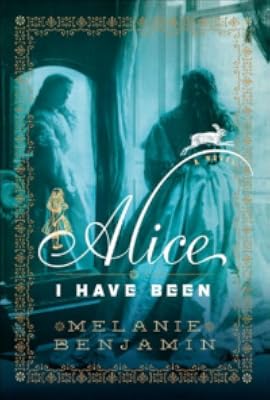
Alice I Have Been
by Melanie Benjamin
On This Page
Description
Fiction. Literature. Historical Fiction. HTML:BONUS: This edition contains an Alice I Have Been discussion guide and an excerpt from Melanie Benjamin's The Autobiography of Mrs. Tom Thumb.Few works of literature are as universally beloved as Alice’s Adventures in Wonderland. Now, in this spellbinding historical novel, we meet the young girl whose bright spirit sent her on an unforgettable trip down the rabbit hole–and the grown woman whose story is no less enthralling.
But oh my dear, show more I am tired of being Alice in Wonderland. Does it sound ungrateful?
Alice Liddell Hargreaves’s life has been a richly woven tapestry: As a young woman, wife, mother, and widow, she’s experienced intense passion, great privilege, and greater tragedy. But as she nears her eighty-first birthday, she knows that, to the world around her, she is and will always be only “Alice.” Her life was permanently dog-eared at one fateful moment in her tenth year–the golden summer day she urged a grown-up friend to write down one of his fanciful stories.
That story, a wild tale of rabbits, queens, and a precocious young child, becomes a sensation the world over. Its author, a shy, stuttering Oxford professor, does more than immortalize Alice–he changes her life forever. But even he cannot stop time, as much as he might like to. And as Alice’s childhood slips away, a peacetime of glittering balls and royal romances gives way to the urgent tide of war.
For Alice, the stakes could not be higher, for she is the mother of three grown sons, soldiers all. Yet even as she stands to lose everything she treasures, one part of her will always be the determined, undaunted Alice of the story, who discovered that life beyond the rabbit hole was an astonishing journey.
A love story and a literary mystery, Alice I Have Been brilliantly blends fact and fiction to capture the passionate spirit of a woman who was truly worthy of her fictional alter ego, in a world as captivating as the Wonderland only she could inspire. show less
Tags
Recommendations




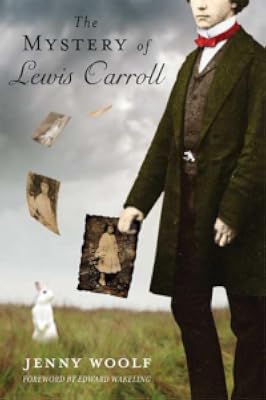




Member Recommendations
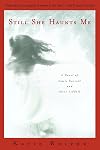
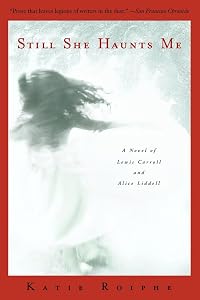
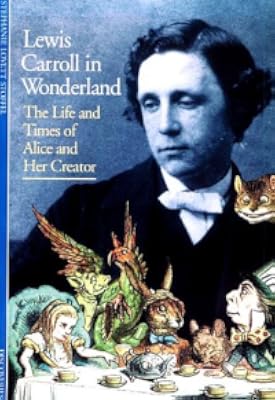
BookshelfMonstrosity These historical novels blend fact and fiction to re-imagine the life of Alice Pleasance Liddell, who inspired Lewis Carroll's Alice's Adventures in Wonderland. Both books speculate about the nature of Liddell's relationship with Carroll, but Katie Roiphe's is darker in tone.
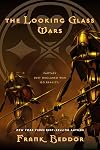
by anonymous user, BookshelfMonstrosity
by anonymous user
Member Reviews
A fictionalized account of the life of Alice Pleasance Hargreaves, nee Liddell, the woman generally supposed to be the inspiration for Alice in Wonderland. Her childhood friendship with Charles Dodgson, her brief romance with Prince Leopold, and her eventual marriage to Reginald Hargreaves are all part of this novel, but the thread that runs through the whole thing is the question of whether Dodgson behaved inappropriately towards her, and what caused the sudden break between him and the Liddell family when Alice was 11 years old.
This was a fascinating, sometimes uncomfortable read, skirting the edges of the historical record and playing around in the hazy places left by destroyed letters and missing diaries. It sent me down many show more Wikipedia rabbit holes (yes, see what I did there), and I feel like I learned a lot about several Victorian figures and the Oxford of the mid-1800s. I was also freshly irritated at Victorian social mores as embodied in Alice's mother and older sister, just as the author intended. If you enjoy reading about this period, or like to look behind the curtain at the creation of beloved literary classics, I would recommend this book to you. show less
This was a fascinating, sometimes uncomfortable read, skirting the edges of the historical record and playing around in the hazy places left by destroyed letters and missing diaries. It sent me down many show more Wikipedia rabbit holes (yes, see what I did there), and I feel like I learned a lot about several Victorian figures and the Oxford of the mid-1800s. I was also freshly irritated at Victorian social mores as embodied in Alice's mother and older sister, just as the author intended. If you enjoy reading about this period, or like to look behind the curtain at the creation of beloved literary classics, I would recommend this book to you. show less
I fell in love with Alice I Have Been straight away. Alice Liddell is the famed little girl who took a tumble down the rabbit hole. Benjamin has taken her life story and presented it in a fictional yet spellbinding way. Starting with Alice as a precocious seven year old who befriends a subtly sinister gentleman by the name of Charles Lutwidge Dodgson. Everyone turns their heads to ignore the slightly inappropriate relationship Alice has with stuttering Mr. Dodgson. I found myself asking what was Benjamin's motive for so much alluding to impropriety? There is a lot of trembling that goes on...It whispers of pedophilia and the strange this is, Alice, even at seven, is perceptive to know something is amiss. However by age ten, almost show more eleven she is the instigator, asking Mr. Dodgson to "wait" for her, a statement that is accompanied by the proverbial wink and nod. Years later, Alice is rumored to be involved with Prince Leopold and her childhood relationship with Mr. Dodgson is all but a faded memory...until the Prince needs to ask his mum for her approval to marry Alice. It is then all of the allusions to impropriety make sense. Everything begins to make sense. show less
Summary: In 1859, Alice Liddell was a 7-year-old girl, the middle daughter of the dean of Oxford University; Charles Dodgson was an eccentric math professor who would amuse Alice and her sisters by making up stories. Today, he's better known as Lewis Carroll, and she's the girl who inspired Alice in Wonderland. Alice I Have Been is told from the perspective of an 80-year-old Alice as she looks back over her life: the simple joys, great tragedy, and complex scandal that left their marks on her childhood; her romance with a prince; her unfulfilling marriage to another man; the sons she loved - and lost; and in the center of it all, the book, and her permanent role in literary history. As a girl, she dreamed of immortality and escape, only show more to find out as she grew up that both of those things have their costs, and that neither was quite what she'd dreamed of.
Review: I knew the basic facts of Alice Liddell's post-childhood life (love affair with Prince Leopold, marriage to Reginald Hargreaves, three children, etc.) before I read this book - facts I'd garnered mostly from the young-adult fantasy novel The Looking Glass Wars. What I hadn't known, however, was the story of Alice and Dodgson at Oxford. While there is not a huge amount of documentation of the critical events of the time - Alice's family burned her letters, and the relevant pages were torn from Dodgson's diary - Benjamin weaves a compelling story around the pieces that we do know: most critically, a provocative and disturbing photograph of Alice as a young girl.
The story, as Benjamin tells it, is not at all sexualized or about seduction - Alice is a little flirtatious, and trying to be older than she is, but is mostly still innocent. Dodgson is creepy, and inappropriate at times, but he didn't really seem aggressively creepy - I didn't ever think that he was actually a danger to her. However, the whole first half of the book was so perfused with the idea of pedophilia that it was just thoroughly unsettling, to a degree where I can't exactly say that I enjoyed reading it. That's not to knock Ms. Benjamin's skill; indeed, I think it's to her credit that a first novel could make me feel something so powerfully. Still, it makes it hard to say that I actually *liked* the book.
Overall, the book was very well done. The tone and dialogue reek of Victoriana without ever becoming stilted, ponderous or hard to read. Benjamin does an excellent job of bringing historical people and events to life, and of filling in the details, motivations, and inner lives while staying true to the facts. The themes of identity and immortality are interesting, and Alice Liddell is an excellent character to use to explore them, although I felt like at times there was a bit too much telling vs. showing, having Alice explain conclusions that the readers should have been allowed to draw for themselves.
So, while I can't say that I exactly enjoyed reading this (at least the first half; the second half was more enjoyable), it was definitely absorbing, with a fascinating story told well. 4 out of 5 stars.
Recommendation: Alice I Have Been should be on the list of folks who like literary history, historical fiction, or Victorian novels. show less
Review: I knew the basic facts of Alice Liddell's post-childhood life (love affair with Prince Leopold, marriage to Reginald Hargreaves, three children, etc.) before I read this book - facts I'd garnered mostly from the young-adult fantasy novel The Looking Glass Wars. What I hadn't known, however, was the story of Alice and Dodgson at Oxford. While there is not a huge amount of documentation of the critical events of the time - Alice's family burned her letters, and the relevant pages were torn from Dodgson's diary - Benjamin weaves a compelling story around the pieces that we do know: most critically, a provocative and disturbing photograph of Alice as a young girl.
The story, as Benjamin tells it, is not at all sexualized or about seduction - Alice is a little flirtatious, and trying to be older than she is, but is mostly still innocent. Dodgson is creepy, and inappropriate at times, but he didn't really seem aggressively creepy - I didn't ever think that he was actually a danger to her. However, the whole first half of the book was so perfused with the idea of pedophilia that it was just thoroughly unsettling, to a degree where I can't exactly say that I enjoyed reading it. That's not to knock Ms. Benjamin's skill; indeed, I think it's to her credit that a first novel could make me feel something so powerfully. Still, it makes it hard to say that I actually *liked* the book.
Overall, the book was very well done. The tone and dialogue reek of Victoriana without ever becoming stilted, ponderous or hard to read. Benjamin does an excellent job of bringing historical people and events to life, and of filling in the details, motivations, and inner lives while staying true to the facts. The themes of identity and immortality are interesting, and Alice Liddell is an excellent character to use to explore them, although I felt like at times there was a bit too much telling vs. showing, having Alice explain conclusions that the readers should have been allowed to draw for themselves.
So, while I can't say that I exactly enjoyed reading this (at least the first half; the second half was more enjoyable), it was definitely absorbing, with a fascinating story told well. 4 out of 5 stars.
Recommendation: Alice I Have Been should be on the list of folks who like literary history, historical fiction, or Victorian novels. show less
Alice Pleasance Liddell Hargreaves never chose to be "The Real Alice." I have to suspect, though, that she would have preferred what really happened over what is described in this book. At least what really happened was, well, real.
Disclaimer: I am autistic, and I don't understand why anyone would bother with an historical novel when there are actual facts to gather. Having read sixteen actual scholarly volumes about Charles Dodgson, this is the first novel I've read on the subject.
But the fact that I'm autistic is relevant, because the evidence is strong that Dodgson was autistic also --although he, of course, had never even heard of the condition, which had not been described in his lifetime. But it is the autism that explains the show more story of Dodgson and Alice. Or, rather, it does not explain what happened on that horrid day in 1863 that cost Dodgson so deeply; we will never know that. But it does explain why he went on to publish Alice's book, and the many years of depression he suffered, and the years he spent trying to win back her friendship.
Part of the problem is just the general air of non-historicality about this book. The narrator of Alice I Have Been is clearly not a woman brought up in upper class circumstances in Victorian England. She isn't. To take just one minor example, on p. 226 we encounter the phrase "Fess up." This phrase is attested in England -- now. But it is an Americanism (first found in the 1840s), and remained colloquial long after the time it is used in the book. There are many similar instances -- such as an indirect allusion to A. E. Housman's poetry (p. 157) before Housman wrote it!
And there are factual errors. Through the Looking Glass is dedicated to Alice Liddell, but Alice's Adventures in Wonderland, contrary to p. 165, is properly dedicated to all of the "Cruel Three" -- Lorina, Alice, and Edith Liddell. It is only later that Charles Dodgson seems to have concentrated all his attention on Alice. And while author Benjamin admits to having redated Dodgson's last photo of Alice, she doesn't seem to have noticed that the photo set involved Lorina Liddell the younger, not Lorina the older. And on page 223, the mother is reported to have regarded Alice as not good enough to marry royalty. But Mother Liddell was known as "the Kingfisher" because of her attempts to snag the best husbands she could! And that "secret" photo of "The Beggar Child" -- it was no secret; a contemporary called it the most beautiful photograph ever taken!
Being autistic, I want to keep listing all the places where this book departs from reality. Suffice it to say that there are many. But there is at least one that people who read the book should be aware of: In my edition at least, there is a photo preceding chapter seven of Alice Liddell as a young woman. The implication is that it is Dodgson's last photo of her. But it isn't; that photo is by Julia Margaret Cameron (and, frankly, it doesn't look much like the Alice we see in other photos of this period).
So what really did happen between Dodgson and Alice? It seems pretty clear that Dodgson felt an extremely intense friendship toward the girl young enough to be his daughter -- many people with autism have such friendships. (I know, because I do -- and I've suffered some of the same punishments as Dodgson suffered.) It isn't quite like being in love, but because normal people don't feel these sorts of friendships, it looked like it to others. At some point, he made a gaffe (one scholar speculated that Alice once made a joke about wanting to marry "Uncle Charles," and he didn't deny it fast enough, although I think it more likely that he had an autistic meltdown). The situation escalated, as conflicts involving people with autism often do, and eventually he was exiled from the Liddell family. He never ceased trying, incompetently, to win them back, because that's what people with autism do. But it broke his creativity for many years; it wasn't until he met Gertrude Chataway that he was able to produce The Hunting of the Snark, and that really was his last hurrah.
Is this a good novel? I haven't the skills to tell. I can categorically state that it is not good history. For those who want to find out something more reliable, there are two significant books about Alice (not just one, as Benjamin implies in her afterword): The Real Alice, by Anne Clark (which is, however, much too pro-Dodgson) and Beyond the Looking Glass: Reflections of Alice and Her Family, by Colin Gordon. The best biography of Dodgson is still probably Morton N. Cohen's Lewis Carroll: A Biography, although it is too kind to Dodgson and a little out-of-date (we have yet to see a biography based on the recognition of Dodgson's autism, although the evidence is very strong).
Alice Liddell was a genuinely fascinating woman in her own right. Someday, someone will truly write her story. show less
Disclaimer: I am autistic, and I don't understand why anyone would bother with an historical novel when there are actual facts to gather. Having read sixteen actual scholarly volumes about Charles Dodgson, this is the first novel I've read on the subject.
But the fact that I'm autistic is relevant, because the evidence is strong that Dodgson was autistic also --although he, of course, had never even heard of the condition, which had not been described in his lifetime. But it is the autism that explains the show more story of Dodgson and Alice. Or, rather, it does not explain what happened on that horrid day in 1863 that cost Dodgson so deeply; we will never know that. But it does explain why he went on to publish Alice's book, and the many years of depression he suffered, and the years he spent trying to win back her friendship.
Part of the problem is just the general air of non-historicality about this book. The narrator of Alice I Have Been is clearly not a woman brought up in upper class circumstances in Victorian England. She isn't. To take just one minor example, on p. 226 we encounter the phrase "Fess up." This phrase is attested in England -- now. But it is an Americanism (first found in the 1840s), and remained colloquial long after the time it is used in the book. There are many similar instances -- such as an indirect allusion to A. E. Housman's poetry (p. 157) before Housman wrote it!
And there are factual errors. Through the Looking Glass is dedicated to Alice Liddell, but Alice's Adventures in Wonderland, contrary to p. 165, is properly dedicated to all of the "Cruel Three" -- Lorina, Alice, and Edith Liddell. It is only later that Charles Dodgson seems to have concentrated all his attention on Alice. And while author Benjamin admits to having redated Dodgson's last photo of Alice, she doesn't seem to have noticed that the photo set involved Lorina Liddell the younger, not Lorina the older. And on page 223, the mother is reported to have regarded Alice as not good enough to marry royalty. But Mother Liddell was known as "the Kingfisher" because of her attempts to snag the best husbands she could! And that "secret" photo of "The Beggar Child" -- it was no secret; a contemporary called it the most beautiful photograph ever taken!
Being autistic, I want to keep listing all the places where this book departs from reality. Suffice it to say that there are many. But there is at least one that people who read the book should be aware of: In my edition at least, there is a photo preceding chapter seven of Alice Liddell as a young woman. The implication is that it is Dodgson's last photo of her. But it isn't; that photo is by Julia Margaret Cameron (and, frankly, it doesn't look much like the Alice we see in other photos of this period).
So what really did happen between Dodgson and Alice? It seems pretty clear that Dodgson felt an extremely intense friendship toward the girl young enough to be his daughter -- many people with autism have such friendships. (I know, because I do -- and I've suffered some of the same punishments as Dodgson suffered.) It isn't quite like being in love, but because normal people don't feel these sorts of friendships, it looked like it to others. At some point, he made a gaffe (one scholar speculated that Alice once made a joke about wanting to marry "Uncle Charles," and he didn't deny it fast enough, although I think it more likely that he had an autistic meltdown). The situation escalated, as conflicts involving people with autism often do, and eventually he was exiled from the Liddell family. He never ceased trying, incompetently, to win them back, because that's what people with autism do. But it broke his creativity for many years; it wasn't until he met Gertrude Chataway that he was able to produce The Hunting of the Snark, and that really was his last hurrah.
Is this a good novel? I haven't the skills to tell. I can categorically state that it is not good history. For those who want to find out something more reliable, there are two significant books about Alice (not just one, as Benjamin implies in her afterword): The Real Alice, by Anne Clark (which is, however, much too pro-Dodgson) and Beyond the Looking Glass: Reflections of Alice and Her Family, by Colin Gordon. The best biography of Dodgson is still probably Morton N. Cohen's Lewis Carroll: A Biography, although it is too kind to Dodgson and a little out-of-date (we have yet to see a biography based on the recognition of Dodgson's autism, although the evidence is very strong).
Alice Liddell was a genuinely fascinating woman in her own right. Someday, someone will truly write her story. show less
Alice I Have Been is a novel recounting the life of real Alice as it might have been. It is told by Alice herself, who is now eighty eight years old with a baggage of experiences that shaped her whole life. The author takes us through the childhood years when Alice, together with her two sisters lived in Oxford in the second half of 19th century. Alice was a wild, nonconformist child who preferred spending afternoons with beloved Mr. Dodgson to sitting quietly and learning the etiquette of young girls. Alice's childhood is privileged and mostly happy until things get out of control, until tragedy strikes and one life comes to an end as another begins. We accompany Alice on her real adventures as she innocently contends with her older show more sister Ina for the affection of Mr. Dodgson, as she is being loved and courted by a member of royal family, and as she finally gets to live away from her critical mother and from the illusion of dubious fame as Alice in Wonderland.
I really had mixed feelings while reading the book. I admit, I was caught under the spell of Ms. Benjamin's writing. I think she truly captured the life Alice may have lived, at least I didn't once question it and that's about as much as you can do in judging the authenticity in historical fiction. Most of the characters were real, most of events in Alice's life were also real and by the end of the book I felt that real Alice had a lot richer life than what Lewis Carroll imagined for her. What caused me to feel ambivalent in the end was that my image of Lewis Carroll as this innocent, lovable almost Santa Claus-like person crumbled and I wasn't ready for that. There appeared to be some gossip of a scandal concerning young Miss Alice and Mr. Dodgson and looking at the photographs taken by him, I have to say that there is indeed some impropriety in them. I don't want to come out and say that Lewis Carroll was a pedophile, but there certainly seemed to be more to his love of children than I originally thought. But that's really nothing to do with the author's talent. I think that Melanie did a great job by subtly portraying this relationship between a girl and an adult that might or might not have had any sexual undertones.
The second half of the book and second half of Alice's life is what I enjoyed the most. It was the most emotional for me and I could really sympathize with this young girl and then a wife and a mother just trying to get away from forever being Alice in Wonderland and to build a life in which she is known, loved and respected as a real woman and not a child from a story. I even caught myself admiring this strong character and wondering if that's who she really was. Life didn't spare Alice misery, tears and tragedy but life was also good to her in many ways. She emerged from a scandal and from a broken heart as a different woman who knew what she wanted and how to be finally happy. It was truly an adventure to read Alice I Have Been where many emotions were evoked and that's what I think makes for a story worth reading. show less
I really had mixed feelings while reading the book. I admit, I was caught under the spell of Ms. Benjamin's writing. I think she truly captured the life Alice may have lived, at least I didn't once question it and that's about as much as you can do in judging the authenticity in historical fiction. Most of the characters were real, most of events in Alice's life were also real and by the end of the book I felt that real Alice had a lot richer life than what Lewis Carroll imagined for her. What caused me to feel ambivalent in the end was that my image of Lewis Carroll as this innocent, lovable almost Santa Claus-like person crumbled and I wasn't ready for that. There appeared to be some gossip of a scandal concerning young Miss Alice and Mr. Dodgson and looking at the photographs taken by him, I have to say that there is indeed some impropriety in them. I don't want to come out and say that Lewis Carroll was a pedophile, but there certainly seemed to be more to his love of children than I originally thought. But that's really nothing to do with the author's talent. I think that Melanie did a great job by subtly portraying this relationship between a girl and an adult that might or might not have had any sexual undertones.
The second half of the book and second half of Alice's life is what I enjoyed the most. It was the most emotional for me and I could really sympathize with this young girl and then a wife and a mother just trying to get away from forever being Alice in Wonderland and to build a life in which she is known, loved and respected as a real woman and not a child from a story. I even caught myself admiring this strong character and wondering if that's who she really was. Life didn't spare Alice misery, tears and tragedy but life was also good to her in many ways. She emerged from a scandal and from a broken heart as a different woman who knew what she wanted and how to be finally happy. It was truly an adventure to read Alice I Have Been where many emotions were evoked and that's what I think makes for a story worth reading. show less
It's pretty funny that this month I have read "Still Alice" and now have just completed "Alice I Have Been" . . .I'm not sure I ever read a book with the word Alice in the title since Alice in Wonderland, not to mention two books in which the title describes Alice in a state of being.
I digress.
This book is a fictionalized autobiography of Alice Pleasance Liddell, the inspiration for Lewis Carroll's Alice in Wonderland. We meet Alice at three pivotal periods of her life: childhood, young adulthood, and elderly Alice.
In my mind, the writing of this story is akin to a beautiful woman dressed in an overcoat. You can see she is beautiful, and you are basically dying for her to remove her coat so you can see if she's really as gorgeous as show more you think. And she won't take off the darned coat. The writing just aches with suspense even though the story is truly a simple one. The first section raises the question of whether Carroll is in fact a pedophile, and it does it without one ounce of unnecessary graphic description . . .yet, you are on the edge of your seat with concern for Alice.
My only issue was that the first two segments were so well done and engaging that the third segment paled a bit in comparison. It felt a bit rushed as we fast forward to Alice in her eighties and that detaches the reader a bit from the character we've really grown to care about.
The bottom line is Alice's life is a far cry from Wonderland, and I found it just as fascinating as the story she inspired. show less
I digress.
This book is a fictionalized autobiography of Alice Pleasance Liddell, the inspiration for Lewis Carroll's Alice in Wonderland. We meet Alice at three pivotal periods of her life: childhood, young adulthood, and elderly Alice.
In my mind, the writing of this story is akin to a beautiful woman dressed in an overcoat. You can see she is beautiful, and you are basically dying for her to remove her coat so you can see if she's really as gorgeous as show more you think. And she won't take off the darned coat. The writing just aches with suspense even though the story is truly a simple one. The first section raises the question of whether Carroll is in fact a pedophile, and it does it without one ounce of unnecessary graphic description . . .yet, you are on the edge of your seat with concern for Alice.
My only issue was that the first two segments were so well done and engaging that the third segment paled a bit in comparison. It felt a bit rushed as we fast forward to Alice in her eighties and that detaches the reader a bit from the character we've really grown to care about.
The bottom line is Alice's life is a far cry from Wonderland, and I found it just as fascinating as the story she inspired. show less
Melanie Benjamin's ALICE I HAVE BEEN is a fictionalized account of the life of Alice Liddell Hargreaves, the real "Alice" behind Lewis Carroll's (aka Charles Dodgson) ALICE IN WONDERLAND. The real nature of the relationship between the child Alice and the Oxford Don Charles Dodgson is a one-hundred and fifty-year old mystery. Until Alice was eleven years old, Dodgson was a frequent visitor at her household and would often take Alice and her sisters on outings. Then there was a mysterious break. The facts are sketchy, and the true nature of this break has been speculated upon ever since by historians and biographers. The explanations range from the innocent to the chilling.
Benjamin gives us a fictionalized first person account based on show more her speculation after researching the scant known facts. I don't think I'm giving anything away when I state that her choice is a reasonable middle ground between the more benign and salacious extremes. Other fictionalizations have taken more polarizing approaches; I personally found Katie Roiphe's STILL SHE HAUNTS ME to be horrifying, if just as likely true. Benjamin's version, however, has a certain ring of truth to it, perhaps because she gives Alice a voice that seems to fit the girl in the Carroll stories.
Benjamin's Alice begins as a Victorian age child of privilege with a precocious attitude ill fitted to the age. She grows into a Victorian matron still chafing at her boundaries. Still, this Alice is firmly a product of her time and class and it can take some getting used to for a modern reader. The adult Alice will be smothering under the layers of restrictions a woman had to endure at the time, then turn around and complain about the servants getting above their station. It can be off-putting, but Benjamin does such a good job of ensconcing Alice in her time and place that the reader can understand the mindset. I know I never had a moment when I felt the privilege Alice enjoyed came even close to making up for the humiliating limitations of the role she was trapped in. And Alice's voice rang true to the little girl we know, except the bizarre Wonderland is replaced with the equally eccentric Victorian age.
Unlike the stories, there is ultimately no way out for this Alice. For all the privilege, her life was a hard one beset by tragedy. Oddly, the tragedies involving life and death aren't the ones that seem the most hurtful. The less lethal but more unfair tragedies are the most painful to witness, and it is without question that the adult Alice suffered for whatever it was that happened between her and Dodgson when she was a child. That a child victim was seen as marked is outrageous to a modern sensibility, and it boils the blood as a reader. Benjamin does a masterful job of making this point; whether the mysterious incident was innocent or severe, innocent Alice was marked by it for life. As for Dodgson, we'll never really know if he was a perpetrator who escaped sufficient punishment, or an innocent victim of the times like Alice herself. One way or another, this is a must read for Wonderland addicts. show less
Benjamin gives us a fictionalized first person account based on show more her speculation after researching the scant known facts. I don't think I'm giving anything away when I state that her choice is a reasonable middle ground between the more benign and salacious extremes. Other fictionalizations have taken more polarizing approaches; I personally found Katie Roiphe's STILL SHE HAUNTS ME to be horrifying, if just as likely true. Benjamin's version, however, has a certain ring of truth to it, perhaps because she gives Alice a voice that seems to fit the girl in the Carroll stories.
Benjamin's Alice begins as a Victorian age child of privilege with a precocious attitude ill fitted to the age. She grows into a Victorian matron still chafing at her boundaries. Still, this Alice is firmly a product of her time and class and it can take some getting used to for a modern reader. The adult Alice will be smothering under the layers of restrictions a woman had to endure at the time, then turn around and complain about the servants getting above their station. It can be off-putting, but Benjamin does such a good job of ensconcing Alice in her time and place that the reader can understand the mindset. I know I never had a moment when I felt the privilege Alice enjoyed came even close to making up for the humiliating limitations of the role she was trapped in. And Alice's voice rang true to the little girl we know, except the bizarre Wonderland is replaced with the equally eccentric Victorian age.
Unlike the stories, there is ultimately no way out for this Alice. For all the privilege, her life was a hard one beset by tragedy. Oddly, the tragedies involving life and death aren't the ones that seem the most hurtful. The less lethal but more unfair tragedies are the most painful to witness, and it is without question that the adult Alice suffered for whatever it was that happened between her and Dodgson when she was a child. That a child victim was seen as marked is outrageous to a modern sensibility, and it boils the blood as a reader. Benjamin does a masterful job of making this point; whether the mysterious incident was innocent or severe, innocent Alice was marked by it for life. As for Dodgson, we'll never really know if he was a perpetrator who escaped sufficient punishment, or an innocent victim of the times like Alice herself. One way or another, this is a must read for Wonderland addicts. show less
Members
- Recently Added By
Published Reviews
added by nancyewhite
added by nancyewhite
Lists

Historical Fiction
889 works; 91 members

Historical Fiction Lovers
88 works; 4 members

Authors from the United States
245 works; 3 members
Author Information

13 Works 7,659 Members
Melanie Benjamin was born in Indianapolis, Indiana and attended college there. She has been an avid reader all her life and firmly believes that a lifetime of reading is the best education a writer can have. After college Melanie married and moved to the Chicago area to raise her children, but the desire to write was always there in the show more background. Soon she began writing for local magazines and newspapers before venturing into fiction. As Melanie Hauser she published two contemporary novels. Now writing as Melanie Benjamin, she's incorporated her passion for history and biography into ALICE I HAVE BEEN her first historical novel; THE AUTOBIOGRAPHY OF MRS. TOM THUMB is her second, and was published July 2011. Her book,The Aviator's Wife, made the New York Times bestseller list in 2013. The Swans of Fifth Avenue made the iBooks best seller list in 2016. Melanie and her family still live in the Chicago area where she enjoys writing, taking long walks, and gardening. (Bowker Author Biography) show less
Some Editions
Work Relationships
Was inspired by
Common Knowledge
- Canonical title
- Alice I Have Been
- Original publication date
- 2010-01-12
- People/Characters
- Alice Liddell (Alice Pleasance Liddell); Lorina Liddell (sister of Alice Liddell); Edith Liddell; Charles Dodgson / Lewis Carroll; John Ruskin; Prince Leopold, Duke of Albany (show all 27); Harry Liddell; Miss Prickett; Caryl Hargreaves; Alan Hargreaves; Rex Hargreaves; Phoebe; Edwin Dodgson; Rhoda Liddell; Albert Liddell; Robinson Duckworth; Dinah; Lord Newry; Lionel Liddell; Violet Liddell; Eric Liddell; William Skene; Aubrey Harcourt; Victoria, Queen of the United Kingdom; Albert, Prince Consort; Reginald Hargreaves; Peter Llewelyn-Davies
- Important places
- Christ Church, University of Oxford, Oxford, Oxfordshire, England, UK; University of Oxford, Oxford, Oxfordshire, England, UK; Oxford, Oxfordshire, England, UK; Oxfordshire, England, UK
- Important events
- World War I (1914 | 1918)
- Dedication
- To Nic, for leading me to the Rabbit Hole
- First words
- But oh my dear, I am tired of being Alice in Wonderland. Does it sound ungrateful? It is. Only I do get tired.
- Quotations
- I suppose, at some point, we all have to decide which memories--real or otherwise--to hold on to, and which ones to let go.
- Last words
- (Click to show. Warning: May contain spoilers.)Alice I have been.
- Blurbers
- Allen, Sarah Addison; King, Laurie R.; Barron, Stephanie; Wolff, Isabel; Vreeland, Susan
Classifications
Statistics
- Members
- 1,666
- Popularity
- 13,423
- Reviews
- 156
- Rating
- (3.70)
- Languages
- 5 — Dutch, English, German, Italian, Portuguese
- Media
- Paper, Audiobook, Ebook
- ISBNs
- 13
- ASINs
- 11
