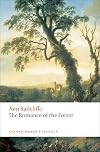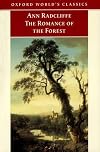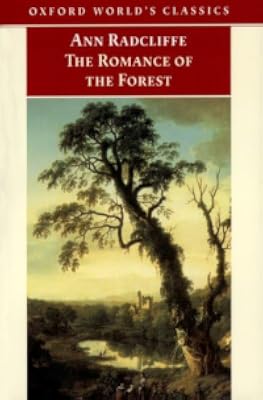
The Romance of the Forest
by Ann Radcliffe
On This Page
Description
Ann Radcliffe's The Romance of the Forest, first published in 1791, is the epitome of the Gothic novel: a beautiful, orphaned heiress, a dashing hero, a dissolute, aristocratic villain and a ruined abbey deep in a great forest are combined by the author in a tale of suspense where danger lurks behind every secret trap-door. Reprinted four times between 1791 and 1795 and satirised as represented of the Gothic genre by Jane Austen in Northanger Abbey, Radcliffe's tense masterpiece, in which show more the heroine is afraid even to look in the mirror for fear of what she might see behind her, established her reputation as a writer and her brilliant descriptions of both characters and scenes serve to create the perfect atmosphere for a novel packed with emotional intensity. show lessTags
Recommendations








Member Reviews
Look, nothing is ever going to live up to the rollicking and titillating Gothic romp The Monk. But there is something to be enjoyed in Ann Radcliffe's wholesome and blandly poetic style, even if there is a lot of sighing and tears and fainting. So much fainting. And the obligatory skeleton. And riches beyond compare at the very end. I do think that Adeline as a protagonist demonstrates much more agency and interiority than the other fairly insipid heroines that populate Gothic tales. For this move towards feminism alone, I give this 4, when it really is closer to a 3.5. Definitely less dramatic and lurid than The Mysteries of Udolpho.
To me, the fun of a gothic romance lies in all the absurd and unlikely coincidences that arise in the course of the story. The Romance of the Forest does possess these, especially at the end, but I definitely wish there'd been less...Romanticism...along the way.
At final count, variations on the word "sublime"—because no other word will do when you're writing something Romantic!—number 31 throughout the novel. That's 31 instances of Radcliffe diving into the Romantic when maybe she didn't really need to.
And variations on the words "weep" or "tears"? 148! (Not counting that one time when a willow was doing the weeping.) Just think how much tighter the pacing of the book would have been if even half of these overwrought moments of show more horror and grief and despair and longing (etc., etc.) had been edited out.
Alas, as a modern day reader, I wanted a little more action. But if I'd read this when it came out? The lamentations might still have aggravated me, but I would've been penning the Georgian equivalent of fanfiction and sharing it with anyone who would read it. show less
At final count, variations on the word "sublime"—because no other word will do when you're writing something Romantic!—number 31 throughout the novel. That's 31 instances of Radcliffe diving into the Romantic when maybe she didn't really need to.
And variations on the words "weep" or "tears"? 148! (Not counting that one time when a willow was doing the weeping.) Just think how much tighter the pacing of the book would have been if even half of these overwrought moments of show more horror and grief and despair and longing (etc., etc.) had been edited out.
Alas, as a modern day reader, I wanted a little more action. But if I'd read this when it came out? The lamentations might still have aggravated me, but I would've been penning the Georgian equivalent of fanfiction and sharing it with anyone who would read it. show less
This novel was received to critical acclaim on publication, and it has certainly held up well; as an early example of the gothic style, it's excellent. Creepy abbey with dark mysterious chambers, a manuscript written by a secret prisoner, lots of mistaken identities, &c. Good stuff, and some really well-handled suspenseful moments and unexpected twists, too.
While fleeing Paris, conman La Motte is forced to take under his wing Adeline, on the run from her father, who is trying to force her into becoming a nun.
Although the effects of scenery on people's moods are important all through the book, the author really goes overboard with the travelogue sections of the third volume, apparently based on travel books of the time. This striving for geographical realism is odd given how unrealistic the people are.
Although the effects of scenery on people's moods are important all through the book, the author really goes overboard with the travelogue sections of the third volume, apparently based on travel books of the time. This striving for geographical realism is odd given how unrealistic the people are.
'It is the first proof of a superior mind to liberate itself from prejudices of country, or of education.' (222)
I read this because it was suggested to me that in the works of Ann Radcliffe and Maria Edgeworth I might find those female scientists I often claim did not exist in fiction until the 1880s. Well, I don't think they're to be found in this Gothic novel, either. Adeline may be educated in what we now call sciences, and even in clear thinking, but she is by no means a scientist, or even a (wo)man of science, and her clear thinking isn't linked to any kind of scientific training.
Outside of the science stuff, I didn't find much to enjoy here. Some mildly atmospheric bits, but man much of the rest of it is tedious. Hurry up show more Victorian realism, make novels palatable. show less
I read this because it was suggested to me that in the works of Ann Radcliffe and Maria Edgeworth I might find those female scientists I often claim did not exist in fiction until the 1880s. Well, I don't think they're to be found in this Gothic novel, either. Adeline may be educated in what we now call sciences, and even in clear thinking, but she is by no means a scientist, or even a (wo)man of science, and her clear thinking isn't linked to any kind of scientific training.
Outside of the science stuff, I didn't find much to enjoy here. Some mildly atmospheric bits, but man much of the rest of it is tedious. Hurry up show more Victorian realism, make novels palatable. show less
This may possibly be my last Ann Radcliffe novel. The enjoyment of The Romance of the Forest was much greater than Mysteries of Udolpho, but her novels are SO incredibly exhausting to read. The pace of The Romance of the Forest was quicker and more action packed than MOU, and the characters seemed much better written. Not too bad, just took forever.
This was a pleasant diversion, and interesting as a look into gothic fiction of the eighteenth century, but it was also rather ridiculous at quite a few points. Not a bad piece of entertainment, but aside from historical value, not something I see as a great deal more or which I'll ever go back to.
Members
- Recently Added By
Lists

Lovecraft's 'Supernatural Horror in Literature' Reading List
216 works; 8 members

To Read - Literature / Fiction
26 works; 1 member

Recommended Horror and Dark Fiction by Women
81 works; 13 members
Author Information

58+ Works 6,678 Members
Ann Radcliffe was born Ann Ward in England on July 9, 1764. She was the only child of William Ward and Anne Oates Ward. In 1788 she married William Radcliffe. They had no children. Ann published The Castles of Athlin and Dunbayne in 1789. Other works include A Sicilian Romance, The Romance of the Forest, The Mysteries of Udolpho, and The Italian. show more She found much success with The Romance of the Forest and it established her as a Gothic novelist. Her later novels influenced other authors including Jane Austen, Sir Walter Scott, and Mary Wollstonecraft. She died on February 7, 1823 from respiratory problems. (Bowker Author Biography) show less
Some Editions
Awards and Honors
Notable Lists
Series
Belongs to Publisher Series
Work Relationships
Common Knowledge
- Canonical title
- The Romance of the Forest
- Original title
- The Romance of the Forest
- Original publication date
- 1791
- Important places
- England, UK
- Important events
- French Revolution; 18th century (1791)
Classifications
Statistics
- Members
- 764
- Popularity
- 36,927
- Reviews
- 14
- Rating
- (3.34)
- Languages
- 6 — English, French, German, Italian, Russian, Spanish
- Media
- Paper, Audiobook, Ebook
- ISBNs
- 48
- ASINs
- 6