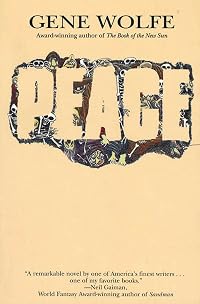
Peace
by Gene Wolfe
On This Page
Description
Hailed as "one of the literary giants of SF" by the Denver Post, Gene Wolfe has repeatedly won the field's highest honors, including the Nebula, the Hugo, and the World Fantasy awards.Peace is Gene Wolfe's first full-length novel, a work that shows the genius that later flourished in such acclaimed works as The Fifth Head of Cerberus and The Book of The New Sun.
Originally published in 1975, Peace is a spellbinding, brilliant tour de force of the imagination. The melancholy memoir of Alden show more Dennis Weer, an embittered old man living out his last days in a small midwestern town, the novel reveals a miraculous dimension as the narrative unfolds. For Weer's imagination has the power to obliterate time and reshape reality, transcending even death itself. Powerfully moving and uncompromisingly honest, Peace ranks alongside the finest literary works of our time.
At the Publisher's request, this title is being sold without Digital Rights Management Software (DRM) applied.
. show less
Tags
Recommendations





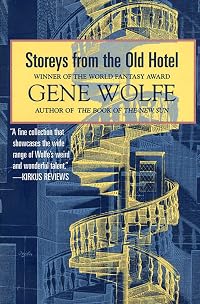

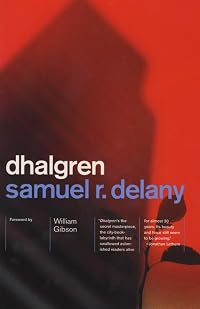
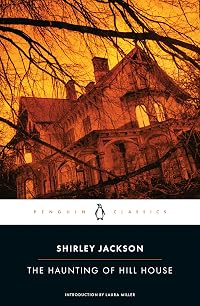
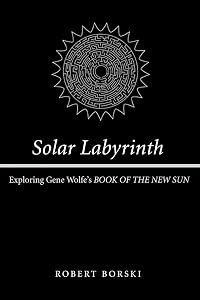






Member Reviews
Peace is a difficult book for me to categorize. Wolfe is mostly famous for writing science-fiction and fantasy but this book is really neither of those things. Well... perhaps it's a modern fantasy, of sorts... 'Pastoral Horror' is about the nearest term I can think of.
In Wolfe's first full-length novel we are told a series of stories, most of them frustratingly incomplete, by an aging first-person narrator. There are ghost stories, tragedies, treasure hunts, forged books, romantic entanglements, strange surroundings, even stranger events, meta-physics, a sort of time-travel... All in all, there are a lot of weird happenings. But none of them are stridently visceral. It's all delivered in a languidly matter-of-fact tone that soon show more imparts to the reader that there is much, much more to these stories than the person doing the telling is letting on.
Now, I love me some first-person story-telling because I always expect the narrator to be unreliable. And this one certainly is. Alden Dennis Weer is a strange old guy and the way he reminisces about people, places and events from his past (and present?) soon makes it abundantly clear that there is more here than meets the eye at first glance. And Peace is definitely that rare type of book that will reveal more of itself with each re-read. I almost want to start over from the beginning right away to see what I missed in the early going that might help clarify where we ended up. Which was where again? Ah yes. The ending, (if one can call it that). Frustratingly incomplete and yet... Oh well, there are too many other books clamoring for their fair share at the moment - but I will be tempted to re-read this one sooner rather than later while it's still relatively fresh. Anyway, I pretty much loved this book - even though I am grinding my teeth a bit at the swooshing sound I keep hearing above my head...
A footnote: Gene Wolfe has never been an easy read for me. He places a heavy demand on his audience. When you pick up one of his books, do not expect to be spoon-fed a plot. That doesn't mean there isn't a plot, only that there will be deeper meanings in his stories than you might at first realize. There are always layers of meaning and hidden events in Wolfe's narratives. This book is perhaps his most confounding that I have read to date - although Castleview is comparably dense with meaning. show less
In Wolfe's first full-length novel we are told a series of stories, most of them frustratingly incomplete, by an aging first-person narrator. There are ghost stories, tragedies, treasure hunts, forged books, romantic entanglements, strange surroundings, even stranger events, meta-physics, a sort of time-travel... All in all, there are a lot of weird happenings. But none of them are stridently visceral. It's all delivered in a languidly matter-of-fact tone that soon show more imparts to the reader that there is much, much more to these stories than the person doing the telling is letting on.
Now, I love me some first-person story-telling because I always expect the narrator to be unreliable. And this one certainly is. Alden Dennis Weer is a strange old guy and the way he reminisces about people, places and events from his past (and present?) soon makes it abundantly clear that there is more here than meets the eye at first glance. And Peace is definitely that rare type of book that will reveal more of itself with each re-read. I almost want to start over from the beginning right away to see what I missed in the early going that might help clarify where we ended up. Which was where again? Ah yes. The ending, (if one can call it that). Frustratingly incomplete and yet... Oh well, there are too many other books clamoring for their fair share at the moment - but I will be tempted to re-read this one sooner rather than later while it's still relatively fresh. Anyway, I pretty much loved this book - even though I am grinding my teeth a bit at the swooshing sound I keep hearing above my head...
A footnote: Gene Wolfe has never been an easy read for me. He places a heavy demand on his audience. When you pick up one of his books, do not expect to be spoon-fed a plot. That doesn't mean there isn't a plot, only that there will be deeper meanings in his stories than you might at first realize. There are always layers of meaning and hidden events in Wolfe's narratives. This book is perhaps his most confounding that I have read to date - although Castleview is comparably dense with meaning. show less
I never expected so much depth. While it is barely Science Fiction, it is most certainly literature of the highest caliber. Like Faulkner, Wolfe constantly cripples the reader's understanding with his obscure perspectives and elegant suggestion. Chronology and irony are never explicit, and characters are always hiding pieces of their personalities. In a way entirely unique to his oeuvre, Wolfe invents layers beneath the surface narratives - stories surrounding an enigmatic core, like onion-skin.
After finishing Fifth Head of Cerberus, I was already convinced that he had deliberately designed a multi-dimensional masterpiece. Possibly even more thoroughly with Peace, he manages to make good on his techniques, and to deepen the modus show more operandi. We are forced to dig to uncover the rippling insinuations of his world.
A second or third reading will likely reveal more puzzles and subtexts to the seemingly innocuous, and tenuously connected stories of fragmented memories, contradictory doctor visits, Midwestern town life, the nearly Victorian tale of a porcelain egg, an homage to the Arabian Nights and the undercurrent of human deception cutting through it all.
Structured like a memoir, Wolfe's style is never forced, and is always confidently stringing the reader along, no matter how thoroughly razzled your flailing body becomes. It is nonetheless a fascinating joyride, an imaginative dream, half-remembered but sprinkled with divine joy and profound sadness. Witness his use of playful fairy tale, and his staggering ability to engross and entertain you. His voices will haunt you, like the ghosts and banshees in his books, because of the uncanny magic of 'what they know.' Wolfe excels at dangling the forbidden fruit of knowledge before the reader. All you are allowed is a taste, but it is enough to realize the breadth of mystery inherent in any imperfect being's conception of the universe. show less
After finishing Fifth Head of Cerberus, I was already convinced that he had deliberately designed a multi-dimensional masterpiece. Possibly even more thoroughly with Peace, he manages to make good on his techniques, and to deepen the modus show more operandi. We are forced to dig to uncover the rippling insinuations of his world.
A second or third reading will likely reveal more puzzles and subtexts to the seemingly innocuous, and tenuously connected stories of fragmented memories, contradictory doctor visits, Midwestern town life, the nearly Victorian tale of a porcelain egg, an homage to the Arabian Nights and the undercurrent of human deception cutting through it all.
Structured like a memoir, Wolfe's style is never forced, and is always confidently stringing the reader along, no matter how thoroughly razzled your flailing body becomes. It is nonetheless a fascinating joyride, an imaginative dream, half-remembered but sprinkled with divine joy and profound sadness. Witness his use of playful fairy tale, and his staggering ability to engross and entertain you. His voices will haunt you, like the ghosts and banshees in his books, because of the uncanny magic of 'what they know.' Wolfe excels at dangling the forbidden fruit of knowledge before the reader. All you are allowed is a taste, but it is enough to realize the breadth of mystery inherent in any imperfect being's conception of the universe. show less
Ugh. Too effing good. I can't even. Gene Wolfe is a magician. I full-on didn't know what was going on until the last page. The sense of foreboding never really leaves you. It's like too-large a space with too few people. Well, almost too few. Read this book. I'm sorry. You're welcome.
Peace, the debut novel of sci-fi/fantasy author Gene Wolfe, has been subject to nearly as many critical interpretations as Henry James's The Turn of the Screw. There's no need to examine those interpretations here, since Wolfe freely admitted that the book's rambling but fascinating narrative is being delivered by a ghost. Is Alden Dennis Weer a reliable narrator? The reader must judge for himself. Not a sci-fi novel in any sense of the term, Peace may befuddle those approaching it for the first time. Critic David G. Hartwell classified certain of Wolfe's works (like the novella "Seven American Nights" and this book) as horror, and what we have here is undoubtedly a ghost story of majestic proportions. Lush with detail, peopled by show more characters viewed exclusively through the lens of the narrator's memory, the novel is impossible to synopsize. It's not for everyone, but the middle-aged reader learning to confront his own mortality will find Weer's tale relatable--sometimes painfully so.
Reminiscent of William Goyen's House of Breath and Samuel Beckett's Malone Dies and The Unnamable, but with a Midwestern flavor that is uniquely Wolfe's. show less
Reminiscent of William Goyen's House of Breath and Samuel Beckett's Malone Dies and The Unnamable, but with a Midwestern flavor that is uniquely Wolfe's. show less
Peace is the memoir of Alden Dennis Weer, chronicling his life growing up in the town of Cassionsville. It's a rambling narrative prone to go off on tangents, where one story can and will invoke another, entirely seperate memory—transitioning into it without warning—and so the text jumps back forth in time, blurring the boundaries between one passage and the next. But Gene Wolfe is such a great writer that, after a few pages to get acclimated to these shifts, not only does it become easy to follow, but the seemingly-unrelated stories end up tying back to each other in often unexpected ways.
And yet, as Weer weaves his stories, something sinister begins to take shape underneath the main narrative, hinting at some horrific secret show more underlying Weer's tale. Is this simply an old man recording his life story? Or is Weer somehow projecting his consciousness back through time to revisit (or revise) these memories? Or (even worse) is he somehow recreating events as he describes them—conjuring up the dead to reenact his tale for him? There's a sense of unease and dread that mounts as the pages fly by, an anticipation that builds, waiting for the terrible revelation that will totally alter the context of all that has come before. And then, once that final page has turned...
The book just kind of ends. Or doesn't. Depending how you look at it.
And I confess that I don't get it. I found it captivating and entertaining and beautifully written, but it comes as no surprise (I guess) that Wolfe has outsmarted me. From the little I had read about it (to keep from spoiling myself) I expected this big reveal at the end that would turn the entire book on its head. Didn't happen. In fact, I found the fifth and final chapter to be the least interesting—and the least relevant—by far. Wolfe is a man whose work demands to be read very closely and carefully, and this book might be Exhibit A. I've looked at a couple of interpretations online, and, okay, I guess that makes some sense, but if that's true then man! is this stuff obtuse.
I'm trying not to let it bother me though. I still loved every minute that I spent reading it. And if I was rather disappointed by the outcome, I consider myself at least as much to blame as Wolfe. Someday I'll reread it for the tenth time, and it will all make sense. Until then, I give Peace 4 out of 5 stars. show less
And yet, as Weer weaves his stories, something sinister begins to take shape underneath the main narrative, hinting at some horrific secret show more underlying Weer's tale. Is this simply an old man recording his life story? Or is Weer somehow projecting his consciousness back through time to revisit (or revise) these memories? Or (even worse) is he somehow recreating events as he describes them—conjuring up the dead to reenact his tale for him? There's a sense of unease and dread that mounts as the pages fly by, an anticipation that builds, waiting for the terrible revelation that will totally alter the context of all that has come before. And then, once that final page has turned...
The book just kind of ends. Or doesn't. Depending how you look at it.
And I confess that I don't get it. I found it captivating and entertaining and beautifully written, but it comes as no surprise (I guess) that Wolfe has outsmarted me. From the little I had read about it (to keep from spoiling myself) I expected this big reveal at the end that would turn the entire book on its head. Didn't happen. In fact, I found the fifth and final chapter to be the least interesting—and the least relevant—by far. Wolfe is a man whose work demands to be read very closely and carefully, and this book might be Exhibit A. I've looked at a couple of interpretations online, and, okay, I guess that makes some sense, but if that's true then man! is this stuff obtuse.
I'm trying not to let it bother me though. I still loved every minute that I spent reading it. And if I was rather disappointed by the outcome, I consider myself at least as much to blame as Wolfe. Someday I'll reread it for the tenth time, and it will all make sense. Until then, I give Peace 4 out of 5 stars. show less
Gene Wolfe is my favorite living author thanks to the brilliant Book of the New Sun and Book of the Short Sun (Long Sun was very good as well, just not quite on the level of the other two), and so I go into each of his books with raised expectations. Peace met them, and then some. While I'd name The Fifth Head of Cerberus as the best place to start with Wolfe, this might be a good place to start for those who don't love science fiction. Here the setting is more tethered to reality, although not without some supernatural aspects, as the stories contained herein are mostly ghost stories (in fact, once you work it out, in a way everything is a ghost story).
Like any Gene Wolfe there is hidden depth here, as if you pay attention to show more characters and dates you can piece together a timeline that reveals more of what is going on than is ever explicitly stated. Wolfe is the master at writing books that have extra depths to explore if you so choose, but which don't have to be delved into to have a good reading experience. Personally I always like trying to solve the riddles Wolfe strews about, and if such a thing sounds appealing to you there's no author I would recommend to you more highly than Gene Wolfe. show less
Like any Gene Wolfe there is hidden depth here, as if you pay attention to show more characters and dates you can piece together a timeline that reveals more of what is going on than is ever explicitly stated. Wolfe is the master at writing books that have extra depths to explore if you so choose, but which don't have to be delved into to have a good reading experience. Personally I always like trying to solve the riddles Wolfe strews about, and if such a thing sounds appealing to you there's no author I would recommend to you more highly than Gene Wolfe. show less
A slow read, but beautifully written. There's more than meets the eye here. Settle in with a cup of tea.
Note: while there are some dark elements to some of the stories, and ghosts are prominent, it is not graphic. More dread than terror.
Note: while there are some dark elements to some of the stories, and ghosts are prominent, it is not graphic. More dread than terror.
Members
- Recently Added By
Lists

Overdue Podcast
808 works; 9 members

Best Horror Mega-List
342 works; 6 members

David Pringle's Modern Fantasy: The 100 Best Novels
100 works; 5 members

Jones and Newman's Horror: Another 100 Best Books
100 works; 7 members

Fantasy Masterworks
66 works; 5 members
Author Information

316+ Works 43,703 Members
Gene Wolfe was born in New York City on May 7, 1931. He dropped out of Texas A&M University during his junior year and was drafted into the Army to fight in the Korean War. After the war, he received a degree in mechanical engineering from the University of Houston. He worked as an industrial engineer for Procter and Gamble, where he developed the show more machine that cooks the dough used to make Pringles potato chips. He was an editor of the trade journal Plant Engineering from 1972 to 1984 before retiring to become a full-time writer. He wrote more than 30 books during his lifetime including The Fifth Head of Cerberus, Peace, The Book of the New Sun, and The Land Across. He received the Campbell Memorial Award, the Edward E. Smith Memorial Award, the Locus Award four times, and the Nebula Award and the World Fantasy Award two times each. In 1996, he was given the World Fantasy Award for Lifetime Achievement. He was inducted into the Science Fiction Hall of Fame in 2007 and was named a Grand Master by the Science Fiction and Fantasy Writers of America in 2012. He died after a long battle with heart disease on April 14, 2019 at the age of 87. (Bowker Author Biography) show less
Some Editions
Awards and Honors
Series
Belongs to Publisher Series
Fantasy Masterworks (28)
Common Knowledge
- Canonical title*
- Paz
- Original title
- Peace
- Original publication date
- 1975-05
- Dedication
- To Rosemary
- First words
- The elm tree planted by Eleanor Bold, the judge's daughter, fell last night.
- Last words
- (Click to show. Warning: May contain spoilers.)My aunt's voice on the intercom says, "Den, darling, are you awake in there?"
- Blurbers
- Gaiman, Neil
- Original language
- English
*Some information comes from Common Knowledge in other languages. Click "Edit" for more information.
Classifications
Statistics
- Members
- 992
- Popularity
- 26,535
- Reviews
- 24
- Rating
- (4.08)
- Languages
- 6 — English, French, German, Polish, Russian, Spanish
- Media
- Paper, Ebook
- ISBNs
- 14
- ASINs
- 3