

Dead Men Do Tell Tales: The Strange and Fascinating Cases of a Forensic Anthropologist
by William R. Maples, Michael Browning
On This Page
Description
From a skeleton, a skull, a mere fragment of burnt thighbone, Dr. William Maples can deduce the age, gender, and ethnicity of a murder victim, the manner in which the person was dispatched, and, ultimately, the identity of the killer. In Dead Men Do Tell Tales, Dr. Maples revisits his strangest, most interesting, and most horrific investigations, from the baffling cases of conquistador Francisco Pizarro and Vietnam MIAs to the mysterious deaths of President Zachary Taylor and the family of show more Czar Nicholas II. show lessTags
Recommendations



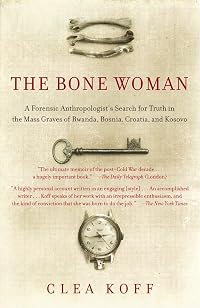
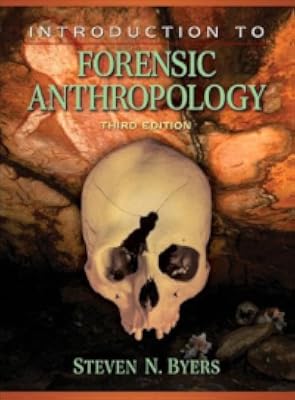
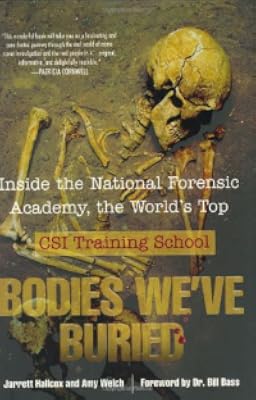




Member Recommendations


Member Reviews
Fieldnotes:
1 Expert Forensic Anthropologist
1 Utterly Unnecessary Chapter Regarding Baboons
Several Largely Irrelevant 'Soapbox' Chapters Regarding Suicide and His Moral Qualms Therewith, Child Abuse, Disdain for Psychology, etc.
3 Famous Historical Cases (Pizarro, Zachary Taylor, Romanovs)
including 2 Instances of Blatant Hypocrisy
namely 1 Overly Intricate Theory Ignoring the Most Likely Scenario Given the Evidence and
1 Case of Leaping to Identification Conclusions based on Insufficient Evidence
1 Intriguing Criminal Case (Meeks/Jennings)
1 Painfully Overabundant Ego Evidenced by:
Countless Instances of Ostentatiously Not Giving His Opinion as Irrelevant
An Equal Number of Instances of Giving His Opinion Despite an Utter Lack of Expertise in show more Pathology/Psychology/Other Discipline
The Short Version
When Maples focused on his actual cases, his discipline (and his conclusions) are generally quite interesting - though his arrogance put me off. Seriously, never tell me as a reader that something is 'beyond any doubt' - especially when the evidence is far from conclusive. Unfortunately for much of the book, Maples doesn't talk about his actual expertise and discipline - that of making skeletons 'talk'. Instead we're treated to snippets here and there interspersed with Maples views on suicides, sexual practices, child abuse, dismemberment, etc. While some of this might be link-able to his profession, most of these links are poorly done and don't really tie back to forensic anthropology. And I'm just not that interested in his soapbox. show less
1 Expert Forensic Anthropologist
1 Utterly Unnecessary Chapter Regarding Baboons
Several Largely Irrelevant 'Soapbox' Chapters Regarding Suicide and His Moral Qualms Therewith, Child Abuse, Disdain for Psychology, etc.
3 Famous Historical Cases (Pizarro, Zachary Taylor, Romanovs)
including 2 Instances of Blatant Hypocrisy
namely 1 Overly Intricate Theory Ignoring the Most Likely Scenario Given the Evidence and
1 Case of Leaping to Identification Conclusions based on Insufficient Evidence
1 Intriguing Criminal Case (Meeks/Jennings)
1 Painfully Overabundant Ego Evidenced by:
Countless Instances of Ostentatiously Not Giving His Opinion as Irrelevant
An Equal Number of Instances of Giving His Opinion Despite an Utter Lack of Expertise in show more Pathology/Psychology/Other Discipline
The Short Version
When Maples focused on his actual cases, his discipline (and his conclusions) are generally quite interesting - though his arrogance put me off. Seriously, never tell me as a reader that something is 'beyond any doubt' - especially when the evidence is far from conclusive. Unfortunately for much of the book, Maples doesn't talk about his actual expertise and discipline - that of making skeletons 'talk'. Instead we're treated to snippets here and there interspersed with Maples views on suicides, sexual practices, child abuse, dismemberment, etc. While some of this might be link-able to his profession, most of these links are poorly done and don't really tie back to forensic anthropology. And I'm just not that interested in his soapbox. show less
From my Cannonball Read 5 review ...
Dead Men Do Tell Tales is a fascinating, detailed book by Dr. William Maples, an amazingly accomplished forensic anthropologist. You may be familiar with that field if you watch “Bones,” although as is usually the case, what you see on screen doesn’t closely match reality. A forensic anthropologist is trained in examining human remains to learn more about the decedent. They can tell if bones belonged to a woman or man, approximate age, and explain wounds. It’s very detail-oriented work, at times taking months or years when the identity is unknown (not the 45 minutes plus commercials Emily Deschanel might suggest).
In his book from the 90s, Dr. Maples takes the reader through many different show more cases he’s participated in over the years. Some involve people you’ve never heard of, and some are so famous it would be understandable if you didn’t quite believe what you were reading. Dr. Maples was, no joke, part of the small team that confirmed the identity of the bones of the murdered last Tsars of Russia. He put to rest the idea that President Taylor was killed by arsenic poisoning. He also helped convict murderers whose crimes were devastating but whose names you and I might not recognize.
As evidenced by my line of work, I find this to be an extremely interesting topic. I’ve read Mary Roach’s Stiff, as well as a couple of other books about the lives of medical examiners. If nothing else is on TV, I’ll likely leave it tuned to Dr. G. Medical Examiner or some other disease-related show on TLC or Discovery. I say all of that in service of the recognition that this type of writing is just not for everyone.
It is EXTREMELY graphic. Not to shock, but to explain. How else can he express to you how he was able to identify a murder weapon than to explain how he matched it to the wounds to the victim’s bones? Without the detail, it would be a very short book, with each chapter consisting of “so I did my work and concluded X.” His way of writing is so much better – it makes sense, and gives the reader a real insight into how forensic anthropology works.
If you enjoy history, or true crime stories, or science, and are not easily sickened by detailed descriptions of human remains, I think you’ll really enjoy this book. The only reason I gave it four stars is because at times the non-forensic writing (the set-up to the crime, or background) is a bit too flowery for my tastes. I appreciate creative turns of phrase, and I don’t doubt that the authors really do write this way, but at times it felt a little like one of them just got a new thesaurus. Additionally, while it suits the structure of the book, each chapter feels like its own independent essay; he re-explains some things as though the reader hadn’t just learned about them 50 pages prior.
But those are minimal complaints. It’s a great book. show less
Dead Men Do Tell Tales is a fascinating, detailed book by Dr. William Maples, an amazingly accomplished forensic anthropologist. You may be familiar with that field if you watch “Bones,” although as is usually the case, what you see on screen doesn’t closely match reality. A forensic anthropologist is trained in examining human remains to learn more about the decedent. They can tell if bones belonged to a woman or man, approximate age, and explain wounds. It’s very detail-oriented work, at times taking months or years when the identity is unknown (not the 45 minutes plus commercials Emily Deschanel might suggest).
In his book from the 90s, Dr. Maples takes the reader through many different show more cases he’s participated in over the years. Some involve people you’ve never heard of, and some are so famous it would be understandable if you didn’t quite believe what you were reading. Dr. Maples was, no joke, part of the small team that confirmed the identity of the bones of the murdered last Tsars of Russia. He put to rest the idea that President Taylor was killed by arsenic poisoning. He also helped convict murderers whose crimes were devastating but whose names you and I might not recognize.
As evidenced by my line of work, I find this to be an extremely interesting topic. I’ve read Mary Roach’s Stiff, as well as a couple of other books about the lives of medical examiners. If nothing else is on TV, I’ll likely leave it tuned to Dr. G. Medical Examiner or some other disease-related show on TLC or Discovery. I say all of that in service of the recognition that this type of writing is just not for everyone.
It is EXTREMELY graphic. Not to shock, but to explain. How else can he express to you how he was able to identify a murder weapon than to explain how he matched it to the wounds to the victim’s bones? Without the detail, it would be a very short book, with each chapter consisting of “so I did my work and concluded X.” His way of writing is so much better – it makes sense, and gives the reader a real insight into how forensic anthropology works.
If you enjoy history, or true crime stories, or science, and are not easily sickened by detailed descriptions of human remains, I think you’ll really enjoy this book. The only reason I gave it four stars is because at times the non-forensic writing (the set-up to the crime, or background) is a bit too flowery for my tastes. I appreciate creative turns of phrase, and I don’t doubt that the authors really do write this way, but at times it felt a little like one of them just got a new thesaurus. Additionally, while it suits the structure of the book, each chapter feels like its own independent essay; he re-explains some things as though the reader hadn’t just learned about them 50 pages prior.
But those are minimal complaints. It’s a great book. show less
Recently, an online acquaintance suggested we begin exchanging books through the post. The first book she wanted to send was Dead Men Do Tell Tales: The Strange and Fascinating Cases of a Forensic Anthropologist by William R. Maples, PhD and William Browning. ‘And it has pictures too!’ she said. I promptly gave her my address (I’m typing this post two months later, so she wasn’t a homicidal maniac) and shortly thereafter the book arrived on my doorstep. (For those of you playing along at home, I sent her Execution by Geoffrey Abbott.)
Forensic anthropology (what Temperance Brennan does on Bones) has always been something of a passing interest of mine, but this was my first in-depth reading about the subject. The science hasn’t show more been around all that long and Maples has been a part of a good portion of it. Particularly interesting were chapters on cremation, the truly twisted Meeks-Jenning case, his involvement with identifying the Romanovs and his thoughts upon meeting Ted Bundy, but the book was full of wonderful information. Like this:
"The instruments of murder are manifold as the unlimited human imagination. Apart from the obvious–shotguns, rifles, pistols, knives, hatches and axes–I have seen meat cleavers, machetes, ice picks, bayonets, hammers, wrenches, screwdrivers, crowbars, prybars, two-by-fours, tree limbs, jack handles (which are not ‘tire irons'; nobody carries tire irons anymore), building blocks, crutches, artificial legs, brass bedposts, pipes, bricks, belts, neckties, pantyhose, ropes, bootlaces, towels and chains–all these things and more, used by human beings to dispatch fellow human beings into eternity. I have never seen a butler use a candelabrum! Such recherché elegance is apparently confided to England. I did see a pair of sneakers used to kill a woman, and they left distinctive tread marks where the murderer stepped on her throat and crushed the life from her. I have not seen an icicle used to stab someone, though it is said to be the perfect weapon, because it melts afterward. But I do know of a case in which a man was bludgeoned to death with a frozen ham."
Maples also talks about the American Academy of Forensic Sciences, which, at the time of writing, only had fourteen members, and they got together once a year. It sounded rather like a hair-raising hoot. One member would share slides of his most…eye-opening cases and the group would discuss historical problems like whether or not Van Gogh’s color imagery and style was a result of digitalis poisoning or what was the final body count of the legendary feud between the Hatfields and the McCoys.
During the annual meetings, prospective applicants had to undergo rigorous examinations including identifying bones. This involved members transporting skulls to and from the gatherings.
"This requires some explanation, particularly at airports. I always make a point of telling the airline ticket agent just how many skulls I have with me in my luggage–not to shock her, but to make sure, in case the plane crashes, investigators will know why there were more skulls than passengers aboard. This is mere professional courtesy to my colleagues, who will have to pick through my remains in the event of an accident."
I can’t help picturing one of the members being late for a plane and not having time to explain what’s in his bag–the plane crashing and the forensics people being completely baffled with the extra bits and bobs everywhere. An extra Asian male tibia hither and an extra African female fibula yon will really mess up an incident report.
But I digress, I’ve taken loads of other notes, all of which will eventually appear over in the left sidebar under Sciences.
Dead Men Do Tell Tales was published in the mid 90s and I would love to know how the field has changed in the last twenty years. The beginning was a little slow and some of the case studies could drag a bit but overall it was an excellent introduction to forensic anthropology by someone who was there. The first-person account of identifying Tsar Nicholas II and his family is worth it if you find a used copy somewhere. show less
Forensic anthropology (what Temperance Brennan does on Bones) has always been something of a passing interest of mine, but this was my first in-depth reading about the subject. The science hasn’t show more been around all that long and Maples has been a part of a good portion of it. Particularly interesting were chapters on cremation, the truly twisted Meeks-Jenning case, his involvement with identifying the Romanovs and his thoughts upon meeting Ted Bundy, but the book was full of wonderful information. Like this:
"The instruments of murder are manifold as the unlimited human imagination. Apart from the obvious–shotguns, rifles, pistols, knives, hatches and axes–I have seen meat cleavers, machetes, ice picks, bayonets, hammers, wrenches, screwdrivers, crowbars, prybars, two-by-fours, tree limbs, jack handles (which are not ‘tire irons'; nobody carries tire irons anymore), building blocks, crutches, artificial legs, brass bedposts, pipes, bricks, belts, neckties, pantyhose, ropes, bootlaces, towels and chains–all these things and more, used by human beings to dispatch fellow human beings into eternity. I have never seen a butler use a candelabrum! Such recherché elegance is apparently confided to England. I did see a pair of sneakers used to kill a woman, and they left distinctive tread marks where the murderer stepped on her throat and crushed the life from her. I have not seen an icicle used to stab someone, though it is said to be the perfect weapon, because it melts afterward. But I do know of a case in which a man was bludgeoned to death with a frozen ham."
Maples also talks about the American Academy of Forensic Sciences, which, at the time of writing, only had fourteen members, and they got together once a year. It sounded rather like a hair-raising hoot. One member would share slides of his most…eye-opening cases and the group would discuss historical problems like whether or not Van Gogh’s color imagery and style was a result of digitalis poisoning or what was the final body count of the legendary feud between the Hatfields and the McCoys.
During the annual meetings, prospective applicants had to undergo rigorous examinations including identifying bones. This involved members transporting skulls to and from the gatherings.
"This requires some explanation, particularly at airports. I always make a point of telling the airline ticket agent just how many skulls I have with me in my luggage–not to shock her, but to make sure, in case the plane crashes, investigators will know why there were more skulls than passengers aboard. This is mere professional courtesy to my colleagues, who will have to pick through my remains in the event of an accident."
I can’t help picturing one of the members being late for a plane and not having time to explain what’s in his bag–the plane crashing and the forensics people being completely baffled with the extra bits and bobs everywhere. An extra Asian male tibia hither and an extra African female fibula yon will really mess up an incident report.
But I digress, I’ve taken loads of other notes, all of which will eventually appear over in the left sidebar under Sciences.
Dead Men Do Tell Tales was published in the mid 90s and I would love to know how the field has changed in the last twenty years. The beginning was a little slow and some of the case studies could drag a bit but overall it was an excellent introduction to forensic anthropology by someone who was there. The first-person account of identifying Tsar Nicholas II and his family is worth it if you find a used copy somewhere. show less
The trials of being a forensic anthropologist: I recieved this book as a gift when I was in high school. I loved it then. Since I've recently finished a Masters in forensic anthropology myself, I decided to pull it off my shelf and give it another run through.
This is hands down the most honest and truthful illustration of what it's like to work in this field in a market flooded with a glut of products dedicated to the likes of Patricia Cornwell and Kathy Reichs. Every Bones/CSI fan needs to read this book and learn about the un-glamorous parts of these careers. I went into my career as a forensic anthropologist with a realistic understanding of the job because of Dr. Maples' great prose. While the CSI wannabes whine about the maggots show more and the smell, I do my job.
This is a great book for anyone who is interested in forensic science and should be a required read in introductory courses. show less
This is hands down the most honest and truthful illustration of what it's like to work in this field in a market flooded with a glut of products dedicated to the likes of Patricia Cornwell and Kathy Reichs. Every Bones/CSI fan needs to read this book and learn about the un-glamorous parts of these careers. I went into my career as a forensic anthropologist with a realistic understanding of the job because of Dr. Maples' great prose. While the CSI wannabes whine about the maggots show more and the smell, I do my job.
This is a great book for anyone who is interested in forensic science and should be a required read in introductory courses. show less
I thoroughly enjoyed reading this book! Having previously read Dr. Emily Craig’s Teasing Secrets From the Dead, I noticed that while both works explore similar subject matter, the approach here is quite distinct. Dr. Maples’ writing is detailed and flowery—true to the style of someone who almost became an English major. However, I wouldn't describe it as pompous. Rather, it reflects the era in which it was written, giving the book a sense of nostalgic storytelling, almost as if an elderly grandparent is sharing their wisdom.
The "tales" themselves are captivating and offer a fascinating look into the field of forensic anthropology, particularly before the widespread use of DNA analysis. Maples’ insights on DNA are especially show more striking, as he predicted the future accessibility and affordability of DNA testing.
As someone who enjoys stories of anthropology, this book definitely lived up to expectations. show less
The "tales" themselves are captivating and offer a fascinating look into the field of forensic anthropology, particularly before the widespread use of DNA analysis. Maples’ insights on DNA are especially show more striking, as he predicted the future accessibility and affordability of DNA testing.
As someone who enjoys stories of anthropology, this book definitely lived up to expectations. show less
Fascinating. Grisly. A real page-turner with scientific mysteries and human drama. His investigations included the remains of Francisco Pizarro, the conquistador of Peru; President Zachary Taylor; and Tsar Nicholas II and his family, as well as the bones of many ordinary folks.
Recommended for readers with strong stomachs!
Recommended for readers with strong stomachs!
(Amy) In an effiort to get me to read some nonfiction every once in a while, my husband tempted me with this book about forensic anthropology, knowing full well how much I love macabre details and medical mysteries. Well, it worked. I didn't just sit right down and read it, as I so often do with fiction, but I kept coming back to it and reading a chapter or two at a time, and it was fascinating.
I was not entirely without quibbles - I got the impression more than once that the author was playing a juvenile game of "let's see if we can get the reader to vomit", in that I could conceive of many less gratuitously icky ways to phrase quite a few things in the book without losing any information; also I thought his sense of self-importance show more was perhaps inflated an order of magnitude or so beyond what would be pleasant to share a room with. But by and large, it is a remarkable glimpse into forensic science, especially for a 15-year-old book, coming thus long before the age of CSI. Recommended for anyone who feels up to coping with vivid descriptions of dead bodies.
( http://weblog.siliconcerebrate.com/zenos-library/2008/10/dead_men_do_tell_tales.... ) show less
I was not entirely without quibbles - I got the impression more than once that the author was playing a juvenile game of "let's see if we can get the reader to vomit", in that I could conceive of many less gratuitously icky ways to phrase quite a few things in the book without losing any information; also I thought his sense of self-importance show more was perhaps inflated an order of magnitude or so beyond what would be pleasant to share a room with. But by and large, it is a remarkable glimpse into forensic science, especially for a 15-year-old book, coming thus long before the age of CSI. Recommended for anyone who feels up to coping with vivid descriptions of dead bodies.
( http://weblog.siliconcerebrate.com/zenos-library/2008/10/dead_men_do_tell_tales.... ) show less
Members
- Recently Added By
Author Information

1 Work 1,141 Members
1 Work 1,126 Members
Common Knowledge
- Important places
- Florida, USA
- Blurbers
- Cornwell, Patricia; Massie, Robert K.; Hiaasen, Carl
Classifications
- Genres
- Anthropology, Nonfiction, General Nonfiction, Science & Nature, Biography & Memoir
- DDC/MDS
- 614.1 — Applied science & technology Medicine & health Epidemics, Poisons, Alternative Medicine Forensic medicine
- LCC
- GN50.6 .M36 .A3 — Geography, Anthropology and Recreation Anthropology Anthropology Physical anthropology. Somatology
- BISAC
Statistics
- Members
- 1,142
- Popularity
- 22,007
- Reviews
- 29
- Rating
- (3.91)
- Languages
- English, German, Spanish
- Media
- Paper, Audiobook, Ebook
- ISBNs
- 17
- ASINs
- 12
