Biographia Literaria
by Samuel Taylor Coleridge
On This Page
Description
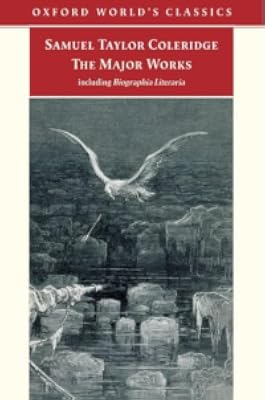
Samuel Taylor Coleridge's 1817 work Biographia Literaria is an autobiography in discourse; loosely structured and non-linear, the work is meditative and contains numerous philosophical essays. Initially criticized as the product of Coleridge's opiate-driven descent into illness, more recent critics have given the work far more credit and recognition. The book is the origin of the well-known critical idea of "willing suspension of disbelief.".
Tags
Recommendations




















Member Reviews
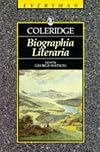
It’s frustrating that the book description on Goodreads of this edition of Coleridge’s Biographia Literaria should perpetuate the traditional account of its genesis, an account that the editor, George Watson, takes pains to refute.
Watson describes the origins of the book, dating back to more than fifteen years before its eventual publication. From the outset, Coleridge intended a work that would reflect his dual interest in philosophy and poetry. Watson concedes that the formal design of the book cannot be defended, but argues that Coleridge succeeded “for the first and (so far) for the last time in English criticism” in “discovering a causal link between the two” in the poet’s imagination, set out by Coleridge in chapters show more 12 and 13, the heart of the book. Hitherto, “imagination” and “fancy” had been used interchangeably, but Coleridge differentiates the two, assigning to imagination, especially the poetic imagination, the power to dissolve sense perceptions to recreate, idealize, or unify them. In contrast, fancy, a lesser power, can only recall, with its creativity limited to association. At least that’s what I make of it, though I had a hard time following his discussion. He even coined a term to describe this faculty, “esemplastic” (the power to form into one), but this hasn’t caught on.
This achievement has been clouded not only by the ever-perpetuated tale that the Biographia is nothing more than an overgrown preface to a collection of poems, but also because a printer’s miscalculation forced Coleridge to hurriedly pad the manuscript at the last minute. This edition omits the padding and thus, Watson claims, is “the first to present the Biographia as nearly as possible according to the author’s intention.”
I can understand the widespread currency of the “garrulous preface” legend, however. Like a magpie, Coleridge seems to hop about, collecting shiny objects. The result: a fascinating record of a lively mind. He read widely and thought deeply, but the fecundity of his mind seems to have sabotaged his production. The footnotes of this book teem with announcements of forthcoming projects that never saw the light of day, mirroring the fifteen-year gap between plan and execution of this book.
One of the pleasures of reading Biographia was to follow a great literary critic at work as he shows by precept and example what makes great poetry. I noted several passages, including this: “The ultimate end of criticism is much more to establish the principles of writing than to furnish rules how to pass judgement on what has been written by others; if indeed it were possible that the two could be separated.” Coleridge’s work as a great critic is supported by his acute psychological insight.
One of Coleridge’s notable services rendered was to transmit the best of contemporary German philosophy to the English-speaking world. This book includes lengthy passages translated from Schelling and Lessing. He names both, but should have been clearer about where their words (in his translation) begin and end. His carelessness left him open to charges of plagiarism. He, in turn, felt misunderstood, one of many things that rankled him when others criticized his work. No doubt much of the criticism was unjustified, but his counterattacks are some of the least enjoyable passages in this book.
Still, overall, I enjoyed the book and learned a great deal from it. show less
Watson describes the origins of the book, dating back to more than fifteen years before its eventual publication. From the outset, Coleridge intended a work that would reflect his dual interest in philosophy and poetry. Watson concedes that the formal design of the book cannot be defended, but argues that Coleridge succeeded “for the first and (so far) for the last time in English criticism” in “discovering a causal link between the two” in the poet’s imagination, set out by Coleridge in chapters show more 12 and 13, the heart of the book. Hitherto, “imagination” and “fancy” had been used interchangeably, but Coleridge differentiates the two, assigning to imagination, especially the poetic imagination, the power to dissolve sense perceptions to recreate, idealize, or unify them. In contrast, fancy, a lesser power, can only recall, with its creativity limited to association. At least that’s what I make of it, though I had a hard time following his discussion. He even coined a term to describe this faculty, “esemplastic” (the power to form into one), but this hasn’t caught on.
This achievement has been clouded not only by the ever-perpetuated tale that the Biographia is nothing more than an overgrown preface to a collection of poems, but also because a printer’s miscalculation forced Coleridge to hurriedly pad the manuscript at the last minute. This edition omits the padding and thus, Watson claims, is “the first to present the Biographia as nearly as possible according to the author’s intention.”
I can understand the widespread currency of the “garrulous preface” legend, however. Like a magpie, Coleridge seems to hop about, collecting shiny objects. The result: a fascinating record of a lively mind. He read widely and thought deeply, but the fecundity of his mind seems to have sabotaged his production. The footnotes of this book teem with announcements of forthcoming projects that never saw the light of day, mirroring the fifteen-year gap between plan and execution of this book.
One of the pleasures of reading Biographia was to follow a great literary critic at work as he shows by precept and example what makes great poetry. I noted several passages, including this: “The ultimate end of criticism is much more to establish the principles of writing than to furnish rules how to pass judgement on what has been written by others; if indeed it were possible that the two could be separated.” Coleridge’s work as a great critic is supported by his acute psychological insight.
One of Coleridge’s notable services rendered was to transmit the best of contemporary German philosophy to the English-speaking world. This book includes lengthy passages translated from Schelling and Lessing. He names both, but should have been clearer about where their words (in his translation) begin and end. His carelessness left him open to charges of plagiarism. He, in turn, felt misunderstood, one of many things that rankled him when others criticized his work. No doubt much of the criticism was unjustified, but his counterattacks are some of the least enjoyable passages in this book.
Still, overall, I enjoyed the book and learned a great deal from it. show less
discussion of literature
First included in Everyman's Library, 1906
Ratings
Members
- Recently Added By
Lists

Recommended Reading : 600 Classics Reviewed, Editors of Salem Press, 2015
634 works; 6 members
Author Information

514+ Works 14,179 Members
Born in Ottery St. Mary, England, in 1772, Samuel Taylor Coleridge studied revolutionary ideas at Cambridge before leaving to enlist in the Dragoons. After his plans to start a communist society in the United States with his friend Robert Southey, later named poet laureate of England, were botched, Coleridge instead turned his attention to show more teaching and journalism in Bristol. Coleridge married Southey's sister-in-law Sara Fricker, and they moved to Nether Stowey, where they became close friends with William and Dorothy Wordsworth. From this friendship a new poetry emerged, one that focused on Neoclassic artificiality. In later years, their relationship became strained, partly due to Coleridge's moral collapse brought on by opium use, but more importantly because of his rejection of Wordworth's animistic views of nature. In 1809, Coleridge began a weekly paper, The Friend, and settled in London, writing and lecturing. In 1816, he published Kubla Kahn. Coleridge reported that he composed this brief fragment, considered by many to be one of the best poems ever written lyrically and metrically, while under the influence of opium, and that he mentally lost the remainder of the poem when he roused himself to answer an ill-timed knock at his door. Coleridge's The Rime of the Ancient Mariner, Christabel, and his sonnet Ozymandias are all respected as inventive and widely influential Romantic pieces. Coleridge's prose works, especially Biographia Literaria, were also broadly read in his day. Coleridge died in 1834. (Bowker Author Biography) show less
Some Editions
Awards and Honors
Series
Belongs to Publisher Series
Work Relationships
Contains
Is abridged in
Common Knowledge
- First words
- It has been my lot to have had my name introduced, both in conversation, and in print, more frequently than I find it easy to explain, whether I consider the fewness, unimportance, and limited circulation of my writings, or t... (show all)he retirement and distance in which I have lived, both from the literary and political world.
Classifications
Statistics
- Members
- 429
- Popularity
- 71,775
- Reviews
- 3
- Rating
- (3.95)
- Languages
- English, Italian, Spanish
- Media
- Paper, Ebook
- ISBNs
- 52
- UPCs
- 1
- ASINs
- 22