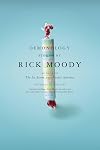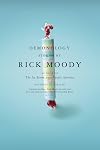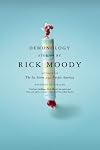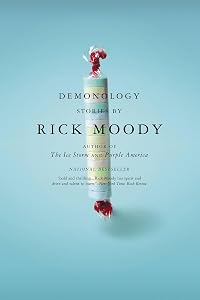
Demonology: Stories
by Rick Moody
On This Page
Description
Rick Moody's novels have earned him a reputation as a "breathtaking" writer (The New York Times) and "a writer of immense gifts" (The San Francisco Examiner). His remarkable short stories have led both the New Yorker and Harpers to single him out as one of the most original and admired voices in a generation.These stories are abundant proof of Rick Moody's grace as a stylist and a shaper of interior lives. He writes with equal force about the blithe energies of youth ("Boys") and the rueful show more onset of middle age ("Hawaiian Night"), about Midwestern optimists ("Double Zero") and West coast strategists ("Baggage Carousel"), about visionary exhilaration ("Forecast from the Retail Desk") and delusional catharsis ("Surplus Value Books: Catalog Number 13.") The astounding title story, which has already been reprinted in four different anthologies, is a masterpiece of remembrance and thwarted love.
Full of deep feeling and stunningly beautiful language, the stories in Demonology offer the deepest pleasures that fiction can afford.
. show less
Tags
Recommendations



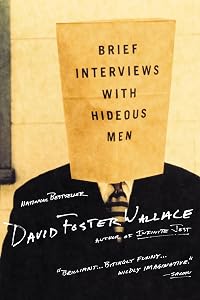
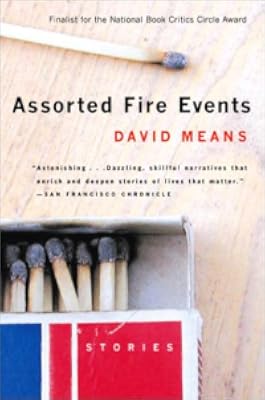
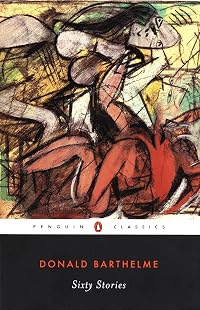
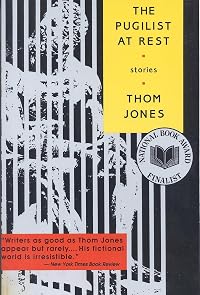
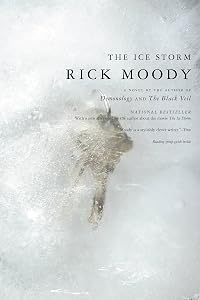
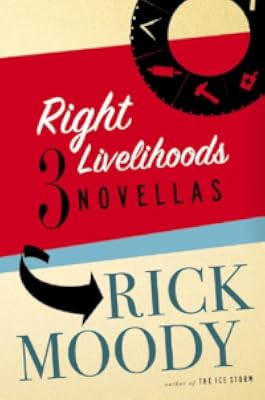


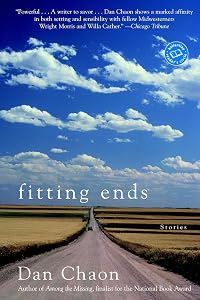
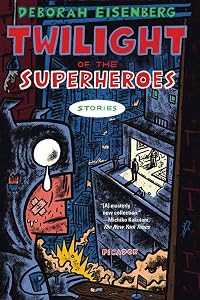
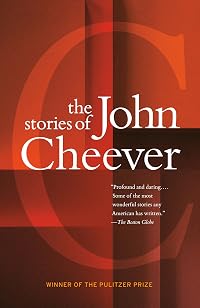

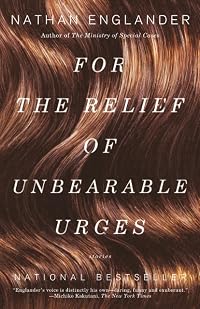


Member Reviews
For the novelist, the short story form is often an outlet for momentary inspiration, development of technique, display, and burlesque. But for a writer as talented as Rick Moody, these short forms are more like gems, finely cut, delicately set, polished in the extreme. The range across these thirteen stories is breathtaking. How does the same author who writes, “Surplus Value Books,” or “Wilkie Fahnstock,” also write, “The Double Zero,” or “Demonology”? There is a feast of language, insight, acute observation, and silliness available here. Of course the “silliness” is actually in service of a larger ironic, often sadder, end. But that doesn’t stop those stories being fun (at times). And indeed a certain playfulness show more is present even in the saddest of these stories.
Moody has a predilection for the extended stream of consciousness monologue (sometimes in dialogic form). But he is not wedded to it, and it has the feel of technique rather than empathy. So it is in the stories where he moves away from monologue toward a nuanced close third person that life fills the darker places. Even the easy and (as far as I can tell) proper use of continental philosophical and literary critical terminology that percolates some of the stories seems light and never merely about display or cheap mockery. You’ll see connection, in style and form, to Moody’s successful novels. But I take that as a sign that there is a constant interplay between his work in the short form and that of the longer form narrative. Successfully.
Recommended. show less
Moody has a predilection for the extended stream of consciousness monologue (sometimes in dialogic form). But he is not wedded to it, and it has the feel of technique rather than empathy. So it is in the stories where he moves away from monologue toward a nuanced close third person that life fills the darker places. Even the easy and (as far as I can tell) proper use of continental philosophical and literary critical terminology that percolates some of the stories seems light and never merely about display or cheap mockery. You’ll see connection, in style and form, to Moody’s successful novels. But I take that as a sign that there is a constant interplay between his work in the short form and that of the longer form narrative. Successfully.
Recommended. show less
It's funny how writing from 25 years ago can feel dated in a way the same kind of writing from 65 years ago doesn't. Moody's tales of middle-class (white, obviously) East Coasters transpire in a similar milieu to Cheever's, but time has bestowed a golden patina on the latter (who, of course, is also inherently better). How we were 25 years ago, when wheeled luggage was going mainstream, mixtapes were still unironic (both grist to Moody's mill), and "website" was written as two words, like on the back of this book, seems ridiculous, because we were there. How we were 65 years ago might as well be the Canterbury Tales. The past is a foreign country, it gets a pass; the recent past is more like a yearbook photo you wish you could destroy show more all copies of. At least that's how I felt reading Demonology.
This collection feels like a writer terrified of sincerity, reliant on predictable pop-culture references for the advancement of both character and plot. "Wilkie Fahnstock: The Boxed Set" is a biography of a typical Moody dude comprising a 10-cassette mixtape with liner notes. In a similar vein is "Surplus Value Books: Catalogue Number 13". The 100-page "The Carnival Tradition" is caught between short story and novella, a Frankenstory, two episodes from an instantly forgettable life, lacking the spark to outlive its constituent parts. The less said about "Pan's Fair Throng", a Renaissance fair in prose (after laughter comes tears), the better. The two-page "Drawer" was "drawn", against its will, from a gallery pamphlet, where it should have remained. If I had to praise one of these stories it would be the opener, "The Mansion on the Hill", a passably jokey account of work life at a New York State wedding venue which revolves uneasily around the spectre of a dead sister — a theme directly addressed in the title story, and maybe elsewhere in the collection: if I'd given more of a shit I'd be able to tell you.
I guess I should never reread The Ice Storm, which I loved. Let it stay inviolate! show less
This collection feels like a writer terrified of sincerity, reliant on predictable pop-culture references for the advancement of both character and plot. "Wilkie Fahnstock: The Boxed Set" is a biography of a typical Moody dude comprising a 10-cassette mixtape with liner notes. In a similar vein is "Surplus Value Books: Catalogue Number 13". The 100-page "The Carnival Tradition" is caught between short story and novella, a Frankenstory, two episodes from an instantly forgettable life, lacking the spark to outlive its constituent parts. The less said about "Pan's Fair Throng", a Renaissance fair in prose (after laughter comes tears), the better. The two-page "Drawer" was "drawn", against its will, from a gallery pamphlet, where it should have remained. If I had to praise one of these stories it would be the opener, "The Mansion on the Hill", a passably jokey account of work life at a New York State wedding venue which revolves uneasily around the spectre of a dead sister — a theme directly addressed in the title story, and maybe elsewhere in the collection: if I'd given more of a shit I'd be able to tell you.
I guess I should never reread The Ice Storm, which I loved. Let it stay inviolate! show less
Some books you read and they just stick with you always. This is one of those books. It serves as a representative sample of the worst excesses of postmodernism and snobbery. Demonology is a chronicle of pretentiousness, full of words and sentences constructed to look insightful but which have little, if any, real meaning. If you're interested in the lives of pathetic, prep school twits, this is your book. Want a deeper truth? Look somewhere else. To paraphrase movie critic Roger Ebert: "I hated, hated, hated, hated this book."
A frustratingly uneven collection, containing one story which I'd consider to be a modern classic ('Demonology') and one story so torturously overwritten as to be unreadable ('Pan's Fair Throng'). Sometimes I found myself suppressing the feeling that these stories exist primarily as an excuse to showboat, that they're really more about Moody as a stylist than they are about the people they are ostensibly about. In this way the book ends up reminding me of the Coen Brothers movies: inventive, flashy, often entertaining, but with little sense of human urgency.
after having read The Ice Storm and Garden State many moons ago (the late 90s), I had lost track of Rick Moody. Not that he went anywhere. I even have a copy of Purple America that I have never read. But I just never found myself drawn back to him. Recently I had to read Demonology for a class and also had the chance to meet Moody at a reading. I have fallen into his post-Ice Storm work with much enthusiasm. It doesn't always work ("Hawaiian Night" is conceptually interesting but almost too dense to figure out; "Wilkie Fahnstock" seems like one of those ideas that probably shouldn't have made it to the page), but when it does, I am enthralled ("Mansion on the Hill," "Forecast from the Retail Desk," "The Carnival Tradition," "Boys," and show more of course "Demonology."
He's definitely not for everyone -- and I don't mean that in a "I'm smart enough to get it" way. If you can get through the misfires, the ones that hit, hit hard. show less
He's definitely not for everyone -- and I don't mean that in a "I'm smart enough to get it" way. If you can get through the misfires, the ones that hit, hit hard. show less
The stories in this collection carry a sense of loss and non-sappy nostalgia wrapped in a wicked sense of humor. "The Mansion on the Hill", "Double Zero", "The Carnival Tradition" and "Demonology" are strikingly good. Some of the more experimental ones are difficult to penetrate.
Moody and his postmodern cohorts have more in common with Charles Dickens then any 20th century writer I could name. Sure, there's Pynchon, Gaddis, Barthelme, but those writer lack the sheer love of humanity that shines out this book by Moody.
Members
- Recently Added By
Author Information

41+ Works 4,767 Members
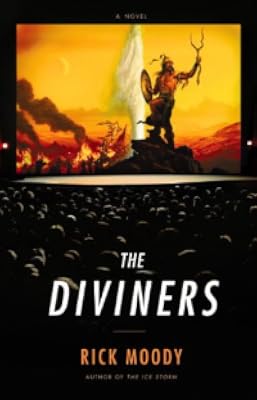
Novelist Rick Moody was born in Fairfield, Connecticut on October 18, 1962. He is an undergraduate of Brown University and has a Master of Fine Arts Degree from Columbia University. Moody's works often demonstrate the concept that money makes no difference in the problems people face. His first novel, Garden State, won Pushcart's Tenth Annual show more Editor's Book Award. The Ice Storm (1994) was adapted into the 1997 film starring Kevin Kline and Sigourney Weaver. In 1999, The New Yorker chose him as one of America's most talented young writers, listing him on their "20 Writers for the 21st Century" list. He has also won the Addison Metcalf Award and has received a Guggenheim Fellowship. Moody's memoir The Black Veil (2002) won the PEN/Martha Albrand Award for the Art of the Memoir. His other works include The Diviners and The Four Fingers of Death. In 2012 he won Fernanda Pivano Award in Italy. Moody has taught at Yale University, Princeton University, the State University of New York at Purchase and Bennington College, and New York University. (Bowker Author Biography) show less
Some Editions
Common Knowledge
- Original publication date
- 2001
Classifications
Statistics
- Members
- 694
- Popularity
- 41,349
- Reviews
- 10
- Rating
- (3.41)
- Languages
- 7 — Dutch, English, French, German, Italian, Portuguese (Portugal), Spanish
- Media
- Paper, Ebook
- ISBNs
- 17
- ASINs
- 8