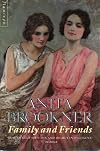
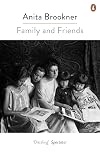
Family and Friends
by Anita Brookner
On This Page
Description
Follows the members of a rich European family--the widow Sofka and her four children, Frederick, Alfred, Mimi, and Betty, from prewar London to their various destinies in such places as Paris, Hollywood, and the Italian Riviera.Tags
Recommendations









































Member Reviews
"Reading, to Alfred, means his cool back bedroom at home, with a curtain blowing in front of the open window, and a white counterpane on his soft bed and his dead father's desk in the corner, waiting to be made his own. Reading, for Alfred means a dream of home that he is condemned to lose, to forfeit, in some unsought trial of manhood. Reading means his sister's voice drifting up the stairs and the polite clapping of the visitors and the faint chink of coffee-cups. Reading means Mimi knocking at his door and handing in a glistening slice of cherry tart. Only Mimi bothers to knock. For this, Alfred loves her best. His mother must never know this." (page 30)
Sofia Dorn runs her London household with a firm and formidable hand in the years show more between (and after) the wars. Her oldest son, Frederick, is a happy go lucky, uninspired but congenial young man who is running the family business with the help of his right hand man. Frederick has no intention of making this his life's work. He doesn't have the gumption for that kind of responsibility whether his mother realizes that or not. That job will fall by default to young Alfred who has dreams of being an intellectual/artist/anything else. Young daughter Betty, has no use for anything but amusement of all types and will never fulfill her mother's hopes and dreams. And older daughter Mimi will eventually be saddled with responding with respectability and common sense to make up for her sister's lack of both. This is their story.
Written as a brilliant character study of these four people Brookner is at the top of her game with this book. I was angry and sympathetic; amused and intrigued; flabbergasted and understanding. She was able to bring these people to life in an incredible manner while at the same time making their lives seem very very ordinary. Very highly recommended. show less
Sofia Dorn runs her London household with a firm and formidable hand in the years show more between (and after) the wars. Her oldest son, Frederick, is a happy go lucky, uninspired but congenial young man who is running the family business with the help of his right hand man. Frederick has no intention of making this his life's work. He doesn't have the gumption for that kind of responsibility whether his mother realizes that or not. That job will fall by default to young Alfred who has dreams of being an intellectual/artist/anything else. Young daughter Betty, has no use for anything but amusement of all types and will never fulfill her mother's hopes and dreams. And older daughter Mimi will eventually be saddled with responding with respectability and common sense to make up for her sister's lack of both. This is their story.
Written as a brilliant character study of these four people Brookner is at the top of her game with this book. I was angry and sympathetic; amused and intrigued; flabbergasted and understanding. She was able to bring these people to life in an incredible manner while at the same time making their lives seem very very ordinary. Very highly recommended. show less
Family and Friends opens with a wedding photograph, a group of family and friends in the 1920s, Sophia Dorn – always called by the diminutive Sofka – her eldest son; Frederick, the pride and joy, her daughters; Mimi and Betty all in white, while Alfred the youngest and favourite sat crossed legged at the front with assorted other children. This wedding photo and the ones which follow later in the novel form a frame for telling the stories of these family members and their hangers on. The final photograph coming on the last page – it is the last one in the album we are told by the unnamed narrator.
“At the wedding they will dance, husbands with wives, fathers with daughters. Under watchful gazes the young people will flirt, amazed show more that no one is stopping them. The music will become slower, sweeter, as the evening wears on. The children will be flushed, glassy-eyed with tiredness, their beauty extraordinary, as if it were painted. On the gilt chairs the elders will sit and talk. Reflecting on the following day, Sofka will judge the event a success.”
The family live in Bryanston Square, London, Frederick at only twenty-one is at the helm of the family business started by Sofka’s late husband. Alfred is just sixteen, but expected upon leaving school to enter into the business, learn it all from Frederick and the faithful Lautner who has been there since the beginning and without whom the firm wouldn’t be as successful. Mireille and Babette (Mimi and Betty) are the pretty daughters, whose job it is to flirt while the boys go out and conquer. However, Frederick already has itchy feet – eager to escape the confines of the business and leave it in the hands of his little brother. Frederick meets Eva, of whom Sofka is immediately suspicious – rightly so as it turns out, for it isn’t long before Evie (as she prefers to be called) has spirited Frederick away to Italy to help run a family hotel. Alfred, much to his frustration is left to run the business, any hope of freedom slipping daily away. His adult life (still only sixteen) starts as it will continue, living with his mother and sisters, spending his days at the family business, which he discusses with Lautner each Sunday evening in Sofka’s drawing room where she serves her famous marzipan cake.
“If anyone had ever bothered to tell her, Betty would know that she bears a marked resemblance to Colette, that redoubtable French writer of whom Betty has never heard… At fifteen she is already the accomplished flirt that her mother has always thought she wanted her to be. Plump and petite like Sofka, with the same small hands and feet, Betty has a guttersnipe charm.”
The two sisters are quite different, Betty, reckless and wild, she longs to run away to join the Folies-Bergères. Mimi, the elder of the two is milder, dreamy and beautiful. Once a week Betty accompanies her sister to her piano lesson with Mr Cariani, here they meet Mr Cariani’s son Frank, a darkly handsome, lithe dance instructor. Betty does run away – to Paris where she intends to get a job dancing, having arranged to meet up with Frank Cariani. Sofka is furious and sends Mimi and Alfred to Paris after her. Alfred’s seventeenth birthday passes while he sits miserable and forgotten in a city he doesn’t want to be in. Believing she has everything in hand Mimi sends an unhappy Alfred home on an earlier train, while she meets up with Betty, finding her in a pavement café just as Frank arrives. Mimi who was always the sister Frank preferred, expects to win him back. She sits all night by the window in her hotel room waiting, and Frank never arrives to win her, the devastation she feels seems to set the course for the rest of her life.
Betty never does return home, swapping Frank for Max, and Paris for California. With Frederick and Evie in Italy, Mimi and Alfred remain with Sofka. There are letters and phone calls from Frederick and Betty – but the life of Sofka’s house continues without them. As always in life, the years pass by with almost unbelievable speed – and as they do Alfred’s disappointment and resentment grows. In his hands, the business goes from strength to strength, and in time he buys a country house; Wren House – where the family go at weekends. Times have changed since that first photograph was taken and family relations have fractured. A war has come and gone, barely mentioned by Brookner, although Sofka understood the dangerous times when a woman she knew vaguely once, appears at the door selling lace. It’s a delicately revealing passage – the reader understands that Sofka and her old acquaintance are Jewish.
“Of the past, by common consent, they do not speak. It is too dangerous, too painful. Collapses might take place, youthful hopes might be remembered, wave after wave of reminiscence might be activated, and the woman gives Sofka to understand that nothing now must be cherished; only a dry appraisal of the possible is to be allowed. At last, and fearfully, Sofka enquires, ‘Your children?’ For the first time the woman relaxes, and smiles. ‘Safe,’ she says. ‘Here.’”
As ever, Brookner’s characters drive the novel, the plot is simple enough, but – again as ever – her sense of place is superb, I always enjoy her descriptions. An introspective little novel, with little dialogue, it is a quietly evocative portrait of a family. show less
“At the wedding they will dance, husbands with wives, fathers with daughters. Under watchful gazes the young people will flirt, amazed show more that no one is stopping them. The music will become slower, sweeter, as the evening wears on. The children will be flushed, glassy-eyed with tiredness, their beauty extraordinary, as if it were painted. On the gilt chairs the elders will sit and talk. Reflecting on the following day, Sofka will judge the event a success.”
The family live in Bryanston Square, London, Frederick at only twenty-one is at the helm of the family business started by Sofka’s late husband. Alfred is just sixteen, but expected upon leaving school to enter into the business, learn it all from Frederick and the faithful Lautner who has been there since the beginning and without whom the firm wouldn’t be as successful. Mireille and Babette (Mimi and Betty) are the pretty daughters, whose job it is to flirt while the boys go out and conquer. However, Frederick already has itchy feet – eager to escape the confines of the business and leave it in the hands of his little brother. Frederick meets Eva, of whom Sofka is immediately suspicious – rightly so as it turns out, for it isn’t long before Evie (as she prefers to be called) has spirited Frederick away to Italy to help run a family hotel. Alfred, much to his frustration is left to run the business, any hope of freedom slipping daily away. His adult life (still only sixteen) starts as it will continue, living with his mother and sisters, spending his days at the family business, which he discusses with Lautner each Sunday evening in Sofka’s drawing room where she serves her famous marzipan cake.
“If anyone had ever bothered to tell her, Betty would know that she bears a marked resemblance to Colette, that redoubtable French writer of whom Betty has never heard… At fifteen she is already the accomplished flirt that her mother has always thought she wanted her to be. Plump and petite like Sofka, with the same small hands and feet, Betty has a guttersnipe charm.”
The two sisters are quite different, Betty, reckless and wild, she longs to run away to join the Folies-Bergères. Mimi, the elder of the two is milder, dreamy and beautiful. Once a week Betty accompanies her sister to her piano lesson with Mr Cariani, here they meet Mr Cariani’s son Frank, a darkly handsome, lithe dance instructor. Betty does run away – to Paris where she intends to get a job dancing, having arranged to meet up with Frank Cariani. Sofka is furious and sends Mimi and Alfred to Paris after her. Alfred’s seventeenth birthday passes while he sits miserable and forgotten in a city he doesn’t want to be in. Believing she has everything in hand Mimi sends an unhappy Alfred home on an earlier train, while she meets up with Betty, finding her in a pavement café just as Frank arrives. Mimi who was always the sister Frank preferred, expects to win him back. She sits all night by the window in her hotel room waiting, and Frank never arrives to win her, the devastation she feels seems to set the course for the rest of her life.
Betty never does return home, swapping Frank for Max, and Paris for California. With Frederick and Evie in Italy, Mimi and Alfred remain with Sofka. There are letters and phone calls from Frederick and Betty – but the life of Sofka’s house continues without them. As always in life, the years pass by with almost unbelievable speed – and as they do Alfred’s disappointment and resentment grows. In his hands, the business goes from strength to strength, and in time he buys a country house; Wren House – where the family go at weekends. Times have changed since that first photograph was taken and family relations have fractured. A war has come and gone, barely mentioned by Brookner, although Sofka understood the dangerous times when a woman she knew vaguely once, appears at the door selling lace. It’s a delicately revealing passage – the reader understands that Sofka and her old acquaintance are Jewish.
“Of the past, by common consent, they do not speak. It is too dangerous, too painful. Collapses might take place, youthful hopes might be remembered, wave after wave of reminiscence might be activated, and the woman gives Sofka to understand that nothing now must be cherished; only a dry appraisal of the possible is to be allowed. At last, and fearfully, Sofka enquires, ‘Your children?’ For the first time the woman relaxes, and smiles. ‘Safe,’ she says. ‘Here.’”
As ever, Brookner’s characters drive the novel, the plot is simple enough, but – again as ever – her sense of place is superb, I always enjoy her descriptions. An introspective little novel, with little dialogue, it is a quietly evocative portrait of a family. show less
The tale of a family, told at a slight distance, as from an observer. The head of the family is clearly Sofka, who likes to control what her family does. It appears that the story begins in the early 1900s and proceeds several years, as the children grow into themselves.
Things do not go quite as Sofka would have liked. Our narrator soberly describes how the partying Frederick first "manages" the family business, then finds his way into a marriage. How Betty runs off to Paris. How Mimi, ever the good girl, does her mother's bidding. How Alfred takes the business to greater heights but with less and less satisfaction. Am I giving too much away? I'm not sure. It is a short book and a reader will quickly find these things out.
At first I was show more a bit unhappy with the narrative style. I wanted it to be more personal. But the voice was chosen for a reason, and the quiet humor might not be there without it. show less
Things do not go quite as Sofka would have liked. Our narrator soberly describes how the partying Frederick first "manages" the family business, then finds his way into a marriage. How Betty runs off to Paris. How Mimi, ever the good girl, does her mother's bidding. How Alfred takes the business to greater heights but with less and less satisfaction. Am I giving too much away? I'm not sure. It is a short book and a reader will quickly find these things out.
At first I was show more a bit unhappy with the narrative style. I wanted it to be more personal. But the voice was chosen for a reason, and the quiet humor might not be there without it. show less
A gem of a book that, at its heart is, as usual with Ms Brookner, a graceful exposition of family life from one of the great writers.
A Compton-Burnett title and indeed style, with touches of Elizabeth Bowen. Following the lives of four very different siblings, using wedding photos as a hook for different times of their lives. Set around the war years (though not really concerned with it).
This is an extraordinarily visual book and it reminded me of the 80's French movie Sunday in the country. The movie looks like a series of paintings by Degas and Renoir, and this book is set up to show a family in a series of family portraits. This is a story of a strong-willed woman who has specific plans for her four children. Two of them live lives which conform to her plans; two rebel; and none is terribly happy with the choices made. Time and World War II act as a wedge, driving the errant children further away. This is a curious book. All of the action--what there is of it--is described, not shown. It's a pleasant read, but somewhat odd.
another quick can't put down read by this author
Members
- Recently Added By
Lists

Books Read in 2023
5,638 works; 147 members

TML 200 Best Books 1950-1999
202 works; 10 members

Books Read in 2018
4,360 works; 110 members

Books Read in 2025
4,128 works; 98 members

The Modern Library (The Two Hundred Best Novels....
202 works; 1 member
Author Information

35+ Works 12,831 Members
Anita Brookner was born in London, England on July 16, 1928. She received a BA in history from King's College London in 1949 and a doctorate in art history from the Courtauld Institute of Art in 1953. She went on to lecture in art at Reading University and the Courtauld Institute, where she specialized in eighteenth- and nineteenth-century French show more art. She became the first woman to be named as Slade Professor of Art at Cambridge University in 1967. Her first novel, A Start in Life, was published in 1981. Some of her other works include The Bay of Angels, The Next Big Thing, The Rules of Engagement, Latecomers, Leaving Home, Incidents in the Rue Laugier, Look at Me, and Strangers. Hotel du Lac won the Booker Prize for Fiction in 1984 and was adapted for television in 1986. She has also written scholarly works about Jacques Louis David, Jean Baptiste Greuze, and Jean-Antoine Watteau. She died on March 10, 2016 at the age of 87. (Bowker Author Biography) show less
Awards and Honors
Notable Lists
Series
Belongs to Publisher Series
Andanzas (97)
Otavan kirjasto (63)
Common Knowledge
- Original title
- Family and Friends
- Original publication date
- 1985
- Epigraph
- THERE is much to be said for the advantage of rules and regulations, much the same thing as can be said in praise of middle-class society - he who sticks to them will never produce anything that is bad or in poor taste, just ... (show all)as he who lets himself be moulded by law, order and prosperity will never become an intolerable neighbour or a striking scoundrel. On the other hand... rules and regulations ruin our true appreciation of nature and our powers to express it.
Goethe, The Sorrows of Young werther, 1774 - First words
- Here is Sofka, in a wedding photograph; at least, I assume it is a wedding, although the bride and groom are absent. Sofka stands straight and stern, her shoulders braced, her head erect in the manner of two generations earli... (show all)er.
- Last words
- (Click to show. Warning: May contain spoilers.)Wait for the dancing to begin.
- Original language*
- englanti
*Some information comes from Common Knowledge in other languages. Click "Edit" for more information.
Classifications
Statistics
- Members
- 539
- Popularity
- 55,486
- Reviews
- 7
- Rating
- (3.49)
- Languages
- 10 — Catalan, Danish, Dutch, English, Finnish, French, German, Norwegian, Spanish, Swedish
- Media
- Paper, Audiobook, Ebook
- ISBNs
- 28
- ASINs
- 8