On This Page
Description
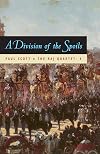
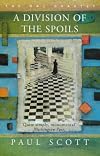
After exploiting India's divisions for years, the British depart in such haste that no one is prepared for the Hindu-Muslim riots of 1947. The twilight of the raj turns bloody. Against the backdrop of the violent partition of India and Pakistan, A Division of the Spoils illuminates one last bittersweet romance, revealing the divided loyalties of the British as they flee, retreat from, or cling to India.Tags
Recommendations


















Member Recommendations
Cecrow As a sort of coda to the Raj Quartet, you'll learn what happened afterwards in Pankot and to several of the characters.

Member Reviews
The fourth and final installment in Paul Scott’s inimitable Raj Quartet, A Division of the Spoils left me breathless and shaken. Scott has done for the struggle for Indian independence what Tolstoy did for Russia’s Napoleonic War: it has brought it to life, given it flesh and substance, and shown its effect on the people it touched and the world at large. If there was anything worse than the dominion The British Empire exercised over the Indian continent, it was the abrupt and heartless manner in which they carved up and deserted it to its own rule after some 200 years of having every decision handed down as an edict.
After building slowly a complex tale of personalities and interlocking fates, Scott did not disappoint in painting show more this shattering end. A historian greater than myself has told me that the writing of these books literally killed the author; that he put so much of himself into them and gave them so much of his time and energy that he neglected his deteriorating health and hastened his end. What a sad fact to contemplate, but I can surely see that there was a soul poured into their making; in fact, I feel as if a bit of my own soul was stolen in the reading. I will certainly never look at India in the same way again. I feel as if a journey I began with Forster’s Passage to India, and filled in with Rohinton Mistry’s A Fine Balance, has been completed with The Raj Quartet. The India I carried in my mind has been shattered and replaced with a sadder but more human image, peppered with a huge respect for the Indian people who have pushed forward with dignity through such a tumultuous history.
I cannot close without mentioning the central characters of this drama, who have become so real for me. Ronald Merrick is the consummate evil man who believes that he is a wise and heroic savior. He buys his own PR, the image of efficiency and capability that he sells to his superiors, while using the most vile of means to punish others for his own shortcomings. Part of what makes him so frightening is his humanity, the way he verges on the edge of being something better, his lack of understanding of himself or others and his unwillingness to attribute any responsibility to his own failings. It is observed of him,
He had a talent, one that amounted to genius, for seeing the key or combination of keys that would open a situation up so that he could twist it to suit his purpose.
And, he does that over and over again, aided and abetted by the system that has made him and left him in charge of the lives of others who are hated for the basest of reasons.
In contrast to Merrick, Hari Kumar is the epitome of a good soul and wasted potential, a man who has so much to offer society but who is deprived of giving that by the ridiculous racial prejudices of the society itself and the inexplicable hatred he incurs from Merrick for being too British, too educated, and too promising. In their company we find a dozen other breathing beings, Daphne Manners who dares to love outside the artificial lines; Barbie Bachelor a rare British citizens who comes to see the Indian population as persons, instead of servants; Sarah Layton, who belongs to India more than to England, but struggles to find her place in a world that no longer has order and soon will not even exist; Ahmed Kasim; Guy Perron; Nigel Rowan; Dmitri Boronowsky.
I agree wholly with Paul Scott when he has his character, Guy Perron, say,
The deeply subjective feelings, like joy, fear, love, are the most difficult to convey. One has to make do, more often than not, with the crutch of the words themselves.
I can assure you, the words are more than a crutch in Scott's hands. He conveys every feeling that is dearest to the heart and hardest to face or identify. He covers all the human emotions: hate, fear, jealousy, intimidation, insecurity, love, passion, desire, regret, pride, despair, horror; and he conveys them with so much feeling that you are reduced to tears or tighten with anxiety.
It is my fondest wish that I live long enough to read this set of novels again someday. I would like to come at them armed with all the foreknowledge of the first read so that I can process the details and clever hints sprinkled throughout. There are books that make me grateful to be a reader and extremely grateful that God blessed some men with the talents to write significantly--the Raj Quartet is a perfect example of writing that stirs those emotions. show less
After building slowly a complex tale of personalities and interlocking fates, Scott did not disappoint in painting show more this shattering end. A historian greater than myself has told me that the writing of these books literally killed the author; that he put so much of himself into them and gave them so much of his time and energy that he neglected his deteriorating health and hastened his end. What a sad fact to contemplate, but I can surely see that there was a soul poured into their making; in fact, I feel as if a bit of my own soul was stolen in the reading. I will certainly never look at India in the same way again. I feel as if a journey I began with Forster’s Passage to India, and filled in with Rohinton Mistry’s A Fine Balance, has been completed with The Raj Quartet. The India I carried in my mind has been shattered and replaced with a sadder but more human image, peppered with a huge respect for the Indian people who have pushed forward with dignity through such a tumultuous history.
I cannot close without mentioning the central characters of this drama, who have become so real for me. Ronald Merrick is the consummate evil man who believes that he is a wise and heroic savior. He buys his own PR, the image of efficiency and capability that he sells to his superiors, while using the most vile of means to punish others for his own shortcomings. Part of what makes him so frightening is his humanity, the way he verges on the edge of being something better, his lack of understanding of himself or others and his unwillingness to attribute any responsibility to his own failings. It is observed of him,
He had a talent, one that amounted to genius, for seeing the key or combination of keys that would open a situation up so that he could twist it to suit his purpose.
And, he does that over and over again, aided and abetted by the system that has made him and left him in charge of the lives of others who are hated for the basest of reasons.
In contrast to Merrick, Hari Kumar is the epitome of a good soul and wasted potential, a man who has so much to offer society but who is deprived of giving that by the ridiculous racial prejudices of the society itself and the inexplicable hatred he incurs from Merrick for being too British, too educated, and too promising. In their company we find a dozen other breathing beings, Daphne Manners who dares to love outside the artificial lines; Barbie Bachelor a rare British citizens who comes to see the Indian population as persons, instead of servants; Sarah Layton, who belongs to India more than to England, but struggles to find her place in a world that no longer has order and soon will not even exist; Ahmed Kasim; Guy Perron; Nigel Rowan; Dmitri Boronowsky.
I agree wholly with Paul Scott when he has his character, Guy Perron, say,
The deeply subjective feelings, like joy, fear, love, are the most difficult to convey. One has to make do, more often than not, with the crutch of the words themselves.
I can assure you, the words are more than a crutch in Scott's hands. He conveys every feeling that is dearest to the heart and hardest to face or identify. He covers all the human emotions: hate, fear, jealousy, intimidation, insecurity, love, passion, desire, regret, pride, despair, horror; and he conveys them with so much feeling that you are reduced to tears or tighten with anxiety.
It is my fondest wish that I live long enough to read this set of novels again someday. I would like to come at them armed with all the foreknowledge of the first read so that I can process the details and clever hints sprinkled throughout. There are books that make me grateful to be a reader and extremely grateful that God blessed some men with the talents to write significantly--the Raj Quartet is a perfect example of writing that stirs those emotions. show less
I am at a loss for words. I have no idea what to write about this last volume of The Raj Quartet and about the entire series. Magnificent? Brilliant? Superb? They all fit but why? What has Scott done to rise to this level of superior literature, maybe the best thing I’ve ever read?
Character development is the first thing that comes to mind. Ronald Merrick may be the most evil character ever created. His self-serving smugness while he humiliates and destroys others is brilliantly depicted. Hari Kumar is the perfect foil. Soft-spoken, gentle, and protective of the white woman he has come to respect and admire, even though he knows how unacceptable this is in his homeland of India. Barbie Batchelor, retired mission administrator and show more teacher only wants what she believes is right and just. Edwina Crane, mission administrator realizes too late the value of her Indian teachers. The women, wives of the military men who are either serving in Europe or in the Far East, as their spouses literally hold down the fort in India. Their interactions and opinions are invaluable as they keep the plot moving. Guy Perron, historian at best, sifts all the facts and sorts things out at the end. Sarah Layton, one of the most complex women in literature, ponders whether she fits in India or should she be living in Great Britain, where she feels she really belongs. I could go on and on but I’ll stop there.
The historical significance of this series of novels is probably its most important aspect. I knew little to nothing about the machinations of the demise of the British in India in the years during WWII and leading up to the1947 partition and independence of India but Scott’s evocation of all that brought it about was incredibly haunting and yet brilliantly informative.
Make no mistake this series has a lot to love: police procedural, forbidden love, politics, military technique, murder, racism and history come alive, all carefully constructed in the making of a very complex narrative. Add to that the incredibly beautiful, almost poetic, prose employed by Scott which left me holding my breath at times. Very, very highly recommended. show less
Character development is the first thing that comes to mind. Ronald Merrick may be the most evil character ever created. His self-serving smugness while he humiliates and destroys others is brilliantly depicted. Hari Kumar is the perfect foil. Soft-spoken, gentle, and protective of the white woman he has come to respect and admire, even though he knows how unacceptable this is in his homeland of India. Barbie Batchelor, retired mission administrator and show more teacher only wants what she believes is right and just. Edwina Crane, mission administrator realizes too late the value of her Indian teachers. The women, wives of the military men who are either serving in Europe or in the Far East, as their spouses literally hold down the fort in India. Their interactions and opinions are invaluable as they keep the plot moving. Guy Perron, historian at best, sifts all the facts and sorts things out at the end. Sarah Layton, one of the most complex women in literature, ponders whether she fits in India or should she be living in Great Britain, where she feels she really belongs. I could go on and on but I’ll stop there.
The historical significance of this series of novels is probably its most important aspect. I knew little to nothing about the machinations of the demise of the British in India in the years during WWII and leading up to the1947 partition and independence of India but Scott’s evocation of all that brought it about was incredibly haunting and yet brilliantly informative.
Make no mistake this series has a lot to love: police procedural, forbidden love, politics, military technique, murder, racism and history come alive, all carefully constructed in the making of a very complex narrative. Add to that the incredibly beautiful, almost poetic, prose employed by Scott which left me holding my breath at times. Very, very highly recommended. show less
(30) The last of the Raj Quartet. Fortunately, I still have most of the episodes of the BBC series to watch so I don't have to say goodbye quite yet. This last installment introduced us to two British soldiers, Nigel Rowan, and Guy Perron - both had gone to the posh private school with Hari Kumar back in England. They are satellites to the Laytons whose patriarch returns from captivity. The Laytons lives are still intertwined with the Kasims, the Nawab and Count Bronofsky, and of course Merrick who continues to be the ultimate enigma right up until the end. . . Britain relinquishes power, the partition off of Pakistan occurs, and the book ends shockingly in the midst of the Hindu-Muslim riots on 1947.
Scott's writing is sublime - dense, show more but sublime. As usual, there are parts, in particular dealing with the politics, that are dull and require I think some knowledge of the time that I didn't seem to possess despite reading these novels. That is mostly why I've taken 1/2 star off of the preceding novels, but despite this the whole reading experience has been unparalleled.
Scott weaves magic with characterization, realistic dialogue, different mediums for telling the story through all optics - letters, newspaper articles, reminisces, direct narration. You really feel as if you are in those close, moldy, haunted bungalows having a brandy. Or in a train compartment watching the cows, and Indian peasants roll by, reading the Mayapore Gazette and contemplating tiffin.
Some things that haunt -- Merrick's 'accident', Hari's home, Ahmed's last smile. I will miss the experience of reading these novels. Definitely one of the best experiences of my reading life. show less
Scott's writing is sublime - dense, show more but sublime. As usual, there are parts, in particular dealing with the politics, that are dull and require I think some knowledge of the time that I didn't seem to possess despite reading these novels. That is mostly why I've taken 1/2 star off of the preceding novels, but despite this the whole reading experience has been unparalleled.
Scott weaves magic with characterization, realistic dialogue, different mediums for telling the story through all optics - letters, newspaper articles, reminisces, direct narration. You really feel as if you are in those close, moldy, haunted bungalows having a brandy. Or in a train compartment watching the cows, and Indian peasants roll by, reading the Mayapore Gazette and contemplating tiffin.
Some things that haunt -- Merrick's 'accident', Hari's home, Ahmed's last smile. I will miss the experience of reading these novels. Definitely one of the best experiences of my reading life. show less
Like the rest of the Quartet it's a tough initial fifty pages or so to get into, but then there's nothing but reward for the effort. This final story is driven by the winding down of the Raj as background to Sarah Layton's possible suitors and the further activities of the mysterious Merrick - villain or just misunderstood? In the meantime it's an eye-opener to the violence that erupted between Muslims and Hindus in the wake of the independence announcement. It's a harsh contrast to the idyllic multicultural scene portrayed by Rudyard Kipling. Mirat could be seen as India in microcosm, and the question is asked in multiple ways whether Britain dodged a moral obligation in its hasty exit.
The entire Quartet hangs together very well. Paul show more Scott is brilliant at transmitting story through dialogue, and it's the conversations between characters where most of the story happens. He thrives on revisiting scenes from different perspectives that inform one another. No one character can piece together the elements from each to arrive at a full picture like the reader can. Of course this does enormous damage to following the events chronologically (e.g. you'll find out who stepped off the train; just hang in there.) Apparently the miniseries straightens everything out, which would be refreshing.
Even after 2,000 pages I don't know if I'm ready for the Raj Quartet to be over. I don't know if it's the story and its characters I'll miss most, or Paul Scott's wonderful style. This was every bit the epic journey that my enormous single-volume edition hinted it would be. show less
The entire Quartet hangs together very well. Paul show more Scott is brilliant at transmitting story through dialogue, and it's the conversations between characters where most of the story happens. He thrives on revisiting scenes from different perspectives that inform one another. No one character can piece together the elements from each to arrive at a full picture like the reader can. Of course this does enormous damage to following the events chronologically (e.g. you'll find out who stepped off the train; just hang in there.) Apparently the miniseries straightens everything out, which would be refreshing.
Even after 2,000 pages I don't know if I'm ready for the Raj Quartet to be over. I don't know if it's the story and its characters I'll miss most, or Paul Scott's wonderful style. This was every bit the epic journey that my enormous single-volume edition hinted it would be. show less
I was sad when I read the last page of this brilliant sweeping saga about British colonialism in India. The last days of Raj control were complicated by the longheld and ongoing animosity between Muslims and Hindus which had festered under the two centuries of British control. Politics and religion have never mixed well and the independence of India in 1947 was no exception.
Paul Scott is a master of historical fiction. He covers the final years of British occupation with great depth and sensitivity. He creates a powerful story of hopeless love and an unfortunate rape that introduces the reader to some memorable characters who intertwine throughout the four books that make up The Raj Quartet. Every good book is better with a villain. show more Richard Merrick, a Brit employed by the Indian Police, shows how depraved he can be when he tortures the innocent Hari Kumar, an Indian raised and educated in England, who is a lost soul in his native land. He is offstage in Book Four but is still the driving force of Merrick's sadism and bigotry which is seen through the eyes of a new character, Guy Perron, whose diaries and intelligent questions help explain the complex and emotional developments that took place in the last years of Raj rule. I read these books over a period of several months, so I appreciated the way the different threads of interactions between the natives and the British were expanded upon as different narrators added insight into events.
I finally feel that I have a better understanding of colonialism after reading Scott's skillful tale of how the jewel in England's crown began to lose its luster. I was horrified to learn that approximately 250,000 lives were lost in the massacres that occurred between Muslims and Hindus as they migrated during the partition. Scott doesn't linger on facts, but he does show the impact on individual lives who get caught in the course of history. show less
Paul Scott is a master of historical fiction. He covers the final years of British occupation with great depth and sensitivity. He creates a powerful story of hopeless love and an unfortunate rape that introduces the reader to some memorable characters who intertwine throughout the four books that make up The Raj Quartet. Every good book is better with a villain. show more Richard Merrick, a Brit employed by the Indian Police, shows how depraved he can be when he tortures the innocent Hari Kumar, an Indian raised and educated in England, who is a lost soul in his native land. He is offstage in Book Four but is still the driving force of Merrick's sadism and bigotry which is seen through the eyes of a new character, Guy Perron, whose diaries and intelligent questions help explain the complex and emotional developments that took place in the last years of Raj rule. I read these books over a period of several months, so I appreciated the way the different threads of interactions between the natives and the British were expanded upon as different narrators added insight into events.
I finally feel that I have a better understanding of colonialism after reading Scott's skillful tale of how the jewel in England's crown began to lose its luster. I was horrified to learn that approximately 250,000 lives were lost in the massacres that occurred between Muslims and Hindus as they migrated during the partition. Scott doesn't linger on facts, but he does show the impact on individual lives who get caught in the course of history. show less
I have been anticipating the final book in the Raj Quartet by Paul Scott wondering how the author would bring this impressive tale to a close. The Quartet itself has been an epic read as it records encounters between East and West through the eyes of some of the people that are caught up in the changes brought about by the Second World War and the growing unrest of the Indian people anxious for independence.
In this final volume, A Division of the Spoils, Scott brings his story full circle as he continues with his practise of retelling previous events through the eyes of different characters. It is now 1947 and once again we encounter many of the people we have gotten to know in the previous books. We see the Raj collapsing and the show more British leaving and modern India being born amongst upheaval, violence and separation. Scott again captures the feeling of the time and delivers a masterful story. As always his narrative rings true to the character who is highlighted at the time.
I am both regretful and thankful to reach the end of this series and it’s lush, picturesque portrayal of these last years of British control in India. The characters are distinct and will last in my memory for some time, many were trapped in the traditions and morals of the time, most suffered difficulties of some sort and, some died. The book leaves us with a vivid picture of the natural conclusion of colonial rule and the love/hate relationship that existed between the ruling class and the native population. A Division of the Spoils is a worthy addition to the Quartet and although not all the pieces of the story are neatly tied up, this book brings a feeling of completion to this enthralling saga. show less
In this final volume, A Division of the Spoils, Scott brings his story full circle as he continues with his practise of retelling previous events through the eyes of different characters. It is now 1947 and once again we encounter many of the people we have gotten to know in the previous books. We see the Raj collapsing and the show more British leaving and modern India being born amongst upheaval, violence and separation. Scott again captures the feeling of the time and delivers a masterful story. As always his narrative rings true to the character who is highlighted at the time.
I am both regretful and thankful to reach the end of this series and it’s lush, picturesque portrayal of these last years of British control in India. The characters are distinct and will last in my memory for some time, many were trapped in the traditions and morals of the time, most suffered difficulties of some sort and, some died. The book leaves us with a vivid picture of the natural conclusion of colonial rule and the love/hate relationship that existed between the ruling class and the native population. A Division of the Spoils is a worthy addition to the Quartet and although not all the pieces of the story are neatly tied up, this book brings a feeling of completion to this enthralling saga. show less
"An emigration is possibly the loneliest experience a man can suffer. In a way it is not a country he has lost but a home, or even just a part of a home, a room perhaps, or something in that room that he has had to leave behind, and which haunts him."
This novel is the concluding part to Paul Scott's 'Raj Quartet'. This book is largely written in two parts. The first set in 1945 just as WWII is coming to an end, the latter in 1947 just before India gains independence. Both English and Indians alike must ask themselves what place there is for them in a new India.
In this book we are introduced to a new character, Sergeant Guy Perron. Perron is not really made to be a soldier or an intelligence officer rather he is an academic interested in show more Indian history and culture. Despite coming from a privileged background and having attended the same boy's school as most of the central male characters Perron has resisted all attempts to make him an officer. He is trying to keep a low profile, hoping to pass the war years quietly and resume civilian life as soon as possible thereafter. Perron attends a party hosted by a maharanee as part of his investigation into possible security leaks where he meets Ronald Merrick (the policemen, now a soldier, at the centre of the incident in The Jewel in the Crown), Sarah Layton and Count Bronowsky (both of whom we first met in The Day of the Scorpion). When Perron's senior officer commits suicide Merrick decides to get Perron transferred to his own staff.
Merrick, now a Major, remains eager to achieve a rise in social standing despite his hatred for those born into privilege. Merrick represents the worst characteristics of the English in India, where greedy, unremarkable Englishmen have carved something out for themselves, simply because of the colour of their skin.
The Layton family have their issues as well. Susan, is clearly still struggling to cope with the death of her husband whilst their father, Lt Col Layton, has returned from a German prisoner of war camp a different man; uncertain of himself as his family are of him. Sarah works diligently to be the glue that keeps the family together, sacrificing herself to do so.
With Indian independence inevitable the future of princely states such as Mirat, ruled by the Nawab assisted by his chief-advisor Count Bronowsky, is increasingly uncertain, whilst the growth in power of the Muslim League has made the formation of Pakistan almost inevitable. Meanwhile the Indian National Army (INA) – a rebel army composed of Indian soldiers captured by the Japanese and released on the condition that they now serve Japan are now returning to their homes. Are they freedom fighters or traitors?
As Perron reluctantly works for Merrick, befriends the Layton family, enjoys the hospitality of the Nawab, he becomes the reader's main witness to unfolding events. Though he remains enchanted with India, shocking events as independence nears, means that, like the English, his time there too must come to an end.
Being the final book in the series this review inevitably also becomes one of the quartet, largely because the two seem to neatly dovetail one another. Despite the whole series stretching over roughly 2000 pages there is remarkably little action but when there is it is often explosive.I found some parts genuinely engrossing, often when characters discuss events in India at the time, cultural and racial divides, and the roles of colonist and colonised. However, frustratingly, there were also a lot of dull passages. Parts that are slow, uninteresting or seemingly unnecessary, whilst his penchant for repetition and long convoluted sentences, (often consisting of brackets) continued to annoy me. In this book, a long section was taken up by a near repetition of the interview between Hari Kumar and Rowan whilst the former was still in prison. In the earlier book this was compelling reading but here it was just plain annoying and a touch patronising.
Having now read the entire quartet, I think this final novel is symptomatic of the whole. There is much to admire and despite my issues with some of his writing style, his knowledge and appreciation of a complex and controversial time in history, his exploration of them through a disparate set of characters caught up in events much larger than themselves is quite astounding, making this quartet: a true epic. show less
This novel is the concluding part to Paul Scott's 'Raj Quartet'. This book is largely written in two parts. The first set in 1945 just as WWII is coming to an end, the latter in 1947 just before India gains independence. Both English and Indians alike must ask themselves what place there is for them in a new India.
In this book we are introduced to a new character, Sergeant Guy Perron. Perron is not really made to be a soldier or an intelligence officer rather he is an academic interested in show more Indian history and culture. Despite coming from a privileged background and having attended the same boy's school as most of the central male characters Perron has resisted all attempts to make him an officer. He is trying to keep a low profile, hoping to pass the war years quietly and resume civilian life as soon as possible thereafter. Perron attends a party hosted by a maharanee as part of his investigation into possible security leaks where he meets Ronald Merrick (the policemen, now a soldier, at the centre of the incident in The Jewel in the Crown), Sarah Layton and Count Bronowsky (both of whom we first met in The Day of the Scorpion). When Perron's senior officer commits suicide Merrick decides to get Perron transferred to his own staff.
Merrick, now a Major, remains eager to achieve a rise in social standing despite his hatred for those born into privilege. Merrick represents the worst characteristics of the English in India, where greedy, unremarkable Englishmen have carved something out for themselves, simply because of the colour of their skin.
The Layton family have their issues as well. Susan, is clearly still struggling to cope with the death of her husband whilst their father, Lt Col Layton, has returned from a German prisoner of war camp a different man; uncertain of himself as his family are of him. Sarah works diligently to be the glue that keeps the family together, sacrificing herself to do so.
With Indian independence inevitable the future of princely states such as Mirat, ruled by the Nawab assisted by his chief-advisor Count Bronowsky, is increasingly uncertain, whilst the growth in power of the Muslim League has made the formation of Pakistan almost inevitable. Meanwhile the Indian National Army (INA) – a rebel army composed of Indian soldiers captured by the Japanese and released on the condition that they now serve Japan are now returning to their homes. Are they freedom fighters or traitors?
As Perron reluctantly works for Merrick, befriends the Layton family, enjoys the hospitality of the Nawab, he becomes the reader's main witness to unfolding events. Though he remains enchanted with India, shocking events as independence nears, means that, like the English, his time there too must come to an end.
Being the final book in the series this review inevitably also becomes one of the quartet, largely because the two seem to neatly dovetail one another. Despite the whole series stretching over roughly 2000 pages there is remarkably little action but when there is it is often explosive.I found some parts genuinely engrossing, often when characters discuss events in India at the time, cultural and racial divides, and the roles of colonist and colonised. However, frustratingly, there were also a lot of dull passages. Parts that are slow, uninteresting or seemingly unnecessary, whilst his penchant for repetition and long convoluted sentences, (often consisting of brackets) continued to annoy me. In this book, a long section was taken up by a near repetition of the interview between Hari Kumar and Rowan whilst the former was still in prison. In the earlier book this was compelling reading but here it was just plain annoying and a touch patronising.
Having now read the entire quartet, I think this final novel is symptomatic of the whole. There is much to admire and despite my issues with some of his writing style, his knowledge and appreciation of a complex and controversial time in history, his exploration of them through a disparate set of characters caught up in events much larger than themselves is quite astounding, making this quartet: a true epic. show less
Members
- Recently Added By
Lists

All Things India
95 works; 21 members

Folio Society
831 works; 53 members

Best books made into television
66 works; 4 members
Talk Discussions
Past Discussions
September Group Read: The Raj Quartet 4 : A Division of the Spoils in 2014 Category Challenge (October 2014)
Author Information

27+ Works 6,914 Members
Author Paul Scott was born in England on March 25, 1920. At the age of 16, he left the Winchmore Hill Collegiate School because of financial difficulties and started a career as an accountant. In 1940, he joined the army and was sent to India. After World War II, he worked as an accountant for two small publishing houses and then as a literary show more agent. In 1952, he published his first novel Johnny Sahib and in 1960, he decided to become a full-time author. He is best-known for his series the Raj Quartet and his novel Staying On won the 1977 Booker Prize. He also wrote reviews and was a visiting professor at the University of Tulsa in Oklahoma. He died on March 1, 1978. (Bowker Author Biography) show less
Awards and Honors
Distinctions
Notable Lists
Series

Belongs to Publisher Series
Work Relationships
Common Knowledge
- Canonical title
- A Division of the Spoils
- Original title
- A Division of the Spoils
- Original publication date
- 1975
- People/Characters
- Ronald Merrick (Major/Lieutenant Colonel); Guy Perron (Sergeant Guy Lancelot Percival Perron); Sarah Layton; Nigel Rowan (Captain Nigel Robert Alexander Rowan); Ahmed Kasim; Hari Kumar (show all 17); Mohammed Ali Kasim; Leonard Purvis (Captain); Maharanee Aimee; John Layton (Lieutenant Colonel); Mildred Layton; Havildar Karim Muzzafir Khan; Count Dmitri Bronowsky; Fenella Grace (né | e Muir | Aunt Fenny); Nawab of Mirat; Sayed Kasim; Arthur Grace (Lieutenant Colonel | Uncle Arthur)
- Important places
- India; Ranpur, India (fictional); Mayapore, India (fictional); Pankot, India (fictional); Premanagar, India (fictional); Muzzafirabad, India (fictional) (show all 8); Tanpur, India (fictional); Nansera, India (fictional)
- Important events
- Indian independence
- Related movies
- The Jewel in the Crown (1984 | IMDb)
- Quotations
- In four years of service he had learned to look upon the entire war as an under-rehearsed and over-directed amateur production badly in need of cutting.
Classifications
Statistics
- Members
- 845
- Popularity
- 32,447
- Reviews
- 17
- Rating
- (4.25)
- Languages
- 9 — Dutch, English, Finnish, French, German, Hungarian, Polish, Spanish, Swedish
- Media
- Paper, Audiobook, Ebook
- ISBNs
- 25
- ASINs
- 17