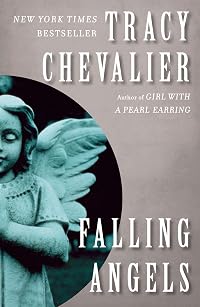
Falling Angels
by Tracy Chevalier
On This Page
Description
In 1901 London, as the precise social order of the Victorian era winds down and the forward-looking Edwardian order takes wing, three strangers meet in the city's tony Highgate Cemetery. Beautiful Lavinia revels in the elaborate trappings of the past. Plain Maude strives to shape the future. Simon Fields, a boy their age, is bound by poverty and professional to the cemetery.As they explore the prejudices and flaws of a changing time, they bring their very different families together and show more ultimately discover that their fates are intertwined.
. show less
Tags
Recommendations





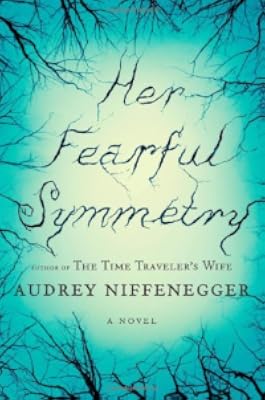
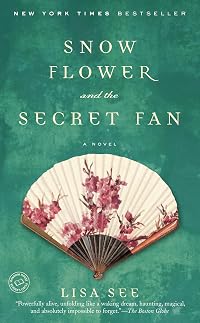
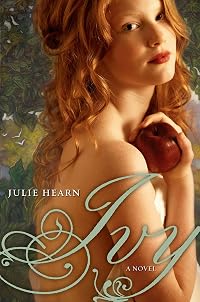
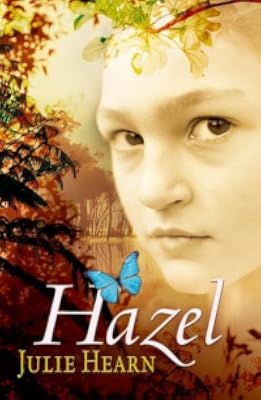


Member Recommendations
Member Reviews
I loved this book for a lot of reasons. It was immediately engaging, tragic, humorous in spots and always interesting. It’s told through several first-person accounts and they were all great. I especially liked and felt empathy for Kitty. I would have felt all her frustration, hopelessness and helplessness if born in her place and time. Especially when it came to kids. Ugh. Her daughter Maude doesn’t seem to crave her attention though, so she’ll probably turn out just fine if she does get to University.
I guess if there has to be a person to dislike it’s Livy. She’s just a spoiled brat and already vapid at age 5. Maude’s complaints about her are spot on, but Livy just thinks she’s the perfect little lady. I could barely show more force myself to read what she did with the Suffrage banners.
The movement, while positive in so many respects, was nothing but tragedy for the Colemans and the Waterhouses. I didn’t expect Ivy May’s fate and it shocked and saddened me. Her one and only chapter was so wrenching. From reading history and novels written in Victorian times, child abduction, murder and abuse was pretty rampant and because children weren’t a protected class in the sense they are now, crimes against them just piled up with no end.
I wish a little more focus was put on the Suffrage movement than was the bereavement practices of Victorians. They were positively suffused with death - gloried in it, reveled in it, milked it for all the emotional drama it could afford. I guess since women above the working poor had nothing to do, it filled their days. I think that’s why the women who weren’t afraid of their own intellects and wills went into the Suffrage movement so thoroughly even though they knew nothing was likely to change in their lifetimes.
It appalls me to read the sentiments of “mother” Coleman. Women who thoroughly believe that women are second class citizens and ought to remain basically slaves to men. It’s incredible. They’re so afraid it would be funny if it weren't so pathetic and dangerous. Women still think like that today. Some reviews of this book characterize Kitty as selfish. Why, because she doesn’t bow down and serve every last convention? Because she isn’t a doormat? Because she has thoughts and ideas of her own? Because she wants to have some agency? OMFG it’s stupid how some women think. Blinkered, frightened fools. I really liked the way Tracy silenced her in the end. Pity she didn’t give us another mother Colman viewpoint after she lost her tongue. That would have been fun. She should have been Mrs. Waterhouse’s mother in law. They would have gotten on like a house on fire if Trudy could have had an ounce of self-esteem.
Simon, Mrs. Baker and our Jenny fill in the voices for the servant class. Jenny’s fate is easy to see coming, but I was surprised that she made her way back. Simon seemed a little to free to do what he wanted through the whole novel. I think most boys his age were basically worked to death. He was fun and needed to have freedom to be able to move the plot forward in several ways.
Overall a lot of fun, insight and one of her best books. show less
I guess if there has to be a person to dislike it’s Livy. She’s just a spoiled brat and already vapid at age 5. Maude’s complaints about her are spot on, but Livy just thinks she’s the perfect little lady. I could barely show more force myself to read what she did with the Suffrage banners.
The movement, while positive in so many respects, was nothing but tragedy for the Colemans and the Waterhouses.
I wish a little more focus was put on the Suffrage movement than was the bereavement practices of Victorians. They were positively suffused with death - gloried in it, reveled in it, milked it for all the emotional drama it could afford. I guess since women above the working poor had nothing to do, it filled their days. I think that’s why the women who weren’t afraid of their own intellects and wills went into the Suffrage movement so thoroughly even though they knew nothing was likely to change in their lifetimes.
It appalls me to read the sentiments of “mother” Coleman. Women who thoroughly believe that women are second class citizens and ought to remain basically slaves to men. It’s incredible. They’re so afraid it would be funny if it weren't so pathetic and dangerous. Women still think like that today. Some reviews of this book characterize Kitty as selfish. Why, because she doesn’t bow down and serve every last convention? Because she isn’t a doormat? Because she has thoughts and ideas of her own? Because she wants to have some agency? OMFG it’s stupid how some women think. Blinkered, frightened fools. I really liked the way Tracy silenced her in the end. Pity she didn’t give us another mother Colman viewpoint after she lost her tongue. That would have been fun. She should have been Mrs. Waterhouse’s mother in law. They would have gotten on like a house on fire if Trudy could have had an ounce of self-esteem.
Simon, Mrs. Baker and our Jenny fill in the voices for the servant class. Jenny’s fate is easy to see coming, but I was surprised that she made her way back. Simon seemed a little to free to do what he wanted through the whole novel. I think most boys his age were basically worked to death. He was fun and needed to have freedom to be able to move the plot forward in several ways.
Overall a lot of fun, insight and one of her best books. show less
Beginning on New Year's Day 1900 and ending a decade later, this novel revolves around two families who have adjoining plots in the local ceremony and later become neighbors in their current homes, too. Told from various viewpoints, including servants, the story builds upon itself and is strengthened with multiple perspectives.
I was on the fence about this book at first; I picked it up just because I had enjoyed reading Chevalier's Remarkable Creatures and figured I would try something else she wrote. Initially, I wasn't sure what to make of this story and the early obsession with the graveyard; I thought to myself that this was the most I had ever heard a cemetery referenced in a book that wasn't straight-up horror. Later, I realized show more that I should have seen this forthe foreshadowing that it was but I completely missed that at first.
However, I did start to get drawn into the character drama and appreciate the many portraits Chevalier was drawing. By the time that the suffragette movement came in to play, I was hooked on the book. I also appreciated how so many threads of ideas and plotlines started coming together beautifully. Admittedly, I was surprised by where the story took some characters and a little disappointed that one thing was never resolved (namely, the circumstances of and perpetrator behind Ivy May's death , even though there are clues for readers to make their own interpretations).
Overall, I found myself lost in the drama of this book and wanted to keep reading to see what would happen next. The writing style is very accessible while also being eloquent. Chevalier expertly intertwines her fictional characters with actual suffragettes and into real events such as the deaths of Queen Victoria and later King Edward. The audiobook version had a so-so narrator; I do think she did a good job overall with diction, accents, and modulation, but there were just too many characters in this book for her to create distinct voices for each one. Still, I think her reading had heart and it's a worthwhile listen for the audiophile. show less
I was on the fence about this book at first; I picked it up just because I had enjoyed reading Chevalier's Remarkable Creatures and figured I would try something else she wrote. Initially, I wasn't sure what to make of this story and the early obsession with the graveyard; I thought to myself that this was the most I had ever heard a cemetery referenced in a book that wasn't straight-up horror. Later, I realized show more that I should have seen this for
However, I did start to get drawn into the character drama and appreciate the many portraits Chevalier was drawing. By the time that the suffragette movement came in to play, I was hooked on the book. I also appreciated how so many threads of ideas and plotlines started coming together beautifully. Admittedly, I was surprised by where the story took some characters and a little disappointed that one thing was never resolved (
Overall, I found myself lost in the drama of this book and wanted to keep reading to see what would happen next. The writing style is very accessible while also being eloquent. Chevalier expertly intertwines her fictional characters with actual suffragettes and into real events such as the deaths of Queen Victoria and later King Edward. The audiobook version had a so-so narrator; I do think she did a good job overall with diction, accents, and modulation, but there were just too many characters in this book for her to create distinct voices for each one. Still, I think her reading had heart and it's a worthwhile listen for the audiophile. show less
Set in Edwardian London, Falling Angels by Tracy Chevalier takes place from January 1901 to May 1910 and was a joy to read.
This historical novel confidently covers themes of mourning, mourning etiquette, class and the suffragette movement with an engaging and natural writing style.
The chapters are narrated in the first person by several of the main characters, although each character picks up the thread of the story and continues with it, rather than re-living the same events from their point of view.
Each of the voices are unique, making it impossible to confuse the characters.
My favourite character by far was Simon Field, the gravedigger's son and the conversations that take place in the cemetery were some of my favourite parts of show more the book.
I recommend Falling Angels for those interested in the mourning etiquette of the Victorian and Edwardian periods and readers looking for something a little different. show less
This historical novel confidently covers themes of mourning, mourning etiquette, class and the suffragette movement with an engaging and natural writing style.
The chapters are narrated in the first person by several of the main characters, although each character picks up the thread of the story and continues with it, rather than re-living the same events from their point of view.
Each of the voices are unique, making it impossible to confuse the characters.
My favourite character by far was Simon Field, the gravedigger's son and the conversations that take place in the cemetery were some of my favourite parts of show more the book.
I recommend Falling Angels for those interested in the mourning etiquette of the Victorian and Edwardian periods and readers looking for something a little different. show less
Strangely, this is my second attempt at reading this book. The first time round I couldn't get into it, yet the second time I loved it and rated it 5 stars. I suppose I just needed to be in the right mood for it.
This is the story, primarily, of Maude Coleman and Lavinia Waterhouse, two young girls who meet at a Victorian cemetery in London in 1901, around the time of the death of Queen Victoria. They become friends and their families become acquainted. The story follows their lives until 1910, the year that King Edward VII died, during which both families suffer tragedies. The women's suffrage movement plays a large part in the book, and the story is an excellent piece of historical writing. Tracy Chevalier writes from numerous show more different points of view and at no time was I confused as to who was narrating, which is a testament to her fine writing style.
I think this is now one of my favourite Tracy Chevalier books, and one which I would recommend to anybody who enjoys historical novels. The fact that this is a relatively recent period in history, and a time of much change and progress for women, was very appealing to me, as were the descriptions of the cemetery and mourning styles. A fantastic read. show less
This is the story, primarily, of Maude Coleman and Lavinia Waterhouse, two young girls who meet at a Victorian cemetery in London in 1901, around the time of the death of Queen Victoria. They become friends and their families become acquainted. The story follows their lives until 1910, the year that King Edward VII died, during which both families suffer tragedies. The women's suffrage movement plays a large part in the book, and the story is an excellent piece of historical writing. Tracy Chevalier writes from numerous show more different points of view and at no time was I confused as to who was narrating, which is a testament to her fine writing style.
I think this is now one of my favourite Tracy Chevalier books, and one which I would recommend to anybody who enjoys historical novels. The fact that this is a relatively recent period in history, and a time of much change and progress for women, was very appealing to me, as were the descriptions of the cemetery and mourning styles. A fantastic read. show less
In Falling Angels Tracy Chevalier tells the story of two London families at the dawn of the Edwardian era. The day after Queen Victoria's death both the Colemans and the Waterhouses visit the cemetary, visiting the gravesites of their own family. Their plots are adjoining and their daughters, Maude and Lavinia, become fast friends. Simon, the gravediggers son, quickly falls in with them. It will be two years until the girls meet again when the Waterhouses buy a house that adjoins the Coleman's property. The girls spend much of their free time, together with Simon, in the cemetary, and eventually draw other members of their family inside it's walls as well.
Mrs. Coleman uses this an opportunity to relieve the tedium of her life and is show more soon heavily involved in the suffragist movement. She is bored with her own home life and eventually her political involvement consumes not only herself, but that of her own family and finally with disasterous consequences that of the Waterhouses.
Chevalier wrote this story in 1st person, sharing with us the persepective of all the key players, as well as incorporating the stories of some of the secondary characters. Most of the play goes to Maude, Lavinia, Kitty Coleman, and Gertrude Waterhouse, but everyone gets their chance to be heard - even if only for one line. The characters are richly drawn and the background is given just enough detail to be historically accurate but still have room to write a moving ficitional account of two families living through it.
I was really drawn into this story and found it hard to put down this book, finishing it in two sittings. Chevalier has definitely found herself a new fan and I will be picking up another of her books very soon. show less
Mrs. Coleman uses this an opportunity to relieve the tedium of her life and is show more soon heavily involved in the suffragist movement. She is bored with her own home life and eventually her political involvement consumes not only herself, but that of her own family and finally with disasterous consequences that of the Waterhouses.
Chevalier wrote this story in 1st person, sharing with us the persepective of all the key players, as well as incorporating the stories of some of the secondary characters. Most of the play goes to Maude, Lavinia, Kitty Coleman, and Gertrude Waterhouse, but everyone gets their chance to be heard - even if only for one line. The characters are richly drawn and the background is given just enough detail to be historically accurate but still have room to write a moving ficitional account of two families living through it.
I was really drawn into this story and found it hard to put down this book, finishing it in two sittings. Chevalier has definitely found herself a new fan and I will be picking up another of her books very soon. show less
Falling Angels begins with the death of Queen Victoria and ends with the death of King Edward VII. In between, the Coleman.and Waterhouse families navigate the social changes that opened the 20th century. Chief among these is the women's suffrage movement, but the book also includes changing attitudes to death and burial, a relaxing of the social strictures associated with the Victorians, and the blurring of boundaries between the classes.
Written in the first person as recollections by the main characters, it is a thoughtful and heartbreaking story. There is amusement in the form of the friendship between Maude Coleman and Lavinia Waterhouse and the rivalry between their parents, and sorrow in the fates of Maude's mother Kitty and show more Lavinia's sister Ivy May.
Kitty Coleman was my favourite character, a woman born in the wrong time who fought to improve the world for her daughter and was misunderstood in the doing. Hers is a heart-rending story of the ties of social duty and the frustrations of wanting to be seen and respected as an intelligent woman. show less
Written in the first person as recollections by the main characters, it is a thoughtful and heartbreaking story. There is amusement in the form of the friendship between Maude Coleman and Lavinia Waterhouse and the rivalry between their parents, and sorrow in the fates of Maude's mother Kitty and show more Lavinia's sister Ivy May.
Kitty Coleman was my favourite character, a woman born in the wrong time who fought to improve the world for her daughter and was misunderstood in the doing. Hers is a heart-rending story of the ties of social duty and the frustrations of wanting to be seen and respected as an intelligent woman. show less
4.20.19 This book has even more poignancy than when I first read it many years ago. Tracy Chevalier deftly tackles sentimentalism in death culture, transitions from Victorian to Edwardian culture, class hierarchy, and women's activism. The chapters are short and move quickly. Each narrator helps weave a perspective into a rich tapestry that makes up the narrative. One of my favorite historical fiction novels.
Members
- Recently Added By
Lists

Recommend the 20 best books you've read in the last five years
2,168 works; 606 members

Historical Fiction
889 works; 91 members

Best Downton Abbey-esqe books to read
17 works; 7 members

Top Five Books of 2019
387 works; 111 members

Authors from England
147 works; 4 members

Historical Fiction Set in Gilded Age
13 works; 5 members

Books Read in 2019
4,052 works; 110 members
Author Information

27+ Works 43,094 Members
Tracy Chevalier was born on October 19, 1962 in Washington, D.C. After receiving a B.A. in English from Oberlin College, she moved to England in 1984 where she worked several years as a reference book editor. Leaving her job in 1993, she began a year-long M.A in creative writing at the University of East Anglia. She is the author of several novels show more including The Virgin Blue, Burning Bright, Remarkable Creatures, and The Last Runaway. Her novel Girl with a Pearl Earring was made into a film starring Colin Firth and Scarlett Johansson. (Bowker Author Biography) show less
Some Editions
Awards and Honors
Distinctions
Notable Lists
Series
Belongs to Publisher Series
List Taschenbuch (60347)
Gallimard, Folio (3943)
Work Relationships
Is contained in
Common Knowledge
- Canonical title*
- Wenn Engel fallen
- Original title
- Falling Angels
- Original publication date
- 2001
- People/Characters
- Kitty Coleman; Richard Coleman; Maude Coleman; Gertrude Waterhouse; Albert Waterhouse; Lavinia Waterhouse (show all 15); Simon Field; Jenny Whitby; Edith Coleman; Ivy May Waterhouse; John Jackson; Dorothy Baker; Caroline Black; Paul Field; Joe
- Important places
- London, England, UK; Highgate Cemetery, London, England, UK
- Important events
- Suffragette Movement; Death of Queen Victoria; Death of Edward VII
- Dedication
- For Jonathan, again
- First words
- I woke this morning with a stranger in my bed.
- Quotations
- I have spent my entire life waiting for something to happen. And I have come to understand that nothing will. Or it already has, and I blinked during that moment and it’s gone. I don’t know which is worse – to have miss... (show all)ed it or to know there is nothing to miss.
- Last words
- (Click to show. Warning: May contain spoilers.)'Sides, bone meal's good for roses.
- Original language
- English
*Some information comes from Common Knowledge in other languages. Click "Edit" for more information.
Classifications
Statistics
- Members
- 3,813
- Popularity
- 4,161
- Reviews
- 89
- Rating
- (3.54)
- Languages
- 16 — Catalan, Danish, Dutch, English, Finnish, French, German, Hungarian, Italian, Lithuanian, Norwegian (Bokmål), Portuguese, Romanian, Serbian, Spanish, Swedish
- Media
- Paper, Audiobook, Ebook
- ISBNs
- 70
- UPCs
- 1
- ASINs
- 15