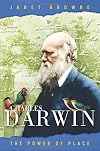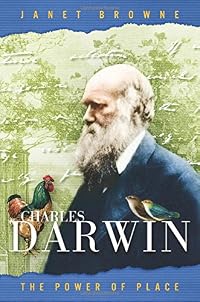
Charles Darwin: A Biography: Volume 2: The Power of Place
by Janet Browne
Charles Darwin: A Biography (2)
On This Page
Description
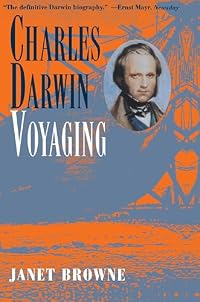
In 1858 Charles Darwin was forty-nine years old, a gentleman scientist living quietly at Down House in the Kent countryside, respected by fellow biologists and well liked among his wide and distinguished circle of acquaintances. He was not yet a focus of debate; his "big book on species" still lay on his study desk in the form of a huge pile of manuscript. For more than twenty years he had been accumulating material for it, puzzling over questions it raised, trying--it seemed endlessly--to show more bring it to a satisfactory conclusion. Publication appeared to be as far away as ever, delayed by his inherent cautiousness and wish to be certain that his startling theory of evolution was correct. It is at this point that the concluding volume of Janet Browne's biography opens. The much-praised first volume, Voyaging, carried Darwin's story through his youth and scientific apprenticeship, the adventurous Beagle voyage, his marriage and the birth of his children, the genesis and development of his ideas. Now, beginning with the extraordinary events that finally forced the "Origin of Species" into print, we come to the years of fame and controversy. For Charles Darwin, the intellectual upheaval touched off by his book had deep personal as well as public consequences. Always an intensely private man, he suddenly found himself and his ideas being discussed--and often attacked--in circles far beyond those of his familiar scientific community. Demonized by some, defended by others (including such brilliant supporters as Thomas Henry Huxley and Joseph Hooker), he soon emerged as one of the leading thinkers of the Victorian era, a man whose theories played a major role in shaping the modern world. Yet, in spite of the enormous new pressures, he clung firmly, sometimes painfully, to the quiet things that had always meant the most to him--his family, his research, his network of correspondents, his peaceful life at Down House. In her account of this second half of Darwin's life, Janet Browne does dramatic justice to all aspects of the Darwinian revolution, from a fascinating examination of the Victorian publishing scene to a survey of the often furious debates between scientists and churchmen over evolutionary theory. At the same time, she presents a wonderfully sympathetic and authoritative picture of Darwin himself right through the heart of the Darwinian revolution, busily sending and receiving letters, pursuing research on subjects that fascinated him (climbing plants, earthworms, pigeons--and, of course, the nature of evolution), writing books, and contending with his mysterious, intractable ill health. Thanks to Browne's unparalleled command of the scientific and scholarly sources, we ultimately see Darwin more clearly than we ever have before, a man confirmed in greatness but endearingly human. Reviewing Voyaging, Geoffrey Moorhouse observed that "if Browne's second volume is as comprehensively lucid as her first, there will be no need for anyone to write another word on Darwin." The Power of Place triumphantly justifies that praise. "From the Hardcover edition." show lessTags
Recommendations










Member Reviews
This book is the second part of a really excellent two-volume biography of Charles Darwin, one which the great evolutionary theorist Ernst Mayr called “the definitive Darwin biography”.
This second volume takes up the story a year or so before the 1859 publication of “On the Origin of Species”. Darwin was dilly-dallying about publishing a book on his theory of natural selection, when, in June 1858, he received a letter from Alfred Russel Wallace in which Wallace enclosed a paper which showed that he had just come up with the same theory. Wallace did not know that Darwin had already had the same idea.
Darwin was torn: he didn’t want to lose the credit for having thought of the theory himself much earlier than Wallace; but on the show more other hand he didn’t want to treat Wallace badly. Two of Darwin’s scientific friends came up with a solution. They made a joint presentation of Wallace’s paper and some extracts from Darwin’s unpublished writings on the theory to the Linnean Society.
To make matters worse, all this commotion coincided with the illness and then death of the Darwins’ youngest child.
As in the first volume, there is certainly plenty of ammunition in this book to shoot down the ridiculous conspiracy theory which claims that Darwin stole the credit for the theory of natural selection from Wallace. Wallace certainly deserves credit for independently coming up with the same idea, but Wallace himself was always happy to play second fiddle to Darwin. For example, in 1908 Wallace made a speech to the Linnaean Society in which he explicitly defended Darwin’s priority, pointing out that “...the idea occurred to Darwin in October 1838, nearly twenty years earlier than to myself (in February 1858); and that during the whole of that twenty years he had been laboriously collecting evidence...”
Darwin probably started thinking seriously about “transmutation” on the last stretch of his Beagle voyage in 1836. He certainly opened his first notebook on the subject in 1837, and the idea of natural selection as the mechanism of evolutionary change came to him, after reading Malthus, in 1838. In 1842 he wrote what he called the “pencil sketch of my species theory”, and in 1844 he wrote a fuller and more polished version.
Darwin’s letters, notebooks and the two essays/sketches, show beyond question that all the key ideas that Darwin made public in 1859 in “On the Origin of Species” had already been developed by him much earlier.
Stephen Jay Gould once described Darwin as being “radical in his scientific ideas, liberal in his political and social views, and conservative in personal lifestyle...”
This book by Janet Browne shows us that Gould’s summary of Darwin is a perfectly accurate one. Browne describes Darwin’s personality, his personal life, his class position, the social context of nineteenth century England, and the influences which led him to develop his theory of natural selection, as well as Darwin’s researches and the theory itself.
The only thing that I was not happy about with this second volume was the fact that it was not published until seven years after the publication of the first volume. Even allowing for the enormous amount of research that went into these books, that is a long time! I remember that when the first volume came out in 1995 I decided not to get it until the second one was published, so that I could buy and read both together. I didn’t think that I would have to wait for seven years to be able to do that. Still, that’s water under the bridge now. Darwin fans can read, re-read and savour both volumes. show less
This second volume takes up the story a year or so before the 1859 publication of “On the Origin of Species”. Darwin was dilly-dallying about publishing a book on his theory of natural selection, when, in June 1858, he received a letter from Alfred Russel Wallace in which Wallace enclosed a paper which showed that he had just come up with the same theory. Wallace did not know that Darwin had already had the same idea.
Darwin was torn: he didn’t want to lose the credit for having thought of the theory himself much earlier than Wallace; but on the show more other hand he didn’t want to treat Wallace badly. Two of Darwin’s scientific friends came up with a solution. They made a joint presentation of Wallace’s paper and some extracts from Darwin’s unpublished writings on the theory to the Linnean Society.
To make matters worse, all this commotion coincided with the illness and then death of the Darwins’ youngest child.
As in the first volume, there is certainly plenty of ammunition in this book to shoot down the ridiculous conspiracy theory which claims that Darwin stole the credit for the theory of natural selection from Wallace. Wallace certainly deserves credit for independently coming up with the same idea, but Wallace himself was always happy to play second fiddle to Darwin. For example, in 1908 Wallace made a speech to the Linnaean Society in which he explicitly defended Darwin’s priority, pointing out that “...the idea occurred to Darwin in October 1838, nearly twenty years earlier than to myself (in February 1858); and that during the whole of that twenty years he had been laboriously collecting evidence...”
Darwin probably started thinking seriously about “transmutation” on the last stretch of his Beagle voyage in 1836. He certainly opened his first notebook on the subject in 1837, and the idea of natural selection as the mechanism of evolutionary change came to him, after reading Malthus, in 1838. In 1842 he wrote what he called the “pencil sketch of my species theory”, and in 1844 he wrote a fuller and more polished version.
Darwin’s letters, notebooks and the two essays/sketches, show beyond question that all the key ideas that Darwin made public in 1859 in “On the Origin of Species” had already been developed by him much earlier.
Stephen Jay Gould once described Darwin as being “radical in his scientific ideas, liberal in his political and social views, and conservative in personal lifestyle...”
This book by Janet Browne shows us that Gould’s summary of Darwin is a perfectly accurate one. Browne describes Darwin’s personality, his personal life, his class position, the social context of nineteenth century England, and the influences which led him to develop his theory of natural selection, as well as Darwin’s researches and the theory itself.
The only thing that I was not happy about with this second volume was the fact that it was not published until seven years after the publication of the first volume. Even allowing for the enormous amount of research that went into these books, that is a long time! I remember that when the first volume came out in 1995 I decided not to get it until the second one was published, so that I could buy and read both together. I didn’t think that I would have to wait for seven years to be able to do that. Still, that’s water under the bridge now. Darwin fans can read, re-read and savour both volumes. show less
Covers the second half of Darwin's long life, from the lead-up to writing the Origin on. Emphasizes Darwin's place in hierarchical Victorian society, and how his wealth and breeding allowed him to extract raw data from breeders and amateur naturalists around the world to build his theories upon. The author particularly stresses how much Darwin relied on these informants. The book is not only a testament to Darwin's genius, but to practical knowledge of amateur naturalists of Victorian Britain.
Slower than the first volume.
Ratings
Members
- Recently Added By
Lists

The Great Courses: The Darwinian Revolution
50 works; 1 member
Author Information

14+ Works 1,309 Members
Janet Browne is a professor at the Wellcome Trust Centre for the History of Medicine at UCL.
Awards and Honors
Series

Work Relationships
Is contained in
Common Knowledge
- Canonical title
- Charles Darwin: A Biography: Volume 2: The Power of Place
- Original publication date
- 2002
- People/Characters
- Joseph Dalton Hooker; Thomas Henry Huxley; Charles Lyell; Alfred Russel Wallace; Francis Abbot; Henry Austin Bruce (1st Baron Aberdare) (show all 178); Henry Acland; Louis Agassiz; George Biddel Airy; Charles Allen; Fanny Allen; Grant Allen; C. H. Allfrey; William Allingham; William Henry Appleton; George Campbell (8th Duke of Argyll); Edward Atkinson; Jane Austen (referenced); Sarah Austin; Edward Aveling; James Ayerst; Charles Babington; Francis Bacon (1561-1626); Karl Ernst von Baer (1792-1876); Frank Balfour; R. H. Barham; Joachim Barrande; Herbert Barraud; Abraham Bartlett; Henry Bastian; Charles Spence Bate; James Bateman; Henry Walter Bates; William Baxter; Donald Beaton; Lydia Becker; Andrei Beketov; Thomas Bell; Charles Henry Bennett; John Hughes Bennett; John Joseph Bennett; George Bentham; Richard Bentley; Miles Berkeley; Claude Bernard; Annie Besant; Edward Blyth; Alice Bonham Carter; Charles Bonnet; Jacques Boucher de Perthes; Francis Bowen; Mrs. Bowen; Frank Bower; Charles Brace; Charles Bradlaugh; Charles Robert Bree; George Bridger; Richard Bright; William Brinton; Paul Broca; Benjamin Brodie; Giacomo Brogi; Heinrich Bronn; James Brooke; Shirley Brooks; William Brooks; Robert Brown; Hablot Knight Browne ('Phiz'); Robert Browning; Charles-Édouard Brown-Séquard; Thomas Lauder Brunton; Ludwig Buchner; Arabella Buckley; Charles Bunbury; Angela Burdett-Coutts; Thomas Burgess; Wilhelm Busch; George Busk; Joseph Butler; Mary Butler; Samuel Butler; Jemmy Button; Lord Byron; Julia Margaret Cameron; Alphonse de Candolle; Giovanni Canestrini; Thomas Carlyle; William Benjamin Carpenter; Charles Dodgson ('Lewis Carroll'); Julius Victor Carus; Robert Chambers; John Chapman; Jean-Martin Charcot; Édouard Claparède; Andrew Clark; Lockhardt Clark; William Clark; J. W. Clarke; Frances Power Cobbe; William Cobbett; Ferdinand Cohn; Henry Colburn; John William Colenso; John Collier; Cuthbert Collingwood; Wilkie Collins; George Combe; Auguste Comte; Moncure Conway (Moncure Daniel Conway); Robert Cooke; Georgiana Craik; John Crawfurd; James Crichton-Browne; James Croll; George Cruikshank; Louis Cuvier; William Dallas; James Dwight Dana; Amy Darwin; Anne Elizabeth Darwin; Bernard Darwin; Charles Darwin [Charles Robert: 1809-1882]; Charles Waring Darwin; Elizabeth Darwin; Elizabeth Pole Darwin; Emma Wedgwood Darwin; Erasmus Alvey Darwin; Erasmus Darwin; Erasmus Darwin IV; Francis Darwin; George Darwin; Henrietta Darwin Litchfield; Horace Darwin; Ida Farrer Darwin; Leonard Darwin; Mary Howard Darwin; Robert Waring Darwin; Sara Sedgwick Darwin; Susan Darwin; William Erasmus Darwin; Charles Daubeny; Honoré Daumier; William Boyd Dawkins; Federico Delphino; Edward Henry Stanley (15th Earl of Derby); Hugo de Vries; Charles Dickens; Benjamin Disraeli, 1st Earl of Beaconsfield; Hepworth Dixon; E. S. Dixwell; Anton Dohrn; Franciscus Donders; John Langdon Down; John Doyle ('HB'); Richard Doyle; John William Draper; Hans Driesch; Guillaume Duchenne; John Duns; William Thistelton Dryer; Johannes Dzierzon; Ernest Edwards; W. H. Edwards; Philip Egerton; George Eliot; Robinson Ellis; Whitwell Elwin; Ralph Waldo Emerson; Stephen Engleheart; Edward John Eyre; Thomas Campbell Eyton; Hugh Falconer; Michael Faraday; William Farr; F. W. Farrar; Effie Wedgwood Farrer; Thomas Henry Farrer; Henry Fawcett
- Important places
- England, UK
- First words
- If Charles Darwin had spent the first half of his life in the world of Jane Austen, he now stepped forward into the pages of Anthony Trollope.
- Last words
- (Click to show. Warning: May contain spoilers.)And Darwin himself slipped into legend.
- Blurbers
- Pick, J B; Secord, James; McKie, Robin
Classifications
Statistics
- Members
- 403
- Popularity
- 76,820
- Reviews
- 3
- Rating
- (4.54)
- Languages
- English, Portuguese
- Media
- Paper, Ebook
- ISBNs
- 8
- ASINs
- 5