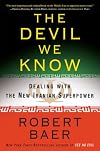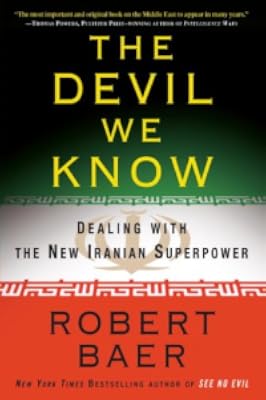
The Devil We Know: Dealing with the New Iranian Superpower
by Robert Baer
On This Page
Description
By mixing anecdotes with information gleaned from clandestine sources, ex-CIA operative Robert Baer superbly demonstrates that Iran, far from being a wild-eyed rogue state, is a rational actor--one skilled in the game of nations and so effective at thwarting perceived Western colonialism that even rival Sunnis relish fighting under its banner. For U.S. policy makers, the choices have narrowed: either cede the world's most important energy corridors to a nation that can match us militarily show more with its asymmetric capabilities (which include the use of suicide bombers)--or deal with the devil we know.--From publisher description. show lessTags
Recommendations


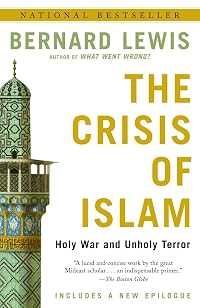
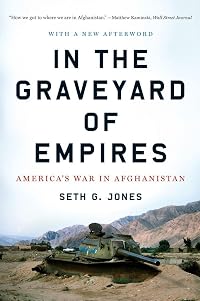

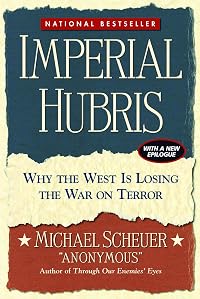













Member Recommendations
Member Reviews
This is book is a bit dated in that it tackles the question of U.S. withdraw from Iraq, but it is very valuable for the years of experience Baer gained on Iran from his years in the middle east. The title of this work is loaded and layers of meaning are not fully clear until the audacious (enlightened? visionary?) epilogue. Baer builds up a tale of a misunderstood Iran with astute geo-political machinations bearing success at positioning it as a regional hegemon and leader of a Shia-dominant, oil-rich Muslim (not Arab) world. It is easy to take this as subtle coloring of a wily adversary, but in the conclusion Baer boldly advises getting the jump on Russia and China and the U.S. directly allying with and cooperating transparently with show more Iran.
like Wells in "Outline of History", we see here that below the imposed political map wrestles a religio-cultural map. by disrupting Iraq, we've tipped the scales in Iran's favor. Baer suggests we run with that. show less
like Wells in "Outline of History", we see here that below the imposed political map wrestles a religio-cultural map. by disrupting Iraq, we've tipped the scales in Iran's favor. Baer suggests we run with that. show less
I listened to the audiobook of The Devil We Know: Dealing with the New Iranian Superpower (2008) by Robert Baer and I can tell you right now that this isn't going to be a good review because this book presents such a different understanding of Iran than any other perspective I've ever encountered. Here are the highlights as I understand them:
Americans and the West in general have a distorted view of Iran and especially of what Iran wants.
Iran is a country that is trying to modernize, participates widely in the internet, and even watches a lot of American television. They are not like some other Islamic states trying to return to pre-modern times.
Iranians desire empire and wish to be recognized as a major player in Middle East show more politics, perhaps even a superpower.
We should not be scared that Iran will build and use nuclear weapons nor that they desire some nihilistic destruction of the west. What Iran actually really does do and what they're capable of is actually more unsettling if unnoticed by the West. Iran succeeds through asymetrical tactics and weapons
Through proxy wars, Iran has carried out their quest for imperialism throughout the Mid East. Baer asserts that through Hezbollah, Iran won the first military conflict against Israel in 2000. Through cunning and strategy Iran has achieved many military goals and won over the support many Muslims even Sunnis & Arabs who traditionally are at odds with the Shiite & Persian Iran.
Nations the US currently allies with are weak (Saudi Arabia, Bahrain, UAE) or not really states at all just strong armies (Pakistan). Plus the oil fields in Saudi Arabia are emptying out and Iran's hegemony has them in position to control the oil supply for the future.
In general, Shiite Iran is hierarchical, commands come only from leaders with extensive religious trading, and they carry out their campaigns with specific goals and targets in mind. Sunni Arabs are not hierarchical, leaders with no religious training give out commands (such as Osama bin Laden), and carry out attacks for slaughter's sake alone. Western governments have successfully negotiated peace with Iran because they can not only find someone to negotiate with but because they are open to negotiation.
Continuing on the present course will require a huge outlay of money and military force to either contain Iran in a 30+ year Cold War or to actually engage them in battle. In addition to losing many lives and bankrupting the country, Iran would shut off our supply of oil. Baer does not believe the US populace would stand for any of this.
In the end Baer gives several reccomendations for the US to bury it's pride and recognize Iran as a major power, grant them a role in restoring order to Iraq, and allow nations artificially created after WWI (such as Iraq and Pakistan) to be disolved into smaller states. Baer believes this realpolitik approach to Iran's de facto superpower status is are only sensible option.
I obviously know only a little about Iran and the Mid East in general, and Baer seems to be stacking the deck to support his thesis and has certain obvious prejudices (especially against Sunnis/Arabs. Yet its a compelling argument, and a very nuanced understanding of today's Iran. It's not likely that American politicians will follow any of these suggestions, and perhaps with good reason. Still it's an eye-opening account that challenges the accepted wisdom. show less
Americans and the West in general have a distorted view of Iran and especially of what Iran wants.
Iran is a country that is trying to modernize, participates widely in the internet, and even watches a lot of American television. They are not like some other Islamic states trying to return to pre-modern times.
Iranians desire empire and wish to be recognized as a major player in Middle East show more politics, perhaps even a superpower.
We should not be scared that Iran will build and use nuclear weapons nor that they desire some nihilistic destruction of the west. What Iran actually really does do and what they're capable of is actually more unsettling if unnoticed by the West. Iran succeeds through asymetrical tactics and weapons
Through proxy wars, Iran has carried out their quest for imperialism throughout the Mid East. Baer asserts that through Hezbollah, Iran won the first military conflict against Israel in 2000. Through cunning and strategy Iran has achieved many military goals and won over the support many Muslims even Sunnis & Arabs who traditionally are at odds with the Shiite & Persian Iran.
Nations the US currently allies with are weak (Saudi Arabia, Bahrain, UAE) or not really states at all just strong armies (Pakistan). Plus the oil fields in Saudi Arabia are emptying out and Iran's hegemony has them in position to control the oil supply for the future.
In general, Shiite Iran is hierarchical, commands come only from leaders with extensive religious trading, and they carry out their campaigns with specific goals and targets in mind. Sunni Arabs are not hierarchical, leaders with no religious training give out commands (such as Osama bin Laden), and carry out attacks for slaughter's sake alone. Western governments have successfully negotiated peace with Iran because they can not only find someone to negotiate with but because they are open to negotiation.
Continuing on the present course will require a huge outlay of money and military force to either contain Iran in a 30+ year Cold War or to actually engage them in battle. In addition to losing many lives and bankrupting the country, Iran would shut off our supply of oil. Baer does not believe the US populace would stand for any of this.
In the end Baer gives several reccomendations for the US to bury it's pride and recognize Iran as a major power, grant them a role in restoring order to Iraq, and allow nations artificially created after WWI (such as Iraq and Pakistan) to be disolved into smaller states. Baer believes this realpolitik approach to Iran's de facto superpower status is are only sensible option.
I obviously know only a little about Iran and the Mid East in general, and Baer seems to be stacking the deck to support his thesis and has certain obvious prejudices (especially against Sunnis/Arabs. Yet its a compelling argument, and a very nuanced understanding of today's Iran. It's not likely that American politicians will follow any of these suggestions, and perhaps with good reason. Still it's an eye-opening account that challenges the accepted wisdom. show less
This book was perfect for understanding where Iran is today since its revolution in 1979. Robert Baer focused primarily on Iran’s foreign policy strategy throughout the Middle East. He argues that Iran, far from being a regime run by apocalyptic religious fundamentalists out to nuke Israel, is a shrewd and calculating political player in the region. Its ultimate goal; to make the US accept Iran as an equal power and replace America as the dominating force in the Middle East. I was astonished reading about how far Iran’s reach goes and how much weight it carries in places like Iraq and Lebanon. Baer also notes how Iran’s proxy in Lebanon, Hezbollah, has won the hearts and minds of Shias and Sunnis alike throughout the Muslim world. show more This book should serve as a wake up call that Iran is winning in the Middle East and the US should either find a way towards peace or start gearing up for a hundred year war in the region.
Highlights:
- Iran wants nuclear capability but would never create a nuclear weapon , doing so would jeopardize all the progress that it has made.
- Iran plans on controlling all the oil fields in the Persian Gulf. With large Shia populations in many Gulf states this is making Arab countries more willing to acquiesce to Iran’s demands.
- Baer believes that our best option with Iran is diplomacy and that in the long run a US-Iran alliance will be successful in terms of stability in Iraq, better hopes of a peace deal between Israel and Palestine, and more cooperation in containing the Taliban in Afghanistan. show less
Highlights:
- Iran wants nuclear capability but would never create a nuclear weapon , doing so would jeopardize all the progress that it has made.
- Iran plans on controlling all the oil fields in the Persian Gulf. With large Shia populations in many Gulf states this is making Arab countries more willing to acquiesce to Iran’s demands.
- Baer believes that our best option with Iran is diplomacy and that in the long run a US-Iran alliance will be successful in terms of stability in Iraq, better hopes of a peace deal between Israel and Palestine, and more cooperation in containing the Taliban in Afghanistan. show less
A book I highly recommend to people thinking about the future of the Middle East. Iran is a major player, clearly desires to become an even larger factor in the region, and its influence is only growing following the weakening of Iraq. Baer's work with the CIA gave him important insights into the Middle East, and he takes care to provide an understanding of Iran and its policies. Our Country's most recent policy has been to isolate Iran and not to participate in discussions between the two countries. The President-elect had stated during the 2008 Campaign that he's interested in opening a dialog with Iran, and this book point out why that approach appears to be a valid one.
An essential book about Iran and the Middle East written by someone who understands the history, culture and outlook of that region from first hand experience. Robert Baer's other books, See No Evil and Sleeping With the Devil are both first rate, but this one tops this others, especially because its focus is on contemporary issues that bear directly on the United States and Iran. It should be at the top
of Barack Obama's and Hillary Clinton's reading lists (assuming, of course, that they have reading lists!).
of Barack Obama's and Hillary Clinton's reading lists (assuming, of course, that they have reading lists!).
Very interesting book about Iran and where it stands against the West. Very unsettling book considering that author was working for the government agencies so all of what he says should be more or less visible through political action but unfortunately is not. For whatever reason.
Recommended for anyone interested in Middle East and West-East interactions in general.
Recommended for anyone interested in Middle East and West-East interactions in general.
Terrifying and educational read. I hope the new administration reads this book!
Members
- Recently Added By
Lists

The Emergence of the Modern Middle East
289 works; 13 members

All Things Iran/Persia
64 works; 1 member

Middle Eastern Literature & Non-Fiction
99 works; 3 members
Author Information

13 Works 2,761 Members
Robert Baer was born in Los Angeles, California on July 1, 1952. He graduated from the Georgetown University School of Foreign Service and in 1976, decided to join the CIA's Directorate of Operations. He worked for the CIA for 20 years as a case officer assigned to the Middle East. He has written several books including Sleeping with the Devil: show more How Washington Sold Our Soul for Saudi Crude, The Devil We Know: Dealing with the New Iranian Superpower, and The Company We Keep: A Husband-and-Wife True-Life Spy Story. His book See No Evil: The True Story of a Ground Soldier in the CIA's War on Terrorism was the basis for the acclaimed film Syriana. He writes regularly for Time.com and has contributed to Vanity Fair, the Wall Street Journal, and the Washington Post. (Bowker Author Biography) show less
Common Knowledge
- Original publication date
- 2008
- Important places
- Iran; Iraq; Syria; Israel; Lebanon
- Publisher's editor
- Dickey, Lisa; Horgan, Rick
- Blurbers
- Risen, James
Classifications
Statistics
- Members
- 257
- Popularity
- 126,172
- Reviews
- 9
- Rating
- (3.79)
- Languages
- English, French, Italian
- Media
- Paper, Audiobook, Ebook
- ISBNs
- 11
- ASINs
- 2