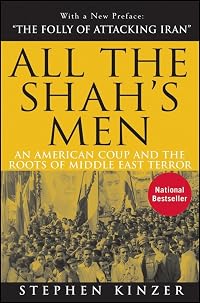
All the Shah's Men: An American Coup and the Roots of Middle East Terror
by Stephen Kinzer
On This Page
Description
With a thrilling narrative that sheds much light on recent events, this national bestseller brings to life the 1953 CIA coup in Iran that ousted the country's elected prime minister, ushered in a quarter-century of brutal rule under the Shah, and stimulated the rise of Islamic fundamentalism and anti-Americanism in the Middle East. Selected as one of the best books of the year by the Washington Post and The Economist, it now features a new preface by the author on the folly of attacking Iran.Tags
Recommendations
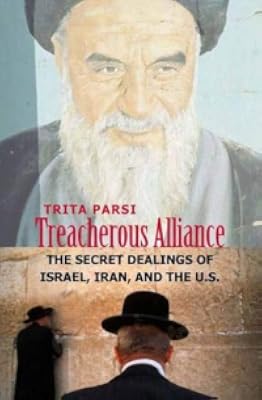
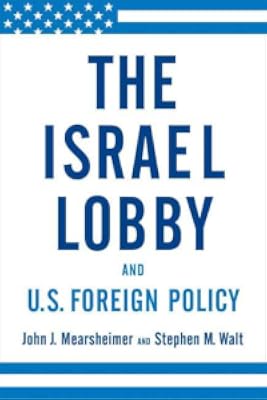
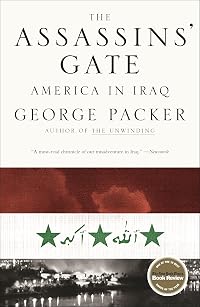
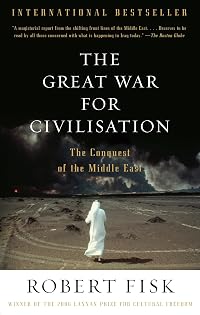






Member Recommendations
Member Reviews
Iran is in the news again ... or at least getting more of my attention. So, I pulled off the shelf this volume I got from the Little Free Library in front of Third Man Records Nashville. I knew vaguely about Kermit Roosevelt and the coup. In this easy to read account it came across that WW II and post-WW II Britain was treating Iran rather like it seems Trump now wants to treat Ukraine: pressed by a hegemon against Russia to extract mineral wealth under duress. Then, though Truman before Eisenhower was the voice of reason. All this, apparently had a knock-on effect of emboldening the CIA to further government destabilizing schemes and dividing Iranians and other peoples from respect and cooperation with Western nations.
From the show more Preface:
A nice summary of the unintended side effects seen in this analysis:
While ineffectual, Truman did at least try to encourage a more enlightened approach to Britain. Ike instead gave freedom to act audaciously to the Dulles brothers.
From the show more Preface:
One day I attended a book party for an older Iranian woman who had written her memoirs. She spoke for an hour about her eventful life. Although she never touched on politics, she mentioned in passing that her family was related to the family of Mohammad Mossadegh, who served as prime minister of Iran for twenty-six months in the early 1950s and was overthrown in a coup d'etat staged by the Central Intelligence Agency.
After she finished speaking, I couldn't resist the temptation to ask a question. "You mentioned Mossadegh," I said. "What do you remember, or what can you tell us, about the coup against him?" She immediately became agitated and animated.
"Why did you Americans do that terrible thing?" she cried out. "We always loved America. To us, America was the great country, the perfect country, the country that helped us while other countries were exploiting us. But after that moment, no one in Iran ever trusted the United States again. I can tell you for sure that if you had not done that thing, you would never have had that problem of hostages being taken in your embassy in Tehran. All your trouble started in 1953. Why, why did you do it?"
This outburst reflected a great gap in knowledge and understanding...
A nice summary of the unintended side effects seen in this analysis:
As a postrevolutionary generation came of age in Iran, Iranian intellectuals began assessing the long-term effects of the 1953 coup. Several published thoughtful essays that raised intriguing questions. One appeared in an American foreign-policy journal:
It is a reasonable argument that but for the coup, Iran would be a mature democracy. So traumatic was the coup's legacy that when the Shah finally departed in 1979, many Iranians feared a repetition of 1953, which was one of the motivations for the student seizure of the U.S. embassy. The hostage crisis, in turn, precipitated the Iraqi invasion of Iran, while the [Islamic] revolution itself played a part in the Soviet decision to invade Afghanistan. A lot of history, in short, flowed from a single week in Tehran.
The 1953 coup and its consequences [were] the starting point for the political alignments in today's Middle East and inner Asia. With hindsight, can anybody say the Islamic Revolution of 1979 was inevitable? Or did it only become so once the aspirations of the Iranian people were temporarily expunged in 1953?
While ineffectual, Truman did at least try to encourage a more enlightened approach to Britain. Ike instead gave freedom to act audaciously to the Dulles brothers.
Truman spent many hours thinking and talking about Iran, but Eisenhower was far less engaged. He allowed the Dulles brothers to supe his administration's policy toward the restive Third World. They were anxious for quick and visible successes in their anticommunist crusade and saw covert action as a way to achieve them. Preemptive coups, actions against threats that had not yet materialized, seemed to them not only wise but imperative. They did not worry about the future consequences of such coups because they believed that if the United States did not sponsor them, its own future would be endangered.show less
The success of Operation Ajax had an immediate and far-reaching effect in Washington. Overnight, the CIA became a central part of the American foreign policy apparatus, and covert action came to be regarded as a cheap and effective way to shape the course of world events. Kermit Roosevelt could sense this view taking hold even before he had finished delivering his White House briefing on September 4, 1953.
You can read others for a summary of the book - or, the title pretty much says it all. What is most important, however, especially where we are today with sanctions against Iran is a replaying of the horrors we inflicted on this country. The aftermath of what we did to them is clear and their anti-American sentiment is justified and understandable. So, knowing all this, what the hell are we doing? Why are we allowing this to happen again to this country? These sanctions and willy-waving war imbued rhetoric will not work against them, they've already suffered it once.
History repeats itself and we have rapacious leaders with hegemonic desires and our own collective ignorance to blame. This book is something that everyone should read, and show more I believe you don't have a right to an opinion about Iran and today's issues related to Iran (as well as other issues in the Middle East which ultimately all come home to roost) without reading a book like this.
This book was a real joy to read and by the end of it I felt such anger and resentment toward the US and especially Britain, and it's happening all over again. These poor people must think, "why are they doing this to us?" The reason is clear: oil.
I can't recommend this book highly enough. It's my second Stephen Kinzer book and even more enjoyable than the other book of his I read (Overthrow). Read this book! show less
History repeats itself and we have rapacious leaders with hegemonic desires and our own collective ignorance to blame. This book is something that everyone should read, and show more I believe you don't have a right to an opinion about Iran and today's issues related to Iran (as well as other issues in the Middle East which ultimately all come home to roost) without reading a book like this.
This book was a real joy to read and by the end of it I felt such anger and resentment toward the US and especially Britain, and it's happening all over again. These poor people must think, "why are they doing this to us?" The reason is clear: oil.
I can't recommend this book highly enough. It's my second Stephen Kinzer book and even more enjoyable than the other book of his I read (Overthrow). Read this book! show less
All the Shah's Men provides a detailed account of the Iranian political climate in the late 1940s and early 1950s, as well as a broader summary of its earlier history. The circumstances leading to U.S. involvement in what began as a dispute between Iran and Great Britain are also given thorough attention.
Most importantly, Kinzer draws a direct line between the CIA's secret (at the time) 1953 coup to overthrow Iranian Prime Minister Mohammad Mosaddegh and the strained relationship between the U.S. and Iran that has followed the 1979 Iranian Revolution. Prior to the coup, the U.S. was seen as an ally in the region, a protector of national interests and resources -- or least more fair than the traditional imperialist attitude still show more portrayed by Great Britain. By displacing Mosaddegh, a secularist, the nationalist and Islamist movements converged against a common enemy -- the Shah and his neo-imperalist supporters, Great Britain and the U.S.
As Kinzer described the Dulles brothers' strategy to persuade President Eisenhower that the coup was necessary, I had the sense of viewing a horror movie heroine poised to open a door that the audience knows conceals the movie's villain. If only we had shown more restraint in 1953, we may have prevented Iran's transformation from a budding democracy into a hostile and theocratic state. show less
Most importantly, Kinzer draws a direct line between the CIA's secret (at the time) 1953 coup to overthrow Iranian Prime Minister Mohammad Mosaddegh and the strained relationship between the U.S. and Iran that has followed the 1979 Iranian Revolution. Prior to the coup, the U.S. was seen as an ally in the region, a protector of national interests and resources -- or least more fair than the traditional imperialist attitude still show more portrayed by Great Britain. By displacing Mosaddegh, a secularist, the nationalist and Islamist movements converged against a common enemy -- the Shah and his neo-imperalist supporters, Great Britain and the U.S.
As Kinzer described the Dulles brothers' strategy to persuade President Eisenhower that the coup was necessary, I had the sense of viewing a horror movie heroine poised to open a door that the audience knows conceals the movie's villain. If only we had shown more restraint in 1953, we may have prevented Iran's transformation from a budding democracy into a hostile and theocratic state. show less
Short primer on Iranian history, then fairly detailed account of the rise of the secular, populist Mossadegh and the British-spurred, American-financed coup against him. Truman sympathized with nationalist aspirations, but Eisenhower (and the Dulles brothers in charge of foreign policy) was more sympathetic to fears of Communist takeover, even though that wasn’t really what was going on in Iran. So America backed the shah, because he was friendlier to Britain’s oil interests, and bought “stability” for 25 years at the cost of brutal repression and then passionate anti-Americanism when bottled-up popular demands finally exploded. Depressing but useful history, emphasizing the mismatch between Iranian aspirations (not to be show more stripped of their oil for a pittance, not to be treated like lesser human beings by the British) and British/American preoccupations (global dominance, Communism). show less
A gripping history of the first covert operation by the CIA to overthrow the popularly elected government of another nation in 1953. That nation is Iran and the deposed leader is Mohammad Mosaddeq, the Iranian prime minister who dared stand up against Western imperialism. The fascinating thing about this book is that for much of Mosaddeq's reign many US leaders supported Iran's self-determination and attempts at democracy. Iran's squabble was with Great Britain, especially regarding the exploitative nature of the Anglo-Iranian Oil Company. When Mosaddeq nationalized Iranian oil, British leaders wanted him removed, but needed US approval which was eventually gained by the specter of Communism. A number of familiar names play a role in show more the plot: Secretary of State John Foster Dulles, CIA director Allan Dulles, CIA agent Kermit Roosevelt, Jr. (grandson of Theodore), and Norman Schwarzkopf, Sr. (father of the Desert Storm commander). Kinzer tells the story in great detail with the ultimate outcome balanced on the coming together of some very unlikely events
Kinzer concludes that the immediate result - a stable and anti-communist Iran under the Shah - was beneficial to the United States but the long-term results were disastrous. The Shah's tyrannical rule in Iran, and the knowledge that the US supported him, turned most Iranians virulently against the United States. When revolutionary Iranians took hostages at the US embassy in 1979 it was because the embassy had been a base of covert activity in 1953. Finally, it set a pattern of CIA-sponsored activities in other parts of the world that havecontributed to the loss of the USA's image as a standard-bearer of freedom. show less
Kinzer concludes that the immediate result - a stable and anti-communist Iran under the Shah - was beneficial to the United States but the long-term results were disastrous. The Shah's tyrannical rule in Iran, and the knowledge that the US supported him, turned most Iranians virulently against the United States. When revolutionary Iranians took hostages at the US embassy in 1979 it was because the embassy had been a base of covert activity in 1953. Finally, it set a pattern of CIA-sponsored activities in other parts of the world that havecontributed to the loss of the USA's image as a standard-bearer of freedom. show less
History for me is exciting and interesting. History books can be a shaky proposition, a lot are boring and dull. They read like a brochure for watching grass grow. But some history writers can really translate the power of history into a great story. Stephen Kinzer is one of those writers. All the Shah's Men is a fantastic book, I could not put it down. He not only thoroughly explains the Irainian Coup of 1953, and the West's involvement, but he paces the book like a political thriller (which it truly is). Anyone who wishes to know why the middle east is in the state it is now, and why the west in general and America specifically are despised, must read this book. I can't recommend it enough.
All the Shah's Men is a journalistic approach to the events leading up to the 1953 American installation of the Shah in Iran. The multiple causes - British and American fear of Russia in the Cold War, British attempts to regain their crumbling colonial power, Iranian ambivalence over whether to cooperate with or expel Western forces - all piled up, necessitating a drastic move in some direction or another.
The book is well-written, driven less by polished political theorizing and more by the way in which Kinzer fleshes out the primary actors in the coup. His journalism is even-handed; the actions of Kermit Roosevelt, who took the lead in CIA work in Iran, may be either lauded or criticized. Similarly, Mohammad Mossadegh, the favored show more Iranian leader prior to the US's involvement, emerges as neither a hero nor a villain, but simply a man facing foreign adversity that must be dealt with. Kinzer merely reports the political story as cleanly as possible, and readers learn the larger-than-life personas who were involved on all sides.
The book wraps up with a reflection: was the American coup ultimately a good thing or a bad thing? Truly, without knowing the other routes that history may have taken, it's impossible to say. If Russia had seized control instead (as the West was terrified they would), their control of the oil and physical location of Iran would have had a large impact on the outcome of the Cold War. On the other hand, the US coup incited such vehement dislike for Western power that one may pinpoint the beginning of present day Islamic anti-Western terrorism at the meddling of the US in 1953. However one approaches it, though, the 1953 coup stands as a critical turning point in twentieth century politics, whose impact is so far-reaching that our present understanding probably does not fully encompass it. show less
The book is well-written, driven less by polished political theorizing and more by the way in which Kinzer fleshes out the primary actors in the coup. His journalism is even-handed; the actions of Kermit Roosevelt, who took the lead in CIA work in Iran, may be either lauded or criticized. Similarly, Mohammad Mossadegh, the favored show more Iranian leader prior to the US's involvement, emerges as neither a hero nor a villain, but simply a man facing foreign adversity that must be dealt with. Kinzer merely reports the political story as cleanly as possible, and readers learn the larger-than-life personas who were involved on all sides.
The book wraps up with a reflection: was the American coup ultimately a good thing or a bad thing? Truly, without knowing the other routes that history may have taken, it's impossible to say. If Russia had seized control instead (as the West was terrified they would), their control of the oil and physical location of Iran would have had a large impact on the outcome of the Cold War. On the other hand, the US coup incited such vehement dislike for Western power that one may pinpoint the beginning of present day Islamic anti-Western terrorism at the meddling of the US in 1953. However one approaches it, though, the 1953 coup stands as a critical turning point in twentieth century politics, whose impact is so far-reaching that our present understanding probably does not fully encompass it. show less
Members
- Recently Added By
Published Reviews
ThingScore 75
Sure enough, ''All the Shah's Men'' reads more like a swashbuckling yarn than a scholarly opus. Still, Kinzer, a New York Times correspondent now based in Chicago, offers a helpful reminder of an oft-neglected piece of Middle Eastern history, drawn in part from a recently revealed secret C.I.A. history.
added by jlelliott
Lists

The Emergence of the Modern Middle East
289 works; 13 members

LtGen James Mattis' Reading List
58 works; 2 members

All Things Iran/Persia
64 works; 1 member

Mitski!
25 works; 1 member

Shaykh Hamza's Book Recommendations
439 works; 3 members

r/AskHistorians' Recommended Books
1,068 works; 18 members
Author Information

15 Works 4,891 Members
Stephen Kinzer is the author of The Brothers, Reset, Overthrow, All the Shah's Men, and other books. An award-winning foreign correspondent, he served as Latin America correspondent for The Boston Globe and as the New York Times bureau chief in Nicaragua, Germany, and Turkey. He is a senior fellow at the Watson Institute for International and show more Public Affairs at Brown University, and writes a column on world affairs for The Boston Globe. He lives in Boston. show less
Awards and Honors
Distinctions
Common Knowledge
- Canonical title
- All the Shah's Men: An American Coup and the Roots of Middle East Terror
- Original publication date
- 2003
- People/Characters
- Mohammad Mossadegh; Dwight D. Eisenhower; Winston Churchill (Churchill, Winston Leonard Spencer); John Foster Dulles; Allen Dulles; Kermit Roosevelt (show all 10); Mohammad Reza Shah; Nasir al-Din Shah; Muzzaffar al-Din Shah; Mohammad Ali Shah
- Important places
- Iran; Middle East; Tehran, Iran; USA; United Kingdom
- Important events
- Operation Ajax
- First words
- Most of Tehran was asleep when an odd caravan set out through the darkness shortly before midnight on August 15, 1953.
- Last words
- (Click to show. Warning: May contain spoilers.)"It's too great a responsibility."
Classifications
Statistics
- Members
- 1,416
- Popularity
- 16,718
- Reviews
- 24
- Rating
- (4.07)
- Languages
- 5 — English, German, Portuguese, Spanish, Turkish
- Media
- Paper, Audiobook, Ebook
- ISBNs
- 20
- UPCs
- 1
- ASINs
- 11