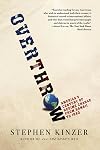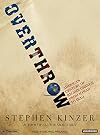
Overthrow: America's Century of Regime Change from Hawaii to Iraq
by Stephen Kinzer
On This Page
Description
"Regime change" did not begin with the administration of George W. Bush, but has been part of U.S. foreign policy for more than one hundred years. Starting with the overthrow of the Hawaiian monarchy in 1893 and continuing into our own time, the United States has not hesitated to overthrow governments that stood in the way of its political and economic goals. The invasion of Iraq in 2003 is the latest, though perhaps not the last, example of the dangers inherent in these operations. Foreign show more correspondent Kinzer tells the stories of the audacious politicians, spies, military commanders, and business executives who took it upon themselves to depose monarchs, presidents, and prime ministers in fourteen countries, including Cuba, Iran, South Vietnam, Chile, and Iraq. He also shows that the U.S. government has often pursued these operations without understanding the countries involved; as a result, many of them have had disastrous long-term consequences.--From publisher description. show lessTags
Recommendations







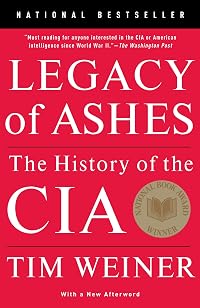



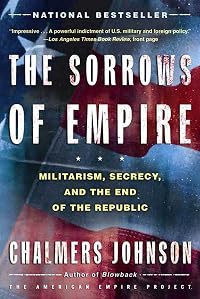


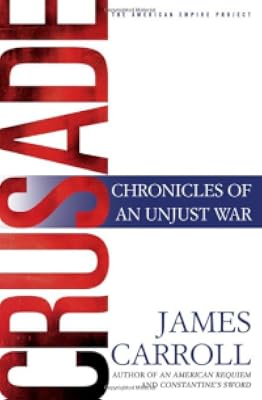
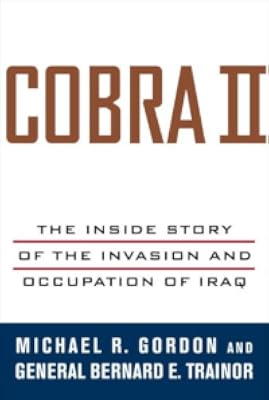

























Member Recommendations


Member Reviews
A very interesting and fascinating history on an American century of regime change--starting with the overthrow of the Hawaiian Queen Liliuokami and ending with our present debacle in Iraq. Kinzer goes behind the scenes to ferret out the characters behind the coups and the more often than not hapless victims of their ambitions. For the most part these are cautionary tales of ambition, greed and deceit filtered through a more often than not blinkered and arrogant view of righteousness and 'good' intentions and more often than not come back to haunt us sometimes 20--30 even 60 years afterwards. Many of these countries are very familiar to us--Cuba, Vietnam, Iran, Iraq. Kinzer argues that what may seem politically expedient today can have show more awful ramifications far into the future if not thought out carefully--a secondary theme being how little Americans in general know (or are even interested for that matter) about world history and how this leaves us unprepared to objectively view the machinations of regime change when one president or another of ours gets an idea in his head.
Particularly poignant are the chapters on Iran (the Mossadegh coup), Guatemala (Arbenz), Vietnam (the Diem assassination that JFK unwittingly provoked less than a month before his own assassination), Chile (Allende) and our aid to the Afghan rebels many of whom later will become soldiers for the Taliban or terrorists for Al Quaeda. American foreign policy throughout the century has a tendency to take its eye off the ball after deposing its enemies often leaving a slowly boiling population to suffer under the hands of ' friendly to american interests' military tyrants. Kinzer makes the point also that the aspirations of those people though usually in time come to fruition albeit more often than not with much resentment towards our government--seen afterwards for its cynicism and hypocrisy.
Kinzer is an excellent storyteller--who writes skillfully and with much verve. He is able to pare things down without losing focus on the personalities and politics involved. He is able to tie the stories together into a coherent whole. They are easy to read--not hard to understand and give much food for thought. Very well done and very much recommended. show less
Particularly poignant are the chapters on Iran (the Mossadegh coup), Guatemala (Arbenz), Vietnam (the Diem assassination that JFK unwittingly provoked less than a month before his own assassination), Chile (Allende) and our aid to the Afghan rebels many of whom later will become soldiers for the Taliban or terrorists for Al Quaeda. American foreign policy throughout the century has a tendency to take its eye off the ball after deposing its enemies often leaving a slowly boiling population to suffer under the hands of ' friendly to american interests' military tyrants. Kinzer makes the point also that the aspirations of those people though usually in time come to fruition albeit more often than not with much resentment towards our government--seen afterwards for its cynicism and hypocrisy.
Kinzer is an excellent storyteller--who writes skillfully and with much verve. He is able to pare things down without losing focus on the personalities and politics involved. He is able to tie the stories together into a coherent whole. They are easy to read--not hard to understand and give much food for thought. Very well done and very much recommended. show less
Kinzer's main thesis is that, from the end of the 19th Century through the present, the U.S. has used military power (both overtly and clandestinely) to overthrow governments seen as unfriendly to American interests. In most cases, these interests have been of an economic nature or coincident with economic benefits. In every instance, however, the manipulation of the fate of other countries and their people has been cloaked in more "elevated" rhetoric. Each chapter is devoted to a short history of one country ‘s takeover, beginning with Hawaii, then Central America, and ending with Iran and Iraq. Kinzer points to the use of patriotism and religious fervor to win over American popular opinion, backed by the big dollars and political show more support of corporations ”eagerly looking abroad for new markets and sources of raw materials.”
Of contemporary interest, Kinzer draws parallels between George W. Bush and William McKinley, noting with sarcasm that “Neither man was troubled by his ignorance of the countries whose governments he overthrew.” Both, he observes, believed they were agents of divine inspiration, carrying out America’s “sacred mission to spread its form of government to faraway countries.”
In spite of the lofty ideals professed by presidents under whose administrations regime changes were effected, the bottom line is that “Americans have believed they deserve access to markets and resources in other countries. When they are denied that access, they take what they want by force, deposing governments that stand in their way.”
Kinzer tells some very interesting stories that are not the usual textbook fare: U.S. control of the banana republics by United Fruit; CIA destabilization tactics in Guatemala; the horrific determination of Nixon and Kissinger to, in Nixon’s words, “smash” that “son of a bitch Allende” in Chile; our love affair, and then change of heart, over Noriega; how the CIA worked behind the scenes to undermine Mossadegh in Iran (creating a nation full of America-hating youth, some of whom went on to take American diplomats as hostage and drive Jimmy Carter from office); and of course the piece de resistance – George W. Bush’s obsession with Iraq.
“And in the end,” one would have to say with John Lennon, “the love you take, is equal to the love you make.” If we’re not much loved in the world right now, there are plenty of good reasons, and Kinzer makes a good start in delineating them. show less
Of contemporary interest, Kinzer draws parallels between George W. Bush and William McKinley, noting with sarcasm that “Neither man was troubled by his ignorance of the countries whose governments he overthrew.” Both, he observes, believed they were agents of divine inspiration, carrying out America’s “sacred mission to spread its form of government to faraway countries.”
In spite of the lofty ideals professed by presidents under whose administrations regime changes were effected, the bottom line is that “Americans have believed they deserve access to markets and resources in other countries. When they are denied that access, they take what they want by force, deposing governments that stand in their way.”
Kinzer tells some very interesting stories that are not the usual textbook fare: U.S. control of the banana republics by United Fruit; CIA destabilization tactics in Guatemala; the horrific determination of Nixon and Kissinger to, in Nixon’s words, “smash” that “son of a bitch Allende” in Chile; our love affair, and then change of heart, over Noriega; how the CIA worked behind the scenes to undermine Mossadegh in Iran (creating a nation full of America-hating youth, some of whom went on to take American diplomats as hostage and drive Jimmy Carter from office); and of course the piece de resistance – George W. Bush’s obsession with Iraq.
“And in the end,” one would have to say with John Lennon, “the love you take, is equal to the love you make.” If we’re not much loved in the world right now, there are plenty of good reasons, and Kinzer makes a good start in delineating them. show less
A chronology highlighting some of the darker elements of US imperialism for the past 100 years, including details of all the blood it's spilled around the globe. No matter where or who or what, if the hungry America-beast wants something, it will by any means necessary go and take what it wants with impunity.
All the examples in this book illustrate the intense and deceptive PR campaigns perpetrated by each of the various administrations. And at the core of most of these overthrows sits industry, contributing cash to our elected officials election campaigns so each government currently in power will "send in the tanks" when the locals in a country have the audacity to want to control their own country's resources and not allow foreigners show more (Americans) to send their country's capital outside their borders leaving nothing behind but poverty.
It also highlights the fact that propaganda works and works well. Jingoism and overly simplistic (and often misnamed) labels sit at the center of all these campaigns and any major media outlet is only too happy to accommodate with support (publishing word for word what government tells them) and quashing any dissenting opinions.
This book is a good read; I went with the audio version and felt the narrator wasn't the most charismatic voice they could have selected, but still did enjoy the book. I've got another one of Kinzer's books I'm now looking forward to reading (which says something). Read this book and share it with everyone you know. show less
All the examples in this book illustrate the intense and deceptive PR campaigns perpetrated by each of the various administrations. And at the core of most of these overthrows sits industry, contributing cash to our elected officials election campaigns so each government currently in power will "send in the tanks" when the locals in a country have the audacity to want to control their own country's resources and not allow foreigners show more (Americans) to send their country's capital outside their borders leaving nothing behind but poverty.
It also highlights the fact that propaganda works and works well. Jingoism and overly simplistic (and often misnamed) labels sit at the center of all these campaigns and any major media outlet is only too happy to accommodate with support (publishing word for word what government tells them) and quashing any dissenting opinions.
This book is a good read; I went with the audio version and felt the narrator wasn't the most charismatic voice they could have selected, but still did enjoy the book. I've got another one of Kinzer's books I'm now looking forward to reading (which says something). Read this book and share it with everyone you know. show less
Lovers of nonfiction regarding American foreign policy or international affairs will find great storytelling combined with amazing detail -- at times brutally graphic detail -- in Overthrow: America 's Century of Regime Change from Hawaii to Iraq by award-winning New York Times foreign correspondent Stephen Kinzer.
Kinzer limits his examination of U.S. military actions to those coups, revolutions, and invasions in which a head of state was deposed.
"Drawing up a list of countries whose governments the United States has overthrown is not as simple as it sounds," Kinzer explains. "This book treats only cases in which Americans played the decisive role in deposing a regime. Chile, for example, makes the list because, although many factors show more led to the 1973 coup there, the American role was decisive. Indonesia, Brazil, and the Congo do not, because American agents played only subsidiary roles in the overthrow of their governments during the 1960s. Nor do Mexico, Haiti, or the Dominican Republic, countries the United States invaded but whose leaders it did not depose."
The governments the United States has overthrown, from 1893 to 2003, are Hawaii, Cuba, Nicaragua, the Philippines, Puerto Rico, Honduras, Guatemala, Iran, Vietnam, Chile, Lebanon, Grenada, Panama, Afghanistan, and Iraq.
"No nation in modern history has done this so often, in so many places so far from its own shores," Kinzer notes.
(Overthrow definitely gives you the sense that not a day goes by that we aren't kicking down a door somewhere.)
"By considering these operations as a continuum rather than as a series of unrelated incidents, it seeks to find what they have in common," Kinzer writes. "It poses and tries to answer two fundamental questions. First, why did the United States carry out these operations? Second, what have been their long-term consequences?"
Among the themes to emerge from Kinzer's analysis are the following points:
• Many U.S. "interventions" transpire not because we care about the locals, but because we're responding to big business interests -- we're seeking "to establish, promote, and defend the right of Americans to do business around the world without interference."
Kinzer in some instances makes the federal government look like the lapdog of U.S.-based transnational corporations:
"By a quirk of history, the United States rose to great power at the same time multinational corporations were emerging as a decisive force in world affairs. These corporations came to expect government to act on their behalf abroad, even to the extreme of overthrowing uncooperative foreign leaders."
• The United States, more because it was kowtowing to the interests of big business than because it was responding to real threats of the Cold War, has shown zero tolerance for nationalist movements, labeling them "communistic" to excuse invasions and most often hurting chances for real democracy to take hold.
• People in the countries we occupy routinely are left worse off in terms of poverty and civil rights; Kinzer questions how individual countries would have fared had we not imposed our interventionist policy.
• "Most American sponsored 'regime change' operations have, in the end, weakened rather than strengthened, American security," Kinzer argues.
Those who would dismiss Kinzer's work as left-leaning propaganda should know that Kinzer has reported for The New York Times from more than 50 countries and has served as the bureau chief in Turkey, Germany, and Nicaragua.
Says Kinzer: "History does not repeat itself, but it delights in patterns and symmetries. When the stories of American 'regime change' operations are taken together, they reveal much about why the United States overthrows foreign governments and what consequences it brings on itself by doing so. They also teach lessons for the future." -- Jeanie Straub show less
Kinzer limits his examination of U.S. military actions to those coups, revolutions, and invasions in which a head of state was deposed.
"Drawing up a list of countries whose governments the United States has overthrown is not as simple as it sounds," Kinzer explains. "This book treats only cases in which Americans played the decisive role in deposing a regime. Chile, for example, makes the list because, although many factors show more led to the 1973 coup there, the American role was decisive. Indonesia, Brazil, and the Congo do not, because American agents played only subsidiary roles in the overthrow of their governments during the 1960s. Nor do Mexico, Haiti, or the Dominican Republic, countries the United States invaded but whose leaders it did not depose."
The governments the United States has overthrown, from 1893 to 2003, are Hawaii, Cuba, Nicaragua, the Philippines, Puerto Rico, Honduras, Guatemala, Iran, Vietnam, Chile, Lebanon, Grenada, Panama, Afghanistan, and Iraq.
"No nation in modern history has done this so often, in so many places so far from its own shores," Kinzer notes.
(Overthrow definitely gives you the sense that not a day goes by that we aren't kicking down a door somewhere.)
"By considering these operations as a continuum rather than as a series of unrelated incidents, it seeks to find what they have in common," Kinzer writes. "It poses and tries to answer two fundamental questions. First, why did the United States carry out these operations? Second, what have been their long-term consequences?"
Among the themes to emerge from Kinzer's analysis are the following points:
• Many U.S. "interventions" transpire not because we care about the locals, but because we're responding to big business interests -- we're seeking "to establish, promote, and defend the right of Americans to do business around the world without interference."
Kinzer in some instances makes the federal government look like the lapdog of U.S.-based transnational corporations:
"By a quirk of history, the United States rose to great power at the same time multinational corporations were emerging as a decisive force in world affairs. These corporations came to expect government to act on their behalf abroad, even to the extreme of overthrowing uncooperative foreign leaders."
• The United States, more because it was kowtowing to the interests of big business than because it was responding to real threats of the Cold War, has shown zero tolerance for nationalist movements, labeling them "communistic" to excuse invasions and most often hurting chances for real democracy to take hold.
• People in the countries we occupy routinely are left worse off in terms of poverty and civil rights; Kinzer questions how individual countries would have fared had we not imposed our interventionist policy.
• "Most American sponsored 'regime change' operations have, in the end, weakened rather than strengthened, American security," Kinzer argues.
Those who would dismiss Kinzer's work as left-leaning propaganda should know that Kinzer has reported for The New York Times from more than 50 countries and has served as the bureau chief in Turkey, Germany, and Nicaragua.
Says Kinzer: "History does not repeat itself, but it delights in patterns and symmetries. When the stories of American 'regime change' operations are taken together, they reveal much about why the United States overthrows foreign governments and what consequences it brings on itself by doing so. They also teach lessons for the future." -- Jeanie Straub show less
Stephen Kinzer's *Overthrow* is a great book for anyone wanting to understand the deep-rooted history of U.S. foreign intervention. Careful tracing of a century-long pattern—from the 1893 overthrow of the Hawaiian monarchy to the 2003 Iraq War—offers valuable insights. However, it doesn't include much geopolitical context to help us grasp the enormity of today's interventions.
A brisk and interesting chronicle of fourteen instances of U.S. intervention to promote
"regime change" -- the ouster of an existing government in favor of one that the U.S. preferred. Well-written and interesting, though it would be nice if he ventured further into the broader implications of U.S. interventionism.
"regime change" -- the ouster of an existing government in favor of one that the U.S. preferred. Well-written and interesting, though it would be nice if he ventured further into the broader implications of U.S. interventionism.
Overthrow: America's Century of Regime Change from Hawaii to Iraq by Stephen Kinzer is exactly what its title suggests - a historical account of every time since the 19th century that the United States has intervened overtly or covertly to depose a regime perceived as unfriendly to US interests. I normally love Kinzer's books - he wrote the excellent All the Shah's Men, about an American-backed coup against a democratically elected Iranian leader in 1953 - but this one was tough going for me, perhaps because it was so long and so wide-ranging that I started to feel numb after a while. I confess that I skimmed the chapters on the most recent American interventions in Iraq and Afghanistan because I have recently read so many books and show more articles about these topics & Kinzer did not appear to bring anything new to my understanding of these two conflicts.
Kinzer assesses that both political/ideological and economic reasons have motivated nearly every American attempt at regime change and his exploration of the role of corporations in shaping 19th and early 20th century American foreign policy in Latin America was particularly new and interesting for me.
His assertion that all states pursue their interests in foreign policy but that only the United States sees and describes its interventions as motivated by charitable ideals seemed somewhat of a stretch for me. Didn't European colonial powers claim that they were at least in part on a civilizing mission? All in all, however, a good read, but one that I am glad to finally be done with. show less
Kinzer assesses that both political/ideological and economic reasons have motivated nearly every American attempt at regime change and his exploration of the role of corporations in shaping 19th and early 20th century American foreign policy in Latin America was particularly new and interesting for me.
His assertion that all states pursue their interests in foreign policy but that only the United States sees and describes its interventions as motivated by charitable ideals seemed somewhat of a stretch for me. Didn't European colonial powers claim that they were at least in part on a civilizing mission? All in all, however, a good read, but one that I am glad to finally be done with. show less
Members
- Recently Added By
Lists

LT picks: Blue Books
197 works; 44 members

Books Read in 2010
631 works; 11 members

United States
35 works; 1 member
Author Information

15 Works 4,903 Members
Stephen Kinzer is the author of The Brothers, Reset, Overthrow, All the Shah's Men, and other books. An award-winning foreign correspondent, he served as Latin America correspondent for The Boston Globe and as the New York Times bureau chief in Nicaragua, Germany, and Turkey. He is a senior fellow at the Watson Institute for International and show more Public Affairs at Brown University, and writes a column on world affairs for The Boston Globe. He lives in Boston. show less
Series
Belongs to Publisher Series
Die Andere Bibliothek (274)
Common Knowledge
- Original publication date
- 2006
- People/Characters
- Emilio Aguinaldo; George W. Bush; William McKinley; Richard M. Nixon; Henry Kissinger
- Important places
- Hawaï, Verenigde Staten; Iran; Iraq; Guatemala; Chile
Classifications
- Genres
- History, Nonfiction, General Nonfiction, Politics and Government
- DDC/MDS
- 327.73009 — Society, government, & culture Political science International Relations: Spies North America United States
- LCC
- E744 .K49 — History of the United States United States Twentieth century General Diplomatic history. Foreign and general
- BISAC
Statistics
- Members
- 916
- Popularity
- 29,245
- Reviews
- 17
- Rating
- (4.13)
- Languages
- English, German
- Media
- Paper, Audiobook, Ebook
- ISBNs
- 9
- ASINs
- 8