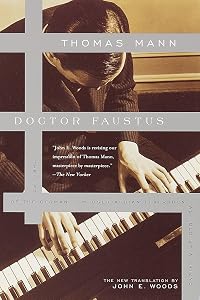
Doctor Faustus
by Thomas Mann 
On This Page
Description
Thomas Mann's last great novel, first published in 1947 and now newly rendered into English by acclaimed translator John E. Woods, is a modern reworking of the Faust legend, in which Germany sells its soul to the Devil. Mann's protagonist, the composer Adrian Leverkühn, is the flower of German culture, a brilliant, isolated, overreaching figure, his radical new music a breakneck game played by art at the very edge of impossibility. In return for twenty-four years of unparalleled musical show more accomplishment, he bargains away his soul--and the ability to love his fellow man. Leverkühn's life story is a brilliant allegory of the rise of the Third Reich, of Germany's renunciation of its own humanity and its embrace of ambition and nihilism. It is also Mann's most profound meditation on the German genius--both national and individual--and the terrible responsibilities of the truly great artist. John E. Woods is revising our impression of Thomas Mann, masterpiece by masterpiece." --The New Yorker "Doctor Faustus is Mann's deepest artistic gesture. . . . Finely translated by John E. Woods." --The New Republic. show lessTags
Recommendations
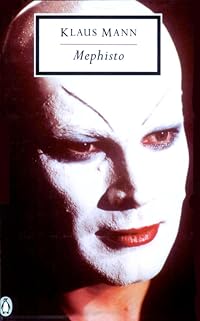
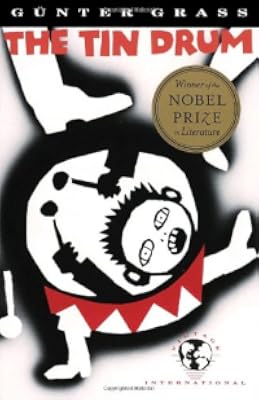
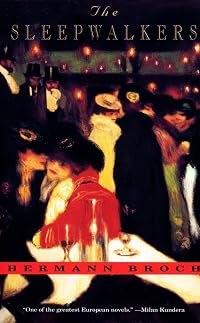
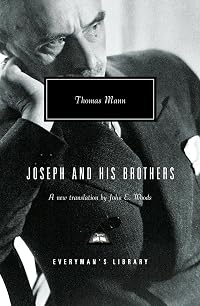
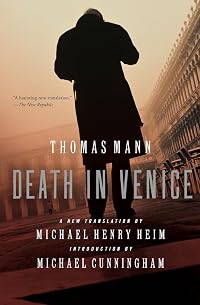
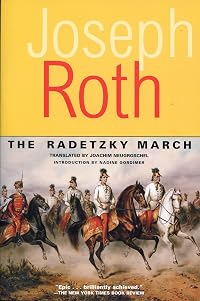
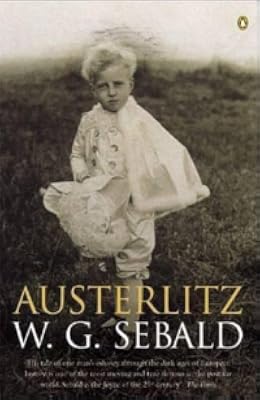
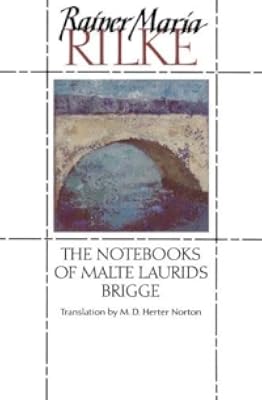




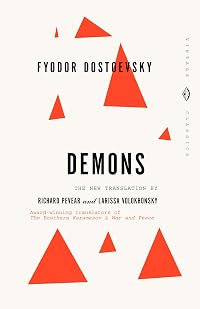

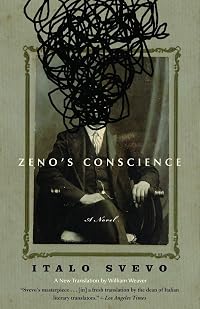

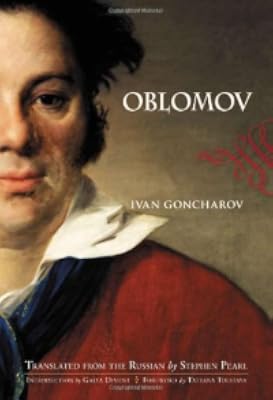


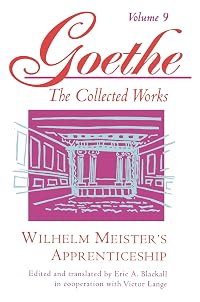



Member Recommendations
Member Reviews
This is not a beach book. The literature on Thomas Mann's "Doktor Faustus" is huge, and I'm glad I didn't try to master it all. I tackled the novel (actually re-reading it after 40 years) with an untutored but relatively open mind. However, I needed a reading group to get through it, and here goodreads really came through for me with an international group of 14 close readers on the same schedule. They helped enormously.
Thomas Mann wrote his fiction in response to a heartbreaking reality: his beloved Germany committed such atrocious crimes in World War II that, from his exile in the US, he felt obligated to broadcast, in German, into Germany. He explained to his compatriots that total defeat was the only honorable way out. Germans who show more secretly listened to his illegal radio broadcasts, as the bombs were demolishing their homes, say they found his message comforting. I don't know that an American like me can fully understand.
There are a couple naive questions that get asked a lot, and of course don't have answers. One is "How can the culture that produced Bach and Beethoven also produce Auschwitz." A second naive question is "Can there be poetry after Auschwitz." I think about the novel "Doktor Faustus" as a response instead of an answer. For all the unique aspects of this tragedy, there are other cultures with a similar paradox. Japanese artists produced some of the most gentle, peaceful artworks ever created, even has the military of that same culture brutalized their neighbors. I think the shorthand for this is the title "The Chrysanthemum and the Sword" used by Ruth Benedict. But Mann himself does not even think of relativizing the catastrophe with comparisons. He confronts the good and the bad sides of German genius as something totally intertwined, without trying to distinguish between "good Germans" and "bad Germans" as some commentators have done. Culture is an interwoven tapestry.
The Faust legend arose when the invention of the printing press was revolutionizing a society that still believed in devils. The sudden access to knowledge was seen as something dangerous. That's pretty much biblical too. Somehow sex inevitably gets into the mix in all these myths. Mann expects his readers to be familiar with Goethe's take on the Faustian pact, but he doesn't reference it directly. Since music has served as a source of great national pride for Germany, starting long before the country actually existed as a unified nation-state, Mann revises the deal with the devil. The brilliant composer Adrian Leverkuehn trades his soul, not for knowledge, not for happiness, but for musical talent, specifically talent for composing modern music. The genius is undeniably powerful, but it destroys his soul. What a metaphor for the political and human disaster. But this theme is also an opening for Mann to introduce a cluster of colorful characters who discuss music in great detail,--all about polyphony and counterpoint and twelve tone composition....These discussions somehow lift the text out of the swamp. Mann's richly detailed story, drenched in quirky irony, becomes oddly comforting. It's pretty much impossible to explain.
The book is long. It is narrated by a fuddy-duddy friend of the composer, with the nutty name of Serenus Zeitblom. Mann has a lot of fun with his long-winded narrator. The chapters shift radically from one mood to another, like movements in a symphonic piece of music. Themes and images, like the butterfly and the little mermaid, are introduced early on, then dropped, only to reappear hundreds of pages later in unexpected variations, a verbal Wagnerian Leitmotiv effect. Adrian's communications with Lucifer are completely logically explained by his medical and psychiatric conditions. But the highly ornate way Mann presents it all--with fleeting images that appear and disappear, and with shifting moods--seduces the readers into his dangerous world. And everyone's soul is in danger. Without the lengthy build up, I don't think the book would work at all.
Adrian comes from a farm, where his life begins and ends. His musical talent comes from his beautiful mother, but she is wise enough not to develop her talent. His other introduction to music comes from the simple milkmaid, who teaches the country children charming folk songs, including a hauntingly beautiful "round." After selling his soul, he finds a refuge on a monastery turned farm estate, where he rents a beautiful studio from the generous farmer's wife. And there he writes amazing music that goes out into the world. These two farms are the "real" Germany, the source. When Adrian has his final nervous breakdown in front of a gathering of friends, the noble farmer's wife, Frau Schweigestill, comforts him and sends the guests away, because they (like me) could never understand. Heneke's film "Das weisse Band," addresses the question of collective guilt among the peasantry in a relentlessly depressing way. Mann's take is totally different, and more nuanced. Something indigenous, that is beautiful and magical, has a dangerous internal logic...I don't think Mann asks us to read this as a universal, but that is how I read it. We Americans need to deal with certain aspects of our culture and its internal logic...
The other simplistic question, the one about poetry after Auschwitz, is implicit in these discussions. Mann's close friend and adviser on the book, Adorno, famously examined this issue. I see Mann's response in the poetic passages of his writing. I think poetry may be the only way to come to terms with some aspects of human history, think of Paul Celan or Nelly Sachs. (Myself, I'm not so sure whether other arts like music, painting, or architecture ever recovered from the brutalization of 20th century.) The poetry in Mann's prose emerges very slowly, in baroque sentences and page long paragraphs. Like an unfolding flower, you just can't rush it. I went to a Buddhist mediation class where we sat on the floor for four hours chanting and visualizing a lotus slowly blossoming. At the end I felt like I was levitating. I asked afterward if there might be a more efficient method that we could do in say 20 minutes. Nope. Mann's way with words gradually lifts off the ground. A more concise reading exercise could not build the same spell. This all by way of partly explaining why a novel about such a horrifying history can be oddly beautiful. I will never really understand, of course, but language can in itself be comforting. show less
Thomas Mann wrote his fiction in response to a heartbreaking reality: his beloved Germany committed such atrocious crimes in World War II that, from his exile in the US, he felt obligated to broadcast, in German, into Germany. He explained to his compatriots that total defeat was the only honorable way out. Germans who show more secretly listened to his illegal radio broadcasts, as the bombs were demolishing their homes, say they found his message comforting. I don't know that an American like me can fully understand.
There are a couple naive questions that get asked a lot, and of course don't have answers. One is "How can the culture that produced Bach and Beethoven also produce Auschwitz." A second naive question is "Can there be poetry after Auschwitz." I think about the novel "Doktor Faustus" as a response instead of an answer. For all the unique aspects of this tragedy, there are other cultures with a similar paradox. Japanese artists produced some of the most gentle, peaceful artworks ever created, even has the military of that same culture brutalized their neighbors. I think the shorthand for this is the title "The Chrysanthemum and the Sword" used by Ruth Benedict. But Mann himself does not even think of relativizing the catastrophe with comparisons. He confronts the good and the bad sides of German genius as something totally intertwined, without trying to distinguish between "good Germans" and "bad Germans" as some commentators have done. Culture is an interwoven tapestry.
The Faust legend arose when the invention of the printing press was revolutionizing a society that still believed in devils. The sudden access to knowledge was seen as something dangerous. That's pretty much biblical too. Somehow sex inevitably gets into the mix in all these myths. Mann expects his readers to be familiar with Goethe's take on the Faustian pact, but he doesn't reference it directly. Since music has served as a source of great national pride for Germany, starting long before the country actually existed as a unified nation-state, Mann revises the deal with the devil. The brilliant composer Adrian Leverkuehn trades his soul, not for knowledge, not for happiness, but for musical talent, specifically talent for composing modern music. The genius is undeniably powerful, but it destroys his soul. What a metaphor for the political and human disaster. But this theme is also an opening for Mann to introduce a cluster of colorful characters who discuss music in great detail,--all about polyphony and counterpoint and twelve tone composition....These discussions somehow lift the text out of the swamp. Mann's richly detailed story, drenched in quirky irony, becomes oddly comforting. It's pretty much impossible to explain.
The book is long. It is narrated by a fuddy-duddy friend of the composer, with the nutty name of Serenus Zeitblom. Mann has a lot of fun with his long-winded narrator. The chapters shift radically from one mood to another, like movements in a symphonic piece of music. Themes and images, like the butterfly and the little mermaid, are introduced early on, then dropped, only to reappear hundreds of pages later in unexpected variations, a verbal Wagnerian Leitmotiv effect. Adrian's communications with Lucifer are completely logically explained by his medical and psychiatric conditions. But the highly ornate way Mann presents it all--with fleeting images that appear and disappear, and with shifting moods--seduces the readers into his dangerous world. And everyone's soul is in danger. Without the lengthy build up, I don't think the book would work at all.
Adrian comes from a farm, where his life begins and ends. His musical talent comes from his beautiful mother, but she is wise enough not to develop her talent. His other introduction to music comes from the simple milkmaid, who teaches the country children charming folk songs, including a hauntingly beautiful "round." After selling his soul, he finds a refuge on a monastery turned farm estate, where he rents a beautiful studio from the generous farmer's wife. And there he writes amazing music that goes out into the world. These two farms are the "real" Germany, the source. When Adrian has his final nervous breakdown in front of a gathering of friends, the noble farmer's wife, Frau Schweigestill, comforts him and sends the guests away, because they (like me) could never understand. Heneke's film "Das weisse Band," addresses the question of collective guilt among the peasantry in a relentlessly depressing way. Mann's take is totally different, and more nuanced. Something indigenous, that is beautiful and magical, has a dangerous internal logic...I don't think Mann asks us to read this as a universal, but that is how I read it. We Americans need to deal with certain aspects of our culture and its internal logic...
The other simplistic question, the one about poetry after Auschwitz, is implicit in these discussions. Mann's close friend and adviser on the book, Adorno, famously examined this issue. I see Mann's response in the poetic passages of his writing. I think poetry may be the only way to come to terms with some aspects of human history, think of Paul Celan or Nelly Sachs. (Myself, I'm not so sure whether other arts like music, painting, or architecture ever recovered from the brutalization of 20th century.) The poetry in Mann's prose emerges very slowly, in baroque sentences and page long paragraphs. Like an unfolding flower, you just can't rush it. I went to a Buddhist mediation class where we sat on the floor for four hours chanting and visualizing a lotus slowly blossoming. At the end I felt like I was levitating. I asked afterward if there might be a more efficient method that we could do in say 20 minutes. Nope. Mann's way with words gradually lifts off the ground. A more concise reading exercise could not build the same spell. This all by way of partly explaining why a novel about such a horrifying history can be oddly beautiful. I will never really understand, of course, but language can in itself be comforting. show less
When I was about sixteen, I had one of those moments of mad inspiration and decided that I was going to sort out German literature once and for all. I got a pile of German books out of the library, made it as far as page 5 of Doktor Faustus, and gave up in despair before even starting on Broch...(*) So, there's a feeling of relief at finally having overcome that hurdle. It took me seven months, on and off, this time, but I think it was worth it.
It is, definitely a difficult book. Mann's prose is beautiful to read, but you have to keep your wits about you to follow the winding path of his long sentences. And he's not someone to use an image where a concept will do: there are more abstract nouns here than in a moderate-sized philosophy show more library. You have to be ready for long, theoretical discussions about aesthetics, musicology, cultural history, theology, and all the rest. But there is a story under all that, and it does have enough purely narrative interest to carry you through the theory and start to get an inkling of how it all fits together.
It's clearly a book you can read on different levels. It's looking at the Faust legend, it's delving into what we mean by artistic creativity, it's investigating the transition from humanism to modernism, it's playing around with the boundaries of madness and inspiration, it's trying to find a Mercator system that will project music onto literature in a meaningful way. All of those things (and no doubt a lot of others I failed to pick up explicitly) are interesting and important, but the thing that comes over most vividly to me is the way that the book acts as a kind of colloquium on what "Germanness" means to someone living in 1947, at a time when Germans should expect the whole world to be condemning Germany and everything associated with it. Mann, or rather his narrator, Serenus, seems to be addressing the rest of the world, not really being able to envisage a time when Germans will be printing and reading books again. Mann, of course, is writing from exile, but he puts Serenus in the middle of the destruction. Seen from that point of view (and oversimplifying Mann's complex structure almost to the point of absurdity) you could see the story of Serenus and Leverkühn as a confrontation between the reasonable, ordered, liberal-humanist side of German culture and its wilder, more intense and creative, but also vastly more dangerous, self-destructive gothic aspects. Leverkühn buys 24 years of spectacular creativity from the devil (or from an untreated syphilis infection, according to which reading you prefer) and destroys himself; Serenus never explicitly draws the parallel, but I think we are supposed to work out for ourselves that the Nazis get the same amount of time (offset a bit) from their Faustian bargain and end up destroying Germany.
----
(*) Fortunately, I then took advice, and started again a little later with something more approachable. show less
It is, definitely a difficult book. Mann's prose is beautiful to read, but you have to keep your wits about you to follow the winding path of his long sentences. And he's not someone to use an image where a concept will do: there are more abstract nouns here than in a moderate-sized philosophy show more library. You have to be ready for long, theoretical discussions about aesthetics, musicology, cultural history, theology, and all the rest. But there is a story under all that, and it does have enough purely narrative interest to carry you through the theory and start to get an inkling of how it all fits together.
It's clearly a book you can read on different levels. It's looking at the Faust legend, it's delving into what we mean by artistic creativity, it's investigating the transition from humanism to modernism, it's playing around with the boundaries of madness and inspiration, it's trying to find a Mercator system that will project music onto literature in a meaningful way. All of those things (and no doubt a lot of others I failed to pick up explicitly) are interesting and important, but the thing that comes over most vividly to me is the way that the book acts as a kind of colloquium on what "Germanness" means to someone living in 1947, at a time when Germans should expect the whole world to be condemning Germany and everything associated with it. Mann, or rather his narrator, Serenus, seems to be addressing the rest of the world, not really being able to envisage a time when Germans will be printing and reading books again. Mann, of course, is writing from exile, but he puts Serenus in the middle of the destruction. Seen from that point of view (and oversimplifying Mann's complex structure almost to the point of absurdity) you could see the story of Serenus and Leverkühn as a confrontation between the reasonable, ordered, liberal-humanist side of German culture and its wilder, more intense and creative, but also vastly more dangerous, self-destructive gothic aspects. Leverkühn buys 24 years of spectacular creativity from the devil (or from an untreated syphilis infection, according to which reading you prefer) and destroys himself; Serenus never explicitly draws the parallel, but I think we are supposed to work out for ourselves that the Nazis get the same amount of time (offset a bit) from their Faustian bargain and end up destroying Germany.
----
(*) Fortunately, I then took advice, and started again a little later with something more approachable. show less
This book is a continuation of my post-election reading program; it turned out to be another appropriate choice, written as it was when the world stood “in Endes Zeichen,” as the narrator expresses it. I first tried to read this nearly a half-century ago, in the translation of H. T. Lowe-Porter, but didn’t get very far; the book was beyond me then. I lacked the knowledge of theology, philosophy, and music theory to appreciate it fully. But more than that, I’m glad I waited so that I could read it in German and savor both Mann’s convoluted style as well as his pastiche of archaic vocabulary.
Thomas Mann seems to be an old-fashioned writer. Certainly, he is less modernistic than contemporaries such as Joyce. In his way, however, show more he is inventive, particularly in the way he gives the impression that the book is not a novel by having an obtrusive narrator as one of the characters.
Doktor Faustus treats Mann’s familiar theme, artistic genius and its relation to illness and madness, in this case, even the demonic. It is a variation on that theme, though. In many of his earlier works, the protagonist is divided: too bourgeois, he fears, to truly be successful as an artist, with a related fastidious alienation from artistic circles, yet too attracted to art to fit in as a solid burgher. Here, by contrast, the traits of each are apportioned to two characters, the composer Adrian Leverkühn and the narrator, Serenus Zeitblom, a pedantic, small-caliber scholar whose name suggests the transient nature of the decayed humanist tradition he personifies and is powerless to defend.
Another way in which this story of an artist’s life varies from Mann’s earlier works is the way in which Leverkühn’s life and fate correspond to that of Germany in the first half of the 20th century; in a way, it serves as a parable of it. This correspondence is underlined by the way the narrator repeatedly sidetracks himself to ruminate on the course of the war at the time of composition (1943—45). This juxtaposition of two timelines, that of Leverkühn’s life and that of the composition of the narrative is one of the skillful ways Mann suggests the impression of a factual account, rather than a novel.
The title takes its name from the composer’s final work, The Lamentations of Doktor Faustus, a work the narrator describes as simultaneously one of extreme calculation and pure expressivity. This pairing of polar opposites is characteristic of Mann’s recurring preoccupations.
As Leverkühn declares, this cantata, based on the enduring proto-German Faust legend, is nothing less than the retraction of Beethoven’s Ninth Symphony. That work’s famous closing choral movement, Ode to Joy, celebrates the humanistic ideals of brotherhood and enlightenment, ideals that Germany betrayed.
While not as great an achievement as Der Zauberberg, Tonio Kröger, or Tod in Venedig, this book is so masterful and rich that I can’t give it less than five stars. The complexity of its prose and the topics treated demand attentive reading, but I felt amply rewarded for the effort. Nevertheless, I think I’ll read next something with simpler sentences. Perhaps Hemingway. show less
Thomas Mann seems to be an old-fashioned writer. Certainly, he is less modernistic than contemporaries such as Joyce. In his way, however, show more he is inventive, particularly in the way he gives the impression that the book is not a novel by having an obtrusive narrator as one of the characters.
Doktor Faustus treats Mann’s familiar theme, artistic genius and its relation to illness and madness, in this case, even the demonic. It is a variation on that theme, though. In many of his earlier works, the protagonist is divided: too bourgeois, he fears, to truly be successful as an artist, with a related fastidious alienation from artistic circles, yet too attracted to art to fit in as a solid burgher. Here, by contrast, the traits of each are apportioned to two characters, the composer Adrian Leverkühn and the narrator, Serenus Zeitblom, a pedantic, small-caliber scholar whose name suggests the transient nature of the decayed humanist tradition he personifies and is powerless to defend.
Another way in which this story of an artist’s life varies from Mann’s earlier works is the way in which Leverkühn’s life and fate correspond to that of Germany in the first half of the 20th century; in a way, it serves as a parable of it. This correspondence is underlined by the way the narrator repeatedly sidetracks himself to ruminate on the course of the war at the time of composition (1943—45). This juxtaposition of two timelines, that of Leverkühn’s life and that of the composition of the narrative is one of the skillful ways Mann suggests the impression of a factual account, rather than a novel.
The title takes its name from the composer’s final work, The Lamentations of Doktor Faustus, a work the narrator describes as simultaneously one of extreme calculation and pure expressivity. This pairing of polar opposites is characteristic of Mann’s recurring preoccupations.
As Leverkühn declares, this cantata, based on the enduring proto-German Faust legend, is nothing less than the retraction of Beethoven’s Ninth Symphony. That work’s famous closing choral movement, Ode to Joy, celebrates the humanistic ideals of brotherhood and enlightenment, ideals that Germany betrayed.
While not as great an achievement as Der Zauberberg, Tonio Kröger, or Tod in Venedig, this book is so masterful and rich that I can’t give it less than five stars. The complexity of its prose and the topics treated demand attentive reading, but I felt amply rewarded for the effort. Nevertheless, I think I’ll read next something with simpler sentences. Perhaps Hemingway. show less
Doktor Faustus is – besides Zauberberg and the Josef novels – one of Thomas Mann’s great novels (and yes I’m aware that most people would add Buddenbrooks to that list or even have it solely consist of that novel – for my part, however, I think it is very overrated and one of Mann’s lesser efforts) – and has a reputation of being inaccessible even by his standards. This reputation is not completely undeserved, it is a complex and difficult book and takes some effort to get into – on the other hand, however, the rewards for making that effort are exceptionally great.
One reason for this difficulty is that Doktor Faustus is not really a novel but a fictional biography, and Thomas Mann takes this form seriously, presenting show more us with a proper biography (albeit on a fictional subject) and not just a thinly disguised novel. As a result, there is no unfolding plot, no overarching narrative, no colourful descriptions, making this even more abstract than Thomas Mann’s other works; and it does not help that there is (also in keeping with the biography form) a marked prevalence of telling over showing. And, as a biography, it is not even a good one – Serenus Zeitblom, the biography’s author, gets far too easily distracted from his supposed subject, the life story of his lifelong friend, the composer Adrian Leverkühn, pushing it into the background and instead telling the reader about himself, and the circumstances under which he is writing his book.
But (and any reader of Doktor Faustus had better get used to twist and turns like this one, as the novel is full of them) what makes for a bad biography makes for an excellent novel, and the reader of the latter watches as Thomas Mann unfolds the parallel stories of the life of Adrian Leverkühn and of the downfall of the Third Reich as experienced by Serenus Zeitblom several decades later, not only mirroring the two stories in each other but also showing how the seeds for the German crimes were already being sown during Leverkühn’s lifetime. And Germany is as much at the centre of this novel as Leverkühn is, the Faustian pact with the devil is one that was not made by just an individual but by a whole nation.
As all of Mann’s major works, Doktor Faustus is a novel of ideas, and the idea, or rather the problem that drives it is how – and if – it is possible to reconcile a deep and lasting love for German art and culture with the atrocious crimes committed by Germans during the Nazi reign. The easy way out of this dilemma is to claim that the Third Reich was a regress into “barbarism” that had nothing to do with the “real” Germany and was nothing but a deviation from pure and unsullied German culture which doesn’t really have anything in common with those people. Apart from the rather striking similarities this argument bears to the antisemitic rhetoric of the Nazis by presupposing a supposedly “pure” Germany, it also neatly exculpates Germany and the German from any relation with National Socialism (which, in the context of this way of thinking, very often tends to shrink down to evil Hitler and a handful of his followers) – undoubtedly the reason why this way of thinking has been consistently popular from 1945 until today (in fact, I seem to see it pop up more frequently again in recent years).
This is emphatically not the road Thomas Mann takes, however. Even though he used to be a right-wing nationalist himself in his youth (he wrote something of a manifest of that movement with his book-length essay Betrachtungen eines Unpolitischen), by the time he wrote Doktor Faustus (while in exile in the United States) he had come to the conclusion that something must have gone wrong with Germany and German culture in general if it led up to the Nazis. Hence, there is one level in Doktor Faustus where Mann explores the genesis of national socialist ideas from the intellectual debates at the beginning of the twentieth century and the early Weimar Republic, showing meticulously how moral standards are becoming eroded under the weight of arguments that originally are put forth just for the sake of appearing intellectually audacious and unconventional but take on an increasingly sinister turn when people get used to them and start taking them seriously. One can assume that Mann was familiar with similar debates first hand, and even if Doktor Faustus did not go beyond this, it would already be a brilliant depiction of the intellectual atmosphere in pre-fascist Germany.
But of course the novel does not stop with this, this is barely the beginning of what Mann is undertaking here. The subject of the novel’s fictional autobiography is the composer Adrian Leverkühn, and while it is never explicitly stated, it is very obvious that his fate mirrors that of Germany. Any lesser writer would probably have focused on drawing a parallel between Leverkühn’s life and the rise of Nazism, and not bothered much with the music, maybe used the works of some other composer as model.But again, Thomas Mann shirks the easy way and instead makes Leverkühn’s compositions an essential part of the novel. Drawing on Schönberg’s Zwölftonmusik (the theory, mind you, not specific works) and the musical philosophy of young Adorno (who he had met in the US where he also was in exile), Doktor Faustus is at the height of musical theory of its time and presents the reader with a very detailed (and very demanding) description and analysis of Adrian Leverkühn’s fictional oeuvre (and some actual compositions by actual composers – mainly Beethoven – along the way).
Doktor Faustus thus becomes a novel about music as much as it is one about Germany. However, Thomas Mann was not content with this either, but added another turn of the screw by making those two subjects mesh with each other, and the link between them is the satanic pact. Corresponding to the two temporal strands of the novel there are also the dual characters of their respective protagonists – Serenus Zeitblom is a rational humanist, who believes in reason and moderation in all things, while Adrian Leverkühn is very Nietzschean, a driven genius, believing that true excellence can only be achieved in extremes (any readers of Der Zauberberg will of course be very familiar with this opposition, and indeed Mann reprises here one of his earlier themes). And it is this which drives Leverkühn to make a pact with the devil (or get himself infected with syphilis – the novel leaves it open what exactly happens, in fact this very ambivalence is part of the dichotomy between humanism and the irrational) as the only means he can conceive of to transcend his limitations and become a great composer – just like Germany thought it had to leave the limitations of ethics and morality behind to become a great nation.
However, as the reader proceeds through the novel and follows the development of Adrian Leverkühn as a composer, it becomes increasingly clear that his compositions follow a consistent inner logic, that they are highly intellectual affairs which follow a strict systematics and that there does not appear to be any need for any outside intervention – whether it is ascribed to demonic forces or disease, possibly not even inspiration, in any case, the irrational – at all. One might see this as a weakness of the novel, because it threatens to make the whole plot around the devil / syphilis and Leverkühn’s descent into madness if not superfluous, then highly unmotivated. For my part, I think that this was intentional on Thomas Mann’s part, that this very superfluousness even constitutes the tragic turn for Leverkühn (and, by extension, for the German people): that he does not need to strike a deal with the devil, but only thinks he does because of a misguided belief that true greatness simply has to be irrational – or that he possibly even wants to ally himself with the demonic because he is secretly in love with his own downfall, wishes for his own personal Götterdämmerung.
And it is no surprise that this is what both Germany and Leverkühn get in the end. I wrote above that Doktor Faustus is very abstract even for a novel by Thomas Mann, but this is only true for the first three-quarters of the work. The last 200 pages or so, comprising the fate of Rudolf Schwerdtfeger and even more so little Nepomuk Schneidewein, however, might very well be the most emotionally intense and harrowing piece of literature to have been produced by literary modernism. Even at the fourth reading of the novel, that final part left me not only in tears but quite shaken as well. And it does take the many hundred pages of intellectual debate and abstract thought (which, don’t get me wrong, are fascinating reading – but not what anyone would call emotionally engaging) to build the momentum which then comes crashing down in an overwhelming emotional rush in the novel’s final parts.
But what is probably most astonishing about Doktor Faustus, is the way that for everything that happens in the novel in the way of plot there is not only some corresponding literary formal element, but a musical one in the fictional oeuvre of Adrian Leverkühn as well. So it is an often reiterated theme in Leverkühn’s musical theory that one needs to pass through the strictest formalism to regain free expression in music, and it is easy to see how this corresponds the emotional payoff I just described and to the novel’s movement from debating abstract ideas to narrating deeply emotional events. The reader can follow this kind of correspondence and interpenetration on almost every single plot or thematic element and this is what makes this such a dense novel – it is impossible to just pick up a just single thread from its texture, but one always finds it interwoven with many others that seems to form a confusing tangle at first sight but upon closer scrutiny turn out to form an intricate pattern. And, almost needless to mention at this point, of course this has its correspondence in Leverkühn’s music, too, when in his later work all elements relate to all other elements in some way and everything becomes a theme. I can certainly why some people have difficulties with Doktor Faustus even if they enjoy other works by this author beyond Buddenbrooks – it is a difficult work and still poses a challenge even almost 70 years after its publication, but I for one think it remains one of the most exciting novels of the twentieth century and is well worth the effort it demands. show less
One reason for this difficulty is that Doktor Faustus is not really a novel but a fictional biography, and Thomas Mann takes this form seriously, presenting show more us with a proper biography (albeit on a fictional subject) and not just a thinly disguised novel. As a result, there is no unfolding plot, no overarching narrative, no colourful descriptions, making this even more abstract than Thomas Mann’s other works; and it does not help that there is (also in keeping with the biography form) a marked prevalence of telling over showing. And, as a biography, it is not even a good one – Serenus Zeitblom, the biography’s author, gets far too easily distracted from his supposed subject, the life story of his lifelong friend, the composer Adrian Leverkühn, pushing it into the background and instead telling the reader about himself, and the circumstances under which he is writing his book.
But (and any reader of Doktor Faustus had better get used to twist and turns like this one, as the novel is full of them) what makes for a bad biography makes for an excellent novel, and the reader of the latter watches as Thomas Mann unfolds the parallel stories of the life of Adrian Leverkühn and of the downfall of the Third Reich as experienced by Serenus Zeitblom several decades later, not only mirroring the two stories in each other but also showing how the seeds for the German crimes were already being sown during Leverkühn’s lifetime. And Germany is as much at the centre of this novel as Leverkühn is, the Faustian pact with the devil is one that was not made by just an individual but by a whole nation.
As all of Mann’s major works, Doktor Faustus is a novel of ideas, and the idea, or rather the problem that drives it is how – and if – it is possible to reconcile a deep and lasting love for German art and culture with the atrocious crimes committed by Germans during the Nazi reign. The easy way out of this dilemma is to claim that the Third Reich was a regress into “barbarism” that had nothing to do with the “real” Germany and was nothing but a deviation from pure and unsullied German culture which doesn’t really have anything in common with those people. Apart from the rather striking similarities this argument bears to the antisemitic rhetoric of the Nazis by presupposing a supposedly “pure” Germany, it also neatly exculpates Germany and the German from any relation with National Socialism (which, in the context of this way of thinking, very often tends to shrink down to evil Hitler and a handful of his followers) – undoubtedly the reason why this way of thinking has been consistently popular from 1945 until today (in fact, I seem to see it pop up more frequently again in recent years).
This is emphatically not the road Thomas Mann takes, however. Even though he used to be a right-wing nationalist himself in his youth (he wrote something of a manifest of that movement with his book-length essay Betrachtungen eines Unpolitischen), by the time he wrote Doktor Faustus (while in exile in the United States) he had come to the conclusion that something must have gone wrong with Germany and German culture in general if it led up to the Nazis. Hence, there is one level in Doktor Faustus where Mann explores the genesis of national socialist ideas from the intellectual debates at the beginning of the twentieth century and the early Weimar Republic, showing meticulously how moral standards are becoming eroded under the weight of arguments that originally are put forth just for the sake of appearing intellectually audacious and unconventional but take on an increasingly sinister turn when people get used to them and start taking them seriously. One can assume that Mann was familiar with similar debates first hand, and even if Doktor Faustus did not go beyond this, it would already be a brilliant depiction of the intellectual atmosphere in pre-fascist Germany.
But of course the novel does not stop with this, this is barely the beginning of what Mann is undertaking here. The subject of the novel’s fictional autobiography is the composer Adrian Leverkühn, and while it is never explicitly stated, it is very obvious that his fate mirrors that of Germany. Any lesser writer would probably have focused on drawing a parallel between Leverkühn’s life and the rise of Nazism, and not bothered much with the music, maybe used the works of some other composer as model.But again, Thomas Mann shirks the easy way and instead makes Leverkühn’s compositions an essential part of the novel. Drawing on Schönberg’s Zwölftonmusik (the theory, mind you, not specific works) and the musical philosophy of young Adorno (who he had met in the US where he also was in exile), Doktor Faustus is at the height of musical theory of its time and presents the reader with a very detailed (and very demanding) description and analysis of Adrian Leverkühn’s fictional oeuvre (and some actual compositions by actual composers – mainly Beethoven – along the way).
Doktor Faustus thus becomes a novel about music as much as it is one about Germany. However, Thomas Mann was not content with this either, but added another turn of the screw by making those two subjects mesh with each other, and the link between them is the satanic pact. Corresponding to the two temporal strands of the novel there are also the dual characters of their respective protagonists – Serenus Zeitblom is a rational humanist, who believes in reason and moderation in all things, while Adrian Leverkühn is very Nietzschean, a driven genius, believing that true excellence can only be achieved in extremes (any readers of Der Zauberberg will of course be very familiar with this opposition, and indeed Mann reprises here one of his earlier themes). And it is this which drives Leverkühn to make a pact with the devil (or get himself infected with syphilis – the novel leaves it open what exactly happens, in fact this very ambivalence is part of the dichotomy between humanism and the irrational) as the only means he can conceive of to transcend his limitations and become a great composer – just like Germany thought it had to leave the limitations of ethics and morality behind to become a great nation.
However, as the reader proceeds through the novel and follows the development of Adrian Leverkühn as a composer, it becomes increasingly clear that his compositions follow a consistent inner logic, that they are highly intellectual affairs which follow a strict systematics and that there does not appear to be any need for any outside intervention – whether it is ascribed to demonic forces or disease, possibly not even inspiration, in any case, the irrational – at all. One might see this as a weakness of the novel, because it threatens to make the whole plot around the devil / syphilis and Leverkühn’s descent into madness if not superfluous, then highly unmotivated. For my part, I think that this was intentional on Thomas Mann’s part, that this very superfluousness even constitutes the tragic turn for Leverkühn (and, by extension, for the German people): that he does not need to strike a deal with the devil, but only thinks he does because of a misguided belief that true greatness simply has to be irrational – or that he possibly even wants to ally himself with the demonic because he is secretly in love with his own downfall, wishes for his own personal Götterdämmerung.
And it is no surprise that this is what both Germany and Leverkühn get in the end. I wrote above that Doktor Faustus is very abstract even for a novel by Thomas Mann, but this is only true for the first three-quarters of the work. The last 200 pages or so, comprising the fate of Rudolf Schwerdtfeger and even more so little Nepomuk Schneidewein, however, might very well be the most emotionally intense and harrowing piece of literature to have been produced by literary modernism. Even at the fourth reading of the novel, that final part left me not only in tears but quite shaken as well. And it does take the many hundred pages of intellectual debate and abstract thought (which, don’t get me wrong, are fascinating reading – but not what anyone would call emotionally engaging) to build the momentum which then comes crashing down in an overwhelming emotional rush in the novel’s final parts.
But what is probably most astonishing about Doktor Faustus, is the way that for everything that happens in the novel in the way of plot there is not only some corresponding literary formal element, but a musical one in the fictional oeuvre of Adrian Leverkühn as well. So it is an often reiterated theme in Leverkühn’s musical theory that one needs to pass through the strictest formalism to regain free expression in music, and it is easy to see how this corresponds the emotional payoff I just described and to the novel’s movement from debating abstract ideas to narrating deeply emotional events. The reader can follow this kind of correspondence and interpenetration on almost every single plot or thematic element and this is what makes this such a dense novel – it is impossible to just pick up a just single thread from its texture, but one always finds it interwoven with many others that seems to form a confusing tangle at first sight but upon closer scrutiny turn out to form an intricate pattern. And, almost needless to mention at this point, of course this has its correspondence in Leverkühn’s music, too, when in his later work all elements relate to all other elements in some way and everything becomes a theme. I can certainly why some people have difficulties with Doktor Faustus even if they enjoy other works by this author beyond Buddenbrooks – it is a difficult work and still poses a challenge even almost 70 years after its publication, but I for one think it remains one of the most exciting novels of the twentieth century and is well worth the effort it demands. show less
Mann's attempt at an elegy for German culture following Hitler and a postmortem to extract the inextricable elements in that culture that birthed the NS-zeit. Doctor Faustus doesn't fail, exactly, but it comes uncomfortably close to being an apologia at moments--not for Nazism, but for the abovesaid elements that combining volatilely permitted it. The pretext is a retelling of the Faust myth through the life of the fictional composer Adrian Leverkühn, who is presented as a kind of Schoenberg-analogue in music (the twelve-tone system is his) if not in life, and who makes a deal with the devil for 24 years of unparalleled creative power in exchange for forswearing the capacity and the right to love.
Leverkühn is then a symbol of the show more German genius. It is as ponderous and heavy a genius here as we know it to be of old, with some added convolution or perplexity perhaps from the need to talk around the central shameful act of writing a book about the German genius, in any wise, in the mid-forties. Like, just shut your mouth for a decade or two, Thomas Mann, and then let's talk about how the modern era's most subtle and capacious culture (as it perhaps even really was, for the non-relativists among us) was brought low by its own good and evil. You know? Like, in The Magic Mountain Mann's heart was in the right place and he didn't have an agenda--slowly, carefully, he aired out the chambers and inspected the sores of pre–First World War Europe, a civilization sick in body and spirit. In Doctor Faustus, though, he does have an agenda. He is subtle and capacious in the best spirit of his people, and he does not stoop to, say, decrying the Nazis for their destruction of German culture (because, like, "true" German culture?) as your average sad old guy in the gasthaus without Mann's artistic responsibilities might. But he does, often, evince despair that he has lost the right to do even that decrying. In short, Mann's narrator, Serenus Zeitblom, comes ever-so-close, often, to espousing that the real tragedy of the Second World War and the Holocaust are the stain they left on German honour and the fact that we can no longer hear Bach or read Goethe without an astringent aftertaste. Mann described Zeitblom as a pastiche of his author and of course he was aware of this problem. But I think the lexicon of the "new social movements" is really apt here: he is mansplaining and derailing and not being a good ally. Sucking up all the air in the room. White people.
I think this is part of why so many of the novel-of-ideas parts of this were hieratic and sterile to me (tho I love The Magic Mountain so much): Mann is going into contusions, chasing his tail. (Let it be said now for the record, he is also right, and if he had had his lawyers sit on this manuscript till 1975 it might feel different). It may also be that I'm just too stupid (dummkopf! I mention in passing here that Mann's vision of Germany is seemingly that of a nation of 75 habilitationisten and privatdozente and country doctors and bohemian violinists and philistine colonels who nevertheless keep salons and try to touch the gesicht des Gottes. Although he diagnoses the Nazis with acuity, this still reduces them to the nature of a brain fever suffered by the bourgeois guardians of--not only culture, but history! governance!--who were too too enamoured with a certain politics brut. Where in fact the Nazis were real dudes too. And then the stolid peasant and bürger don't even get a look in--if the Nazis are a condition or affliction, the non-intelligensia are a mere backdrop. It's quiet arrogance, through and through--the kind of pride that comes before a you know what.)
Funny enough for a so frequently forbidding novel, with a high bar of entry and all that, what kept me reading and what accounts for the quite-high-in-the-great-scheme-of-things rating I'm giving the book wasn't the ideas, it was the writing. I don't think of Mann as among the most trippingly beautiful writers, but this is up there with Death in Venice in terms of staging and lyricism. I will remember characters--both Zeitblom and Leverkühn, the unrequited love of the former for the latter, and the greater psychosexual web that humanizes the hieratic--Rudi Schwerdtfeger who finally got Adrian to call him du; Rüdiger Schildknapp who was the only one who could make him laugh; Kretzschmar and Kumpf and divers others of his teachers; poor little Nepomuk or Echo (weep for the beautiful child in fiction, my friends!)--and scenes (operatic influence here, I think)--Kretzschmar's lectures, Leverkühn's fateful trip to the brothel in Bratislava, the ill-fated marriage of Inez Rodde and Helmut Institoris, the campy, magisterial entry-stage-left of der teufel, and Leverkühn's final hideous crescendo, where he hauls himself down to hell like Don Giovanni or somebody only cursed to solitude even to the extent of having to show himself out. They made this a significant experience perhaps best compared to going into your first music lesson, being handled the most beautifully crafted instrument and densely orchestrated score, and expected to keep up with a quartet of virtuosi as they run through the inscrutable last string quartets of a twentieth-century master who fled in ' 39 and ended up teaching composition and theory to prematurely balding young American men with very thick glasses at oh let's say Brown.
(Listening to the Brandenburg Concertos as I write this, and it does seem clear how their smooth Apollonianisms, filtered through two hundred years of German cultural DNA, might give rise to a sense that something like the twelve-tone system was a supremely rational, and not a complexly alien, next step, in politics as well as music. No one who speaks German could be a bad man! I think Hitler's love of Wagner covers up a lot of complexity regarding the input of modernity into national socialism--an atavistic Kulturismus that sounds a bit like special pleading, of a sort that the Heidegger of "The Question Concerning Technology" would have approved. It's not that anything monstrous was going on or that the Nazis would have transformed Germany and Europe into a twisted surveillance technocracy avec bonfire parties, it's that the Jews and gypsies and communists and homosexuals were totally littering on the pristine mountain paths and we just really care about keeping the mountain paths clean and also they peed in the pure white snow. What I'm saying is that too much listening to Bach could make a certain kind of person at a certain kind of time value mountain paths more than non-German lives and then also see the imposition of twelve tones on music and death camps on Europe as an organic extension of the patternization in Bach. I know that's probably a fucked-up false equivalency, and I can see why Schoenberg hated this book (also because Mann borrowed part of Nietzsche's backstory for Leverkühn too and Schoenberg didn't want the world all thinking he had the syphilis).) show less
Leverkühn is then a symbol of the show more German genius. It is as ponderous and heavy a genius here as we know it to be of old, with some added convolution or perplexity perhaps from the need to talk around the central shameful act of writing a book about the German genius, in any wise, in the mid-forties. Like, just shut your mouth for a decade or two, Thomas Mann, and then let's talk about how the modern era's most subtle and capacious culture (as it perhaps even really was, for the non-relativists among us) was brought low by its own good and evil. You know? Like, in The Magic Mountain Mann's heart was in the right place and he didn't have an agenda--slowly, carefully, he aired out the chambers and inspected the sores of pre–First World War Europe, a civilization sick in body and spirit. In Doctor Faustus, though, he does have an agenda. He is subtle and capacious in the best spirit of his people, and he does not stoop to, say, decrying the Nazis for their destruction of German culture (because, like, "true" German culture?) as your average sad old guy in the gasthaus without Mann's artistic responsibilities might. But he does, often, evince despair that he has lost the right to do even that decrying. In short, Mann's narrator, Serenus Zeitblom, comes ever-so-close, often, to espousing that the real tragedy of the Second World War and the Holocaust are the stain they left on German honour and the fact that we can no longer hear Bach or read Goethe without an astringent aftertaste. Mann described Zeitblom as a pastiche of his author and of course he was aware of this problem. But I think the lexicon of the "new social movements" is really apt here: he is mansplaining and derailing and not being a good ally. Sucking up all the air in the room. White people.
I think this is part of why so many of the novel-of-ideas parts of this were hieratic and sterile to me (tho I love The Magic Mountain so much): Mann is going into contusions, chasing his tail. (Let it be said now for the record, he is also right, and if he had had his lawyers sit on this manuscript till 1975 it might feel different). It may also be that I'm just too stupid (dummkopf! I mention in passing here that Mann's vision of Germany is seemingly that of a nation of 75 habilitationisten and privatdozente and country doctors and bohemian violinists and philistine colonels who nevertheless keep salons and try to touch the gesicht des Gottes. Although he diagnoses the Nazis with acuity, this still reduces them to the nature of a brain fever suffered by the bourgeois guardians of--not only culture, but history! governance!--who were too too enamoured with a certain politics brut. Where in fact the Nazis were real dudes too. And then the stolid peasant and bürger don't even get a look in--if the Nazis are a condition or affliction, the non-intelligensia are a mere backdrop. It's quiet arrogance, through and through--the kind of pride that comes before a you know what.)
Funny enough for a so frequently forbidding novel, with a high bar of entry and all that, what kept me reading and what accounts for the quite-high-in-the-great-scheme-of-things rating I'm giving the book wasn't the ideas, it was the writing. I don't think of Mann as among the most trippingly beautiful writers, but this is up there with Death in Venice in terms of staging and lyricism. I will remember characters--both Zeitblom and Leverkühn, the unrequited love of the former for the latter, and the greater psychosexual web that humanizes the hieratic--Rudi Schwerdtfeger who finally got Adrian to call him du; Rüdiger Schildknapp who was the only one who could make him laugh; Kretzschmar and Kumpf and divers others of his teachers; poor little Nepomuk or Echo (weep for the beautiful child in fiction, my friends!)--and scenes (operatic influence here, I think)--Kretzschmar's lectures, Leverkühn's fateful trip to the brothel in Bratislava, the ill-fated marriage of Inez Rodde and Helmut Institoris, the campy, magisterial entry-stage-left of der teufel, and Leverkühn's final hideous crescendo, where he hauls himself down to hell like Don Giovanni or somebody only cursed to solitude even to the extent of having to show himself out. They made this a significant experience perhaps best compared to going into your first music lesson, being handled the most beautifully crafted instrument and densely orchestrated score, and expected to keep up with a quartet of virtuosi as they run through the inscrutable last string quartets of a twentieth-century master who fled in ' 39 and ended up teaching composition and theory to prematurely balding young American men with very thick glasses at oh let's say Brown.
(Listening to the Brandenburg Concertos as I write this, and it does seem clear how their smooth Apollonianisms, filtered through two hundred years of German cultural DNA, might give rise to a sense that something like the twelve-tone system was a supremely rational, and not a complexly alien, next step, in politics as well as music. No one who speaks German could be a bad man! I think Hitler's love of Wagner covers up a lot of complexity regarding the input of modernity into national socialism--an atavistic Kulturismus that sounds a bit like special pleading, of a sort that the Heidegger of "The Question Concerning Technology" would have approved. It's not that anything monstrous was going on or that the Nazis would have transformed Germany and Europe into a twisted surveillance technocracy avec bonfire parties, it's that the Jews and gypsies and communists and homosexuals were totally littering on the pristine mountain paths and we just really care about keeping the mountain paths clean and also they peed in the pure white snow. What I'm saying is that too much listening to Bach could make a certain kind of person at a certain kind of time value mountain paths more than non-German lives and then also see the imposition of twelve tones on music and death camps on Europe as an organic extension of the patternization in Bach. I know that's probably a fucked-up false equivalency, and I can see why Schoenberg hated this book (also because Mann borrowed part of Nietzsche's backstory for Leverkühn too and Schoenberg didn't want the world all thinking he had the syphilis).) show less
A deal with the devil never goes your way. Thomas Mann’s last great novel is about a composer who makes such a deal and the heights and depths to which he is taken for it. At least that’s what the narrator says. As you read on, you realize that the book is no less about the deal with the devil Germany made with Nazism. Mann writes as a German devastated by the blood pact his country made with a madman. The result is a searing philosophical novel about love, history, and the price of civilization, told as a story of friendship and of thwarted and fulfilled ambition. There’s nothing quite like it in world literature.
I read this when I was an undergrad; you remember, back when it was great fun to torture yourself by reading 500 page books you could barely understand? Loved it.
I flatter myself that I understood much more this time round: the way that the two levels of time interact (the narrator writes in the closing year of world war two, the story takes place in the twenties); the music theory and, much more importantly, modernist aesthetic theory; the reflections of those theories in the book (two characters discuss pastiche as a means of restoring expression to modern art, then the narrator tells us a more or less pointless love story involving two minor characters); the surely ironic extended descriptions that remind you of Mann's older show more realistic style but fall completely flat and seem pointless when placed next to Leverkuehn's demonic genius; the nods to German literary history (obviously Goethe's Faust, but also the bildungsroman); the skill with which Mann shows that the narrator's 'humanism' is open to the Fuhrer-principle even while he remains antipathetic to Nazism; the levels of irony as the 'point' floats between the genuine appeal of the modern Faust, the narrator, and the implied author.
Thing is, it's not as affecting as Buddenbrooks, not as funny as Magic Mountain. It comes off as a bit of a tour-de-force, full of fascinating seminar-room discussion material but lacking any real sense that there are people in the story rather than ideas. Now, I love books that are full of seminar-room discussion material. And I'm willing to believe that this lack of emotion and humor (the narrator reminds us constantly that he has no sense of humor, although that in itself gets pretty funny) is the final twist of Mann's irony: Leverkuehn is a genius whose works will never be listened to by any except a tiny minority who can compute what he's doing, and Doctor Faustus is a novel which can't be read properly except by a tiny minority who can compute what it's doing. The fact that it falls flat tells us something about the dangers of modernist art and its incessant reflexivity. At the same time it tells us a lot about the glories of modernist art and its incessant reflexivity. show less
I flatter myself that I understood much more this time round: the way that the two levels of time interact (the narrator writes in the closing year of world war two, the story takes place in the twenties); the music theory and, much more importantly, modernist aesthetic theory; the reflections of those theories in the book (two characters discuss pastiche as a means of restoring expression to modern art, then the narrator tells us a more or less pointless love story involving two minor characters); the surely ironic extended descriptions that remind you of Mann's older show more realistic style but fall completely flat and seem pointless when placed next to Leverkuehn's demonic genius; the nods to German literary history (obviously Goethe's Faust, but also the bildungsroman); the skill with which Mann shows that the narrator's 'humanism' is open to the Fuhrer-principle even while he remains antipathetic to Nazism; the levels of irony as the 'point' floats between the genuine appeal of the modern Faust, the narrator, and the implied author.
Thing is, it's not as affecting as Buddenbrooks, not as funny as Magic Mountain. It comes off as a bit of a tour-de-force, full of fascinating seminar-room discussion material but lacking any real sense that there are people in the story rather than ideas. Now, I love books that are full of seminar-room discussion material. And I'm willing to believe that this lack of emotion and humor (the narrator reminds us constantly that he has no sense of humor, although that in itself gets pretty funny) is the final twist of Mann's irony: Leverkuehn is a genius whose works will never be listened to by any except a tiny minority who can compute what he's doing, and Doctor Faustus is a novel which can't be read properly except by a tiny minority who can compute what it's doing. The fact that it falls flat tells us something about the dangers of modernist art and its incessant reflexivity. At the same time it tells us a lot about the glories of modernist art and its incessant reflexivity. show less
Members
- Recently Added By
Published Reviews
ThingScore 75
The career of Thomas Mann's modern Faust is intended to illustrate the political, artistic, and religious dilemmas of the author's time. Yet paradoxically, the story of a former divinity student who bargains his soul and body to become a "musician of genius" is set in the wrong historical era. And the book's major flaw as fiction— counting as minor blemishes the discursiveness, and the show more imbalance between theory in the first half, story development and human variety in the second—may be attributed to conflicts between Mann's symbolic and realistic intentions.
To compare Dr. Faustus and the realistic novels of, for example, Solzhenitsyn, is to recognize how much more limited in scope is the newer genre. In the sense of embracing the spectrum of humanistic, religious, and artistic themes, Dr. Faustus may be the last of its kind. show less
To compare Dr. Faustus and the realistic novels of, for example, Solzhenitsyn, is to recognize how much more limited in scope is the newer genre. In the sense of embracing the spectrum of humanistic, religious, and artistic themes, Dr. Faustus may be the last of its kind. show less
added by SnootyBaronet
Lists

1001 Books You Must Read Before You Die
1,448 works; 1,134 members

Favorite Long Books
330 works; 42 members

German Literature
518 works; 56 members

Metafiction
86 works; 23 members

Philosophical Fiction
97 works; 27 members

20th Century Literature
1,161 works; 55 members

Favourite Books
1,819 works; 316 members

The Top Ten: Writers Pick Their Favorite Books
240 works; 31 members
1940s
221 works; 25 members
Best Political Fiction
92 works; 12 members

Canon de la narrativa universal del siglo XX
254 works; 6 members

Books Set in Germany
74 works; 12 members
Most difficult novels
68 works; 27 members
Nobel Price Winners
222 works; 20 members

music to my eyes
86 works; 12 members

Harold Bloom - The Western Canon: D. The Chaotic Age
833 works; 24 members
1,001 BYMRBYD Concensus
723 works; 27 members

A Novel Cure
742 works; 23 members

Modernism
140 works; 8 members
E's Reader
30 works; 1 member

SHOULD Read Books!
354 works; 9 members

Speculative Fiction from around the World
610 works; 18 members

Books Read in 2019
4,052 works; 110 members

Books Read in 2018
4,360 works; 110 members

Faust legend
30 works; 3 members

All Things Germany
321 works; 4 members

The 150 Greatest Novels of All Time
150 works; 6 members
Canon de la narrativa universal del s. XX (cicutadry)
499 works; 3 members

DigitalDreamDoor top 300
300 works; 4 members
.
396 works; 1 member

Liste Otto
107 works; 1 member

Writers In Public Domain 2026
90 works; 1 member
Author Information

946+ Works 51,369 Members
Thomas Mann was born into a well-to-do upper class family in Lubeck, Germany. His mother was a talented musician and his father a successful merchant. From this background, Mann derived one of his dominant themes, the clash of views between the artist and the merchant. Mann's novel, Buddenbrooks (1901), traces the declining fortunes of a merchant show more family much like his own as it gradually loses interest in business but gains an increasing artistic awareness. Mann was only 26 years old when this novel made him one of Germany's leading writers. Mann went on to write The Magic Mountain (1924), in which he studies the isolated world of the tuberculosis sanitarium. The novel was based on his wife's confinement in such an institution. Doctor Faustus (1947), his masterpiece, describes the life of a composer who sells his soul to the devil as a price for musical genius. Mann is also well known for Death in Venice (1912) and Mario the Magician (1930), both of which portray the tensions and disturbances in the lives of artists. His last unfinished work is The Confessions of Felix Krull, Confidence Man (1954), a brilliantly ironic story about a nineteenth-century swindler. An avowed anti-Nazi, Mann left Germany and lived in the United States during World War II. He returned to Switzerland after the war and became a celebrated literary figure in both East and West Germany. In 1929 he was awarded the Nobel Prize for literature. (Bowker Author Biography) show less
Thomas Mann has a Legacy Library. Legacy libraries are the personal libraries of famous readers, entered by LibraryThing members from the Legacy Libraries group.
Some Editions
Awards and Honors
Distinctions
Notable Lists
Series
Belongs to Publisher Series
Thomas Mann, Gesammelte Werke in Einzelbänden. »Frankfurter Ausgabe«. Hrsg. von Peter de Mendelssohn (Bd. 1)
Oscar Narrativa (318)
Bibliothek des 20. Jahrhunderts (Dt. Bücherbund) (Mann, Thomas)
Fischer Taschenbuch (1230 / 9428)
Perpetua reeks (54)
Lanterne (L 285)
Work Relationships
Is contained in
Has the adaptation
Common Knowledge
- Canonical title
- Doctor Faustus: The Life of the German Composer Adrian Leverkuhn As Told by a Friend; Doctor Faustus
- Original title
- Doktor Faustus: Das Leben des deutschen Tonsetzers Adrian Leverkühn, erzählt von einem Freunde; Doktor Faustus
- Alternate titles*
- Doctor Faustus : Het leven van de Duitse toondichter Adrian Leverkühn, verteld door een vriend
- Original publication date
- 1947; 1949 (English: Lowe-Porter) (English: Lowe-Porter); 1997 (English: Woods) (English: Woods)
- People/Characters
- Adrian Leverkühn
- Important places
- Berlin, Germany
- Related movies
- Doktor Faustus (1982 | IMDb)
- Epigraph*
- Lo giorno se n’andava, e l’aer bruno
toglieva gli animai che sono in terra
dalle fatiche loro, ed ito sol uno
m’apparecchiava a sostener la guerra
si del cammino e si della pietate,
che ritrarrà la mente... (show all) che non erra.
O Muse, o alto ingegno, or m’aiutate;
o mente che scrivesti ciò ch’io vidi,
qui si parrà la tua nobilitate.
DANTE, Inferno, II. Gesang - First words
- I wish to state quite definitely that it is by no means out of any wish to bring my own personality into the foreground that I preface with a few words about myself and my own affairs this report on the life of the departed A... (show all)drian Leverkuhn.
- Quotations*
- … talora in una materia semplice come il tema dell'Arietta, svolto in quelle formidabili variazioni che formano il secondo tempo della sonata. E come il tema di qusto tempo, attraverso cento destini, cento mondi di contrast... (show all)i ritmici, finisce col perdersi in altitudini vertiginose che si potrebbero chiamare trascendenti o astratte – così l'arte di Beethoven aveva superato sé stessa: dalle regioni tradizionali e abitabili si era sollevata, davanti agli occhi sbigottiti degli uomini, nelle sfere della pura personalità – a un io dolorosamente isolato nell'assoluto, escluso anche, causa la sordità, dal mondo sensibile: sovrano solitario d'un regno spirituale dal quale erano partiti brividi rimasti oscuri persino ai più devoti del suo tempo, e nei cui terrificanti messaggi i contemporanei avevano saputo raccapezzarsi solo per istanti, solo per eccezione.
Dopo un do iniziale accoglie, prima del re, un do diesis, … e questo do diesis aggiunto è l'atto più commovente, più malinconico e conciliante che si possa dare. È come una carezza dolorosamente amorosa sui capelli, su ... (show all)una guancia, un ultimo sguardo negli occhi, quieto e profondo. È la benedizione dell'oggetto, è la frase terribilmente inseguita e umanizzata in modo che travolge e scende nel cuore di chi ascolta come un addio, un addio per sempre, così dolce che gli occhi si empiono di lacrime. … Dopo di che Kretzschmar non ritornò dal pianino alla cattedra. Volto verso di noi, rimase seduto sullo sgabello girevole, nello stesso nostro atteggiamento, chino in avanti, le mani fra le ginocchia, e conchiuse con poche parole la conferenza sul quesito: perché Beethoven non abbia aggiunto un terzo tempo all'op. 111. Dopo aver udito, disse, tutta la sonata potevamo rispondere da soli a questa domanda. – Un terzo tempo? Una nuova ripresa… dopo questo addio? Un ritorno… dopo questo commiato? – Impossibile. Tutto era fatto: nel secondo tempo, in questo tempo enorme la sonata aveva raggiunto la fine, la fine senza ritorno. E se diceva «la sonata» non alludeva soltanto a questa, alla sonata in do minore, ma intendeva la sonata in genere come forma artistica tradizionale: qui terminava la sonata, qui essa aveva compiuto la sua missione, toccato la meta oltre la quale non era possibile andare, qui annullava sé stessa e prendeva commiato – quel cenno d'addio del motivo re-sol sol, confortato melodicamente dal do diesis, era un addio anche in questo senso, un addio grande come l'intera composizione, il commiato dalla Sonata.
Il pianoforte, chi ben guardi, è il diretto e sovrano rappresentante della musica, persino nella sua spiritualità, e per questo lo si deve imparare.
Con la intelligenza si può fare molta strada nella Chiesa, ma non nella religiosità.
– … L'organizzazione è tutto. Senza di essa nulla esiste, e men che meno l'arte. Ed ecco che la soggettività estetica si prese questo compito e si assunse di organizzare l'opera, per proprio impulso, in libertà. – T... (show all)u pensi a Beethoven. – Sì, a lui e al principio tecnico col quale la soggettività dominante s'impadronì dell'organizzazione musicale, cioè dello svolgimento. Questo era stato una piccola parte della sonata, un modesto campo di illuminazione e di dinamismo soggettivi. Con Beethoven essa diventa universale, diventa il centro della forma totale che, anche quando è premessa come convenzione, viene assorbita dal lato soggettivo e ricreata in libertà. La variazione dunque, una cosa arcaica, un residuo, diventa il mezzo della spontanea nuova creazione della forma.
– … L'arte diventa critica, diventa un caso molto onorevole, nessuno lo nega! Ci vuole molta disobbedienza nell'obbedire rigorosamente, molta indipendenza, molto coraggio. Ma il pericolo di non creare… che ne pensi tu? ... (show all)è ancora pericolo, o è già un fatto bell'e compiuto?
Da una parte abbiamo il tempo personale, dall'altra quello ogettivo, il tempo in cui si muove il narratore e quello in cui si svolgono le cose narrate. È questa una singolare concatenazione di tempi, destinata del resto a co... (show all)llegarsi con un terzo tempo, cioè con quello che un giorno l'amico lettore impiegherà per accogliere i fatti raccontati, di maniera che egli si troverà a distinguere tre tempi: il suo, quello del cronista e quello storico.
… sì, l'attacco da tutte le parti, con materiale immenso e milioni di soldati contro la nostra rocca europea (o debbo forse dire: la nostra prigione? debbo dire: il nostro manicomio?) è ‘atteso’ …
Ma l'uomo di più delicato sentire non è incline a recare disturbo; non si sente d'irrompere con obiezioni logiche o storiche in un ordine di pensieri elaborati a fatica, e persino nell'antispiritualità egli onora e rispett... (show all)a lo spirito. Oggi si capisce, è vero, che fu un errore della nostra civiltà quello di esercitare con troppa magnanimità questo rispetto, mentre non trovava nella parte avversaria altro che insolenza e risolutissima intolleranza.
… mi aggregai volentieri all'allegria, non senza notare che la tragedia e la commedia nascono dallo stesso terreno e che basta mutare illuminazione perché l'una si tramuti nell'altra.
– … Ma per lui musica era musica, purché fosse tale e, in contrapposto al detto goethiano, che «l'arte si occupa delle cose difficili e buone», obiettava che anche il facile è difficile quand'è buono, e che può esse... (show all)re buono altrettanto quanto il difficile. …
La Germania, coi pomelli accesi, traballava allora al colmo dei suoi orrendi trionfi, in procinto di conquistare il mondo in virtù del solo trattato ch'era disposta a osservare e che aveva firmato col suo sangue. Oggi, avvin... (show all)ghiata dai demoni, coprendosi un occhio con la mano e fissando l'orrore con l'altro, precipita di disperazione in disperazione. Quando toccherà il fondo dell'abisso? Quando sorgerà dall'estrema disperazione, pari a un miracolo superiore a ogni fede, il nuovo crepuscolo di una speranza? Un uomo solitario giunge le mani e invoca: Dio sia clemente alle vostre povere anime, o amico, o patria! - Last words
- (Click to show. Warning: May contain spoilers.)A lonely man folds his hands and speaks: "God be merciful to thy poor soul, my friend, my Fatherland!"
- Original language
- German
*Some information comes from Common Knowledge in other languages. Click "Edit" for more information.
Classifications
- Genres
- General Fiction, Fiction and Literature
- DDC/MDS
- 833.912 — Literature & rhetoric German & related literatures German fiction 1900- 1900-1990 1900-1945
- LCC
- PT2625 .A44 .D63 — Language and Literature German, Dutch and Scandinavian literatures German literature Individual authors or works 1860/70-1960
- BISAC
Statistics
- Members
- 4,762
- Popularity
- 2,996
- Reviews
- 50
- Rating
- (4.16)
- Languages
- 26 — Catalan, Czech, Danish, Dutch, English, Estonian, Finnish, French, German, Greek, Hebrew, Hungarian, Italian, Japanese, Lithuanian, Norwegian (Bokmål), Norwegian, Polish, Portuguese, Romanian, Russian, Serbian, Croatian, Spanish, Swedish, Turkish
- Media
- Paper, Audiobook, Ebook
- ISBNs
- 133
- UPCs
- 2
- ASINs
- 75