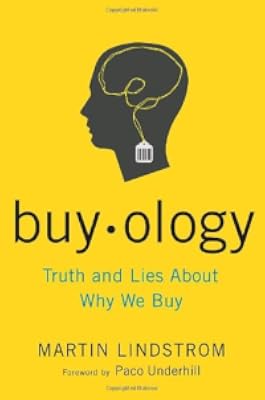
Buyology: Truth and Lies About Why We Buy
by Martin Lindstrom
On This Page
Description
How much do we know about why we buy? What truly influences our decisions in today's message-cluttered world? An eye-grabbing advertisement, a catchy slogan, an infectious jingle? Or do our buying decisions take place below the surface, so deep within our subconscious minds that we're barely aware of them? Marketing guru Lindstrom presents the startling findings from his three-year, seven-million-dollar neuromarketing study, a cutting-edge experiment that peered inside the brains of 2,000 show more volunteers from all around the world as they encountered various ads, logos, commercials, brands, and products. His startling results shatter much of what we have long believed about what seduces our interest and drives us to buy.--From publisher description. show lessTags
Recommendations



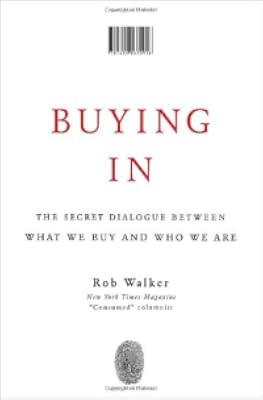
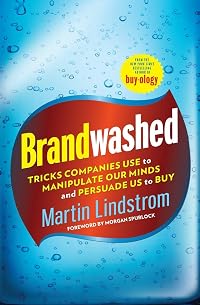


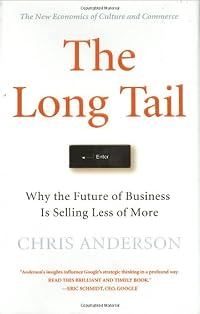
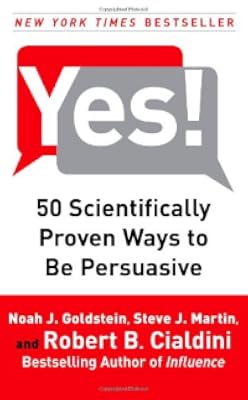















Member Recommendations
Member Reviews
Lindstrom is a highly successful marketing expert -- a fact he makes a point of discussing at great length -- who was involved with some studies using fMRI brain scans to investigate people's responses to various forms of advertising. This seems like a really interesting topic to me, but unfortunately his explanations of the experiments and their results are often vague, confusing, and/or scientifically iffy. I have absolutely no idea, for instance, how he gets from the stated results of the experiments on product placement to the conclusions he eventually asserts. Which is a pity, because I'm kind of interested to know whether product placement works, but I feel like I might actually know less about it now than I did going in, because show more I've got no idea which of several possible things I should believe.
I also found aspects of the way the book is written extremely irritating. Lindstrom uses a lot of examples when talking about how advertisers appeal to our irrational, subconscious minds, repeatedly inviting us to "imagine you're doing X" or "remember when you did Y." In principle this is great; it's important to be able to relate this stuff to our own experiences if we're going to understand it properly. And yet every single time he launched into the second person, I found myself protesting. Almost none of it bore any resemblance to my own experiences at all, often to a degree that was downright offensive. If I'm invited to imagine myself in a clothing store with the ambiance of a trendy night club full of beautiful young things in hip clothes, my irrational inner brain is not flooding itself with happy reward chemicals as it imagines how purchasing their clothes will make me cool like them. My irrational inner brain is flooding me with nasty fight-or-flight chemicals and screaming things like, "Aaaaah! It's the popular kids who made my life hell in junior high! Must get out before the social humiliation starts! The tedious shallowness, it burns!" Now, I know perfectly well that I'm not remotely immune to the kind of influences and irrational thought processes that Lindstrom's talking about here. I know that because I've read better books than this that dealt with the subject by offering up examples and explanations that I could actually relate to. But if this book were my only encounter with these ideas, I'm almost certain that I'd walk away from it thinking that either it was all complete crap or else I was clearly a special snowflake to whom such normal human foibles did not apply. This strikes me as a pretty serious failure, but I think it has provided me with a potential insight into why the vast majority of advertising does absolutely nothing for me, or else has a deeply negative effect. It really just isn't aimed at me. I am, not, on reflection, entirely sure that hotshot ad execs are even aware that people like me exist. My guess is that they just don't tend to have many nerds in their social circles.
It's funny. Lindstrom takes great pains to assure the reader that there's nothing "creepy" about the whole brain-scanning thing, reassuring us that, hey, he's a consumer, too, and isn't remotely interested in brainwashing people into buying things they don't want. He's all about helping companies make products people genuinely want, he says, and his main goal is to show us how this advertising stuff works so we can become more aware and less easily manipulated. Well, I think that's an excellent and worthy goal, and I don't really doubt that he means it. And yet, in some hard-to-pin down but deeply disturbing way, he just comes across to me as... smarmy. This is no doubt largely an irrational emotional response on my part, and I might be inclined to feel a little bad about it, except that there's something richly, stupidly ironic about having that reaction to the work of someone who's supposedly an expert on making people feel good about the stuff he's selling.
Anyway, there are books which offer much better treatments of the kind of psychology Lindstrom is talking about here, minus his focus on "branding." Dan Ariely's Predictably Irrational comes to mind, and I would definitely recommend that over this. show less
I also found aspects of the way the book is written extremely irritating. Lindstrom uses a lot of examples when talking about how advertisers appeal to our irrational, subconscious minds, repeatedly inviting us to "imagine you're doing X" or "remember when you did Y." In principle this is great; it's important to be able to relate this stuff to our own experiences if we're going to understand it properly. And yet every single time he launched into the second person, I found myself protesting. Almost none of it bore any resemblance to my own experiences at all, often to a degree that was downright offensive. If I'm invited to imagine myself in a clothing store with the ambiance of a trendy night club full of beautiful young things in hip clothes, my irrational inner brain is not flooding itself with happy reward chemicals as it imagines how purchasing their clothes will make me cool like them. My irrational inner brain is flooding me with nasty fight-or-flight chemicals and screaming things like, "Aaaaah! It's the popular kids who made my life hell in junior high! Must get out before the social humiliation starts! The tedious shallowness, it burns!" Now, I know perfectly well that I'm not remotely immune to the kind of influences and irrational thought processes that Lindstrom's talking about here. I know that because I've read better books than this that dealt with the subject by offering up examples and explanations that I could actually relate to. But if this book were my only encounter with these ideas, I'm almost certain that I'd walk away from it thinking that either it was all complete crap or else I was clearly a special snowflake to whom such normal human foibles did not apply. This strikes me as a pretty serious failure, but I think it has provided me with a potential insight into why the vast majority of advertising does absolutely nothing for me, or else has a deeply negative effect. It really just isn't aimed at me. I am, not, on reflection, entirely sure that hotshot ad execs are even aware that people like me exist. My guess is that they just don't tend to have many nerds in their social circles.
It's funny. Lindstrom takes great pains to assure the reader that there's nothing "creepy" about the whole brain-scanning thing, reassuring us that, hey, he's a consumer, too, and isn't remotely interested in brainwashing people into buying things they don't want. He's all about helping companies make products people genuinely want, he says, and his main goal is to show us how this advertising stuff works so we can become more aware and less easily manipulated. Well, I think that's an excellent and worthy goal, and I don't really doubt that he means it. And yet, in some hard-to-pin down but deeply disturbing way, he just comes across to me as... smarmy. This is no doubt largely an irrational emotional response on my part, and I might be inclined to feel a little bad about it, except that there's something richly, stupidly ironic about having that reaction to the work of someone who's supposedly an expert on making people feel good about the stuff he's selling.
Anyway, there are books which offer much better treatments of the kind of psychology Lindstrom is talking about here, minus his focus on "branding." Dan Ariely's Predictably Irrational comes to mind, and I would definitely recommend that over this. show less
Lindstrom is a proponent of using neuroscience and neuroimaging in particular as part of marketing, because we’re so bad at articulating why we make the choices we make. He can play fast and loose with the evidence—for example, he uses brainscans of smokers whose “reward centers,” associated with pleasurable experiences and thus with desire for cigarettes, lit up at the sight of graphic cigarette warnings to argue that such warnings backfired. But his evidence doesn’t prove that. It might prove that even graphic images don’t deter addicted smokers, but it doesn’t show that such smokers smoke more because of the warnings, or that nonsmokers are more likely to convert into smokers because of the warnings. Indeed, other show more research he discusses found that Marlboro red and other non-logoed reminders did the best job of stimulating cigarette cravings, arguably because without the explicit brand name people let their guards down, not realizing they were being advertised to. That suggests we need more regulation of cigarette brands, including their use of colors and trade dress, not less.
Still, there’s plenty of note here, including the result that pure product placement in entertainment doesn’t work at all unless it’s well-integrated into the story, at which point it does increase brand awareness, which is a critical waypoint to brand liking. Sex, however, distracts people from the brand actually providing the sexual ad, but he nonetheless expects the use of sex in ads to increase—he doesn’t say so outright, but I think the idea is that executives like the look of such ads and will therefore approve them, because they’re no more rational than any other human.
He’s uninterested in non-advertising sources of meaning, arguing, for example, that we buy products “Made in Japan” because of their association with high-tech and newness. While he acknowledges that this meaning is the opposite of what it was five decades ago, he’s indifferent to the changes in production—spurred, not incidentally, by substantial government intervention—that gave Japanese products these associations. This is, I think, connected with his ultimate idea that advertisers will increasingly use neuromarketing to encourage more consumption and will be increasingly successful at doing so. He says at the end—without any evidence at all, and certainly against the weight of what I’ve seen in behavioral economics—that if we, the audience, know this is going on we will be able to make rational choices about consumption. But then he says what he really means: “what choice do we have?” Neuromarketing is going to happen to us, and so our only options will be to choose how to max out our credit cards. That we might make a societal—and governmental—decision not to allow this route is inconceivable. And as a practical matter I’m not sure he’s wrong. show less
Still, there’s plenty of note here, including the result that pure product placement in entertainment doesn’t work at all unless it’s well-integrated into the story, at which point it does increase brand awareness, which is a critical waypoint to brand liking. Sex, however, distracts people from the brand actually providing the sexual ad, but he nonetheless expects the use of sex in ads to increase—he doesn’t say so outright, but I think the idea is that executives like the look of such ads and will therefore approve them, because they’re no more rational than any other human.
He’s uninterested in non-advertising sources of meaning, arguing, for example, that we buy products “Made in Japan” because of their association with high-tech and newness. While he acknowledges that this meaning is the opposite of what it was five decades ago, he’s indifferent to the changes in production—spurred, not incidentally, by substantial government intervention—that gave Japanese products these associations. This is, I think, connected with his ultimate idea that advertisers will increasingly use neuromarketing to encourage more consumption and will be increasingly successful at doing so. He says at the end—without any evidence at all, and certainly against the weight of what I’ve seen in behavioral economics—that if we, the audience, know this is going on we will be able to make rational choices about consumption. But then he says what he really means: “what choice do we have?” Neuromarketing is going to happen to us, and so our only options will be to choose how to max out our credit cards. That we might make a societal—and governmental—decision not to allow this route is inconceivable. And as a practical matter I’m not sure he’s wrong. show less
A fascinating and very approachable book. A lot of the data I've read of before from other sources, but not in this context and not as engagingly written. He makes a very scientific concept very easy to follow and enjoyable and he really makes you think about your motivations for buying things.
I find it fascinating how little we know about how we think and respond to things and how easy we are to manipulate. Even when we go in with our eyes wide open and the best of intentions to think and buy smart, they have ways around that.
I mean, who knew a company would spend a fortune on figuring out a way to make egg yolks a more appealing yellow and that it would even matter?
I find it fascinating how little we know about how we think and respond to things and how easy we are to manipulate. Even when we go in with our eyes wide open and the best of intentions to think and buy smart, they have ways around that.
I mean, who knew a company would spend a fortune on figuring out a way to make egg yolks a more appealing yellow and that it would even matter?
How much do we know about why we buy? What truly influences our decisions in today’s message-cluttered world? An eye-grabbing advertisement, a catchy slogan, an infectious jingle? Or do our buying decisions take place below the surface, so deep within our subconscious minds, we’re barely aware of them?
In BUYOLOGY, Lindstrom presents the astonishing findings from his groundbreaking, three-year, seven-million-dollar neuromarketing study, a cutting-edge experiment that peered inside the brains of 2,000 volunteers from all around the world as they encountered various ads, logos, commercials, brands, and products. His startling results shatter much of what we have long believed about what seduces our interest and drives us to buy. Among show more the questions he explores:
**Does sex actually sell?** To what extent do people in skimpy clothing and suggestive poses persuade us to buy products?
Despite government bans, does **subliminal advertising still surround us** – from bars to highway billboards to supermarket shelves?
Can “Cool” brands, like iPods, **trigger our mating instincts?**
**Can other senses** – smell, touch, and sound - be so powerful as to physically arouse us when we see a product?
Do companies **copy from** **the world of** **religion and create rituals** – like drinking a Corona with a lime – to capture our hard-earned dollars?
Filled with entertaining inside stories about how we respond to such well-known brands as Marlboro, Nokia, Calvin Klein, Ford, and American Idol, BUYOLOGY is a fascinating and shocking journey into the mind of today’s consumer that will captivate anyone who’s been seduced – or turned off – by marketers’ relentless attempts to win our loyalty, our money, and our minds. show less
In BUYOLOGY, Lindstrom presents the astonishing findings from his groundbreaking, three-year, seven-million-dollar neuromarketing study, a cutting-edge experiment that peered inside the brains of 2,000 volunteers from all around the world as they encountered various ads, logos, commercials, brands, and products. His startling results shatter much of what we have long believed about what seduces our interest and drives us to buy. Among show more the questions he explores:
**Does sex actually sell?** To what extent do people in skimpy clothing and suggestive poses persuade us to buy products?
Despite government bans, does **subliminal advertising still surround us** – from bars to highway billboards to supermarket shelves?
Can “Cool” brands, like iPods, **trigger our mating instincts?**
**Can other senses** – smell, touch, and sound - be so powerful as to physically arouse us when we see a product?
Do companies **copy from** **the world of** **religion and create rituals** – like drinking a Corona with a lime – to capture our hard-earned dollars?
Filled with entertaining inside stories about how we respond to such well-known brands as Marlboro, Nokia, Calvin Klein, Ford, and American Idol, BUYOLOGY is a fascinating and shocking journey into the mind of today’s consumer that will captivate anyone who’s been seduced – or turned off – by marketers’ relentless attempts to win our loyalty, our money, and our minds. show less
What did I think (that teasing little prompt to write a review)? Lindstrom's book reads more like a fiction novel!
If you can wade through the overblown prose (read author's sense of self-importance, borrowed deux ex machina and cliff-hanger endings to various chapters, all of which fizzle out along the way), Lindstrom actually has some sound advice for consumers!
If you value your purchasing sovereignty, read this book (and borrow it from the library, so as to avoid 'buying' into Lindstrom's hype). Marketeers are already implementing some of the ideas in this book, rightly or wrongly (and not considering the ethics and the funding of the research Lindstrom undertook).
How does a brand smell? Taste? Feel? Look like? Sound? And show more specifically, given the demographic in which you, as the customer, most likely fit, which representation of these characterisics should a brand/product have in order to engage your 'impulse buy' mechanism?
Ultimately, if you can determine what it is that drives you to purchase something, you're better protected against mindless consumerism. It might have not been the point Lindstrom wanted to make, but that's certainly the message I took from the book. Buyer beware. show less
Lindstrom is the most narcissistic author I’ve ever read, and, not surprisingly, is shallow and materialistic to a degree I haven’t encountered in my reading in a long time. He's also often times illogical and his pro-marketing views trump his ability to think scientifically--though he endless promotes himself as logical. If the topic wasn’t so interesting I would have dumped the book. His ignorance is just screaming for a totalitarian state/corporation to misuse the neuromarketing he’s promoting.
Interesting content but unjustifiably stretched out. The entire book could have fit a single chapter. The repetition and filler content got so bad that, for the first time, I found myself struggling to finish a book -- and the fact that this is actually a short one is quite telling.
I highly recommend NOT reading this book -- a reasonably well-researched magazine article, conference talk or blog post would suffice to provide the information contained herein.
I highly recommend NOT reading this book -- a reasonably well-researched magazine article, conference talk or blog post would suffice to provide the information contained herein.
Members
- Recently Added By
Author Information

12 Works 1,840 Members
Martin Lindstrom was born in Denmark in 1970. He is the author of Brand Building on the Internet, Clicks, Bricks and Brands, Brandchild: Insights into the Minds of Today's Global Kids: Understanding Their Relationship with Brands, Brandsense: Building Powerful Brands Through Touch, Taste, Smell, Sight & Sound, Buyology: The Truth About Why We Buy, show more Brandwash: Tricks Companies Use to Manipulate Our Minds and Persuade Us to Buy, and Small Data: The Tiny Clues that Uncover Huge Trends. He is a columnist for Fast Company, Time Magazine, and Harvard Business Review. His work can also be seen on NBC's Today show. He has appeared in a movie documentary and has made other movie and television appearances. In 2009, Time Magazine included him in their list of the top 100 Most Influential People in The World. He is the founding partner and Chairman of the Board of Buyology Inc. and Director of Brand Sense Agency. show less
All Editions
Awards and Honors
Distinctions
Common Knowledge
- Canonical title*
- Le bugie del marketing. Come le aziende orientano i nostri consumi
- Alternate titles
- Buyology: How Everything We Believe about Why We Buy Is Wrong
- Original publication date
- 2008-10-21
- First words
- Let's face it, we're all consumers.
- Blurbers
- Oz, Mehmet; Kawasaki, Guy; Eckert, Robert A.; Kotler, Philip; Robertson, Andrew
*Some information comes from Common Knowledge in other languages. Click "Edit" for more information.
Classifications
Statistics
- Members
- 970
- Popularity
- 27,349
- Reviews
- 35
- Rating
- (3.28)
- Languages
- 10 — Danish, Dutch, English, Finnish, French, German, Italian, Portuguese, Russian, Spanish
- Media
- Paper, Audiobook, Ebook
- ISBNs
- 27
- UPCs
- 2
- ASINs
- 8