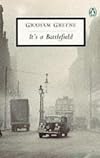
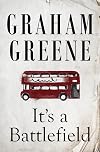
It's a Battlefield
by Graham Greene 
On This Page
Description
An "adventurous... intelligent... ingenious" novel of crime and punishment in pre-World War II London (V. S. Pritchett). During a demonstration in Hyde Park, Communist bus driver Jim Drover acts on instinct to protect his wife by stabbing to death the policeman set to strike her down. Sentenced to hang-whether as a martyr, tool, or murderer-Drover accepts his lot, unaware that the ramifications for the crime, and the battle for his reprieve, are inflaming political unrest in an increasingly show more divided city. But Drover's single, impulsive act is also upending the lives of the people he loves and trusts. Caught in a quicksand of desperation, sexual betrayal, and guilt, they will not only play a part in Drover's fate, but they'll become agents-both unwitting and calculated-of their own fates as well. Turning the traditional narrative of the police procedural, domestic drama, and political thriller on its head, It's a Battlefield was described by Graham Greene himself as "a panoramic novel of London, " one without heroes and villains, only "the injustice of man's justice." show lessTags
Recommendations





















Member Reviews
This is a relatively early (1934) book by Greene, and I think it is interesting for its variety of characters. I don’t think it’s ever safe to say what you think an author was “really thinking," but what I liked here was the portrayal of a “battlefield” of characters, some in conflict with one another, but mostly each fighting an inner conflict.
The plot centers on a bus driver, Jim Drover, who, while protecting his wife during a riot, has killed a policeman. Jim, one of a number of characters participating either whole heartedly or perfunctoriiy in the Communist labor movement of the time, has been convicted and condemned to death. Jim may be the least conflicted character in the story. We see very little of him — he seems show more actually at peace with his own fate and more worried about his wife, Milly. Milly is torn any number of ways, not least by her relationship with Jim’s brother, Conrad, who, in turn, fights an unwinnable battle to prove his manhood to Milly and to himself. Other characters fight for dignity, legitimacy, . . . trying to get themselves to become the persons they want to be rather than the persons they may settle to be.
One character, the Assistant Commissioner, fighting his own battle about whether to intervene in the fate of Jim, sums up the “battlefield”:
"Everybody’s too busy fighting his own little battle to think of the, the next man."
Not only are they too busy fighting their own battles to help each other, they are too busy to even fight with one another. And it doesn’t all add up to any sort of transcendent hope or faith — it’s just a collection of struggles within each person, each in their own way.
It doesn’t sound especially “happy”, but I liked the book exactly for that portrayal of inner struggle — it’s everyone’s life, seen from the inside. Of course you can’t help but suppose there is irony here -- that each is fighting an internal struggle in the context of outer struggles that could be the basis for inner victories. show less
The plot centers on a bus driver, Jim Drover, who, while protecting his wife during a riot, has killed a policeman. Jim, one of a number of characters participating either whole heartedly or perfunctoriiy in the Communist labor movement of the time, has been convicted and condemned to death. Jim may be the least conflicted character in the story. We see very little of him — he seems show more actually at peace with his own fate and more worried about his wife, Milly. Milly is torn any number of ways, not least by her relationship with Jim’s brother, Conrad, who, in turn, fights an unwinnable battle to prove his manhood to Milly and to himself. Other characters fight for dignity, legitimacy, . . . trying to get themselves to become the persons they want to be rather than the persons they may settle to be.
One character, the Assistant Commissioner, fighting his own battle about whether to intervene in the fate of Jim, sums up the “battlefield”:
"Everybody’s too busy fighting his own little battle to think of the, the next man."
Not only are they too busy fighting their own battles to help each other, they are too busy to even fight with one another. And it doesn’t all add up to any sort of transcendent hope or faith — it’s just a collection of struggles within each person, each in their own way.
It doesn’t sound especially “happy”, but I liked the book exactly for that portrayal of inner struggle — it’s everyone’s life, seen from the inside. Of course you can’t help but suppose there is irony here -- that each is fighting an internal struggle in the context of outer struggles that could be the basis for inner victories. show less
We were unimpressed with Greene's first novel. The next two were never published. The fourth ('Stamboul Train') was an over-written proto-'entertainment'. 'It's a Battlefield' (1934) was his fifth crack at literary respectability. He still hasn't quite got there yet.
The patrician observation of ordinary folk that we will see again in 'A Gun for Sale' is in place although the tendency to patronise from the position of Bloomsbury and Oxford is moderated by increasing signs of a humane understanding of the person within.
The story is a sad one of an unintellectual working class Communist who 'loses it' at a demonstration and kills a policeman - less a crime of political passion than one of misjudgement and protectiveness towards others. It show more is a horrible accident of history for all concerned.
This is the age of capital punishment but also a period when institutional questioning had started about its rightness. Questions of right bourgeois order were coming up against the uncomfortable feeling that, well, it was not quite right to kill a man for killing a man.
Greene observes all this with a distant and humane eye, empathy for the moments of life yet no great engagement in the social aspects of the crisis. His interest is not politics but love, human frailty, personality and the ambiguities of power relations. The deaths are rather secondary.
The shenanigans of politics and law enforcement role-playing are covered but not in depth. What is covered well is the equally detached personality of the law officer charged with a job that does not involve judgement and which is the more difficult for not being that of a colonial officer.
Unspoken is the fact that the methods of the colonial officer - 'necessarily' brutal - are not the methods appropriate to fellow subjects of the Crown. Greene hints at, without stating, the discomfort of a man who knows he has a role to play where the morality lies in the role not the individual.
Greene's detachment from the social emerges most evidently in his portrayals of the Communist community and the ancillary characters. He is known to have dabbled in the ideology as a very young man but not for long. His Communists are not villains or heroes but just lost and ordinary.
This is a transitional book. The overwriting is over but there are still moments of forced literariness which detract from the mood and the story. At 30 years old, Greene has still not entirely jettisoned the need to be a literary figure rather than just a good and clear writer.
When he stops being detached and literary (admittedly much less than in the dreadful 'The Man Within' and the less dreadful but second division 'Stamboul Train'), the acute and sensitive observation of the human predicament breaks through.
The characters (too many to be fully fleshed out with no clear protagonist) are, nevertheless, still closer to allegories than persons - of self-delusion, social paranoia, vapid intellectual posturing. Perhaps only the 'promiscuous' Kay retains some sort of authenticity in the round.
This is at its best when exploring the 'sehnsucht' of lonely desire (the book is surprisingly open sexually for a novel of that period), the indistinct and inconclusive self-questioning of people playing social roles and the way that people delude themselves about their own situation.
Yet the book is not a great success because the achievement is periodic rather than sustained and the detachment constantly verges on an inauthentic cynicism which is not actually where Greene stands. Greene is still masking his own sehnsucht for meaning.
Is Greene compassionate? I am not sure. He is trying to be compassionate but struggles to see it through in this novel. The compassion is still wrestling with something that despises his species for its very nature. These ambiguities are those of a depressive 'Catholic agnostic'. show less
The patrician observation of ordinary folk that we will see again in 'A Gun for Sale' is in place although the tendency to patronise from the position of Bloomsbury and Oxford is moderated by increasing signs of a humane understanding of the person within.
The story is a sad one of an unintellectual working class Communist who 'loses it' at a demonstration and kills a policeman - less a crime of political passion than one of misjudgement and protectiveness towards others. It show more is a horrible accident of history for all concerned.
This is the age of capital punishment but also a period when institutional questioning had started about its rightness. Questions of right bourgeois order were coming up against the uncomfortable feeling that, well, it was not quite right to kill a man for killing a man.
Greene observes all this with a distant and humane eye, empathy for the moments of life yet no great engagement in the social aspects of the crisis. His interest is not politics but love, human frailty, personality and the ambiguities of power relations. The deaths are rather secondary.
The shenanigans of politics and law enforcement role-playing are covered but not in depth. What is covered well is the equally detached personality of the law officer charged with a job that does not involve judgement and which is the more difficult for not being that of a colonial officer.
Unspoken is the fact that the methods of the colonial officer - 'necessarily' brutal - are not the methods appropriate to fellow subjects of the Crown. Greene hints at, without stating, the discomfort of a man who knows he has a role to play where the morality lies in the role not the individual.
Greene's detachment from the social emerges most evidently in his portrayals of the Communist community and the ancillary characters. He is known to have dabbled in the ideology as a very young man but not for long. His Communists are not villains or heroes but just lost and ordinary.
This is a transitional book. The overwriting is over but there are still moments of forced literariness which detract from the mood and the story. At 30 years old, Greene has still not entirely jettisoned the need to be a literary figure rather than just a good and clear writer.
When he stops being detached and literary (admittedly much less than in the dreadful 'The Man Within' and the less dreadful but second division 'Stamboul Train'), the acute and sensitive observation of the human predicament breaks through.
The characters (too many to be fully fleshed out with no clear protagonist) are, nevertheless, still closer to allegories than persons - of self-delusion, social paranoia, vapid intellectual posturing. Perhaps only the 'promiscuous' Kay retains some sort of authenticity in the round.
This is at its best when exploring the 'sehnsucht' of lonely desire (the book is surprisingly open sexually for a novel of that period), the indistinct and inconclusive self-questioning of people playing social roles and the way that people delude themselves about their own situation.
Yet the book is not a great success because the achievement is periodic rather than sustained and the detachment constantly verges on an inauthentic cynicism which is not actually where Greene stands. Greene is still masking his own sehnsucht for meaning.
Is Greene compassionate? I am not sure. He is trying to be compassionate but struggles to see it through in this novel. The compassion is still wrestling with something that despises his species for its very nature. These ambiguities are those of a depressive 'Catholic agnostic'. show less
Summary: The private “battles” of those connected with Jim Drover, a bus driver convicted of murder for killing a policeman.
Jim Drover was convicted of the knife murder of a policeman about to bludgeon his wife, Milly, during a demonstration. He was sentenced to die by hanging. The action in this story involves the people who know Drover and their efforts to secure a reprieve. As they do so, we see figures involved in private battles. The title refers to a battle in the Crimean War where a fog isolated soldiers from the larger battle, so they ended up fighting individually, without a sense of the whole but just trying to survive.
The Home Secretary has asked the nameless Assistant Commissioner to give him a report of what effect an show more execution will have on Communist demonstrations. Jim’s brother Conrad, the “brains” to Jim’s “braun” tries to find a way to secure his release. He solicits the efforts of the Communist party with only desultory results. Conrad urges Milly to persuade the policeman’s widow to sign a release, which she does under pressure. However, no one holds out much hope for the petition. Milly’s sister Kay goes to bed with Mr. Surrogate, a widower who is an influential Communist economist to solicit his support, but also to satisfy her own urges. Both Surrogate and the Assistant Commissioner try to persuade Caroline Bury, a society influencer to use her influence. All of this is to no avail.
The reports the Assistant Commissioner receives suggest that the response to Drover’s impending execution will be indifferent. There is the question of doing justice, since Drover was defending his wife. But he hides behind his duty to enforce the law, and that the determinations of justice lay with others.
Meanwhile, as Conrad Drover and Milly recognize the apparent futility of their efforts, they end up in bed, a release but unsatisfying. This was not the “look after Milly” he promised his brother…or was it? Struggling with guilt and ineffectuality, he buys a gun and begins stalking the Assistant Commissioner.
Greene portrays a group of people with no great purpose or vision, who are just trying to get through life, and survive the battle that is life. Conrad, in his desperate plan at least strives for something more–if nothing else to do “something” for his brother. Even the usually conscientious Assistant Commissioner sits on the report. In the end, Jim Drover, who defended his wife, looks the most heroic. But over all seems to hang the bleak curtain of a faithless and indifferent modernism. show less
Jim Drover was convicted of the knife murder of a policeman about to bludgeon his wife, Milly, during a demonstration. He was sentenced to die by hanging. The action in this story involves the people who know Drover and their efforts to secure a reprieve. As they do so, we see figures involved in private battles. The title refers to a battle in the Crimean War where a fog isolated soldiers from the larger battle, so they ended up fighting individually, without a sense of the whole but just trying to survive.
The Home Secretary has asked the nameless Assistant Commissioner to give him a report of what effect an show more execution will have on Communist demonstrations. Jim’s brother Conrad, the “brains” to Jim’s “braun” tries to find a way to secure his release. He solicits the efforts of the Communist party with only desultory results. Conrad urges Milly to persuade the policeman’s widow to sign a release, which she does under pressure. However, no one holds out much hope for the petition. Milly’s sister Kay goes to bed with Mr. Surrogate, a widower who is an influential Communist economist to solicit his support, but also to satisfy her own urges. Both Surrogate and the Assistant Commissioner try to persuade Caroline Bury, a society influencer to use her influence. All of this is to no avail.
The reports the Assistant Commissioner receives suggest that the response to Drover’s impending execution will be indifferent. There is the question of doing justice, since Drover was defending his wife. But he hides behind his duty to enforce the law, and that the determinations of justice lay with others.
Meanwhile, as Conrad Drover and Milly recognize the apparent futility of their efforts, they end up in bed, a release but unsatisfying. This was not the “look after Milly” he promised his brother…or was it? Struggling with guilt and ineffectuality, he buys a gun and begins stalking the Assistant Commissioner.
Greene portrays a group of people with no great purpose or vision, who are just trying to get through life, and survive the battle that is life. Conrad, in his desperate plan at least strives for something more–if nothing else to do “something” for his brother. Even the usually conscientious Assistant Commissioner sits on the report. In the end, Jim Drover, who defended his wife, looks the most heroic. But over all seems to hang the bleak curtain of a faithless and indifferent modernism. show less
Review first posted on BookLikes: http://brokentune.booklikes.com/post/927540/it-s-a-battlefield
“ ‘Yes,’ the secretary said, ‘it was about Drover. Now that the appeal has failed, it all rests on the Home Secretary. The poor dear man is worried, very worried, and all on top too of the licensing.’ The secretary’s wide pale face glistened softly under the concealed lighting and he leant forward with an infinite suggestion of frankness, with an overwhelming effect of guile. ‘To tell you the truth, he’d have been glad, he’d have been tremendously relieved, if the appeal had been allowed.’ ‘Impossible,’ the Assistant Commissioner said, ‘there was no possible – er – line possible – er – line that the Defence show more could – could take.’ ‘Exactly. I was in Court. The Minister, you see, thought that the L.C.J. might give some excuse for a reprieve. But there was nothing at all to get hold of.’ ‘The policeman died,’ the Assistant Commissioner said stubbornly, ‘we got the man.’ ‘But the Minister, you know, doesn’t want the poor devil’s blood. Nobody does. It was a political meeting. Everyone was excited. Drover thought the bobby was going to hit his wife. He had the knife in his pocket. That, of course, is the snag. Why did he carry the knife?’”
Well, that was ... interesting. It’s a Battlefield seems to follow on – in both content and style – from The Man Within and tries to show the discrepancy between what is just in humanitarian terms and what is just in social or legal terms.
The story focuses on the efforts of the Assistant Commissioner to write a report and make a recommendation to the Home Secretary about whether the death sentence handed to Drover should be reprieved. Drover had been convicted of the killing of a police officer during a demonstration. In the course of the investigation by the Assistant Commissioner, it becomes clear that there is a little more to the background of the conviction and that the sentencing may have been influenced by the fact that Drover’s is a communist.
It’s an interesting book because Greene quite overtly talks about politics and social injustice in Britain (the story is set in London). Written in 1934, around the time that Greene joined the Independent Labour Party, the book seems to reflect on issues that Greene might have pondered on as part of his political activity. However, as with everything with Greene, there is little confirmation of what his motivations were as he constantly revised his memoirs, creating quite a few contradictions.
Nevertheless in true Greene fashion, despite the politically inspired theme there is no clear message to the story other than a realisation that life can be depressing, futile, and unjust.
“When he thought of the heavy sentences passed on men who stole a little jewelry from a rich man’s house, the Assistant Commissioner was more than ever thankful that justice was not his business. He knew quite well the cause of the discrepancy; the laws were made by property owners in defence of property; that was why a Fascist could talk treason without prosecution; that was why a man who defrauded the State in defence of his private wealth did not even lose the money he had gained; that was why the burglar went to gaol for five years; that was why Drover could not so easily be reprieved – he was a Communist. Again, it was not his business; he resented having to report to the Minister that in his opinion neither the reprieve nor the execution of Drover would have any public effect.”
This is still an early work and, as mentioned above, it is very reminiscent of The Man Within and I would not be surprised if he had written or drafted It's a Battlefield before Stamboul Train, just because the characters seemed to be developed better (and applied a dark sense of humour) in Stamboul Train. I don't think Greene had found his proper style yet but am curious to discover at what point in time he breaks away from trying to have his protagonists act out social or political struggles and starts to focus on the internal turmoils. show less
“ ‘Yes,’ the secretary said, ‘it was about Drover. Now that the appeal has failed, it all rests on the Home Secretary. The poor dear man is worried, very worried, and all on top too of the licensing.’ The secretary’s wide pale face glistened softly under the concealed lighting and he leant forward with an infinite suggestion of frankness, with an overwhelming effect of guile. ‘To tell you the truth, he’d have been glad, he’d have been tremendously relieved, if the appeal had been allowed.’ ‘Impossible,’ the Assistant Commissioner said, ‘there was no possible – er – line possible – er – line that the Defence show more could – could take.’ ‘Exactly. I was in Court. The Minister, you see, thought that the L.C.J. might give some excuse for a reprieve. But there was nothing at all to get hold of.’ ‘The policeman died,’ the Assistant Commissioner said stubbornly, ‘we got the man.’ ‘But the Minister, you know, doesn’t want the poor devil’s blood. Nobody does. It was a political meeting. Everyone was excited. Drover thought the bobby was going to hit his wife. He had the knife in his pocket. That, of course, is the snag. Why did he carry the knife?’”
Well, that was ... interesting. It’s a Battlefield seems to follow on – in both content and style – from The Man Within and tries to show the discrepancy between what is just in humanitarian terms and what is just in social or legal terms.
The story focuses on the efforts of the Assistant Commissioner to write a report and make a recommendation to the Home Secretary about whether the death sentence handed to Drover should be reprieved. Drover had been convicted of the killing of a police officer during a demonstration. In the course of the investigation by the Assistant Commissioner, it becomes clear that there is a little more to the background of the conviction and that the sentencing may have been influenced by the fact that Drover’s is a communist.
It’s an interesting book because Greene quite overtly talks about politics and social injustice in Britain (the story is set in London). Written in 1934, around the time that Greene joined the Independent Labour Party, the book seems to reflect on issues that Greene might have pondered on as part of his political activity. However, as with everything with Greene, there is little confirmation of what his motivations were as he constantly revised his memoirs, creating quite a few contradictions.
Nevertheless in true Greene fashion, despite the politically inspired theme there is no clear message to the story other than a realisation that life can be depressing, futile, and unjust.
“When he thought of the heavy sentences passed on men who stole a little jewelry from a rich man’s house, the Assistant Commissioner was more than ever thankful that justice was not his business. He knew quite well the cause of the discrepancy; the laws were made by property owners in defence of property; that was why a Fascist could talk treason without prosecution; that was why a man who defrauded the State in defence of his private wealth did not even lose the money he had gained; that was why the burglar went to gaol for five years; that was why Drover could not so easily be reprieved – he was a Communist. Again, it was not his business; he resented having to report to the Minister that in his opinion neither the reprieve nor the execution of Drover would have any public effect.”
This is still an early work and, as mentioned above, it is very reminiscent of The Man Within and I would not be surprised if he had written or drafted It's a Battlefield before Stamboul Train, just because the characters seemed to be developed better (and applied a dark sense of humour) in Stamboul Train. I don't think Greene had found his proper style yet but am curious to discover at what point in time he breaks away from trying to have his protagonists act out social or political struggles and starts to focus on the internal turmoils. show less
I've read five or six Graham Greene novels so far and this has to be my least favorite. Maybe I just didn't have the focus for it, but the characters seemed forgettable and hard to track from one chapter to the next. Still, Greene's writing style as always shines.
Back cover description quite good, but found this very difficult to get into and unengaging. Gave up around page 50 (quarter of the way through)
Rather despairing read. Well written.
Members
- Recently Added By
Published Reviews
On a battlefield each small group of soldiers fights its little individual war, ignorant of the action and its meaning along miles of battlefront. Life, says Graham Greene, is like that. To prove it, he writes in a cinematographic style that shoots a keen, swift-moving camera eye from one point to another round the circle of his drama. In "Orient Express" he used the same method, flashing show more light on lives in widely differing spheres which were somehow connected in a common story. In "It's a Battlefield" he has developed this method still further. show less
added by John_Vaughan
Lists

Books I Own But Haven't Read
144 works; 2 members

My TBR
371 works; 3 members
Author Information

356+ Works 87,436 Members
Born in 1904, Graham Greene was the son of a headmaster and the fourth of six children. Preferring to stay home and read rather than endure the teasing at school that was a by-product of his father's occupation, Greene attempted suicide several times and eventually dropped out of school at the age of 15. His parents sent him to an analyst in show more London who recommended he try writing as therapy. He completed his first novel by the time he graduated from college in 1925. Greene wrote both entertainments and serious novels. Catholicism was a recurring theme in his work, notable examples being The Power and the Glory (1940) and The End of the Affair (1951). Popular suspense novels include: The Heart of the Matter, Our Man in Havana and The Quiet American. Greene was also a world traveler and he used his experiences as the basis for many books. One popular example, Journey Without Maps (1936), was based on a trip through the jungles of Liberia. Greene also wrote and adapted screenplays, including that of the 1949 film, The Third Man, which starred Orson Welles. He died in Vevey, Switzerland in 1991. (Bowker Author Biography) show less
Graham Greene has a Legacy Library. Legacy libraries are the personal libraries of famous readers, entered by LibraryThing members from the Legacy Libraries group.
Some Editions
Series
Belongs to Publisher Series
Work Relationships
Common Knowledge
- Canonical title
- It's a Battlefield
- Original title
- It's a Battlefield
- Original publication date
- 1934
- Important places
- Crimea
- First words
- The Assistant Commissioner was careful of his appearance before meeting men younger than himself. It gave him the same kind of confidence as dressing for dinner had done in eastern forests.
- Last words
- (Click to show. Warning: May contain spoilers.)He began to write in his small meticulous handwriting across the top the Streatham report: "What the officers in charge of this case have not realized is the significance of the prostitute's evidence that she saw Flossie Matthews waiting on a Park chair as early as 6 p.m. Taken in conjunction with the other evidence..." It was for these moments of unsought revelation that the Assistant Commissioner lived.
- Original language
- English
Classifications
Statistics
- Members
- 514
- Popularity
- 58,590
- Reviews
- 9
- Rating
- (3.33)
- Languages
- 9 — Danish, Dutch, English, Finnish, French, German, Portuguese, Spanish, Swedish
- Media
- Paper, Audiobook, Ebook
- ISBNs
- 23
- ASINs
- 24