On This Page
Description
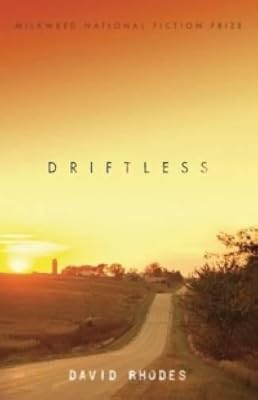
The few hundred souls who inhabit Words, Wisconsin, are an extraordinary cast of characters. The middle-aged couple who zealously guards their farm from a scheming milk cooperative. The lifelong invalid, crippled by conflicting emotions about her sister. A cantankerous retiree, haunted by childhood memories after discovering a cougar in his haymow. The former drifter who forever alters the ties that bind a community. In his first novel in 30 years, David Rhodes offers a vivid and show more unforgettable look at life in small-town America. show lessTags
Recommendations


Member Reviews
DRIFTLESS (2008) is a book I absolutely loved and didn't want it to end. And at four hundred-plus small-ish print pages, it almost didn't. With its unique, and mostly likable, cast of small town characters, it has been compared to Sherwood Anderson's WINESBURG, OHIO and Edgar Lee Masters' SPOON RIVER ANTHOLOGY, both very apt comparisons, albeit with some modern twists. But David Rhodes does for the Driftless region of southwestern Wisconsin what Willa Cather did for frontier Nebraska, or, closer to home, what Aldo Leopold did for the Dells in his SAND COUNTY ALMANAC, with a touch of Mayberry in the mix. There is nothing I enjoy more than a character-driven novel, and the denizens of Words, Wisconsin are a pure pleasure to meet and get show more to know, from the mysterious farmer, July Montgomery, to Pastor Winifred Smith of the Words Friends of Jesus Church, to the repair shop proprietor, Jacob Helm, to dairy farmers Grahm and Cora Shotwell (up against big business and government). And there is paroled petty criminal Wade Armbuster, who falls for the crippled spinster, Olivia, picking her up off the ground in a casino parking lot and taking her on a wild and hilarious night ride through the countryside, first chasing her purse snatchers, then fleeing the police. (And later he takes her to a dog fight, followed by another wild ride.) And there is Rusty Smith, a retiree who learns to respect and trust his Amish neighbors who come to work on his house repairs. And Moe Ridge, a survivalist who is training a secret militia in a forest encampment. And on and on, until all these separate story threads are woven together, sometimes in the most surprising ways.
There are perhaps a dozen or more fascinating folks that populate this story of a tiny rural community, and David Rhodes makes sure you come to know them all intimately. There is comedy here and there is also tragedy. This is storytelling at its very best. My very highest recommendation.
- Tim Bazzett, author of the memoir, BOOKLOVER show less
There are perhaps a dozen or more fascinating folks that populate this story of a tiny rural community, and David Rhodes makes sure you come to know them all intimately. There is comedy here and there is also tragedy. This is storytelling at its very best. My very highest recommendation.
- Tim Bazzett, author of the memoir, BOOKLOVER show less
"Gail sang her song again and was again lifted up by the accompaniment, borne away to a place where plastic factories, unpaid bills, human cruelty, flat tires, and leaking hot water heaters did not exist." (Page 290)
Welcome to Word, Wisconsin. You won't soon forget it. David Rhodes has written a novel that made me cry not once but three separate times automatically rating it five stars in my book. Narrated in alternating chapters by several of the residents of this tiny, nearly forgotten town, the author makes clear that life here is hard and what holds it together is the tenacity and loving spirit of these complicated characters. July Montgomery, a hardscrabble farmer, is the center of this world and his kindness and joy covers show more everyone with an invisible sense of hope.
Cora and Grahm operate a small dairy farm and, like all small farmers, depend on the honesty of the co-op to sustain their income. Jacob Helm, grieving widower, runs a repair shop that everyone relies on for one thing or another. Olivia, wheelchair bound and her sister Violet Brasso don't often see eye to eye but their love for each other is strong. Gail Shotwell works the night shift at the local plastics factory but aspires to be a songwriter. Rusty Smith, retired farmer and all around hard working grouch, discovers untold happiness when he gives in and allows the Amish to make some home improvements for him and his wife, Maxine. He also discovers he harbored a secret that had taken many years to reveal itself. And Winifred Smith is the pastor of Words Friends of Jesus Church, where most of the characters end up.
All the characters represent the hardest working people you will ever know and Rhodes brilliantly depicts them through the use of beautiful prose that had me busily marking passages like:
"Late had recently become a habitual companion in a more general condition of dread."
And Old Age was carefully preserved in the furniture, the artfully organized clutter on the walls and shelves, and the odor of some prehistoric mold culture ingeniously nurtured to withstand modern antiseptic cleaning methods and modernity itself."
And each of these finely drawn characters experiences an epiphany of one kind or another that changes their life completely. All except July, which makes his importance in the novel even more clarifying.
An absolutely wonderful book with enduring characters and I'm scratching my head wondering how I let it sit on my shelves for over ten years. Thanks so much to Mark for getting me to read it. If you decide to give it a try it would be easy to skip the chapter containing the dog fights which was the only negative passage to me. show less
Welcome to Word, Wisconsin. You won't soon forget it. David Rhodes has written a novel that made me cry not once but three separate times automatically rating it five stars in my book. Narrated in alternating chapters by several of the residents of this tiny, nearly forgotten town, the author makes clear that life here is hard and what holds it together is the tenacity and loving spirit of these complicated characters. July Montgomery, a hardscrabble farmer, is the center of this world and his kindness and joy covers show more everyone with an invisible sense of hope.
Cora and Grahm operate a small dairy farm and, like all small farmers, depend on the honesty of the co-op to sustain their income. Jacob Helm, grieving widower, runs a repair shop that everyone relies on for one thing or another. Olivia, wheelchair bound and her sister Violet Brasso don't often see eye to eye but their love for each other is strong. Gail Shotwell works the night shift at the local plastics factory but aspires to be a songwriter. Rusty Smith, retired farmer and all around hard working grouch, discovers untold happiness when he gives in and allows the Amish to make some home improvements for him and his wife, Maxine. He also discovers he harbored a secret that had taken many years to reveal itself. And Winifred Smith is the pastor of Words Friends of Jesus Church, where most of the characters end up.
All the characters represent the hardest working people you will ever know and Rhodes brilliantly depicts them through the use of beautiful prose that had me busily marking passages like:
"Late had recently become a habitual companion in a more general condition of dread."
And Old Age was carefully preserved in the furniture, the artfully organized clutter on the walls and shelves, and the odor of some prehistoric mold culture ingeniously nurtured to withstand modern antiseptic cleaning methods and modernity itself."
And each of these finely drawn characters experiences an epiphany of one kind or another that changes their life completely. All except July, which makes his importance in the novel even more clarifying.
An absolutely wonderful book with enduring characters and I'm scratching my head wondering how I let it sit on my shelves for over ten years. Thanks so much to Mark for getting me to read it. If you decide to give it a try it would be easy to skip the chapter containing the dog fights which was the only negative passage to me. show less
Using small-town life to explore the boundaries of identity and community is hardly a new concept, but I found this story to be sympathetic and insightful, with some piercing moments and beautiful language.
I chose this book only because the driftless occupies a somewhat mythical patch of my mental landscape. I knew that had nothing to do with the actual story, but I chose it anyway.
I chose this book only because the driftless occupies a somewhat mythical patch of my mental landscape. I knew that had nothing to do with the actual story, but I chose it anyway.
Words is a tiny town in the middle of the Driftless area of southwest Wisconsin, a place where the glaciers didn't move through and flatten the land. The inhabitants of Words represent varying degrees of drift themselves; some seem to be wandering through live without an anchor, while others are very firmly tied to the land and the local way of life. I loved this novel, both for the beautifully drawn characters and how their stories all come together in different ways, and for the lovely rendition of this area of Wisconsin. Having grown up on a farm and also having lived in the Driftless for nearly a decade, I can attest that Rhodes' depiction of farm life, life in SW Wisconsin, and the people who inhabit the two is 100% accurate and show more lovingly told. I have only a couple of very minor quibbles: there's one character whom I can't stand and so the sections of the book focused on her were not to my taste, and there were bits here and there that seems to drag and could have used some editing. Otherwise, though, a fantastic novel. show less
That Midwestern area that didn't collect geological drift seems clogged with human drift, a diminuative town full of almost adults who can't seem to keep their lives tracked without July Montgomery. Gloriously written, with human characters, but the plotting is fantasy and I'm not the audience for the transcendent stuff.
I enjoyed this book a lot. The narrration was very good and the various different characters were handled well.
And the story, people facing and overcoming various struggles, seemed very human to me. Even though I’ve never really known people who lived the lives portrayed in the story, they were real and three-dimensional.
And the story, people facing and overcoming various struggles, seemed very human to me. Even though I’ve never really known people who lived the lives portrayed in the story, they were real and three-dimensional.
Meet the residents of Words, Wisconsin. This small town isn't on most maps, but the inhabitants all seem familiar and make themselves at home in the reader's mind. This beautifully interwoven plot succeeds in painting each of the characters as individuals with secrets, stories, and aspirations. The novel also manages to give you a sense of the town as a whole - a place full of friendship, where everyone knows their neighbors and gossips about them. The characters were realistically rendered. Each has his/her own foibles and character flaws, but are all lovable and dear by the close of the book.
Members
- Recently Added By
Lists

Best 21st Century Books (So Far)
679 works; 86 members

Pleasant Surprises: Books That Exceeded Our Expectations
418 works; 142 members

Top Five Books of 2017
757 works; 231 members

Quirky Characters
24 works; 7 members

Books Read in 2015
3,299 works; 126 members

Books Read in 2010
631 works; 11 members

All Iowa Reads
13 works; 2 members
Author Information

6 Works 830 Members
Awards and Honors
Series

Common Knowledge
- People/Characters
- July Montgomery; Russell "Rusty" Smith; Winifred Smith; Olivia Brasso; Gail Shotwell; Grahm Shotwell (show all 11); Cora Shotwell; Violet Brasso; Wade Armbuster; Maxine Smith; Jacob Helm
- Important places
- Words, Wisconsin, USA
- Dedication
- For Edna
- First words
- Prologue: In southwestern Wisconsin there is an area roughly one hundred and sixty miles long and seventy miles wide with unique features.
- Quotations
- She would never be like heaven to someone else--only a charitable activity for earning the right to get there. (p.194)
- Last words
- (Click to show. Warning: May contain spoilers.)"Things should be the way people think they are -- when it's possible."
- Blurbers
- Kanon, Joseph; Greenberg, Joanne
Classifications
Statistics
- Members
- 521
- Popularity
- 57,741
- Reviews
- 31
- Rating
- (4.01)
- Languages
- English
- Media
- Paper, Audiobook, Ebook
- ISBNs
- 14
- ASINs
- 3