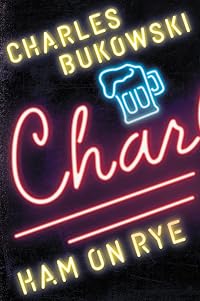
Ham on Rye: A Novel
by Charles Bukowski
On This Page
Description
In what is widely hailed as the best of his many novels, Charles Bukowski details the long, lonely years of his own hardscrabble youth in the raw voice of alter ego Henry Chinaski. From a harrowingly cheerless childhood in Germany through acne-riddled high school years and his adolescent discoveries of alcohol, women, and the Los Angeles Public Library's collection of D. H. Lawrence, Ham on Rye offers a crude, brutal, and savagely funny portrait of an outcast's coming-of-age during the show more desperate days of the Great Depression. show lessTags
Recommendations

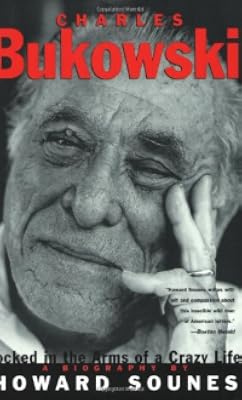
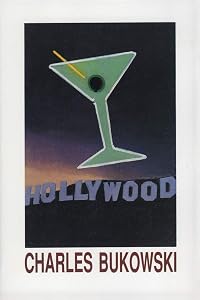
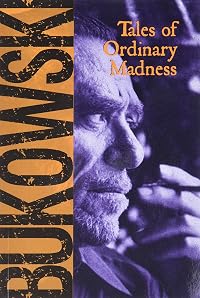
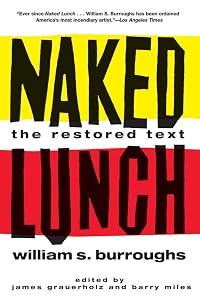
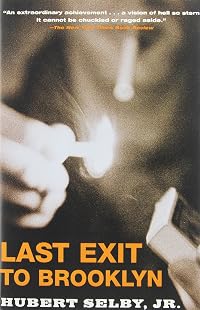
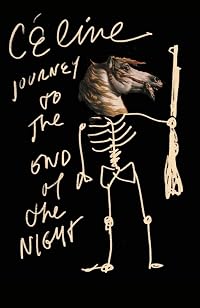
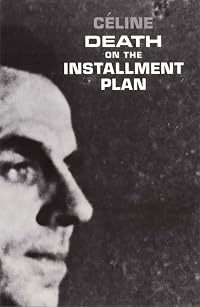
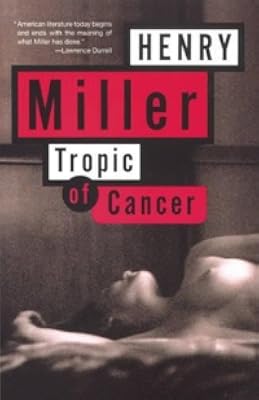
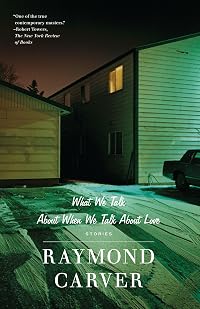
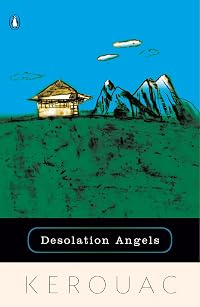
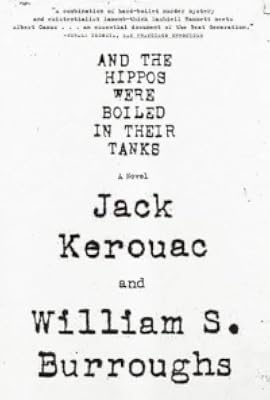
Member Recommendations

SnootyBaronet Poor sons, abusive fathers
Member Reviews
A book that I have to rate highly, because it emerges that it is fantastically (though not beautifully) written, but that I can't give top marks to because ultimately, it contains sentiments that I hate, sentiments that make me feel sick. Why? Because they're twisted? Perhaps. But mostly, because I fear they're true.
If you read this as a marginalised teen who sought over-compensation through ridiculous displays of masculinity, maybe it would resonate. Maybe it would be your Mockingbird (might not surprise you to hear I wasn't keen on that one either). But for me, nothing about it resonates with personal experience.
But second hand experience? Oh absolutely. I fear that maybe this is men. To differing degrees, in different people, but show more ultimately, as close as you can get to a truth. This is what we call 'toxic' today. But that's not a condemnation, its just that it is what it is, and it seems hugely unpalatable. I hear these inner thoughts and it brings out every fear I've ever thought about the men that sit opposite me; maintaining a veneer of social acceptability but somewhere, somehow, underneath, something deeper and harsher lurks. Hate. Aggression. Mindless depravity. This text - from the reading perspective of a woman - confirms much if what we might fear, the 'truth' of being male. Whether that is socially conditioned or innate is far outside of the scope of this book, it just is.
At the same time, the book expresses something complex; because it is clear on the one hand we are meant to express pity for this insecure overcompensation expressed through ridiculous expressions of masculinity (mainly, telling everybody you can beat them up, wanting to fuck everything but being terrified of actual women, and hard drinking). But even while I find it too much, I also see the romanticism of the trope; I'm enough on the spectrum of nihilistic, aggressive, sex-driven alcoholic that I get the appeal and the relatability of the 'vision' inherent in an anti-establishment character like Chinaksi. Somehow though, whilst a certain curated level of this nihilism is appealing and sexy, Bukowski communicates something way more raw and deep than this. Which is both disgusting, and brilliant.
Returning to the writing. Roddy Doyle opens with an introduction that summarises it well; it's sparse writing where it's sometimes the gaps that give the most resonance. This isn't perfect; it's sometimes overplayed - in the younger chapters there is too much childish understatement or naivety that is meant to read as profound, and on the latter chapters Bukowski seeks to spell out and justify his own literary approach by inserting a dissection of other authors (which lo and behold mirror his own approach) with some secondary character. But ignoring those few missteps, the overall style is engaging, evocative and incredibly communicative without being overstated.
I hate it, I'll never read it again, and it will leave a bad taste with me for a long time. But it is perhaps as good as they say. show less
If you read this as a marginalised teen who sought over-compensation through ridiculous displays of masculinity, maybe it would resonate. Maybe it would be your Mockingbird (might not surprise you to hear I wasn't keen on that one either). But for me, nothing about it resonates with personal experience.
But second hand experience? Oh absolutely. I fear that maybe this is men. To differing degrees, in different people, but show more ultimately, as close as you can get to a truth. This is what we call 'toxic' today. But that's not a condemnation, its just that it is what it is, and it seems hugely unpalatable. I hear these inner thoughts and it brings out every fear I've ever thought about the men that sit opposite me; maintaining a veneer of social acceptability but somewhere, somehow, underneath, something deeper and harsher lurks. Hate. Aggression. Mindless depravity. This text - from the reading perspective of a woman - confirms much if what we might fear, the 'truth' of being male. Whether that is socially conditioned or innate is far outside of the scope of this book, it just is.
At the same time, the book expresses something complex; because it is clear on the one hand we are meant to express pity for this insecure overcompensation expressed through ridiculous expressions of masculinity (mainly, telling everybody you can beat them up, wanting to fuck everything but being terrified of actual women, and hard drinking). But even while I find it too much, I also see the romanticism of the trope; I'm enough on the spectrum of nihilistic, aggressive, sex-driven alcoholic that I get the appeal and the relatability of the 'vision' inherent in an anti-establishment character like Chinaksi. Somehow though, whilst a certain curated level of this nihilism is appealing and sexy, Bukowski communicates something way more raw and deep than this. Which is both disgusting, and brilliant.
Returning to the writing. Roddy Doyle opens with an introduction that summarises it well; it's sparse writing where it's sometimes the gaps that give the most resonance. This isn't perfect; it's sometimes overplayed - in the younger chapters there is too much childish understatement or naivety that is meant to read as profound, and on the latter chapters Bukowski seeks to spell out and justify his own literary approach by inserting a dissection of other authors (which lo and behold mirror his own approach) with some secondary character. But ignoring those few missteps, the overall style is engaging, evocative and incredibly communicative without being overstated.
I hate it, I'll never read it again, and it will leave a bad taste with me for a long time. But it is perhaps as good as they say. show less
Gathered around me were the weak instead of the strong, the ugly instead of the beautiful, the losers instead of the winners." (pg. 168).
Ham on Rye is difficult to summarise. I would probably say that my impression of Bukowski, from reading this book, is to imagine Hemingway channelling Tom Waits. (Bukowski himself notes his Hemingway influence on pg. 165). The sparse prose complements the raw, confessional writing in a grimy coming-of-age novel that follows Henry Chinaski (a barely-disguised pseudonym for Bukowski himself) from his confused youth in Depression-era California through his troubled adolescence before concluding (not as abruptly as other reviewers as suggested) at the time of the attack on Pearl Harbor, with Bukowski - show more sorry, Chinaski - kicked out of his parents' home and living a solo life dedicated to alcoholism and the pursuit of slovenliness.
As a coming-of-age story, Ham on Rye is fantastic. Bukowski accurately (and harrowingly, it must be said) captures the confusion of his troubled youth, particularly the unpredictable violence and abuse by his father (and the passive acquiescence of his mother). He struggles to identify his place in the world, and becomes extremely cynical. Much of the language of the novel is not so much funny as wry and cynical; the humour (in the broadest definition of the term) comes from his knowing contempt of life around him. When he is praised for a school report for a speech he did not even bother to attend, he thinks, "So, that's what they wanted: lies. Beautiful lies. That's what they needed. People were fools." (p87). The abuse by his father is what grounds this novel; passages that in any other book would be merely humorous - like, for example, when his father gives him an Indian costume when all the other kids have cowboy outfits (pg. 89) - are tempered by an undercurrent of despair and contempt that invoke a conflicted sensation in the reader.
Above all, Bukowski's novel is a rejection, or more accurately a resentment, of conformity. Chinaski identifies "a general falsity" in how people live their lives (pg. 215), where "everybody had to conform, find a mold to fit into" (pg. 195). Chinaski resents living one's life in such a way, and finds menial work and the excessive consumption of alcohol less debasing than submission to towing the party line, to agreeing to play the game. When you do play the game - get a job, an education, a wife, etc. - "the problem was you had to keep choosing between one evil or another, and no matter what you chose, they sliced a little bit more off you, until there was nothing left." (pg. 192), a sentiment which will have many readers nodding their heads in agreement and recognition. Whilst this probably shouldn't be a guide for how to live one's life, it is refreshing to learn that your own darker thoughts on the state of life and humanity are shared by others. Many of Chinaski's thoughts will strike a chord with the disillusioned and the apathetic, from his views on sales work ("I could see myself happily employed as a clerk there so long as no customers entered the door." (pg. 195) - I've said as much on occasion!) to the way apathy can manifest itself as bitter and unsocial behaviour:
"... nothing was interesting, nothing. The people were restrictive and careful, all alike. And I've got to live with these fuckers for the rest of my life, I thought... They were dull as horse dung. [And] The girls looked good from a distance, the sun shining through their dresses, their hair. But get up close and listen to their minds running out of their mouths, you felt like digging in under a hill and hiding out with a tommy-gun." (pg. 272).
Bukowski also has some rather valid points to make about social class, about the laughing, superior rich folk with their fast cars and their good looks and their "untroubled youth" (pg. 215) and the poor folk, the ugly misfits who have to endure the feelings of envy and contempt ("It came to me then, clearly, why the rich, golden boys and girls were always laughing. They knew." (pg. 230)). But Chinaski is no social revolutionary - he recognises the hypocrisy of the poor: "I'd be happy to take their new cars and their pretty girlfriends and I wouldn't give a fuck about anything like social justice." (pg. 219). As his friend replies, "the only time most people think about injustice is when it happens to them." Overall, Ham on Rye is a book for those who want to say a big 'fuck you' to the world once in a while." show less
Ham on Rye is difficult to summarise. I would probably say that my impression of Bukowski, from reading this book, is to imagine Hemingway channelling Tom Waits. (Bukowski himself notes his Hemingway influence on pg. 165). The sparse prose complements the raw, confessional writing in a grimy coming-of-age novel that follows Henry Chinaski (a barely-disguised pseudonym for Bukowski himself) from his confused youth in Depression-era California through his troubled adolescence before concluding (not as abruptly as other reviewers as suggested) at the time of the attack on Pearl Harbor, with Bukowski - show more sorry, Chinaski - kicked out of his parents' home and living a solo life dedicated to alcoholism and the pursuit of slovenliness.
As a coming-of-age story, Ham on Rye is fantastic. Bukowski accurately (and harrowingly, it must be said) captures the confusion of his troubled youth, particularly the unpredictable violence and abuse by his father (and the passive acquiescence of his mother). He struggles to identify his place in the world, and becomes extremely cynical. Much of the language of the novel is not so much funny as wry and cynical; the humour (in the broadest definition of the term) comes from his knowing contempt of life around him. When he is praised for a school report for a speech he did not even bother to attend, he thinks, "So, that's what they wanted: lies. Beautiful lies. That's what they needed. People were fools." (p87). The abuse by his father is what grounds this novel; passages that in any other book would be merely humorous - like, for example, when his father gives him an Indian costume when all the other kids have cowboy outfits (pg. 89) - are tempered by an undercurrent of despair and contempt that invoke a conflicted sensation in the reader.
Above all, Bukowski's novel is a rejection, or more accurately a resentment, of conformity. Chinaski identifies "a general falsity" in how people live their lives (pg. 215), where "everybody had to conform, find a mold to fit into" (pg. 195). Chinaski resents living one's life in such a way, and finds menial work and the excessive consumption of alcohol less debasing than submission to towing the party line, to agreeing to play the game. When you do play the game - get a job, an education, a wife, etc. - "the problem was you had to keep choosing between one evil or another, and no matter what you chose, they sliced a little bit more off you, until there was nothing left." (pg. 192), a sentiment which will have many readers nodding their heads in agreement and recognition. Whilst this probably shouldn't be a guide for how to live one's life, it is refreshing to learn that your own darker thoughts on the state of life and humanity are shared by others. Many of Chinaski's thoughts will strike a chord with the disillusioned and the apathetic, from his views on sales work ("I could see myself happily employed as a clerk there so long as no customers entered the door." (pg. 195) - I've said as much on occasion!) to the way apathy can manifest itself as bitter and unsocial behaviour:
"... nothing was interesting, nothing. The people were restrictive and careful, all alike. And I've got to live with these fuckers for the rest of my life, I thought... They were dull as horse dung. [And] The girls looked good from a distance, the sun shining through their dresses, their hair. But get up close and listen to their minds running out of their mouths, you felt like digging in under a hill and hiding out with a tommy-gun." (pg. 272).
Bukowski also has some rather valid points to make about social class, about the laughing, superior rich folk with their fast cars and their good looks and their "untroubled youth" (pg. 215) and the poor folk, the ugly misfits who have to endure the feelings of envy and contempt ("It came to me then, clearly, why the rich, golden boys and girls were always laughing. They knew." (pg. 230)). But Chinaski is no social revolutionary - he recognises the hypocrisy of the poor: "I'd be happy to take their new cars and their pretty girlfriends and I wouldn't give a fuck about anything like social justice." (pg. 219). As his friend replies, "the only time most people think about injustice is when it happens to them." Overall, Ham on Rye is a book for those who want to say a big 'fuck you' to the world once in a while." show less
An unfiltered semi-autobiographical novel about navigating the challenges of growing up in a dysfunctional family during the great Depression, “Ham on Rye” is gritty and uncompromising. It explores themes of alienation, the brutality of adolescence, and the longing for identity. The dark humor in it all is that life is mundane as a ham on rye sandwich. Bukowski doesn't shy from depicting the uglier aspects of life, giving readers a visceral and uncomfortable experience. The novel also delves into the impact of societal expectations and norms on an individual, particularly one who doesn't fit the conventional mold. Ham on Rye is raw, honest, storytelling.
This memoir-style novel is shocking, irreverent, hilarious, tragic, and (bare your soul in all it's faults) real. I love an underdog. This is the novel of a self-aspiring underdog with few aspirations and even less means to make something of himself. Some portions of the novel will deeply disturb readers, but I found that these sections added authenticity to the Chinaski character and served to reinforce the flow and general direction of the novel. I found this novel to be deeply touching; it can resonate on many levels with an individual's battle to overcome the multitude of obstacles that can be found in life.
Bukowski: the early years. To be followed by Post Office. There's a fantastic sense of rhythm here, both in the telling of stories and setting up comedic turns. The heightened reality of a memoir that's half fictional lets there be a snappy movement to the slice of life reality. Did this happen to him becomes surpassed by it happening to someone, somewhere. The truth of the story being larger than the facts. Even the domestic abuse and violent father is given an irreverent pass, Bukowski doesn't let sappy emotions bog down the storytelling but they're hovering in the background.
If there's a downfall here it's the repetition, the alcohol and womanizing can only be stretched so far, and eventually he writes himself into a cliché, saved show more only by the masterful use of language. It's a strong three stars, but does anything worth digging for really lie beneath the veneer? show less
If there's a downfall here it's the repetition, the alcohol and womanizing can only be stretched so far, and eventually he writes himself into a cliché, saved show more only by the masterful use of language. It's a strong three stars, but does anything worth digging for really lie beneath the veneer? show less
I adored this book. I haven't read the Beats seriously since I was in my early twenties; my few attempts to return to the well have been unsatisfying. But this book was magnificent. Somehow I hadn't read it before, even though I've got Mockingbird Wish Me Luck on my limited shelves.
I'd forgotten all about that outsider spirit that I used to have - the sense that society didn't really want much to do with the likes of me and that most people lead pretty narrow, constrained little lives and it takes serious energy, effort and insight to break out of that - but this book brought it all back. I was never tough, but I was gay and smart and passionate about literature and I really did feel like I was on the outside looking in at society.
The show more narrator and protagonist, Henry Chinaski, is a brilliant character. He's acerbic and misanthropic and absolutely uninterested in taking any conventional wisdom for granted. He tells his life story like he's an alien - baffled at everything he sees. The prose is witty, clear, energetic and has tremendous momentum. Every single character is unhinged, although Chinaski only likes the ones who are aware of it.
There's every chance reading this book has just happened to coincide with the beginning of my midlife crisis, but the evidence against that is I can see how little this "outsider" story applies to today. I don't think that what young people today need is to get in more fights and dabble in fascism. Nor do I find myself yearning for this simpler time. Instead, I am struck by the fact that a brilliantly specific setting - in this case a specific time, but in many other books it's a place - lends a universality to literature. The pervasiveness of the mood of the time (this book is mostly set in the Depression) is brilliantly realised. The characters seem to be both aware that they are living through something but also just getting on with the business of living. One day great literature will be written about now (if we make it far enough into the future), how we marched toward climate catastrophe, the rise of fascism and/or irreversible inequality with a simultaneous sense of outrage and resignation. show less
I'd forgotten all about that outsider spirit that I used to have - the sense that society didn't really want much to do with the likes of me and that most people lead pretty narrow, constrained little lives and it takes serious energy, effort and insight to break out of that - but this book brought it all back. I was never tough, but I was gay and smart and passionate about literature and I really did feel like I was on the outside looking in at society.
The show more narrator and protagonist, Henry Chinaski, is a brilliant character. He's acerbic and misanthropic and absolutely uninterested in taking any conventional wisdom for granted. He tells his life story like he's an alien - baffled at everything he sees. The prose is witty, clear, energetic and has tremendous momentum. Every single character is unhinged, although Chinaski only likes the ones who are aware of it.
There's every chance reading this book has just happened to coincide with the beginning of my midlife crisis, but the evidence against that is I can see how little this "outsider" story applies to today. I don't think that what young people today need is to get in more fights and dabble in fascism. Nor do I find myself yearning for this simpler time. Instead, I am struck by the fact that a brilliantly specific setting - in this case a specific time, but in many other books it's a place - lends a universality to literature. The pervasiveness of the mood of the time (this book is mostly set in the Depression) is brilliantly realised. The characters seem to be both aware that they are living through something but also just getting on with the business of living. One day great literature will be written about now (if we make it far enough into the future), how we marched toward climate catastrophe, the rise of fascism and/or irreversible inequality with a simultaneous sense of outrage and resignation. show less
*This review has some spoilers*
“Fiction is an improvement on life.”Charles Bukowski,Ham on Rye
Dedication in Ham On Rye: ‘For all the Fathers’
There was a time in my life when thinking of Father’s Day would conjure up the prose of Charles Bukowski, as opposed to the angelic verse you find in the greeting card section of your local shop. It’s been a passing thought, more than once, that I would prefer a brand of greeting that was honest about the failings of the recipient, not some gilded version of what they could have been, had they been someone completely different. Why must those of us with the misfortune of having bad parents be tortured twice a year into pretending that our dear old dads taught us everything we know, or show more how our magnificent moms used to cut the crusts off our nut butter and organic preserve sandwiches just right?
When I used to think of fathers – the ones that most of my classmates seemed to have, those on sitcoms, or even the one my mother had – I would get a little Bukowski-esk; bitter, resentful, and then after enough alcohol, apathetic. Father’s day was nothing but a week-long leadup to a depressing day with torturous reminders that everyone else seemed to get handed a protective and nurturing knight for their Dad, and instead, I would spend the rest of my life trying to heal from the gaping wounds left by mine. My father was a toxic mixture of Bukowski the drunk, and his strop-wielding maker, with some extra poison for good measure. This review, were he alive today, would be the closest thing to a tribute that he would ever receive.
I want to be clear, I hold nothing against those good people out there that were fortuitous enough to have such shining examples of greatness at the helm of their beginnings, at least in this stage of my journey. My bitterness surrounding the issue of these commemorative days has more to do with a system that inflates them into commercial spending sprees and does so by media manipulation and over-saturation throughout society. (Please note, I am now a cog in this machine, as of late, with my post about the Top 5 Books For Dad, so welcome to the height of hypocrisy).
Of course, in the last decade this type of toxic marketing, amongst others, has become amplified via the monster that is social media, properly slaying nations and their children. This beast is a malevolent force that reminds a person what they are lacking, in glaring and constant ways, thus pushing insecurities deeper, whilst eroding confidence and drive. Sounds almost like what happened to Bukowski, except for him it was due to a different ogre: his father.
Life wasn’t easy for Henry, the literary stand-in of Bukowski’s creation, and agonist of this semi-autobiography, Ham on Rye. One doesn’t know exactly what parts of the book weren’t truly Bukowski’s story, but you don’t have to look too far into his other work to see the pain and trauma that he asserts came at the hands of his detestable, racist, and raunchy father.
Henry was a young boy growing up in the depression era, a time which saw many families with fathers out of work, his being no exception. Poverty and malnutrition were commonplace in his neighbourhood, but his was the only father that simultaneously pretended they were rich.
‘We all came from depression families and most of us were ill-fed, yet we had grown up to be huge and strong. Most of us, I think, got little love from our families, and we didn’t ask for love and kindness from anybody.’
Henry’s father would see beans and weenies on his plate and boast of how they were eating the finest meal. He would rise early each morning and leave the house, only to return after the length of a typical workday, just so the neighbours wouldn’t know that he too was unemployed. He was larger than life.
‘I heard my father come in. He always slammed the door, walked heavily, and talked loudly. He was home. After a few moments the bedroom door opened. He was six feet two, a large man. Everything vanished, the chair I was sitting in, wallpaper, the walls, all of my thoughts. He was the dark covering the sun, the violence of him made everything else utterly disappear. He was all ears, nose, mouth, I couldn’t look at his eyes, there was only his red angry face.’
All of that emasculation, frustration, and delusion resulted in an angry tyrant who felt no weight about taking things out on his son. Playing with local ‘hooligans,’ writing stories, or the old standby: a failed attempt to remove every last blade of rogue grass missed with the mower; anything could result in Henry incurring his father’s strop, often 2-3 times a week.
'I felt that even the sun belonged to my father, that I had no right to it because it was shining upon my father's house. I was like his roses, something that belonged to him and not to me. . .'
As this terrible man continued to treat Henry in these vile ways, while his mother just sat there agreeing with everything he said and calling him ‘Daddy,’ *cringe* I could feel my jaw clenching. I was reminded of the man we meet in the first chapter of the book, Henry’s alcoholic grandfather, and questioned what role he had to play in who his father had become. It is likely to have been considerable, as both his uncles were also alcoholics, and his aunt was estranged from the family. Shit rolls downhill, as they say.
“My father didn’t like people. He didn’t like me. “Children should be seen and not heard,” he told me.”
I became hopeful for a moment, with the appreciation his writing received from his fifth-grade teacher for an embellished paper that he had submitted about having attended a local visit from President Hoover. This gave Henry a sense of pride and satisfaction for the first time. He had a skill, with value. He had found currency, not only with his teacher but with the other students, even the bullies. But it wasn’t enough to last, and he was soon destitute once again.
Given Henry’s isolation from other children while growing up, and his needing to survive his childhood within the confines of his mind, he acquired a propensity to daydream, and a survivalist’s need of dissociation. Under these circumstances, it is understandable that he became the writer he did, and explains both his imagination and his inability to form real connections with others throughout his journey.
‘… since some people had told me that I was ugly, I always preferred shade to the sun, darkness to the light.’
Henry had a protective nature towards animals and other vulnerable beings in general, a quality that I’ve noticed in many others who have lived a life mired in trauma. He had an affinity for collecting strays and misfits. At school, the outcasts were drawn to him, and whether he liked it or not, he couldn’t shake them because he knew what it felt like to be cast aside. When he wasn’t able to sufficiently protect whatever sorry soul he was in defence of, he castigated himself for being a weakling.
‘He was so pitiful that I couldn’t tell him to get lost. He was like a mongrel dog, starved and kicked. Yet it didn’t make me feel good going around with him. But since I knew that mongrel dog feeling, I let him hang around.’
In 7th grade, he tried alcohol for the first time at a friend’s house. Life began for Henry that fateful day, as the clouds parted and the sun shone on his face from the heavens above; after 13 years he had finally found a way to feel good.
‘Never had I felt so good. It was better than masturbating. I went from barrel to barrel. It was magic. Why hadn’t someone told me? With this, life was great, a man was perfect, nothing could touch him.’
Except for his father and the strop, especially when he found out his son was partaking in an activity that he despised. After seeing the effects of alcohol on his father and brothers, Henry’s father wanted nothing to do with drunks, which no doubt made the drug all the more enticing to our rebellious antihero.
A violent and soul-crushing family life wasn’t all that Henry had to contend with, as he had hormonal issues that resulted in debilitating acne. The vivid descriptions of the medical procedures that he had to withstand, and the pain that he had to endure multiple times, for months, were hard to read. Other than the friend he eventually found in alcohol, there was no form of solace or saving grace for Henry throughout this story, save for a kind nurse that he never saw again once his invasive acne treatments were complete. I felt perpetually sad for him, increasingly so.
The beauty of healing through art was one of few tools that Henry availed himself of, as he spent his spare time recovering from his devastating acne by filling a notebook with the escapades of his hero and creation, Baron Von Himmlen.
‘The Baron went on doing magic things. Half the notebook was filled with Baron Von Himmlen. It made me feel good to write about the Baron. A man needed somebody. There wasn’t anybody around, so you had to makeup somebody, make him up to be like a man should be. It wasn’t make-believe or cheating. The other way was make-believe and cheating: living your life without a man like him around.’
I also empathised with his existential confrontation with God during those lonely days of healing. I’m sure religion and faith are laughable things when you are a young man suffering through the hardships of the depression-era, unloving and abusive parents, and trapped in absolute isolation. It is almost certain that one would feel forsaken.
‘All right, God, say that you are really there. You have put me in this fix. You want to test me. Suppose I test you? Suppose I say that You are not there. You’ve given me a supreme test with my parents and with these boils. I think that I have passed your test. I am tougher than You. If You will come down here right now, I will spit into Your face, if You have a face… I think you have been picking on me too much so I am asking You to come down here so I can put You to the test.’
The library was a saviour for Henry, as it has been for much struggling youth, myself included. He was thrilled by the possibility found in the words of others, and the healing that reading books can offer.
'It all came rushing at me. One book led to the next....It was a joy. Words weren't dull, words were things that could make your mind hum. If you read them and let yourself feel the magic, you could love without pain, with hope, no matter what happened to you.'
There came a point when Henry needed to forge his path, and find his own identity; one that wasn’t an extension of his father’s. He found that route through alcohol and a tough-guy persona. He was proud when his coach from middle school referred to him as one of the ‘bad guys,’ or when the girls were shocked by his brutish antics. At least he could be someone of his own making.
At times disgusting, and others hilarious, it was always interesting to read the locker room banter between the young lads, where Henry vacillated between victim and perpetrator, and they all, collectively, struggled to find out who they were, and where their place was in the hierarchy that is high school.
Bukowski pontificated on the insufferableness of the limited choices for a young and poor person making their way through school. How things are tailor-made to break one’s spirit, to better facilitate the transition and assimilation into the adult world, and I found myself in agreement.
‘The problem was you had to keep choosing between one evil or another, and no matter what you chose, they sliced a little bit more off you, until there was nothing left. At the age of 25 most people were finished. A whole god-damned nation of assholes driving automobiles, eating, having babies, doing everything in the worst way possible, like voting for the presidential candidate who reminded them most of themselves.’
He was bitter and felt it unfair that he would have to work a dead-end job because he didn’t have the means to be properly educated to get a high-paying one. He claimed that his apathy and lack of drive were a direct result of his father’s desire to be rich, which in turn made him want to be a bum. Part of that is likely true, but another aspect could be that he made himself believe he didn’t want anything and became lazy so as not to be exceedingly disappointed by not being able to have these things afforded the lucky ones. A get them before they get me, mentality.
‘Now, I thought, pushing my cart along, I have this job. Is this to be it? No wonder men robbed banks. There were too many demeaning jobs. Why the hell wasn’t I a superior court judge or a concert pianist? Because it took training and training cost money. But I didn’t want to be anything anyhow. And I was certainly succeeding.’
I was pulling for Henry, I wanted him to have a loving and dependable person stand up for him in his early life. I think that would have made all the difference, and that he might not have remained stagnant in his development if there were someone there to show him about love. But alas, there was no guardian angel, and he just continued to exist. Sure, it was on his terms, as he bolted from home early and lived in rooming houses; struggling, boozing, and brawling. It wasn’t what I would call, even mildly, ‘healthy’ living, never mind whether it was truly enjoyable.
Even as he was adamant in the later chapters of the book that his life was how he wanted it – without the anchor of a job, a wife, or kids – he offers glimpses into the loneliness that shrouded him. There were parts of Ham on Rye when Henry would request the company of strangers, almost begging for them to join him in his drinking binges. Those were the times when I felt the saddest for him. His defeat, however, was laced with pride, as he appreciated himself too much to simply just end it. I found this excerpt to be a clear view into his bitterness that was forever gnawing at his soul.
‘Sitting there drinking, I considered suicide, but I felt a strange fondness for my body, my life. Scarred as they were, they were mine. I would look into the dresser mirror and grin: if you’re going to go, you might as well take eight, or ten or twenty of them with you…’
After I had finished reading this tragedy of a broken life I was left with pity, sadness, and an overwhelming sense of melancholy for a man that was too numb to feel any of these things himself. His prose is sparse but concise and pointed. I agreed with some of his commentary on society and war, but I didn’t find his words to be overly profound, so my rating sits at 4 peaches for Ham On Rye. It should be noted that my original rating was 3.5, but after assessing the book and his words deeper for the writing of this review, I’ve bumped it up. I will read the other Henry Chinaski books, partly because I’m curious about how much of a trainwreck this guy will become, but also for the dark humour bestrewn within the writing.
As for me and my Bukowski-like bitterness, I’ve developed an appreciation of what Mums and Dads should be, which I’ve acquired through life with my chosen clan, post-family-from-hell. I would surely hide in a technology-free zone, on the second Sunday of every May and June for the rest of eternity, drowning myself in spirits and the caustic words of Bukowski had I not my son’s father to love, or my cherished position as Mummy to fill. The reading of this book has reminded me how I’d narrowly averted that boozy bullet. I am forever grateful to my guys for lifting me out of my previous vitriolic existence, and I can’t help but feel sorry for Bukowski for not having had the same chance. Who knows? He clearly and repeatedly stated throughout his works that this sort of saving was something he not only didn’t need but was repelled by. Instead, he seemed to find solace in the bottom of a bottle, and his redemption through words on a page, so maybe in the end that was good enough for him.
Happy Father’s Day to the amazing Daddies out there, like my son’s. The world would be much darker (and 'drunker') without you.
To see the bookmark I was inspired to make by reading Ham on Rye, please visit my blog post on peachybooks.ca here: https://peachybooks.ca/2021/06/20/fathers-day-book-review-ham-on-rye-by-charles-... show less
“Fiction is an improvement on life.”Charles Bukowski,Ham on Rye
Dedication in Ham On Rye: ‘For all the Fathers’
There was a time in my life when thinking of Father’s Day would conjure up the prose of Charles Bukowski, as opposed to the angelic verse you find in the greeting card section of your local shop. It’s been a passing thought, more than once, that I would prefer a brand of greeting that was honest about the failings of the recipient, not some gilded version of what they could have been, had they been someone completely different. Why must those of us with the misfortune of having bad parents be tortured twice a year into pretending that our dear old dads taught us everything we know, or show more how our magnificent moms used to cut the crusts off our nut butter and organic preserve sandwiches just right?
When I used to think of fathers – the ones that most of my classmates seemed to have, those on sitcoms, or even the one my mother had – I would get a little Bukowski-esk; bitter, resentful, and then after enough alcohol, apathetic. Father’s day was nothing but a week-long leadup to a depressing day with torturous reminders that everyone else seemed to get handed a protective and nurturing knight for their Dad, and instead, I would spend the rest of my life trying to heal from the gaping wounds left by mine. My father was a toxic mixture of Bukowski the drunk, and his strop-wielding maker, with some extra poison for good measure. This review, were he alive today, would be the closest thing to a tribute that he would ever receive.
I want to be clear, I hold nothing against those good people out there that were fortuitous enough to have such shining examples of greatness at the helm of their beginnings, at least in this stage of my journey. My bitterness surrounding the issue of these commemorative days has more to do with a system that inflates them into commercial spending sprees and does so by media manipulation and over-saturation throughout society. (Please note, I am now a cog in this machine, as of late, with my post about the Top 5 Books For Dad, so welcome to the height of hypocrisy).
Of course, in the last decade this type of toxic marketing, amongst others, has become amplified via the monster that is social media, properly slaying nations and their children. This beast is a malevolent force that reminds a person what they are lacking, in glaring and constant ways, thus pushing insecurities deeper, whilst eroding confidence and drive. Sounds almost like what happened to Bukowski, except for him it was due to a different ogre: his father.
Life wasn’t easy for Henry, the literary stand-in of Bukowski’s creation, and agonist of this semi-autobiography, Ham on Rye. One doesn’t know exactly what parts of the book weren’t truly Bukowski’s story, but you don’t have to look too far into his other work to see the pain and trauma that he asserts came at the hands of his detestable, racist, and raunchy father.
Henry was a young boy growing up in the depression era, a time which saw many families with fathers out of work, his being no exception. Poverty and malnutrition were commonplace in his neighbourhood, but his was the only father that simultaneously pretended they were rich.
‘We all came from depression families and most of us were ill-fed, yet we had grown up to be huge and strong. Most of us, I think, got little love from our families, and we didn’t ask for love and kindness from anybody.’
Henry’s father would see beans and weenies on his plate and boast of how they were eating the finest meal. He would rise early each morning and leave the house, only to return after the length of a typical workday, just so the neighbours wouldn’t know that he too was unemployed. He was larger than life.
‘I heard my father come in. He always slammed the door, walked heavily, and talked loudly. He was home. After a few moments the bedroom door opened. He was six feet two, a large man. Everything vanished, the chair I was sitting in, wallpaper, the walls, all of my thoughts. He was the dark covering the sun, the violence of him made everything else utterly disappear. He was all ears, nose, mouth, I couldn’t look at his eyes, there was only his red angry face.’
All of that emasculation, frustration, and delusion resulted in an angry tyrant who felt no weight about taking things out on his son. Playing with local ‘hooligans,’ writing stories, or the old standby: a failed attempt to remove every last blade of rogue grass missed with the mower; anything could result in Henry incurring his father’s strop, often 2-3 times a week.
'I felt that even the sun belonged to my father, that I had no right to it because it was shining upon my father's house. I was like his roses, something that belonged to him and not to me. . .'
As this terrible man continued to treat Henry in these vile ways, while his mother just sat there agreeing with everything he said and calling him ‘Daddy,’ *cringe* I could feel my jaw clenching. I was reminded of the man we meet in the first chapter of the book, Henry’s alcoholic grandfather, and questioned what role he had to play in who his father had become. It is likely to have been considerable, as both his uncles were also alcoholics, and his aunt was estranged from the family. Shit rolls downhill, as they say.
“My father didn’t like people. He didn’t like me. “Children should be seen and not heard,” he told me.”
I became hopeful for a moment, with the appreciation his writing received from his fifth-grade teacher for an embellished paper that he had submitted about having attended a local visit from President Hoover. This gave Henry a sense of pride and satisfaction for the first time. He had a skill, with value. He had found currency, not only with his teacher but with the other students, even the bullies. But it wasn’t enough to last, and he was soon destitute once again.
Given Henry’s isolation from other children while growing up, and his needing to survive his childhood within the confines of his mind, he acquired a propensity to daydream, and a survivalist’s need of dissociation. Under these circumstances, it is understandable that he became the writer he did, and explains both his imagination and his inability to form real connections with others throughout his journey.
‘… since some people had told me that I was ugly, I always preferred shade to the sun, darkness to the light.’
Henry had a protective nature towards animals and other vulnerable beings in general, a quality that I’ve noticed in many others who have lived a life mired in trauma. He had an affinity for collecting strays and misfits. At school, the outcasts were drawn to him, and whether he liked it or not, he couldn’t shake them because he knew what it felt like to be cast aside. When he wasn’t able to sufficiently protect whatever sorry soul he was in defence of, he castigated himself for being a weakling.
‘He was so pitiful that I couldn’t tell him to get lost. He was like a mongrel dog, starved and kicked. Yet it didn’t make me feel good going around with him. But since I knew that mongrel dog feeling, I let him hang around.’
In 7th grade, he tried alcohol for the first time at a friend’s house. Life began for Henry that fateful day, as the clouds parted and the sun shone on his face from the heavens above; after 13 years he had finally found a way to feel good.
‘Never had I felt so good. It was better than masturbating. I went from barrel to barrel. It was magic. Why hadn’t someone told me? With this, life was great, a man was perfect, nothing could touch him.’
Except for his father and the strop, especially when he found out his son was partaking in an activity that he despised. After seeing the effects of alcohol on his father and brothers, Henry’s father wanted nothing to do with drunks, which no doubt made the drug all the more enticing to our rebellious antihero.
A violent and soul-crushing family life wasn’t all that Henry had to contend with, as he had hormonal issues that resulted in debilitating acne. The vivid descriptions of the medical procedures that he had to withstand, and the pain that he had to endure multiple times, for months, were hard to read. Other than the friend he eventually found in alcohol, there was no form of solace or saving grace for Henry throughout this story, save for a kind nurse that he never saw again once his invasive acne treatments were complete. I felt perpetually sad for him, increasingly so.
The beauty of healing through art was one of few tools that Henry availed himself of, as he spent his spare time recovering from his devastating acne by filling a notebook with the escapades of his hero and creation, Baron Von Himmlen.
‘The Baron went on doing magic things. Half the notebook was filled with Baron Von Himmlen. It made me feel good to write about the Baron. A man needed somebody. There wasn’t anybody around, so you had to makeup somebody, make him up to be like a man should be. It wasn’t make-believe or cheating. The other way was make-believe and cheating: living your life without a man like him around.’
I also empathised with his existential confrontation with God during those lonely days of healing. I’m sure religion and faith are laughable things when you are a young man suffering through the hardships of the depression-era, unloving and abusive parents, and trapped in absolute isolation. It is almost certain that one would feel forsaken.
‘All right, God, say that you are really there. You have put me in this fix. You want to test me. Suppose I test you? Suppose I say that You are not there. You’ve given me a supreme test with my parents and with these boils. I think that I have passed your test. I am tougher than You. If You will come down here right now, I will spit into Your face, if You have a face… I think you have been picking on me too much so I am asking You to come down here so I can put You to the test.’
The library was a saviour for Henry, as it has been for much struggling youth, myself included. He was thrilled by the possibility found in the words of others, and the healing that reading books can offer.
'It all came rushing at me. One book led to the next....It was a joy. Words weren't dull, words were things that could make your mind hum. If you read them and let yourself feel the magic, you could love without pain, with hope, no matter what happened to you.'
There came a point when Henry needed to forge his path, and find his own identity; one that wasn’t an extension of his father’s. He found that route through alcohol and a tough-guy persona. He was proud when his coach from middle school referred to him as one of the ‘bad guys,’ or when the girls were shocked by his brutish antics. At least he could be someone of his own making.
At times disgusting, and others hilarious, it was always interesting to read the locker room banter between the young lads, where Henry vacillated between victim and perpetrator, and they all, collectively, struggled to find out who they were, and where their place was in the hierarchy that is high school.
Bukowski pontificated on the insufferableness of the limited choices for a young and poor person making their way through school. How things are tailor-made to break one’s spirit, to better facilitate the transition and assimilation into the adult world, and I found myself in agreement.
‘The problem was you had to keep choosing between one evil or another, and no matter what you chose, they sliced a little bit more off you, until there was nothing left. At the age of 25 most people were finished. A whole god-damned nation of assholes driving automobiles, eating, having babies, doing everything in the worst way possible, like voting for the presidential candidate who reminded them most of themselves.’
He was bitter and felt it unfair that he would have to work a dead-end job because he didn’t have the means to be properly educated to get a high-paying one. He claimed that his apathy and lack of drive were a direct result of his father’s desire to be rich, which in turn made him want to be a bum. Part of that is likely true, but another aspect could be that he made himself believe he didn’t want anything and became lazy so as not to be exceedingly disappointed by not being able to have these things afforded the lucky ones. A get them before they get me, mentality.
‘Now, I thought, pushing my cart along, I have this job. Is this to be it? No wonder men robbed banks. There were too many demeaning jobs. Why the hell wasn’t I a superior court judge or a concert pianist? Because it took training and training cost money. But I didn’t want to be anything anyhow. And I was certainly succeeding.’
I was pulling for Henry, I wanted him to have a loving and dependable person stand up for him in his early life. I think that would have made all the difference, and that he might not have remained stagnant in his development if there were someone there to show him about love. But alas, there was no guardian angel, and he just continued to exist. Sure, it was on his terms, as he bolted from home early and lived in rooming houses; struggling, boozing, and brawling. It wasn’t what I would call, even mildly, ‘healthy’ living, never mind whether it was truly enjoyable.
Even as he was adamant in the later chapters of the book that his life was how he wanted it – without the anchor of a job, a wife, or kids – he offers glimpses into the loneliness that shrouded him. There were parts of Ham on Rye when Henry would request the company of strangers, almost begging for them to join him in his drinking binges. Those were the times when I felt the saddest for him. His defeat, however, was laced with pride, as he appreciated himself too much to simply just end it. I found this excerpt to be a clear view into his bitterness that was forever gnawing at his soul.
‘Sitting there drinking, I considered suicide, but I felt a strange fondness for my body, my life. Scarred as they were, they were mine. I would look into the dresser mirror and grin: if you’re going to go, you might as well take eight, or ten or twenty of them with you…’
After I had finished reading this tragedy of a broken life I was left with pity, sadness, and an overwhelming sense of melancholy for a man that was too numb to feel any of these things himself. His prose is sparse but concise and pointed. I agreed with some of his commentary on society and war, but I didn’t find his words to be overly profound, so my rating sits at 4 peaches for Ham On Rye. It should be noted that my original rating was 3.5, but after assessing the book and his words deeper for the writing of this review, I’ve bumped it up. I will read the other Henry Chinaski books, partly because I’m curious about how much of a trainwreck this guy will become, but also for the dark humour bestrewn within the writing.
As for me and my Bukowski-like bitterness, I’ve developed an appreciation of what Mums and Dads should be, which I’ve acquired through life with my chosen clan, post-family-from-hell. I would surely hide in a technology-free zone, on the second Sunday of every May and June for the rest of eternity, drowning myself in spirits and the caustic words of Bukowski had I not my son’s father to love, or my cherished position as Mummy to fill. The reading of this book has reminded me how I’d narrowly averted that boozy bullet. I am forever grateful to my guys for lifting me out of my previous vitriolic existence, and I can’t help but feel sorry for Bukowski for not having had the same chance. Who knows? He clearly and repeatedly stated throughout his works that this sort of saving was something he not only didn’t need but was repelled by. Instead, he seemed to find solace in the bottom of a bottle, and his redemption through words on a page, so maybe in the end that was good enough for him.
Happy Father’s Day to the amazing Daddies out there, like my son’s. The world would be much darker (and 'drunker') without you.
To see the bookmark I was inspired to make by reading Ham on Rye, please visit my blog post on peachybooks.ca here: https://peachybooks.ca/2021/06/20/fathers-day-book-review-ham-on-rye-by-charles-... show less
Members
- Recently Added By
Published Reviews
ThingScore 100
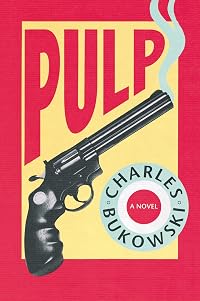
I consider Ham on Rye by Bukowski probably the greatest American novel ever written. It's an autobiographical novel (as are all his novels except Pulp, which is so awful it's unreadable) about his childhood, being beaten by his parents, avoiding war, and beginning his life of destitution, hardship, alcoholism, and the beginnings of his education as a writer. I'm almost embarrassed to admit show more he's an influence. Many people hate him and I'm much more afraid of being judged than he ever was. show less
added by SnootyBaronet
Una novela autobiográfica, contundente como un preciso uppercut, que nos muestra una visión bien distinta del «Sueño Americano», una visión «desde abajo», desde los pisoteados y humillados: la infancia, adolescencia y juventud de Henry Chinaski, en Los Ángeles, durante los años de la Depresión y la Segunda Guerra Mundial. Un padre brutal que cada día finge acudir puntualmente al show more trabajo para que sus vecinos no sospechen que está en paro; una madre apaleada por el padre, que sin embargo está siempre de su parte; un tío a quien busca la policía; un mundo de jefes, de superiores aterrorizados por otros superiores. El joven Chinaski algo así como un hermano paria de Holden Cauldfiel, el dulce héroe de Salinger en The Catcher in the Rye (al que Bukowski parece aludir en el título original Ham on Rye) tiene que aprender las reglas implacables de una durísima supervivencia. En este libro inolvidable, escrito con una ausencia total de ilusiones, se transparenta, evitando la autocompasión, una estoica fraternidad con todos los chinaskis, todos los underdogs de la «otra América» de los patios traseros, los bares sórdidos, las oficinas de desempleo. show less
added by Pakoniet
Lists

Blue Pyramid 1,276 Best Books of All Time
1,248 works; 32 members

1980s
356 works; 23 members

Cult Classics
30 works; 1 member

Books whose title names an object usually found in the kitchen
171 works; 14 members
Author Information

546+ Works 53,025 Members
Charles Bukowski was born in Andernach, Germany, on August 16, 1920. He came to the United States with his parents when he was three years old and spent his early years in poverty. As a young man he was a transient, doing odd jobs. He lived most of his live in boarding houses in the Los Angeles area. He attended Los Angeles City College briefly. show more He worked for the United States Postal Service for about ten years. Bukowski was at home with street people and his work contains a brutal realism and graphic imagery. He began publishing short stories in the mid-1940s. Starting with Flower, Fist and Bestial Wail in 1959, he produced poetry collections almost once a year. His following had grown by the time his collection of poetry about down-and-outers titled It Catches My Heart in Its Hands appeared in 1963. His short story collections include Dirty Old Man and Ejaculations, Exhibitions and General Tales of Ordinary Madness. His novels, with an autobiographical character called Henry Chinaski, include Post Office and Factotum. Bukowski wrote the screenplay for the 1987 motion picture Barfly. He later wrote about the filming of Barfly in his novel, Hollywood. Bukowski died in San Pedro, California, on March 9, 1994. (Bowker Author Biography) show less
Some Editions
Awards and Honors
Notable Lists
Series
Belongs to Publisher Series
Common Knowledge
- Canonical title*
- Kind onder kannibalen
- Original title
- Ham on Rye
- Original publication date
- 1982
- People/Characters
- Henry Chinaski
- Important places*
- Los Angeles, Etats-Unis
- Dedication
- for all the fathers
- First words
- The first thing I remember is being under something.
- Quotations
- It was great. My whole head was bandaged. [...] I felt very exceptional and a bit evil. Nobody had any idea of what had happened to me. A car crash. A fight to the death. A murder. Fire. Nobody knew.
Turgenev was a very serious fellow but he could make me laugh because a truth first encountered can be very funny. When someone else's truth is the same as your truth, and he seems to be saying it just for you, that's great.
*Some information comes from Common Knowledge in other languages. Click "Edit" for more information.
Classifications
Statistics
- Members
- 5,318
- Popularity
- 2,566
- Reviews
- 94
- Rating
- (4.06)
- Languages
- 20 — Danish, Dutch, English, Finnish, French, German, Greek, Italian, Japanese, Lithuanian, Norwegian (Bokmål), Norwegian, Polish, Portuguese, Romanian, Russian, Serbian, Spanish, Swedish, Turkish
- Media
- Paper, Audiobook, Ebook
- ISBNs
- 77
- ASINs
- 33