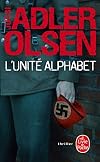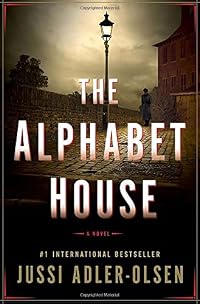
The Alphabet House
by Jussi Adler-Olsen
On This Page
Description
British pilots James Teasdale and Bryan Young have been chosen to conduct a special photo-reconnaissance mission near Dresden, Germany. Intelligence believes the Nazis are building new factories that could turn the tide of the war. When their plane is shot down, James and Bryan know they will be executed if captured. With an enemy patrol in pursuit, they manage to jump aboard a train reserved for senior SS soldiers wounded on the eastern front. In a moment of desperation, they throw two show more patients off the train and take their places, hoping they can escape later. But their act is too convincing and they end up in the Alphabet House, a mental hospital located far behind enemy lines, where German doctors subject their patients to daily rounds of shock treatments and experimental drugs. The pilots' only hope of survival is to fake insanity until the war ends, but their friendship and courage are put to the ultimate test when James and Bryan realize they aren't the only ones in the Alphabet House feigning madness. show lessTags
Recommendations








































Member Reviews
A dark and heavy book. Some of said it was a depressing read, which there are certainly elements, but their are also elements that are uplifting. Themes of friendship, hardship, means of survival, guilt, and coming to peace with one's past all carry this story. Although there are plot lines that may be deemed difficult to believe, I have encountered numerous actual stories where a mix of human determination, a bit of luck, quick problem solving, and ingenuity all make the impossible quite possible.
Two British pilots, and very close friends, are shot down over Germany during World War II. Against all odds, they are able to avoid being captured as prisoners of war, only to prisoners of a different sort. Assuming the identifies of Nazi SS show more officers and then pretending to suffer from what today we refer to as PTSD, they are sent to a mental institution. At this mental hospital, they are not as safe as they would hope and are forced to avoid each other to prevent detection. The fates of these two Englishmen take very different paths.
The second part of the story takes place 30 years later, when several of the patients of the 'Alphabet House', as the mental institute was known, are reunited, and not in expected or pleasant ways.
You wish to find more humanity in this story, but unfortunately, it brings to light the brutality of human nature and the consequences of that. An engaging and powerful story that challenges one to think of one's own limitations under heavy psychological (and physical) hardships. show less
Two British pilots, and very close friends, are shot down over Germany during World War II. Against all odds, they are able to avoid being captured as prisoners of war, only to prisoners of a different sort. Assuming the identifies of Nazi SS show more officers and then pretending to suffer from what today we refer to as PTSD, they are sent to a mental institution. At this mental hospital, they are not as safe as they would hope and are forced to avoid each other to prevent detection. The fates of these two Englishmen take very different paths.
The second part of the story takes place 30 years later, when several of the patients of the 'Alphabet House', as the mental institute was known, are reunited, and not in expected or pleasant ways.
You wish to find more humanity in this story, but unfortunately, it brings to light the brutality of human nature and the consequences of that. An engaging and powerful story that challenges one to think of one's own limitations under heavy psychological (and physical) hardships. show less
This is a novel in two distinct sections. The first part involves two British aviators who are shot down during WW2, assume German identities and end up in a hospital for mental patients. One eventually escapes. Part two of the book is the escapees quest decades later to find out what happened to the comrade he left behind. The book is overall nicely written and suspenseful but requires giant leaps of faith as to how the meticulous Germans would not detect they were not Germans by simply using the "mute act".
Dass Adler-Olsen gute Thriller schreibt, ist hinlänglich bekannt. So wurde auch sein Erstlingswerk, das bereits vor 25 Jahren erschien, mit entsprechenden Vorschusslorbeeren bedacht (offenbar ohne dass es von den entsprechenden Leuten vorher gelesen wurde).
Der Beginn ist vielversprechend: Zwei britische Soldaten stürzen im II. Weltkrieg über Nazideutschland ab und retten sich, getarnt als psychisch kranke Nazigrößen, in einem entsprechenden Militärkrankenhaus. Schweigend entgehen sie ihrer Enttarnung, doch ihr Aufenthalt dort wird zu einem Martyrium... Dreissig Jahre später finden diese entsetzlichen Erlebnisse unweit des ehemaligen Lazaretts ihre Fortsetzung.
Der erste Teil, der die Zeit der Freunde in dem deutschen show more Militärkrankenhaus beschreibt, lässt bereits erahnen, dass von diesem Autor noch einiges zu erwarten ist. Zwar ist die Sprache noch nicht ganz so flüssig wie in seinen Folgebüchern Erbarmen oder Schändung, doch die Spannung, die aus der jederzeit möglichen Enttarnung resultiert, lässt einen weiter und weiter lesen. Doch dann kommt Gewalt ins Spiel und damit wird manches unplausibel und einfach unlogisch, insobesondere das Ende des 1. Teils (Wie kann ein lange Bettlägriger Kämpfe auf Leben und Tod und andere körperliche Strapazen ohne weiteres bewältigen?).
Der 2. Teil, der rund 30 Jahre später einsetzt, nimmt an Unlogiken zu und ist immer weniger glaubhaft, worunter natürlich die Spannung leidet. Die Zufälle nehmen überhand und Normalbürger werden zu Kampfmaschinen bzw. es hagelt Spontanheilungen.
Zwei Punkte gibt es für den guten Auftakt (wenn auch verbesserungswürdig) und für die an sich gute Idee. Als Erstlingswerk ist es verzeihbar und Jussi Adler-Olsen hat sich ja gut weiterentwickelt ;-) show less
Der Beginn ist vielversprechend: Zwei britische Soldaten stürzen im II. Weltkrieg über Nazideutschland ab und retten sich, getarnt als psychisch kranke Nazigrößen, in einem entsprechenden Militärkrankenhaus. Schweigend entgehen sie ihrer Enttarnung, doch ihr Aufenthalt dort wird zu einem Martyrium... Dreissig Jahre später finden diese entsetzlichen Erlebnisse unweit des ehemaligen Lazaretts ihre Fortsetzung.
Der erste Teil, der die Zeit der Freunde in dem deutschen show more Militärkrankenhaus beschreibt, lässt bereits erahnen, dass von diesem Autor noch einiges zu erwarten ist. Zwar ist die Sprache noch nicht ganz so flüssig wie in seinen Folgebüchern Erbarmen oder Schändung, doch die Spannung, die aus der jederzeit möglichen Enttarnung resultiert, lässt einen weiter und weiter lesen. Doch dann kommt Gewalt ins Spiel und damit wird manches unplausibel und einfach unlogisch, insobesondere das Ende des 1. Teils (Wie kann ein lange Bettlägriger Kämpfe auf Leben und Tod und andere körperliche Strapazen ohne weiteres bewältigen?).
Der 2. Teil, der rund 30 Jahre später einsetzt, nimmt an Unlogiken zu und ist immer weniger glaubhaft, worunter natürlich die Spannung leidet. Die Zufälle nehmen überhand und Normalbürger werden zu Kampfmaschinen bzw. es hagelt Spontanheilungen.
Zwei Punkte gibt es für den guten Auftakt (wenn auch verbesserungswürdig) und für die an sich gute Idee. Als Erstlingswerk ist es verzeihbar und Jussi Adler-Olsen hat sich ja gut weiterentwickelt ;-) show less
Two British pilots, James and Bryan, are on a reconnaissance mission over Germany when they are shot down. To escape capture they jump aboard a train that turns out to be carrying wounded SS officers. The pair take the place of two of the officers hoping for a chance to escape unnoticed later. Unfortunately, the chance doesn’t come and they have to act as if they have had some sort of mental breakdown. Their act is so convincing that they are taken to The Alphabet House so named because of the Nazis’ penchant for bookkeeping, giving everything including different types of psychogenic ailments like those suffered by the inhabitants of The Alphabet House an alphabetical and numerical designation. The two continue to feign mental show more illness, an act that is aided by drugs, and electric shock. Soon, though, they discover that they are not the only malingerers and these others are not above murder to protect themselves from discovery.
Eventually, Bryan escapes alone. The story then switches to 1972. Bryan is a successful doctor and businessman. He had spent years searching for James after the war but eventually gave up. However, when he meets a man who is from the area of The Alphabet House, he hires him to find any information he can about any survivors. With his information, Bryan is on the trail again but rather than James, he finds the other malingerers who benefitted financially from the war and are determined to stop anyone from uncovering their crimes.
This is the first book I have read by author Jussi Adler-Olsen and, as it turns out, it was the first book he wrote; it is, however, the first time it’s been released in North America so firsts all around. Despite its setting, The Alphabet House is not, according to Adler-Olsen, a war story. It’s also not a perfect book. At times, it strains credulity almost to the breaking point and it says a great deal about the writing and the sheer adrenaline rush of the story that, despite the occasional ‘huh’, it never interferes with the enjoyment of the book. This is one edge-of-your-seat, nail-bitingly intense, unputdownable and a whole lot of other adjectives and adverbs that can be used to describe one hell of a psychological thriller. In other words, I liked it a lot. This may have been my first book by Adler-Olsen but it will definitely not be my last. show less
Eventually, Bryan escapes alone. The story then switches to 1972. Bryan is a successful doctor and businessman. He had spent years searching for James after the war but eventually gave up. However, when he meets a man who is from the area of The Alphabet House, he hires him to find any information he can about any survivors. With his information, Bryan is on the trail again but rather than James, he finds the other malingerers who benefitted financially from the war and are determined to stop anyone from uncovering their crimes.
This is the first book I have read by author Jussi Adler-Olsen and, as it turns out, it was the first book he wrote; it is, however, the first time it’s been released in North America so firsts all around. Despite its setting, The Alphabet House is not, according to Adler-Olsen, a war story. It’s also not a perfect book. At times, it strains credulity almost to the breaking point and it says a great deal about the writing and the sheer adrenaline rush of the story that, despite the occasional ‘huh’, it never interferes with the enjoyment of the book. This is one edge-of-your-seat, nail-bitingly intense, unputdownable and a whole lot of other adjectives and adverbs that can be used to describe one hell of a psychological thriller. In other words, I liked it a lot. This may have been my first book by Adler-Olsen but it will definitely not be my last. show less
When their plane is shot down over Germany, two RAF pilots and good friends hop a train carrying patients to a hospital/sanitarium, and survive by pretending to be German soldiers in need of psychiatric treatment. They are subject to extensive electroshock and drug treatments. One of them is able to escape, and in 1972 returns to try and find out what happened to his friend.
I had some problems with the plot of this one, which seemed mostly unbelievable, starting from the very beginning when they succeed in replacing dead and dying German soldiers. Why wouldn't the Germans who were chasing them after they were shot down not have the train stopped and thoroughly searched? They would have been caught easily if that had been done. But, if show more you can suspend your disbeief about the first part of the story, the book's second section, about event in 1972, is pretty well done. show less
I had some problems with the plot of this one, which seemed mostly unbelievable, starting from the very beginning when they succeed in replacing dead and dying German soldiers. Why wouldn't the Germans who were chasing them after they were shot down not have the train stopped and thoroughly searched? They would have been caught easily if that had been done. But, if show more you can suspend your disbeief about the first part of the story, the book's second section, about event in 1972, is pretty well done. show less
This book, although just translated into English, was first published in Denmark in 1997, and predated Adler-Olsen’s Department Q detective series.
It tells the story of two British pilots, Bryan Young and James Teasdale, friends from childhood, who were sent on a dangerous aerial reconnaissance mission over Germany during World War II. Their plane is shot down, and the two manage to bail out, but now they are in German territory, somewhat injured, and have no way to get back to the Allies. They jump onto a railroad car carrying injured German SS troopers, and assume the identity of two of the men. Because this is a car for those who are damaged psychologically, the Brits can get away with not speaking. James does understand German, show more but Bryan does not. Thus Brian’s efforts at appearing confused are convincing, but to Brian’s surprise, James is an even better actor.
The two are transferred along with the others to a sanitarium known as Alphabet House because of the alphanumeric categorization of patients with mental illnesses. (Such special treatment for SS officers who had mental problems was of course not available to most sufferers, who were gassed to death.)
At Alphabet House, James and Bryan are subjected to radical treatments for their putative psychoses, including frequent electroshock and daily administration of dangerous anti-psychotic drugs that induced catatonic-like states. Bryan tried not to take his pills, but this too was dangerous; if the officials at the facility suspected anyone of malingering, that person would be executed. As it turns out, however, Bryan and James were not the only ones pretending to have psychiatric disorders. But the others who are faking are determined to take no chances with anyone knowing about them; they have a secret to protect that will make them rich if only they can survive until the war is over. Thus, the two Brits are constantly observed, judged, suspected, and mistreated by the German prisoners to cause them to slip in their roles, if indeed they are playing roles. And as the German malingerers - high-level sadistic Nazis - increasingly suspect the two, the tension ratchets up enormously.
Evaluation: Although a few aspects of the story strained credulity, this psychological (in a double sense) thriller kept me on the edge of my seat once I got into it a bit. (Jim was pulled in right from the start.) Even though Adler-Olsen wrote this debut novel many years ago, you can see a talented writer at work, who is adept at pacing and characterization. I did not find the characters at either end of the morality spectrum unduly caricatured. This is a solidly good book, and it is a standalone. We both enjoyed reading it, as we have enjoyed the other books by this author. show less
It tells the story of two British pilots, Bryan Young and James Teasdale, friends from childhood, who were sent on a dangerous aerial reconnaissance mission over Germany during World War II. Their plane is shot down, and the two manage to bail out, but now they are in German territory, somewhat injured, and have no way to get back to the Allies. They jump onto a railroad car carrying injured German SS troopers, and assume the identity of two of the men. Because this is a car for those who are damaged psychologically, the Brits can get away with not speaking. James does understand German, show more but Bryan does not. Thus Brian’s efforts at appearing confused are convincing, but to Brian’s surprise, James is an even better actor.
The two are transferred along with the others to a sanitarium known as Alphabet House because of the alphanumeric categorization of patients with mental illnesses. (Such special treatment for SS officers who had mental problems was of course not available to most sufferers, who were gassed to death.)
At Alphabet House, James and Bryan are subjected to radical treatments for their putative psychoses, including frequent electroshock and daily administration of dangerous anti-psychotic drugs that induced catatonic-like states. Bryan tried not to take his pills, but this too was dangerous; if the officials at the facility suspected anyone of malingering, that person would be executed. As it turns out, however, Bryan and James were not the only ones pretending to have psychiatric disorders. But the others who are faking are determined to take no chances with anyone knowing about them; they have a secret to protect that will make them rich if only they can survive until the war is over. Thus, the two Brits are constantly observed, judged, suspected, and mistreated by the German prisoners to cause them to slip in their roles, if indeed they are playing roles. And as the German malingerers - high-level sadistic Nazis - increasingly suspect the two, the tension ratchets up enormously.
Evaluation: Although a few aspects of the story strained credulity, this psychological (in a double sense) thriller kept me on the edge of my seat once I got into it a bit. (Jim was pulled in right from the start.) Even though Adler-Olsen wrote this debut novel many years ago, you can see a talented writer at work, who is adept at pacing and characterization. I did not find the characters at either end of the morality spectrum unduly caricatured. This is a solidly good book, and it is a standalone. We both enjoyed reading it, as we have enjoyed the other books by this author. show less
I'm a huge fan of Jussi Adler-Olsen's Department Q mysteries featuring Detective Carl Morck.
I thought it was the next entry in the series, but it's actually an older stand alone book from Adler-Olsen making a North America debut.
Two British pilots, James Teasdale and Bryan Young are doing flyover photo reconnaissance of a German town during WW2 when their plane is shot down. In an attempt to avoid capture, they jump on a train of wounded German soldiers. And finally in desperation, they throw two Germans off the train and take their places. Unbeknownst the them until later, the train is full of shell shocked SS officers bound for a mental hospital.
Teasdale and Young are too good at their subterfuge - they end up admitted to the hospital show more and subjected to treatment. Much time passes - until one of them escapes. And one is left.
I thought this was a great idea for a book. Indeed, it has its basis in reality. Adler-Olsen's father worked in a psychiatric facility and Jussi wondered about malingerers or those living out their lives in such a facility.
Once the two Brits land in The Alphabet House, the pacing of the novel slows down. Adler-Olsen draws out the time, echoing what the two servicemen would be feeling. There are many cringe worthy moments that can only make the reader appreciate that much of this is based in reality.
The second half is from 1975 when the the first goes back looking for his comrade. In this second half the pace picks up as we discover what happened in the last thirty years to both men. And how the past has a long reach....
The Alphabet House explores war, friendship and the innate desire to live, all couched in a tense, atmospheric narrative. show less
I thought it was the next entry in the series, but it's actually an older stand alone book from Adler-Olsen making a North America debut.
Two British pilots, James Teasdale and Bryan Young are doing flyover photo reconnaissance of a German town during WW2 when their plane is shot down. In an attempt to avoid capture, they jump on a train of wounded German soldiers. And finally in desperation, they throw two Germans off the train and take their places. Unbeknownst the them until later, the train is full of shell shocked SS officers bound for a mental hospital.
Teasdale and Young are too good at their subterfuge - they end up admitted to the hospital show more and subjected to treatment. Much time passes - until one of them escapes. And one is left.
I thought this was a great idea for a book. Indeed, it has its basis in reality. Adler-Olsen's father worked in a psychiatric facility and Jussi wondered about malingerers or those living out their lives in such a facility.
Once the two Brits land in The Alphabet House, the pacing of the novel slows down. Adler-Olsen draws out the time, echoing what the two servicemen would be feeling. There are many cringe worthy moments that can only make the reader appreciate that much of this is based in reality.
The second half is from 1975 when the the first goes back looking for his comrade. In this second half the pace picks up as we discover what happened in the last thirty years to both men. And how the past has a long reach....
The Alphabet House explores war, friendship and the innate desire to live, all couched in a tense, atmospheric narrative. show less
Members
- Recently Added By
Published Reviews
Overall the novel is unrelentingly depressing, with most characters being difficult to like, as well as being nearly indistinguishable from each other...this book is nasty, brutish and long - way too long at over 4 50 pages of small print.
added by mysterymax
Lists

Historical Fiction
889 works; 91 members

Scandinavian Crime
90 works; 3 members

Dishonourable Mentions of 2013
189 works; 62 members

Books Read in 2015
3,298 works; 126 members

Books read in 2015
213 works; 5 members

Which house?
423 works; 16 members

Reading List - Scandinavian Fiction
134 works; 3 members
Author Information

35+ Works 16,012 Members
Jussi Henry Adler-Olsen was born in 1950 in Copenhagen. After graduating from the state school in Rødovre, he studied medicine, sociology and film making. In the late 1970s, he worked in various areas of publishing including cartoon-scripting, proof-reading and journalism. He went on to write two books about Groucho Marx (1984-1985). His first show more successful novel, Alfabethuset (The Alphabet House), followed in 1997. It tells the story of two British pilots on a secret mission who are shot down in Germany during World War II. It was followed in 2002 by Og hun takkede guderne (The Company Basher), a thriller set in Iraq in which an Indonesian specialist in destroying large corporations is persuaded to bring down an oil company. In 2006, Washington Dekretet (The Washington Decree) begins with the assassination of the Democratic front-runner on the eve of an American presidential election. His first novels in the crime-thriller series about Department Q, Kvinden i buret (The Woman in the Cage, US title -The Keeper of Lost Causes) and Fasandræberne (Disgrace) were published in 2007 and 2008. Both are set in Denmark where they increased his popularity, appearing at the top of bestseller lists. Then followed Flaskepost fra P (Message in a Bottle) in 2009, and Department Q book, Journal 64, was published in 2010. His title Absent One made The New York Times Best Seller List in 2012 and in 2014 his title The Purity of Vengeance made the list again. (Bowker Author Biography) show less
Some Editions
Awards and Honors
Notable Lists
Work Relationships
Is contained in
Common Knowledge
- Canonical title
- The Alphabet House
- Original title
- Alfabethuset
- Original publication date
- 1997
- People/Characters
- James Teasdale; Bryan Underwood Scott; Petra; Wilfried Kröner; Horst Lankau; Dieter Schmidt
- Important places
- Londen, Engeland, Verenigd Koninkrijk; Freiburg im Breisgau, Baden-Württemberg, Germany; Weimar, Thüringen, Duitsland
- Important events
- Tweede Wereldoorlog; World War II, European Theater
- First words
- Het weer was niet al te best. Een koude wind en slecht zicht.
- Last words*
- (Click to show. Warning: May contain spoilers.)Ja, ze dankte de goden uit de grond van haar hart!
- Original language
- Danish
*Some information comes from Common Knowledge in other languages. Click "Edit" for more information.
Classifications
- Genres
- Fiction and Literature, Suspense & Thriller, Historical Fiction, Mystery
- DDC/MDS
- 839.813 — Literature & rhetoric German & related literatures Other Germanic literatures Danish and Norwegian literatures Danish Danish fiction
- LCC
- PT8176.1 .D54 .A4413 — Language and Literature German, Dutch and Scandinavian literatures Danish literature Individual authors or works 1961-2000
- BISAC
Statistics
- Members
- 799
- Popularity
- 34,464
- Reviews
- 41
- Rating
- (3.57)
- Languages
- 11 — Danish, Dutch, English, Finnish, French, German, Korean, Norwegian (Bokmål), Russian, Spanish, Swedish
- Media
- Paper, Audiobook, Ebook
- ISBNs
- 62
- ASINs
- 11