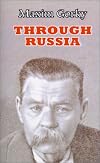
Through Russia
by Maxim Gorky
On This Page
Description
Over my head hung chestnut trees decked with gold; at my feet lay a mass of chestnut leaves which resembled the amputated palms of human hands; on the opposite bank, where there waved, tanglewise, the stripped branches of a hornbeam, an orange-tinted woodpecker was darting to and fro, as though caught in the mesh of foliage--by Maxim Gorky.Tags
Recommendations



































Member Reviews
Unlike in his autobiographical trilogy, Gorky's writing in these stories is florid and 'saturated', and the translations (in the Heron edition anyway) seem so archaic they must have been for its original English publication. But the stories are truly remarkable documents of life among the lower segments of society in Russia at that time. Most remarkable of all is the way the author finds and expresses the humanity hidden in broken, defeated individuals regarded as the dregs of society. Forced through circumstances and/or desperate choices to tramp a land in which drink, religion, violence and fatalism are all-pervasive, they are in search of something better than the misery they have left behind them. In stories which tell of his show more encounters with them, Gorky creates unforgettable pictures of a Russia which, as we now know, was on a path to social breakdown. show less
sad little stories
Ratings
Members
- Recently Added By
Author Information

933+ Works 8,276 Members
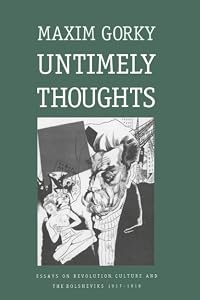
Alexei Maximovich Peshkov, better known as Maxim (Maksim) Gorky, was born on March 28th, 1968. Until the recent collapse of the Soviet state, Gorky was officially viewed as the greatest Russian writer of the twentieth century---an evaluation far above the true measure of his nevertheless considerable talent. Proclaimed the founder of socialist show more realism, he significantly influenced many Soviet writers, as well as others in Europe and in the developing world, and his works were for decades part of the Soviet school curriculum. His formal education was minimal. From the age of 11, he fended for himself with a variety of jobs. Self-taught, he published his first story, "Makar Chudra," in 1892. His first collection, Sketches and Stories (1898), is a romantic celebration of society's strong outcasts---the hobos and the drifters---and helped to popularize such literary protagonists. Foma Gordeyev (1899), Gorky's first novel, depicts generational conflict within the Russian bourgeoisie. A popular public figure on the left, Gorky was often in trouble with the tsarist government. During the 1900s, he was the central figure in the Znanie publishing house, which produced realist prose with a social conscience. Some of his own works were extremely successful. The play The Lower Depths (1902), set in a poorhouse and a strong indictment of social injustice, was not only a staple of Soviet theater but also influential in the United States. Eugene O'Neill's The Iceman Cometh was influenced by it. The propagandistic, extraordinarily influential novel Mother (1906) presents an iconic working-class woman who is transformed into a saint of the Revolution; its optimism in the ultimate triumph of the cause made it a prototype of socialist-realist fiction. During the years prior to 1917, Gorky published a number of autobiographical stories: All Over Russia (1912--18) (also Through Russia) and his memoirs; My Childhood (1913--14), My Apprenticeship (1915--16), and My Universities (1923). This trilogy shows his art at its best and includes some very lively reminiscences of such writers as Tolstoy and Chekhov. Although a Bolshevik party member since 1905, Gorky strongly criticized the new regime after the October Revolution: His collected articles from 1917-18, Untimely Thoughts, remained unpublished in the Soviet Union until recently. A cultural activist, he helped to save the lives of many writers, artists, and scholars during the cold and hungry years of the civil war. In 1921 he left Russia for Italy but returned permanently a decade later, recognized as the grand old man of Soviet literature. He then worked for Stalin's economic policies and presided over the institutionalization of socialist realism. At his death, he left unfinished a major novel of considerable interest, The Life of Klim Samgin, which he had been working on since 1925. (Bowker Author Biography) show less
Series
Belongs to Publisher Series
Common Knowledge
- Original language
- Russian
Classifications
- Genres
- General Fiction, Fiction and Literature
- DDC/MDS
- 813 — Literature & rhetoric American literature in English American fiction in English
- LCC
- AC1 .E8 — General Works Collections. Series. Collected works Collections. Series. Collected works Collections of monographs, essays, etc. American and English
- BISAC
Statistics
- Members
- 108
- Popularity
- 301,542
- Reviews
- 2
- Rating
- (3.73)
- Languages
- English, German
- Media
- Paper, Ebook
- ISBNs
- 34
- UPCs
- 1
- ASINs
- 19