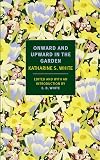
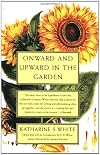
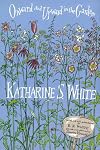
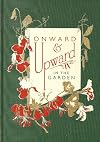
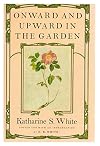
Onward and Upward in the Garden
by Katharine S. White, E. B. White (Editor)
On This Page
Description
In 1925, Harold Ross hired Katharine Sergeant Angell as a manuscript reader for The New Yorker. Within months she became the magazine's first fiction editor, discovering and championing the work of Vladimir Nabokov, John Updike, James Thurber, Marianne Moore, and her husband-to-be, E. B. White, among others. After years of cultivating fiction, she set her sights on a new genre- garden writing. On March 1, 1958, The New Yorkerran a column entitled oOnward and Upward in the Garden,o a critical show more review of garden catalogs, in which White extolled the writings of oseedmen and nurserymen,o those unsung authors who produced her ofavorite reading matter.o Thirteen more columns followed, exploring the history and literature of gardens, flower arranging, herbalists, and developments in gardening. Two years after her death in 1977, E. B. White collected and published the series, with a fond introduction. The result is this sharp-eyed appreciation of the green world of growing things, of the aesthetic pleasures of gardens and garden writing, and of the dreams that gardens inspire. show lessTags
Recommendations

















Member Reviews
A collection of articles Katherine S. White wrote for the New Yorker in the 1950s and 1960s. Most are reviews of seed catalogs, while the end chapters focus on reviews of nature and garden books being published at that time. If you like to read about gardens and flowers, reader beware. This is FULL of books you will want to look at and read, and with the ease of the internet now, it is all to easy to find yourself clicking away and ordering books mentioned here. I bought two. I count myself restrained.
White has a straightforward way of discussing both the good and the bad in the garden books. She doesn't hesitate to tell you her preferences and opinions in flower arrangement and garden blooms. At the same time, I felt as though I were show more sitting with my grandmother discussing the various seed catalogs and possibilities for the garden. She is both charming and literary, well spoken and firm in her ideas. She weaves in history, lore and childhood memories in the most natural way.
At the end of the book, there is a large section with seed and plant nurseries which were still operating at the time of this publication, 1979. There is also an introduction by E. B. White. Very charming line drawings of plants and flowers at the beginning and end of each chapter of the book. show less
White has a straightforward way of discussing both the good and the bad in the garden books. She doesn't hesitate to tell you her preferences and opinions in flower arrangement and garden blooms. At the same time, I felt as though I were show more sitting with my grandmother discussing the various seed catalogs and possibilities for the garden. She is both charming and literary, well spoken and firm in her ideas. She weaves in history, lore and childhood memories in the most natural way.
At the end of the book, there is a large section with seed and plant nurseries which were still operating at the time of this publication, 1979. There is also an introduction by E. B. White. Very charming line drawings of plants and flowers at the beginning and end of each chapter of the book. show less
A compilation of Katharine S. White's essays on gardening, collected into a single volume after her death and published with a gem of an introduction by her husband, one E.B. White. Who, other than Katharine White, would have thought to review seed and flower catalogs for The New Yorker? Her lively, opinionated prose makes for wonderfully enjoyable reading, even if the annual reviews which make up the first part of the book do get ever-so-slightly repetitive. The more thematic essays in the second half (on roses, house plants, winter gardening, and on horticultural books generally) are excellent.
Utterly charming from start to finish, and the introduction is worth a read all on its own.
Utterly charming from start to finish, and the introduction is worth a read all on its own.
This gardening book is a compilation of articles originally written as a column for The New Yorker magazine. It took me by surprise. The individual essays are not actually about gardening per se, but are for the most part, reviews of seed catalogs. I have done this once myself, so I was a bit intrigued. It turns out Mrs. White is quite opinionated about gardening and the development of new plant varieties- especially how showier flowers and bigger produce seem to be all the seedsmen are aiming for- at least that was her take on it. She disparages a lot of trends in the seed catalogs, which makes for some amusing reading. Here and there she mentions her own experiences with certain plants, which were the parts I really enjoyed. She show more doesn't just talk about plants, though. She criticizes (or praises where it was merited) the paper quality, choice of typography and clarity of photos in the seed catalogs. Later in the book are a few reviews of different types of publications regarding plants- field guides to wildflowers and oversized gardening books meant to be decorative (I call them "coffee table" books). I admit I was totally uninterested in the two chapters about books on formal flower arranging, styles in flower arrangement, and flower shows. I kind of skimmed through that. I puzzled a bit at how often she made a point of telling which supplier had what particular variety of a species, until I recalled the publication date: there was no internet back then. You couldn't just do a search and find where to buy the rose your grandmother used to grow or anything. So of course she made notes on which seeds suppliers grew, developed and sold what particular strains of plants. Specializing in roses, or azaleas, or herbs, etc. Helpfully, in the back of the book is a listing of all the catalogs and suppliers mentioned, with brief notes if they are still in business or have changed their focus. Only the last two chapters review gardening books of the kind I like to read- and here I did note down a few titles that sound particularly good. And on a different note, the introduction is written by her husband, a lovely portrait of Mrs. White and some of her gardening habits.
from the Dogear Diary show less
from the Dogear Diary show less
A passionate, engaging book about gardening. Katharine S White writes about gardening in Maine and other gardening topics with an exquisite sensibility and a compelling voice. I was very surprised by how engaging this book was, all due to the author and her skills.
I will admit this book is not for everyone and if you are not passionate about flowers and flower gardening or reading about a woman living in the 50's then just skip this book but I found it to be a treasure. I did take my time reading it, I think this is the longest I have ever taken to finish a book! I chose to pick it up at different times of different seasons when my interest was inspired. This is not a book to be read at one time. Katharine had spunk and she drew me in right off the bat and when I thought I just might give up on a certain topic I was finding dull she would write something that would make me chuckle. I just fell in love with her. I looked up some of the seed companies and found them to still be doing business and I show more actually bought some bulbs from one of them! I was drawn to this book because I was born in 1959 and was curious to see the writing style of that time and hoped to get a glimpse into what my Mother's life might have been like. I have copied 2 other reviewer's opinions because they described Katharine and her book better than I could. If you choose to give it a try, I hope you fall in love with her too!
Apr 11, 2009 Marguerite rated it 4 stars
I've never met an opinionated gardener I like more than the late Katharine S. White. The essays in this book shaped me somewhat, to the extent that they helped me accept my own gardening prejudices and limitations. More than anything, though, they helped me to dream, to visualize perfection in my own little piece of sod. I've come close to that mark a couple of times, but not on the shady lot we now call home. This is a book for winter months, the times you'd like nothing better than to sink your hands into some good earth and make things grow. The only thing better than reading about it is doing it. But, if you're going to read about it, read White
Char rated it 4 stars June 13, 2007 Katharine's wit is very English, genteel, 50's and I found myself laughing aloud at least once per chapter. This is a book to savor over time. Read a few pages or a chapter when you need a respite, put it down, then come back to enjoy again show less
Apr 11, 2009 Marguerite rated it 4 stars
I've never met an opinionated gardener I like more than the late Katharine S. White. The essays in this book shaped me somewhat, to the extent that they helped me accept my own gardening prejudices and limitations. More than anything, though, they helped me to dream, to visualize perfection in my own little piece of sod. I've come close to that mark a couple of times, but not on the shady lot we now call home. This is a book for winter months, the times you'd like nothing better than to sink your hands into some good earth and make things grow. The only thing better than reading about it is doing it. But, if you're going to read about it, read White
Char rated it 4 stars June 13, 2007 Katharine's wit is very English, genteel, 50's and I found myself laughing aloud at least once per chapter. This is a book to savor over time. Read a few pages or a chapter when you need a respite, put it down, then come back to enjoy again show less
I don't garden so after the novelty wore off it was rough going. I'd consider spreading it out, say a chapter a week, otherwise it's a bit much. I also had to look up quite a few of the flowers to keep pace. The writing is fine, though dated in style, in my mind it definitely read as pre-WWII. There's a definite underpinning of the white middle class experience as normative.
One of my all time favourite gardening books, this is a delightful book for a cold winter's day of reading and dreaming in front of the warm fireplace.
Members
- Recently Added By
Published Reviews
"You don't have to be a gardener to love this collection of essays. White observes that a talent for the soil and a taste for writing and editorializing often go together, and she proves it-creating her own distinctive voice in the process."
added by MsMixte
Lists

Garden-essays and books on gardening
53 works; 10 members

Must-Read Maine
146 works; 91 members

Folio Society
831 works; 48 members

Best Gardening Books
133 works; 45 members

Books With the Most Memorable Titles
478 works; 158 members
Author Information

4+ Works 1,002 Members
Katharine S. White (1896-1977) was fiction editor at The New Yorker from 1925 to 1959. She and her husband, E. B. White, lived in New York City and North Brooklin, Maine

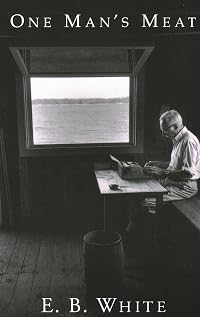
Born in Mount Vernon, New York, E. B. White was educated at Cornell University and served as a private in World War I. After several years as a journalist, he joined the staff of the New Yorker, then in its infancy. For 11 years he wrote most of the "Talk of the Town" columns, and it was White and James Thurber who can be credited with setting the show more style and attitude of the magazine. In 1938 he retired to a saltwater farm in Maine, where he wrote essays regularly for Harper's Magazine under the title "One Man's Meat." Like Thoreau, White preferred the woods; he also resembled Thoreau in his impatience and indignation. White received several prizes: in 1960, the gold medal of the American Academy of Arts and Letters; in 1963, the Presidential Medal of Freedom, the nation's highest civilian award (he was honored along with Thornton Wilder and Edmund Wilson); and in 1978, a special Pulitzer Prize. His verse is original and witty but with serious undertones. His friend James Thurber described him as "a poet who loves to live half-hidden from the eye." Three of his books have become children's classics: Stuart Little (1945), about a mouse born into a human family, Charlotte's Web (1952), about a spider who befriends a lonely pig, and The Trumpet of the Swan (1970). Among his best-known and most widely used books is The Elements of Style (1959), a guide to grammar and rhetoric based on a text written by one of his professors at Cornell, William Strunk, which White revised and expanded. White was married to Katherine Angell, the first fiction editor of the New Yorker. (Bowker Author Biography) Elwyn Brooks White was born on July 11, 1899, in Mt. Vernon, New York. After graduating from Cornell University, he worked briefly for an advertising agency and as a newspaper reporter before joining the staff of The New Yorker magazine in 1927. As a columnist for The New Yorker and a contributor to Harper's Magazine, White established a reputation as a prose stylist of exceptional elegance, clarity and wit. His interests, as reflected in his writing, were numerous and varied; his essays touched on such wide-ranging subjects as politics, farm animals, and life in New York City. White married Katharine S. Angell in 1929. They had one son, and in 1957 the family left New York for a farm in North Brookline, Maine. Writings from The New Yorker, 1927-1976 is a compilation of columns and essays produced during White's long relationship with the magazine. One Man's Meat, published in 1942, is a collection of his writings for Harper's. White adapted a short guide to English grammar and usage, The Elements of Style, from a college text written by one of his professors at Cornell, William Strunk Jr. It has sold millions of copies since it was first published in 1959 and has become a cherished resource for guidance in writing. White also co-authored Is Sex Necessary? with the humorist James Thurber, a fellow staff member at The New Yorker. E.B. White died on October 1, 1985 after succumbing to Alzheimer's. His diverse legacy also includes three children's books: Stuart Little, Charlotte's Web, and The Trumpet of the Swan. In 1970 the American Library Association presented White the Laura Ingalls Wilder Award in recognition of his "substantial and lasting contribution to literature for children." He was also awarded the Presidential Medal of Freedom in 1963 and received a special Pulitzer Prize citation for his body of work in 1970. (Bowker Author Biography) show less
Some Editions
Awards and Honors
Series
Belongs to Publisher Series
Work Relationships
Is abridged in
Common Knowledge
- Canonical title
- Onward and Upward in the Garden
- First words
- March 1, 1958. For gardeners, this is the season of lists and callow hopefulness; hundreds of thousands of bewitched readers are poring over their catalogues, making lists for their seed and plant orders, and dreaming their ... (show all)dreams.
- Quotations
- "I read in dream"- Katharine S. White
Classifications
Statistics
- Members
- 528
- Popularity
- 56,310
- Reviews
- 9
- Rating
- (4.01)
- Languages
- English
- Media
- Paper, Ebook
- ISBNs
- 6
- UPCs
- 1
- ASINs
- 14