On This Page
Description
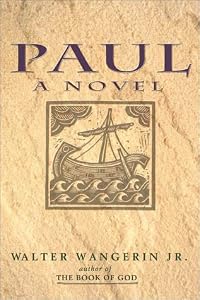
A novel based on the life of St. Paul.Tags
Recommendations



















Member Reviews
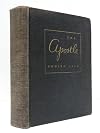
Sholem Asch was a Yiddish writer, a Polish Jew who wrote about shtetl life in Europe and became very well known, with his work being translated into many languages. He moved to America in his 30s and began writing about the Jewish immigrant experience here. Late in his career, however, he wrote three books in what became known as his "Founders of Christianity" series: The Nazarene, The Apostle, and Mary. This did not go over well in the Jewish community of the time (The Apostle was published in 1942), and he lost readership and his job. This despite that fact that Asch maintained that the novels were meant to bridge the gap between Jews and Christians by demonstrating in fiction that Christianity was in fact a deeply Jewish phenomenon show more at its core. As my old man would have said, however, "Lotsa luck." And so I was curious about The Apostle. It is the fictional story of early Christianity as seen through the eyes of Saul, who become the Apostle Paul.
Once he is converted and begins preaching about the Messiah, Paul schlepps back and forth across the Middle East, founding congregations and converting Jew and Gentile alike to the new faith. Being Jewish myself, I never knew the details of Paul's life nor much about the turning point where Paul stopped preaching only to Jews that their Messiah had arrived and instead insisted on preaching to everyone, thus taking the new religion out of the realm of Judaism. (And that is, of course, to whatever extent this book is faithful to what is know of those events.) So that was interesting. Unfortunately about 95% of the storytelling is done in flat, expository prose. There's almost nothing to draw us into the narrative for its own sake. show less
Once he is converted and begins preaching about the Messiah, Paul schlepps back and forth across the Middle East, founding congregations and converting Jew and Gentile alike to the new faith. Being Jewish myself, I never knew the details of Paul's life nor much about the turning point where Paul stopped preaching only to Jews that their Messiah had arrived and instead insisted on preaching to everyone, thus taking the new religion out of the realm of Judaism. (And that is, of course, to whatever extent this book is faithful to what is know of those events.) So that was interesting. Unfortunately about 95% of the storytelling is done in flat, expository prose. There's almost nothing to draw us into the narrative for its own sake. show less
This book, like most hagiographies, was extremely pro Paul. It shows him struggling, but he always ends up sacrificing everything for his vision of Christ, which came out to be the Church's accepted version. That the force of his personality is felt down through the centuries so strongly that it crushed all the "heresies" of his time is pretty amazing.
Asch's story deals minutely with the struggle between the Jews and Christians to decide if Christ was the expected Messiah, and whether, in ministering to the gentiles, the law of Torah should be enforced upon them, or abrogated to some extent (and if abrogated, to what extent?).
Paul believed that the gentiles should be given the salvation of Christ just by faith and left uncircumsized and show more eating pork if they so chose.
Most of the book flowed like a novel should, but it had some longueurs, when Asch discoursed on the finer points of the Torah or you could tell he was just reiterated the letters of Saint Paul from the New Testament itself.
Nero burns Rome and sacrificies Christians in the arena and Seneca and Petronius are also portrayed here, as well as a good deal about Saint Peter. It definitely has its exciting moments. Many are martyred and St. Peter is famously nailed to the cross upsidedown.
Most interesting to me, while reading this 754 page tome, was wondering what happened to Asch to make him write the trilogy of Christian-themed books and alienate most of his Yiddish readers. Did he convert?
In the book they recommend that Jews accept Jesus and hold to the laws of the Torah as well. I think he must have been like that, but this is mere speculation, of course. show less
Asch's story deals minutely with the struggle between the Jews and Christians to decide if Christ was the expected Messiah, and whether, in ministering to the gentiles, the law of Torah should be enforced upon them, or abrogated to some extent (and if abrogated, to what extent?).
Paul believed that the gentiles should be given the salvation of Christ just by faith and left uncircumsized and show more eating pork if they so chose.
Most of the book flowed like a novel should, but it had some longueurs, when Asch discoursed on the finer points of the Torah or you could tell he was just reiterated the letters of Saint Paul from the New Testament itself.
Nero burns Rome and sacrificies Christians in the arena and Seneca and Petronius are also portrayed here, as well as a good deal about Saint Peter. It definitely has its exciting moments. Many are martyred and St. Peter is famously nailed to the cross upsidedown.
Most interesting to me, while reading this 754 page tome, was wondering what happened to Asch to make him write the trilogy of Christian-themed books and alienate most of his Yiddish readers. Did he convert?
In the book they recommend that Jews accept Jesus and hold to the laws of the Torah as well. I think he must have been like that, but this is mere speculation, of course. show less
Interesting viewpoint on this ancient time and person. Interesting. Entertaining.
Whether or not definitive I don't know. Writing is good. Character lives in extremes.
Whether or not definitive I don't know. Writing is good. Character lives in extremes.
Historical novel about Saul of Tarsus who became Paul and started a new religion.
Story of Christianity. $6.63,
Ratings
Members
- Recently Added By
Lists

Publisher's Weekly Bestsellers - Part II - 1940 - 1979
355 works; 5 members
Author Information

104+ Works 2,232 Members
Sholem Asch, one of the major figures in Yiddish letters, was born in Kutno, near Warsaw, Poland, in 1880. He began writing in 1901, first in Hebrew, then in Yiddish. His early, quietly humorous stories of Jewish small-town life brought Yiddish literature to international notice. His epic novels and plays dealt with the contemporary scene and the show more Jewish experience on a worldwide scale. The range and reach of his talent were wide; his collected works appeared in Yiddish in 29 volumes. Many of his works have been translated into English, but some translations are now out of print. Asch spent most of his last two years in Bat Yam near Tel Aviv, Israel (although he died in London). His house in Bat Yam is now the Sholem Asch Museum. The bulk of his library, containing rare Yiddish books and manuscripts, including the manuscripts of some of his own works, is held at Yale University. Asch died in 1957. (Bowker Author Biography) show less
Some Editions
Awards and Honors
Distinctions
Series

Common Knowledge
- Original publication date
- 1943
- People/Characters
- Paul; Simon Peter; Timothy (of Lystra); Barnabas the Apostle (Saint, b. Joseph); Silas (companion of Paul in Antioch)
- Important places
- Jerusalem, Israel; Ephesus, Turkey; Corinth, Greece; Rome, Roman Empire
- Important events
- Saul's Conversion on the road to Damascus; Paul's Christian missions; Paul's imprisonment in Rome
Classifications
- Genres
- Fiction and Literature, General Fiction, Historical Fiction
- DDC/MDS
- 892.493 — Literature & rhetoric Asian Literature Afro-Asiatic literatures Jewish, Israeli, and Hebrew
- LCC
- PZ3 .A798 .A — Language and Literature Fiction and juvenile belles lettres Fiction and juvenile belles lettres Fiction in English
Statistics
- Members
- 437
- Popularity
- 70,008
- Reviews
- 6
- Rating
- (3.64)
- Languages
- Dutch, English, Hebrew, Italian
- Media
- Paper, Ebook
- ISBNs
- 5
- ASINs
- 29