
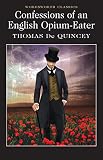
Confessions of an English Opium Eater
by Thomas De Quincey
On This Page
Description
You won't be able to put down this gripping first-hand account of opium addiction that shocked England after its initial publication in 1821. Thomas De Quincy was a renowned author and intellectual who fell prey to a laudanum addiction as a young man, and who later recounted his experiences in excruciating detail in a series of anonymously published magazine serials. This important early work provides a fascinating glimpse into the processes of drug addiction..
Tags
Recommendations
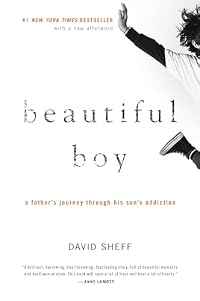
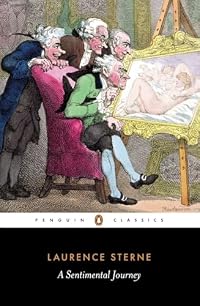
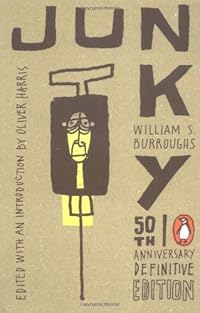
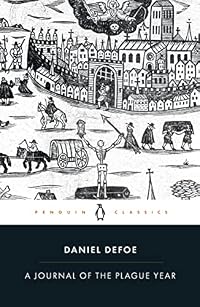














Member Recommendations
lemontwist I like On Wine and Hashish better but Baudelaire was clearly influenced by the work of De Quincey, and I think the two essays are well paired.
41

Sylak A different drug this time. Huxley experiments with mescalin, found in peyote.
Member Reviews
Brilliant, rhythmic, poetical prose. The story itself is quite good too, combining honesty without self-pitying, dark side of 19th century London, tragic and dramatic experiences of the protagonist which are mitigated through detached self-observation and author’s tendency to poke fun at himself, current state of medical science, writers, philosophers and everything else. BTW, it might be one of the first accounts of fighting and beating drug addiction (possibly, with the help of a public diary).
As far as I know, this book is the original addiction memoir, so it set the template for those that have followed. It has a three-part structure, written from the standpoint of one who has kicked the habit: First, one’s previous life, which helps illuminate why one took to the drug in the first place; secondly, the exquisite pleasures of what De Quincey calls “just, subtle, and mighty opium,” and finally, the terrors of a habit gone out of control.
Only a postscript reveals the coda: the stance of one having overcome his addiction was a fiction. It wasn’t true at the time he wrote, nor had his subsequent efforts been successful. Perhaps the most frightening sentence in the book is “not the Opium-eater, but the opium, is the show more true hero of the tale.”
De Quincey was a precocious scholar, especially of classical Greek. His awareness of attainment in it beyond that of his schoolmasters (and his masters’ awareness of it), combined with his inability to persuade his guardians (De Quincey was an orphan) to “go up” to Oxford ahead of time, led him to run away from school. This brought on years of intense poverty and hunger, resulting in chronic stomach pains (the cause, he asserts, of his opium abuse). This book shows evidence that the analytic ability he claims is no idle boast. He shows a keen insight into the workings of the human mind and society.
Along the way, De Quincey also challenges some of the common assumptions about the drug. One mistake, he asserts, is its designation as a narcotic. In his experience during the days of his occasional recreational use (a small dose every three weeks or so), his sip of laudanum (despite the title, he didn’t “eat” the opium, but drank it in a tincture) led to as much as eight hours of euphoria. Why waste that time sleeping! Instead, he went to the opera. Sounds appealing, but even then, he notes, “its pleasures even are of a grave and solemn complexion.”
When his stomach pain worsened, he increased both the dosage and the frequency, which soon led to harrowing experiences. In particular, his sleep becomes a nightly phantasmagoria, peopled by those he had lost through death. Even worse were the excursions to an Orient of the mind: a jumble of what he knew of China, India, and ancient Egypt. At the culmination of his description of the pains of opium, he reached the point where he felt that continued use would kill him; he was faced with a choice of two agonies: either continuing or quitting.
In rough outlines, a familiar tale. Though evident in the background, what is little expressed are the sufferings of his wife and children.
Some readers may be put off by the subject matter, others by the prose that is of its time and to current taste can seem purple. I, however, was fascinated by the combination of honesty and self-deception. Similarly, his acute insight into society didn’t keep him from failing to recognize aspects he took for granted: Part of the horror of his nocturnal dream excursions to Asia was being thrust into “the mystic sublimity of castes that have flowed apart, and refused to mix, through such immemorial tracts of time,” causing him to shudder, for as an Englishmen, he believed, he was “not bred in any knowledge of such institutions.”
Blind spots, self-deception: in the end, these are not just hallmarks of the addict. They are part of being human, and not even the sharpest mind is immune to them. It’s syllogistic then that I have them too, although, of course, I don’t know what they are. show less
Only a postscript reveals the coda: the stance of one having overcome his addiction was a fiction. It wasn’t true at the time he wrote, nor had his subsequent efforts been successful. Perhaps the most frightening sentence in the book is “not the Opium-eater, but the opium, is the show more true hero of the tale.”
De Quincey was a precocious scholar, especially of classical Greek. His awareness of attainment in it beyond that of his schoolmasters (and his masters’ awareness of it), combined with his inability to persuade his guardians (De Quincey was an orphan) to “go up” to Oxford ahead of time, led him to run away from school. This brought on years of intense poverty and hunger, resulting in chronic stomach pains (the cause, he asserts, of his opium abuse). This book shows evidence that the analytic ability he claims is no idle boast. He shows a keen insight into the workings of the human mind and society.
Along the way, De Quincey also challenges some of the common assumptions about the drug. One mistake, he asserts, is its designation as a narcotic. In his experience during the days of his occasional recreational use (a small dose every three weeks or so), his sip of laudanum (despite the title, he didn’t “eat” the opium, but drank it in a tincture) led to as much as eight hours of euphoria. Why waste that time sleeping! Instead, he went to the opera. Sounds appealing, but even then, he notes, “its pleasures even are of a grave and solemn complexion.”
When his stomach pain worsened, he increased both the dosage and the frequency, which soon led to harrowing experiences. In particular, his sleep becomes a nightly phantasmagoria, peopled by those he had lost through death. Even worse were the excursions to an Orient of the mind: a jumble of what he knew of China, India, and ancient Egypt. At the culmination of his description of the pains of opium, he reached the point where he felt that continued use would kill him; he was faced with a choice of two agonies: either continuing or quitting.
In rough outlines, a familiar tale. Though evident in the background, what is little expressed are the sufferings of his wife and children.
Some readers may be put off by the subject matter, others by the prose that is of its time and to current taste can seem purple. I, however, was fascinated by the combination of honesty and self-deception. Similarly, his acute insight into society didn’t keep him from failing to recognize aspects he took for granted: Part of the horror of his nocturnal dream excursions to Asia was being thrust into “the mystic sublimity of castes that have flowed apart, and refused to mix, through such immemorial tracts of time,” causing him to shudder, for as an Englishmen, he believed, he was “not bred in any knowledge of such institutions.”
Blind spots, self-deception: in the end, these are not just hallmarks of the addict. They are part of being human, and not even the sharpest mind is immune to them. It’s syllogistic then that I have them too, although, of course, I don’t know what they are. show less
Six-word review: Opium dreams are heaven, addiction hell.
Extended review:
Somewhere on one of my bookcases, probably bearing 40-plus years' accumulation of dust and shelf wear, is a paper copy of De Quincey's autobiographical work, a remnant of one of my college courses in British literature of the Romantic Period. It remains unbroached; the copy I just read was a free download on my Kindle. But that's how long the intent has been in place.
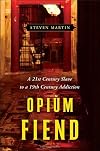
What finally overcame the pull of inertia was reading Opium Fiend: A 21st Century Slave to a 19th Century Addiction (2012), by Steven Martin (reviewed here). De Quincey's work, although far from the only one on the subject, was a sort of spiritual ancestor of Martin's soul-baring memoir.
De Quincey's show more narrative, originally published in two installments in a London periodical, consists of two parts, each with an introduction: "The Pleasures of Opium" and "The Pains of Opium." De Quincey came to the use of laudanum (a preparation of opium mixed with alcohol) as a pain reliever when he was young and alone, estranged from his family. In it he found relief and release from emotional and spiritual as well as physical pain, and his ecstatic visions began to consume his life.
The old story, old even then in the early 19th century and a good deal older and more commonplace now, is simply that the drug of choice begins by seeming to solve a problem and ends by being itself a far, far greater problem. The user must overcome the addiction or die, and if he succeeds in withdrawal, his life is now encumbered not only by the problems he sought to escape in the first place but also by all the wreckage he has created since then as a result.
That is De Quincey's tale, recounted in 1822, different in language and particulars from addicts' stories told today but one with them in substance.
The age and style of this 200-year-old account pose no obstacle for me; but for readability, relevance, vividness, and comprehensiveness I recommend Martin's work to anyone who has no need to delve into the older literature. show less
Extended review:
Somewhere on one of my bookcases, probably bearing 40-plus years' accumulation of dust and shelf wear, is a paper copy of De Quincey's autobiographical work, a remnant of one of my college courses in British literature of the Romantic Period. It remains unbroached; the copy I just read was a free download on my Kindle. But that's how long the intent has been in place.
What finally overcame the pull of inertia was reading Opium Fiend: A 21st Century Slave to a 19th Century Addiction (2012), by Steven Martin (reviewed here). De Quincey's work, although far from the only one on the subject, was a sort of spiritual ancestor of Martin's soul-baring memoir.
De Quincey's show more narrative, originally published in two installments in a London periodical, consists of two parts, each with an introduction: "The Pleasures of Opium" and "The Pains of Opium." De Quincey came to the use of laudanum (a preparation of opium mixed with alcohol) as a pain reliever when he was young and alone, estranged from his family. In it he found relief and release from emotional and spiritual as well as physical pain, and his ecstatic visions began to consume his life.
The old story, old even then in the early 19th century and a good deal older and more commonplace now, is simply that the drug of choice begins by seeming to solve a problem and ends by being itself a far, far greater problem. The user must overcome the addiction or die, and if he succeeds in withdrawal, his life is now encumbered not only by the problems he sought to escape in the first place but also by all the wreckage he has created since then as a result.
That is De Quincey's tale, recounted in 1822, different in language and particulars from addicts' stories told today but one with them in substance.
The age and style of this 200-year-old account pose no obstacle for me; but for readability, relevance, vividness, and comprehensiveness I recommend Martin's work to anyone who has no need to delve into the older literature. show less
This is the autobiography of Thomas de Quincey, a 19th century intellectual who indulged in opium use for a large proportion of his life. The book only gets onto the opium after half way through, and spends a while detailing his childhood and younger years. Smaller sections toward the end give account of the pleasures and pains of opium, and are just as interesting to read as the earlier parts. What is distinctive of this book is the apparent candor with which the author writes, the details of his thoughts and feelings through the various times in his life, and his observations on human nature. This is as much a view onto life in the period as it is a view onto the life of Quincey, and as it also contains his views of literary show more contemporaries, it should be of interest to fans of literature of this time. show less
The original 1821 version of Confessions can and probably should be read in a single sitting. It is the literary equivalent of taking opium: the rationale, the purchase, the ingestion, the high, the down and the withdraw. De Quincey's impassioned literary style is equal to the dreamy clarity of opiates. Heroin and morphine have long been the muse of many a great rock star for good reason, it opens the minds creative channels yet unlike alcohol doesn't cloud the abilities and indeed enhances them. De Quincey along with others of his time found in opium the key to artistic expansion of the mind, for better and worse. The book directly influenced a number of 19th century authors, and today is a keystone in a long line of drug tell-all show more confessions. show less
3.5 stars. One can see why Confessions was such a favorite among the drug-addled youngsters of the 60s and 70s. The title is catchy but--surprise!--its not primarily a book about drug experiences, only the last 20 or so pages plumb that. It's about suffering, homelessness, and penury. There were passages that reminded me of 1993's Travels With Lizbeth by Lars Eighner, a wonderfully written book about homelessness.
The class system of Britain, thank God it's dying, systemically prevented true eleemosynary activity. Anyone deemed to be a victim of their own excess was not considered worthy of care. As de Quincey states:
The class system of Britain, thank God it's dying, systemically prevented true eleemosynary activity. Anyone deemed to be a victim of their own excess was not considered worthy of care. As de Quincey states:
The stream of London charity flows in a channel which, though deep and mighty, is yet noiseless and underground; notshow more
obvious or readily accessible to poor houseless wanderers; and it cannot be denied that the outside air and framework of London society is harsh, cruel, and repulsive.It took me ten pages to acclimate to the slightly archaic diction, but once I did the reading was enjoyable. There's a guardedness about certain episodes in the author's life which evoked wonder and curiosity in this reader. He focuses on opium addiction almost to the utter exclusion of everything else. The focus is laser-like. Recommended. show less
#10 A classic by an author that's new to you
I chose this book in part because I currently have contact with several current and former substance abusers, and wished to gain a little more insight into their situation of addiction. As I was reading it, I was also hearing news of the great opiate problem in the US, so it seemed particularly timely, especially as I understand he was first given opium as medicine. I read enough British classics not to be put off by the language of the book, but Mr. de Quincy seemed to be a little full of himself at times. And he seemed to extol the virtues of opium for many more pages than he spent speaking of the damage it does. On the other hand, I don't think any could come away from the book with the show more idea that opium consumption is an easy habit to break! I also think de Quincy either did not realize or overlooked the fact that different organisms react differently to different substances. Thus some of the "experts" of the day were probably right, at least regarding the effects of opium on the majority of the consuming population. One also wonders exactly how reliable a narrator the author is. show less
I chose this book in part because I currently have contact with several current and former substance abusers, and wished to gain a little more insight into their situation of addiction. As I was reading it, I was also hearing news of the great opiate problem in the US, so it seemed particularly timely, especially as I understand he was first given opium as medicine. I read enough British classics not to be put off by the language of the book, but Mr. de Quincy seemed to be a little full of himself at times. And he seemed to extol the virtues of opium for many more pages than he spent speaking of the damage it does. On the other hand, I don't think any could come away from the book with the show more idea that opium consumption is an easy habit to break! I also think de Quincy either did not realize or overlooked the fact that different organisms react differently to different substances. Thus some of the "experts" of the day were probably right, at least regarding the effects of opium on the majority of the consuming population. One also wonders exactly how reliable a narrator the author is. show less
Members
- Recently Added By
Published Reviews
ThingScore 100
First published in 1821, Confessions of an English Opium Eater was the book that kick-started Thomas De Quincey's literary career and the one that would ultimately lead to his canonisation as the patron saint of the erudite addict and the bookish dipsomaniac. Until then, he had been living in Wordsworth's cottage at Grasmere, scratching a living from his translations of German writers and show more feeding a laudanum habit acquired at the age of 19. This new edition displays the range of the author's learning, not only in classical and English literature, but in the Enlightenment philosophy that had been sweeping across Europe since his youth.
Certain moments of the narrative stand out with the kind of vividness De Quincey ascribes to an opium dream. The friendship with a young prostitute who saved his life and whom he lost among the thronging London crowds. The disquisition on music, which, in an 11-word parenthesis, gives as succinct a summary of Kantian aesthetics as can be imagined. Above all, the extraordinary prose hymn to the joys of winter, a warm cottage, a good library and a pot of hot tea.
"Nothing," writes De Quincey in his preface, "is more revolting to English feelings than the spectacle of a human being obtruding on our notice his moral ulcers or scars." Confessions confounded that theory by the sheer force of its style and launched the memoir of intoxication on to the literary scene. With Mill's Autobiography and Hazlitt's Liber Amoris, it is one of the classics of 19th-century life writing and its influence is still felt: to it we owe the mescaline experiments of Huxley and Michaux and the bleak satisfactions of Burroughs's Junky show less
Certain moments of the narrative stand out with the kind of vividness De Quincey ascribes to an opium dream. The friendship with a young prostitute who saved his life and whom he lost among the thronging London crowds. The disquisition on music, which, in an 11-word parenthesis, gives as succinct a summary of Kantian aesthetics as can be imagined. Above all, the extraordinary prose hymn to the joys of winter, a warm cottage, a good library and a pot of hot tea.
"Nothing," writes De Quincey in his preface, "is more revolting to English feelings than the spectacle of a human being obtruding on our notice his moral ulcers or scars." Confessions confounded that theory by the sheer force of its style and launched the memoir of intoxication on to the literary scene. With Mill's Autobiography and Hazlitt's Liber Amoris, it is one of the classics of 19th-century life writing and its influence is still felt: to it we owe the mescaline experiments of Huxley and Michaux and the bleak satisfactions of Burroughs's Junky show less
added by shieldwolf
Lists

Best Gothic Fiction
110 works; 29 members

Read These Too
458 works; 9 members

Harold Bloom - The Western Canon: C. The Democratic Age
336 works; 15 members

Works cited in Palimpsest: A History of the Written Word by Matthew Battles
79 works; 2 members

autobiographies, biographies & memoirs
56 works; 1 member

substances
14 works; 1 member
Talk Discussions
Past Discussions
Confessions of an English Opium-Eater by De Quincey Thomas - LIMITED EDITIONS CLUB 1930 in George Macy devotees (May 2023)
Author Information

Thomas de Quincey, born in 1785, was an English novelist, essayist, and literary critic. He is best known for his Confessions of an English Opium Eater, an insightful autobiographical account of his addiction to opium. The death of de Quincey's older sister when he was seven years old shaped his life through the grief and sadness that forced him show more to seek comfort in an inner world of imagination. He ran away to Wales when he was 17. He then attended Oxford University. It was at Oxford that he first encountered opium, and he subsequently abandoned his study of poetry without a degree, hoping to find a true philosophy. de Quincey wrote essays for journals in London and Edinburgh in order to support his large family. His prose writings and essays contain psychological insights relevant to the modern reader of today. In addition to his voluminous works of criticism and essays, he wrote a novel, Klosterheim or The Masque. Thomas de Quincey died in 1859. (Bowker Author Biography) show less
Some Editions
Awards and Honors
Series
Belongs to Publisher Series
Limited Editions Club (S:2.02)
The World's Classics (23)
The Folio Society ((6) 1948)
Sammlung Hofenberg (de Quincey)
Penguin Great Ideas (70)
Everyman's Library (223)
Work Relationships
Common Knowledge
- Canonical title
- Confessions of an English Opium Eater
- Original title
- Confessions of an English Opium-Eater
- Alternate titles
- The Opium Eater
- Original publication date
- 1821
- People/Characters
- Thomas De Quincey; Ann
- Important places
- England, UK
- Related movies
- Confessions of an Opium Eater (1962 | IMDb)
- First words
- To the Reader.--I here present you, courteous reader, with the record of a remarkable period in my life: according to my application of it, I trust that it will prove, not merely an interesting record, but, in a considerable... (show all) degree, useful and instructive.
- Quotations
- I was stared at, hooted at, grinned at, chattered at, by monkeys, by paroquets, by cockatoos. I ran into pagodas: and was fixed, for centuries, at the summit, or in secret rooms; I was the idol; I was the priest; I was worshi... (show all)pped; I was sacrificed. I fled from the wrath of Brama through all the forests of Asia: Vishnu hated me: Seeva laid wait for me. I came suddenly upon Isis and Osiris: I had done a deed, they said, which the ibis and the crocodile trembled at. I was buried, for a thousand years, in stone coffins, with mummies and sphynxes, in narrow chambers at the heart of eternal pyramids. I was kissed, with cancerous kisses, by crocodiles; and laid, confounded with all unutterable slimy things, amongst reeds and Nilotic mud.
I thus give the reader some abstraction of my oriental dreams, which always filled me with such amazement at the monstrous scenery, that horror seemed absorbed, for a while, in sheer astonishment.
(From 'Confessions of an English Opium-Eater')
" I say: for there is one celebrated man of the present day, who if all be true which is reported of him, has greatly exceeded me in quantity."
Death we can face: but knowing, as some of us do, what is human life, which of us is it that without shuddering could (if consciously we were summoned) face the hour of birth?
(last line of 'Suspiria de Profundis')
No dignity is perfect which does not at some point ally itself with the indeterminate and mysterious.
(from 'The English Mail-Coach')
Ah, reader! when I look back upon those days, it seems to me that all things change or perish. Even thunder and lightning, it pains me to say, are not the thunder and lightning which I seem to remember from the time of Waterl... (show all)oo. Roses, I fear, are degenerating, and, without a Red revolution, must come to the dust.
(from 'The English Mail-Coach')
The late Duke of Norfolk used to say, ‘Next Monday, wind and weather permitting, I purpose to be drunk’.
(Part Two: The Pleasures of Opium.)
… from Lord Bacon’s Essay on Death: — ‘It is as natural to die as to be born; and to a little infant perhaps the one is as painful as the other.’
(Part Three: The Pains of Opium.)
A young Chinese seems to me an antediluvian man renewed.
(Part Three: The Pains of Opium.) - Last words
- (Click to show. Warning: May contain spoilers.)A thousand times, amongst the phantoms of sleep, has he shown thee to me, standing before the golden dawn, and teady to enter its gates--with the dreadful Word going before thee--with the armies of the grave behind thee; shown thee to me, sinking rising, fluttering, fainting, but then suddenly reconciled, adoring: a thousand times has he followed thee in the worlds of sleep--through storms; through desert seas; through the darkness of quicksands; through fugues and the persecution of fugues; through dreams, and the dreadful ressurections that are in dreams--only that at the last, with one motion of his victorious arm, he might record and emblazon the endless resurrections of his love!
- Original language
- English
- Disambiguation notice
- This is a short to medium length book, containing between less than 100 pages (in the first edition) and 275 pages (in the edition of 1856). Do not combine with editions that include "Other Writings" by the same author.
Classifications
Statistics
- Members
- 2,111
- Popularity
- 9,660
- Reviews
- 39
- Rating
- (3.46)
- Languages
- 16 — Czech, Dutch, English, Estonian, Finnish, French, German, Hungarian, Italian, Norwegian (Bokmål), Portuguese, Russian, Croatian, Spanish, Swedish, Turkish
- Media
- Paper, Audiobook, Ebook
- ISBNs
- 143
- UPCs
- 1
- ASINs
- 127