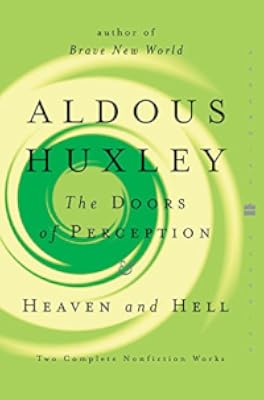
The Doors of Perception / Heaven and Hell
by Aldous Huxley 
On This Page
Description
The critically acclaimed novelist and social critic Aldous Huxley, describes his personal experimentation with the drug mescaline and explores the nature of visionary experience. The title of this classic comes from William Blake's The Marriage of Heaven and Hell: "If the doors of perception were cleansed every thing would appear to man as it is, infinite. For man has closed himself up, till he sees all things through narrow chinks of his cavern.".Tags
Recommendations



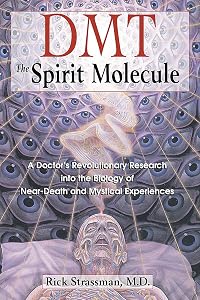

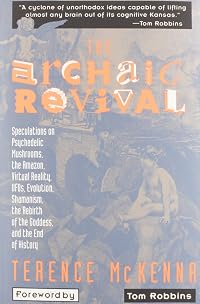
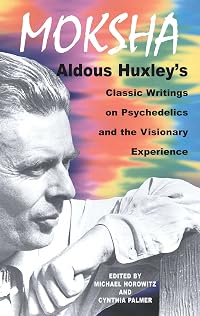


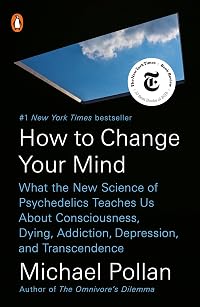



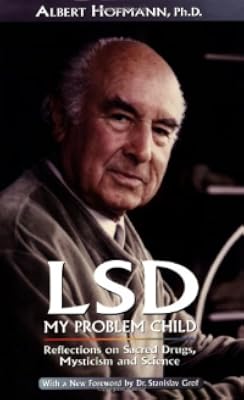


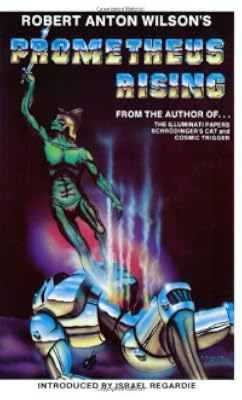

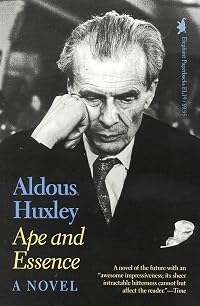
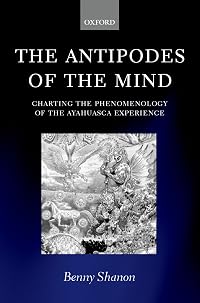


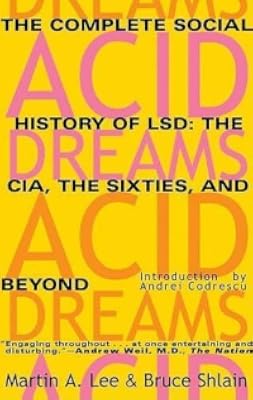
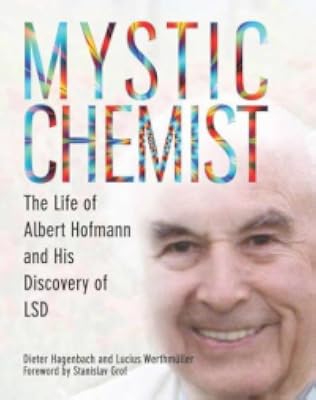

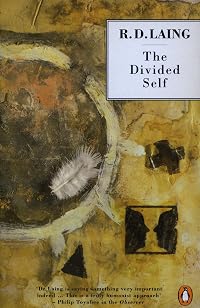


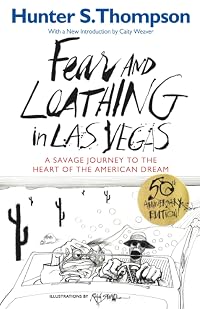





Member Recommendations

Sylak Huxley took notes from this work for his sequel to 'The Doors of Perception', titled 'Heaven and Hell'. See appendix II of the 1959 Penguin copy.
Member Reviews
The Doors of Perception is very interesting, but Heaven and Hell is complete nonsense.
The former is fascinating for being a trip report by a person born pre-1900. In addition, Huxley was definitely an excellent writer who was able to accurately relay his experience. And his experience was remarkably similar to mine! I especially enjoyed the kind of 'literary criticism' he performed during and after the experience, in which he discussed the similarities between the psychedelic experience and Buddhist notions of the dharmakāya & Buddha nature, as well as its relations to art and literature. An interesting fact that I just stumbled upon when writing this: at the time of the book, Huxley was if not blind, then quite visually impaired. show more This calls into question the intensely visual aspect of his experience. In the book he described with what seemed to be perfect clarity his visual experiences. How much of this was his experience, how much was mescalin, and how much was his experience with the aforementioned literature of art and visionary writers? Overall though, The Doors of Perception was compelling and well worth reading.
The latter piece is a bunch of hogwash, written 2-3 years after his mescalin experience, that largely attempts to rationally explain psychedelic phenomena. Huxley seems to have drunk the Jungian Kool-Aid and sincerely believes that the chemical changes in the brain due to mescalin have the effect of allowing us to access sense-data from the collective unconscious - in his words "the Mind-at-Large". There are many similarly foolish claims here too. One could give the excuse that he lived long enough ago to make these ideas plausible, but Huxley himself opened Heaven and Hell by remarking that at that point in time (1953) the study of the mind was in the naturalist/collector stage of scientific progress, and that they were not yet ready for classification, analysis, and theory. He knew what he was doing was likely to be without merit, but he did it anyway. Skip Heaven and Hell. show less
The former is fascinating for being a trip report by a person born pre-1900. In addition, Huxley was definitely an excellent writer who was able to accurately relay his experience. And his experience was remarkably similar to mine! I especially enjoyed the kind of 'literary criticism' he performed during and after the experience, in which he discussed the similarities between the psychedelic experience and Buddhist notions of the dharmakāya & Buddha nature, as well as its relations to art and literature. An interesting fact that I just stumbled upon when writing this: at the time of the book, Huxley was if not blind, then quite visually impaired. show more This calls into question the intensely visual aspect of his experience. In the book he described with what seemed to be perfect clarity his visual experiences. How much of this was his experience, how much was mescalin, and how much was his experience with the aforementioned literature of art and visionary writers? Overall though, The Doors of Perception was compelling and well worth reading.
The latter piece is a bunch of hogwash, written 2-3 years after his mescalin experience, that largely attempts to rationally explain psychedelic phenomena. Huxley seems to have drunk the Jungian Kool-Aid and sincerely believes that the chemical changes in the brain due to mescalin have the effect of allowing us to access sense-data from the collective unconscious - in his words "the Mind-at-Large". There are many similarly foolish claims here too. One could give the excuse that he lived long enough ago to make these ideas plausible, but Huxley himself opened Heaven and Hell by remarking that at that point in time (1953) the study of the mind was in the naturalist/collector stage of scientific progress, and that they were not yet ready for classification, analysis, and theory. He knew what he was doing was likely to be without merit, but he did it anyway. Skip Heaven and Hell. show less
Although much-lauded, especially by those looking for a literary advocate for the re-integration of altered states of consciousness into our society and culture (a cause I tend to support on principle), this book has not stood the test of time very well.
This edition contains, in fact, two works – ‘The Doors of Perception’, an account of Huxley’s experience taking mescalin and ‘Heaven and Hell’, a somewhat rambling view of art from a somewhat self-appointed cultural Pontifex Maximus.
‘Heaven and Hell’ betrays itself as something to be expected from a famous European belles-lettrist with a bee in his bonnet, most of which is opinionated nonsense.
It is, nevertheless worth ploughing through (it is only forty pages) in order show more to reach and appreciate a curious set of ‘appendices’ on a variety of subjects that are genuinely informative and stimulating – albeit not really consciousness-changing.
‘The Doors of Perception’ itself is only fifty pages long and it stands as an excellent and well written account of how an elite member of the British literary class responded to an experience otherwise undertaken by Amerindian shamans and peasants and academics.
From that point of view, it is well worth reading although the responses are so embedded in the habits of Huxley’s class and expectations as to offer little insight other than that:-
- a) the experience is enormously interesting and
- b) there is cause to question the fear of it amongst our authoritarian bureaucrats (albeit with the caveat of caution as to its effects on the truly vulnerable).
Where the account breaks down is in the lack of detachment. This is a man desperate to believe in something and it shows.
The account in both texts is by a patrician who has already decided how he wishes to understand the plebeian and who is subliminally looking for a magical means of reasserting his cultural authority in a mosern age with which he self-evidently has little sympathy.
His snobbery about the modern world and about ordinary folk is palpable. But let us step back because there are insights in the text even if the account demonstrates little of the validity of Huxley’s subsequent philosophical and spiritual claims about his experience.
He also does rather go on a bit about art. Art is a 'thing' with the European intelligentsia but his comments, though interesting, do rather seem to appear like a set of non sequitors.
If he wants to imply that European artists were as high as kites when they produced their great works, then the implication is daft.
He experiences mescalin and then relates it to art but in a way that tells us a great deal about him (perhaps a taste for the magpie gaudy) but very little about art.
He also tends to try and suggest that all meaningful experiences are ‘as one’. This is pure ideology, perhaps a forced assumption resulting from his naive ‘perennialism’.
He asserts but does not demonstrate his points and thus by scattering his shot, he fails to make well the better single valid point that the common experience of taking drugs that alter mental states taps into very similar mental effects in all persons.
He and others take this as meaning that there is some greater reality ‘out there’ but this is not logically necessary. It could (and probably does) equally mean that chemical processes trigger very similar perceptual and ordering processes and imageries in all or most persons.
There is also a determined self-centredness in the account (which is reasonable enough as an account of the experience of taking mescalin) but not of its wider implications.
There is a curious passage on dreaming in colour where you get the sense (I may be being unfair) that he rather resents not dreaming in colour (I do dream in colour and got bullied by a teacher for stating that fact once) and so must diminish it as having meaning.
In this and in his comments on visualisation, you get the sense of his feeling disadvantaged, as if he was disabled, by being an intellectual. But Huxley is an intellectual even if he perhaps wants to be other than intellectual.
Mescalin enables him to leap across to the category of spiritual on one bound. He wants to be a Platonist at a level that is more than intellectual – not merely to accept the existence of a world of forms as rational argument but to perceive them as ‘real’.
Of course, the Platonic always was absurd except as belief but over two thousand years of Western cultural history have been in deep denial about this. Squaring Platonic reason and Platonic faith has been no less a task than squaring Christian revelation and reason itself.
What Huxley, in his experience of mescalin, gets absolutely right is that the majority of the population, in their need to survive through maintaining social bonds, live in a constructed world of perception that is not necessarily ‘real’.
Unfortunately, he assumes that the break-down of our tightly controlled perception of reality, that is required in order to survive in nature let alone in society, can, under the influence of drugs, result in access to a ‘true’ reality.
The greater likelihood is that all we are seeing is the collapse of the controlling socialised and historically constructed reality in favour of contemplative stasis, not Reality but a new version of a reality because Reality is simply not available to us simply because of how we have evolved.
The unreality of everyday reality does not require drugs or altered states of consciousness to expose it as such.
Existentialist reasoning will take you to the same conclusion without needing you to adopt the illusion of seeing the universe in a grain of sand, lovely though such an experience might be.
What Huxley is experiencing is as illusory as socialised or constructed habitual reality but he is grasping at it as ‘true reality’ (like so many before him) because he cannot live without meaning. Indeed, his elite status and education requires that the world have meaning.
In this Huxley is in the same state of torment as his grandfather Thomas Huxley, ‘Darwin’s Bulldog’, in observing a world where the traditional Judaeo-Christian God has no credible role.
Once you start questioning social and personal-historical reality, it is hard to stop and you are left with only three alternatives.
You can accept the social and one’s own history pragmatically and make the best of it (or become grumpy and depressed), create a new self and so contribute to creating a new social reality (the way of the existentialist) or deny one reality and replace it with another (the way of religion).
The ‘normal’ path has both self and meaning (though both are false in the sense of being constructed by others). The existentialist path retains self but contains no meaning other than the meaning inherent in the self he or she constructs – which is a tough path to follow for most people.
The religious mentality in rejecting the forms of society or in seeking to change society (and, in this, communists are religious) in a collective way must retain meaning but can only do so by rejecting self. ‘Selflessness’ is a virtue to the social but not to the individual.
In the 1930s, many elite middle class Englishmen who rejected the social ‘given’ might have chosen the new religion of Marxism-Leninism or discovered obedience to Rome or even (at a pinch) fascism but Huxley found his salvation in the perennial philosophy, loss of self and oneness in ‘nature’.
Experience of mescalin, of religious ecstasy and of many other altered states that break down the conventional ordering of perception in the brain (and Huxley is no fool in his understanding that whatever is happening has a brain chemistry aspect) lead to the grand illusion of all illusions.
A process which should be understood as permitting the illusion of universal consciousness is so powerful in its effects that the person who is not detached and who is sub-consciously searching for meaning must impose non-dualism on the experience, absolute and not contingent.
From a sense of personal salvation (legitimate enough) through the insights given in altered states of consciousness, the mind slips into an assumption that the world out there is actually ‘like that’, imbued with consciousness or some meaning that exists outside the experiencing brain.
Huxley gets into knots here because he does not want to depart too far from the social. He worries about detachment from society and lack of compassion and he argues (probably rightly) that use of altered states must in stable societies (he is a true conservative) enhances social virtues.
In other words, context is all. He clearly fears that he might be confused with some radical anarchy of drug-taking that is not bound by conventions and belief systems. The book was written in 1954 and he died in 1963 so he was spared the worst of the hallucinogenic chaos of the later 1960s.
In fact, existentialist thought also tends oddly to an engaged realignment with the social despite the equally dangerous misuse of the philosophy by the sort of libertarian who has not read or certainly not understood Kierkegaard, Nietzsche, Heidegger or Sartre.
If anyone is misaligned with the social – and there is every reason to be misaligned with the social since the social is always marginally misaligned with functional reality itself as its pragmatism catches up with itself ...
... then an illusory non-dualistic search for meaning in the world and the phenomenological creation of meaning in oneself against the world are going to be eternally with us.
In such responses to social reality, the illusory essentialism of taking the ‘reality’ of personal experiences of altered states as a greater reality will always compete with the colder, harder detached pragmatic observation of social reality as intrinsically absurd if pragmatically necessary.
Perhaps Huxley most gives himself away at the very end of ‘Heaven and Hell’ where he pictures mental hell as a paranoid picture of human robots in a ‘system’. This is the madness he fears and it significantly make up the last paragraphs of the last Appendix. Believe or fear!
Huxley’s short text still represents an entry point for those who are determined on ‘meaning’ no matter what –and no matter that, as he notes himself, the loss of self in this universal consciousness will almost certainly create a passive observing conservatism towards the world.
But, then, an aging Englishman whose world was dying and who feared the philistinism of the masses, might naturally have been drawn to loss of self in a fantasy world induced by drugs.
Yet this is not an argument against permitting those who are disconnected from the world, who are unable to take courage and be critics of the world and of themselves, to take substances that alter consciousness and create the illusion of spirituality.
On the contrary, vast numbers of people are very uncomfortable in any given 'social reality’ (they may be in serious mental or physical pain) and most will not be in such a position that they can afford to revolt with any effect from their condition.
Rather than live in misery, the solaces of religion and of ‘altered states’, with experienced guides concerned for the safety of their subjects, may be vital to the survival of society, pacifying a depressed and anxious population and allowing the energetic to move forward.
So long as spiritual types are not significant as a class in the allocation of power and resources, and their guides, the shamanic and priestly class, do not become bureaucratised into agents of power as in Constantinian Rome, then the more spiritual paths that are permitted the better.
Huxley is merely asking for the freedom to withdraw from society into ecstatic contemplation in order to cope with it … and that freedom should probably have been granted to all in the West a long time ago. show less
This edition contains, in fact, two works – ‘The Doors of Perception’, an account of Huxley’s experience taking mescalin and ‘Heaven and Hell’, a somewhat rambling view of art from a somewhat self-appointed cultural Pontifex Maximus.
‘Heaven and Hell’ betrays itself as something to be expected from a famous European belles-lettrist with a bee in his bonnet, most of which is opinionated nonsense.
It is, nevertheless worth ploughing through (it is only forty pages) in order show more to reach and appreciate a curious set of ‘appendices’ on a variety of subjects that are genuinely informative and stimulating – albeit not really consciousness-changing.
‘The Doors of Perception’ itself is only fifty pages long and it stands as an excellent and well written account of how an elite member of the British literary class responded to an experience otherwise undertaken by Amerindian shamans and peasants and academics.
From that point of view, it is well worth reading although the responses are so embedded in the habits of Huxley’s class and expectations as to offer little insight other than that:-
- a) the experience is enormously interesting and
- b) there is cause to question the fear of it amongst our authoritarian bureaucrats (albeit with the caveat of caution as to its effects on the truly vulnerable).
Where the account breaks down is in the lack of detachment. This is a man desperate to believe in something and it shows.
The account in both texts is by a patrician who has already decided how he wishes to understand the plebeian and who is subliminally looking for a magical means of reasserting his cultural authority in a mosern age with which he self-evidently has little sympathy.
His snobbery about the modern world and about ordinary folk is palpable. But let us step back because there are insights in the text even if the account demonstrates little of the validity of Huxley’s subsequent philosophical and spiritual claims about his experience.
He also does rather go on a bit about art. Art is a 'thing' with the European intelligentsia but his comments, though interesting, do rather seem to appear like a set of non sequitors.
If he wants to imply that European artists were as high as kites when they produced their great works, then the implication is daft.
He experiences mescalin and then relates it to art but in a way that tells us a great deal about him (perhaps a taste for the magpie gaudy) but very little about art.
He also tends to try and suggest that all meaningful experiences are ‘as one’. This is pure ideology, perhaps a forced assumption resulting from his naive ‘perennialism’.
He asserts but does not demonstrate his points and thus by scattering his shot, he fails to make well the better single valid point that the common experience of taking drugs that alter mental states taps into very similar mental effects in all persons.
He and others take this as meaning that there is some greater reality ‘out there’ but this is not logically necessary. It could (and probably does) equally mean that chemical processes trigger very similar perceptual and ordering processes and imageries in all or most persons.
There is also a determined self-centredness in the account (which is reasonable enough as an account of the experience of taking mescalin) but not of its wider implications.
There is a curious passage on dreaming in colour where you get the sense (I may be being unfair) that he rather resents not dreaming in colour (I do dream in colour and got bullied by a teacher for stating that fact once) and so must diminish it as having meaning.
In this and in his comments on visualisation, you get the sense of his feeling disadvantaged, as if he was disabled, by being an intellectual. But Huxley is an intellectual even if he perhaps wants to be other than intellectual.
Mescalin enables him to leap across to the category of spiritual on one bound. He wants to be a Platonist at a level that is more than intellectual – not merely to accept the existence of a world of forms as rational argument but to perceive them as ‘real’.
Of course, the Platonic always was absurd except as belief but over two thousand years of Western cultural history have been in deep denial about this. Squaring Platonic reason and Platonic faith has been no less a task than squaring Christian revelation and reason itself.
What Huxley, in his experience of mescalin, gets absolutely right is that the majority of the population, in their need to survive through maintaining social bonds, live in a constructed world of perception that is not necessarily ‘real’.
Unfortunately, he assumes that the break-down of our tightly controlled perception of reality, that is required in order to survive in nature let alone in society, can, under the influence of drugs, result in access to a ‘true’ reality.
The greater likelihood is that all we are seeing is the collapse of the controlling socialised and historically constructed reality in favour of contemplative stasis, not Reality but a new version of a reality because Reality is simply not available to us simply because of how we have evolved.
The unreality of everyday reality does not require drugs or altered states of consciousness to expose it as such.
Existentialist reasoning will take you to the same conclusion without needing you to adopt the illusion of seeing the universe in a grain of sand, lovely though such an experience might be.
What Huxley is experiencing is as illusory as socialised or constructed habitual reality but he is grasping at it as ‘true reality’ (like so many before him) because he cannot live without meaning. Indeed, his elite status and education requires that the world have meaning.
In this Huxley is in the same state of torment as his grandfather Thomas Huxley, ‘Darwin’s Bulldog’, in observing a world where the traditional Judaeo-Christian God has no credible role.
Once you start questioning social and personal-historical reality, it is hard to stop and you are left with only three alternatives.
You can accept the social and one’s own history pragmatically and make the best of it (or become grumpy and depressed), create a new self and so contribute to creating a new social reality (the way of the existentialist) or deny one reality and replace it with another (the way of religion).
The ‘normal’ path has both self and meaning (though both are false in the sense of being constructed by others). The existentialist path retains self but contains no meaning other than the meaning inherent in the self he or she constructs – which is a tough path to follow for most people.
The religious mentality in rejecting the forms of society or in seeking to change society (and, in this, communists are religious) in a collective way must retain meaning but can only do so by rejecting self. ‘Selflessness’ is a virtue to the social but not to the individual.
In the 1930s, many elite middle class Englishmen who rejected the social ‘given’ might have chosen the new religion of Marxism-Leninism or discovered obedience to Rome or even (at a pinch) fascism but Huxley found his salvation in the perennial philosophy, loss of self and oneness in ‘nature’.
Experience of mescalin, of religious ecstasy and of many other altered states that break down the conventional ordering of perception in the brain (and Huxley is no fool in his understanding that whatever is happening has a brain chemistry aspect) lead to the grand illusion of all illusions.
A process which should be understood as permitting the illusion of universal consciousness is so powerful in its effects that the person who is not detached and who is sub-consciously searching for meaning must impose non-dualism on the experience, absolute and not contingent.
From a sense of personal salvation (legitimate enough) through the insights given in altered states of consciousness, the mind slips into an assumption that the world out there is actually ‘like that’, imbued with consciousness or some meaning that exists outside the experiencing brain.
Huxley gets into knots here because he does not want to depart too far from the social. He worries about detachment from society and lack of compassion and he argues (probably rightly) that use of altered states must in stable societies (he is a true conservative) enhances social virtues.
In other words, context is all. He clearly fears that he might be confused with some radical anarchy of drug-taking that is not bound by conventions and belief systems. The book was written in 1954 and he died in 1963 so he was spared the worst of the hallucinogenic chaos of the later 1960s.
In fact, existentialist thought also tends oddly to an engaged realignment with the social despite the equally dangerous misuse of the philosophy by the sort of libertarian who has not read or certainly not understood Kierkegaard, Nietzsche, Heidegger or Sartre.
If anyone is misaligned with the social – and there is every reason to be misaligned with the social since the social is always marginally misaligned with functional reality itself as its pragmatism catches up with itself ...
... then an illusory non-dualistic search for meaning in the world and the phenomenological creation of meaning in oneself against the world are going to be eternally with us.
In such responses to social reality, the illusory essentialism of taking the ‘reality’ of personal experiences of altered states as a greater reality will always compete with the colder, harder detached pragmatic observation of social reality as intrinsically absurd if pragmatically necessary.
Perhaps Huxley most gives himself away at the very end of ‘Heaven and Hell’ where he pictures mental hell as a paranoid picture of human robots in a ‘system’. This is the madness he fears and it significantly make up the last paragraphs of the last Appendix. Believe or fear!
Huxley’s short text still represents an entry point for those who are determined on ‘meaning’ no matter what –and no matter that, as he notes himself, the loss of self in this universal consciousness will almost certainly create a passive observing conservatism towards the world.
But, then, an aging Englishman whose world was dying and who feared the philistinism of the masses, might naturally have been drawn to loss of self in a fantasy world induced by drugs.
Yet this is not an argument against permitting those who are disconnected from the world, who are unable to take courage and be critics of the world and of themselves, to take substances that alter consciousness and create the illusion of spirituality.
On the contrary, vast numbers of people are very uncomfortable in any given 'social reality’ (they may be in serious mental or physical pain) and most will not be in such a position that they can afford to revolt with any effect from their condition.
Rather than live in misery, the solaces of religion and of ‘altered states’, with experienced guides concerned for the safety of their subjects, may be vital to the survival of society, pacifying a depressed and anxious population and allowing the energetic to move forward.
So long as spiritual types are not significant as a class in the allocation of power and resources, and their guides, the shamanic and priestly class, do not become bureaucratised into agents of power as in Constantinian Rome, then the more spiritual paths that are permitted the better.
Huxley is merely asking for the freedom to withdraw from society into ecstatic contemplation in order to cope with it … and that freedom should probably have been granted to all in the West a long time ago. show less
The Doors of Perception:
“The effective object of worship is the bottle and the sole religious experience is that state of uninhibited and belligerent euphoria which follows the ingestion of the third cocktail.”
To put it bluntly, The Doors of Perception is a first-hand account of Brave New World author Aldous Huxley's documented experience of tripping balls on mescaline. I've always found it telling how high schools (at least in the eighties and nineties when I attended) would eagerly lead students through an anti-drug perspective of Brave New world without bothering to mention Huxley's later experimentation and promotion of hallucinogenics as positive tool towards psychological and philosophical growth.
The Doors of Perception is show more probably one of the most scholarly and grounded first-hand accounts of a hallucinogenic journey you'll ever read, as Huxley takes periodic breaks to expound upon drugs (not all, mind you) as a tool to aid in understanding the perceptions of those suffering from metal illnesses and seeing how the "genius" sees the world, as well as the religious connotations in and human necessity towards chemically aided transcendence.
Huxley would later experiment with LSD and continue to support the clinical and societal benefits of hallucinogenics, and would receive injections of LSD on his deathbed at his request. This book is an a must read for anyone interested in the scholarly pursuit of better living through chemistry, or the history of the modern approach and examination of such drugs. show less
“The effective object of worship is the bottle and the sole religious experience is that state of uninhibited and belligerent euphoria which follows the ingestion of the third cocktail.”
To put it bluntly, The Doors of Perception is a first-hand account of Brave New World author Aldous Huxley's documented experience of tripping balls on mescaline. I've always found it telling how high schools (at least in the eighties and nineties when I attended) would eagerly lead students through an anti-drug perspective of Brave New world without bothering to mention Huxley's later experimentation and promotion of hallucinogenics as positive tool towards psychological and philosophical growth.
The Doors of Perception is show more probably one of the most scholarly and grounded first-hand accounts of a hallucinogenic journey you'll ever read, as Huxley takes periodic breaks to expound upon drugs (not all, mind you) as a tool to aid in understanding the perceptions of those suffering from metal illnesses and seeing how the "genius" sees the world, as well as the religious connotations in and human necessity towards chemically aided transcendence.
Huxley would later experiment with LSD and continue to support the clinical and societal benefits of hallucinogenics, and would receive injections of LSD on his deathbed at his request. This book is an a must read for anyone interested in the scholarly pursuit of better living through chemistry, or the history of the modern approach and examination of such drugs. show less
“But the man who comes back through the Door in the Wall will never be quite the same as the man who went out. He will be wiser but less cocksure, happier but less self-satisfied, humbler in acknowledging his ignorance yet better equipped to understand the relationship of words to things, of systematic reasoning to the unfathomable Mystery which it tries, forever vainly, to comprehend.”
One of the handful of books I’m reading to bone up for my next novel: 𝘛𝘰𝘹𝘪𝘤 𝘕𝘪𝘨𝘩𝘵𝘫𝘢𝘳𝘴.
I didn’t get nearly as much information out of this that I’d expected, but man, it was a great read. Huxley’s one of the few writers who can slip into philosophy as easily as fiction and not bore the living bejesus show more out of me. He sure had a predilection for the words “antipodes” and “preternatural” in this work, so I’ll make sure to sneak those terms into mine as well.
And now I really, really, really want to munch on some mescaline.
Also, the appendices were nearly as interesting as the proper essays. Another rarity in a writer. I could read a different Huxley book every month. show less
One of the handful of books I’m reading to bone up for my next novel: 𝘛𝘰𝘹𝘪𝘤 𝘕𝘪𝘨𝘩𝘵𝘫𝘢𝘳𝘴.
I didn’t get nearly as much information out of this that I’d expected, but man, it was a great read. Huxley’s one of the few writers who can slip into philosophy as easily as fiction and not bore the living bejesus show more out of me. He sure had a predilection for the words “antipodes” and “preternatural” in this work, so I’ll make sure to sneak those terms into mine as well.
And now I really, really, really want to munch on some mescaline.
Also, the appendices were nearly as interesting as the proper essays. Another rarity in a writer. I could read a different Huxley book every month. show less
I found the first section of this book a little bland and boring on par with The Joyous Cosmology: Adventures in the Chemistry of Consciousness by Alan Watts. In fact, they seem to mirror each other a little in what they say about the drug experience. However, I found the second half of the book, Heaven & Hell, much more enjoyable and interesting. In particular, the idea of a 'visionary' as opposed to a 'negative visionary'. I'm still mulling that over in my head as I write this. Bad trips and hell lie in the concentrated idea of individualism and the opposite laying in ego death and the destruction of self makes sense to me and is plainly engaging to my mind. I have had some experience with drugs especially cannabis and alcohol and show more with some hard drugs and hallucinogens as well. I've never seen heaven or hell while under the influence as Huxley and Alan Watts seem to have, save for spinning, vomiting, and really bad hangovers/mush-brain.
I would recommend this book, not so much the first part (The Doors of Perception), but for the second, (Heaven & Hell) and the included essay Drugs that Shape Men's Minds particularly because the line, "...others embark upon their course of slow suicide as a result of mere intimation and good fellowship because they have made such an "excellent adjustment to their group" - a process which, if the group happens to be criminal, idiotic or merely ignorant, can bring only disaster to the well-adjusted individual." Which really connected with me (a sort of unpleasant flashback to my youth). show less
I would recommend this book, not so much the first part (The Doors of Perception), but for the second, (Heaven & Hell) and the included essay Drugs that Shape Men's Minds particularly because the line, "...others embark upon their course of slow suicide as a result of mere intimation and good fellowship because they have made such an "excellent adjustment to their group" - a process which, if the group happens to be criminal, idiotic or merely ignorant, can bring only disaster to the well-adjusted individual." Which really connected with me (a sort of unpleasant flashback to my youth). show less
I've never had someone parallel my thoughts on psilocybin so perfectly, yet in the absolute best wording possible... Worth a read for all of you who have had an eye-opening trip and need to consolidate some of your thoughts. Huxley somehow predicted our building of perception when we would not solidify these theories until just recently with modern neuroscience. He did it with his own doors of perception, and an excellent philosophical mindset. He predicted many things that are true. I was shocked when I found out this was written in the '50s. A true renegade of his time.
"Most of these modifiers of consciousness cannot now be taken except under doctor’s orders, or else illegally and at considerable risk. For unrestricted use, the West show more has permitted only alcohol and tobacco. All the other chemical Doors in the Wall are labeled Dope, and their unauthorized takers are Fiends." show less
"Most of these modifiers of consciousness cannot now be taken except under doctor’s orders, or else illegally and at considerable risk. For unrestricted use, the West show more has permitted only alcohol and tobacco. All the other chemical Doors in the Wall are labeled Dope, and their unauthorized takers are Fiends." show less
When I first read The Doors of Perception / Heaven and Hell, most of it was lost on me, and I assumed this was because at the time I lacked any experience with psychedelics. The second time I read the book — many years and many psychedelics later — I still found myself struggling to follow along. I generally don't write negative reviews, but I think this book offers at least two valuable lessons to writers.
Lesson One: don't alienate the reader.
I'm not sure who Huxley's intended audience might have been, but it certainly was not the casual reader, regardless of psychedelic experience. Below is a list of the names that Huxley casually references without any explanation, seemingly under the assumption that the reader is already well show more familiar with each:
Pickwick, Sir John Falstaff, Joe Louis, Lungarno, Meister Eckhart, Suzuki, Braque, Juan Gris, Bergson, Wordsworth, St. John of the Cross, Hakuin, Hui-neng, William Law, Laurent Tailhade, Botticelli, Ruskin, Piero, El Greco, Cosimo Tura, Watteau, Cythera, Ingres, Mme. Moitessier, Cezanne, Arnold Bennett, Vermeer, The Le Nain brothers, Vuillard
That's just from the first forty pages or so. I gave up and stopped writing them down after that.
Lesson Two: be clear and concise.
In the passage below, Huxley describes a chair that caught his attention during his mescaline experience:
--------------------
I spent several minutes — or was it several centuries? — not merely gazing at those bamboo legs, but actually being them — or rather being myself in them; or, to be still more accurate (for "I" was not involved in the case, nor in a certain sense were "they") being my Not-self in the Not-self which was the chair.
--------------------
Under the influence of psychedelics, I too have felt entranced by common household objects, toiled over the distinction between self & not-self, etc., so I can relate to the sentiment, but the passage above (along with many others) struck me as rather confusing.
Huxley was clearly a pretty smart dude, and the book contains interesting ideas (some more believable than others), but overall the book simply left me scratching my head. show less
Lesson One: don't alienate the reader.
I'm not sure who Huxley's intended audience might have been, but it certainly was not the casual reader, regardless of psychedelic experience. Below is a list of the names that Huxley casually references without any explanation, seemingly under the assumption that the reader is already well show more familiar with each:
Pickwick, Sir John Falstaff, Joe Louis, Lungarno, Meister Eckhart, Suzuki, Braque, Juan Gris, Bergson, Wordsworth, St. John of the Cross, Hakuin, Hui-neng, William Law, Laurent Tailhade, Botticelli, Ruskin, Piero, El Greco, Cosimo Tura, Watteau, Cythera, Ingres, Mme. Moitessier, Cezanne, Arnold Bennett, Vermeer, The Le Nain brothers, Vuillard
That's just from the first forty pages or so. I gave up and stopped writing them down after that.
Lesson Two: be clear and concise.
In the passage below, Huxley describes a chair that caught his attention during his mescaline experience:
--------------------
I spent several minutes — or was it several centuries? — not merely gazing at those bamboo legs, but actually being them — or rather being myself in them; or, to be still more accurate (for "I" was not involved in the case, nor in a certain sense were "they") being my Not-self in the Not-self which was the chair.
--------------------
Under the influence of psychedelics, I too have felt entranced by common household objects, toiled over the distinction between self & not-self, etc., so I can relate to the sentiment, but the passage above (along with many others) struck me as rather confusing.
Huxley was clearly a pretty smart dude, and the book contains interesting ideas (some more believable than others), but overall the book simply left me scratching my head. show less
Members
- Recently Added By
Lists

Non-Fiction Worth Reading
1,025 works; 264 members

The Works of Aldous Huxley
49 works; 1 member

Books
85 works; 1 member

Books I've Read
40 works; 2 members

Seeking the Soul
46 works; 1 member

1950s
340 works; 22 members
Author Information

298+ Works 105,348 Members
Aldous Huxley was born on July 26, 1894, in Surrey, England, into a distinguished scientific and literary family; his grandfather was the noted scientist and writer, T.H. Huxley. Following an eye illness at age 16 that resulted in near-blindness, Huxley abandoned hope of a career in medicine and turned instead to literature, attending Oxford show more University and graduating with honors. While at Oxford, he published two volumes of poetry. Crome Yellow, his first novel, was published in 1927 followed by Antic Hay, Those Barren Leaves, and Point Counter Point. His most famous novel, Brave New World, published in 1932, is a science fiction classic about a futuristic society controlled by technology. In all, Huxley produced 47 works during his long career, In 1947, Huxley moved with his family to southern California. During the 1950s, he experimented with mescaline and LSD. Doors of Perception and Heaven and Hell, both works of nonfiction, were based on his experiences while taking mescaline under supervision. In 1959, Aldous Huxley received the Award of Merit for the Novel from the American Academy of Arts and Letters. He died on November 22, 1963. (Bowker Author Biography) show less
Aldous Huxley has a Legacy Library. Legacy libraries are the personal libraries of famous readers, entered by LibraryThing members from the Legacy Libraries group.
Some Editions
Series
Belongs to Publisher Series
Work Relationships
Contains
Common Knowledge
- Canonical title
- The Doors of Perception / Heaven and Hell
- Original title
- Las puertas de la percepción / Cielo e infierno
- Original publication date
- 1959 (together in collection) (together in collection); 1954 (Doors of Perception) (Doors of Perception); 1956 (Heaven and Hell) (Heaven and Hell)
- People/Characters
- Aldous Huxley
- Epigraph
- "If the doors of perception were cleansed, everything will appear to man as it is, infinite." - William Blake
- Dedication
- For M.
- First words
- It was in 1886 that the German pharmacologist, Louis Lewin, published the first systematic study of the cactus, to which his own name was subsequently given.
- Quotations
- But the need for frequent chemical vacations from intolerable selfhood and repulsive surroundings will undoubtedly remain.
There is always money for, there are always doctorates available in, the learned foolery of research into what, for scholars, is the all-important problem: Who influenced whom to say what when? - Last words
- (Click to show. Warning: May contain spoilers.)To both, again, all is significant, but negatively significant, so that every event is utterly pointless, every object intensely unreal, every self-styled human being a clockwork dummy, grotesquely going through the motions of work and play, of loving, hating, thinking, of being eloquent, heroic, saintly what you will—the robots are nothing if not versatile.
- Original language
- English
- Canonical DDC/MDS
- 615/.7883
- Canonical LCC
- RM666.P48
- Disambiguation notice
- Contains "The Doors of Perception" AND "Heaven and Hell" - please don't combine with editions containing only one of these. While not always specified in the title, the German edition with the ISBN 3492200060 contains both wo... (show all)rks and is correctly combined here!
Classifications
Statistics
- Members
- 5,194
- Popularity
- 2,654
- Reviews
- 47
- Rating
- (3.76)
- Languages
- 15 — Chinese, Dutch, English, Finnish, German, Greek, Hungarian, Italian, Japanese, Lithuanian, Polish, Portuguese, Romanian, Spanish, Turkish
- Media
- Paper, Audiobook, Ebook
- ISBNs
- 62
- ASINs
- 52