On This Page
Description
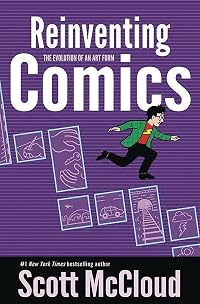
"In 1993, Scott McCloud tore down the wall between high and low culture with the acclaimed international hit Understanding Comics, a massive comic book that explored the inner workings of the world's most misunderstood art form. Now, McCloud takes comics to the next level, charting twelve different revolutions in how comics are created, read, and perceived today, and how they're poised to conquer the new millennium." "Part One of this fascinating and in-depth book includes: the life of show more comics as an art form and as literature; the battle for creators' rights; reinventing the business of comics; the volatile and shifting public perceptions of comics; and sexual and ethnic representation in comics." "Then in Part Two, McCloud paints a picture of comics' digital revolutions, including: the intricacies of digital production; the exploding world of online delivery; and the ultimate challenges of the infinite digital canvas."--Jacket. show lessTags
Recommendations


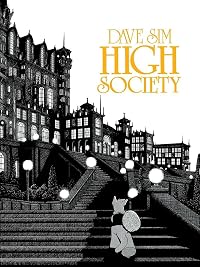
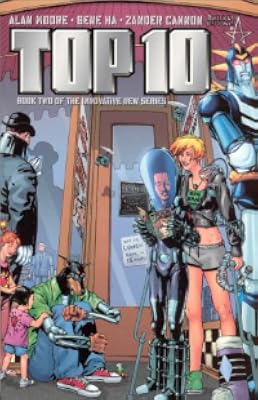
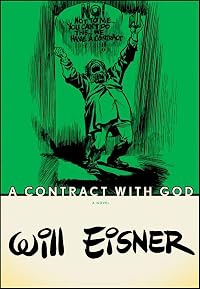
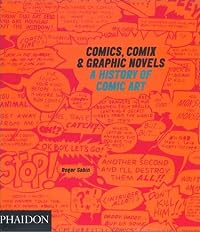







Member Recommendations

Member Reviews
As with the first book in Scott McCloud's trilogy on comics, I read this at the same time as my teenage son. About halfway through, though, I lost interest because the computer technology discussed (the book was originally published in 2000) was out of date and while some predictions about the future of digital comics were fairly accurate, a lot of then-un-forseen, and thus un-mentioned, technology has developed such as Wi-Fi and smartphones and tablets. Perhaps I would have enjoyed it more if I was a computer geek -- and if it had been a newer, updated version (which has yet to be done, and certainly should be).
I enjoyed this book, but much of it is very dated simply because it was very topical. Other works by Scott mcCloud about comics as a literary and art form like "Understanding Comics" seem to withstand the passage of time better for me personally. This work speaks more about how technology has changed comics, and much of the speculation he details came to pass in the years since the books publication.
Not quite as tightly composed or as rich as his first book--and he is the first to admit so, in his introduction--this book is nevertheless a necessary and almost-equally brilliant expansion on the possibilities of graphic narrative. What is most surprising, though, is that McCloud is so aware of his medium and so quick to grasp the new directions graphic narrative can head and have gone in a digital age that recents books on this subject are still echoing his ideas--a decade after he wrote this!
Scott McCloud's Reinventing Comics: How Imagination and Technology Are Revolutionizing an Art Form builds upon his 1993 work, Understanding Comics, to further explore the role of comics in culture and to examine what role the Internet and digital technology might play in comics. Though he wrote in 2000 and some of the ideas he describes have come to pass, the basic theories he elucidates remain useful as they encourage comics readers and makers to think beyond the limitations of print or other forms of media. McCloud identifies twelve key developments from the late 1980s through the period in which he wrote (many of which continue to develop 18 years later): Comics as Literature; Comics as Art; Creators' Rights; Industry Innovation; show more Public Perception; Industrial Scrutiny; Gender Balance; Minority Representation; Diversity of Genre; Digital Production; Digital Delivery; and, Digital Comics. His examination of the first nine establishes the parameters by which he explores the last three. This examination is particularly useful both for those looking to break into the comic field and those studying it within academia. show less
Interesting, but dated, but interesting because of that--he was certainly ahead of many in imagining ways computers/the internet could change things. Though as deftly handled, the subject of this book wasn't nearly as compelling to me as his earlier Understanding Comics, and I would probably have survived nicely if I'd never read this one--but would really regret not having read the first.
(Note: 5 stars = amazing, wonderful, 4 = very good book, 3 = decent read, 2 = disappointing, 1 = awful, just awful. I'm fairly good at picking for myself so end up with a lot of 4s).
(Note: 5 stars = amazing, wonderful, 4 = very good book, 3 = decent read, 2 = disappointing, 1 = awful, just awful. I'm fairly good at picking for myself so end up with a lot of 4s).
Although this may seem a bit dated because of what it says about the state of the comics industry and technology, that can be overlooked (hey, it was 2000) in light of more important issues raised in this graphic novel - the history of comics, censorship and the freedom to read, how industry has shaped comics available to the masses, how technology is changing things, connecting the artist to the reader, defining art - all this and much more, plus a good bibliography. I couldn't put it down and feel I know more about the medium as a whole. I have added a lot of books to my to-read list because of this book. I hope he comes out with another more updated version!
This should be required reading for librarians who are getting acquainted show more with comics/graphic novels. show less
This should be required reading for librarians who are getting acquainted show more with comics/graphic novels. show less
Better as a cultural artefact than anything else (though I did occasionally enjoy certain historical tidbits). Perhaps this would have been more hard-hitting if I had read it when it was published in 2000, but half-assed discussions of diversity and cutting edge technology like CD-ROMs makes it woefully obsolete (and the writing wasn't anywhere near as engaging as its predecessor). Understanding Comics needs an update just because I'm interested in his take on the subject matter now; this is in dire need of an update for it to maintain any measurable relevance.
*******
Counting as my (FINAL!) Panels Read Harder item for a book about comics.
*******
Counting as my (FINAL!) Panels Read Harder item for a book about comics.
Members
- Recently Added By
Lists

Recommended Comics / Graphic Novels
595 works; 122 members

Bret Victor's Five-Star List
46 works; 5 members
Author Information

61+ Works 11,026 Members
Scott McCloud was born Scott McLeod on June 10, 1960 in Boston. He decided he wanted to be a comics artist in 1975. He attended and graduated from Syracuse University with a Bachelor of Fine Arts degree in 1982. He created the light-hearted science fiction/superhero comic book series Zot! in 1984. His other print comics include Destroy!!, the show more graphic novel The New Adventures of Abraham Lincoln, 12 issues writing DC Comics' Superman Adventures, and the three-issue limited series Superman: Strength. He is best known as a comics theorist following the publication in 1993 of Understanding Comics, a wide-ranging exploration of the definition, history, vocabulary, and methods of the medium of comics, itself in comics form. He created a comic book that formed the press release introducing Google's web browser, Google Chrome, which was published on September 1, 2008. McCloud was the principal author of the Creator's Bill of Rights, a 1988 document with the stated aim of protecting the rights of comic book creators and help aid against the exploitation of comic artists. In 2015, he made The New York Times Best Seller List with his title The Sculptor. (Bowker Author Biography) show less
Series

Belongs to Publisher Series
Work Relationships
Is contained in
Common Knowledge
- Canonical title
- Reinventing Comics
- Original title
- Reinventing Comics
- Original publication date
- 2000
- People/Characters
- Scott McCloud
- Blurbers
- Miller, Frank; Wright, Will; Gaiman, Neil
Classifications
- Genres
- Nonfiction, Graphic Novels & Comics, Literature Studies and Criticism, Technology
- DDC/MDS
- 741.5 — Arts & recreation Drawing & decorative arts Drawing Comic books, graphic novels, fotonovelas, cartoons, caricatures, comic strips
- LCC
- PN6710 .M333 — Language and Literature Literature (General) Literature (General) Collections of general literature Comic books, strips, etc.
- BISAC
Statistics
- Members
- 1,231
- Popularity
- 20,176
- Reviews
- 14
- Rating
- (3.59)
- Languages
- 6 — English, French, German, Italian, Spanish, Portuguese (Portugal)
- Media
- Paper
- ISBNs
- 13
- UPCs
- 1
- ASINs
- 5