
An Introduction to Zen Buddhism
by D. T. Suzuki
On This Page
Description
One of the world's leading authorities on Zen Buddhism, D. T. Suzuki was the author of more than a hundred works on the subject in both Japanese and English, and was most instrumental in bringing the teachings of Zen Buddhism to the attention of the Western world. Written in a lively, accessible, and straightforward manner, An Introduction to Zen Buddhism is illuminating for the serious student and layperson alike. Suzuki provides a complete vision of Zen, which emphasizes self-understanding show more and enlightenment through many systems of philosophy, psychology, and ethics. With a foreword by the renowned psychiatrist Dr. Carl Jung, this volume has been generally acknowledged a classic introduction to the subject for many years. It provides, along with Suzuki's Essays and Manual of Zen Buddhism, a framework for living a balanced and fulfilled existence through Zen. show lessTags
Recommendations




























Member Reviews
The recurring problem with books on buddhism, and zen in particular, is the axiomatic view of mistaking the finger pointing to the moon for the moon. By abhorring explanation and with striving to become enlightened being a major obstacle preventing it, it seems always that the more you try to grasp it, the more it slips away, rendering the very existence of these books paradoxical. Suzuki attacks this problem head on in a way that's less slippery than in many other books on the topic and for a half century old book it still feels fresh as it refutes common criticisms (that are still levied against zen half a century later, so perhaps not so definitively).
Stressing the inter-compatibility of zen with other beliefs is a defensive stance show more that's perhaps less required these days as buddhism seems less 'alien' to the west. But as much as "mindfulness" has become a business friendly meme, it's also become too surface level to engage with the goals of zen as expressed in the Satori chapter. Familiarity has come at the cost of assimilation into a culture of self-help where any higher goals of the practice beyond 'feeling better' also disappear (McMindfulness: How Mindfulness Became the New Capitalist Spirituality covers this).
In that environment this very short introduction is a helpful finger pointing at the deeper meaning of the practices we ape. show less
Stressing the inter-compatibility of zen with other beliefs is a defensive stance show more that's perhaps less required these days as buddhism seems less 'alien' to the west. But as much as "mindfulness" has become a business friendly meme, it's also become too surface level to engage with the goals of zen as expressed in the Satori chapter. Familiarity has come at the cost of assimilation into a culture of self-help where any higher goals of the practice beyond 'feeling better' also disappear (McMindfulness: How Mindfulness Became the New Capitalist Spirituality covers this).
In that environment this very short introduction is a helpful finger pointing at the deeper meaning of the practices we ape. show less
‘An absolute affirmation must rise from the fiery crater of life itself.’
I liked the bit where, just to make a point, a Zen master cut a cat in half because a couple of the fellas couldn’t decide which side of the Monastery it should belong to. At least we’re reassured by Suzuki that the cat is surely on its way to Buddhahood.... I wonder where that cat is now.
I liked the bit where, just to make a point, a Zen master cut a cat in half because a couple of the fellas couldn’t decide which side of the Monastery it should belong to. At least we’re reassured by Suzuki that the cat is surely on its way to Buddhahood.... I wonder where that cat is now.
If you are expecting a logical explanation of Zen Buddhism in this book you will be sorely disappointed. Suzuki doesn't even attempt to do that (nor should he, in my opinion). Zen does not make sense at all if you approach it that way.
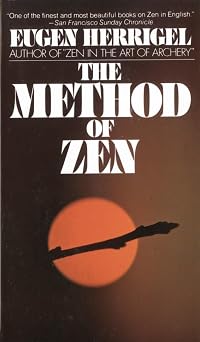
This book is a classic, but I don't recommend reading it as the first book on Zen (Herrigel's approach would probably be more useful for the Western readers), nor do I think it should be read as the last book. It is, after all, an introduction and doesn't try to be more than that.
This book is a classic, but I don't recommend reading it as the first book on Zen (Herrigel's approach would probably be more useful for the Western readers), nor do I think it should be read as the last book. It is, after all, an introduction and doesn't try to be more than that.
Very influential in popularizing Zen in the west. From my further reading I feel it represents very much Suzuki's personal interpretation of the Zen tradition, but it has its own place in religious history for introducing many westerners to Zen
One of the world’s leading authorities on Zen Buddhism, D. T. Suzuki was the author of more than a hundred works on the subject in both Japanese and English, and was most instrumental in bringing the teachings of Zen Buddhism to the attention of the Western world. Written in a lively, accessible, and straightforward manner, An Introduction to Zen Buddhism is illuminating for the serious student and layperson alike. Suzuki provides a complete vision of Zen, which emphasizes self-understanding and enlightenment through many systems of philosophy, psychology, and ethics. With a foreword by the renowned psychiatrist Dr. Carl Jung, this volume has been generally acknowledged a classic introduction to the subject for many years. It show more provides, along with Suzuki’s Essays and Manual of Zen Buddhism, a framework for living a balanced and fulfilled existence through Zen. show less
I thought Christopher Hitchens’ book needlessly ripped into some religions, but after reading this junk I can understand the impulse. Neither the writing nor the philosophy as described seem all that worthy. I could be wrong. There’s probably a good book out there that makes Zen make sense. This ain’t it.
(Full review at my blog)
(Full review at my blog)
With an introduction from Dr. Jung, a small text in itself. To Suzuki's brilliant text. It is my understanding that this introduction by Dr. Jung is consider a classic for Zen in general. Suzuki does write this text for the beginner.
Explains the oriental mind, along with the proncipals of Zen. In such a way, that we of western thought actually have a chance to relate to what is required in our quest to understand Zen Buddhism. This book is for the lay-person and the philosophy major. This book provides a very complete outline of Zen.
Explains the oriental mind, along with the proncipals of Zen. In such a way, that we of western thought actually have a chance to relate to what is required in our quest to understand Zen Buddhism. This book is for the lay-person and the philosophy major. This book provides a very complete outline of Zen.
Members
- Recently Added By
Author Information

152+ Works 7,007 Members
A student of the Zen master Shaku Soen, who addressed the 1893 World's Parliament of Religions held in Chicago, D. T. Suzuki did more to introduce Zen to Westerners than any other representative of that tradition. Shaku Soen sent the young Suzuki to America in 1897 to help Paul Carus translate the Chinese text the Dao De Jing. Suzuki remained in show more America for about a decade, working at Carus' Open Court Publishing Company outside Chicago. After Suzuki returned to Japan, he married an American woman, Beatrice Lane, in 1911, and they began publishing an English journal, The Eastern Buddhist, in 1921. During this time in Japan, Suzuki translated into Japanese a number of Swedenborgian texts. He traveled to China in 1934, and he went to London in 1936 to attend the World Congress of Faiths. Suzuki recognized that the West had much to offer the East, but like Swami Vivekananda, he was convinced that the East had much to offer the West in its religion and philosophy. On this basis he was motivated to write about Zen in English. Suzuki wrote about 30 books in English and many more in Japanese. Suzuki's first books in English were a translation of Ashvaghosha's Discourse on the Awakening of Faith in the Mahayana (1900) and Outlines of Mahayana Buddhism (1907). A practitioner of Rinzai Zen Buddhism, Suzuki, in his writings about the ultimate experience of satori and the meditative use of koans, made Zen terms almost household words in the United States. In the early part of the twentieth century, Suzuki devoted himself to the propagation of Zen via his writings. After World War II he became a noted lecturer on Zen at American and European universities. That Suzuki's work was effective can be seen in the fact that Zen was picked up in the 1950s by California beatniks, producing what was termed Beat Zen. From that time on, Americans increasingly began to go to Japan to study Zen, and more Zen masters began to come to the United States to teach. The earliest institutions devoted to the practice of Zen in America were established in San Francisco in 1928, in Los Angeles in 1929, and in New York City in 1931. Zen centers remain an important part of the American urban scene, and several of them have established rural Zen retreat centers. (Bowker Author Biography) show less
Some Editions
Series
Belongs to Publisher Series
鈴木大拙禅選集 (7)
Common Knowledge
- Canonical title*
- 禅仏教入門
- Original title
- An Introduction to Zen Buddhism
- Alternate titles*
- Die grosse Befreiung
- Original publication date
- 1914 (as magazine articles) (as magazine articles); 1934-08 (book) (book); 1954 (English translation) (English translation)
- First words
- Buddhism in its course of development has completed a form which distinguishes itself from its so-called primitive or original type—so greatly, indeed, that we are justified in emphasizing its historical division into two s... (show all)chools, Hinayana and Mahayana, or the Lesser Vehicle and the Greater Vehicle of salvation.
- Last words
- (Click to show. Warning: May contain spoilers.)The unique position maintained by the Zen sect among other Buddhist sects in Japan and China throughout the history of Buddhism in the Far East is no doubt due to the institution known as the Meditation Hall, or Zendo.
*Some information comes from Common Knowledge in other languages. Click "Edit" for more information.
Classifications
- Genres
- Religion & Spirituality, Nonfiction, Philosophy, General Nonfiction
- DDC/MDS
- 294.3927 — Religion Other religions Dharmic religions Buddhism Buddhism - Branches and schools Mahayana Buddhism Zen Buddhism
- LCC
- BQ9265.4 .S95 — Philosophy, Psychology and Religion Buddhism Buddhism Modifications, schools, etc. Special modifications, sects, etc. Zen Buddhism
- BISAC
Statistics
- Members
- 1,293
- Popularity
- 18,932
- Reviews
- 11
- Rating
- (3.78)
- Languages
- 9 — Chinese, Dutch, English, French, German, Italian, Japanese, Spanish, Portuguese (Portugal)
- Media
- Paper, Audiobook, Ebook
- ISBNs
- 29
- ASINs
- 25