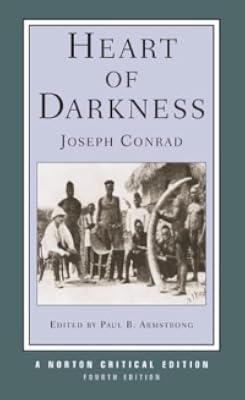
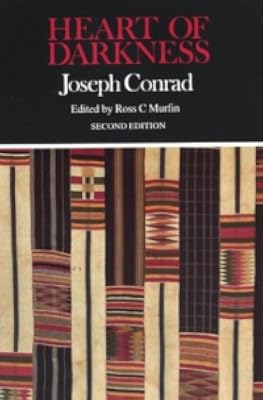
Heart of Darkness [Norton Critical Edition]
by Joseph Conrad
On This Page
Description
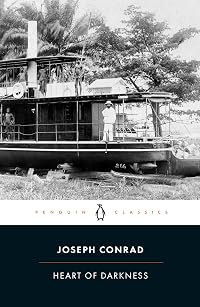
The Fourth Edition is again based on Robert Kimbrough's meticulously re-edited text. Missing words have been restored and the entire novel has been re-punctuated in accordance with Conrad's style. The result is the first published version of Heart of Darkness that allows readers to hear Marlow's voice as Conrad heard it when he wrote the story. "Backgrounds and Contexts" provides readers with a generous collection of maps and photographs that bring the Belgian Congo to life. Textual show more materials, topically arranged, address nineteenth-century views of imperialism and racism and include autobiographical writings by Conrad on his life in the Congo. New to the Fourth Edition is an excerpt from Adam Hochschild's recent book, King Leopold's Ghost, as well as writings on race by Hegel, Darwin, and Galton. "Criticism" includes a wealth of new materials, including nine contemporary reviews and assessments of Conrad and Heart of Darkness and twelve recent essays by Chinua Achebe, Peter Brooks, Daphne Erdinast-Vulcan, Edward Said, and Paul B. Armstrong, among others. Also new to this edition is a section of writings on the connections between Heart of Darkness and the film Apocalypse Now by Louis K. Greiff, Margot Norris, and Lynda J. Dryden. A Chronology and Selected Bibliography are also included. About the Series: No other series of classic texts equals the caliber of the Norton Critical Editions. Each volume combines the most authoritative text available with the comprehensive pedagogical apparatus necessary to appreciate the work fully. Careful editing, first-rate translation, and thorough explanatory annotations allow each text to meet the highest literary standards while remaining accessible to students. Each edition is printed on acid-free paper and every text in the series remains in print. Norton Critical Editions are the choice for excellence in scholarship for students at more than 2,000 universities worldwide. show lessTags
Recommendations








Member Reviews
If ever a book of Novella length (77 pages) deserves the Norton Critical Edition treatment it is Heart of Darkness. The book runs to over 500 pages and my second hand edition was full of post-it notes in nine different colours. There is no evidence who the literature student was who posted all the notes and so when I removed them all I had a perfectly clean copy. It was no longer clean when I had finished it, but I did use a pencil (a stadilo pencil 160 coming from the Czech Republic).
My last review of an English language book was the penguin edition of Heart of Darkness and LolaWalser (of course) posted a comment recommending that I look for criticism of the book by African Writers as white people are constantly finding excuses for show more Conrad's strident racism. The norton critical edition has Achebe's essay: An Image of Africa: Racism in Conrad's Heart of Darkness, but all the other critical essays are from white authors, some of whom do address Achebe's concerns. In fact J. Hillis Miller asks the question 'Should we read "Heart of Darkness"
"Heart of Darkness has often received a heavy sentence from its critics. It has been condemned often in angry terms, as racist or sexist, sometimes in the same essay as both.................Nevertheless, according to the paradox I have already mentioned, you could only be sure about this by reading the novella yourself, therefore putting yourself, if these critics are right, in danger of becoming sexist, racist, and Eurocentric yourself.
Chinua Achebe says:
The real question is the dehumanisation of Africa and Africans, which this age long attitude has fostered and continues to foster in this world. And the question is whether a novel which celebrates this dehumanisation, which depersonalises a portion of the human race, can be called a great work of art. My answer is: No, it cannot...........................Whatever Conrad's problems were, you might say he is safely dead. Quite true. Unfortunately his heart of darkness plagues us still. Which is why an offensive and deplorable book can be described by a serious scholar as "among the half dozen greatest short story novels in the English language." And why it is today perhaps the most commonly prescribed novel in twentieth-century literature courses in English Departments of American Universities.
Achebe originally called Conrad a bloody racist, but toned this down in a later revision as a thoroughgoing racist. He says:
Conrad saw and condemned the evil of imperial exploitation, but was strangely unaware of the racism on which it sharpened its iron tooth.
In my opinion, the dichotomy of the book is that from a late 20th century perspective Achebe was correct in everything he says, however Conrad was writing his novel in 1902 some seventy years earlier, when the term racism had not even been invented. By all accounts he was conservative in his outlook, but this did not stop from him being horrified by what he saw and publishing a novel which at the time expressed liberal views. Paul B Armstrong says:
This conflict is only the latest chapter in a long history of disagreement about whether to regard 'Heart of Darkness" as a daring attack on imperialism or a reactionary purveyor of colonial stereotypes.
So we come back to the question of whether we should read this book. Speaking for myself I would want to read and re-read a book that has caused so much controversy. Being a white male I could not be personally offended by Conrads depiction of African natives, and although recognising it as racist from a contemporary viewpoint I am in a position to understand Conrad's viewpoint which reflects the culture and attitudes of his times. I do also of course understand why some people would choose not to read it.
The Norton Critical edition includes textual variants to the original novella and there are over 100 pages devoted to Backgrounds and Contents, which deal with Imperialism and the Belgian Congo and there is a section on 19th century attitudes towards race. Conrad and the Congo describes Conrad's own travels down the river by excerpts from his diary and selected letters. There is 200 pages of criticism ranging from contemporary responses to essays comparing themes in Hearts of Darkness to the film Apocalypse Now. It does lack criticism from black writers (only Achebe's essay is featured), but there is enough to enjoy and perhaps study Conrad's novella. 5 stars. show less
My last review of an English language book was the penguin edition of Heart of Darkness and LolaWalser (of course) posted a comment recommending that I look for criticism of the book by African Writers as white people are constantly finding excuses for show more Conrad's strident racism. The norton critical edition has Achebe's essay: An Image of Africa: Racism in Conrad's Heart of Darkness, but all the other critical essays are from white authors, some of whom do address Achebe's concerns. In fact J. Hillis Miller asks the question 'Should we read "Heart of Darkness"
"Heart of Darkness has often received a heavy sentence from its critics. It has been condemned often in angry terms, as racist or sexist, sometimes in the same essay as both.................Nevertheless, according to the paradox I have already mentioned, you could only be sure about this by reading the novella yourself, therefore putting yourself, if these critics are right, in danger of becoming sexist, racist, and Eurocentric yourself.
Chinua Achebe says:
The real question is the dehumanisation of Africa and Africans, which this age long attitude has fostered and continues to foster in this world. And the question is whether a novel which celebrates this dehumanisation, which depersonalises a portion of the human race, can be called a great work of art. My answer is: No, it cannot...........................Whatever Conrad's problems were, you might say he is safely dead. Quite true. Unfortunately his heart of darkness plagues us still. Which is why an offensive and deplorable book can be described by a serious scholar as "among the half dozen greatest short story novels in the English language." And why it is today perhaps the most commonly prescribed novel in twentieth-century literature courses in English Departments of American Universities.
Achebe originally called Conrad a bloody racist, but toned this down in a later revision as a thoroughgoing racist. He says:
Conrad saw and condemned the evil of imperial exploitation, but was strangely unaware of the racism on which it sharpened its iron tooth.
In my opinion, the dichotomy of the book is that from a late 20th century perspective Achebe was correct in everything he says, however Conrad was writing his novel in 1902 some seventy years earlier, when the term racism had not even been invented. By all accounts he was conservative in his outlook, but this did not stop from him being horrified by what he saw and publishing a novel which at the time expressed liberal views. Paul B Armstrong says:
This conflict is only the latest chapter in a long history of disagreement about whether to regard 'Heart of Darkness" as a daring attack on imperialism or a reactionary purveyor of colonial stereotypes.
So we come back to the question of whether we should read this book. Speaking for myself I would want to read and re-read a book that has caused so much controversy. Being a white male I could not be personally offended by Conrads depiction of African natives, and although recognising it as racist from a contemporary viewpoint I am in a position to understand Conrad's viewpoint which reflects the culture and attitudes of his times. I do also of course understand why some people would choose not to read it.
The Norton Critical edition includes textual variants to the original novella and there are over 100 pages devoted to Backgrounds and Contents, which deal with Imperialism and the Belgian Congo and there is a section on 19th century attitudes towards race. Conrad and the Congo describes Conrad's own travels down the river by excerpts from his diary and selected letters. There is 200 pages of criticism ranging from contemporary responses to essays comparing themes in Hearts of Darkness to the film Apocalypse Now. It does lack criticism from black writers (only Achebe's essay is featured), but there is enough to enjoy and perhaps study Conrad's novella. 5 stars. show less
We begin with two rivers of contradiction, the Thames and the Congo. Marlow's journey begins and ends on the Thames.
After reading Heart of Darkness did you ask yourself, "what is the definition of civilized?" I know I did.
Also, I found myself paying attention to light and dark imagery throughout Heart of Darkness. There were contradiction of light and darkness - the sun setting versus the lighthouse's beam and the glare of the stars. Light needs the dark in order to be its brightest. Night falling has an impact on people and places. All in all, the plot was slow and plodding. I kept waiting for something drastic to happen because I knew the horror could jump out and gnash its teeth any second. The pages leading up to the grand finale show more seemed nothing more than a vain attempt to rattle the nerves.
I know many people who couldn't stand Heart of Darkness, but I have to offer this as an alternative. Why? Why is it so hated? I can remember reading a book about a woman working up the courage to commit suicide. I cared to little for the character that by the end of the book I was wishing she would just get it over with! I wanted her kill herself. Instead of saying I hated the book because I wanted the main character dead, I applauded the author. The power of the writing forced me to feel that strongly about a character. Maybe, just maybe, Conrad was forcing his audience to hate much in the same way. show less
After reading Heart of Darkness did you ask yourself, "what is the definition of civilized?" I know I did.
Also, I found myself paying attention to light and dark imagery throughout Heart of Darkness. There were contradiction of light and darkness - the sun setting versus the lighthouse's beam and the glare of the stars. Light needs the dark in order to be its brightest. Night falling has an impact on people and places. All in all, the plot was slow and plodding. I kept waiting for something drastic to happen because I knew the horror could jump out and gnash its teeth any second. The pages leading up to the grand finale show more seemed nothing more than a vain attempt to rattle the nerves.
I know many people who couldn't stand Heart of Darkness, but I have to offer this as an alternative. Why? Why is it so hated? I can remember reading a book about a woman working up the courage to commit suicide. I cared to little for the character that by the end of the book I was wishing she would just get it over with! I wanted her kill herself. Instead of saying I hated the book because I wanted the main character dead, I applauded the author. The power of the writing forced me to feel that strongly about a character. Maybe, just maybe, Conrad was forcing his audience to hate much in the same way. show less
Joseph Conrad’s Heart of Darkness takes readers on a journey up the Congo River and into the middle of a postcolonial wrangle. One of the things at odds in this book is the European thought process of what is considered civilized versus what is uncivilized. The colonizers, also known as the cultured and proper Europeans, exist is a world where the African people and culture that they have colonized is understood only in negative terms. The light and dark imagery, and white versus black race illustrations that Conrad presents depict a clear division of power and control. The white colonizers hold all the power while the black “creatures” (Conrad 17) are beaten and starved into submission by their handlers.
Some readers might show more believe, because of the nature of repetition in literature, that the differences between East and West are as plain as Conrad describes, the savage in contrast to the cultivated. Others might look back on history and see the dampening of the African culture as necessary for civilized advancements instead of dishonorable and inhuman. Still others might agree with the treatment of the marginalized in this book as necessary for the greater good. A close read of Heart of Darkness might also expose another meaning to Marlow’s account of that trip up river. Perhaps Conrad wants the reader to question the validity of imperialism. Noorbakhsh Hooti and Masoud Mousaabad posit this and suggest that Conrad’s use of irony “leaves something unveiled…for the reader which does not necessarily go with the positive side of imperialism, but tries to help the reader to unveil the reality of imperialistic practices” (63). An example can be found in Chapter 1 as Marlow waits in the Station. “Strings of dusty niggers with splay feet arrived and departed; a stream of manufactured goods, rubbishy cottons, beads, and brass-wire set into the depths of darkness, and in return came a precious trickle of ivory” (Conrad 18), indicating that the primary concern, the primary goal, is to obtain more ivory even when the trade is for human beings here described as something below mankind. Here Conrad unveils the domination of a people in the name of colonization.
Conrad also uses the environment of the Congo to present a dark image of Africa that reflects back upon the actions of the colonizers. From Marlow’s first encounter with the Station that he describes as a “scene of inhabited devastation” (15) to the dark wilderness he experiences as he travels up river, never is there a period of calm or order that might be associated with European civilization. The environment Conrad describes is in exact disagreement with a civilized society. “It manifests as an unrestrained savagery which by its very nature threatens as a massive presence that will block the imposition of civilized order” (Brown). The darkness seems to deepen and the environment appears to envelope anyone or anything that attempts to change it. Because Marlow tells this story as he sits on the Thames River readers can surmise the similarities between the Congo and the Thames, and on a greater level Europe and Africa.
So what is one to think of Conrad after reading Heart of Darkness? Is he a racist and pro-imperialism or does he tell his story through Marlow in an attempt to expose the injustices of this system of dominance. Michael Lackey points out that if it can be “shown that Marlow is a racist, then we can conclude that Conrad is a racist” (1), because the two speak as one throughout the novel. Marlow is never at ease though with the events that unfold on his journey, perhaps callous and indifferent but never really okay with his surroundings. Marlow’s restlessness and dwindling enthusiasm show that he is as trapped and disempowered as the oppressed African’s of the Congo. show less
Some readers might show more believe, because of the nature of repetition in literature, that the differences between East and West are as plain as Conrad describes, the savage in contrast to the cultivated. Others might look back on history and see the dampening of the African culture as necessary for civilized advancements instead of dishonorable and inhuman. Still others might agree with the treatment of the marginalized in this book as necessary for the greater good. A close read of Heart of Darkness might also expose another meaning to Marlow’s account of that trip up river. Perhaps Conrad wants the reader to question the validity of imperialism. Noorbakhsh Hooti and Masoud Mousaabad posit this and suggest that Conrad’s use of irony “leaves something unveiled…for the reader which does not necessarily go with the positive side of imperialism, but tries to help the reader to unveil the reality of imperialistic practices” (63). An example can be found in Chapter 1 as Marlow waits in the Station. “Strings of dusty niggers with splay feet arrived and departed; a stream of manufactured goods, rubbishy cottons, beads, and brass-wire set into the depths of darkness, and in return came a precious trickle of ivory” (Conrad 18), indicating that the primary concern, the primary goal, is to obtain more ivory even when the trade is for human beings here described as something below mankind. Here Conrad unveils the domination of a people in the name of colonization.
Conrad also uses the environment of the Congo to present a dark image of Africa that reflects back upon the actions of the colonizers. From Marlow’s first encounter with the Station that he describes as a “scene of inhabited devastation” (15) to the dark wilderness he experiences as he travels up river, never is there a period of calm or order that might be associated with European civilization. The environment Conrad describes is in exact disagreement with a civilized society. “It manifests as an unrestrained savagery which by its very nature threatens as a massive presence that will block the imposition of civilized order” (Brown). The darkness seems to deepen and the environment appears to envelope anyone or anything that attempts to change it. Because Marlow tells this story as he sits on the Thames River readers can surmise the similarities between the Congo and the Thames, and on a greater level Europe and Africa.
So what is one to think of Conrad after reading Heart of Darkness? Is he a racist and pro-imperialism or does he tell his story through Marlow in an attempt to expose the injustices of this system of dominance. Michael Lackey points out that if it can be “shown that Marlow is a racist, then we can conclude that Conrad is a racist” (1), because the two speak as one throughout the novel. Marlow is never at ease though with the events that unfold on his journey, perhaps callous and indifferent but never really okay with his surroundings. Marlow’s restlessness and dwindling enthusiasm show that he is as trapped and disempowered as the oppressed African’s of the Congo. show less
Dark is the right word for this book. On every level I found it depressing from Conrad's pandering to melodrama right through to the subject matter. Not a single good thing happens in the entire episode. The whole is dark; the people, the weather, the water, the minds and motivations of the central characters. If Conrad actually speaks through the storyteller in this book, then he was one hell of a miserable, ethnocentric guy.
I didn't enjoy it one bit. Sure, the subject matter was dark but then I've read novels that are dark (take Roy's God of Small Things as one example) but captivate through their style. Conrad has about as much style as a B-grade 1930s horror movie. Everything is over-exaggerated. It can't just be a tree. It has to show more be a towering figure of doom wrought throughout with the shimmering evanescence of the myriad leaves... or some such laborious description. The characters all struggle with their own selves as if this is all we were born to do. You want to smack them all in the face and just say "Lighten up will you?!" at every turn of the page. This gives it all a very unrealistic quality. After all, no one takes themselves THAT seriously even if we are all prone to wonder at ourselves. The effect is to create a flat two-dimensional array of characters.
As a glimpse into the world of savagery it could be described as "interesting" provided you yourself possess your own heart of darkness. I'm desperately hoping that Conrad ironically intended the image of savagery to be painted by the colonisers and not the colonised. That would be nicely done. But I've a nasty feeling that he really did consider Africans as savages and himself as the noble higher race. If so, this book is appalling in its worldview, something I've since discovered others, including no less than Achebe, have been critical of. show less
I didn't enjoy it one bit. Sure, the subject matter was dark but then I've read novels that are dark (take Roy's God of Small Things as one example) but captivate through their style. Conrad has about as much style as a B-grade 1930s horror movie. Everything is over-exaggerated. It can't just be a tree. It has to show more be a towering figure of doom wrought throughout with the shimmering evanescence of the myriad leaves... or some such laborious description. The characters all struggle with their own selves as if this is all we were born to do. You want to smack them all in the face and just say "Lighten up will you?!" at every turn of the page. This gives it all a very unrealistic quality. After all, no one takes themselves THAT seriously even if we are all prone to wonder at ourselves. The effect is to create a flat two-dimensional array of characters.
As a glimpse into the world of savagery it could be described as "interesting" provided you yourself possess your own heart of darkness. I'm desperately hoping that Conrad ironically intended the image of savagery to be painted by the colonisers and not the colonised. That would be nicely done. But I've a nasty feeling that he really did consider Africans as savages and himself as the noble higher race. If so, this book is appalling in its worldview, something I've since discovered others, including no less than Achebe, have been critical of. show less
Book Circle Reads 19
Rating: 3 stars of five
The Book Description: More than a century after its publication (1899), Heart of Darkness remains an indisputably classic text and arguably Conrad's finest work.
This extensively revised Norton Critical Edition includes new materials that convey nineteenth-century attitudes toward imperialism as well as the concerns of Conrad's contemporaries about King Leopold's exploitation of his African domain. New to the Fourth Edition are excerpts from Adam Hochschild's recent book, King Leopold's Ghost, and from Sir Roger Casement's influential "Congo Report" on Leopold's atrocities. "Backgrounds and Contexts" also provides readers with a collection of photographs and a map that bring the Congo Free show more State to life.
A new section, "Nineteenth-Century Attitudes toward Race," includes writings by, among others, Hegel, Darwin, and Sir Francis Galton. New essays by Patrick Brantlinger, Marianna Torgovnik, Edward W. Said, Hunt Hawkins, Anthony Fothergill, and Paul Armstrong debate Chinua Achebe's controversial indictment of the novel's depiction of Africans and offer differing views about whether Conrad's beliefs about race were progressive or retrograde.
A rich selection of writings by Conrad on his life in the Congo is accompanied by extensive excerpts from his essays about art and literature. "Criticism" presents a wealth of new materials on Heart of Darkness, including contemporary responses by Henry James, E.M. Forster, Ford Madox Ford, and Virginia Woolf. Recent critical assessments by Peter Brooks, Jeremy Hawthorn, Daphna Erdinast-Vulcan, Andrew Michael Roberts, J. Hillis Miller, and Lissa Schneider cover a ranger of topics, from narrative theory to philosophy and sexuality. Also new to the Fourth Edition is a selection of writings on the connections between the novel and the film Apocalypse Now.
This Norton Critical Edition is again based on Robert Kimbrough's meticulously re-edited text of the novel. An expanded Textual Appendix allows the reader to follow Conrad's revisions at different stages of the creative process. A Chronology has been added, and the Selected Bibliography has been revised and updated.
My Review: Had I not read the critical edition of this book, I wouldn't have given it three stars. It's dense and chewy prose. It's a bleak story. It's Conrad's most famous and most lasting work because it's so astounding that a man of his era could be this perceptive and say so publicly! Oh, there was much tut-tutting at the time about the awfulness of Congo Free State's condition, but it was disingenuous at best and cynically political at worst. Conrad wrote a human response to a human horror, and he did so by making a White Man out to be Wrong!!!!!
Cue gasps! And start the applause.
But it is a slog to read, short though it might be. Simply put, Conrad spoke English as a third, yes THIRD language. He did an extraordinary thing, writing in his third language, but to me it felt like it was his third about half the time.
Still and all, I am quite pleased to have read the Norton Critical Edition, and to have a real sense of the book's revolutionary place. Quite a good use of my limited number of eyeblinks. show less
Rating: 3 stars of five
The Book Description: More than a century after its publication (1899), Heart of Darkness remains an indisputably classic text and arguably Conrad's finest work.
This extensively revised Norton Critical Edition includes new materials that convey nineteenth-century attitudes toward imperialism as well as the concerns of Conrad's contemporaries about King Leopold's exploitation of his African domain. New to the Fourth Edition are excerpts from Adam Hochschild's recent book, King Leopold's Ghost, and from Sir Roger Casement's influential "Congo Report" on Leopold's atrocities. "Backgrounds and Contexts" also provides readers with a collection of photographs and a map that bring the Congo Free show more State to life.
A new section, "Nineteenth-Century Attitudes toward Race," includes writings by, among others, Hegel, Darwin, and Sir Francis Galton. New essays by Patrick Brantlinger, Marianna Torgovnik, Edward W. Said, Hunt Hawkins, Anthony Fothergill, and Paul Armstrong debate Chinua Achebe's controversial indictment of the novel's depiction of Africans and offer differing views about whether Conrad's beliefs about race were progressive or retrograde.
A rich selection of writings by Conrad on his life in the Congo is accompanied by extensive excerpts from his essays about art and literature. "Criticism" presents a wealth of new materials on Heart of Darkness, including contemporary responses by Henry James, E.M. Forster, Ford Madox Ford, and Virginia Woolf. Recent critical assessments by Peter Brooks, Jeremy Hawthorn, Daphna Erdinast-Vulcan, Andrew Michael Roberts, J. Hillis Miller, and Lissa Schneider cover a ranger of topics, from narrative theory to philosophy and sexuality. Also new to the Fourth Edition is a selection of writings on the connections between the novel and the film Apocalypse Now.
This Norton Critical Edition is again based on Robert Kimbrough's meticulously re-edited text of the novel. An expanded Textual Appendix allows the reader to follow Conrad's revisions at different stages of the creative process. A Chronology has been added, and the Selected Bibliography has been revised and updated.
My Review: Had I not read the critical edition of this book, I wouldn't have given it three stars. It's dense and chewy prose. It's a bleak story. It's Conrad's most famous and most lasting work because it's so astounding that a man of his era could be this perceptive and say so publicly! Oh, there was much tut-tutting at the time about the awfulness of Congo Free State's condition, but it was disingenuous at best and cynically political at worst. Conrad wrote a human response to a human horror, and he did so by making a White Man out to be Wrong!!!!!
Cue gasps! And start the applause.
But it is a slog to read, short though it might be. Simply put, Conrad spoke English as a third, yes THIRD language. He did an extraordinary thing, writing in his third language, but to me it felt like it was his third about half the time.
Still and all, I am quite pleased to have read the Norton Critical Edition, and to have a real sense of the book's revolutionary place. Quite a good use of my limited number of eyeblinks. show less
I will be reading more of Joseph Conrad's work. English was his third language after Polish and French, and his writing is superb.
Heart of Darkness tells a story about colonialism in the Congo, but it is so much more than that. It is more about men's 'hearts of darkness' and what they become after they leave 'civilization'. Marlow is a steamship captain in search of Kurtz, who is one of the best ivory traders The Company has. It is said that Kurtz has become ill and The Company does not want to lose him because of his high productivity in obtaining ivory. But just how does Kurtz maintain his high productivity?
Kurtz isn't the only one to leave his morals behind when he leaves 'civilization'. The actions of The Company Men leave moral show more questions as well. Is it only the ladies, as Marlowe states, who try to uphold society's mores, or are they just deluded in thinking society, left to itself, has any morals?
"It's queer how out of touch with truth women are. They live in a world of their own, and there had never been anything like it, and never can be. It is too beautiful altogether, and if they were to set it up it would go to pieces before the first sunset."
This book is short but very complex. It is one that I'll definitely read again at some point to try to understand it a bit better. I'm still trying to figure out "The horror! The horror!" show less
Heart of Darkness tells a story about colonialism in the Congo, but it is so much more than that. It is more about men's 'hearts of darkness' and what they become after they leave 'civilization'. Marlow is a steamship captain in search of Kurtz, who is one of the best ivory traders The Company has. It is said that Kurtz has become ill and The Company does not want to lose him because of his high productivity in obtaining ivory. But just how does Kurtz maintain his high productivity?
Kurtz isn't the only one to leave his morals behind when he leaves 'civilization'. The actions of The Company Men leave moral show more questions as well. Is it only the ladies, as Marlowe states, who try to uphold society's mores, or are they just deluded in thinking society, left to itself, has any morals?
"It's queer how out of touch with truth women are. They live in a world of their own, and there had never been anything like it, and never can be. It is too beautiful altogether, and if they were to set it up it would go to pieces before the first sunset."
This book is short but very complex. It is one that I'll definitely read again at some point to try to understand it a bit better. I'm still trying to figure out "The horror! The horror!" show less
So, is Conrad a racist? Or does he simply reflect the thought-world and outlook of the European culture in which he lived?
Does he take Africa seriously, or does he simply use Africa as a foil to make Europe look advanced?
Does he mean that the line between light and darkness, good and evil divides continents, people, and classes of people, or does he mean that it divided the human heart, and every human heart--as Solzhenitzen says in his "Gulag Archipelago"?
Does he take Africa seriously, or does he simply use Africa as a foil to make Europe look advanced?
Does he mean that the line between light and darkness, good and evil divides continents, people, and classes of people, or does he mean that it divided the human heart, and every human heart--as Solzhenitzen says in his "Gulag Archipelago"?
Members
- Recently Added By
Lists

1001 Books You Must Read Before You Die
1,448 works; 1,137 members

Best of World Literature
437 works; 52 members

20th Century Literature
1,161 works; 55 members

Blue Pyramid 1,276 Best Books of All Time
1,248 works; 32 members

The College Board: 101 Great Books Recommended for College-Bound Readers
111 works; 7 members

Must read
30 works; 2 members
Best African Books
126 works; 46 members
Author Information

730+ Works 91,441 Members
Joseph Conrad is recognized as one of the 20th century's greatest English language novelists. He was born Jozef Konrad Nalecz Korzeniowski on December 3, 1857, in the Polish Ukraine. His father, a writer and translator, was from Polish nobility, but political activity against Russian oppression led to his exile. Conrad was orphaned at a young age show more and subsequently raised by his uncle. At 17 he went to sea, an experience that shaped the bleak view of human nature which he expressed in his fiction. In such works as Lord Jim (1900), Youth (1902), and Nostromo (1904), Conrad depicts individuals thrust by circumstances beyond their control into moral and emotional dilemmas. His novel Heart of Darkness (1902), perhaps his best known and most influential work, narrates a literal journey to the center of the African jungle. This novel inspired the acclaimed motion picture Apocalypse Now. After the publication of his first novel, Almayer's Folly (1895), Conrad gave up the sea. He produced thirteen novels, two volumes of memoirs, and twenty-eight short stories. He died on August 3, 1924, in England. (Bowker Author Biography) show less
Some Editions
Series
Belongs to Publisher Series
Work Relationships
Contains
Reference guide/companion to
Common Knowledge
- Canonical title
- Heart of Darkness [Norton Critical Edition]
- Original publication date
- 1902; 1899 (serialized in “'Blackwood’s Magazine”) (serialized in “'Blackwood’s Magazine”)
- People/Characters
- Charles Marlow; Kurtz
- Important places
- Africa
- Epigraph
- ...But the Dwarf answered: "No; something human is dearer to me than the wealth of all the world." -- GRIMM'S TALES
- First words
- The Nellie, a cruising yawl, swung to her anchor without a flutter of the sails and was at rest.
- Disambiguation notice
- Do Not Combine: This is a "Norton Critical Edition", it is a unique work with significant added material, including essays and background materials. Do not combine with other editions of the work. Please maintain the p... (show all)hrase "Norton Critical Edition" in the Canonical Title and Publisher Series fields.
Classifications
Statistics
- Members
- 3,399
- Popularity
- 4,970
- Reviews
- 22
- Rating
- (3.76)
- Languages
- English
- Media
- Paper, Audiobook, Ebook
- ISBNs
- 10
- ASINs
- 16