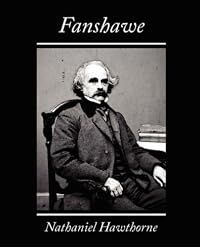
Fanshawe
by Nathaniel Hawthorne
On This Page
Description
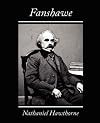
Hawthorne's first published novel, Fanshawe combines romantic themes with an engaging look at college life in the early nineteenth century. Critics have noted that the novel has strong autobiographical components and is likely a thinly fictionalized account of the writer's own experiences as a student at Bowdoin College..
Tags
Recommendations

























Member Reviews
I can't imagine anyone today reading this were it not this was by Nathaniel Hawthorne, who'd later write such classics as The Scarlet Letter and The House of Seven Gables. Note, that came later. When he wrote this he was barely out of college, he published it anonymously, then later would try to destroy every copy in existence. I'm not sorry he didn't succeed. I can imagine this, his first novel, is a goldmine for scholars of American literature.
And it's not really burn-worthy. I can see glimmers of the genius he'd later display in his novels and short stories. I first saw that in the confrontation between "the Angler" and Hugh Crombie: "Your good resolutions were always like cobwebs, and your evil habits like five-inch cables." Great show more line--and I can see some of the classic Hawthorne themes here concerning good and evil and redemption. But oh, the melodrama! And Ellen Langton is no Hester Prynne, but a rather dull, insipid, damsel-in-distress. There's also far too much tell, not show here--Hawthorne would get much, much better. I find I do enjoy even Jane Austen's Juvenalia--I think because she's my crack--there's something about her wit, her humor, that just tickles me. I think you need to feel about Hawthorne the way I do about Austen to really, really relish this novel and rate it highly. If for some weird reason this is your introduction to Hawthorne--please don't judge him by it. He would be appalled if you did. He's one of the true greats of American literature--but you wouldn't guess that on this basis. It took decades more of maturity to create The Scarlet Letter. show less
And it's not really burn-worthy. I can see glimmers of the genius he'd later display in his novels and short stories. I first saw that in the confrontation between "the Angler" and Hugh Crombie: "Your good resolutions were always like cobwebs, and your evil habits like five-inch cables." Great show more line--and I can see some of the classic Hawthorne themes here concerning good and evil and redemption. But oh, the melodrama! And Ellen Langton is no Hester Prynne, but a rather dull, insipid, damsel-in-distress. There's also far too much tell, not show here--Hawthorne would get much, much better. I find I do enjoy even Jane Austen's Juvenalia--I think because she's my crack--there's something about her wit, her humor, that just tickles me. I think you need to feel about Hawthorne the way I do about Austen to really, really relish this novel and rate it highly. If for some weird reason this is your introduction to Hawthorne--please don't judge him by it. He would be appalled if you did. He's one of the true greats of American literature--but you wouldn't guess that on this basis. It took decades more of maturity to create The Scarlet Letter. show less
So this is my first review here on LibraryThing. Agh! The intimidation! Anyway, this is a delightful little work - I shall attempt to do it justice.
Fanshawe tells the story of the virginal, innocent, and blameless Ellen Langton - an orphan of avarice - a lovely young woman stranded in a small New England college town in the 1700's after her father has "'set his heart to gather gold'" and "to this absorbing passion...sacrificed his domestic happiness." So poor Ellen ends up staying with the head of Harley College - a small (single-sex, male) college located in a "retired corner of one of the New-England States."
The novel derives its name from one of our sweet, innocent, [frivolous] maiden's two suitors. Suitor #1, Edward, is a total show more B.M.O.C - not the most studious young lad, but wealthy and presumably exciting in that ever-thrilling Colonial American way. Suitor #2 is none other but the young and intensely studious Fanshawe.
Cutting to the chase...a surly, dark, mysterious man shows up in the area and wastes no time before attempting to get awfully friendly with Ellen in front of Edward and Fanshawe before going so far as to solicit her company in private.
Racy, eh? Alas, not so much...but there is still a engaging reading experience here, especially if you add in healthy doses of each of the following:
a conveniently timed/placed funeral, the bumbling incompetance of Edward (from whom one might reasonably expect considerably more gusto) and the head of the college (the stereotypical Bumbling Old Academic type from whom one cannot reasonably expect much - if anything), alcohol-induced antics, the threat of a dual, bar-trashing, Ellen's willingness to sit crouched in a cave of her own accord longer than would many a sedated ape, and Fanshawe's victory over the sinister villain with the help of his old sidekick, Gravity...and yeah...you've got Fanshawe.
It's delightful for what it is. If you dig Early American stuff, it is highly likely that you will dig this. It's great in the vein of Melville's Pierre! - if you don't know what I mean, you may be bored with Fanshawe...you may find it overly simplistic or even a pain in the unmentionables.
Oh, one last thing...if you are a single grad student, Fanshawe's predicament may speak loud and clear to you. I highly, highly, highly recommend you kill an afternoon when you should be reading for class reading this book. You, my fellow aspiring monastic-types will not be disappointed! show less
Fanshawe tells the story of the virginal, innocent, and blameless Ellen Langton - an orphan of avarice - a lovely young woman stranded in a small New England college town in the 1700's after her father has "'set his heart to gather gold'" and "to this absorbing passion...sacrificed his domestic happiness." So poor Ellen ends up staying with the head of Harley College - a small (single-sex, male) college located in a "retired corner of one of the New-England States."
The novel derives its name from one of our sweet, innocent, [frivolous] maiden's two suitors. Suitor #1, Edward, is a total show more B.M.O.C - not the most studious young lad, but wealthy and presumably exciting in that ever-thrilling Colonial American way. Suitor #2 is none other but the young and intensely studious Fanshawe.
Cutting to the chase...a surly, dark, mysterious man shows up in the area and wastes no time before attempting to get awfully friendly with Ellen in front of Edward and Fanshawe before going so far as to solicit her company in private.
Racy, eh? Alas, not so much...but there is still a engaging reading experience here, especially if you add in healthy doses of each of the following:
a conveniently timed/placed funeral, the bumbling incompetance of Edward (from whom one might reasonably expect considerably more gusto) and the head of the college (the stereotypical Bumbling Old Academic type from whom one cannot reasonably expect much - if anything), alcohol-induced antics, the threat of a dual, bar-trashing, Ellen's willingness to sit crouched in a cave of her own accord longer than would many a sedated ape, and Fanshawe's victory over the sinister villain with the help of his old sidekick, Gravity...and yeah...you've got Fanshawe.
It's delightful for what it is. If you dig Early American stuff, it is highly likely that you will dig this. It's great in the vein of Melville's Pierre! - if you don't know what I mean, you may be bored with Fanshawe...you may find it overly simplistic or even a pain in the unmentionables.
Oh, one last thing...if you are a single grad student, Fanshawe's predicament may speak loud and clear to you. I highly, highly, highly recommend you kill an afternoon when you should be reading for class reading this book. You, my fellow aspiring monastic-types will not be disappointed! show less
I'm not sorry I read it (particularly because it's quite short), but it just didn't do a dang thing for me. The characters felt stilted and cliche and the plot was nothing new either.
Hawthorne's first novel-meh, he still had a lot to learn.
Ratings
Members
- Recently Added By
Lists

Daria Morgendorffer's Bookshelf
70 works; 5 members
Fiction (Mostly) in Selective Bibliography of American Literature 1775-1900
431 works; 3 members
Author Information

888+ Works 78,741 Members
Nathaniel Hawthorne was born on July 4, 1804 in Salem, Massachusetts. When he was four years old, his father died. Years later, with financial help from his maternal relatives who recognized his literary talent, Hawthorne was able to enroll in Bowdoin College. Among his classmates were the important literary and political figures Horatio Bridge, show more Henry Wadsworth Longfellow, and Franklin Pierce. These friends supplied Hawthorne with employment during the early years after graduation while Hawthorne was still establishing himself as a legitimate author. Hawthorne's first novel, Fanshawe, which he self-published in 1828, wasn't quite the success that he had hoped it would be. Not willing to give up, he began writing stories for Twice-Told Tales. These stories established Hawthorne as a leading writer. In 1842, Hawthorne moved to Concord, Massachusetts, where he wrote a number of tales, including "Rappaccini's Daughter" and "Young Goodman Brown," that were later published as Mosses from an Old Manse. The overall theme of Hawthorne's novels was a deep concern with ethical problems of sin, punishment, and atonement. No one novel demonstrated that more vividly than The Scarlet Letter. This tale about the adulterous Puritan Hester Prynne is regarded as Hawthorne's best work and is a classic of American literature. Other famous novels written by Hawthorne include The House of Seven Gables and The Blithedale Romance. In 1852, Hawthorne wrote a campaign biography of his college friend Franklin Pierce. After Pierce was elected as President of the United States, he rewarded Hawthorne with the Consulship at Liverpool, England. Hawthorne died in his sleep on May 19, 1864, while on a trip with Franklin Pierce. (Bowker Author Biography) show less
Work Relationships
Common Knowledge
- Original publication date
- 1828
- People/Characters
- Fanshawe; Edward Walcott; Ellen Langton
- Important places
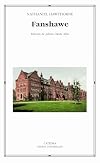
- Harley College (Bowdoin College, Brunswick, Maine, USA)
- Epigraph
- "Wilt thou go on with me?"---SOUTHEY
- First words
- In an ancient, though not very populous settlement, in a retired corner of one of the New-England States, arise the walls of a seminary of learning, which, for the convenience of a name, shall be entitled 'Harley College.'
Classifications
Statistics
- Members
- 69
- Popularity
- 451,696
- Reviews
- 4
- Rating
- (2.89)
- Languages
- English, Italian, Spanish
- Media
- Paper, Audiobook, Ebook
- ISBNs
- 52
- ASINs
- 7