
On This Page
Description
The modern classic about an idealistic British schoolmaster's influence on his students: "A minor miracle" (The New York Times).Throughout his forty-three-year tenure at Brookfield, "a good public school of the second rate" in eastern England, Arthur Chipping has been Mr. Chips to his students. From his unpolished first years during the Franco-Prussian War through the radical changes of the twentieth century and the outbreak of the First World War, Mr. Chips has shaped many young lives. But show more Chips has been inspired as well—by the unremarkable and the extraordinary alike, by his colleagues, by a woman who will change him forever, and not least, by his children, "thousands of them, all boys."
Since it was first published in 1934 to international success, Goodbye, Mr. Chips has never been out of print. It was followed by a collection of stories, To You, Mr. Chips, and provided the basis for two award-winning feature films, a stage musical, a radio play, and two television adaptations. Based on author James Hilton's experiences as a student at the Leys School, Cambridge, this short novel endures as a revelation of the difference one good teacher can make, and "what the better emotions do toward making people important" (Kirkus Reviews).
. show less
Tags
Recommendations












Member Recommendations
by Booksloth
Member Reviews
The Book Report: Old Mr. Chipping, nearing ninety and still telling his hoary old jokes from sixty years ago to the newbies at Brookfields school, spends his last few days on earth wandering among the many well-furnished rooms in his head. We see the events of his entire career as a schoolmaster, his brief, brilliant career as a husband, and his long, glorious sunset as a School Institution. As he passes through the portal made for one (bet Chips'd know the source on that one), he feels...as I hope and pray all who read this will feel on their own long night...it was good, it was good.
My Review: I read this book tonight because, for far from the first time in my life to date, I learned that I lost an old, old friend: My mother's best show more friend, my heart-mother, finally let go of her life barely short of her 92nd birthday on January 4.
I know it was only her body wearing down, because dementia had long since taken her essence from the living world. But tonight, forty-two years after I met her and began to love her, I feel she is here. And I promised her I wouldn't cry, she told me it hurt her to see me cry once a lifetime ago, but I can't not. It's for myself, for my heart growing old and curling inwards from surprisingly fresh hurt. I don't miss her, or miss her more than I did yesterday; death is a release when someone is already no longer themselves; but the days ahead number fewer than the days behind, and I can see my own end like a hill far away, instead of the comforting illusion of horizons hiding it. It's not scary. It's just...real.
I am now the age she was when I met her. My memories are so real! The Pirate's Den, the junque shoppe on North Lamar, parking under the pecan tree and racing everyone to be the first to see what was new; cold, cold Bull Creek, flat hot rocks, the folds of the Balcones Escarpment and their fossil shells; laughing, crying, talking, always with a silver-bunned, trifocalled, green-eyed artist teaching the only things she knew to teach. I needed them then, I treasure them now, and there is no one else to whom these memories mean one single thing except an old guy reliving his past.
She was Mr. Chips, and I listened the way those schoolboys did; now it's my turn...sic semper tyrranis, oh wait that was the assassin but that's good too, sic transit Irenaea mundi...hail and farewell, dear, now you go on home to Mother and Daddy, walk safe! show less
My Review: I read this book tonight because, for far from the first time in my life to date, I learned that I lost an old, old friend: My mother's best show more friend, my heart-mother, finally let go of her life barely short of her 92nd birthday on January 4.
I know it was only her body wearing down, because dementia had long since taken her essence from the living world. But tonight, forty-two years after I met her and began to love her, I feel she is here. And I promised her I wouldn't cry, she told me it hurt her to see me cry once a lifetime ago, but I can't not. It's for myself, for my heart growing old and curling inwards from surprisingly fresh hurt. I don't miss her, or miss her more than I did yesterday; death is a release when someone is already no longer themselves; but the days ahead number fewer than the days behind, and I can see my own end like a hill far away, instead of the comforting illusion of horizons hiding it. It's not scary. It's just...real.
I am now the age she was when I met her. My memories are so real! The Pirate's Den, the junque shoppe on North Lamar, parking under the pecan tree and racing everyone to be the first to see what was new; cold, cold Bull Creek, flat hot rocks, the folds of the Balcones Escarpment and their fossil shells; laughing, crying, talking, always with a silver-bunned, trifocalled, green-eyed artist teaching the only things she knew to teach. I needed them then, I treasure them now, and there is no one else to whom these memories mean one single thing except an old guy reliving his past.
She was Mr. Chips, and I listened the way those schoolboys did; now it's my turn...sic semper tyrranis, oh wait that was the assassin but that's good too, sic transit Irenaea mundi...hail and farewell, dear, now you go on home to Mother and Daddy, walk safe! show less
"When you are getting on in years it is nice to sit by the fire and drink a cup of tea and listen to the school bell sounding dinner, call-over, prep. and lights out." (pg. 2)
A snug and endearing little novella about a beloved schoolteacher growing old gracefully. At just 16,000 words, it is very economical in Mr Chips' reminiscences and this actually works to the book's benefit. The effect is sentimental without being mawkish, and portrays an England that has long since passed into the mists of time. One of author James Hilton's strengths in the book is that he is aware of this passing of an age. When Chips is young, the Franco-Prussian War of 1870-1 is ongoing and someone remarks to him that they will have to deal with the Prussians show more themselves one day; later, he comes out of retirement to hold the school together whilst its alumni are being killed at the Somme and Passchendaele. He dies in his sleep only a few months after Hitler comes to power in 1933, an event which will come to make demands of Old England yet again.
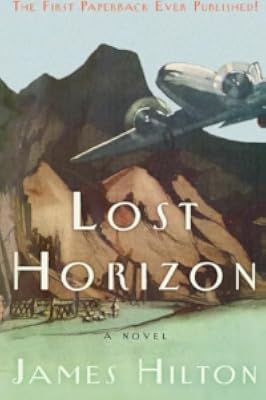
Writing in 1934, Hilton would not have been aware of the full importance of this latter date (except perhaps an acute awareness of the zeitgeist), but to a modern reader it frames the piece beautifully. Whilst Goodbye, Mr Chips is quite different from Hilton's other famous fiction, the unimpeachable adventure Lost Horizon, both share this same sense of wistfulness, of a desire for peace and contentment, set against a cloud of impending cataclysm. The sky is about to rain, and Hilton's two books help you feel warm and dry. show less
A snug and endearing little novella about a beloved schoolteacher growing old gracefully. At just 16,000 words, it is very economical in Mr Chips' reminiscences and this actually works to the book's benefit. The effect is sentimental without being mawkish, and portrays an England that has long since passed into the mists of time. One of author James Hilton's strengths in the book is that he is aware of this passing of an age. When Chips is young, the Franco-Prussian War of 1870-1 is ongoing and someone remarks to him that they will have to deal with the Prussians show more themselves one day; later, he comes out of retirement to hold the school together whilst its alumni are being killed at the Somme and Passchendaele. He dies in his sleep only a few months after Hitler comes to power in 1933, an event which will come to make demands of Old England yet again.
Writing in 1934, Hilton would not have been aware of the full importance of this latter date (except perhaps an acute awareness of the zeitgeist), but to a modern reader it frames the piece beautifully. Whilst Goodbye, Mr Chips is quite different from Hilton's other famous fiction, the unimpeachable adventure Lost Horizon, both share this same sense of wistfulness, of a desire for peace and contentment, set against a cloud of impending cataclysm. The sky is about to rain, and Hilton's two books help you feel warm and dry. show less
Easy to speculate Hilton distills his own outlook on education into Chips, fitting insofar as it is inherently conservative, in the sense of upholding established ideals under threat of changing norms. No mere propaganda vehicle, however: Chips undergoes a transformation of character, becoming a jester within stolid Brookfield, a second-tier public school, in his effort to preserve tradition even while honouring the ideals of excellence and personal compassion (made manifest with his love for Kathie). Chips himself refers to "a sense of proportion".
So, a self-conscious nostalgia trip, impressive as English history in miniature panorama. Brings to mind Forrest Gump: does the film adaptation hew closer or further from that peculiar sense show more of History-with-an-H? Similarly, an elegy to the influence an individual can wield. Sentimental, but at sufficient remove to allow a genuine glimpse into its time & place. An open question as to whether I would have thought the same when reading it on publication. An authenticity accrued over time, incidental to authorial intent.
//
Chips almost despite himself a contrarian: talking with a striker in broad view of the boys, bringing political talk down to a human level; his friendship with Max Staefel even through the Great War, exchanging letters; reciting Latin during an air raid.
Like 84, Charing Cross Road, Good-bye, Mr Chips lends itself to reading aloud, with brief chapters and vignettes easily parceled out over several evenings before bed. show less
So, a self-conscious nostalgia trip, impressive as English history in miniature panorama. Brings to mind Forrest Gump: does the film adaptation hew closer or further from that peculiar sense show more of History-with-an-H? Similarly, an elegy to the influence an individual can wield. Sentimental, but at sufficient remove to allow a genuine glimpse into its time & place. An open question as to whether I would have thought the same when reading it on publication. An authenticity accrued over time, incidental to authorial intent.
//
Chips almost despite himself a contrarian: talking with a striker in broad view of the boys, bringing political talk down to a human level; his friendship with Max Staefel even through the Great War, exchanging letters; reciting Latin during an air raid.
Like 84, Charing Cross Road, Good-bye, Mr Chips lends itself to reading aloud, with brief chapters and vignettes easily parceled out over several evenings before bed. show less
4.5 — Lovely lovely perfect book about the life of a schoolmaster in the late 19th and early 20th century. Very smartly written and thick with the social strains occurring within England at the time. Feels like a cross between the humor of Wodehouse, the commentary of Dickens, and the soul of Alan Holinhurst. So warm and so human. This is a classic for a reason ❤️
Mr. Chipping, the classics master at Brookfield School since 1870, takes readers on a beguiling journey through the late 19th and early 20th centuries. Sometimes Chips, as he is affectionately known, is an old man who dreams by the fire; then he's a difficult young taskmaster schooling his students, or a middle-aged man encountering the lovely Katherine, whose "new woman" opinions work far-reaching changes in him. As succeeding generations of boys march onward through Chips' mind, Hilton's narrative remains masterful. He seamlessly interweaves a poignant love story with the jokes and eccentricities of English public school life, while also chronicling a new, uncertain world full of conflict and upheaval that extends far beyond the show more turrets of Brookfield. show less
After the darkness of Nothing by Janne Tiller, this was a refreshing change. It's a sweet story and even though there are references that I have no chance of getting - having been born decades after its publishing and not in England, I still gleaned enough understanding throughout and enjoyed the tale of Mr. Chips. It's a comforting book.
The more we age, the more of our experience is behind us rather than ahead. And as we look back, the soothing temptation is to let ourselves be lulled into a comfortable, maybe mushy, sense of worthiness. Veteran school-master Mr Chips is an un-layered, rather flat, recognisably English character, rather like the butler in “Remains of the Day” but without the creeping self-doubt. For over time, his steadiness is seen to prevail. Strivers and innovators are distrusted or at least gently teased. The great upheavals of the age, undermining the Victorian-Edwardian order, are endured without major divergence from the settled methods. Chips’ ponderous manner is matched by Hilton’s sparing prose. And Chips wins us over, as the author show more dignifies those little foibles and familiar tics we adopt or succumb to as we age. Perhaps too, our own sense of receded ambitions and modest attainment is soothed. The overall effect is uplifting, memorable, even moving. show less
Members
- Recently Added By
Lists

Read the book and saw the movie
1,170 works; 195 members

Best School Stories
219 works; 22 members

Books That Made Me Cry
199 works; 105 members

Books Set in Great Britain
191 works; 13 members

Best Books Set in Boarding Schools
160 works; 57 members

World War I Fiction
94 works; 15 members

all aboard for malory towers (grownups)
28 works; 5 members

Amanda's Guaranteed Books
110 works; 5 members

Academia in Fiction
158 works; 23 members

1930s
262 works; 5 members

BOOKS READ IN 1980's and 1990's
52 works; 4 members

Teachers
16 works; 2 members

Mensa for Kids Excellence in Reading Award Program (Grades 7-8)
62 works; 1 member

Books I have Recommended
208 works; 1 member

Blue Pyramid 1,276 Best Books of All Time
1,248 works; 32 members

Books Read in 2013
1,630 works; 51 members

Ambleside Year 5
55 works; 1 member

Books That Made Us Cry
278 works; 145 members

Top Five Books of 2023
767 works; 317 members

Publisher's Weekly Bestsellers Part I - 1895-1939
399 works; 8 members

Mustich's 1000 Books to Read Before You Die: A Life Changing List
1,001 works; 20 members

the preppy handbook
36 works; 1 member
Best Books of 1926-1935
403 works; 10 members

Books tagged "feel good"
129 works; 20 members

Best books made into television
66 works; 4 members

Books Read in 2010
631 works; 11 members

Mensa for Kids Excellence in Reading Award Program (Grades 7-8)
62 works; 3 members

CCE 1000 Good Books List
1,033 works; 12 members

Ambleside Books
459 works; 18 members

Books whose title names an object usually found in the kitchen
171 works; 14 members
Author Information

49+ Works 9,359 Members
James Hilton was born in Leigh, Lancashire, England on September 9, 1900. While attending the Leys School in Cambridge, he published several stories in the school magazine. In 1918, he won a scholarship to Christ's College, Cambridge, where he joined the University Officer Training Squadron. Before he saw any action, the war ended. He published show more his first novel, Catherine Herself, in 1920, while still an undergraduate. After Cambridge, he became a freelance journalist, writing chiefly for The Manchester Guardian and later The Irish Independent and reviewing fiction for The Daily Telegraph. During this time, he had several more of his novels published, though without conspicuous success. In 1931, he enjoyed his first popular success with And Now Goodbye and was able to take up writing fiction full time. His other works include Lost Horizon, which won the Hawthornden Prize, Goodbye Mr. Chips, and Random Harvest, all of which were made into highly successful motion pictures. In 1935, he was invited to Hollywood to work as a screenwriter. He wrote screenplays for Camille, Foreign Correspondent, Forever and a Day, The Story of Dr. Wassell, The Tuttles of Tahiti, and We Are Not Alone. He won the Best Screenplay Oscar for Mrs. Miniver in 1942. During his Hollywood years, he continued to write novels including Nothing So Strange, Morning Journey, and Time and Time Again. He also served as the narrator for Madame Curie and the adaptation of his novel So Well Remembered, in addition to hosting CBS Radio's Hallmark Playhouse from 1948 until 1953. He died of liver cancer on December 20, 1954. (Bowker Author Biography) show less
Some Editions
Awards and Honors
Distinctions
Notable Lists
Series

Belongs to Publisher Series
Work Relationships
Is contained in
Has the adaptation
Is abridged in
Reader's Digest Condensed Books 1961 v03: The Winter of Our Discontent / The Agony and the Ecstasy / The Making of the President, 1960 / A Lodging for the Emperor / Goodbye Mr. Chips by Reader's Digest
Good-bye Mr. Chips; De roman van het leven van Michelangelo; De berg van de Spencers; Haaien en kleine vissen by Reader's Digest
Common Knowledge
- Canonical title
- Goodbye, Mr. Chips
- Original title
- Goodbye, Mister Chips!
- Original publication date
- 1934
- People/Characters
- Mr. Chips (Arthur Chipping); Katherine Bridges
- Important places
- Brookfield School, England, UK
- Important events
- World War I
- Related movies
- Goodbye, Mr. Chips (1939 | IMDb); Goodbye, Mr. Chips (1969 | IMDb); Goodbye Mr. Chips (1984 | IMDb); Goodbye, Mr. Chips (2002 | IMDb); Goodbye, Mr. Chips (2021 | IMDb)
- First words
- When you are getting on in years (but not ill, of course), you get very sleepy at times, and the hours seem to pass like lazy cattle moving across a landscape.
- Quotations
- A great joke, this growing old—but a sad joke, too, in a way. And as Chips sat by his fire with autumn gales rattling the windows, the waves of humor and sadness swept over him very often until tears fell, so that when Mrs.... (show all) Wickett came in with his cup of tea she did not know whether he had been laughing or crying. And neither did Chips himself.
On the night before the wedding, when Chips left the house to return to his hotel, she said, with mock gravity: "This is an occasion, you know—this last farewell of ours. I feel rather like a new boy beginning his first ter... (show all)m with you. Not scared, mind you—but just, for once, in a thoroughly respectful mood. Shall I call you 'sir'—or would 'Mr. Chips' be the right thing? 'Mr. Chips,' I think. Good-bye, then—good-bye, Mr. Chips. . . ."
Where had they all gone to, he often pondered; those threads he had once held together, how far had they scattered, some to break, others to weave into unknown patterns? The strange randomness of the world beguiled him, that ... (show all)randomness which never would, so long as the world lasted, give meaning to those choruses again.
And sometimes, when the bell rang for call-over, he would go to the window and look across the road and over the School fence and see, in the distance, the thin line of boys filing past the bench. New times, new names . . . b... (show all)ut the old ones still remained . . . Jefferson, Jennings, Jolyon, Jupp, Kingsley Primus, Kingsley Secundus, Kingsley Tertius, Kingston . . . where are you all, where have you all gone to? . . . Mrs. Wickett, bring me a cup of tea just before prep, will you, please?
"I thought I heard you—one of you—saying it was a pity—umph—a pity I never had—any children . . . eh? . . . But I have, you know . . . I have . . ."
The others smiled without answering, and after a pause Chip... (show all)s began a faint and palpitating chuckle.
"Yes—umph—I have," he added, with quavering merriment. "Thousands of 'em . . . thousands of 'em . . . and all boys." - Last words
- (Click to show. Warning: May contain spoilers.)But Linford, at any rate, will remember and tell the tale: "I said goodbye to Chips the night before he died ..."
- Original language
- English
Classifications
Statistics
- Members
- 2,621
- Popularity
- 7,220
- Reviews
- 63
- Rating
- (3.84)
- Languages
- 11 — Catalan, Danish, Dutch, English, French, German, Hungarian, Italian, Portuguese, Spanish, Swedish
- Media
- Paper, Audiobook, Ebook
- ISBNs
- 72
- UPCs
- 1
- ASINs
- 112