On This Page
Description
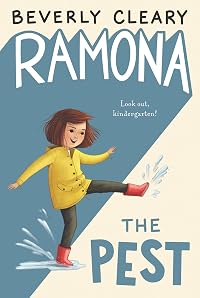
Ramona meets lots of interesting people in kindergarten class, like Davy whom she keeps trying to kiss and Susan whose springy curls seem to ask to be pulled.Tags
Recommendations



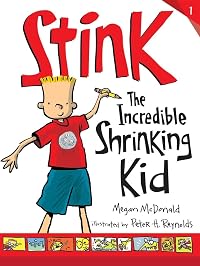
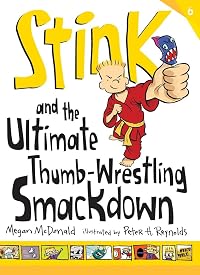
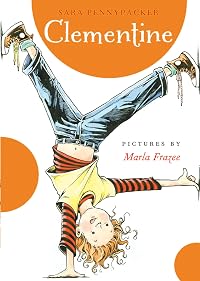
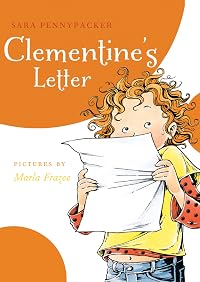

Member Recommendations
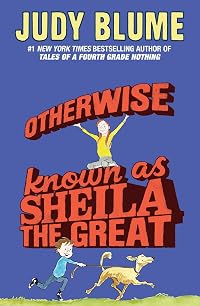
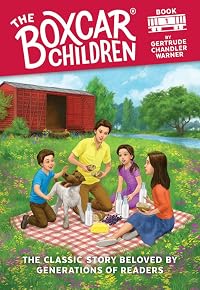
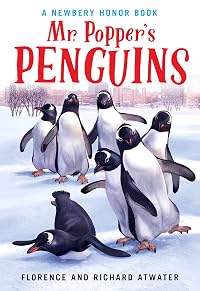
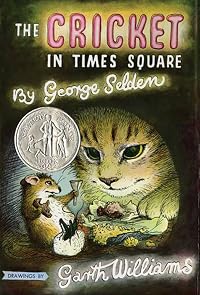
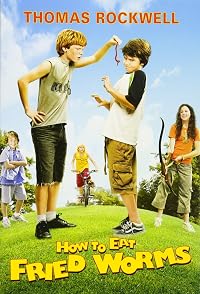
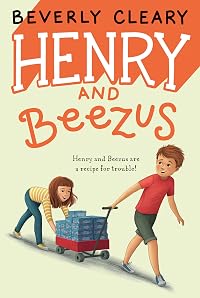
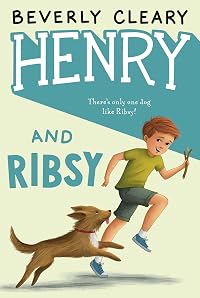
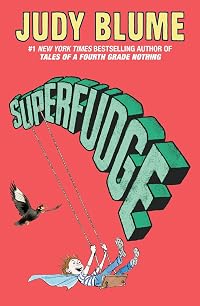
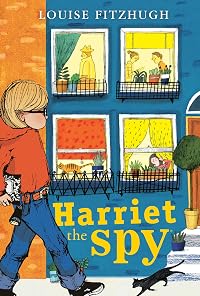
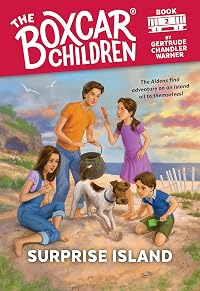
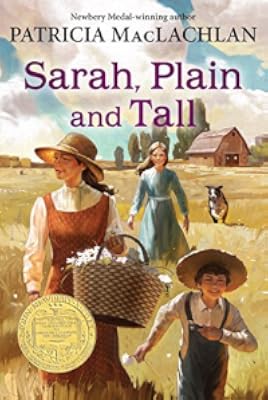
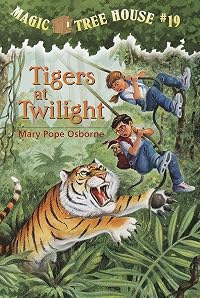
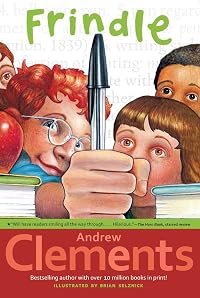
foggidawn If you like Ramona, you will love Clementine -- another spunky, lovable heroine.
20
Member Reviews
Now starting kindergarten, Ramona is looking forward to growing up, learning to read, and riding a bike instead of a tricycle. She's especially sensitive to being called a pest, especially when she's just trying to figure out how this whole growing up thing works, and adults can't understand why certain things are important to her or why she sees life the way she does.
It's rather delightful to reread this series as an adult. As a child, I related so much to Ramona and her confusion about how adults were taking what she said when her thoughts and feelings seem so reasonable to her. And now, of course, I can also see everything from the parents' point of view. Cleary manages to convey both without talking down to her audience or show more minimizing their feelings. show less
It's rather delightful to reread this series as an adult. As a child, I related so much to Ramona and her confusion about how adults were taking what she said when her thoughts and feelings seem so reasonable to her. And now, of course, I can also see everything from the parents' point of view. Cleary manages to convey both without talking down to her audience or show more minimizing their feelings. show less
I know there are readers who find Ramona’s brattiness kind of intolerable, I do understand that, she can be a lot, she is definitely a lot in this one, but that’s just never bothered me. I love Ramona no matter how messy she gets, maybe even because of how messy she gets, and I love these books, I love that Beverly Cleary never felt the need to soften a little girl’s edges the way so many other books do.
This didn’t have as much family time as the first in the series did, and I did miss that, but I was still thoroughly entertained by Ramona’s rocky entry into kindergarten. The dramatic moments, the hissy fits, heels kicking her bedroom wall, feeling sorry for herself, longing for her teacher's praise, all that read as real, show more true to things we’ve all felt at one point or another. Same with the comedy, there’s such an organic feeling to it, a kid misunderstanding the definition of a word or not knowing what time actually is quarter past the hour, etc., these are genuinely funny bits and funnier still because they’re situations you could see actually playing out, that’s why this still holds up strong now, it’s filled with these moments that are still identifiable long past the era they were written in. show less
This didn’t have as much family time as the first in the series did, and I did miss that, but I was still thoroughly entertained by Ramona’s rocky entry into kindergarten. The dramatic moments, the hissy fits, heels kicking her bedroom wall, feeling sorry for herself, longing for her teacher's praise, all that read as real, show more true to things we’ve all felt at one point or another. Same with the comedy, there’s such an organic feeling to it, a kid misunderstanding the definition of a word or not knowing what time actually is quarter past the hour, etc., these are genuinely funny bits and funnier still because they’re situations you could see actually playing out, that’s why this still holds up strong now, it’s filled with these moments that are still identifiable long past the era they were written in. show less
[b:Ramona the Pest|232112|Ramona the Pest (Ramona, #2)|Beverly Cleary|https://i.gr-assets.com/images/S/compressed.photo.goodreads.com/books/1172944383l/232112._SX50_.jpg|1284999] is the one that makes it clear how Ramona's thinking is just plain different than an older child's or an adult's.
For example, near the beginning, she thinks that Howie should "make a great big noisy fuss" about his jeans since he doesn't like them. After a few months in school, with firm but understanding Miss Binney, we see her gain enough sophistication that she's not likely to think that again.
But every child has their own perspective. Susan "carried her new white boots so she would not get them muddy." And Davy doesn't like being chased to get kissed, but show more when at one point Ramona cuts him, he is a bit hurt.
I think the most powerful part of this for me was when Ramona felt lost and anonymous in her witch costume. I adored her solution, to give herself a name 'tag.'
Probably the most powerful thing at the time of writing was when Ramona banged her heels on her bedroom wall, intentionally being "wicked" and *wanting* everyone in her family to feel as angry as she felt. I'm sure that Cleary was one of the first popular authors to recognize that children sometimes feel this way, and it's ok. The behavior is not ok, but the feelings totally are.
Remember in the first book that Beezus was so worried about feeling as if she didn't love her sister, and how relieved she was to learn that such a feeling is normal, healthy, and not something to get punished for as a sin. She only knew about purely good children from her storybooks.
The edition I read has new illustrations by [a:Tracy Dockray|422740|Tracy Dockray|https://s.gr-assets.com/assets/nophoto/user/u_50x66-632230dc9882b4352d753eedf9396530.png]. I, personally, miss the originals by [a:Louis Darling|470404|Louis Darling|https://images.gr-assets.com/authors/1296333607p2/470404.jpg] but the updated ones do charm and are more welcoming to 21st-century readers. I especially like the 'snapshot' set on p. 196-7 of Ramona's reactions to being utterly bored while accompanying Mother on her shopping trip.
Five stars, because no matter how many times I read these, they never get old. This one maybe the most. show less
For example, near the beginning, she thinks that Howie should "make a great big noisy fuss" about his jeans since he doesn't like them. After a few months in school, with firm but understanding Miss Binney, we see her gain enough sophistication that she's not likely to think that again.
But every child has their own perspective. Susan "carried her new white boots so she would not get them muddy." And Davy doesn't like being chased to get kissed, but show more when at one point Ramona cuts him, he is a bit hurt.
I think the most powerful part of this for me was when Ramona felt lost and anonymous in her witch costume. I adored her solution, to give herself a name 'tag.'
Probably the most powerful thing at the time of writing was when Ramona banged her heels on her bedroom wall, intentionally being "wicked" and *wanting* everyone in her family to feel as angry as she felt. I'm sure that Cleary was one of the first popular authors to recognize that children sometimes feel this way, and it's ok. The behavior is not ok, but the feelings totally are.
Remember in the first book that Beezus was so worried about feeling as if she didn't love her sister, and how relieved she was to learn that such a feeling is normal, healthy, and not something to get punished for as a sin. She only knew about purely good children from her storybooks.
The edition I read has new illustrations by [a:Tracy Dockray|422740|Tracy Dockray|https://s.gr-assets.com/assets/nophoto/user/u_50x66-632230dc9882b4352d753eedf9396530.png]. I, personally, miss the originals by [a:Louis Darling|470404|Louis Darling|https://images.gr-assets.com/authors/1296333607p2/470404.jpg] but the updated ones do charm and are more welcoming to 21st-century readers. I especially like the 'snapshot' set on p. 196-7 of Ramona's reactions to being utterly bored while accompanying Mother on her shopping trip.
Five stars, because no matter how many times I read these, they never get old. This one maybe the most. show less
Cleary seems to have some great insight into the mind of a child; though it's been a long time since I was Ramona's age in this book, I can definitely remember having some of the same thoughts and feelings she has here. Her ups and downs are so realistic and make me wish her parents would see her more, while knowing that they're normal and understanding why they're not always fully aware of what's going on with her. The very end of the book, the culmination of Ramona's trouble at school and her love of making cats with her Qs, made me so happy! I liked the first book in the series, but this one definitely tops it!
I read this when I was in elementary school, and recently read it to my 5 year old, who, like Ramona the Pest, has just started kindergarten. The personality of Ramona is still strong and wonderful. Her insights and annoyance with grown-ups and their tiresome strictures made me snicker, and, I could tell, resonated with my 5yo -- who LOVED the book.
Some social sexism mars the book -- I did a fair amount of on-the-fly editing rather than engaging in a discussion of WHY people would say Davy, a little boy, should run track, and not say that about Ramona, the little girl who was chasing him; why boys were crossing guards and not girls; what all the heteronormative role playing is about (Ramona is going to kiss Davy; she wants to marry show more Davy; she wants to marry Henry Huggins); and so on. But the core of the story is rather delightful, so I'd still recommend the book.
And it was so interesting to see how times have changed in other ways too. A 5yo might be left alone in her house, to leave for school, and walk a few blocks, all by herself. She can "duck down" onto the floor of the car -- because the 5yo isn't in a carseat/booster seat.
Anyway, I really enjoyed re-visiting Ramona, and recommend it for others too. show less
Some social sexism mars the book -- I did a fair amount of on-the-fly editing rather than engaging in a discussion of WHY people would say Davy, a little boy, should run track, and not say that about Ramona, the little girl who was chasing him; why boys were crossing guards and not girls; what all the heteronormative role playing is about (Ramona is going to kiss Davy; she wants to marry show more Davy; she wants to marry Henry Huggins); and so on. But the core of the story is rather delightful, so I'd still recommend the book.
And it was so interesting to see how times have changed in other ways too. A 5yo might be left alone in her house, to leave for school, and walk a few blocks, all by herself. She can "duck down" onto the floor of the car -- because the 5yo isn't in a carseat/booster seat.
Anyway, I really enjoyed re-visiting Ramona, and recommend it for others too. show less
i read these books fairly often as a kid, there not being a glut of books in the new-reader category in the 1980s, aaaaaaand i didn't enjoy them much back then.
i did not enjoy this re-read, either, and i still can't quite figure out why. what's the problem here? is it that Ramona really is a pest, and the narrator calls it out (but still thinks it's cute)? is it that the story is too old-fashioned to feel relevant (and not old-fashioned enough to feel charming)? is it that the family is loving and kind and there isn't any real drama or change?
all of this and none of them. Ramona IS a pest, but her family loves her so it's okay. The story IS very old -- nobody in America lets a five year old walk to school; is that even legal? And i have show more a suspicion the text has been edited a bit to reflect this -- I remember references to roller-skates and records and rotary phones, which are archaic now, at best.) The illustrations are extremely 2010s, in haircuts and clothing styles ... Ramona is shown to wear leggings under a skirt, for heaven's sake, and Converse. These are not 1968 clothes.
... And the family is loving and kind, because everyone is loving and kind (except Ramona), and the worst that happens is a miscommunication, followed by swift apology, and of course it's a book for kids but it seems so unrealistic, in a way that just isn't comforting to me. When Ramona is "kicked out of kindergarten" -- ie, not allowed to stay in class because she refuses to stop pulling another child's hair -- they just ... sort of ... ignore the issue? She stays home for at least a week, and still gets her treats and enjoys fun times, and aside from a couple conversations of "Wouldn't you like to go back?" nobody seems to mind that a five year old child is not going to school because she won't stop attacking someone else.
I mean, i'm not advocating for Ramona to be beaten raw and bloody, but it seems like something more then "darling, wouldn't you like to stop hurting people? no? not yet? okay then sweetums" would be reasonable. Maybe a time-out? Maybe a lesson in cause & effect, like, you can't go to the Halloween party because you keep pulling that child's hair and she is also at the party and we won't let you hurt her again?
No -- instead, Ramona is given exactly what she wants, when she wants it. She gets to go to the party AND be in the parade AND dress up in the costume she wants AND stomp around yelling despite being repeatedly asked to stop by everyone, and when she is around the other children she does indeed return to hair-pulling -- and this time, she manages to hide it. (The poor tormented child tattles but, of course, nothing happens to Ramona. Shut up, curly-haired kid! You're inhibiting the protagonist!)
There is the tiniest hint of hardship: Ramona wears hand-me-down shoes from a neighbor, which is embarrassing of course, but she gets her own new shoes almost immediately, and the entire situation is dealt with so blandly that it's really hard to know how to take it. Are the Quimbys poor to working class? are they ashamed? is this a struggle? is this the normal "economizing" that happens even in wealthier areas, because children grow so quickly and use their shoes so lightly? Ramona herself is only annoyed that she's wearing boy-color-shoes instead of the proper girl-color, and her mother takes her to what seems to be a good local shoe store for the new ones -- there is a toy area for the children, and the clerk is friendly and he remembers her, and she even gets a new balloon for free.
The entire thing is discomforting in its smooth, bland sitcom perfection -- it's less Hallmark and more Truman Show. Quite typical for the 60s really but ooh it makes my skin crawl. show less
i did not enjoy this re-read, either, and i still can't quite figure out why. what's the problem here? is it that Ramona really is a pest, and the narrator calls it out (but still thinks it's cute)? is it that the story is too old-fashioned to feel relevant (and not old-fashioned enough to feel charming)? is it that the family is loving and kind and there isn't any real drama or change?
all of this and none of them. Ramona IS a pest, but her family loves her so it's okay. The story IS very old -- nobody in America lets a five year old walk to school; is that even legal? And i have show more a suspicion the text has been edited a bit to reflect this -- I remember references to roller-skates and records and rotary phones, which are archaic now, at best.) The illustrations are extremely 2010s, in haircuts and clothing styles ... Ramona is shown to wear leggings under a skirt, for heaven's sake, and Converse. These are not 1968 clothes.
... And the family is loving and kind, because everyone is loving and kind (except Ramona), and the worst that happens is a miscommunication, followed by swift apology, and of course it's a book for kids but it seems so unrealistic, in a way that just isn't comforting to me. When Ramona is "kicked out of kindergarten" -- ie, not allowed to stay in class because she refuses to stop pulling another child's hair -- they just ... sort of ... ignore the issue? She stays home for at least a week, and still gets her treats and enjoys fun times, and aside from a couple conversations of "Wouldn't you like to go back?" nobody seems to mind that a five year old child is not going to school because she won't stop attacking someone else.
I mean, i'm not advocating for Ramona to be beaten raw and bloody, but it seems like something more then "darling, wouldn't you like to stop hurting people? no? not yet? okay then sweetums" would be reasonable. Maybe a time-out? Maybe a lesson in cause & effect, like, you can't go to the Halloween party because you keep pulling that child's hair and she is also at the party and we won't let you hurt her again?
No -- instead, Ramona is given exactly what she wants, when she wants it. She gets to go to the party AND be in the parade AND dress up in the costume she wants AND stomp around yelling despite being repeatedly asked to stop by everyone, and when she is around the other children she does indeed return to hair-pulling -- and this time, she manages to hide it. (The poor tormented child tattles but, of course, nothing happens to Ramona. Shut up, curly-haired kid! You're inhibiting the protagonist!)
There is the tiniest hint of hardship: Ramona wears hand-me-down shoes from a neighbor, which is embarrassing of course, but she gets her own new shoes almost immediately, and the entire situation is dealt with so blandly that it's really hard to know how to take it. Are the Quimbys poor to working class? are they ashamed? is this a struggle? is this the normal "economizing" that happens even in wealthier areas, because children grow so quickly and use their shoes so lightly? Ramona herself is only annoyed that she's wearing boy-color-shoes instead of the proper girl-color, and her mother takes her to what seems to be a good local shoe store for the new ones -- there is a toy area for the children, and the clerk is friendly and he remembers her, and she even gets a new balloon for free.
The entire thing is discomforting in its smooth, bland sitcom perfection -- it's less Hallmark and more Truman Show. Quite typical for the 60s really but ooh it makes my skin crawl. show less
If you enjoyed the first book in the series, you will absolutely love this. Even though older people think Ramona is a pest, the author did a great job of capturing things from Ramona's perspective to explain why she does the things she does. A solid volume in the Ramona collection.
Members
- Recently Added By
Lists

Favorite Childhood Books
1,651 works; 515 members

Best middle grade books
130 works; 24 members
NPRs Ultimate Backseat Bookshelf: 100 Must-Reads for kids 9-14
222 works; 30 members

my children books reading list-from 100 great books
101 works; 7 members

Scholastic 100 Best Read-Aloud Books
100 works; 8 members

Comfort Reads
221 works; 41 members
Honey For a Child's Heart
1,152 works; 25 members

Books Set in Oregon
14 works; 2 members

Books About Girls
219 works; 17 members

Female Protagonist
1,056 works; 57 members
Ambleside Books
459 works; 18 members

Satori Smiles Children's Book List
262 works; 7 members

Back to School
94 works; 5 members

Romalda Spalding's Writing Road To Reading
213 works; 3 members

Dogs -- children's/young adult fiction
1,317 works; 9 members

Recommend the 20 best books you've read in the last five years
2,168 works; 603 members

Best Sellers / Popular 1968
237 works; 5 members

AR Level 5 in cloudLibrary
170 works; 1 member

Books We Loved As Children
610 works; 254 members
Author Information

Beverly Cleary was born on April 12, 1916. Her family lived on a small farm in McMinnville, Oregon, before moving to Portland. Ironically, this internationally known author of children's books struggled to learn how to read when she entered school. Before long however Cleary had learned to love books, and as a child she spent a good deal of her show more time in the public library. Cleary attended Chaffey Junior College in Ontario, Ca. and went on to earned her first B.A. in 1938 from the University of California at Berkeley. Her second degree, a B.A. in library science, was bestowed by the University of Washington in Seattle in 1939. She worked for a short time as Children's Librarian in Yakima, Washington, before moving to California. Cleary began her writing career in her early thirties. Her first book, Henry Huggins, was published in 1950. Her stories and especially her characters, Henry Huggins and Ramona Quimby, have proven popular with young readers. Her books have been translated into twenty languages and are available in over twenty countries. Some of her best-known titles are Ellen Tebbits (1951), Henry and the Paper Route (1957), Runaway Ralph (1970), and Dear Mr. Henshaw (1983). Several television programs have been produced from the Henry Huggins and Ramona stories. She also wrote two memoirs, A Girl from Yamhill (1988) and My Own Two Feet (1995). Cleary has won many awards for her contributions to children's literature, including the American Library Association's Laura Ingalls Wilder Award in 1975, the Catholic Library Association's Regina Medal in 1980, the John Newbery Medal in 1984 and the National Medal of Arts in 2003. Beverly Cleary died on March 25, 2021 in Carmel, California. She was 104 year old. (Bowker Author Biography) show less
Some Editions
Awards and Honors
Awards
Distinctions
Notable Lists
Series

Work Relationships
Is contained in
The Complete 8-Book Ramona Collection: Beezus and Ramona, Ramona and Her Father, Ramona and Her Mother, Ramona Quimby, Age 8, Ramona Forever, Ramona the Brave, Ramona the Pest, Ramona's World by Beverly Cleary
The World of Beverly Cleary Collection - 15 Book Ultimate Boxed Set! Ramona and More! (Beverly Cleary) by Beverly Cleary
Ramona and her Mother / Ramona Forever / Ramona Quimby, Age 8 / Ramona the Brave / Ramona the Pest by Beverly Cleary
Ramona Quimby, America's Favorite 5 Box Set: Ramona and Her Mother; Ramona and Her Father; Ramona the Pest; Ramona Forever; Ramona Quimby, Age 8 by Beverly Cleary
Has as a teacher's guide
Common Knowledge
- Canonical title*
- Ramona La Peste
- Original title
- Ramona the Pest
- Original publication date
- 1968
- People/Characters
- Ramona Quimby; Beatrice "Beezus" Quimby; Miss Binney; Davy; Susan Kushner; Howie Kemp (show all 8); Dorothy Quimby; Robert Quimby
- Important places
- Portland, Oregon, USA; Oregon, USA; Klickitat Street, Portland, Oregon, USA
- Related movies
- Ramona and Beezus (2010)
- First words
- "I am not a pest," Ramona Quimby told her big sister Beezus.
- Quotations
- She was not going to pick up her crayons. Nobody could make her pick up her crayons. Nobody. Not her father nor her mother. Not even the principal. Not even God.
- Last words
- (Click to show. Warning: May contain spoilers.)Ramona gave Howie a look of pity, but she said, "Please stay for lunch, Howie. It isn't tuna fish. It's peanut butter and jelly."
- Original language
- English
*Some information comes from Common Knowledge in other languages. Click "Edit" for more information.
Classifications
- Genres
- Children's Books, Fiction and Literature, Kids
- DDC/MDS
- 813.54 — Literature & rhetoric American literature in English American fiction in English 1900-1999 1945-1999
- LCC
- PZ7 .C5792 — Language and Literature Fiction and juvenile belles lettres Fiction and juvenile belles lettres Juvenile belles lettres
- BISAC
Statistics
- Members
- 9,762
- Popularity
- 1,047
- Reviews
- 121
- Rating
- (3.99)
- Languages
- 6 — English, French, German, Italian, Japanese, Spanish
- Media
- Paper, Audiobook, Ebook
- ISBNs
- 62
- ASINs
- 45