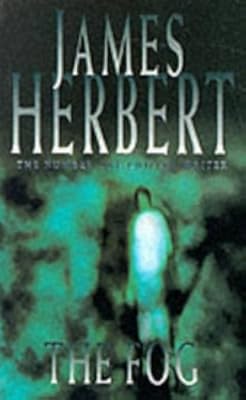
The Fog
by James Herbert
On This Page
Description
The peaceful life of a village in Wiltshire is suddenly shattered by a disaster which strikes without reason or explanation, leaving behind it a trail of misery and horror. A yawning, bottomless crack spreads through the earth, out of which creeps a fog that resembles no other. Whatever it is, it must be controlled; for wherever it goes it leaves behind a trail of disaster as hideous as the tragedy that marked its entry into the world. The fog, quite simple, drives people insane.Tags
Recommendations

















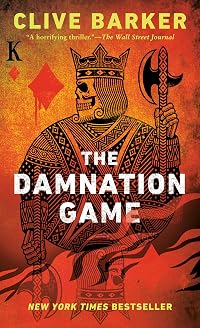
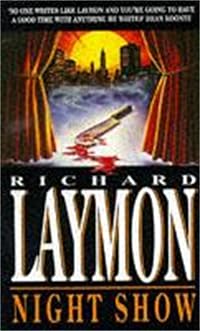
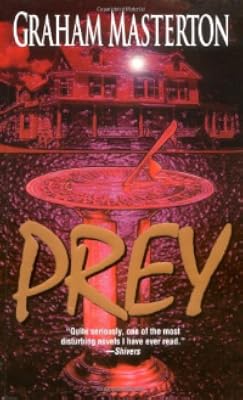

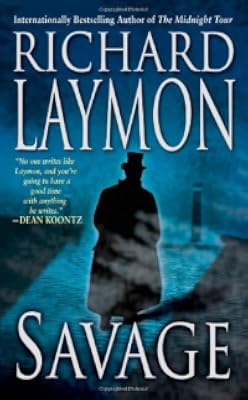

Member Recommendations
Snow by Ronald Malfi
by Scottneumann

SomeGuyInVirginia Two of Herbert's best; genuinely creepy.
Member Reviews
One start. One glorious, glittering star.
There are bad writers.
There are bad books.
We all know and fear them: shallow, inconsistent plot, flat writing, unrelatable characters, character development absent or unbelievable. Uff.
Then, once in a Pope's death, as they say in my town, one stumbles upon bad writing pushed to the limits of the sublime.
If there is a firmament of the awful novelists, this Herbert guy shines there, next constellation to Giorgio Faletti, in the same hemisphere with the best of the worst of Thomas Harris (I am thinking Hannibal, here. He must have been on something nasty while writing that one, thanks to God for the laughs).
Plot? At the service of the manly man, intent in saving Britain from fog, madness and show more unmanliness.
Character development? Who needs it? Our manly man needs not changing a iota of his musky self. Women around him, on the other hand, being helpless and evidently dim-witted cannot develop by God's decree, if not in the nature of their adoration for the manly one: submissively erotic while young and desirable, maternal as soon as they start, ahem, wilting. Then, and only then, are they allowed to become intellectually gifted.
Even the Government with its Secret Departments cannot but capitulate in front of such a critical mass of testosterone and entrust him, and only him, with saving the world. Because any civilian who happens to be the only survivor immune to the effects of the fog would be left free to come and go from a secret government facility and asked to risk his life, just him, to get a sample of the evil mist. And why wouldn't they, my friends, why wouldn't they.
Style? Who needs style, when we can have body horror aplenty, the triumph of TELL WHAT YOU WANT BUT JAYSUS, NEVER SHOW, and possibly the purplest, most off-putting sex scenes ever written? Also: a bunch of possessed schoolboys lynching an ecstatic gay teacher (because gay and pedophiles are one, in Herbert's Little Britain); lesbian sex imagined by a countryside provost, and remember that lesbians will regret their mistake; and an impressive mass suicide scene.
Absolutely advised, for All the Wrong Reasons!
I will leave here some gold nuggets as soon as I can get a copy back from the library. show less
There are bad writers.
There are bad books.
We all know and fear them: shallow, inconsistent plot, flat writing, unrelatable characters, character development absent or unbelievable. Uff.
Then, once in a Pope's death, as they say in my town, one stumbles upon bad writing pushed to the limits of the sublime.
If there is a firmament of the awful novelists, this Herbert guy shines there, next constellation to Giorgio Faletti, in the same hemisphere with the best of the worst of Thomas Harris (I am thinking Hannibal, here. He must have been on something nasty while writing that one, thanks to God for the laughs).
Plot? At the service of the manly man, intent in saving Britain from fog, madness and show more unmanliness.
Character development? Who needs it? Our manly man needs not changing a iota of his musky self. Women around him, on the other hand, being helpless and evidently dim-witted cannot develop by God's decree, if not in the nature of their adoration for the manly one: submissively erotic while young and desirable, maternal as soon as they start, ahem, wilting. Then, and only then, are they allowed to become intellectually gifted.
Even the Government with its Secret Departments cannot but capitulate in front of such a critical mass of testosterone and entrust him, and only him, with saving the world. Because any civilian who happens to be the only survivor immune to the effects of the fog would be left free to come and go from a secret government facility and asked to risk his life, just him, to get a sample of the evil mist. And why wouldn't they, my friends, why wouldn't they.
Style? Who needs style, when we can have body horror aplenty, the triumph of TELL WHAT YOU WANT BUT JAYSUS, NEVER SHOW, and possibly the purplest, most off-putting sex scenes ever written? Also: a bunch of possessed schoolboys lynching an ecstatic gay teacher (because gay and pedophiles are one, in Herbert's Little Britain); lesbian sex imagined by a countryside provost, and remember that lesbians will regret their mistake; and an impressive mass suicide scene.
Absolutely advised, for All the Wrong Reasons!
I will leave here some gold nuggets as soon as I can get a copy back from the library. show less
Here's what Uncle Stevie had to say about James Herbert -
'Herbert does not just write. . .he puts on his combat boots and goes out to assault the reader with horror.'
'James Herbert comes at us with both hands, not willing to simply engage our attention, he seizes us by the lapels and begins to scream in our faces.'
These are apt descriptions, as [The Fog] is a barreling train without any mercy, demanding both attention, and obedience in turning page after page. The set-up is that a mysterious earthquake rips through the bucolic English countryside, and a yellowed fog snakes up from the depths. A civil servant on a mission in the area goes into the rip with his car but manages to climb out with another victim. Then, he turns around and show more tries to jump back into oblivion. He stays mad for several days, trying to slash his own neck at one point, and then comes out of it. The rest of the countryside is enveloped in the fog and everyone goes stark raving and violently mad. The follow on for the story is a bit Koontzian, in his modern bad government phase, and our hero, now immune, mostly, to the fog has to save the day while evading throngs of the mad intent on killing. There's a King feel to the narrative along the way with many interludes of the folk in their everyday lives before the fog tips them into grueling psychosis.
5 bones!!!!!
My Highest Recommendation on this one - but steel yourself. show less
'Herbert does not just write. . .he puts on his combat boots and goes out to assault the reader with horror.'
'James Herbert comes at us with both hands, not willing to simply engage our attention, he seizes us by the lapels and begins to scream in our faces.'
These are apt descriptions, as [The Fog] is a barreling train without any mercy, demanding both attention, and obedience in turning page after page. The set-up is that a mysterious earthquake rips through the bucolic English countryside, and a yellowed fog snakes up from the depths. A civil servant on a mission in the area goes into the rip with his car but manages to climb out with another victim. Then, he turns around and show more tries to jump back into oblivion. He stays mad for several days, trying to slash his own neck at one point, and then comes out of it. The rest of the countryside is enveloped in the fog and everyone goes stark raving and violently mad. The follow on for the story is a bit Koontzian, in his modern bad government phase, and our hero, now immune, mostly, to the fog has to save the day while evading throngs of the mad intent on killing. There's a King feel to the narrative along the way with many interludes of the folk in their everyday lives before the fog tips them into grueling psychosis.
5 bones!!!!!
My Highest Recommendation on this one - but steel yourself. show less
I really thought this would be a dud - fog is the bad guy? But it was recommended and...
It's pretty damn good! Surprisingly so! Something about the fog makes folks go insane. In Chapter 6, what happens at the boys school far surpasses insanity and boils over into an orgy of violence and horror that is a bit stomach churning! And the jetliner story is creepy when you consider that this book was written 26 years before 9/11! I liked that this is basically a bunch of stories about how the fog effects people, birds, and animals, and the little vignettes are almost always horrifying and disgusting! These stories are the book's strength! The science bits, and even the attack on the fog aren't that riveting. But, if you're looking for a horror show more story, this is the book! show less
It's pretty damn good! Surprisingly so! Something about the fog makes folks go insane. In Chapter 6, what happens at the boys school far surpasses insanity and boils over into an orgy of violence and horror that is a bit stomach churning! And the jetliner story is creepy when you consider that this book was written 26 years before 9/11! I liked that this is basically a bunch of stories about how the fog effects people, birds, and animals, and the little vignettes are almost always horrifying and disgusting! These stories are the book's strength! The science bits, and even the attack on the fog aren't that riveting. But, if you're looking for a horror show more story, this is the book! show less
Very gory for its age, and scary in parts. The big strength here is the unpredictability of the results. The fog isn't a zombie rage virus, the violence is as much external as internal, the motivations seem derived from personality and complexes. There's something in that idea that could have transcended genre, but as we get more detail about what it is and how it works it's really not that different from things you've seen already (a victim of cultural osmosis perhaps). The Spear was better.
I had hoped that this would be a light distraction from some of the heavier books I've been reading, and it was, to a degree. But I seriously doubt if I'm going to be reading any more of Herbert's books. This just wasn't good enough to consider putting myself through a similar experience. Many people compare him to Steve King, and I can see why - they've got a similar knack for storytelling, and both obviously write about similar things. Heck, King even got me to read this, because of his reviews of Herbert in Danse Macabre. But believe me, having read quite a bit of King, he is a much better writer than Herbert. Not to say King is a particularly good writer: he has a way of writing, and he usually sticks to it, outside of a few show more salubrious experiments in his shorter works. But as for Herbert, well, to quote A.E. Housman out of context, 'Terence, this is stupid stuff'.
Herbert's characters are just, well, cardboard compared to King's. I just didn't care for any of them. And the whole premise of the book is so absurd, especially Herbert's quasi-scientific explanations, that I couldn't help laughing at some of the things in the book. Which brings me to another problem with the book - it has no sense of humour, and is only funny by accident. The dialogue is also so stilted that I thought I was reading a bad translation into British English.
That said, the book is fairly entertaining - if you can forgive the inconsistencies and other faults. I couldn't. Maybe I've grown too critical - one can't expect too much from these books, obviously. The gruesome bits of the book are at least properly blood-curdling, but, because I didn't care about the characters, I just didn't feel anxious or sympathetic. I can see why it caused a big stir back in 1975, but, honestly, it just doesn't have the impact it should. Seeing the deaths of cardboard characters is pretty much comparable to watching reams of paper going through an industrial shedder - it left me quite indifferent.
I read this book because I'm interested in the history of speculative fiction. But this just goes to show that all oldies certainly aren't goodies. In Herbert's foreword to the 1988 edition, he says that he felt the temptation to 'smooth out the rougher edges, perhaps endow some of the characters with a little more depth.' He defends his choice not to by saying that 'change would be an unnecessary indulgence' on his part, and goes on to call the book 'a throwback to the fifties and much earlier', paying homage to H.G. Wells and John Wyndham. Well, that's fair enough, I guess. But it still doesn't excuse the bad writing found throughout the novel. show less
Herbert's characters are just, well, cardboard compared to King's. I just didn't care for any of them. And the whole premise of the book is so absurd, especially Herbert's quasi-scientific explanations, that I couldn't help laughing at some of the things in the book. Which brings me to another problem with the book - it has no sense of humour, and is only funny by accident. The dialogue is also so stilted that I thought I was reading a bad translation into British English.
That said, the book is fairly entertaining - if you can forgive the inconsistencies and other faults. I couldn't. Maybe I've grown too critical - one can't expect too much from these books, obviously. The gruesome bits of the book are at least properly blood-curdling, but, because I didn't care about the characters, I just didn't feel anxious or sympathetic. I can see why it caused a big stir back in 1975, but, honestly, it just doesn't have the impact it should. Seeing the deaths of cardboard characters is pretty much comparable to watching reams of paper going through an industrial shedder - it left me quite indifferent.
I read this book because I'm interested in the history of speculative fiction. But this just goes to show that all oldies certainly aren't goodies. In Herbert's foreword to the 1988 edition, he says that he felt the temptation to 'smooth out the rougher edges, perhaps endow some of the characters with a little more depth.' He defends his choice not to by saying that 'change would be an unnecessary indulgence' on his part, and goes on to call the book 'a throwback to the fifties and much earlier', paying homage to H.G. Wells and John Wyndham. Well, that's fair enough, I guess. But it still doesn't excuse the bad writing found throughout the novel. show less
This one was a little disappointing for me. I was expecting an element of the supernatural, but discovered that was not to be. I like James Herbert. I've read and enjoyed a few of his novels, but this whole 'The government did it' kind of vibe really just makes me sigh, and then wish I'd chosen something else to read instead.
Look, it was good for what it was. It was a good story revolving around a strange fog that is released due to the army performing underground explosive tests. There is no supernatural element to it at all, unless you count the fact that it seems at times to be actively hiding from it's pursuers. If you like your horror with limited mystery to it then you'll probably enjoy this. If however you prefer a little more of show more the unknown then I'd give this a miss. show less
Look, it was good for what it was. It was a good story revolving around a strange fog that is released due to the army performing underground explosive tests. There is no supernatural element to it at all, unless you count the fact that it seems at times to be actively hiding from it's pursuers. If you like your horror with limited mystery to it then you'll probably enjoy this. If however you prefer a little more of show more the unknown then I'd give this a miss. show less
John Holman is an investigator for the Department of the Environment who is driving back to London from a secret stakeout at a military installation in rural Britain. As he enters a small town, the ground starts shaking, the highway splits apart and his car falls into the crevasse in the earth. He manages to get out of his car and crawl towards safety, but on his way out he is surrounded by a strange yellow fog escaping from deep in the earth. When the rescuers finally pull him from the ground, he is completely violent and insane.
Holman is restrained in a hospital, gets a blood transfusion, and fights his demons for several days before returning to his regular self. His girlfriend stands by him, and the two of them begin the drive back show more to London. But as they drive, they run into a mysterious yellow fog -- and it is getting bigger.
This book was really well written and entertaining -- it ultimately moves between Holman who has to convince the government that the fog is dangerous, and who is quickly recognized as the only person who is immune to the effects of the fog, and a series of vignettes of the different people who come into contact with the fog with horrible results. This novel is part government conspiracy, part zombie attack, part creepy isolation, and a whole lot of yellowish fog that becomes a character in its own right.
[full review here: http://spacebeer.blogspot.com/2009/08/fog-1975.html ] show less
Holman is restrained in a hospital, gets a blood transfusion, and fights his demons for several days before returning to his regular self. His girlfriend stands by him, and the two of them begin the drive back show more to London. But as they drive, they run into a mysterious yellow fog -- and it is getting bigger.
This book was really well written and entertaining -- it ultimately moves between Holman who has to convince the government that the fog is dangerous, and who is quickly recognized as the only person who is immune to the effects of the fog, and a series of vignettes of the different people who come into contact with the fog with horrible results. This novel is part government conspiracy, part zombie attack, part creepy isolation, and a whole lot of yellowish fog that becomes a character in its own right.
[full review here: http://spacebeer.blogspot.com/2009/08/fog-1975.html ] show less
Members
- Recently Added By
Lists

Best Horror Books
281 works; 85 members

1970s
657 works; 23 members

Stephen King's 'Danse Macabre' reading list
111 works; 25 members

Books to Reread Someday
53 works; 7 members

Paperbacks from Hell
382 works; 9 members

Jones & Newman: Best Horror Books Further Recommended Reading
577 works; 4 members

Books Read in 2025
4,091 works; 97 members
Stephen King's Danse Macabre Full Appendix List
110 works; 2 members
BlackDog's Complete Paperbacks From Hell List
639 works; 3 members
Author Information

41+ Works 15,093 Members
Horror writer James Herbert was born in London, England on April 8, 1943. Before becoming a full-time writer, he worked as a singer and an art director for an advertising agency. His novels have sold more than forty-two million copies worldwide and have been translated into thirty-three languages, including Russian and Chinese. His stories are show more simple, yet compelling and usually have a young, jaded man as the hero. Besides writing his novels, he also designs the book covers and handles the publicity. He currently lives in London, England with his wife and children. (Bowker Author Biography) show less
Some Editions
Series
Belongs to Publisher Series
Work Relationships
Common Knowledge
- Canonical title
- The Fog
- Original publication date
- 1975
- People/Characters
- John Holman; Jessie Bundock; Freddy Graves; Martin Hurdle; Tom Abbot; George Ross (show all 24); Casey Simmons; Herbert Brown; Lena Brown; Edward Smallwood; Norman Symes; Mavis Evers; Wreford; Barrow; Joe Ennard; Janet Halstead; Trevor Chambers; Hermann Ryker; Keith Macklen; William Douglas-Glyne; Stan Reynolds; Irma Bidmead; Samson King; Mason
- Important places
- Wiltshire, England, UK
- First words
- The village slowly began to shake off its slumber and come to life.
- Last words
- (Click to show. Warning: May contain spoilers.)He closed the door behind them.
Classifications
Statistics
- Members
- 1,104
- Popularity
- 22,978
- Reviews
- 16
- Rating
- (3.53)
- Languages
- 6 — English, Finnish, French, German, Polish, Spanish
- Media
- Paper, Audiobook, Ebook
- ISBNs
- 39
- ASINs
- 14