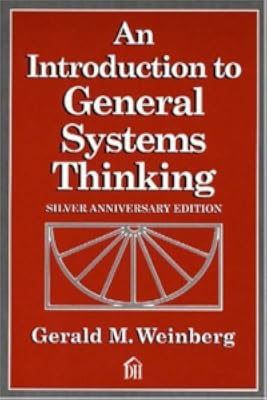
An Introduction to General Systems Thinking
by Gerald M. Weinberg
On This Page
Description
For more than thirty-five years, An Introduction to General Systems Thinking has been hailed as an innovative introduction to systems theory, with applications in software development and testing, medicine, engineering, social sciences, architecture, and beyond. Used in university courses and professional seminars all over the world, the text has proven its ability to open minds and sharpen thinking.Originally published in 1975 and reprinted more than twenty times, the book uses clear show more writing to explore new approaches to projects, products, organizations, and virtually any kind of system.
Scientists, engineers, organization leaders, managers, doctors, students, and thinkers of all disciplines can use this book to dispel the mental fog that clouds problem-solving. As author Gerald M. Weinberg writes, "I haven't changed my conviction that most people don't think nearly as well as they could had they been taught some principles of thinking."
With more than 50 helpful illustrations and 80 examples from two dozen fields, and an appendix on a mathematical notation used in problem-solving, An Introduction to General Systems Thinking may be your most powerful tool in working with problems, systems, and solutions.
"John D. Richards wrote, ". . . this is one of the classics of systems or science of computing. I recommend it to all; it will cause both scientists and non-scientists to examine their world and their thinking. This book will appear on my reading table at regular intervals, and one day I hope to update to the golden anniversary edition."
He continues, "I've found myself returning to An Introduction to General Systems Thinking again and again in the twenty-plus years since I first stumbled across it. I know no better spark to revive a mind that's stuck in dead-end thinking than to open this book, dive into one of Gerald Weinberg's wonderful open-ended questions, and rediscover how one looks at the world."
. show less
Tags
Recommendations












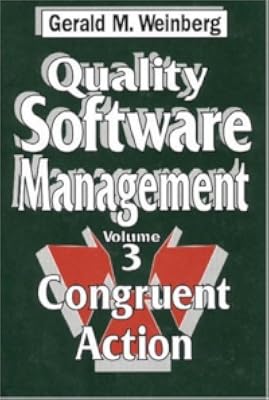

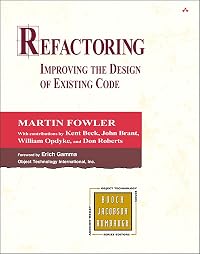

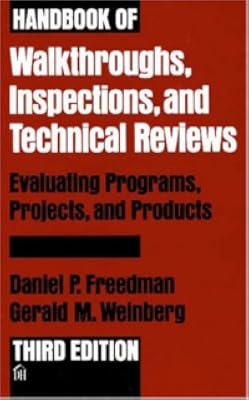

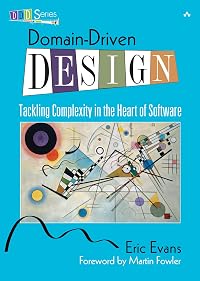









Member Reviews
This book has lots of good content -- I was highlighting frequently -- but it's not the easiest read.
The high level idea of general systems thinking is that there are large classes of problems that are difficult to analyze. Problems with small number of pieces and lots of structure -- organized simplicity -- can be handled analytically. Problems with many pieces and lots of randomness -- unorganized complexity -- can be handled statistically. Those systems in between -- medium systems -- are too large to be handled analytically but not large enough to be handled statistically.
To illustrate this with an example from the text, one can fully analyze the way that the flu spreads through a very small group of people, e.g., a family. show more Alternately, one can statistically analyze the way the flu spreads through a population. But figuring out how the flu spreads through a medium sized group -- a school for example -- is difficult, and a system that was analyzable at other scales suddenly has complex and surprising behavior.
As "The Law of Medium Numbers" puts it: "For medium number systems, we can expect that large fluctuations, irregularities, and discrepancy with with any theory will occur more or less regularly."
So where does that leave us? General systems thinking is the field of creating models and understanding the limitations of those models. An important part of this is understanding how different models can seem contradictory yet both be correct. Along the way, Weinberg diverts into discussions of scientific theories and social subcultures. These passages alone make the ideas in the book worthwhile, and I expect that we would have a lot less controversy over models like evolution and climate change if people understood better how models work. show less
The high level idea of general systems thinking is that there are large classes of problems that are difficult to analyze. Problems with small number of pieces and lots of structure -- organized simplicity -- can be handled analytically. Problems with many pieces and lots of randomness -- unorganized complexity -- can be handled statistically. Those systems in between -- medium systems -- are too large to be handled analytically but not large enough to be handled statistically.
To illustrate this with an example from the text, one can fully analyze the way that the flu spreads through a very small group of people, e.g., a family. show more Alternately, one can statistically analyze the way the flu spreads through a population. But figuring out how the flu spreads through a medium sized group -- a school for example -- is difficult, and a system that was analyzable at other scales suddenly has complex and surprising behavior.
As "The Law of Medium Numbers" puts it: "For medium number systems, we can expect that large fluctuations, irregularities, and discrepancy with with any theory will occur more or less regularly."
So where does that leave us? General systems thinking is the field of creating models and understanding the limitations of those models. An important part of this is understanding how different models can seem contradictory yet both be correct. Along the way, Weinberg diverts into discussions of scientific theories and social subcultures. These passages alone make the ideas in the book worthwhile, and I expect that we would have a lot less controversy over models like evolution and climate change if people understood better how models work. show less
I read this book in the 1980s, probably, and now am writing this review in 2021. This is a book that changed my way of thinking. It's written in an almost jokey style, but is a very serious description of how to think about complex collections of people, ideas, processes, and objects. I learned here to view much of what goes on in the world as systems.
I read a couple of Weinberg's books. He did some on-site consulting in organization development at my employer's of the time.
I preferred his "Psychology of Computer Programming" for accessibility.
I preferred his "Psychology of Computer Programming" for accessibility.
Another gem from Gerald Weinberg. This one is about "systems", in a very general sense. Anybody doing science or engineering (or pretty much anything that involves some type of analysis) will find material of interest here.
Ratings
Members
- Recently Added By
Author Information

60+ Works 3,551 Members
Common Knowledge
- Canonical title
- An Introduction to General Systems Thinking
- Original publication date
- 1975
Classifications
Statistics
- Members
- 415
- Popularity
- 74,925
- Reviews
- 4
- Rating
- (3.93)
- Languages
- Dutch, English, Japanese
- Media
- Paper, Ebook
- ISBNs
- 5
- ASINs
- 1