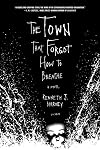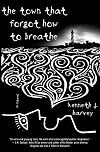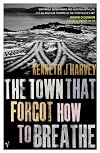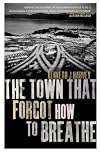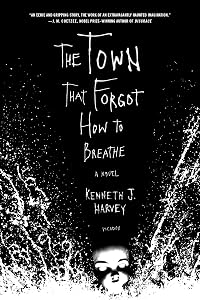
The Town That Forgot How to Breathe
by Kenneth J. Harvey
On This Page
Description
When the maritime village of Bareneed is beset upon by mythic sea creatures, a bizarre suffocating plague, and other strange events, divorced father Joseph Blackwood works against time to save his only daughter.Tags
Recommendations
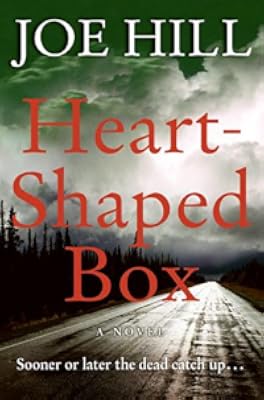
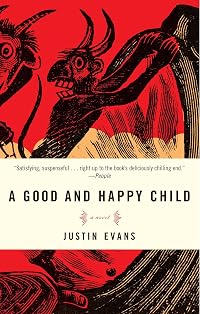
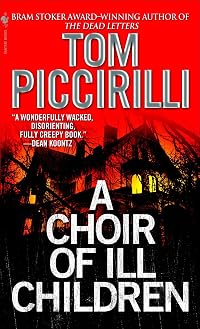
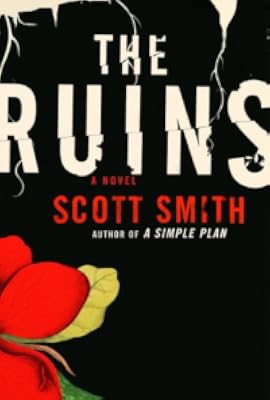
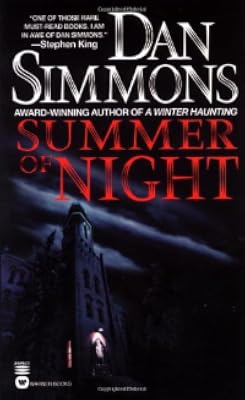
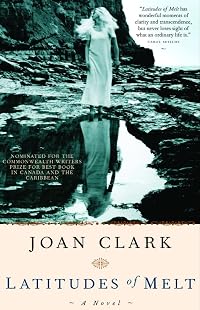

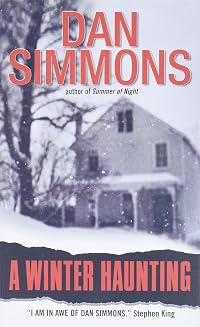
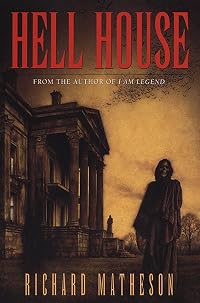







Member Recommendations

Member Reviews
I recommend this book, to you, if even just the title seems remotely interesting.
I found it by chance while browsing, and I don't feel I'm exagerating in saying that this book has a palpable atmosphere even before you begin reading. The title caught my eye, and I picked it up. The cover was at once so unique and so haunting that I had no choice but to buy the book--it's textured, and the computer can't do it justice. It took me some months to start it, though I wanted to.
This is a story which takes place in a Newfoundland seaside town, and follows an amazing array of characters over the span of a week (current day). I can honestly say that I've never seen an author create so many distinct characters to the extent that each is entirely show more different from the others and also feels absolutely real. They speak, feel, think, and act differently, and come across as individuals throughout though their stories are all wound together. Additionally, the detail of the town and scenery are drawn perfectly--never overwhelming, always clear and written with the perfect amount of description. The reality of the work and the characters here will lead you to every emotion you encounter with a good piece of work, from frustration to joy to sadness to fear to points when you'll laugh out loud.
I should say, this is a haunting and lyrical book. I would classify it as literary horror, though in my mind I'm still not quite happy with that phrase as fitting. I began this book in November, and read a hundred pages in one sitting. I put it down to sleep, and found I couldn't sleep peacefully--books don't normally get to me, but this one did, to the extent that while I'd been fully engaged and enamoured with the story, the characters, and the writing, the book so haunted me in the day after I read it that I was nearly afraid to pick it up again. I read another sixty pages three or four days later, and found I couldn't concentrate that night or the next day at all, so I simply put it down, though I considered it nearly daily in the interim after. I had something of a dread of what would happen, and a lasting feeling of being haunted that I wasn't ready to go back to just yet. I promised myself I would finish it over spring break when losing sleep wouldn't hurt me, and the book drew me back in within two pages. About three-fourths of the way through the book, the town was so real that it was absolutely separate from reality--I couldn't be frightened off anymore, because stepping into the book was honestly like stepping into a different world.
Does that sound sort of haunted? It does to me, but this is the most haunting book I've read, far more eerie than anything else I've picked up, and probably better written than any horror I've come across. The atmosphere and the story will suck you in if you give them a chance. I'd suggest reading them away from the ocean and with someone else around to knock you back into reality (at least for the first two hundred pages or so). If you do want a solid scare that'll have you running--sure, read them in a cottage by the sea. I'll be rereading this, but not there. If you end up picking it up, let me know what you think--for me, this is the best read of my year so far.
Five stars, absolutely show less
I found it by chance while browsing, and I don't feel I'm exagerating in saying that this book has a palpable atmosphere even before you begin reading. The title caught my eye, and I picked it up. The cover was at once so unique and so haunting that I had no choice but to buy the book--it's textured, and the computer can't do it justice. It took me some months to start it, though I wanted to.
This is a story which takes place in a Newfoundland seaside town, and follows an amazing array of characters over the span of a week (current day). I can honestly say that I've never seen an author create so many distinct characters to the extent that each is entirely show more different from the others and also feels absolutely real. They speak, feel, think, and act differently, and come across as individuals throughout though their stories are all wound together. Additionally, the detail of the town and scenery are drawn perfectly--never overwhelming, always clear and written with the perfect amount of description. The reality of the work and the characters here will lead you to every emotion you encounter with a good piece of work, from frustration to joy to sadness to fear to points when you'll laugh out loud.
I should say, this is a haunting and lyrical book. I would classify it as literary horror, though in my mind I'm still not quite happy with that phrase as fitting. I began this book in November, and read a hundred pages in one sitting. I put it down to sleep, and found I couldn't sleep peacefully--books don't normally get to me, but this one did, to the extent that while I'd been fully engaged and enamoured with the story, the characters, and the writing, the book so haunted me in the day after I read it that I was nearly afraid to pick it up again. I read another sixty pages three or four days later, and found I couldn't concentrate that night or the next day at all, so I simply put it down, though I considered it nearly daily in the interim after. I had something of a dread of what would happen, and a lasting feeling of being haunted that I wasn't ready to go back to just yet. I promised myself I would finish it over spring break when losing sleep wouldn't hurt me, and the book drew me back in within two pages. About three-fourths of the way through the book, the town was so real that it was absolutely separate from reality--I couldn't be frightened off anymore, because stepping into the book was honestly like stepping into a different world.
Does that sound sort of haunted? It does to me, but this is the most haunting book I've read, far more eerie than anything else I've picked up, and probably better written than any horror I've come across. The atmosphere and the story will suck you in if you give them a chance. I'd suggest reading them away from the ocean and with someone else around to knock you back into reality (at least for the first two hundred pages or so). If you do want a solid scare that'll have you running--sure, read them in a cottage by the sea. I'll be rereading this, but not there. If you end up picking it up, let me know what you think--for me, this is the best read of my year so far.
Five stars, absolutely show less
Everyone has heard the phrase, ‘Don’t judge a book by its cover’. Yet, that is precisely what I do... a lot of the time. Okay, so I don’t judge exactly, but I have to admit I can be greatly influenced by a book’s cover art as well as the title; that is what possessed me to purchase Kenneth J. Harvey’s novel The Town That Forgot How To Breathe.
I purchased my paperback copy live and in person from the now defunct Border’s. The background color of the book’s cover is black with the only additional color being white. The title of the book is written in a raised white font which is spindly in nature; it is centered in the upper half of the front cover. On the bottom of the front cover slightly off centered to the right in show more white is a bald dolls head. The eyes are vacant, the head appears to be coming out of a splash of raised water which follows the book completely around to the back where we find a synopsis of the book again written in the same, albeit smaller, white spindly font. Some words are larger than the others… these words drew me in; mythical creatures, corpses, gothic thriller, H.P. Lovecraft, haunting. I had to read this book!
Scanning the inside I come upon the table of contents. There are fourteen chapters with titles such as; Thursday, Eight Days Ago, Thursday Afternoon and Night, Friday, Friday Night and this continues to Tuesday night and then the Epilogue. I like the simplicity of the titles and it also shows me that what occurs within these 471 pages take place in a span of 6 days.
I expected so much more from this book. I wanted to be on the edge of my seat, turning the page to find out what happens next. Alas, this never happened.
In the beginning of the book the character of Miss Laracy was not my favourite; her dialect was hard to read and it threw me off, however, by the end of the book she had endeared herself to me.
Throughout the book I held out hope for the relationship between Joseph and Kim and every time Claudia came into the picture, I held my breath… pun not intended, ok maybe a little.
Characters were brought in and then dropped out of the story without incident; as was the case of Luke and the albino shark. We learn from Tommy Quilty that the shark starts to regain its colour on the way back to St. John’s but it was never explained or elaborated on. It was like the only reason for that piece of the story was to allow Kim to travel to Bareneed.
I was mostly drawn to the story of Joseph and his daughter Robin. At times I felt they were being possessed by Reg and Jennifer. However, Joseph’s decent into madness seemed to have happened off page. He was sane at the end of one chapter and the next he was over the edge. His madness had me fearing for Robin’s life.
The character Claudia was most confusing, especially at the end. Was she the black dog? Sand pouring out of her wound, and why was Sergeant Chase seeing a little girl? Was Chase actually seeing Jennifer?
For me, there were too many story lines going on that never really seemed to connect.
Was it worth the read? I think so, and I would not discourage anyone from reading the book. Would I run up to my bibliophile friends exclaiming, “You’ve got to read this book!”? Sadly, I would not.
I felt that the cure for “forgetting how to breathe” was the telling of stories; the tall tales.
My overall emotion as the book wound to its end was a deep sadness… a sadness that we all have seemed to have misplaced or lost our stories; the oral tradition of history and storytelling. show less
I purchased my paperback copy live and in person from the now defunct Border’s. The background color of the book’s cover is black with the only additional color being white. The title of the book is written in a raised white font which is spindly in nature; it is centered in the upper half of the front cover. On the bottom of the front cover slightly off centered to the right in show more white is a bald dolls head. The eyes are vacant, the head appears to be coming out of a splash of raised water which follows the book completely around to the back where we find a synopsis of the book again written in the same, albeit smaller, white spindly font. Some words are larger than the others… these words drew me in; mythical creatures, corpses, gothic thriller, H.P. Lovecraft, haunting. I had to read this book!
Scanning the inside I come upon the table of contents. There are fourteen chapters with titles such as; Thursday, Eight Days Ago, Thursday Afternoon and Night, Friday, Friday Night and this continues to Tuesday night and then the Epilogue. I like the simplicity of the titles and it also shows me that what occurs within these 471 pages take place in a span of 6 days.
I expected so much more from this book. I wanted to be on the edge of my seat, turning the page to find out what happens next. Alas, this never happened.
In the beginning of the book the character of Miss Laracy was not my favourite; her dialect was hard to read and it threw me off, however, by the end of the book she had endeared herself to me.
Throughout the book I held out hope for the relationship between Joseph and Kim and every time Claudia came into the picture, I held my breath… pun not intended, ok maybe a little.
Characters were brought in and then dropped out of the story without incident; as was the case of Luke and the albino shark. We learn from Tommy Quilty that the shark starts to regain its colour on the way back to St. John’s but it was never explained or elaborated on. It was like the only reason for that piece of the story was to allow Kim to travel to Bareneed.
I was mostly drawn to the story of Joseph and his daughter Robin. At times I felt they were being possessed by Reg and Jennifer. However, Joseph’s decent into madness seemed to have happened off page. He was sane at the end of one chapter and the next he was over the edge. His madness had me fearing for Robin’s life.
The character Claudia was most confusing, especially at the end. Was she the black dog? Sand pouring out of her wound, and why was Sergeant Chase seeing a little girl? Was Chase actually seeing Jennifer?
For me, there were too many story lines going on that never really seemed to connect.
Was it worth the read? I think so, and I would not discourage anyone from reading the book. Would I run up to my bibliophile friends exclaiming, “You’ve got to read this book!”? Sadly, I would not.
I felt that the cure for “forgetting how to breathe” was the telling of stories; the tall tales.
My overall emotion as the book wound to its end was a deep sadness… a sadness that we all have seemed to have misplaced or lost our stories; the oral tradition of history and storytelling. show less
A hauntingly beautiful novel of the supernatural, The Town That Forgot How to Breathe explores one of the most original ideas I've come across in my lifetime of reading. Mythical sea creatures, such as albino sharks, mermaids, flying fish which really fly (not just jump), are being spotted around the fishing village of Bareneed, Newfoundland in remote Atlantic Canada. Corpses of missing townspeople presumed drowned at sea, some over 200 years ago, are amassing in the waters and floating to shore. And a mysterious illness is causing people to literally forget how to breathe - patients who fall asleep without mechanical breathing assistance will die because their unconscious minds are no longer able to regulate respiratory activity.
Into show more this bizarre sea and landscape comes a recently separated father and his young daughter for a few weeks of vacation. Soon after arriving, we begin meeting some of the paranormally talented residents of the village, including an elderly woman who sees auras, a sculptress who is visited by her missing and presumed dead young daughter and a mildly mentally challenged painter whose works portend the future.
Harvey explores the nature of identity and love but reserves his primary thrust for the dichotomy between tradition and modernism. The use of the supernatural to explore this chasm is brilliant in its execution and is ably served by a lyrical prose. We are put in the minds of the characters: as they are unsure who is who and who is dead, neither are we.
Highly recommended for those looking for a different kind of horror story. show less
Into show more this bizarre sea and landscape comes a recently separated father and his young daughter for a few weeks of vacation. Soon after arriving, we begin meeting some of the paranormally talented residents of the village, including an elderly woman who sees auras, a sculptress who is visited by her missing and presumed dead young daughter and a mildly mentally challenged painter whose works portend the future.
Harvey explores the nature of identity and love but reserves his primary thrust for the dichotomy between tradition and modernism. The use of the supernatural to explore this chasm is brilliant in its execution and is ably served by a lyrical prose. We are put in the minds of the characters: as they are unsure who is who and who is dead, neither are we.
Highly recommended for those looking for a different kind of horror story. show less
I picked this book up in Powell's City of Books on a recent trip to Portland to read on the plane ride home. The first half was a perfect plane read: eerie and atmospheric, and, though not exactly plot-driven, compelling enough to keep me turning the pages until touch-down. The second half, however, petered out and so did my interest. What started as a promisingly haunted portrait of a Newfoundland fishing village and its uneasy relationship to 21st-century modernity turned into a lame morality tale about how electric lights and the internet are bad for the soul, or something.
If this were made into a movie, though, I'd probably watch that on a future plane ride.
If this were made into a movie, though, I'd probably watch that on a future plane ride.
Have you ever thought about what it would be like if you had to consciously decide to take each and every breath? I always thought that would make a great curse for your enemies. While that idea isn't the premise of this book, it does come into play. I used to read a lot of horror and none of it ever really disturbed me (repulsed, maybe, but not disturbed), but this book did. Pay close attention in the very beginning and it will be even more fun later. I had to go flipping back to figure out if what I thought was happening really was. But read it, definitely. It's a great story, it's well written and it will still let you sleep at night. Though your heart might get a bit more of a workout than usual.
[b: The Town That Forgot How to Breathe|218409|The Town That Forgot How to Breathe|Kenneth J. Harvey|https://images.gr-assets.com/books/1316727742s/218409.jpg|302418] was at no point quite what I expected it to be. I'd been told it was a book in general Lovecraftian style, playing on the trope of a strange isolated seaside community. I expected the usual progression such stories take: the fear of being an outsider in an insulated community, strange beliefs at odds with the modern world, the dark creatures that swim beneath the surface of the sea... Instead what I got was a bit of a treatise against the modern world and the evils of convenience.
Divorced Joseph, and his daughter Robin, go for vacation in the town of Bareneed. Joseph had show more come from fisherman stock, but had taken up a job as a fisheries officer rather than follow in his families footsteps. The book opens with Miss Laracy, the town elder, realizing that young Robin has the sight. She can see spirits, and thus is the new life that Bareneed indeed needs. What follows is a tale of gothic horror. People are stricken with an illness that manifests as an inability to breathe automatically. They've forgotten who they are, where they are, and where they come from. It's an odd metaphor of the loss of identity that tends to rise up in places where modern ways of life clash with tradition, and plays out accordingly...
It's an interesting book, and not really a bad one. I simply wished for more care to be put into the characterization of the people within it, and a bit more clarity when it came to certain people's motivations. I could easily see falling in love with this book if I cared more for the style in which it was written, but overall I just couldn't get as into it as I wished. Still an interesting book, though. Would likely make a killer miniseries if adapted to television. show less
Divorced Joseph, and his daughter Robin, go for vacation in the town of Bareneed. Joseph had show more come from fisherman stock, but had taken up a job as a fisheries officer rather than follow in his families footsteps. The book opens with Miss Laracy, the town elder, realizing that young Robin has the sight. She can see spirits, and thus is the new life that Bareneed indeed needs. What follows is a tale of gothic horror. People are stricken with an illness that manifests as an inability to breathe automatically. They've forgotten who they are, where they are, and where they come from. It's an odd metaphor of the loss of identity that tends to rise up in places where modern ways of life clash with tradition, and plays out accordingly...
It's an interesting book, and not really a bad one. I simply wished for more care to be put into the characterization of the people within it, and a bit more clarity when it came to certain people's motivations. I could easily see falling in love with this book if I cared more for the style in which it was written, but overall I just couldn't get as into it as I wished. Still an interesting book, though. Would likely make a killer miniseries if adapted to television. show less
I'm not sure if I liked this book, but I know that I couldn't put it down. The first half was especially good, and Harvey sure knows how to set the scene... but it seemed to lose direction as it gained momentum towards the end. Overall, though, it was very well written, and if you like a really well developed, creepy setting, this is worth the read just for that.
The town of Bareneed in remote Newfoundland is not what it used to be - the fishing plant, the lifeblood of the community, sits unused. Moreover, people begin to get sick with some sort of breathing disorder that stumps the local doctor. As the sickness escalates, other strange events start happening around town as well.
The town of Bareneed in remote Newfoundland is not what it used to be - the fishing plant, the lifeblood of the community, sits unused. Moreover, people begin to get sick with some sort of breathing disorder that stumps the local doctor. As the sickness escalates, other strange events start happening around town as well.
Members
- Recently Added By
Published Reviews
ThingScore 75
The trouble began when the cod fishery closed down a few years earlier and the community lost a piece of its soul, developing a need—a bare need—for “visions… manifested as a… coping mechanism.” But the secondhand vitality of conjuring spirits, in this town, must compete with the canned visions of the twenty-first century, the electronic storytelling of TV and the internet.
added by paradoxosalpha
In these days of SARS and West Nile virus, Kenneth Harvey’s new novel about a catastrophic illness devastating an outport Newfoundland community is timely. But while whatever is filling the hospital with the stricken folk of Bareneed is severe, respiratory, and acute, it is like no known virus. And it is only one aspect of a moiling, preternatural miasma somehow connected to a crack in the show more ocean floor belching up bodies drowned years and even centuries before. Amber rays and disrupted electronic fields are involved. So are fish.... When Joseph is afflicted with the violent sexual hallucinations connected to the disease, we know we’re in classic Harvey territory. In his previous 13 books, this Newfoundland writer, now in mid-career, has made many forays into the heart of darkness....You can’t put down The Town That Forgot How to Breathe without thinking that economic and political decisions in remote centres of power can kill a people as effectively and remorselessly as any plague. show less
added by vancouverdeb
Lists

Magic Realism
371 works; 52 members
Talk Discussions
Past Discussions
The Town That Forgot How To Breathe in Thing(amabrarian)s That Go Bump in the Night (August 2008)
Author Information

18+ Works 795 Members
Some Editions
Awards and Honors
Notable Lists
Common Knowledge
- Canonical title
- The Town That Forgot How to Breathe
- Original publication date
- 2003
- Important places
- Bareneed, Newfoundland, Canada; Newfoundland, Canada
- First words
- Miss Eileen Laracy shuffled up the higher road in search of lilacs to lay atop her white chenille bedspread.
- Blurbers
- Coetzee, J.M.; O'Connor, Joseph
Classifications
Statistics
- Members
- 573
- Popularity
- 51,761
- Reviews
- 20
- Rating
- (2.97)
- Languages
- 6 — Dutch, English, French, German, Italian, Swedish
- Media
- Paper
- ISBNs
- 14
- ASINs
- 1