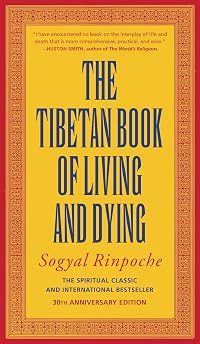
The Tibetan Book of Living and Dying
by Sogyal Rinpoche
On This Page
Description
A newly revised and updated edition of the internationally best-selling spiritual classic, The Tibetan Book of Living and Dying, written by Sogyal Rinpoche, is the ultimate introduction to Tibetan Buddhist wisdom. An enlightening, inspiring, and comforting manual for life and death that the New York Times calls, "The Tibetan equivalent of {Dante's} The Divine Comedy," this is the essential work that moved Huston Smith, author of The World's Religions, to proclaim, "I have encountered no book show more on the interplay of life and death that is more comprehensive, practical, and wise." This 30th Anniversary edition includes a foreword by the Dalai Lama and is masterfully narrated by Lorraine Velez. Produced and published by Echo Point Books & Media, an independent bookseller in Brattleboro, Vermont. ©2002 Rigpa Fellowship (P.) show lessTags
Recommendations





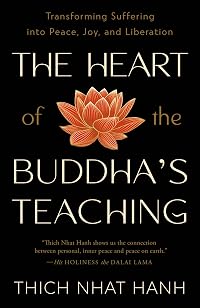
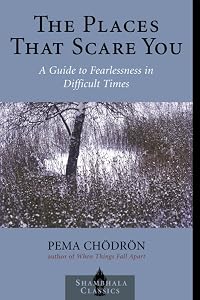

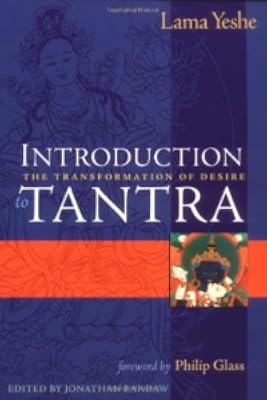
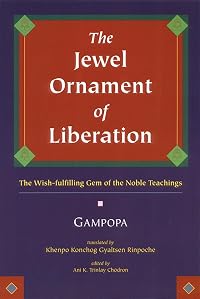

Member Recommendations

Member Reviews
I've wanted to read The Tibetan Book of Living and Dying for a long time—over twenty years—but have been too intimidated. I can't remember where the intimidation comes from because I'm almost positive I've never even looked between the covers, but something was holding me back. Then I asked a friend for Buddhist book recommendations and was told that this is one of her favorite books. I don't know if I'd call it one of my favorites, but I did like it a lot. Over my life I've had trouble with death (both the death of loved ones and my eventual death) and discipline, and this book helped me with both; with death, more than anything else I've read.
I am at my best when I am regularly meditating. I've found myself in an absurd amount of show more intense situations in my life, and I can draw a straight line between whether or not I'm meditating and how well I handled it. Although I've been meditating for almost twenty years, it's been very on and off, mostly off. My path toward becoming more balanced and peaceful has been clunky and slow, but this book reminded me it’s still a path—and I’m doing just fine .
A title like The Tibetan Book of Living and Dying feels bold—maybe even arrogant—but Sogyal Rinpoche delivers. After reading this book I have many more different styles of meditation to access, I'm more interested in and have better access to my expansive mind, I can look at death with a more rational lens, and I'm excited to learn more and prepare myself for what the future inevitably holds. Talk of life after death and reincarnation felt, at times, like the kind of doctrine that has been used to pacify and manipulate people. I don’t think that’s the goal of this book—or Buddhism in general—but the echoes of that were hard to ignore. Still, it's neat to think about and I'm not 100 percent sure that there's nothing after we die.
I've heard and read other teachers talk about the expansiveness of the mind, but it never really clicked. Last year while listening to a guided meditation by Lama Rod Owens, he said something (I can't remember what) that made everything fall into place, that helped me start to grasp how truly limitless my inner world is. And reading this book gave me the tools to explore that more and the knowledge that it is perhaps the most important part of meditation.
Another insight I had while reading and contemplating was of being on the right path. I've spent decades both trying to live more simply (having less stuff, a smaller dwelling, setting up my life in a way where I can spend ample time doing things that I love) and finding some balance. Things have happened in my life to make me believe that this path was a selfish path or immature or naive, but hearing someone as enlightened as the author talk about simplicity and balance in depth helped me realize that I'm doing the right thing. I'm spending a lot of time in my head, I'm trying to increase my compassion, and I'm working on my attachment. Am I headed towards my goals at a tremendous speed? No, and that's ok.
The Tibetan Book of Living and Dying, like everything ever written, is not a perfect book. As I stated earlier, I have an issue with telling people that the most important part of life is focusing on what happens after we die; this has been used to manipulate large percentages of Earth's population for centuries. I respect Buddhism a lot more than Christianity, and therefore don't believe that this is their goal, but it feels strange nonetheless.
The concept that I most struggled with was (and I'm probably not saying this as clearly as I'd like to) is that all negative emotions arise from not recognizing their true nature. I can't find the section of the book that talks about this, but it was something like if we recognize anger for what it truly is, we would see joy. That all these negative emotions are actually positive ones in disguise. Clearly, by the fact that I don't even remember where in the book this is, I need more help understanding this.
I remember when I first became an EMT, there was a man whose house we went to multiple times per week. He was probably in his 80s and had bad dementia, and I remember one time him staring at his reflection in a mirror, absolutely petrified, and saying, “who the fuck is that.” The terror in his eyes filled me with dread. One day I may slowly lose my mind; I'll almost definitely experience my body breaking down, and that scared the living shit out of me. It's haunted me since, and it's something that I think about and try to work through on a regular basis. I see so many people who probably have the same or similar fears, but constantly distract themselves so as to avoid thinking about it, and I know I don't want to be like them. This book helped me take a step in the right direction.
Another thing I've been struggling with lately is the feeling that I need to leave the place where I live. I love living in a cabin on ten acres in a town of 2000 people and I thank the stars every day that I've gotten to experience this. But the solitude that at first felt peaceful and clarifying has sunk into isolation. The author's insistence that in order to achieve the enlightenment he talks about, we need a teacher, felt like the final nail in the coffin that will soon hold my time in this little place.
If you're one of the many people struggling with the concept of death or loneliness or spiritual discipline, then this book is for you. It's not a quick read and it's worth having someone to talk to while reading, but it's such a helpful 366 pages. show less
I am at my best when I am regularly meditating. I've found myself in an absurd amount of show more intense situations in my life, and I can draw a straight line between whether or not I'm meditating and how well I handled it. Although I've been meditating for almost twenty years, it's been very on and off, mostly off. My path toward becoming more balanced and peaceful has been clunky and slow, but this book reminded me it’s still a path—and I’m doing just fine .
A title like The Tibetan Book of Living and Dying feels bold—maybe even arrogant—but Sogyal Rinpoche delivers. After reading this book I have many more different styles of meditation to access, I'm more interested in and have better access to my expansive mind, I can look at death with a more rational lens, and I'm excited to learn more and prepare myself for what the future inevitably holds. Talk of life after death and reincarnation felt, at times, like the kind of doctrine that has been used to pacify and manipulate people. I don’t think that’s the goal of this book—or Buddhism in general—but the echoes of that were hard to ignore. Still, it's neat to think about and I'm not 100 percent sure that there's nothing after we die.
I've heard and read other teachers talk about the expansiveness of the mind, but it never really clicked. Last year while listening to a guided meditation by Lama Rod Owens, he said something (I can't remember what) that made everything fall into place, that helped me start to grasp how truly limitless my inner world is. And reading this book gave me the tools to explore that more and the knowledge that it is perhaps the most important part of meditation.
Another insight I had while reading and contemplating was of being on the right path. I've spent decades both trying to live more simply (having less stuff, a smaller dwelling, setting up my life in a way where I can spend ample time doing things that I love) and finding some balance. Things have happened in my life to make me believe that this path was a selfish path or immature or naive, but hearing someone as enlightened as the author talk about simplicity and balance in depth helped me realize that I'm doing the right thing. I'm spending a lot of time in my head, I'm trying to increase my compassion, and I'm working on my attachment. Am I headed towards my goals at a tremendous speed? No, and that's ok.
The Tibetan Book of Living and Dying, like everything ever written, is not a perfect book. As I stated earlier, I have an issue with telling people that the most important part of life is focusing on what happens after we die; this has been used to manipulate large percentages of Earth's population for centuries. I respect Buddhism a lot more than Christianity, and therefore don't believe that this is their goal, but it feels strange nonetheless.
The concept that I most struggled with was (and I'm probably not saying this as clearly as I'd like to) is that all negative emotions arise from not recognizing their true nature. I can't find the section of the book that talks about this, but it was something like if we recognize anger for what it truly is, we would see joy. That all these negative emotions are actually positive ones in disguise. Clearly, by the fact that I don't even remember where in the book this is, I need more help understanding this.
I remember when I first became an EMT, there was a man whose house we went to multiple times per week. He was probably in his 80s and had bad dementia, and I remember one time him staring at his reflection in a mirror, absolutely petrified, and saying, “who the fuck is that.” The terror in his eyes filled me with dread. One day I may slowly lose my mind; I'll almost definitely experience my body breaking down, and that scared the living shit out of me. It's haunted me since, and it's something that I think about and try to work through on a regular basis. I see so many people who probably have the same or similar fears, but constantly distract themselves so as to avoid thinking about it, and I know I don't want to be like them. This book helped me take a step in the right direction.
Another thing I've been struggling with lately is the feeling that I need to leave the place where I live. I love living in a cabin on ten acres in a town of 2000 people and I thank the stars every day that I've gotten to experience this. But the solitude that at first felt peaceful and clarifying has sunk into isolation. The author's insistence that in order to achieve the enlightenment he talks about, we need a teacher, felt like the final nail in the coffin that will soon hold my time in this little place.
If you're one of the many people struggling with the concept of death or loneliness or spiritual discipline, then this book is for you. It's not a quick read and it's worth having someone to talk to while reading, but it's such a helpful 366 pages. show less
Who dies? The answer to this question goes straight to the heart of Dzogchen, a 1,200-year-old school of Tibetan Buddhism that sees impermanence as the very essence of existence.
Sogyal Rinpoche grew up in the last generation of Tibetans who learned Buddhism as it was traditionally taught in Tibet. Schooled by his country's most revered masters, and later educated at Cambridge, Sogyal Rinpoche is uniquely prepared to bring this ancient tradition to the Western world today.
On Tibetan Wisdom for Living and Dying, Rinpoche presents a grand and transforming vision of life and death, introducing you to Tibetan practices that can help anyone live fully, while preparing for the extraordinary adventure that death offers each one of us.
What we show more call life and death, Rinpoche teaches, are merely shades of the same unbroken wholeness. By daring to see clearly the truth of our lives, and by exploring the part of us that is changeless and eternal, we can face the last moment of life without fear.
Masterfully taught, Tibetan Wisdom for Living and Dying is both a guide to this inner technology and a sacred document for listeners of all faiths and traditions. show less
Sogyal Rinpoche grew up in the last generation of Tibetans who learned Buddhism as it was traditionally taught in Tibet. Schooled by his country's most revered masters, and later educated at Cambridge, Sogyal Rinpoche is uniquely prepared to bring this ancient tradition to the Western world today.
On Tibetan Wisdom for Living and Dying, Rinpoche presents a grand and transforming vision of life and death, introducing you to Tibetan practices that can help anyone live fully, while preparing for the extraordinary adventure that death offers each one of us.
What we show more call life and death, Rinpoche teaches, are merely shades of the same unbroken wholeness. By daring to see clearly the truth of our lives, and by exploring the part of us that is changeless and eternal, we can face the last moment of life without fear.
Masterfully taught, Tibetan Wisdom for Living and Dying is both a guide to this inner technology and a sacred document for listeners of all faiths and traditions. show less
I think this book has sat on my physical TBR longer than any other book I have owned, somewhere in the region of 10 years. Since then I have tried to read it several times, each time not getting more than 50 pages into it before having to put it aside. I always put it aside due to the fact it is pretty heavy going, this is not a book to read when you are tired or distracted. In recent months my reading has been going great so I decided to pick it up again and this time to finish it. Along the way I also read something lighter to give me some entertainment when I felt a big bogged down.
Looking at reviews of the book online it appears that it does live up the claim on the cover, it is widely regarded as a spiritual classic. My forays show more online also revealed something that I was unaware of. Sogyal Rinpoche has been implicated is a sexual abuse scandal involving his female disciples. He took advantage of his position of master and as a result has been widely shunned by the Tibetan Buddhist community. This put me in a bit of an awkward situation, I wanted to read the book but felt his actions are very contradictory with regards to his message. I felt I should plow on with the book though and see what it had to offer.
Sadly for me the book was a miss despite it being loved by many people. I have had an interest in Buddhist for most of my adult life but I wouldn't really consider myself a religious person. I am agnostic by nature and one thing I have always admired about Buddhism is the message to make use of what you find value in and let the rest go. Unquestionable belief is not a requirement and I find this comforting. This book contained far too many tales of miracles and mystical woo woo for my liking. The parts about compassion, empathy, and caring for the dying were fantastic but too often they were packaged with unbelievable 'facts'. If i had been a fully signed up Buddhist with a leaning towards the Tibetan traditions I'm sure I would have loved this book.
Large sections of the book are very pressing on the importance of the master-disciple relationship. This was uncomfortable reading as it is easy to see in hindsight how he has used these beliefs take advantage of women by giving them 'special teachings'. For the relationship to work I would imagine there has to be complete trust and as someone who held such a highly respected position to abuse this trust is unforgivable. This is even more troubling when you consider many people went to him for guidance on dealing with death of either themselves or their loved ones. show less
Looking at reviews of the book online it appears that it does live up the claim on the cover, it is widely regarded as a spiritual classic. My forays show more online also revealed something that I was unaware of. Sogyal Rinpoche has been implicated is a sexual abuse scandal involving his female disciples. He took advantage of his position of master and as a result has been widely shunned by the Tibetan Buddhist community. This put me in a bit of an awkward situation, I wanted to read the book but felt his actions are very contradictory with regards to his message. I felt I should plow on with the book though and see what it had to offer.
Sadly for me the book was a miss despite it being loved by many people. I have had an interest in Buddhist for most of my adult life but I wouldn't really consider myself a religious person. I am agnostic by nature and one thing I have always admired about Buddhism is the message to make use of what you find value in and let the rest go. Unquestionable belief is not a requirement and I find this comforting. This book contained far too many tales of miracles and mystical woo woo for my liking. The parts about compassion, empathy, and caring for the dying were fantastic but too often they were packaged with unbelievable 'facts'. If i had been a fully signed up Buddhist with a leaning towards the Tibetan traditions I'm sure I would have loved this book.
Large sections of the book are very pressing on the importance of the master-disciple relationship. This was uncomfortable reading as it is easy to see in hindsight how he has used these beliefs take advantage of women by giving them 'special teachings'. For the relationship to work I would imagine there has to be complete trust and as someone who held such a highly respected position to abuse this trust is unforgivable. This is even more troubling when you consider many people went to him for guidance on dealing with death of either themselves or their loved ones. show less
REVIEW From LibraryThing
Who dies? The answer to this question goes straight to the heart of Dzogchen, a 1,200-year-old school of Tibetan Buddhism that sees impermanence as the very essence of existence.
Sogyal Rinpoche grew up in the last generation of Tibetans who learned Buddhism as it was traditionally taught in Tibet. Schooled by his country's most revered masters, and later educated at Cambridge, Sogyal Rinpoche is uniquely prepared to bring this ancient tradition to the Western world today.
On Tibetan Wisdom for Living and Dying, Rinpoche presents a grand and transforming vision of life and death, introducing you to Tibetan practices that can help anyone live fully, while preparing for the extraordinary adventure that death offers show more each one of us.
What we call life and death, Rinpoche teaches, are merely shades of the same unbroken wholeness. By daring to see clearly the truth of our lives, and by exploring the part of us that is changeless and eternal, we can face the last moment of life without fear.
Masterfully taught, Tibetan Wisdom for Living and Dying is both a guide to this inner technology and a sacred document for listeners of all faiths and traditions. show less
Who dies? The answer to this question goes straight to the heart of Dzogchen, a 1,200-year-old school of Tibetan Buddhism that sees impermanence as the very essence of existence.
Sogyal Rinpoche grew up in the last generation of Tibetans who learned Buddhism as it was traditionally taught in Tibet. Schooled by his country's most revered masters, and later educated at Cambridge, Sogyal Rinpoche is uniquely prepared to bring this ancient tradition to the Western world today.
On Tibetan Wisdom for Living and Dying, Rinpoche presents a grand and transforming vision of life and death, introducing you to Tibetan practices that can help anyone live fully, while preparing for the extraordinary adventure that death offers show more each one of us.
What we call life and death, Rinpoche teaches, are merely shades of the same unbroken wholeness. By daring to see clearly the truth of our lives, and by exploring the part of us that is changeless and eternal, we can face the last moment of life without fear.
Masterfully taught, Tibetan Wisdom for Living and Dying is both a guide to this inner technology and a sacred document for listeners of all faiths and traditions. show less
The Tibetan Book of Living and Dying by Sogyal Rinpoche is a classic of Eastern Philosophy. It discusses the methods and techniques to prepare your mindset for the impending specter of death that eventually visits us all. The book is not all about death and dying, it attempts to instruct the reader on how to live without regret. It is beautifully written and quite inspiring. The version I have is the Twentieth Anniversary edition and other than the preface message, I don’t think anything else was updated.
The book discusses phenomena associated with dying people, some of whom have attained enlightenment. Since I don’t really believe in God or Life after Death, trying to wrap my head around stories of Reincarnation gave me feelings of show more cognitive dissonance. I mean, I can accept some things, but past lives and Life after Death is not something you can really explain without a hand wave. So some parts of this book were really hard to swallow, but I can accept the advice it provides to take care of dying people. In the end, people are all pretty much the same. When you are dying, the facade that you put forth for others comes off and you become who you truly are.
On another note, the book is also quite informative about Tibetan Culture and how they choose successors and other things. For instance, take the name of the author. Since I am a Westerner and an American, I generally assume that the person’s given name comes first and the family name comes last. Now I know that some other cultures have the opposite way of doing that, notably Japan and maybe Korea. For this gentleman, it isn’t even that. He inherited the name ‘Rinpoche’ as a title which means ‘Precious One.’
So this book was really fascinating and I liked it quite a bit. show less
The book discusses phenomena associated with dying people, some of whom have attained enlightenment. Since I don’t really believe in God or Life after Death, trying to wrap my head around stories of Reincarnation gave me feelings of show more cognitive dissonance. I mean, I can accept some things, but past lives and Life after Death is not something you can really explain without a hand wave. So some parts of this book were really hard to swallow, but I can accept the advice it provides to take care of dying people. In the end, people are all pretty much the same. When you are dying, the facade that you put forth for others comes off and you become who you truly are.
On another note, the book is also quite informative about Tibetan Culture and how they choose successors and other things. For instance, take the name of the author. Since I am a Westerner and an American, I generally assume that the person’s given name comes first and the family name comes last. Now I know that some other cultures have the opposite way of doing that, notably Japan and maybe Korea. For this gentleman, it isn’t even that. He inherited the name ‘Rinpoche’ as a title which means ‘Precious One.’
So this book was really fascinating and I liked it quite a bit. show less
A masterful distillation for the West of the priceless wisdom of Tibetan Buddhism that gives us practical instruction and spiritual guidance on how to live in light of the greatest teacher of all -- death.
Very good piece on death, the process of dying and the art of dying. Derived from ancient Tibetan knowledge and wisdom. One important point is that if you are prepared for death and know what to expect, it gives you peace of mind, reduces fear, and makes it easier to live your current life fully. I’ve bought several copies of this book and distributed it amongst the people close to me, with my wish that I want do die as instructed in this book, and that I want to have this book read to me on my death bed. In case you are confronted with death in your close circle, consider reading some passages of this book to the one who is dying, to ease their fear and to prepare them for what is coming.
Members
- Recently Added By
Lists


Author Information

61+ Works 4,335 Members
Sogyal Rinpoche was born in Tibet and brought up by one of the most outstanding spiritual masters of the twentieth century, Jamyang Khyentse Chokyi Lodro. He studied at universities in New Delhi and Cambridge and acted as translator and aid to many eminent Tibetan Buddhist masters. He is the founder and spiritual director of Rigpa, an show more international network of Buddhist centers and, through his tireless traveling around the world, he has become one of the best-loved interpreters of Tibetan Buddhism today show less
Some Editions
Work Relationships
Is contained in
Common Knowledge
- Canonical title*
- Das tibetische Buch vom Leben und vom Sterben
- Original title
- The Tibetan Book of Living and Dying
- Original publication date
- 1992; 1994 (1st paperback ed) (1st paperback ed)
- People/Characters
- Tenzin Gyatzo. XIV Dalai Lama
- Epigraph
- Šią knygą skiriu Džamjangui Kjencė Čiokji Lodro, Dudžomui Rinpočei ir visiems kitiems mylimiems mokytojams, teikusiems mano gyvenimui įkvėpimą. Tebūnie ši knyga Išsilaisvinimo vadovas gyviesiems, mirštantiesiem... (show all)s ir mirusiesiems. Tepadeda ji visiems skaitytojams ir teskatina juos keliauti į nušvitimą!
- First words*
- Meine erste Begeg ung mit dem Tod hatte ich im Alter von sieben Jahren, als wir uns eben darauf vorbereiteten, das östliche Hochland zu verlassen, um nach Zentraltibet aufzubrechen.
- Last words*
- (Click to show. Warning: May contain spoilers.)Puissent tous les êtres des six royaumes atteindre tous ensemble la base de la perfection primordiale.
- Disambiguation notice*
- basierend auf "2002 (amerikanische Originalausgabe). Revised and updated version."
vollständige Ausgabe
*Some information comes from Common Knowledge in other languages. Click "Edit" for more information.
Classifications
Statistics
- Members
- 2,767
- Popularity
- 6,677
- Reviews
- 29
- Rating
- (4.15)
- Languages
- 21 — Chinese, Danish, Dutch, English, Estonian, Finnish, French, German, Hungarian, Italian, Japanese, Lithuanian, Norwegian (Bokmål), Norwegian, Polish, Romanian, Croatian, Spanish, Swedish, Turkish, Portuguese (Portugal)
- Media
- Paper, Audiobook, Ebook
- ISBNs
- 76
- UPCs
- 1
- ASINs
- 28