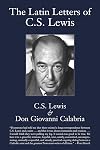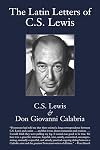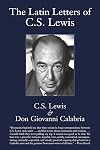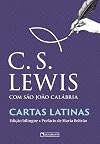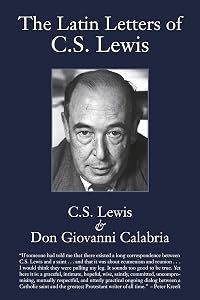
Latin Letters of C.S. Lewis
by C. S. Lewis, Giovanni Calabria
On This Page
Description
Aficionados de C.S Lewis disfrutaran de este gran trabajo histórico con comentarios sobre cartas entre grandes eclesiásticos en temas de divinidad, guerras, la iglesia y oraciones. En septiembre de 1947, tras leer Cartas del diablo a su sobrino, el padre Giovanni Calabria se sintió impulsado a escribirle al autor, pero no sabía inglés, de modo que lo hizo en latín. Así comenzó una correspondencia que sobreviviría al propio padre Calabria (murió en diciembre de 1954 y le sucedió en show more la correspondencia el padre Luigi Pedrollo). El traductor y editor Martin Moynihan califica estas cartas de "límpidas, fluidas y profundamente refrescantes. También poseen un gran encanto, sobre todo por la forma en que se inician y concluyen, es decir, por los variopintos formalismos que se emplean para presentarlas o para despedirse". Las Cartas en latín de C. S. Lewis a Don Giovanni Calabriamuestran, más que otras de sus publicaciones, la fuerte faceta devocional de Lewis y contienen temas que van desde la unidad de los cristianos y la historia moderna de Europa hasta la liturgia y el comportamiento ético general. Además, adquieren a menudo un carácter íntimo y personal. Fans of C.S. Lewis will enjoy this great historical work with commentaries on letters between great ecclesiastics on the subjects of divinity, war, the church and prayer. In September 1947, after reading C.S. Lewis's The Screwtape Letters in Italian, Fr. (now St.) Giovanni Calabria was moved to write the author, but he knew no English and assumed (rightly) that Lewis knew no Italian. So, he wrote his letter in Latin, hoping that, as a classicist, Lewis would know Latin. Therein began a correspondence that was to outlive Fr. Calabria himself (he died in December 1954, and was succeeded in correspondence by Fr. Luigi Pedrollo, which continued until Lewis's own death in 1963). Translator/editor Martin Moynihan calls these letters "limpid, fluent and deeply refreshing. There was a charm about them, too, and not least in the way they were 'topped and tailed'-that is, in their ever-slightly-varied formalities of address and of farewell." More than any other of his published works The Latin Letters shows the strong devotional side of Lewis and contains letters ranging from Christian unity and modern European history to liturgical worship and general ethical behavior. show lessTags
Recommendations












Member Reviews
This is an fun book to read and have on a number of different levels, but ultimately an oddity of middling interest.
First the positive. It is interesting that Lewis carried on an exchange with an Italian priest, Don Giovanni Calabria, since canonized. It is fun to see Lewis write Latin. There seems to be genuine affection here, and some interesting stuff, especially Lewis' thoughts on Christian unity, does come up.
Now some negatives. First, the exchange is largely one-sided and hard to follow. Few of Calabria's letters are extant, but, from the surviving ones, you get the sense he was one of those no doubt saintly but tiresome Christians who can't write a sentence about a topic directly, but must swaddle it in yards of pious cloth. show more Take letters 10 and 14, which are composed entirely of "may this!" and "may that!" constructions (ie., mostly subjunctives) of an entirely pious but also entirely colorless and general nature. One claws through them looking for a point, much as one crawls through the letters of Julian and Libanius—proving that apostates can be bores every bit as much as Saints.
Second, although Lewis opines briefly on various topics, there's little in the way of sustained conversation here. We learn for example that Calabria proposed Christian unity be founded on the Pope—a pious Catholic thought, perhaps, but, as Lewis gently notes, one that begs the question. Lewis goes on to make some interesting observations about Thomas More and William Tyndale. Then the matter is apparently dropped. Similarly, Lewis' letters indicate that Calabria was much alarmed by the state of the world, gave various examples, and wanted Lewis to agree with him. Lewis does to to some extent, but also warns of the danger of old men complaining about the present--and he doesn't engage on any specific points. Good will, dropped threads and polite deflection doesn't make for a very lively conversation.
After Calabria dies, Lewis continued to correspond with his successor, but the conversation becomes very perfunctory.
The Latin is fun--Lewis' at any rate. It reads like Lewis, but perhaps sometimes too much. For example, at the close of one letter Lewis wrote "Be it granted to us, I pray, hereafter, to meet in our True Country face to face." "True Country" is very Lewis--used in Mere Christianity and many other places. But, for what it's worth the Latin is merely "in Patria." The lack of a possessive is fine and very Latin, and even without "True"--which Latin has a word for!--it amounts to the same thing, namely heaven, but it would be better if the translator didn't try to sound more Lewis than Lewis.
I was also disappointed by the notes. For example, in December 1951 Lewis writes that he is sending Calabria a tale (fabula) recently translated into Italian. The editor proposes this is "presumably one of this stories for children." This seems very lazy. By this time Lewis had written a few things--the space trilogy, the Great Divorce and the first two Narnia books. It's probably The Lion, The Witch and the Wardrobe, but not necessarily so. I did a quick check and can't find an Italian edition of that so early. However Mondadori published an Italian translation of Out of the Silent Planet in 1951. It could be that. Couldn't the editor have taken the time to do a little legwork here?
Recommended for Latinate Lewis-o-philes and Latin-less Lewis completists. show less
First the positive. It is interesting that Lewis carried on an exchange with an Italian priest, Don Giovanni Calabria, since canonized. It is fun to see Lewis write Latin. There seems to be genuine affection here, and some interesting stuff, especially Lewis' thoughts on Christian unity, does come up.
Now some negatives. First, the exchange is largely one-sided and hard to follow. Few of Calabria's letters are extant, but, from the surviving ones, you get the sense he was one of those no doubt saintly but tiresome Christians who can't write a sentence about a topic directly, but must swaddle it in yards of pious cloth. show more Take letters 10 and 14, which are composed entirely of "may this!" and "may that!" constructions (ie., mostly subjunctives) of an entirely pious but also entirely colorless and general nature. One claws through them looking for a point, much as one crawls through the letters of Julian and Libanius—proving that apostates can be bores every bit as much as Saints.
Second, although Lewis opines briefly on various topics, there's little in the way of sustained conversation here. We learn for example that Calabria proposed Christian unity be founded on the Pope—a pious Catholic thought, perhaps, but, as Lewis gently notes, one that begs the question. Lewis goes on to make some interesting observations about Thomas More and William Tyndale. Then the matter is apparently dropped. Similarly, Lewis' letters indicate that Calabria was much alarmed by the state of the world, gave various examples, and wanted Lewis to agree with him. Lewis does to to some extent, but also warns of the danger of old men complaining about the present--and he doesn't engage on any specific points. Good will, dropped threads and polite deflection doesn't make for a very lively conversation.
After Calabria dies, Lewis continued to correspond with his successor, but the conversation becomes very perfunctory.
The Latin is fun--Lewis' at any rate. It reads like Lewis, but perhaps sometimes too much. For example, at the close of one letter Lewis wrote "Be it granted to us, I pray, hereafter, to meet in our True Country face to face." "True Country" is very Lewis--used in Mere Christianity and many other places. But, for what it's worth the Latin is merely "in Patria." The lack of a possessive is fine and very Latin, and even without "True"--which Latin has a word for!--it amounts to the same thing, namely heaven, but it would be better if the translator didn't try to sound more Lewis than Lewis.
I was also disappointed by the notes. For example, in December 1951 Lewis writes that he is sending Calabria a tale (fabula) recently translated into Italian. The editor proposes this is "presumably one of this stories for children." This seems very lazy. By this time Lewis had written a few things--the space trilogy, the Great Divorce and the first two Narnia books. It's probably The Lion, The Witch and the Wardrobe, but not necessarily so. I did a quick check and can't find an Italian edition of that so early. However Mondadori published an Italian translation of Out of the Silent Planet in 1951. It could be that. Couldn't the editor have taken the time to do a little legwork here?
Recommended for Latinate Lewis-o-philes and Latin-less Lewis completists. show less
Mainly for completionists
I'm glad I bought this book. The layout and binding are attractive, and it is interesting how well the Lewis style comes across in Moynihan's translation. Nevertheless, I would rank _Latin Letters_ relatively low in importance among Lewis's books, somewhere below _Letters to an American Lady_. The letters are not terribly "meaty", and most of the substantial comments in the letters were also made by Lewis elsewhere. The book is only a little over a hundred pages, and taking into account the fact that roughly half those pages are taken up by the original Latin and that the remaining half has a generous amount of white space, there's really not a whole lot there.
I'm glad I bought this book. The layout and binding are attractive, and it is interesting how well the Lewis style comes across in Moynihan's translation. Nevertheless, I would rank _Latin Letters_ relatively low in importance among Lewis's books, somewhere below _Letters to an American Lady_. The letters are not terribly "meaty", and most of the substantial comments in the letters were also made by Lewis elsewhere. The book is only a little over a hundred pages, and taking into account the fact that roughly half those pages are taken up by the original Latin and that the remaining half has a generous amount of white space, there's really not a whole lot there.
Ratings
Members
- Recently Added By
Author Information

528+ Works 522,965 Members
C. S. (Clive Staples) Lewis, "Jack" to his intimates, was born on November 29, 1898 in Belfast, Ireland. His mother died when he was 10 years old and his lawyer father allowed Lewis and his brother Warren extensive freedom. The pair were extremely close and they took full advantage of this freedom, learning on their own and frequently enjoying show more games of make-believe. These early activities led to Lewis's lifelong attraction to fantasy and mythology, often reflected in his writing. He enjoyed writing about, and reading, literature of the past, publishing such works as the award-winning The Allegory of Love (1936), about the period of history known as the Middle Ages. Although at one time Lewis considered himself an atheist, he soon became fascinated with religion. He is probably best known for his books for young adults, such as his Chronicles of Narnia series. This fantasy series, as well as such works as The Screwtape Letters (a collection of letters written by the devil), is typical of the author's interest in mixing religion and mythology, evident in both his fictional works and nonfiction articles. Lewis served with the Somerset Light Infantry in World War I; for nearly 30 years he served as Fellow and tutor of Magdalen College at Oxford University. Later, he became Professor of Medieval and Renaissance English at Cambridge University. C.S. Lewis married late in life, in 1957, and his wife, writer Joy Davidman, died of cancer in 1960. He remained at Cambridge until his death on November 22, 1963. (Bowker Author Biography) show less
2 Works 162 Members
All Editions
Some Editions
Work Relationships
Common Knowledge
- Original publication date
- 1988
- Original language
- Latin
- Disambiguation notice
- Moynihan's translation of the correspondence between C. S. Lewis and Fr. Calabria should not be confused (or combined) with The Latin Letters of C.S. Lewis: To Don Giovanni Calabria of Verona and to Members of His Congreg... (show all)ation, 1947 to 1961, which is an essay by Moynihan about the letters.
Classifications
- Genres
- Religion & Spirituality, Nonfiction, General Nonfiction, Biography & Memoir
- DDC/MDS
- 283.092 — Religion Christian denominations Anglican churches Biography And History Biography
- LCC
- BX5199 .L53 .A4 — Philosophy, Psychology and Religion Christian Denominations Christian Denominations Protestantism Church of England Biography
- BISAC
Statistics
- Members
- 160
- Popularity
- 204,183
- Reviews
- 2
- Rating
- (4.21)
- Languages
- English, Latin, Portuguese (Portugal), Spanish
- Media
- Paper, Ebook
- ISBNs
- 6
- ASINs
- 2