On This Page
Description
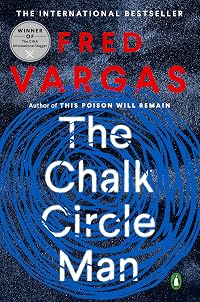
When blue chalk circles begin to appear on the pavement in neighborhoods around Paris, detective Commissaire Adamsberg is alone in thinking that they are far from amusing. As he studies each new circle and the increasingly bizarre objects they contain, he senses the cruelty that lies within whoever is responsible. And when a circle is discovered containing a woman with her throat cut, Adamsberg knows that this is just the beginning.--From publisher's description.Tags
Recommendations




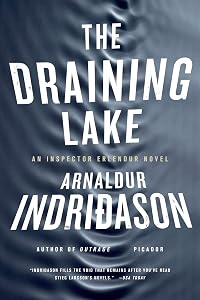
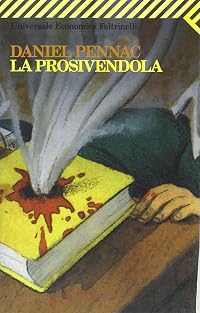

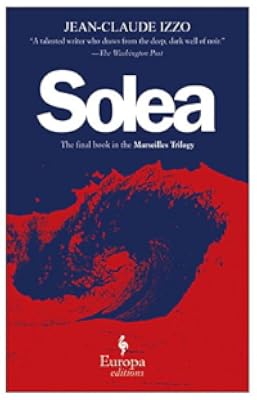
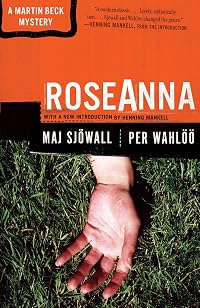


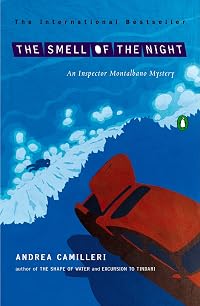




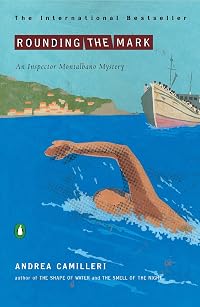

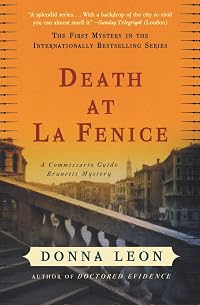

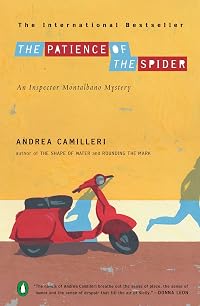
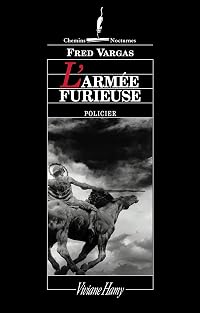
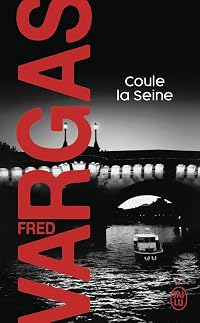
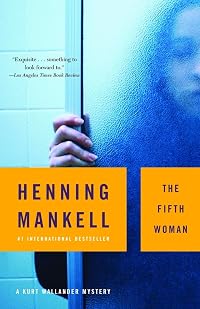

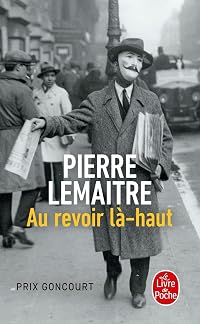



Member Recommendations


Member Reviews
This book found its way into my hand in a used bookstore. Blurb on the back, a review from the Winnipeg Free Press says, "Quirky, bizarre, riveting, irresistible, utterly French...Vargas is perhaps the best mystery writer on the planet."
Well. After that, the moody book jacket design (I picked the wrong cover here--I have the blue one with the man on the shadowy street) and the cheap price, it came home with me. We stopped for takeout on the way, and while waiting, I cracked into it. Before the food was ready, I was thoroughly hooked.
The Winnipeg review is accurate in the quirky and bizarre. The characters and dialog are all that.
This was the kind of book, for me, where usual duties might have to wait. The sink can fill with dishes, show more the laundry can sit...all waiting for me to finish the book. I will say that a LOT of information was withheld until the end; the plot was sinuous; I might have guessed who but not why... and I'm itching to get more Vargas, elated to know that there is more to come. show less
Well. After that, the moody book jacket design (I picked the wrong cover here--I have the blue one with the man on the shadowy street) and the cheap price, it came home with me. We stopped for takeout on the way, and while waiting, I cracked into it. Before the food was ready, I was thoroughly hooked.
The Winnipeg review is accurate in the quirky and bizarre. The characters and dialog are all that.
This was the kind of book, for me, where usual duties might have to wait. The sink can fill with dishes, show more the laundry can sit...all waiting for me to finish the book. I will say that a LOT of information was withheld until the end; the plot was sinuous; I might have guessed who but not why... and I'm itching to get more Vargas, elated to know that there is more to come. show less
First Line: Mathilde took out her diary and wrote: 'The man sitting next to me has got one hell of a nerve.'
Jean-Baptiste Adamsberg grew up in the foothills of the Pyrenees, became a policeman at the age of twenty-five, and after a series of promotions and the passage of twenty years, he finds himself as Commissaire in Paris. Back home Adamsberg was something of a legend:
"You sit around daydreaming, staring at the wall, or doodling on a bit of paper as if you had all the time and knowledge in the world, and then one day you swan in, cool as a cucumber, and say 'Arrest the priest. He strangled the child to stop him talking.'"
Great things are expected of him in Paris, but when he focuses on a case that makes everyone else laugh, some show more begin to wonder if Adamsberg's reputation is all hype.
Almost everyone in Paris is laughing over The Chalk Circle Man, and they scan the newspapers each day to see what bizarre object has been enclosed in a blue chalk circle. Will it be another beer can? Or how about another trombone? Only Adamsberg doesn't think it's funny, and when the next blue chalk circle is around the body of a woman whose throat has been slashed, people begin to realize that the quirky policeman may not be a hayseed after all.
I loved this book. The translation by Sian Reynolds was excellent, and I felt as though I were walking the streets of Paris with Adamsberg. The plot had enough twists and turns in it that, although I'd deduced some things as I read, I was still surprised at the end and laughed with pleasure.
Excellent translation, strong sense of place, nice twisty plot... all those things are important, but it's the characters who stick with me the most. Adamsberg who lets no one keep him from conducting investigations his way. Mathilde, a woman who follows random people through the streets of Paris, observes them, and often takes them under her wing. And Clémence, a septuagenarian who hasn't given up on love and is an avid follower of the "lonely hearts" ads in the newspapers. These characters are what make The Chalk Circle Man sparkle, and they are what make this book memorable.
Comin' through, folks! Comin' through! I've got to get my hands on the second book in this series! show less
Jean-Baptiste Adamsberg grew up in the foothills of the Pyrenees, became a policeman at the age of twenty-five, and after a series of promotions and the passage of twenty years, he finds himself as Commissaire in Paris. Back home Adamsberg was something of a legend:
"You sit around daydreaming, staring at the wall, or doodling on a bit of paper as if you had all the time and knowledge in the world, and then one day you swan in, cool as a cucumber, and say 'Arrest the priest. He strangled the child to stop him talking.'"
Great things are expected of him in Paris, but when he focuses on a case that makes everyone else laugh, some show more begin to wonder if Adamsberg's reputation is all hype.
Almost everyone in Paris is laughing over The Chalk Circle Man, and they scan the newspapers each day to see what bizarre object has been enclosed in a blue chalk circle. Will it be another beer can? Or how about another trombone? Only Adamsberg doesn't think it's funny, and when the next blue chalk circle is around the body of a woman whose throat has been slashed, people begin to realize that the quirky policeman may not be a hayseed after all.
I loved this book. The translation by Sian Reynolds was excellent, and I felt as though I were walking the streets of Paris with Adamsberg. The plot had enough twists and turns in it that, although I'd deduced some things as I read, I was still surprised at the end and laughed with pleasure.
Excellent translation, strong sense of place, nice twisty plot... all those things are important, but it's the characters who stick with me the most. Adamsberg who lets no one keep him from conducting investigations his way. Mathilde, a woman who follows random people through the streets of Paris, observes them, and often takes them under her wing. And Clémence, a septuagenarian who hasn't given up on love and is an avid follower of the "lonely hearts" ads in the newspapers. These characters are what make The Chalk Circle Man sparkle, and they are what make this book memorable.
Comin' through, folks! Comin' through! I've got to get my hands on the second book in this series! show less
This is the first novel in a series by Fred Vargas, who has created an unusual protaganist in the person of Inspector Adamsberg. It is not, however, the first I have read in this series.
Jean-Baptiste Adamsberg grew up in the foothills of the Pyrenees, became a policeman at the age of twenty-five. After a series of promotions, and the passage of twenty years, he has been promoted to the level of Commissaire in Paris.
Back home, Adamsberg was something of a legend. He thinks things through thoroughly and takes some very lateral approaches before he ends up, seemingly effortlessly, with the answer no-one else could see.
I love the secondary characters who act as foils for the intuitive Adamsberg. They reason logically and most know a great show more many more details about the world than does Adamsberg. Yet, it is the seemingly bumbling Adamsberg who reaches the correct conclusion through his superb ability to associate many disparate details and use pattern thinking to find the truth.
As one of his offsiders says, in frustration, "You sit around daydreaming, staring at the wall, or doodling on a bit of paper as if you had all the time and knowledge in the world, and then one day you swan in, cool as a cucumber, and say 'Arrest the priest. He strangled the child to stop him talking.'"
Based on his reputation, great things are expected of him in Paris. However, when he focuses on a case that makes everyone else laugh, some begin to wonder if Adamsberg's reputation is all hype. But of course, they couldn’t be more wrong.
Several times I thought I had figured the mystery out and then was proven wrong, even though Vargas dropped the clues early.
What I particularly like about this story is the way the solving of the crime felt almost incidental. There are so many layers of interest that the attention is fully engaged without any feeling that there's a need to rush. It's easy to get hooked to Jean-Baptiste's pace and that makes the read such a pleasure.
I often envy the French for those long lunch-breaks when everything slows down and to me, this book has the feel of working slowly through a many-coursed meal where each plate is delicious and you just know whatever is coming next is guaranteed to be brilliant. show less
Jean-Baptiste Adamsberg grew up in the foothills of the Pyrenees, became a policeman at the age of twenty-five. After a series of promotions, and the passage of twenty years, he has been promoted to the level of Commissaire in Paris.
Back home, Adamsberg was something of a legend. He thinks things through thoroughly and takes some very lateral approaches before he ends up, seemingly effortlessly, with the answer no-one else could see.
I love the secondary characters who act as foils for the intuitive Adamsberg. They reason logically and most know a great show more many more details about the world than does Adamsberg. Yet, it is the seemingly bumbling Adamsberg who reaches the correct conclusion through his superb ability to associate many disparate details and use pattern thinking to find the truth.
As one of his offsiders says, in frustration, "You sit around daydreaming, staring at the wall, or doodling on a bit of paper as if you had all the time and knowledge in the world, and then one day you swan in, cool as a cucumber, and say 'Arrest the priest. He strangled the child to stop him talking.'"
Based on his reputation, great things are expected of him in Paris. However, when he focuses on a case that makes everyone else laugh, some begin to wonder if Adamsberg's reputation is all hype. But of course, they couldn’t be more wrong.
Several times I thought I had figured the mystery out and then was proven wrong, even though Vargas dropped the clues early.
What I particularly like about this story is the way the solving of the crime felt almost incidental. There are so many layers of interest that the attention is fully engaged without any feeling that there's a need to rush. It's easy to get hooked to Jean-Baptiste's pace and that makes the read such a pleasure.
I often envy the French for those long lunch-breaks when everything slows down and to me, this book has the feel of working slowly through a many-coursed meal where each plate is delicious and you just know whatever is coming next is guaranteed to be brilliant. show less
This is the first of the Commissaire Adamsberg novels (and the second that I have read): Adamsberg has recently been transferred from the provinces to a police station in Paris, and he's still getting to know his new colleagues. A key element of this first book is the establishing of Adamsberg's relationship with his rationalist subordinate Danglard.
Adamsberg employs a more-Maigretish-than-Maigret approach to detection where he lets everyone else run around and find evidence whilst he immerses himself in the surroundings of the crime for 200 pages, then comes up with a brilliant solution based on a mixture of psychological insight and intuition. In Simenon this is just a convention we have to accept, but here it's made explicit and show more discussed at length, and Adamsberg has to defend his approach against Danglard's strong conviction that intuition leads to miscarriages of justice. Although her great predecessor is never mentioned, Vargas clearly has a bone to pick with Simenon: there are many ironic little reversals of iconic images from the Maigret books concealed in the text (most conspicuously in this book the pipe-smoking suspect and the way the book closes by running the opening scene of the first Maigret novel Pietr-le-Letton in reverse). And of course it is an entirely Maigret-like way of proceeding to take as the starting point for a major investigation a sequence of apparently harmless incidents where no crime has been reported yet.
Vargas is obviously also someone who enjoys playing around with gender reversals to make her characters less predictable: Adamsberg himself is a male detective with some very "feminine" personality traits (passive, silent, calming, beautiful...), and both the books I've read have had important minor characters who are women with strongly "masculine" personalities.
What makes these books interesting is really the combination of a quirky crime story with a serious, reflective style of writing that draws you into sympathy with the characters, odd and fragmented though they are. I'm obviously going to have to keep on reading... show less
Adamsberg employs a more-Maigretish-than-Maigret approach to detection where he lets everyone else run around and find evidence whilst he immerses himself in the surroundings of the crime for 200 pages, then comes up with a brilliant solution based on a mixture of psychological insight and intuition. In Simenon this is just a convention we have to accept, but here it's made explicit and show more discussed at length, and Adamsberg has to defend his approach against Danglard's strong conviction that intuition leads to miscarriages of justice. Although her great predecessor is never mentioned, Vargas clearly has a bone to pick with Simenon: there are many ironic little reversals of iconic images from the Maigret books concealed in the text (most conspicuously in this book the pipe-smoking suspect and the way the book closes by running the opening scene of the first Maigret novel Pietr-le-Letton in reverse). And of course it is an entirely Maigret-like way of proceeding to take as the starting point for a major investigation a sequence of apparently harmless incidents where no crime has been reported yet.
Vargas is obviously also someone who enjoys playing around with gender reversals to make her characters less predictable: Adamsberg himself is a male detective with some very "feminine" personality traits (passive, silent, calming, beautiful...), and both the books I've read have had important minor characters who are women with strongly "masculine" personalities.
What makes these books interesting is really the combination of a quirky crime story with a serious, reflective style of writing that draws you into sympathy with the characters, odd and fragmented though they are. I'm obviously going to have to keep on reading... show less
Why do anything or write anything? To attract others? Is that it? To seduce people you've never met, as if the ones you have met aren't enough for you? Because you think you can capture the quintessence of the world in a few pages? What quintessence is there anyway? What emotions are there in the world? What can you say? Even the story of the old shrew-mouse isn't interesting enough to tell to anyone. Writing is an admission of failure.
...
"What is the point of it all?" Mathilde immediately asked herself.
To do you good. To get your feet wet. Yes, that was it. To get your feet wet.
~
Vargas is the best crime (fiction) writer I've ever come across. (I'm sure there are many fine ones out there, but Vargas sits at the top of the heap, for me, show more at this moment.) Thank goodness this is only the second of her books I've read, and that there are many more which await me. I couldn't imagine a reading world without Vargas, after this one.
This was a lovely slow dance to the great reveal -- and when it comes, you feel you must have known it all along, intuitively, like the great Adamsberg himself, although you just "couldn't put your finger on" the thing that you knew.
Many books in this genre resolve the mystery for you in a series of steps but at the end of it all, the truth jumps out at you, like a spook from a closet and you think ... how did that happen? How did we get here from there? It leaves you feeling a little bewildered, but nominally satisfied because you think, "OK, that was clever." But you don't really get much out of the book except a few hours of somewhat-enjoyable distraction from the real world, if the author has done the job right. (If not, you resent the time wasted.)
Others in this genre telegraph the resolution so obviously that there is no point in even reading the book. These books remind me of high school: if you absolutely must know the full plot line, just get a copy of Coles Notes/Cliffs Notes, and you're much better off.
These books leave some jumbled feelings behind: you either feel dumber than you are or more clever than you are, neither of which is a valid experience because you've simply been manipulated by circumstances beyond your control.
In other words, the writing hasn't given you anything, except a few hours of cheap distraction.
I realize that for me, that isn't enough. I always want more. Whether I'm reading the The Collected Dialogues of Plato or chuckling over an Archie comic book, I need a subtext, at the very least, that will inspire me with new perceptions of the world. There has to be some meaning to it all.
The Chalk Circe Man offers a grand reveal, in a slow stream of rations along the way so that one is solving the crime in the same time and cadence as are the detectives within the novel. No surprises jumping at you from closets; nothing withheld to make you feel like a fool for not knowing later; nothing overly obvious to make you feel like a coddled imbecile.
The bonus in all of this is that Vargas offers divergent philosophies on living, without judgment. (We encounter someone who drinks a great deal, for instance, but are never burdened with the author's condemnation; or the man who turns up in somebody else's bed every night, so afraid is he of committing to his own true love, but who is neither admonished nor made to do penance through Vargas's expert handling.) Life is what it is. We can make our own judgments, if we feel the need.
Both the regular characters and the situational ones receive the same treatment: no preference is given, nor shriving done, because she doesn't play favourites.
The other bonus is that we are sometimes lead into Vargas's private thoughts, as in the quotation above. Like the rest of us, she struggles to understand what it's all about. Why do we do what we do? Why do we pursue our passions?
To get our feet wet. In other words, to feel awake and alive, and feel the stream of life swirling around one's ankles: to be part of that stream in whatever context, or condition, we choose -- but to be part of it on our own terms. Don't ask questions all the time. Just jump in and see where it will take you.
Perhaps it really was time to go back to the depths of the ocean. And above all, it was forbidden to ask herself what the point of it all was.
Very rarely have I come across such a satisfying read: a good old-fashioned procedural, as a "front man" for the goddess Sophia, the wisdom of the ages.
There are certainly more things in heaven and earth, Horatio, than are in the crime streets of Paris, and Vargas pulls back that curtain occasionally to give us a peek. show less
...
"What is the point of it all?" Mathilde immediately asked herself.
To do you good. To get your feet wet. Yes, that was it. To get your feet wet.
~
Vargas is the best crime (fiction) writer I've ever come across. (I'm sure there are many fine ones out there, but Vargas sits at the top of the heap, for me, show more at this moment.) Thank goodness this is only the second of her books I've read, and that there are many more which await me. I couldn't imagine a reading world without Vargas, after this one.
This was a lovely slow dance to the great reveal -- and when it comes, you feel you must have known it all along, intuitively, like the great Adamsberg himself, although you just "couldn't put your finger on" the thing that you knew.
Many books in this genre resolve the mystery for you in a series of steps but at the end of it all, the truth jumps out at you, like a spook from a closet and you think ... how did that happen? How did we get here from there? It leaves you feeling a little bewildered, but nominally satisfied because you think, "OK, that was clever." But you don't really get much out of the book except a few hours of somewhat-enjoyable distraction from the real world, if the author has done the job right. (If not, you resent the time wasted.)
Others in this genre telegraph the resolution so obviously that there is no point in even reading the book. These books remind me of high school: if you absolutely must know the full plot line, just get a copy of Coles Notes/Cliffs Notes, and you're much better off.
These books leave some jumbled feelings behind: you either feel dumber than you are or more clever than you are, neither of which is a valid experience because you've simply been manipulated by circumstances beyond your control.
In other words, the writing hasn't given you anything, except a few hours of cheap distraction.
I realize that for me, that isn't enough. I always want more. Whether I'm reading the The Collected Dialogues of Plato or chuckling over an Archie comic book, I need a subtext, at the very least, that will inspire me with new perceptions of the world. There has to be some meaning to it all.
The Chalk Circe Man offers a grand reveal, in a slow stream of rations along the way so that one is solving the crime in the same time and cadence as are the detectives within the novel. No surprises jumping at you from closets; nothing withheld to make you feel like a fool for not knowing later; nothing overly obvious to make you feel like a coddled imbecile.
The bonus in all of this is that Vargas offers divergent philosophies on living, without judgment. (We encounter someone who drinks a great deal, for instance, but are never burdened with the author's condemnation; or the man who turns up in somebody else's bed every night, so afraid is he of committing to his own true love, but who is neither admonished nor made to do penance through Vargas's expert handling.) Life is what it is. We can make our own judgments, if we feel the need.
Both the regular characters and the situational ones receive the same treatment: no preference is given, nor shriving done, because she doesn't play favourites.
The other bonus is that we are sometimes lead into Vargas's private thoughts, as in the quotation above. Like the rest of us, she struggles to understand what it's all about. Why do we do what we do? Why do we pursue our passions?
To get our feet wet. In other words, to feel awake and alive, and feel the stream of life swirling around one's ankles: to be part of that stream in whatever context, or condition, we choose -- but to be part of it on our own terms. Don't ask questions all the time. Just jump in and see where it will take you.
Perhaps it really was time to go back to the depths of the ocean. And above all, it was forbidden to ask herself what the point of it all was.
Very rarely have I come across such a satisfying read: a good old-fashioned procedural, as a "front man" for the goddess Sophia, the wisdom of the ages.
There are certainly more things in heaven and earth, Horatio, than are in the crime streets of Paris, and Vargas pulls back that curtain occasionally to give us a peek. show less
Translated from the French, this first in the Chief Inspector Adamsberg series is original and satisfying. Vargas doesn't follow the Dorothy L. Sayers rules of mystery writing so the solution took me by surprise. But let's face it, even if she had followed those rules, I might not have seen this one coming. Throughout Paris there are blue chalk circles being found, circles with an apparently random series of objects inside them: a wine cork, a doll, a man's belt, a dead cat. Bemusing at first, when the body of a murdered woman is found in one of the circles, the police find the circles to be clues in an increasingly frustrating series of murders. Adamsberg is a thinker but one who uses his gut and trusts his instincts. He is determined show more to find this murderer despite the apparent lack of pattern in the emerging evidence. He is also determined to get over the lost love of his life, a plot element which adds interest to the story. The story is interesting and the characters appealing; the translation is at moments awkward but I settled into it as the novel progressed. I'll certainly be continuing this series. show less
Jean-Baptiste Adamsberg, the new commissaire in town, has a puzzling case on his hands: someone is going around the streets of Paris at night and drawing blue chalk circles on the ground. The circles also have a rhyme written around them: “Victor, mauvais sort, que fais-tu dehors?” Most people seem to think this is just the work of a harmless eccentric, but Adamsberg suspects that this can only end in murder.
This is the first book in the Adamsberg series and is a good introduction. We meet Adrien Danglard, his eventual sidekick of sorts, and we hear about the elusive “petite chérie”, a lost love of Adamsberg’s. We’re introduced to Adamsberg’s intuitive detecting style, which is contrasted (often amusingly) with show more Danglard’s relentless logic. The book is a slow burn but pays off, or at least it did for me. I’d rate this 3 stars for most of the book and 4 stars for the ending, for an average rating of 3.5. show less
This is the first book in the Adamsberg series and is a good introduction. We meet Adrien Danglard, his eventual sidekick of sorts, and we hear about the elusive “petite chérie”, a lost love of Adamsberg’s. We’re introduced to Adamsberg’s intuitive detecting style, which is contrasted (often amusingly) with show more Danglard’s relentless logic. The book is a slow burn but pays off, or at least it did for me. I’d rate this 3 stars for most of the book and 4 stars for the ending, for an average rating of 3.5. show less
Members
- Recently Added By
Lists

Majkia's Mystery/ Thriller TBR
86 works; 3 members

Unshelved Book Clubs
579 works; 5 members

french letters
18 works; 1 member

Books Read in 2016
4,666 works; 199 members

Books Read in 2018
4,360 works; 110 members

Library TBR
64 works; 1 member

Reading Glasses Podcast
410 works; 3 members

Leídos en 2024 por primera vez: Magistrales (R. D.)
22 works; 1 member

Books Read in 2009
464 works; 11 members

Favorite French Fiction
147 works; 63 members
Author Information

54+ Works 15,411 Members
Some Editions
Awards and Honors
Series

Belongs to Publisher Series
Work Relationships
Is contained in
Has the adaptation
Is abridged in
Common Knowledge
- Canonical title
- The Chalk Circle Man
- Original title
- L'homme aux cercles bleus
- Alternate titles*
- Человек, рисующий синие круги
- Original publication date
- 1991; 2009 (English translation) (English translation)
- People/Characters
- Commissaire Jean-Baptiste Adamsberg; Mathilde Forestier; Charles Reyer; Adrien Danglard; Patrice Vernoux; Camille 'petite chérie' (show all 28); Florence; Margellon; Castreau; Christiane; René Vercors-Laury; Conti; Clémence Valmont; Madeleine Châtelain; Meunier; Delille; Nivelle; Réal Louvenel; Louviers; Gérard Pontieux; Delphine Vitruel Le Nermord 'Delphie'; Augustin-Louis Le Nermord; Edouard Danglard; Arlette Danglard; Lisa Danglard; René Danglard; Leclerc; Declerc
- Important places
- Paris, France; Marcilly, Île-de-France, France
- Related movies
- L'homme aux cercles bleus (2009 | IMDb | TV)
- First words
- Mathilde took out her diary and wrote: 'The man sitting next to me has got one hell of a nerve.'
- Last words
- (Click to show. Warning: May contain spoilers.)Then he added: 'Can't sleep. So I'm taking my time, lying on this bed, thinking about my life.'
- Publisher's editor*
- Éditions J'ai lu
- Blurbers
- Drabelle, Dennis; Stasio, Marilyn
- Original language
- French
*Some information comes from Common Knowledge in other languages. Click "Edit" for more information.
Classifications
Statistics
- Members
- 1,746
- Popularity
- 12,680
- Reviews
- 88
- Rating
- (3.56)
- Languages
- 21 — Arabic, Catalan, Danish, Dutch, English, Finnish, French, German, Italian, Korean, Lithuanian, Norwegian (Bokmål), Norwegian, Polish, Russian, Slovenian, Spanish, Swedish, Turkish, Portuguese (Brazil), Chinese, traditional
- Media
- Paper, Audiobook, Ebook
- ISBNs
- 69
- UPCs
- 1
- ASINs
- 30