On This Page
Description
Eleven-year-old Harriet keeps notes on her classmates and neighbors in a secret notebook, but when some of the students read the notebook, they seek revenge.Tags
Recommendations


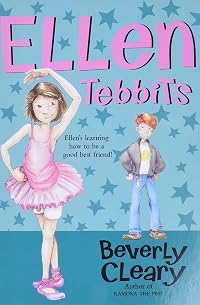
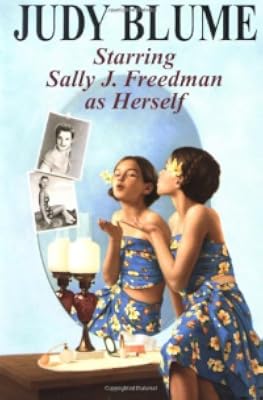
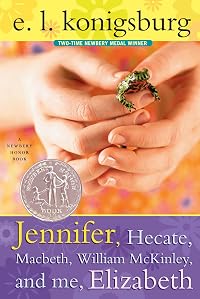
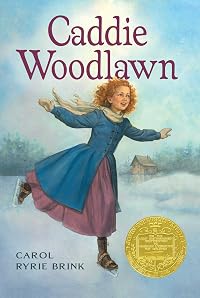

Member Recommendations
Member Reviews
This book was mostly a "wow" for me. Wow in the sense of "How did I not read this as a child?" Wow in the sense of "How does Fitzhugh capture so well both middle-schooler behavior/thoughts/emotions and the confusion and obliviousness of their parents?"
As a person who, in eighth grade, got in trouble with my peer group for something I wrote that was read by people I didn't intend to see it, I'm in awe at the realness of Harriet's reactions to her classmates turning on her.
As a parent, I'm in awe at the realness of Harriet's parents' reactions and their cluelessness about both what's going on and what to do about it.
The only thing I wasn't quite on board with was all the household staff. I just don't get it. Was this a 60's thing? Were show more these particularly wealthy people? I know Harriet's school is a private school, but...a live-in nanny and a cook and a maid? It was interesting---and commendable---how much empathy Fitzhugh was able to employ in her portrayal of Harriet's parents. Here are people who try to outsource all of their child-rearing and just ignore their daughter until they absolutely can't anymore. Had I written this, I would not have had so much compassion for people who put themselves in this situation, but Fitzhugh did well, I think, showing them as human. They made choices, things happened as a result of these choices, and they adjusted. That's all we can expect of anyone---ourselves included---regardless of the exact nature of those choices.
And thank goodness the adults in the story didn't try to show Harriet "tough love" or send her to some middle-schooler boot camp to straighten out her bad attitude. Instead the adults, after a while, showed compassion for this child who was clearly reacting to pain that she didn't know how to express in a more socially acceptable way. Fitzhugh lets everyone in her book make mistakes, which is something I see way too little of in real life these days. We're so keen on zero tolerance and labeling and categorizing and pathologizing that we sometimes forget to see one another's humanity.
Okay, down off my soapbox now.
The key is, I felt good while reading this book. It reminded me to reserve judgment and to see both adults and children as human beings, especially when they're doing things of which I disapprove. show less
As a person who, in eighth grade, got in trouble with my peer group for something I wrote that was read by people I didn't intend to see it, I'm in awe at the realness of Harriet's reactions to her classmates turning on her.
As a parent, I'm in awe at the realness of Harriet's parents' reactions and their cluelessness about both what's going on and what to do about it.
The only thing I wasn't quite on board with was all the household staff. I just don't get it. Was this a 60's thing? Were show more these particularly wealthy people? I know Harriet's school is a private school, but...a live-in nanny and a cook and a maid? It was interesting---and commendable---how much empathy Fitzhugh was able to employ in her portrayal of Harriet's parents. Here are people who try to outsource all of their child-rearing and just ignore their daughter until they absolutely can't anymore. Had I written this, I would not have had so much compassion for people who put themselves in this situation, but Fitzhugh did well, I think, showing them as human. They made choices, things happened as a result of these choices, and they adjusted. That's all we can expect of anyone---ourselves included---regardless of the exact nature of those choices.
And thank goodness the adults in the story didn't try to show Harriet "tough love" or send her to some middle-schooler boot camp to straighten out her bad attitude. Instead the adults, after a while, showed compassion for this child who was clearly reacting to pain that she didn't know how to express in a more socially acceptable way. Fitzhugh lets everyone in her book make mistakes, which is something I see way too little of in real life these days. We're so keen on zero tolerance and labeling and categorizing and pathologizing that we sometimes forget to see one another's humanity.
Okay, down off my soapbox now.
The key is, I felt good while reading this book. It reminded me to reserve judgment and to see both adults and children as human beings, especially when they're doing things of which I disapprove. show less
Harriet M. Welsch is going to be a writer some day. For now, she is observing everything she can, from her family to her classmates to the neighbors she observes on her "spy route." She writes candidly (and often cruelly) in her notebook, but when that notebook is discovered and read by her classmates, Harriet is headed for trouble!
I haven't reread this book in years, and what struck me this time is how well Fitzhugh wrote about the experience of childhood. Harriet is kind of a brat, and I wouldn't want to be around her in real life, but she manages to be sympathetic in the context of the story. This childhood classic is one I highly recommend for both children and adults.
I haven't reread this book in years, and what struck me this time is how well Fitzhugh wrote about the experience of childhood. Harriet is kind of a brat, and I wouldn't want to be around her in real life, but she manages to be sympathetic in the context of the story. This childhood classic is one I highly recommend for both children and adults.
If I’d read this as a kid I would have struggled with the incessant meanness and how this bully of a main character never really changes her behavior or shows any sort of remorse, and in fact, she’s rewarded for being horrible. I doubt my child self would have been cool with any of that, especially since I could totally have seen myself as a Harriet target.
Reading this an adult however, I guess I was able to take this less seriously or personally than I likely would have as a sensitive kid, and while plenty of Harriet’s actions had me cringing and I did wish to see more of a comeuppance for her than she received, admittedly, I found Harriet entertaining.
Harriet’s obsession with tomato sandwiches was so odd that it couldn’t show more help feeling funny. Equally odd is reading something that’s considered a children’s classic constantly thinking okay here’s the moment when Harriet’s going to understand how hurtful she is and become apologetic, only this girl continuously doubles-down with her awfulness, her answer to everything seems to be I’ll do worse, that’ll teach them. It’s so unexpected to read a children’s book where basically no lessons are learned, combine that with Harriet’s brazen persistence in being horrible and you get something a little amusing and a bit dark, with an entirely unique feel to it. If you can get on board with the villain winning then this is a twisted sort of enjoyable, just, you know, don’t dwell on how miserable it would be to tangle with someone like Harriet in real life. show less
Reading this an adult however, I guess I was able to take this less seriously or personally than I likely would have as a sensitive kid, and while plenty of Harriet’s actions had me cringing and I did wish to see more of a comeuppance for her than she received, admittedly, I found Harriet entertaining.
Harriet’s obsession with tomato sandwiches was so odd that it couldn’t show more help feeling funny. Equally odd is reading something that’s considered a children’s classic constantly thinking okay here’s the moment when Harriet’s going to understand how hurtful she is and become apologetic, only this girl continuously doubles-down with her awfulness, her answer to everything seems to be I’ll do worse, that’ll teach them. It’s so unexpected to read a children’s book where basically no lessons are learned, combine that with Harriet’s brazen persistence in being horrible and you get something a little amusing and a bit dark, with an entirely unique feel to it. If you can get on board with the villain winning then this is a twisted sort of enjoyable, just, you know, don’t dwell on how miserable it would be to tangle with someone like Harriet in real life. show less
I probably read no other book as often as a child as I did this one. The fascination of the everyday; the multiple worlds existing within and parallel to your own: just a couple of the things that still make me believe this book is magical.
This book is one of my all-time favorites. As a child, I wanted to be just like Harriet, so I walked my neighborhood and observed. Although I never had the balls to actually hide in someone's dumbwaiter. Of course, I knew no one who even had a dumbwaiter, so I guess that's a moot point.
Anyway, I then went home and wrote down my findings on index cards for my trusty card catalog. It was important that I be able to find, at a moments notice, exactly what I thought of the strange woman at the end of the street who was afraid of children and would come unglued if we touched her yard. It also inspired me to write my own How-to pamphlet titled: How to be a Spy. Yeah. That's right. I'm soooo original.
Really a very lonely story that taught show more me to look outside myself and really see other people in a more compassionate way. Just a great book for children and adults alike. show less
Anyway, I then went home and wrote down my findings on index cards for my trusty card catalog. It was important that I be able to find, at a moments notice, exactly what I thought of the strange woman at the end of the street who was afraid of children and would come unglued if we touched her yard. It also inspired me to write my own How-to pamphlet titled: How to be a Spy. Yeah. That's right. I'm soooo original.
Really a very lonely story that taught show more me to look outside myself and really see other people in a more compassionate way. Just a great book for children and adults alike. show less
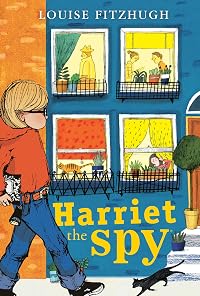
A counterculture children's novel that may be an acquired taste for some, like, for example, the Catcher in the Rye, but nonetheless unique and potentially avant-garde for its time. Its rebellious kookiness fits in perfectly with the estranged youth of the 60s, paving the way for kaleidoscopic Beatlemania, and Harriet's cocky stride on the iconic cover is the perfect bookend to Abbey Road. I didn't enjoy this novel much at first and thought its humour tasteless and crude, but when everything started to unravel about halfway through, after Harriet loses her notebook, I was forced to reassess my initial opinion. You don't really know the real Harriet till she hits rock bottom, and then you get to see just how emotionally blunted she has show more become as a result of her buried intelligence. Without a facet through which to express herself, Harriet becomes nothing but a vegetable (literally, an onion), and it takes Ole Golly's alternative methods to bring her back to herself. show less
Eleven-year-old Harriet M. Welsch knows exactly what she wants to be when she grows up. A spy. She’s already practicing, wearing spy clothes and carrying a notebook on her spy route. The adult she listens to is Ole Golly, her nurse. Ole Golly told Harriet that she needs to get out in the world and see lots of people, because there are as many ways to live as there are people, and Harriet needs to decide how she wants to live. I don’t think Ole Golly meant for Harriet to break into people’s homes and businesses, but that’s what Harriet does. Harriet’s world falls apart when Ole Golly leaves and, shortly afterward, Harriet’s lost notebook is found and read by her classmates.
I didn’t read this book as a child, and I don’t show more think it would have appealed to me then. I was not a snooper as a child, and I avoided the children who were. Harriet’s breaking and entering bothered me. The bullying Harriet experienced after her classmates read her lost notebook was even more troubling, as were Harriet’s payback fantasies. It’s obvious to the reader that Harriet is a budding writer. It takes a child psychiatrist to point out the obvious to Harriet’s parents, who then enlighten Harriet’s teachers and Ole Golly. show less
I didn’t read this book as a child, and I don’t show more think it would have appealed to me then. I was not a snooper as a child, and I avoided the children who were. Harriet’s breaking and entering bothered me. The bullying Harriet experienced after her classmates read her lost notebook was even more troubling, as were Harriet’s payback fantasies. It’s obvious to the reader that Harriet is a budding writer. It takes a child psychiatrist to point out the obvious to Harriet’s parents, who then enlighten Harriet’s teachers and Ole Golly. show less
Members
- Recently Added By
Lists

Favorite Childhood Books
1,651 works; 515 members
1001 Children's Books You Must Read Before You Grow Up
774 works; 101 members

Top-Rated Children's Books
87 works; 16 members
NPRs Ultimate Backseat Bookshelf: 100 Must-Reads for kids 9-14
222 works; 30 members

Best Children's Books You've Read
197 works; 74 members

Best middle grade books
130 works; 24 members

Elevenses
316 works; 88 members

Best School Stories
219 works; 22 members

Read the book and saw the movie
1,170 works; 195 members
Mensa for Kids Excellence in Reading Award Program (Grades 4-6)
64 works; 9 members

Childhood Favorites
427 works; 24 members
my children books reading list-from 100 great books
101 works; 7 members

Books About Girls
219 works; 17 members

Fiction with Women's Names in the Title
378 works; 15 members

Children's Classics Worth Reading
68 works; 9 members
Female Protagonist
1,056 works; 57 members
Honey For a Child's Heart
1,152 works; 25 members

Satori Smiles Children's Book List
262 works; 7 members

Blue Pyramid 1,276 Best Books of All Time
1,248 works; 32 members

grrrrrl power
9 works; 2 members

KID BOOKS
54 works; 1 member

LibraryThingers' 1001 Books You Must Read Before You Die
442 works; 30 members

Books Read in 2024
4,623 works; 126 members
Best Books of the 20th Century
193 works; 5 members

Books We Love to Reread
688 works; 296 members

Lista d1
22 works; 1 member

Mustich's 1000 Books to Read Before You Die: A Life Changing List
1,001 works; 19 members

Books We Loved As Children
603 works; 252 members
EGBERTINA'S List of childhood books worthy of merit or unspeakable delight
155 works; 6 members

Before Austen Comes Aesop
318 works; 9 members

Five star books
1,767 works; 110 members

SYES Library Wishlist
1,080 works; 4 members
Overdue Podcast
806 works; 9 members

Main Character is aged 10-19
362 works; 6 members
Books I've Read More Than Once
602 works; 49 members

Want to Read
12 works; 1 member

Favorite Books from the 1960s
34 works; 3 members

Best Spy Fiction
153 works; 102 members

Girl Detectives
52 works; 5 members

Most Depressing Books
69 works; 16 members

Bullies
44 works; 2 members

Books Read in 2012
816 works; 34 members
One Book, Many Authors
441 works; 40 members

Books Read in 2019
4,052 works; 110 members
Female Author
1,234 works; 67 members

Books Read in 2014
2,343 works; 89 members
Unshelved Book Clubs
579 works; 5 members
Literature About Women and Girls
394 works; 39 members
1960s
281 works; 16 members

Favorite Kids Books (chapter, middle grade)
170 works; 4 members
Author Information

12+ Works 10,105 Members
Some Editions
Awards and Honors
Awards
Distinctions
Notable Lists
Series

Work Relationships
Is contained in
Has the adaptation
Has as a reference guide/companion
Has as a student's study guide
Common Knowledge
- Canonical title
- Harriet the Spy
- Original publication date
- 1964
- People/Characters
- Harriet Welsch; Ole Golly; Simon "Sport" Rocque; Janie Gibbs; Beth Ellen Hansen; Marion Hawthorne (show all 11); Rachel Hennessey; Carrie Andrews; Pinky Whitehead; Mr. Welsch; Mrs. Welsch
- Important places
- New York, New York, USA
- Related movies
- Harriet the Spy (1996 | IMDb); Harriet the Spy: Blog Wars (2010 | IMDb); Harriet the Spy (2021 | IMDb)
- First words
- Harriet was trying to explain to Sport how to play town.
- Quotations
- [Harriet] hated math. She hated math with every bone in her body. She spent so much time hating it that she never had time to do it.
- Last words
- (Click to show. Warning: May contain spoilers.)All three of them turned then and walked along the river.
- Original language
- English
- Disambiguation notice
- This is the book, not the movie.
ISBN 0440414806 is actually for the 2003 film "Holes".
Classifications
Statistics
- Members
- 8,086
- Popularity
- 1,379
- Reviews
- 129
- Rating
- (4.03)
- Languages
- 10 — Chinese, Dutch, English, French, German, Hebrew, Italian, Norwegian (Bokmål), Portuguese, Swedish
- Media
- Paper, Audiobook, Ebook
- ISBNs
- 71
- UPCs
- 1
- ASINs
- 46