On This Page
Description
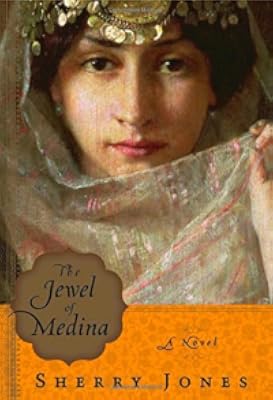
Born Aisha bint Abi Bakr in seventh century Arabia, she would become the favorite wife of the Prophet Muhammad, and one of the most revered women in the Muslim faith. Married at the age of nine, The Jewel of Medina illuminates the difficult path Aisha confronted, from her youthful dreams of becoming a Bedouin warrior, to her life as the beloved wife and confident of the founder of Islam.Extensively researched and elegantly crafted, The Jewel of Medina presents the beauty and harsh realities show more of life in an age long past, during a time of war, enlightenment, and upheaval. At once a love story, a history lesson, and a coming-of-age tale, The Jewel of Medina provides humanizing glimpses into the origins of the Islamic faith, and the nature of love, through the eyes of a truly unforgettable heroine.. show less
Tags
Recommendations





Member Recommendations
Member Reviews
The Jewel of Medina is a historical novel by Sherry Jones that recounts the life of Aisha, one of Muhammad's wives, from the age of six, when she was betrothed to Muhammad, through to his death. Although Aisha is depicted as rather spoiled, wilful, and jealous, the author does develop the character and allows her to mature and grow.
Aisha was a child bride, married to the prophet Muhammed when she was a child of thirteen. Muhammed decided to let her grow up before consummating the marriage. The book consists of Aisha making various plans to enhance her life. She considers running away but find herself growing to love Muhammed so she schemes to get him to take her to bed. Wanting power she plots to become the head wife and leader of the show more harem, she spies on her sister-wives and reports their wrong doings to Muhammed, which instead of him approving only causes him to trust her less.
The Jewel of Medina was not well received when published as many felt it was too light and superficial. I would have to agree with many of the criticisms as I felt Muhammed was portrayed as a weak man who was controlled by his advisors and easily seduced by a pretty face. I would have preferred that the religious aspect of the story not be glossed over and more actual historical events were included. The author maintains that she wrote the book to be entertaining and she did succeed at that. show less
Aisha was a child bride, married to the prophet Muhammed when she was a child of thirteen. Muhammed decided to let her grow up before consummating the marriage. The book consists of Aisha making various plans to enhance her life. She considers running away but find herself growing to love Muhammed so she schemes to get him to take her to bed. Wanting power she plots to become the head wife and leader of the show more harem, she spies on her sister-wives and reports their wrong doings to Muhammed, which instead of him approving only causes him to trust her less.
The Jewel of Medina was not well received when published as many felt it was too light and superficial. I would have to agree with many of the criticisms as I felt Muhammed was portrayed as a weak man who was controlled by his advisors and easily seduced by a pretty face. I would have preferred that the religious aspect of the story not be glossed over and more actual historical events were included. The author maintains that she wrote the book to be entertaining and she did succeed at that. show less
This is the story of the birth of the Muslim religion told through the eyes of the Prophet Muhammad's child bride, A'isha. Excellent writing and very interesting to this reader who knew nothing about Islam. This is a love story but a very realistic one. Life was not easy in Arabia in the year 622. War and drought and lack of food were the only constants. Add into the mix the fact that Muhammad had many wives who lived in his "harem" and that A'isha was a very jealous wife, this created a lot of competition and drama. Most of the marriages involved politics and alliances in furtherance of Islam. I did feel the book tried to cover too much territory at the expense of character development, but it was still a good read.
Summary: This book is essentially a love story set amidst the early days of Islam. It's told from the point of view of A'isha bint Abi Bakr, the child bride of the Prophet Muhammad. Betrothed at six, married at nine, and widowed at nineteen, A'isha wanted nothing more than to be a warrior, fighting to protect her loved ones and her infant religion against the rival tribes that want to destroy it. However, in a time and society where women were treated as property, A'isha chafed against the restrictions put on her due to her gender, struggled to maintain her position as head wife as Muhammad's harem increased in size, and ultimately used her independent spirit to become Muhammad's favorite, as well as his political advisor and show more confidant.
Review: There has been a mighty kerfluffle surrounding publication of this book (if you haven't heard about it, there's a pretty good summary of things on Wikipedia), but after having read it, I kind of fail to see what the hubbub is all about. Granted, I am not Muslim, but from an outsider's point of view, I think that Sherry Jones was actually very respectful towards early Islam, and towards Muhammad in particular. Muhammad is painted very clearly as a man, with a man's weaknesses and vices, which means that while he's certainly portrayed as being wise and holy, he's also shown to be flawed and fallible - human, in other words. Secondly, A'isha is a relatively important and contentious figure in the Sunni/Shi'ite split, so this book's sympathetic portrayal of her automatically alienates a large chunk of the potential readership. I can't say whether either of these things are technically blasphemous under the tenets of Islam, but I certainly don't think either of them are meant to be disrespectful - quite the contrary, in fact.
I also don't think the book itself is worthy of so much kerfluffle as novels go. It was a pretty standard historical romance: seemingly mis-matched man and woman overcoming obstacles and temptations, with true love winning out in the end, etc., etc. There was an interesting story to be told here about women and women's rights, love and duty and freedom, but I felt like it never quite reached its potential, getting lost instead in a seemingly never-ending stream of jealous bickering and brattishness. The language, too, worked against the story, with somewhat stilted dialogue, an overreliance on internal monologuing, and an overabundance of florid metaphors.
Despite the less-than-stellar writing and plotting, I did enjoy the setting of the novel. I knew very little (almost nothing, in truth) about the foundation of Islam, and this book was a pretty palatable way to learn some religious history. While it certainly wasn't a terrible read, neither was it a great one, and that unexceptional-ness was its downfall; it could have (and should have) been much more than it was. On the whole, though, I think this book is going to sell way more copies based on the controversy surrounding it than it ever would on the strength of its own merit. 3 out of 5 stars.
Recommendation: Worth reading if you want to know what the controversy's all about... but I'd get it from the library instead of the bookstore. show less
Review: There has been a mighty kerfluffle surrounding publication of this book (if you haven't heard about it, there's a pretty good summary of things on Wikipedia), but after having read it, I kind of fail to see what the hubbub is all about. Granted, I am not Muslim, but from an outsider's point of view, I think that Sherry Jones was actually very respectful towards early Islam, and towards Muhammad in particular. Muhammad is painted very clearly as a man, with a man's weaknesses and vices, which means that while he's certainly portrayed as being wise and holy, he's also shown to be flawed and fallible - human, in other words. Secondly, A'isha is a relatively important and contentious figure in the Sunni/Shi'ite split, so this book's sympathetic portrayal of her automatically alienates a large chunk of the potential readership. I can't say whether either of these things are technically blasphemous under the tenets of Islam, but I certainly don't think either of them are meant to be disrespectful - quite the contrary, in fact.
I also don't think the book itself is worthy of so much kerfluffle as novels go. It was a pretty standard historical romance: seemingly mis-matched man and woman overcoming obstacles and temptations, with true love winning out in the end, etc., etc. There was an interesting story to be told here about women and women's rights, love and duty and freedom, but I felt like it never quite reached its potential, getting lost instead in a seemingly never-ending stream of jealous bickering and brattishness. The language, too, worked against the story, with somewhat stilted dialogue, an overreliance on internal monologuing, and an overabundance of florid metaphors.
Despite the less-than-stellar writing and plotting, I did enjoy the setting of the novel. I knew very little (almost nothing, in truth) about the foundation of Islam, and this book was a pretty palatable way to learn some religious history. While it certainly wasn't a terrible read, neither was it a great one, and that unexceptional-ness was its downfall; it could have (and should have) been much more than it was. On the whole, though, I think this book is going to sell way more copies based on the controversy surrounding it than it ever would on the strength of its own merit. 3 out of 5 stars.
Recommendation: Worth reading if you want to know what the controversy's all about... but I'd get it from the library instead of the bookstore. show less
 This review was written for LibraryThing Early Reviewers.
The Quick Synopsis:
The Jewel of Medina is a historical fiction novel about A'isha bint Abu Bakr, one of the Prophet Muhammad's numerous wives and, according to Muslim history, his favorite. The story is told in first person and covers A'isha's life from childhood to young adulthood (she was 18 years old when Muhammad died.)
The Tempest in a Teapot:
Much controversy has surrounded this debut novel from Sherry Jones. It was originally picked up by Random House in a two-book, $100,000 deal in 2007. Prior to scheduled publication in August of 2008, galleys were sent out and a subsequent firestorm erupted when a University of Texas Professor by the name of Denise Spellberg decided to warn Random House that the book could incite violence from show more radical Muslim groups, calling the book "an ugly, stupid piece of work" and "soft-core pornography."
Random House dropped the book like a hot potato. Some people screamed "censorship!". Others screamed "heresy!". The publishing world was in an uproar. Enter British publisher Gibson Square, who picked up the rights and published the book. A short time later, Gibson Square headquarters were set on fire in an apparently related arson case.
Long story short, Beaufort Books, a small American publishing house who apparently knows a cash-cow when they see one, picked up the rights here in the U.S. and that's how it ended up in my reading pile.
The Literary Criticism
While I wouldn't go so far as to call it "an ugly, stupid piece of work," as Ms. Spellberg did, it's not going to be nominated for any literary awards in the near future. I found the novel to be something of a missed opportunity. Jones writes the novel from A'isha's viewpoint, but rather than exploring the thoughts and actions of a 7th-century Middle Eastern girl caught up in the birth of a major new faith that will change the course of history, she instead gives us a fluffy historical romance novel.
Now there's nothing wrong with a good romance novel, in my elevated opinion. (The Thornbirds, anyone?) Unfortunately, The Jewel of Medina doesn't even make a good romance novel. Jones tries to use the ol' tried-n-true romance formula:
1. Girl yearns for freedom to be an independant, free spirit who transcends the gender limitations of her era.
2. Somewhere along the way she falls in love with the perfect man.
3. They clash.
4. They overcome the obstacle.
5. They live Happily Ever After.
The reason this formula works in a historical romance novel is because modern-day women identify with the protagonists goals, which are quite attainable in the 21st-century. But it is a formula and an overused one, at that.
The problem with this formula in The Jewel of Medina is that A'isha was but six years old when Muhammad asked for her hand in marriage and only nine years old when the marriage was consummated. By modern day standards this would be considered the rape of a child. Jones tries to gloss over this by delaying consummation of the marriage until A'isha is a teenager and at the same time presenting A'isha as much more mature than a child could possibly be. She is given thoughts and dialogue more consistent with a much older girl. Except she plays with toy horses. Alot. With Muhammad (which only makes him look creepier. I can see why this might offend some people.)
Jones never seems to reconcile exactly how she wants to paint the Prophet Muhammad. She seems to go out of her way to emphasize his compassion and enlightened (at least by 7th-century standards) views of women. Yet when it comes to his acquisition of wives, which was common for the time, she ends up giving us a lecherous old man. Perhaps a dichotomy was intended, but it only reads as inconsistency instead.
Similes abound and are so heavy that they sometimes illicit an unintended chuckle:
"That evening I stepped into the courtyard to see the moon. It dangled like an ornament from the bejeweled sky, dipped in gold and looming so close it beckoned my fingers to reach out and pluck it."
Dialogue doesn't fare much better. The act of sex is continually referred to as the "scorpion's sting." Ouch. I'll leave it at that.
I fully believe that Jones holds A'isha and the Prophet in the highest regard. She clearly had the best of intentions with this novel. But we all know what the road to heck is paved with, don't we? I was looking forward to a novel full of insight into the birth of Islam and the role the Prophet's wives played. I was looking for a glimpse into the mind and life of a Middle Eastern woman in 7th-century Saudi Arabia. I was looking for...something different than what I got, I suppose.
And for those Muslims who were so worried that us Westerners would believe such things about Muhammad? Give us a little credit, please.
The Recommendation:
If you want to weigh in on the controversy by all means go ahead and buy the book, just don't have high expectations for an enlightening, engaging read. Better yet, go buy a copy of The Thorn Birds. show less
The Jewel of Medina is a historical fiction novel about A'isha bint Abu Bakr, one of the Prophet Muhammad's numerous wives and, according to Muslim history, his favorite. The story is told in first person and covers A'isha's life from childhood to young adulthood (she was 18 years old when Muhammad died.)
The Tempest in a Teapot:
Much controversy has surrounded this debut novel from Sherry Jones. It was originally picked up by Random House in a two-book, $100,000 deal in 2007. Prior to scheduled publication in August of 2008, galleys were sent out and a subsequent firestorm erupted when a University of Texas Professor by the name of Denise Spellberg decided to warn Random House that the book could incite violence from show more radical Muslim groups, calling the book "an ugly, stupid piece of work" and "soft-core pornography."
Random House dropped the book like a hot potato. Some people screamed "censorship!". Others screamed "heresy!". The publishing world was in an uproar. Enter British publisher Gibson Square, who picked up the rights and published the book. A short time later, Gibson Square headquarters were set on fire in an apparently related arson case.
Long story short, Beaufort Books, a small American publishing house who apparently knows a cash-cow when they see one, picked up the rights here in the U.S. and that's how it ended up in my reading pile.
The Literary Criticism
While I wouldn't go so far as to call it "an ugly, stupid piece of work," as Ms. Spellberg did, it's not going to be nominated for any literary awards in the near future. I found the novel to be something of a missed opportunity. Jones writes the novel from A'isha's viewpoint, but rather than exploring the thoughts and actions of a 7th-century Middle Eastern girl caught up in the birth of a major new faith that will change the course of history, she instead gives us a fluffy historical romance novel.
Now there's nothing wrong with a good romance novel, in my elevated opinion. (The Thornbirds, anyone?) Unfortunately, The Jewel of Medina doesn't even make a good romance novel. Jones tries to use the ol' tried-n-true romance formula:
1. Girl yearns for freedom to be an independant, free spirit who transcends the gender limitations of her era.
2. Somewhere along the way she falls in love with the perfect man.
3. They clash.
4. They overcome the obstacle.
5. They live Happily Ever After.
The reason this formula works in a historical romance novel is because modern-day women identify with the protagonists goals, which are quite attainable in the 21st-century. But it is a formula and an overused one, at that.
The problem with this formula in The Jewel of Medina is that A'isha was but six years old when Muhammad asked for her hand in marriage and only nine years old when the marriage was consummated. By modern day standards this would be considered the rape of a child. Jones tries to gloss over this by delaying consummation of the marriage until A'isha is a teenager and at the same time presenting A'isha as much more mature than a child could possibly be. She is given thoughts and dialogue more consistent with a much older girl. Except she plays with toy horses. Alot. With Muhammad (which only makes him look creepier. I can see why this might offend some people.)
Jones never seems to reconcile exactly how she wants to paint the Prophet Muhammad. She seems to go out of her way to emphasize his compassion and enlightened (at least by 7th-century standards) views of women. Yet when it comes to his acquisition of wives, which was common for the time, she ends up giving us a lecherous old man. Perhaps a dichotomy was intended, but it only reads as inconsistency instead.
Similes abound and are so heavy that they sometimes illicit an unintended chuckle:
"That evening I stepped into the courtyard to see the moon. It dangled like an ornament from the bejeweled sky, dipped in gold and looming so close it beckoned my fingers to reach out and pluck it."
Dialogue doesn't fare much better. The act of sex is continually referred to as the "scorpion's sting." Ouch. I'll leave it at that.
I fully believe that Jones holds A'isha and the Prophet in the highest regard. She clearly had the best of intentions with this novel. But we all know what the road to heck is paved with, don't we? I was looking forward to a novel full of insight into the birth of Islam and the role the Prophet's wives played. I was looking for a glimpse into the mind and life of a Middle Eastern woman in 7th-century Saudi Arabia. I was looking for...something different than what I got, I suppose.
And for those Muslims who were so worried that us Westerners would believe such things about Muhammad? Give us a little credit, please.
The Recommendation:
If you want to weigh in on the controversy by all means go ahead and buy the book, just don't have high expectations for an enlightening, engaging read. Better yet, go buy a copy of The Thorn Birds. show less
This review was written for LibraryThing Early Reviewers.En jätte bra bok som jag fastnade i från första sidan. Medinas Juvel handlar om profeten Muhammeds unga barnbrud Aisha bint Abi Bakr som han gifte sig med när hon var nio år gammal. Aisha är en sällsynt kvinna, stark, frispråkig , en kvinna som tar kontroll över sitt liv under en tid då kvinnor är mannens ägodelar. :
Earlier this year, in an attempt to learn more about Islam, I spent some time trying to find a fictionalized account of Muhammad’s life. At the time, I felt this would be a starting point for learning more about the foundations of Islam. Though my search was certainly not exhaustive, it was purposeful, but in the end I didn’t find any historical fiction about early Islam. I remembered thinking this seemed odd; a completely unmet literary niche. But since I had no plans to write such a book myself, I settled instead for a couple of nonfiction books by Karen Armstrong, which were highly recommended as primers about Muhammad and Islam.
By the time Sherry Jones’ book “The Jewel of Medina” became an LT ER option, I’d forgotten show more about my earlier quest to find historical Islamic fiction. Consequently, I neglected to realize that “The Jewel of Medina” is actually something of an extraordinary undertaking. It wasn’t until I was well over half way through the book that I learned about its controversial publication.
“The Jewel of Medina” tells the story of A’isha, who was married to Muhammad at a very young age (nine?). Her story explores the unique perspective of not only being a child bride, but also of being one of many wives. A’isha’s life occurs during a significant historical crossroads; she was witness to the birth of one of the world’s great religions, and all the bumps that attended that birth. It is also a story about love and friendship, communication and trust. It illustrates A’isha’s journey towards finding peace with oneself and one’s lot in life. While Muhammad is certainly a central character, this is a book about women, and its plotline is driven by their actions and feelings.
From a strictly literary standpoint, the book is mediocre. It is a moderately engaging story; neither difficult book to put down or difficult to pick up. Jones spends most of her time drawing the female characters and fleshing them out (specifically from A’isha’s perspective; the book is written in the first person). There is little room given to the sights, smells, and atmosphere of being in 7th Century Middle East. Consequently, that place to which the reader longs to step into is disappointingly blank. Little of the imagery lingers; there is little sensory stimulation. This was disappointment for me, because the aspect of historical fiction I most enjoy is to be transported to another place and time.
Authors are supposed to write what they know, and though Jones is certainly a woman and writes about women’s issues, she isn’t Muslim. Jones’ characters seem to be drawn heavily from a 20th Century perspective. There is a chasm of character-intuition that is self-defeating. This is a book more about feminism, 7th Century-style, and less about Islam itself.
Furthermore, I kept encountering the fatal flaw of a lot of historical fiction: how much of the story can be trusted as factual? For me, and a lot of my reading friends, this is a significant question. When this question comes between me and my ability to absorb the story, there is a problem. Especially when the story in unfamiliar territory. Jones’ novel is relationally-driven, rather than driven by historical fact.
For a story about the origins of one of history’s most influential and significant religions, the book is notably void of spirituality. This may be part of the inherent problem with writing about another person’s faith. The lack of Muhammad’s poetic revelations is notable. Everyone in the story seems to be paying lip service to “al-Lah”, but there seems to be no real “showing it” examples of the characters being molded and shaped by God. There is no sense of any character – Muhammad included – having a genuine encounter with God.
On the plus side, what Jones does right is to make her characters fully human. Despite their historical importance, they make mistakes; they are driven by lust, greed, and selfishness. In this sense, they are real and accessible. Even if it is from a 20th Century Western feminist perspective, there were times when I had to pause reading the book and imagine myself in a similar culture and time.
Is it possible for a non-Muslim, Western woman to tell this story? This question nagged at me from the get-go. And clearly, this seems to underlay many of my comments. Certainly, it is a story that should be written, as should many other stories about Islam. And if Muslim men and women won’t do it, who then is left?
Turning the question around, could a book about Jesus Christ written by an atheist be relevant? As a Christian, my answer to that question is: yes. If only to understand how someone outside of my belief system views its foundation and founder, yes, such a book would be very valuable. (And many such books – both respectful and scathing - have been written.) It is also likely there would be parts that would seem to “misunderstand” my faith, and perhaps even be offensive. But in a pluralistic society it is a hopeful sign when people of different worldviews and cultural contexts deeply try to respectfully understand and honor each other.
This is certainly what Sherry Jones has tried to do. No, she’s didn’t get everything right, but who of us ever does? Readers who enjoy Philippa Gregory’s books, and Anita Diamant’s “The Red Tent,” might enjoy “The Jewel of Medina.” show less
By the time Sherry Jones’ book “The Jewel of Medina” became an LT ER option, I’d forgotten show more about my earlier quest to find historical Islamic fiction. Consequently, I neglected to realize that “The Jewel of Medina” is actually something of an extraordinary undertaking. It wasn’t until I was well over half way through the book that I learned about its controversial publication.
“The Jewel of Medina” tells the story of A’isha, who was married to Muhammad at a very young age (nine?). Her story explores the unique perspective of not only being a child bride, but also of being one of many wives. A’isha’s life occurs during a significant historical crossroads; she was witness to the birth of one of the world’s great religions, and all the bumps that attended that birth. It is also a story about love and friendship, communication and trust. It illustrates A’isha’s journey towards finding peace with oneself and one’s lot in life. While Muhammad is certainly a central character, this is a book about women, and its plotline is driven by their actions and feelings.
From a strictly literary standpoint, the book is mediocre. It is a moderately engaging story; neither difficult book to put down or difficult to pick up. Jones spends most of her time drawing the female characters and fleshing them out (specifically from A’isha’s perspective; the book is written in the first person). There is little room given to the sights, smells, and atmosphere of being in 7th Century Middle East. Consequently, that place to which the reader longs to step into is disappointingly blank. Little of the imagery lingers; there is little sensory stimulation. This was disappointment for me, because the aspect of historical fiction I most enjoy is to be transported to another place and time.
Authors are supposed to write what they know, and though Jones is certainly a woman and writes about women’s issues, she isn’t Muslim. Jones’ characters seem to be drawn heavily from a 20th Century perspective. There is a chasm of character-intuition that is self-defeating. This is a book more about feminism, 7th Century-style, and less about Islam itself.
Furthermore, I kept encountering the fatal flaw of a lot of historical fiction: how much of the story can be trusted as factual? For me, and a lot of my reading friends, this is a significant question. When this question comes between me and my ability to absorb the story, there is a problem. Especially when the story in unfamiliar territory. Jones’ novel is relationally-driven, rather than driven by historical fact.
For a story about the origins of one of history’s most influential and significant religions, the book is notably void of spirituality. This may be part of the inherent problem with writing about another person’s faith. The lack of Muhammad’s poetic revelations is notable. Everyone in the story seems to be paying lip service to “al-Lah”, but there seems to be no real “showing it” examples of the characters being molded and shaped by God. There is no sense of any character – Muhammad included – having a genuine encounter with God.
On the plus side, what Jones does right is to make her characters fully human. Despite their historical importance, they make mistakes; they are driven by lust, greed, and selfishness. In this sense, they are real and accessible. Even if it is from a 20th Century Western feminist perspective, there were times when I had to pause reading the book and imagine myself in a similar culture and time.
Is it possible for a non-Muslim, Western woman to tell this story? This question nagged at me from the get-go. And clearly, this seems to underlay many of my comments. Certainly, it is a story that should be written, as should many other stories about Islam. And if Muslim men and women won’t do it, who then is left?
Turning the question around, could a book about Jesus Christ written by an atheist be relevant? As a Christian, my answer to that question is: yes. If only to understand how someone outside of my belief system views its foundation and founder, yes, such a book would be very valuable. (And many such books – both respectful and scathing - have been written.) It is also likely there would be parts that would seem to “misunderstand” my faith, and perhaps even be offensive. But in a pluralistic society it is a hopeful sign when people of different worldviews and cultural contexts deeply try to respectfully understand and honor each other.
This is certainly what Sherry Jones has tried to do. No, she’s didn’t get everything right, but who of us ever does? Readers who enjoy Philippa Gregory’s books, and Anita Diamant’s “The Red Tent,” might enjoy “The Jewel of Medina.” show less
This review was written for LibraryThing Early Reviewers.Even before its publication, The Jewel of Medina angered some people, made some very nervous, and rallied others who resent being told what they may or may not read. The book’s first publisher bailed out on it’s deal to publish the novel and its British publisher, after being firebombed, is yet to publish the book. Thankfully, the publication and marketing of this Sherry Jones debut novel in the United States has been accomplished without violence and with little, if any, real protest from those who would like to see Jones silenced.
The Jewel of Medina is not a great novel. But, of course, it is not that simple.
Any fictional account written today about the relationship between the Prophet Muhammad and his nine wives and four show more concubines, even as sympathetic an account as this one, will be controversial. But, more particularly, The Jewel of Medina is especially prone to controversy since it is told from the point-of-view of Muhammad’s “child bride,” A’isha bint Abi Bakr, who was betrothed to Muhammad when she was six years old and he was fifty.
A’isha, as portrayed by Jones, is an independent and willful little girl, a free spirit who sees herself as the equal of any male she encounters. She is especially close to one of the little boys, Safwan, she plays with every day and his continuing presence in her life will at times tempt her to break her marriage vows to Muhammad.
A’isha’s world changes forever on the day that her mother calls her away from her friends to tell her that she is to immediately begin purdah, confinement to her home, where she will remain until her husband comes to claim her on her wedding day. That is shock enough for a little girl like A’isha, but the even bigger shock is that the future husband to whom she was betrothed at birth, Safwan, is out of the picture. Instead, her husband-to-be is a man even older than her father, the Prohphet Muhammad.
Rebellious, though she might be, A’isha remains confined to the home of her parents for the next three years and, by the time she is nine years old and Muhammad comes for her, she is desperate for a change of scenery despite her fears about what marriage will be like. Much to her relief, the marriage between A’isha and her new husband is not actually consummated until several more years pass and she has matured into womanhood.
Ironically, as imagined by Jones, A’isha eventually becomes much more anxious to consummate the marriage than Muhammad is because of the competition she faces within Muhammad’s harem for its leadership role. She realizes that her image as “child bride” is not one to convey the status and respect required for her to assume the role of “Great Lady of the harem.” The A’isha of The Jewel of Medina, much like the historical A’isha, grows into a strong woman, very much a Joan of Arc of her times, a woman who becomes a trusted advisor to Muhammad and who leads troops into battle against the enemies of Islam. In fact, although it is not covered in the book, the historical A’isha played a key role in the initial Islamic civil war that produced the split between the Sunni and Shi’ite factions that is still causing problems for the religion today.
The Jewel of Medina is historical fiction, “fiction,” being the key word. It is not anti-Islam and, to the contrary, it reads as a very pro-Islam look at the religion and its founder, the Prophet Muhammad. It places the religion’s origins into the context of its times, a time when war among different tribes and alliances was more the norm than the exception, when leaders had to literally fight for the survival of their own, a time when polygamous marriages were often entered into as a means of building political alliances.
More importantly, it is a reminder that Muhammad was a human being, something of which he himself often took great pains to remind his followers.
I said earlier that The Jewel of Medina is not a great novel. Its style is a little stilted, especially the dialogue, and that makes it easier to take in doses of a chapter or two at a time rather than in longer stretches. But even though it focuses largely on the relationships between, and internal struggles for dominance, among Muhammad’s wives, there is much to learn from the novel. Most readers, in fact, will come away from the book with a better understanding of, and more compassion for, the religion of Islam than with which they began the book.
I, for one, am thankful that the author and publisher had the courage to get this one into my hands. It was not a wasted effort on any of our parts.
Rated at: 3.5 show less
The Jewel of Medina is not a great novel. But, of course, it is not that simple.
Any fictional account written today about the relationship between the Prophet Muhammad and his nine wives and four show more concubines, even as sympathetic an account as this one, will be controversial. But, more particularly, The Jewel of Medina is especially prone to controversy since it is told from the point-of-view of Muhammad’s “child bride,” A’isha bint Abi Bakr, who was betrothed to Muhammad when she was six years old and he was fifty.
A’isha, as portrayed by Jones, is an independent and willful little girl, a free spirit who sees herself as the equal of any male she encounters. She is especially close to one of the little boys, Safwan, she plays with every day and his continuing presence in her life will at times tempt her to break her marriage vows to Muhammad.
A’isha’s world changes forever on the day that her mother calls her away from her friends to tell her that she is to immediately begin purdah, confinement to her home, where she will remain until her husband comes to claim her on her wedding day. That is shock enough for a little girl like A’isha, but the even bigger shock is that the future husband to whom she was betrothed at birth, Safwan, is out of the picture. Instead, her husband-to-be is a man even older than her father, the Prohphet Muhammad.
Rebellious, though she might be, A’isha remains confined to the home of her parents for the next three years and, by the time she is nine years old and Muhammad comes for her, she is desperate for a change of scenery despite her fears about what marriage will be like. Much to her relief, the marriage between A’isha and her new husband is not actually consummated until several more years pass and she has matured into womanhood.
Ironically, as imagined by Jones, A’isha eventually becomes much more anxious to consummate the marriage than Muhammad is because of the competition she faces within Muhammad’s harem for its leadership role. She realizes that her image as “child bride” is not one to convey the status and respect required for her to assume the role of “Great Lady of the harem.” The A’isha of The Jewel of Medina, much like the historical A’isha, grows into a strong woman, very much a Joan of Arc of her times, a woman who becomes a trusted advisor to Muhammad and who leads troops into battle against the enemies of Islam. In fact, although it is not covered in the book, the historical A’isha played a key role in the initial Islamic civil war that produced the split between the Sunni and Shi’ite factions that is still causing problems for the religion today.
The Jewel of Medina is historical fiction, “fiction,” being the key word. It is not anti-Islam and, to the contrary, it reads as a very pro-Islam look at the religion and its founder, the Prophet Muhammad. It places the religion’s origins into the context of its times, a time when war among different tribes and alliances was more the norm than the exception, when leaders had to literally fight for the survival of their own, a time when polygamous marriages were often entered into as a means of building political alliances.
More importantly, it is a reminder that Muhammad was a human being, something of which he himself often took great pains to remind his followers.
I said earlier that The Jewel of Medina is not a great novel. Its style is a little stilted, especially the dialogue, and that makes it easier to take in doses of a chapter or two at a time rather than in longer stretches. But even though it focuses largely on the relationships between, and internal struggles for dominance, among Muhammad’s wives, there is much to learn from the novel. Most readers, in fact, will come away from the book with a better understanding of, and more compassion for, the religion of Islam than with which they began the book.
I, for one, am thankful that the author and publisher had the courage to get this one into my hands. It was not a wasted effort on any of our parts.
Rated at: 3.5 show less
Members
- Recently Added By
Author Information

6 Works 801 Members

Sherry Jones is a LibraryThing Author, an author who lists their personal library on LibraryThing.
Some Editions
Series

Common Knowledge
- Canonical title
- The Jewel of Medina
- Original title
- The Jewel of Medina
- Original publication date
- 2008-10
- People/Characters
- Muhammad; A'isha bint Abi Bakr; Abu Bakr; Ali ibn Abi Talib
- Important places
- Mecca, Saudi Arabia; Mecca, Medina; Medina, Saudi Arabia
- Dedication
- For my mother, who taught me to reach for the stars, and for Mariah, the brightest star in my sky.
- First words
- Scandal blew in on the errant wind when I rode into Medina clutching Safwan's waist.
- Last words
- (Click to show. Warning: May contain spoilers.)"A'isha." The name means "life." May it be so now, and forevermore.
Classifications
Statistics
- Members
- 330
- Popularity
- 96,534
- Reviews
- 26
- Rating
- (3.46)
- Languages
- 7 — Danish, English, German, Italian, Portuguese, Spanish, Swedish
- Media
- Paper, Ebook
- ISBNs
- 22
- ASINs
- 5