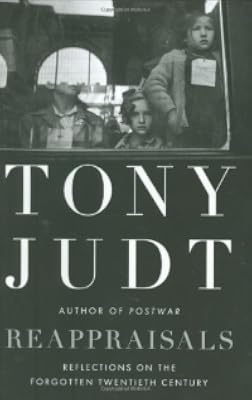
Reappraisals: Reflections on the Forgotten Twentieth Century
by Tony Judt
On This Page
Description
The accelerating changes of the past generation have been accompanied by a comparably accelerated amnesia. The twentieth century has become "history" at an unprecedented rate. The world of 2007 is so utterly unlike that of even 1987, much less any earlier time, that we have lost touch with our immediate past even before we have begun to make sense of it. In less than a generation, the headlong advance of globalization, with the geographical shifts of emphasis and influence it brings in its show more wake, has altered the structures of thought that had been essentially unchanged since the European industrial revolution. Quite literally, we don't know where we came from. From the history of the neglect and recovery of the Holocaust and the challenge of "evil" in the understanding of the European past to the rise and fall of the "state" in public affairs and the displacement of history by "heritage," Judt takes us beyond what we think we know to show us how we came to know it and reveals how many aspects of our history have been sacrificed in the triumph of mythmaking over understanding, collective identity over truth, and denial over memory.--From amazon.com. show lessTags
Recommendations



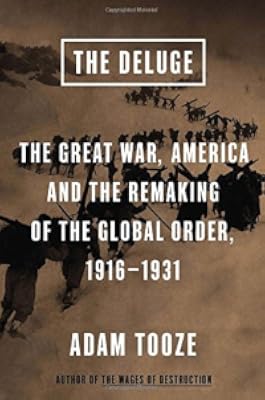


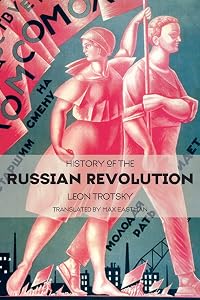
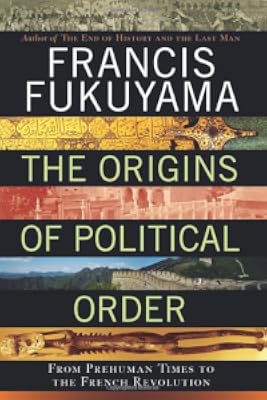
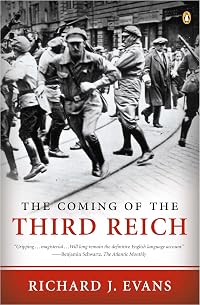





Member Recommendations
Johannes99 Both books share the depth and clarity of thinking of Tony Judt.
Member Reviews
I have long been an admirer of the recently deceased Tony Judt, an intellectually clear-sighted and courageous thinker who faced his own death with dignity and with the same integrity that he applied to his work.
I say thinker but he was more of an analyst and recorder, an historian whose political philosophy, a sort of revisionist social democracy, was probably out of time and out of place - but this should not be held against him.
This book is not much more than a collection of articles, already published essays and book reviews that act as an extended appendix to his history of the post war era (‘Postwar’). It is not a narrative but a collection of ruminations on a number of themes from the mid-1990s through to 2007.
Like the work show more of many ‘public intellectuals’, some of his contemporary writing on contemporary issues is already dated after the passage of only a few years. His understanding of the past is superior to most but his understanding of the future no better than yours or mine.
Even historians seem to forget how fast things change. The world before the credit crunch already looks an age away. He is also on less sure ground in writing about international relations. One or two of his political essays (on Europe and a new social democracy) seem to me to be naïve.
But he is on much surer ground when writing about intellectual history and, since this subject makes up the vast bulk of the book, it is a must-read for anyone interested in modern European history.
The book is divided into four sections with an ‘envelope’ of thoughts, a little unpersuasive perhaps but sincere enough, about the sort of civilized political discourse this best of liberal intellectuals would like to see.
It is also important to understand that he is a European (indeed, a British) Jew writing mostly in America for an American audience. His work is important, for this reason, in explaining the role of Jews in the ‘European Civil War’ of 1914 to 1945 as is his sharp critique of Israel as a permanent adolescent with an ill-informed moral sense.
He is courageous because he writes as someone who is engaged with his own Jewishness yet prepared to stand up to those intellectual thugs who think that any criticism of Israel is anti-semitic and who dismiss any complaint from within their own kind as the language of the ‘self-hating Jew’. I criticize my own degenerate British political culture but I am definitely not a self-hating Briton!
The first section looks at four intellectuals of the interwar and post war period (Koestler, Levi, Sperber and Arendt) and uses them as exemplars of the confusions of that time. He does not hide that right-wing revolt against communism was defensive and that the offensive role of communism was often led by Jews. Bela Kun’s regime gave every reason to fear Bolshevism as not merely expropriatory but murderous and Judt is not a great fan of communism’s intellectual claims or actions.
This role of some Jews does not justify later crimes against humanity but it properly places the Jewish intellectual of a certain cast of mind in pole position as problematic initiator of a process that led to the deaths of many innocents amongst poor and middle classes alike, noth Jewish and non-Jewish.
He looks at responses over time to the evils of fascism, communism and colonialism by a number of intellectuals and at the problematic business of defining evil itself. He explores the switch of the public intellectual from embracing tyranny to opposing it with such fervor that the dislike was to be no more rational than the love.
Later in the book, he undertakes a devastating criticism of the latest turn of the liberal intellectual in America and on the European Right towards an almost neurotic and largely ignorant obsession with Islamo-Fascism. And he is no automatic admirer of every anti-Soviet dissident – he is too sophisticated for that.
One cannot help, as the evidence mounts, but consider the allegedly rational intellectual to be the most irrational and simple-minded of creatures, strutting for attention, and, though the type is by no means exclusively Jewish (on the contrary), it is reasonable to point out the role of the Jewish Enlightenment rationalist in the fads and fashions of murderous belief (and as provocateur of murderous belief).
This is not anti-semitism but observation. I only wish that Judt spent more time on the ‘other side’ – the alleged ‘irrationalism’ of such equally dangerous intellectual types as Junger, Eliade and Evola.
Indeed, the vast mass of Jewish people were victims of a cultural war in which their own intelligentsiya were complicit both sides of the Pripet Marshes and eventually in Zion itself.
It is not Jewishness that is the issue in this book but the excessive de-humanising rationalism, the universalizing tendencies of the disassociated neurotic, that is to be found today amongst all universalists of the West and the so-called Radical Centre today and which was once found in Marxism.
Modern anti-Islamists think structurally like Marxists just as many Islamists think structurally like fascists – plus ca change ….
The second part takes some of the themes of the first but looks at a broader spread of intellectuals to build a picture of European thought as essentially religious in nature, a search for meaning.
He looks at Camus, clearly a hero to Judt but one who cannot escape from the religion of France, at Althusser, the monstrous epitome of unnecessary cultural pessimism, and at Hobsbawn, whose need to belief in the absurdity that is communism infects the official Left to this day and helps define for us the type of the ‘useful idiot’.
He writes of Kolakowski, who swapped one religion for another but who certainly exposed the logic of Marxist thought in a way that leaves no hiding place for Marxists, of Pope Paul II, who must be taken seriously (in my opinion as a dangerous and retrogressive figure) in any history of the modern West, and Edward Said, a rootless cosmopolitan who was to the Arab world what Judt was to the Jewish world, a stripper-away of illusions.
Said was right about the need ultimately for a one state solution to the problem of Israel-Palestine but there are too many vested interests for his sensible view to prevail.
From here (in Part Three) Judt goes on to take a look at aspects of French, British, Belgian, Romanian and Israeli politics.
His excoriations of Israel say all that needs to be said on the matter, he writes well on the French struggle for meaning as a nation and he is suitably unimpressed with the utter nonsense of Blairism, for which Hans Christian Andersen’s story of the Emperor with no clothes might have been written. One hopes a veil may eventually be drawn over his (mal-)administration.
The two most interesting essays are on Belgium and Romania, countries scarcely considered in the Anglo-Saxon world except as problems. Both act as exemplars of fundamental problems underpinning a European Project now under immense strain as a result of the ‘credit crunch’.
Belgium, a non country like the African post-imperial states, is divided into ethnic North and South as much as the Ivory Coast. It remains a puzzle how it has held together for so long.
Romania (GDP was below Namibia’s in 1998) is poorer than some African countries and is a notorious political basket case in its own right. If a politician can be classed as truly evil, then Ceaucescu is definitely in the running.
Judt opens up to scrutiny just what the Eurocrats are taking on in trying to absorb the problems of such countries and about which they are in denial.
Belgium stands for the potential breakdown of Spain, Italy and the United Kingdom under economic pressure and the resentments that might be caused if German economic dominance turns East-Central Europe into a dominion in all but name.
Romania stands for the massive funding required to bring it and the Balkans into ‘civilisation’ at a time when Greece, Ireland, Portugal and parts of the UK, Spain and Italy threaten to go backwards (though Judt was not to know how bad things would get in the years after 2007).
The fourth section on America is less self-assured. There is a typically courageous defence of Whittaker Chambers against the Leftist and liberal true believers who would undertake any twist rather than accept that the Soviet Union was involved in offensive espionage and that Alger Hiss might have been guilty as hell.
There is an unpersuasive critique of Kissinger. He does a suitable knife job on Gaddis’ history of the Cold War – one of a series of triumphalist accounts of imperial victory that appeared on both sides of the Atlantic in the last decade and whose main purpose seems to have been to make the Anglo-Saxon Establishment feel good about itself.
His review of the Cuban Crisis reminds us (again, thinking of the current fiasco in the Ivory Coast) that elected politicians are generally going to be smarter than their opponents and the bureaucrats who surround them.
Major wars can start because one side misunderstands the other side’s priorities. Two different essays suggests that we should feel very lucky that Cold War Berlin (this time innocently) did not thrust us into a catastrophic war for the third time in a century – psycho-geographers must have a field day wondering what dark emanation makes that imperial city into the vortex of such actual and nearly missed horror: a lesson perhaps for our Euro-federalists.
All in all, excellent essays in a book that can be dipped in and out of to profit by anyone who wants to understand the world we live in today. Above all, it offers real insights into the puffed up and rather silly world of the officially sanctioned public intellectual. How they must have hated Judt because he was supposed to be one of their own.
Instead, as a humane and liberal Jew, he pointed out the foolishnesses of his own class whilst wholly respecting the importance of reasoned engagement with the issues of the day. He certainly saw through the nonsense perpetrated by Tony Blair, the new Radical Centre (which he persists in calling ‘liberal’) and Israel.
The book is by no means a polemic. Perhaps two or three essays out of 24 or so slip into this category and are a bit tiresome for that reason. The vast majority are thoughtful, very well researched, reasonable and instructive.
Above all, he is humane – on this, read his moving essays on Primo Levi, whose subtle response to the Shoah confused and irritated those determined to ‘take positions’ and on Sperber, another ‘survivor’, who gives cause for Judt to explore what the shock of the Holocaust, its breaking of all the rules, meant to this generation of intellectuals.
Indeed, if there is a hidden theme in the book, it is that ‘taking positions’ without independent thought on the facts is precisely the death of intellectual endeavour.
What Judt does, especially in the essays on prominent Jewish European intellectuals, is point out something forgotten entirely by their intellectually primitive Zionist and Neo-Conservative heirs in New York – that the European Jewish experience was massively complex and truly cosmopolitan.
Part of the shock of the Shoah was that the assault on many of them was by their own kind. It was Germans and Hungarians murdering Germans and Hungarians in their eyes and the Jewish aspects of the assault only hit home as it was happening and afterwards. Zionism is a very comprehensible response to the shock but it was never inevitable that Jews would all be obliged to be Zionists until that point.
I have left to last the key theme of much of the book – remembrance. Not in the sense of the ‘holocaust industry’ or memorialisation as fixed ritual but the constant attempt to think through the meaning of past events and relate them to the past. This is what history really is, not simple narratives that are designed to allow us to take this or that 'position’.
Thus, the holocaust is placed in its context of Bela Kun and Israel is not understood properly until it comes to terms with the fact of the Nakba and does not think that the Holocaust trumps what Israel did to the Arabs in some ridiculous Benthamite calculation.
Critical engagement with history, based on a humane understanding of personal responses and meanings, their purposes and their vulnerabilities, also means the ability to question narratives such as the determined obsession of many Americans to treat every challenge as if it was Munich. Iran stupidly becomes seen as Nazi Germany when it is nothing of the kind.
Those who saw Cuba as Munich in Kennedy’s circle were the ones who would have driven us into genocidal holocaust in the early 1960s. If you really want to be scared, read about the mind-set of the military loons in the President’s counsels. Dr Strangelove was creepily close to the truth of the matter.
As Judt says, even today, “the United States today is the only advanced country that still glorifies and exalts the military, a sentiment familiar in Europe before 1945 but quite unknown today.”
With ideological rigidity on the one side and bureaucrats without humane sense on the other as permanent features of global politics, and developed to a fine art of ignorance in modern America, it is no surprise to see Guantanamo, the panic over Wikileaks, drone murder of civilians, the demands over extradition and access to private data overseas, constant small-scale war and the brutalisation and torture of an unfortunate little man called Bradley Manning.
If only Tony Judt were alive to chronicle it all … show less
I say thinker but he was more of an analyst and recorder, an historian whose political philosophy, a sort of revisionist social democracy, was probably out of time and out of place - but this should not be held against him.
This book is not much more than a collection of articles, already published essays and book reviews that act as an extended appendix to his history of the post war era (‘Postwar’). It is not a narrative but a collection of ruminations on a number of themes from the mid-1990s through to 2007.
Like the work show more of many ‘public intellectuals’, some of his contemporary writing on contemporary issues is already dated after the passage of only a few years. His understanding of the past is superior to most but his understanding of the future no better than yours or mine.
Even historians seem to forget how fast things change. The world before the credit crunch already looks an age away. He is also on less sure ground in writing about international relations. One or two of his political essays (on Europe and a new social democracy) seem to me to be naïve.
But he is on much surer ground when writing about intellectual history and, since this subject makes up the vast bulk of the book, it is a must-read for anyone interested in modern European history.
The book is divided into four sections with an ‘envelope’ of thoughts, a little unpersuasive perhaps but sincere enough, about the sort of civilized political discourse this best of liberal intellectuals would like to see.
It is also important to understand that he is a European (indeed, a British) Jew writing mostly in America for an American audience. His work is important, for this reason, in explaining the role of Jews in the ‘European Civil War’ of 1914 to 1945 as is his sharp critique of Israel as a permanent adolescent with an ill-informed moral sense.
He is courageous because he writes as someone who is engaged with his own Jewishness yet prepared to stand up to those intellectual thugs who think that any criticism of Israel is anti-semitic and who dismiss any complaint from within their own kind as the language of the ‘self-hating Jew’. I criticize my own degenerate British political culture but I am definitely not a self-hating Briton!
The first section looks at four intellectuals of the interwar and post war period (Koestler, Levi, Sperber and Arendt) and uses them as exemplars of the confusions of that time. He does not hide that right-wing revolt against communism was defensive and that the offensive role of communism was often led by Jews. Bela Kun’s regime gave every reason to fear Bolshevism as not merely expropriatory but murderous and Judt is not a great fan of communism’s intellectual claims or actions.
This role of some Jews does not justify later crimes against humanity but it properly places the Jewish intellectual of a certain cast of mind in pole position as problematic initiator of a process that led to the deaths of many innocents amongst poor and middle classes alike, noth Jewish and non-Jewish.
He looks at responses over time to the evils of fascism, communism and colonialism by a number of intellectuals and at the problematic business of defining evil itself. He explores the switch of the public intellectual from embracing tyranny to opposing it with such fervor that the dislike was to be no more rational than the love.
Later in the book, he undertakes a devastating criticism of the latest turn of the liberal intellectual in America and on the European Right towards an almost neurotic and largely ignorant obsession with Islamo-Fascism. And he is no automatic admirer of every anti-Soviet dissident – he is too sophisticated for that.
One cannot help, as the evidence mounts, but consider the allegedly rational intellectual to be the most irrational and simple-minded of creatures, strutting for attention, and, though the type is by no means exclusively Jewish (on the contrary), it is reasonable to point out the role of the Jewish Enlightenment rationalist in the fads and fashions of murderous belief (and as provocateur of murderous belief).
This is not anti-semitism but observation. I only wish that Judt spent more time on the ‘other side’ – the alleged ‘irrationalism’ of such equally dangerous intellectual types as Junger, Eliade and Evola.
Indeed, the vast mass of Jewish people were victims of a cultural war in which their own intelligentsiya were complicit both sides of the Pripet Marshes and eventually in Zion itself.
It is not Jewishness that is the issue in this book but the excessive de-humanising rationalism, the universalizing tendencies of the disassociated neurotic, that is to be found today amongst all universalists of the West and the so-called Radical Centre today and which was once found in Marxism.
Modern anti-Islamists think structurally like Marxists just as many Islamists think structurally like fascists – plus ca change ….
The second part takes some of the themes of the first but looks at a broader spread of intellectuals to build a picture of European thought as essentially religious in nature, a search for meaning.
He looks at Camus, clearly a hero to Judt but one who cannot escape from the religion of France, at Althusser, the monstrous epitome of unnecessary cultural pessimism, and at Hobsbawn, whose need to belief in the absurdity that is communism infects the official Left to this day and helps define for us the type of the ‘useful idiot’.
He writes of Kolakowski, who swapped one religion for another but who certainly exposed the logic of Marxist thought in a way that leaves no hiding place for Marxists, of Pope Paul II, who must be taken seriously (in my opinion as a dangerous and retrogressive figure) in any history of the modern West, and Edward Said, a rootless cosmopolitan who was to the Arab world what Judt was to the Jewish world, a stripper-away of illusions.
Said was right about the need ultimately for a one state solution to the problem of Israel-Palestine but there are too many vested interests for his sensible view to prevail.
From here (in Part Three) Judt goes on to take a look at aspects of French, British, Belgian, Romanian and Israeli politics.
His excoriations of Israel say all that needs to be said on the matter, he writes well on the French struggle for meaning as a nation and he is suitably unimpressed with the utter nonsense of Blairism, for which Hans Christian Andersen’s story of the Emperor with no clothes might have been written. One hopes a veil may eventually be drawn over his (mal-)administration.
The two most interesting essays are on Belgium and Romania, countries scarcely considered in the Anglo-Saxon world except as problems. Both act as exemplars of fundamental problems underpinning a European Project now under immense strain as a result of the ‘credit crunch’.
Belgium, a non country like the African post-imperial states, is divided into ethnic North and South as much as the Ivory Coast. It remains a puzzle how it has held together for so long.
Romania (GDP was below Namibia’s in 1998) is poorer than some African countries and is a notorious political basket case in its own right. If a politician can be classed as truly evil, then Ceaucescu is definitely in the running.
Judt opens up to scrutiny just what the Eurocrats are taking on in trying to absorb the problems of such countries and about which they are in denial.
Belgium stands for the potential breakdown of Spain, Italy and the United Kingdom under economic pressure and the resentments that might be caused if German economic dominance turns East-Central Europe into a dominion in all but name.
Romania stands for the massive funding required to bring it and the Balkans into ‘civilisation’ at a time when Greece, Ireland, Portugal and parts of the UK, Spain and Italy threaten to go backwards (though Judt was not to know how bad things would get in the years after 2007).
The fourth section on America is less self-assured. There is a typically courageous defence of Whittaker Chambers against the Leftist and liberal true believers who would undertake any twist rather than accept that the Soviet Union was involved in offensive espionage and that Alger Hiss might have been guilty as hell.
There is an unpersuasive critique of Kissinger. He does a suitable knife job on Gaddis’ history of the Cold War – one of a series of triumphalist accounts of imperial victory that appeared on both sides of the Atlantic in the last decade and whose main purpose seems to have been to make the Anglo-Saxon Establishment feel good about itself.
His review of the Cuban Crisis reminds us (again, thinking of the current fiasco in the Ivory Coast) that elected politicians are generally going to be smarter than their opponents and the bureaucrats who surround them.
Major wars can start because one side misunderstands the other side’s priorities. Two different essays suggests that we should feel very lucky that Cold War Berlin (this time innocently) did not thrust us into a catastrophic war for the third time in a century – psycho-geographers must have a field day wondering what dark emanation makes that imperial city into the vortex of such actual and nearly missed horror: a lesson perhaps for our Euro-federalists.
All in all, excellent essays in a book that can be dipped in and out of to profit by anyone who wants to understand the world we live in today. Above all, it offers real insights into the puffed up and rather silly world of the officially sanctioned public intellectual. How they must have hated Judt because he was supposed to be one of their own.
Instead, as a humane and liberal Jew, he pointed out the foolishnesses of his own class whilst wholly respecting the importance of reasoned engagement with the issues of the day. He certainly saw through the nonsense perpetrated by Tony Blair, the new Radical Centre (which he persists in calling ‘liberal’) and Israel.
The book is by no means a polemic. Perhaps two or three essays out of 24 or so slip into this category and are a bit tiresome for that reason. The vast majority are thoughtful, very well researched, reasonable and instructive.
Above all, he is humane – on this, read his moving essays on Primo Levi, whose subtle response to the Shoah confused and irritated those determined to ‘take positions’ and on Sperber, another ‘survivor’, who gives cause for Judt to explore what the shock of the Holocaust, its breaking of all the rules, meant to this generation of intellectuals.
Indeed, if there is a hidden theme in the book, it is that ‘taking positions’ without independent thought on the facts is precisely the death of intellectual endeavour.
What Judt does, especially in the essays on prominent Jewish European intellectuals, is point out something forgotten entirely by their intellectually primitive Zionist and Neo-Conservative heirs in New York – that the European Jewish experience was massively complex and truly cosmopolitan.
Part of the shock of the Shoah was that the assault on many of them was by their own kind. It was Germans and Hungarians murdering Germans and Hungarians in their eyes and the Jewish aspects of the assault only hit home as it was happening and afterwards. Zionism is a very comprehensible response to the shock but it was never inevitable that Jews would all be obliged to be Zionists until that point.
I have left to last the key theme of much of the book – remembrance. Not in the sense of the ‘holocaust industry’ or memorialisation as fixed ritual but the constant attempt to think through the meaning of past events and relate them to the past. This is what history really is, not simple narratives that are designed to allow us to take this or that 'position’.
Thus, the holocaust is placed in its context of Bela Kun and Israel is not understood properly until it comes to terms with the fact of the Nakba and does not think that the Holocaust trumps what Israel did to the Arabs in some ridiculous Benthamite calculation.
Critical engagement with history, based on a humane understanding of personal responses and meanings, their purposes and their vulnerabilities, also means the ability to question narratives such as the determined obsession of many Americans to treat every challenge as if it was Munich. Iran stupidly becomes seen as Nazi Germany when it is nothing of the kind.
Those who saw Cuba as Munich in Kennedy’s circle were the ones who would have driven us into genocidal holocaust in the early 1960s. If you really want to be scared, read about the mind-set of the military loons in the President’s counsels. Dr Strangelove was creepily close to the truth of the matter.
As Judt says, even today, “the United States today is the only advanced country that still glorifies and exalts the military, a sentiment familiar in Europe before 1945 but quite unknown today.”
With ideological rigidity on the one side and bureaucrats without humane sense on the other as permanent features of global politics, and developed to a fine art of ignorance in modern America, it is no surprise to see Guantanamo, the panic over Wikileaks, drone murder of civilians, the demands over extradition and access to private data overseas, constant small-scale war and the brutalisation and torture of an unfortunate little man called Bradley Manning.
If only Tony Judt were alive to chronicle it all … show less
I admit, my ambivalence about this book might just be evidence of Judt fatigue, in the sense that I've read a bunch of his books over the last year or two, and that this is an unnecessarily long compendium of NYRB essays, and most importantly in the sense that I no longer learn anything new about Tony Judt by reading his essays. I know what he's going to say. I know that, about 75% of the time, he is absolutely spot on, and that he'll write well, and so on.
But all that reading has also led me to an odd place. I no longer care to hear Tony Judt slam, e.g., Hobsbawm for not speaking out against Soviet idiocy, not because there wasn't a whole bunch of Soviet idiocy, and not because Hobsbawm is blameless, but because Judt studiously show more ignores those leftist intellectuals who *did* slam Soviet idiocy (there are essays here on centrists who slammed it, and on conservatives who slammed it, and on leftists who didn't slam it, but not even a single essay on the French intellectuals who did, and France is Judt's specialty). Why? There's no good reason, unless he decided that writing about, e.g., Simone Weil would damage his own standing as objective anti-Soviet intellectual by associating him with the 'left'.
Meanwhile, at the other end of his professional activities, he goes to town on American intellectuals cravenly supporting Iraq, and doesn't mention leftists, because, as he puts it, he restricts his "discussion to intellectuals with significant public influence or readership, i.e., those who mattered." Now, Chomsky is not my favorite human being, but I would have thought he fit that description pretty well. Leftists do matter, and leftists objected to the war, just as many of them objected to the USSR.
This matters because Judt wants to have his cake and eat it too. He wants to be the great pro-anti-communist of the twentieth century, but doesn't want to trace the links between pro-anti-communism in the eighties and American bellicosity in the 2000s. He doesn't see, or doesn't want to see, that the social democracy he so brilliantly championed in this late work was undermined precisely because there was no alternative offered, and there was no alternative because anyone who suggested an alternative was immediately classified as a Socialist, and that was possible because people like Judt spent so much time arguing against fellow travelers (quite rightly) and no time arguing against neoliberalism, or arguing for alternative visions of leftism, which would have required him to distinguish consistently e.g., Soviet Communism, Communism, Marxism, socialism, and leftism. None of which he did.
That doesn't make him a bad person, but it does show the kind of thinker he was: stridently empiricist, hugely knowledgeable, but very limited when it comes to considering historical causation across periods; essentially anti-philosophical; and with horrific taste in literature.
Okay, that last one stands apart. But anyone who lists a bunch of mediocre anti-communist propaganda novelists and then calls them "the twentieth century world republic of letters" needs to be corrected. show less
But all that reading has also led me to an odd place. I no longer care to hear Tony Judt slam, e.g., Hobsbawm for not speaking out against Soviet idiocy, not because there wasn't a whole bunch of Soviet idiocy, and not because Hobsbawm is blameless, but because Judt studiously show more ignores those leftist intellectuals who *did* slam Soviet idiocy (there are essays here on centrists who slammed it, and on conservatives who slammed it, and on leftists who didn't slam it, but not even a single essay on the French intellectuals who did, and France is Judt's specialty). Why? There's no good reason, unless he decided that writing about, e.g., Simone Weil would damage his own standing as objective anti-Soviet intellectual by associating him with the 'left'.
Meanwhile, at the other end of his professional activities, he goes to town on American intellectuals cravenly supporting Iraq, and doesn't mention leftists, because, as he puts it, he restricts his "discussion to intellectuals with significant public influence or readership, i.e., those who mattered." Now, Chomsky is not my favorite human being, but I would have thought he fit that description pretty well. Leftists do matter, and leftists objected to the war, just as many of them objected to the USSR.
This matters because Judt wants to have his cake and eat it too. He wants to be the great pro-anti-communist of the twentieth century, but doesn't want to trace the links between pro-anti-communism in the eighties and American bellicosity in the 2000s. He doesn't see, or doesn't want to see, that the social democracy he so brilliantly championed in this late work was undermined precisely because there was no alternative offered, and there was no alternative because anyone who suggested an alternative was immediately classified as a Socialist, and that was possible because people like Judt spent so much time arguing against fellow travelers (quite rightly) and no time arguing against neoliberalism, or arguing for alternative visions of leftism, which would have required him to distinguish consistently e.g., Soviet Communism, Communism, Marxism, socialism, and leftism. None of which he did.
That doesn't make him a bad person, but it does show the kind of thinker he was: stridently empiricist, hugely knowledgeable, but very limited when it comes to considering historical causation across periods; essentially anti-philosophical; and with horrific taste in literature.
Okay, that last one stands apart. But anyone who lists a bunch of mediocre anti-communist propaganda novelists and then calls them "the twentieth century world republic of letters" needs to be corrected. show less
The Art of Intellectual Criticism
From acclaimed author of "Postwar", Historian Tony Judt republishes a collection of essays and book reviews mostly written for the New York Review of Books from the past 20 years. This is a highly complex, all-engrossing exploration of 20th century history of humanity, not to be read lightly, but to be absorbed.
The purpose of this re-publication according to Judt is to confront the ahistorical and unpolitical age we live in and to show that we still have much to learn from the past. The essays are split up into three parts: political intellectualism, revisionist European and Zionist history, and critiques on America.
Political Intellectualism:
The first series of essays, though most difficult to read, are show more the most intellectually engaging given their academic nature. Judt appears to be confronting his own conflicted past, his own flirtations with early Zionism, romanticized Marxism and intellectual criticism. Each of the intellectuals he writes about (eg. Koestler, Levi, Arendt, Camus, Hobsbawm and Said) are almost a reflection of Judt himself and his own intellectual struggles, coping with his own limitations, as an academic, a Jew, a European and an American.
On Zionism, Judt attempts to explain why so many European intellectuals like Hannah Arendt rejected it, why its jingoistic appeal was as dangerous then as it is today. Judt, though a socialist himself, is extremely critical of Marxism and it's "dark cousin" in communism. Judt chastizes Marxists like Hobsbawm and Koestner for their unrelenting support for Soviet Communism despite its repressive nature shown time and time again. With Marxism once again on the rise in postmodern academic circles in response to the inequalities generated by neo-globalization, here Judt reminds us of the dangers of going down that same rabbit hole.
Revisionist European and Zionist History:
In this next section it is easy to see why Judt is so polarizing, why he is high on the hit list of the anti-defamation league. First through an exploration of French history (which is Judt's area of study), he explains the contemporary yet terrible mistake of substituting public memory for history. That "What is new, at least in the modern era, is the neglect of history". The modern obsession with sentimental memorialization is "parasitic upon the presumption of historical knowledge" (p215).
Judt leaves his most biting criticisms for Zionism. He writes: "Instead, the ironies of the Zionist dream have come full circle... many observers believe that one way to take the sting out of rising anti-Semitism in the suburbs of Paris or the streets of Jakarta would be for Israel to give the Palestinians back their land" (p291). It is no doubt Judt's opinions against Israel which will draw many a negative review of this book. Whether you agree with him or not, Judt stays true to the art of intellectual criticism instead of acquiescing to the political pressure.
Anti-Americanism:
In the last series of essays, Judt follows a predictable pattern of arguments against America in the second-half of the 20th century such as McCarthyism, the ills of Henry Kissinger and Richard Nixon, and the limitations of American Cold War thinking. Throughout these essays Judt makes an important point that American exceptionalism within American history is a hindrance to intellectual progress, that critical thinking has all but disappeared in this politically centrist era.
Judt's final essay on the "Social Question" is a highly nuanced look at the debate over the Welfare State. As a socialist, it would be expected for Judt to take the predictable line to save the Welfare State, but instead Judt looks critically at past failures and instead argues that there is no one size fits all solution. He readily acknowledges that "some must lose for all to gain" (p430). The old bi-partisan solutions are equally constrained by the flaws of party politics. In order to solve the "Social Question" we must demand that our political leaders have the intelligence, the determination and the logistical capacity to solve these complex problems of today and tomorrow.
One minor omission that I would've like to have seen included in the book are the author replies and exchanges. Perhaps in another edition. Overall, Judt has put together a highly relevant, intellectually engaging collection of essays that will remind us to forever be critical and to always challenge the status quo. show less
From acclaimed author of "Postwar", Historian Tony Judt republishes a collection of essays and book reviews mostly written for the New York Review of Books from the past 20 years. This is a highly complex, all-engrossing exploration of 20th century history of humanity, not to be read lightly, but to be absorbed.
The purpose of this re-publication according to Judt is to confront the ahistorical and unpolitical age we live in and to show that we still have much to learn from the past. The essays are split up into three parts: political intellectualism, revisionist European and Zionist history, and critiques on America.
Political Intellectualism:
The first series of essays, though most difficult to read, are show more the most intellectually engaging given their academic nature. Judt appears to be confronting his own conflicted past, his own flirtations with early Zionism, romanticized Marxism and intellectual criticism. Each of the intellectuals he writes about (eg. Koestler, Levi, Arendt, Camus, Hobsbawm and Said) are almost a reflection of Judt himself and his own intellectual struggles, coping with his own limitations, as an academic, a Jew, a European and an American.
On Zionism, Judt attempts to explain why so many European intellectuals like Hannah Arendt rejected it, why its jingoistic appeal was as dangerous then as it is today. Judt, though a socialist himself, is extremely critical of Marxism and it's "dark cousin" in communism. Judt chastizes Marxists like Hobsbawm and Koestner for their unrelenting support for Soviet Communism despite its repressive nature shown time and time again. With Marxism once again on the rise in postmodern academic circles in response to the inequalities generated by neo-globalization, here Judt reminds us of the dangers of going down that same rabbit hole.
Revisionist European and Zionist History:
In this next section it is easy to see why Judt is so polarizing, why he is high on the hit list of the anti-defamation league. First through an exploration of French history (which is Judt's area of study), he explains the contemporary yet terrible mistake of substituting public memory for history. That "What is new, at least in the modern era, is the neglect of history". The modern obsession with sentimental memorialization is "parasitic upon the presumption of historical knowledge" (p215).
Judt leaves his most biting criticisms for Zionism. He writes: "Instead, the ironies of the Zionist dream have come full circle... many observers believe that one way to take the sting out of rising anti-Semitism in the suburbs of Paris or the streets of Jakarta would be for Israel to give the Palestinians back their land" (p291). It is no doubt Judt's opinions against Israel which will draw many a negative review of this book. Whether you agree with him or not, Judt stays true to the art of intellectual criticism instead of acquiescing to the political pressure.
Anti-Americanism:
In the last series of essays, Judt follows a predictable pattern of arguments against America in the second-half of the 20th century such as McCarthyism, the ills of Henry Kissinger and Richard Nixon, and the limitations of American Cold War thinking. Throughout these essays Judt makes an important point that American exceptionalism within American history is a hindrance to intellectual progress, that critical thinking has all but disappeared in this politically centrist era.
Judt's final essay on the "Social Question" is a highly nuanced look at the debate over the Welfare State. As a socialist, it would be expected for Judt to take the predictable line to save the Welfare State, but instead Judt looks critically at past failures and instead argues that there is no one size fits all solution. He readily acknowledges that "some must lose for all to gain" (p430). The old bi-partisan solutions are equally constrained by the flaws of party politics. In order to solve the "Social Question" we must demand that our political leaders have the intelligence, the determination and the logistical capacity to solve these complex problems of today and tomorrow.
One minor omission that I would've like to have seen included in the book are the author replies and exchanges. Perhaps in another edition. Overall, Judt has put together a highly relevant, intellectually engaging collection of essays that will remind us to forever be critical and to always challenge the status quo. show less
This collection of essays and reviews is tied together by Judt's plea for a reconsideration of the wisdom and experiences of the 20th century, in the face of the triumph of globalism that has suffused the conventional wisdom since the collapse of the Soviet Union and the Warsaw Pact. The author's case being fortuitously boosted by the return of history to chastise those who claimed that total victory had been won for cult of the market and the diminuation of the providential state.
On the whole, the best essays are those reviews that tend to be closely tied to a biographical subject; an Arthur Koestler, an Albert Camus, or a Whittaker Chambers, to cite several examples. The irony here is that the critiques offered by Judt in regards to show more the dominant policy trends of the last decade or so now feel a little dated, seeing as the current emergency has brought the return of history, and given a jolt to economic and social debate at the world and national levels. The big question, of course, is whether we get a vigorous new social democratic practice out of this, or a vigorous new neo-fascism. show less
On the whole, the best essays are those reviews that tend to be closely tied to a biographical subject; an Arthur Koestler, an Albert Camus, or a Whittaker Chambers, to cite several examples. The irony here is that the critiques offered by Judt in regards to show more the dominant policy trends of the last decade or so now feel a little dated, seeing as the current emergency has brought the return of history, and given a jolt to economic and social debate at the world and national levels. The big question, of course, is whether we get a vigorous new social democratic practice out of this, or a vigorous new neo-fascism. show less
Collection of review essays, mostly about a single thinker or book, mostly pretty negative. Judt writes painfully accurately—15 years ago!—about Israel and Palestine; in other cases, the interesting thing is how much 15 years can change in terms of which countries seem to be flailing around.
This is an excellent book which reminds us what we had forgotten until the financial crisis, when despite all the neocon propaganda we needed the state to bale out the banks. It reminds us that we have states for a reason, not just to get in the way of capitalists. It also reminds us that we should still fight for the rule of law in Europe and oppose Putin's tricks.
Historian Judt's essays about various people and themes of the post war period in Europe, often in the form of extended book reviews. Intellectual commitment or opposition to communism a red thread. Israel another. I guess the book is sort of like a supplement chapter to the big Postwar: A history of Europe since 1945 from 2005.
Believes today's political squabbles are often foolish. Clear about the welfare state as "born of a cross-party twentieth-century consensus. It was implemented, in most cases, by liberals or conservatives who had entered public life well before 1914 and for whom the public provision of universal medical services, old age pensions, unemployment and sickness insurance, free education, subsidized public transport, show more and the other prerequisites of a stable civil order represented not the first stage of twentieth-century socialism but the culmination of late-nineteenth-century reformist liberalism. A similar perspective informed the thinking of many New Dealers in the United States (p. 10)."
Interesting thoughts on what is the relevant counterfactual for Italy - could it be that some of the inefficiency helped keep a fractious country together?
One great thing with Judt is that he is almost always criticizing all sides of a debate. But he clearly has much sympathy with what used to be the left. The last chapter is partly about how the left must come to terms with its own responsibilities for what went wrong in the 20th century to become a good alternative again. show less
Believes today's political squabbles are often foolish. Clear about the welfare state as "born of a cross-party twentieth-century consensus. It was implemented, in most cases, by liberals or conservatives who had entered public life well before 1914 and for whom the public provision of universal medical services, old age pensions, unemployment and sickness insurance, free education, subsidized public transport, show more and the other prerequisites of a stable civil order represented not the first stage of twentieth-century socialism but the culmination of late-nineteenth-century reformist liberalism. A similar perspective informed the thinking of many New Dealers in the United States (p. 10)."
Interesting thoughts on what is the relevant counterfactual for Italy - could it be that some of the inefficiency helped keep a fractious country together?
One great thing with Judt is that he is almost always criticizing all sides of a debate. But he clearly has much sympathy with what used to be the left. The last chapter is partly about how the left must come to terms with its own responsibilities for what went wrong in the 20th century to become a good alternative again. show less
Members
- Recently Added By
Author Information

33+ Works 7,661 Members
Tony Judt was born in London, England on January 2, 1948. He was educated at King's College, Cambridge University and the École Normale Supérieure, Paris. He taught at numerous colleges and universities including Cambridge University; St. Anne's College, Oxford; the University of California, Berkeley and New York University. He was the author or show more editor off over fifteen books including Ill Fares the Land, Reappraisals: Reflections on the Forgotten Twentieth Century, and Postwar: A History of Europe Since 1945, which won the Council on Foreign Relations Arthur Ross Book Award. He was also a frequent contributor to numerous journals including The New York Review of Books, the Times Literary Supplement, The New Republic, and The New York Times. He was diagnosed with ALS in 2008. He died on August 6, 2010 at the age of 62. (Bowker Author Biography) show less
Some Editions
Awards and Honors
Awards
Common Knowledge
- Original publication date
- 2008
- Dedication
- For AK and GL
- First words
- (Introduction) The essays in this book were written over a span of twelve years, between 1994 and 2006.
Arthur Koestler was an exemplary twentieth-century intellectual. - Last words
- (Click to show. Warning: May contain spoilers.)The United States, trapped once again in what Toqueville called its "perpetual utterance of self-applause," isn't even trying.
- Blurbers
- Menand, Louis
- Canonical DDC/MDS
- 909.82
- Canonical LCC
- D422
Classifications
Statistics
- Members
- 742
- Popularity
- 38,176
- Reviews
- 14
- Rating
- (4.10)
- Languages
- 9 — Czech, Dutch, English, French, German, Italian, Polish, Portuguese, Spanish
- Media
- Paper, Audiobook, Ebook
- ISBNs
- 31
- ASINs
- 9