
On This Page
Description
Now on the cusp of manhood, Finnikin, who was a child when the royal family of Lumatere was brutally murdered and replaced by an imposter, reluctantly joins forces with an enigmatic young novice and fellow-exile, who claims that her dark dreams will lead them to a surviving royal child and a way to regain the throne of Lumatere.Tags
Recommendations






Member Recommendations

Member Reviews
This book was unexpectedly wonderful, because it was the sort of high fantasy that does it right. The characters are not cliche, the setting has a fresh originality to it, and while the plot has some familiar facets it also brings an entirely new take on some old stories.
Finnikin of the Rock has always loved his homeland Lumatere, where his father was a Captain of the Guard and he was bosom friends with the prince and princesses. But when a hideous coup snowballs into a destructive chain of events, Lumatere falls into utter ruin, sealed by a witch's curse and ruled by a puppet imposter king. Finnikin and thousands of others are locked outside their own kingdom, forced to wander as persecuted exiles.
But years pass, and the determined show more hearts of some men and women cannot be broken. Finnikin and his mentor Sir Topher wander the other kingdoms, waiting for a miracle. They don't expect it to be the novice Evanjalin, a silent and ferocious young woman with intoxicating hope and power in her eyes. But she will be the catalyst that begins a journey; the journey of a broken people ready to reclaim their home.
The characters are absolutely incredible; they are built so subtly and layered so realistically and emotionally that you hardly realize you are getting attached to them. You run the gamut of emotions following their stories, you feel as though they and their struggles and flaws and triumphs are real. Their emotions are wonderfully human. Yes, the plot and action are slow to build, but after a while I realized it was truly working for the story. The complexity of this world and its people needs to be done slowly in order to add to its beautiful sublety.
And in the end, the entire story is brought to such an amazing and satisfying conclusion that is thrilling without being overdone, sweet without being cliche, and peaceful without being perfect. All in all, one of the best epic fantasies I've read all year. show less
Finnikin of the Rock has always loved his homeland Lumatere, where his father was a Captain of the Guard and he was bosom friends with the prince and princesses. But when a hideous coup snowballs into a destructive chain of events, Lumatere falls into utter ruin, sealed by a witch's curse and ruled by a puppet imposter king. Finnikin and thousands of others are locked outside their own kingdom, forced to wander as persecuted exiles.
But years pass, and the determined show more hearts of some men and women cannot be broken. Finnikin and his mentor Sir Topher wander the other kingdoms, waiting for a miracle. They don't expect it to be the novice Evanjalin, a silent and ferocious young woman with intoxicating hope and power in her eyes. But she will be the catalyst that begins a journey; the journey of a broken people ready to reclaim their home.
The characters are absolutely incredible; they are built so subtly and layered so realistically and emotionally that you hardly realize you are getting attached to them. You run the gamut of emotions following their stories, you feel as though they and their struggles and flaws and triumphs are real. Their emotions are wonderfully human. Yes, the plot and action are slow to build, but after a while I realized it was truly working for the story. The complexity of this world and its people needs to be done slowly in order to add to its beautiful sublety.
And in the end, the entire story is brought to such an amazing and satisfying conclusion that is thrilling without being overdone, sweet without being cliche, and peaceful without being perfect. All in all, one of the best epic fantasies I've read all year. show less
Some ten years ago, Lumatere was a peaceful and prosperous kingdom. Finnikin of the Rock, son of the Captain of the King's Guard and best friend to the young prince, was enjoying an idyllic childhood. Then came the five days of the Unspeakable, when Lumatere's rulers were overthrown and many of her people exiled, while others remained trapped within the curse-sealed gates of the walled kingdom. Finnikin was left with Sir Topher, the king's trusted adviser, and the two have spent the intervening years traveling the surrounding kingdoms, trying to help Lumatere's scattered people. When Finnikin has a dream drawing him to a distant convent of the Goddess, he hopes to find news of the lost prince. Instead, he finds a girl named Evanjalin. show more Finnikin is disappointed at first, but it soon becomes clear that the girl is more than what she seems. Will she be the one who helps Finnikin and the scattered people of Lumatere return to their homeland?
This is an impressively well-written fantasy, but it was not for me. I just found the whole thing a little too gritty and brutal, what with all of the rape and torture and death and vengeance. I disliked all of the characters to some extent, and I saw the big plot twist coming a long way off. I can see this appealing to readers who like their fantasy with darkly flawed characters and plenty of gore, so if it sounds like your thing, don't be put off by my review. show less
This is an impressively well-written fantasy, but it was not for me. I just found the whole thing a little too gritty and brutal, what with all of the rape and torture and death and vengeance. I disliked all of the characters to some extent, and I saw the big plot twist coming a long way off. I can see this appealing to readers who like their fantasy with darkly flawed characters and plenty of gore, so if it sounds like your thing, don't be put off by my review. show less
Summary: Finnikin was just a boy during the Five Days of the Unspeakable - when soldiers invaded his beloved country of Lumatere, seizing power and placing an imposter king on the throne. During this attack, many people fled Lumatere, whose borders were magically sealed shut behind them. Finnikin is the son of the Captain of the Guard, and grew up best friends with Prince Balthazar and other members of the royal family. Now it has been a decade since the terrible events of those times, and Finnikin has been traveling the surrounding countries with his mentor, Sir Topher, attempting to find the Lumaterran exiles and locate a piece of land for them to settle. But when they come across a convent novice, Evangeline, who claims to have had show more dreams that Balthazar is still alive, they begin to believe that it might be possible to not just find a new homeland, but to reclaim the old.
Review: This was a book that I absolutely should have liked, if not loved. I like YA medieval-based fantasy, I like stories about lost princes and quests and the righting of old wrongs. I've seen this book on lists of read-alikes for books such as Graceling, which I did love. And yet, I had a hard time connecting with this book, didn't really like any of the characters very much, and was just thoroughly ambivalent about the whole experience.
I think a large part of my issue with this book was the writing style and the intended audience. It's YA, but mostly the story struck me as being for a younger set. Even though Finnikin was somewhere in his late teens, something about the sentence structure and the dialogue just felt young to me, and I didn't find the plot particularly complex (I figured out the "shocking twist" well before it was revealed) or morally weighty. But whenever I was settling down to enjoy it at a younger level, Marchetta would toss in an off-handed mention about Finnikin visiting a prostitute, or an scene with an attempted rape. I'm not opposed to either of those things in my fiction, necessarily, but they struck me as out of keeping with the tone of the rest of the story, and therefore were pretty jarring.
I also didn't really love the gender politics in this story. Even in places where I think Marchetta was trying to be progressive with her gender roles, it didn't always work for me. I'm pretty sure this book failed the Bechdel test (there may have been a short part where Evangeline was discussing her dreams or the future of the kingdom with another woman, but I suspect that if there was, it was in the context of Balthazar and/or Finnikin). Again, that's not necessarily a deal-breaker for me, but there was a feeling to the way that the other (male) characters treated Evangeline that I didn't care for, and her reactions were not any better... with the result that I wound up finding both of the lead characters tiring - not an ideal situation for reading enjoyment.
This was also a book that I think suffered from being an audiobook. Jeffrey Cummings does a fine job (although it's hard to separate out how much my dislike of Evangeline is based on what she says, or how Cummings decided she should say them.) But the geography of Lumatere and the surrounding countries plays a big role in the story, and I spent a lot of time wishing I had a map to hand. 3 out of 5 stars.
Recommendation: I actually don't disagree with the "If you like Kristen Cashore or Tamora Pierce..." type of recommendations, even though I like both of those authors yet was only so-so on this book. Plus it's a book that lots of people do seem to love, so if you like medieval-esque YA fantasy, it's probably worth a try. show less
Review: This was a book that I absolutely should have liked, if not loved. I like YA medieval-based fantasy, I like stories about lost princes and quests and the righting of old wrongs. I've seen this book on lists of read-alikes for books such as Graceling, which I did love. And yet, I had a hard time connecting with this book, didn't really like any of the characters very much, and was just thoroughly ambivalent about the whole experience.
I think a large part of my issue with this book was the writing style and the intended audience. It's YA, but mostly the story struck me as being for a younger set. Even though Finnikin was somewhere in his late teens, something about the sentence structure and the dialogue just felt young to me, and I didn't find the plot particularly complex (I figured out the "shocking twist" well before it was revealed) or morally weighty. But whenever I was settling down to enjoy it at a younger level, Marchetta would toss in an off-handed mention about Finnikin visiting a prostitute, or an scene with an attempted rape. I'm not opposed to either of those things in my fiction, necessarily, but they struck me as out of keeping with the tone of the rest of the story, and therefore were pretty jarring.
I also didn't really love the gender politics in this story. Even in places where I think Marchetta was trying to be progressive with her gender roles, it didn't always work for me. I'm pretty sure this book failed the Bechdel test (there may have been a short part where Evangeline was discussing her dreams or the future of the kingdom with another woman, but I suspect that if there was, it was in the context of Balthazar and/or Finnikin). Again, that's not necessarily a deal-breaker for me, but there was a feeling to the way that the other (male) characters treated Evangeline that I didn't care for, and her reactions were not any better... with the result that I wound up finding both of the lead characters tiring - not an ideal situation for reading enjoyment.
This was also a book that I think suffered from being an audiobook. Jeffrey Cummings does a fine job (although it's hard to separate out how much my dislike of Evangeline is based on what she says, or how Cummings decided she should say them.) But the geography of Lumatere and the surrounding countries plays a big role in the story, and I spent a lot of time wishing I had a map to hand. 3 out of 5 stars.
Recommendation: I actually don't disagree with the "If you like Kristen Cashore or Tamora Pierce..." type of recommendations, even though I like both of those authors yet was only so-so on this book. Plus it's a book that lots of people do seem to love, so if you like medieval-esque YA fantasy, it's probably worth a try. show less
A solid and very readable fantasy novel. The world the author creates is interesting and well built and the story of a people divided and in turmoil is well done. I found many of the characters compelling and the book kept my interest throughout.
However, this book does deal heavily with the nastier side of humanity and includes many scenes of and mentions of abuse and sexual assault. Im just sick of fantasyland sexism I guess, and fantasyland racism too for that matter. I understand the point of addressing these topics when telling a story centered around refugees as this book was, but disagree with how the author goes about doing that.
However, this book does deal heavily with the nastier side of humanity and includes many scenes of and mentions of abuse and sexual assault. Im just sick of fantasyland sexism I guess, and fantasyland racism too for that matter. I understand the point of addressing these topics when telling a story centered around refugees as this book was, but disagree with how the author goes about doing that.
I was really hoping Finnikin of the Rock would be a delicious high fantasy to really delve into. I mean, it’s even got maps in the beginning. That’s a definite sign you know you’re in for a big, thick story. Unfortunately, Finnikin’s world building fell a little flat, and its sexism made its world and characters unappealing.
I also feel like this book is for the older side of YA. There’s a lot of detailed description of sex, there’s some rape, and there’s very mature themes.
Content warnings:
In-book sexism
Rape attempt (and many mentions of rape)
Racism
Slavery
Representation:
Not sure here … there are lots of different skin colors in this world, but they’re not very well explained by the world or the prose
Finnikin and the show more late King’s First Man have been wandering the island of Skuldenore, taking note of their fellow exiles and trying to find the heir of their beloved lost Kingdom, Lumatere. Ten years ago their royal family was murdered, and a curse was placed over their land -- with an imposter king sitting on their throne. Now Finnikin meets Evanjalin, a girl who can walk through her sleep to experience other people’s memories. She claims she can lead Finnikin to the heir of Lumatere.
Diving right in here, the entire world of Finnikin of the Rock takes place on Skuldenore, an island that … I can’t decide if it’s large or not … and neither the map nor the prose gives me any idea of its dimension. What it does give me is the number of inhabitants: six thousand. That’s … a tiny number! There are a ton of different kingdoms, languages, faiths -- and most notably: different ethnicities here. It could be believable except there are also a ton of different skin colors and races, too? How? Skin color is based on how close the population is to the equator … nothing about this world makes sense (especially because there are also “natives” living here who are pale white → more on that later), unless there is a colonialism situation that the book never touched on.
So those “natives” … who are white. They’re portrayed as very stereotypical Native Americans. Maybe it’d be better to refer to them as indigenous people or an ethnic minority rather than “the natives” (like white ethnic minorities in Europe -- especially because like Melina Marchetta says in the acknowledgements, she wanted to take a lot of things and issues from real life). It just seems extremely disrespectful to separate culture from skin color in this current atmosphere [even ten years ago, when this book was written].
The treatment of the natives in this book is so stereotypically racist, it’s a little outrageous. They’re basically first seen as savages, firing upon Finnikin and co. They use broad iron arrowheads like one would for animal hunting, unlike the rest of Skuldenore, who use swords, throwing knives, shields, etc. They speak in “grunts and guttural sounds”, have spirit warriors that are never explained, and mystical places like the “old country” (also never expanded upon), where the “nocturnal world combined with the spirits of the past as they screeched and moaned and possessed the night”. Aka the way we white people just love to fetishize the heck out of Native American beliefs.
All I’m saying here is there’s a way to add indigenous cultures to a book respectfully, and I really don’t think this is it.
Besides the world building, there's our protagonist: Finnikin. The entire book has this Game-of-Thrones-like atmosphere (HBO version, of course), full of sexism and slavery and women being treated like literal things. Unfortunately, Finnikin is no exception. He’s a macho man who can’t let a woman be better than him at anything, can’t let a woman humiliate him, etc., kind of guy. Definitely someone I do not want to root for. In the prose, he has to tell us (when Evanjalin touches him) that “he was no stranger to women and had felt their hands on all parts of his body, but …” like thanks? Who cares, mr. Big Shot? He admits frustration at Evanjalin’s “inability to take orders” (like what, a servant?), he gets mad when she corrects his pronunciation in a language he doesn’t know, and -- best of all --he can’t deal with the fact that when she’s Queen, she has to choose him to be King, not the other way around. It’s like the entire plot of the last section. He even admits it would be fine if it were the other way around! But then he’s okay with it because at least “I’ll be King to her.”
What an asshole. There were few times I liked him.
Okay, overall I kept wanting to love this book, because so many others do, and I’ve been wanting so badly to love a book for so long. The beginning was slow and madding: basically with Finnikin wandering around having sex and being manly and arguing with Evanjalin. The second half got really good (except for that last section). There was SO much I loved about that second half. There were people coming together, a real sense of hope, new women characters -- but it just couldn’t make up for the first half.
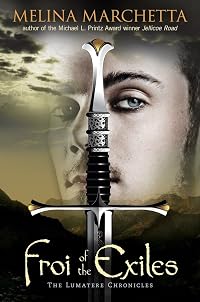
I also saw that the next book centers around Froi … the boy who attempted to rape Evanjalin … I’m not sure I’ll be reading on. I know Evanjalin herself accepted Froi’s character growth, and just will “never forget” what he did; however, I don’t know if I can do the same. An entire book about the character who did that to the protagonist? I’m sorry, my own trauma is screaming way too much for me to accept this. So … an okay fantasy book overall, but I just can’t stomach reading on. show less
I also feel like this book is for the older side of YA. There’s a lot of detailed description of sex, there’s some rape, and there’s very mature themes.
Content warnings:
In-book sexism
Rape attempt (and many mentions of rape)
Racism
Slavery
Representation:
Not sure here … there are lots of different skin colors in this world, but they’re not very well explained by the world or the prose
Finnikin and the show more late King’s First Man have been wandering the island of Skuldenore, taking note of their fellow exiles and trying to find the heir of their beloved lost Kingdom, Lumatere. Ten years ago their royal family was murdered, and a curse was placed over their land -- with an imposter king sitting on their throne. Now Finnikin meets Evanjalin, a girl who can walk through her sleep to experience other people’s memories. She claims she can lead Finnikin to the heir of Lumatere.
Diving right in here, the entire world of Finnikin of the Rock takes place on Skuldenore, an island that … I can’t decide if it’s large or not … and neither the map nor the prose gives me any idea of its dimension. What it does give me is the number of inhabitants: six thousand. That’s … a tiny number! There are a ton of different kingdoms, languages, faiths -- and most notably: different ethnicities here. It could be believable except there are also a ton of different skin colors and races, too? How? Skin color is based on how close the population is to the equator … nothing about this world makes sense (especially because there are also “natives” living here who are pale white → more on that later), unless there is a colonialism situation that the book never touched on.
So those “natives” … who are white. They’re portrayed as very stereotypical Native Americans. Maybe it’d be better to refer to them as indigenous people or an ethnic minority rather than “the natives” (like white ethnic minorities in Europe -- especially because like Melina Marchetta says in the acknowledgements, she wanted to take a lot of things and issues from real life). It just seems extremely disrespectful to separate culture from skin color in this current atmosphere [even ten years ago, when this book was written].
The treatment of the natives in this book is so stereotypically racist, it’s a little outrageous. They’re basically first seen as savages, firing upon Finnikin and co. They use broad iron arrowheads like one would for animal hunting, unlike the rest of Skuldenore, who use swords, throwing knives, shields, etc. They speak in “grunts and guttural sounds”, have spirit warriors that are never explained, and mystical places like the “old country” (also never expanded upon), where the “nocturnal world combined with the spirits of the past as they screeched and moaned and possessed the night”. Aka the way we white people just love to fetishize the heck out of Native American beliefs.
All I’m saying here is there’s a way to add indigenous cultures to a book respectfully, and I really don’t think this is it.
Besides the world building, there's our protagonist: Finnikin. The entire book has this Game-of-Thrones-like atmosphere (HBO version, of course), full of sexism and slavery and women being treated like literal things. Unfortunately, Finnikin is no exception. He’s a macho man who can’t let a woman be better than him at anything, can’t let a woman humiliate him, etc., kind of guy. Definitely someone I do not want to root for. In the prose, he has to tell us (when Evanjalin touches him) that “he was no stranger to women and had felt their hands on all parts of his body, but …” like thanks? Who cares, mr. Big Shot? He admits frustration at Evanjalin’s “inability to take orders” (like what, a servant?), he gets mad when she corrects his pronunciation in a language he doesn’t know, and -- best of all --
What an asshole. There were few times I liked him.
Okay, overall I kept wanting to love this book, because so many others do, and I’ve been wanting so badly to love a book for so long. The beginning was slow and madding: basically with Finnikin wandering around having sex and being manly and arguing with Evanjalin. The second half got really good (except for that last section). There was SO much I loved about that second half. There were people coming together, a real sense of hope, new women characters -- but it just couldn’t make up for the first half.
I also saw that the next book centers around Froi … the boy who attempted to rape Evanjalin … I’m not sure I’ll be reading on. I know Evanjalin herself accepted Froi’s character growth, and just will “never forget” what he did; however, I don’t know if I can do the same. An entire book about the character who did that to the protagonist? I’m sorry, my own trauma is screaming way too much for me to accept this. So … an okay fantasy book overall, but I just can’t stomach reading on. show less
I have really mixed feelings about this book, the likes of which I have not felt since I last opened my refrigerator and found all of my bottles of beer replaced with organic soy milk. I mean, what. Mass confusion, lots of twisting and turning every which way, trying to come to grasps with how I actually felt about Finnikin of the Rock (unrelated to how I feel about soy milk).
tl;dr: great concept, excellent themes, wholly obnoxious characters and heavy-handed melodrama
In Marchetta's bio, it mentions that this is her first fantasy novel, after a career of writing more mainstream YA. She talks about how she doesn't feel that one needs to be familiar with all the fantasy greats in order to write it, giving off the impression that she show more hasn't actually read much in the genre. And I feel like that really shows, because Finnikin of the Rock is basically a book with a very intelligent, literary author who runs headfirst into the Wall of Horrible Fantasy Tropes. Not limited to Super Special Royalty with Super Special Powers and a Super Special Destiny that no one is allowed to interfere with, because come on, have we already mentioned these people are Super Special and Saintly?
It's like someone trying to unironically rewrite The Aeneid. Which could even be palatable if it weren't for the cliche, overwrought characters that head this novel. In addition to all their Super Abilities, they are also Super Jerks. I haven't come across this many unpleasant people since my last visit to the dentist. Ye god, Evanjalin, just go kick a kitten or something. Go ahead, give into the urge, nobody will judge you for it because they all believe you are the greatest thing in all of creation.
On and on it goes. Huge portions of the book made me roll my eyes at the purpleness of the entire situation. No one in this book does anything casually. Everything they do requires great! importance! and! meaning! The number of times Finnikin overreacts to casual comments and threatens to beat the crap out of people is astounding. He's hardly alone. The vast majority of Marchetta's characters (with the exception, perhaps, of Froi, who is awesome except for that one thing he did) feel like they're hopped up on Emotional Steroids. Literally: one of the characters is described as burdened with the gift of feeling everybody's pain. Everyone in the entire kingdom. Because she is so unique, of course, and isn't she so brave and strong. She just cares so much. She's like a super absorbent pain tampon.
This is me staring in horror. I mean, I do realize that these are characters who have gone through a lot of trauma and deserve to wallow about it, but after a while it all feels very one-note. My friends, vary your emotional range a bit. Take a nap. Do some yoga. A bit of sentimentality is poignant. Too much is just gauche.
But, to the novel's credit, I read all the way to the end. And that's because, underneath all the excessive emotionalism and self-absorption of the characters, there is a beautiful, tragic story about a kingdom lost, exiles scattered, and the idea that even in the midst of despair, you can always find your way home. Marchetta writes Finnikin of the Rock like it's My First Epic Fantasy Novel, but there's enough muscle in her prose and her ideas that I can't help but grudgingly respect the book and what its author was trying to do, even if it frustrated me to no end. show less
tl;dr: great concept, excellent themes, wholly obnoxious characters and heavy-handed melodrama
In Marchetta's bio, it mentions that this is her first fantasy novel, after a career of writing more mainstream YA. She talks about how she doesn't feel that one needs to be familiar with all the fantasy greats in order to write it, giving off the impression that she show more hasn't actually read much in the genre. And I feel like that really shows, because Finnikin of the Rock is basically a book with a very intelligent, literary author who runs headfirst into the Wall of Horrible Fantasy Tropes. Not limited to Super Special Royalty with Super Special Powers and a Super Special Destiny that no one is allowed to interfere with, because come on, have we already mentioned these people are Super Special and Saintly?
It's like someone trying to unironically rewrite The Aeneid. Which could even be palatable if it weren't for the cliche, overwrought characters that head this novel. In addition to all their Super Abilities, they are also Super Jerks. I haven't come across this many unpleasant people since my last visit to the dentist. Ye god, Evanjalin, just go kick a kitten or something. Go ahead, give into the urge, nobody will judge you for it because they all believe you are the greatest thing in all of creation.
On and on it goes. Huge portions of the book made me roll my eyes at the purpleness of the entire situation. No one in this book does anything casually. Everything they do requires great! importance! and! meaning! The number of times Finnikin overreacts to casual comments and threatens to beat the crap out of people is astounding. He's hardly alone. The vast majority of Marchetta's characters (with the exception, perhaps, of Froi, who is awesome except for that one thing he did) feel like they're hopped up on Emotional Steroids. Literally: one of the characters is described as burdened with the gift of feeling everybody's pain. Everyone in the entire kingdom. Because she is so unique, of course, and isn't she so brave and strong. She just cares so much. She's like a super absorbent pain tampon.
This is me staring in horror. I mean, I do realize that these are characters who have gone through a lot of trauma and deserve to wallow about it, but after a while it all feels very one-note. My friends, vary your emotional range a bit. Take a nap. Do some yoga. A bit of sentimentality is poignant. Too much is just gauche.
But, to the novel's credit, I read all the way to the end. And that's because, underneath all the excessive emotionalism and self-absorption of the characters, there is a beautiful, tragic story about a kingdom lost, exiles scattered, and the idea that even in the midst of despair, you can always find your way home. Marchetta writes Finnikin of the Rock like it's My First Epic Fantasy Novel, but there's enough muscle in her prose and her ideas that I can't help but grudgingly respect the book and what its author was trying to do, even if it frustrated me to no end. show less
It's a while since I've read much straight fantasy, but this book was a lovely dip back into the genre. Although there's not a lot of magic, that wasn't a drawback--in fact, it might have enhanced my enjoyment of the story because things were not made easy for the characters. I did guess/figure out one of the revelations of the book, but I wasn't disappointed in that--I felt vindicated at having figured it out. :) Anyway, there are compelling characters, wonderful world-building, and a first-class plot contained within these pages, so I highly recommend it! (P.S. I listened to the audiobook version, which is delightfully voiced!)
Members
- Recently Added By
Lists

Best Fantasy Novels
821 works; 361 members

Female Author
1,234 works; 67 members

Books Read in 2013
1,630 works; 51 members

KayStJ's to-read list
1,616 works; 11 members

Books Read in 2012
59 works; 1 member

Favourite Books
1,819 works; 316 members
Talk Discussions
Past Discussions
fantasy novel with a general's son having to become king. he doesn't want it. in Name that Book (March 2017)
Author Information

24+ Works 9,434 Members
Melina Marchetta was born on March 25, 1965 in Australia. She is a writer and teacher who earned a teaching degree from the Australian Catholic University. She then got a job teaching at St Mary's Cathedral College, Sydney. Her first novel, Looking for Alibrandi was released in 1992. Looking for Alibrandi swept the pool of literary awards for show more young adult fiction in 1993 including the coveted CBCA Children's Book of the Year Award. Her second novel, Saving Francesca was released in 2003, followed by On the Jellicoe Road in 2006. Marchetta's fourth novel, the fantasy epic Finnikin of the Rock, was released in October 2008. It has since won the 2008 Aurealis Award for best young-adult novel and the 2009 ABIA (Australian Booksellers Industry Awards) Book of the Year for Older Children. Tell the Truth, Shame the Devil (2016) is her latest book. (Bowker Author Biography) show less
Some Editions
Awards and Honors
Awards
Distinctions
Notable Lists
Series

Common Knowledge
- Canonical title
- Finnikin of the Rock
- Original publication date
- 2008-09-29
- People/Characters
- Finnikin; Sir Topher; Trevanion; Evanjalin
- Important places
- Lumatere
- Epigraph
- You who live safe
In your warm houses,
You who find, returning in the evening,
Hot food and friendly faces:
Consider if this is a man
Who works in the mud
Who does not know peace
... (show all) Who fights for a scrap of bread
Who dies because of a yes or a no.
Consider if this is a woman,
Without hair and without name
With no more strength to remember,
Her eyes empty and her womb cold
Like a frog in winter.
Meditate that this came about:
I commend these words to you.
Carve them in your hearts
At home, in the street,
Going to bed, rising;
Repeat them to your children,
Or may your house fall apart,
May illness impede you,
May your children turn their faces from you.
-- If This A Man by Primo Levi - Dedication
- For Marisa and Daniela,
because I have always loved being a Marchetta sister... - First words
- (PROLOGUE): A long time ago, in the spring before the five days of the unspeakable, Finnikin of the Rock dreamt he was to sacrifice a pound of flesh to save the royal house of Lumatere.
- Last words
- (Click to show. Warning: May contain spoilers.)"Take me home."
- Blurbers
- Cashore, Kristin
- Canonical DDC/MDS
- 813.6
- Canonical LCC
- PZ7.M32855
Classifications
Statistics
- Members
- 2,027
- Popularity
- 10,329
- Reviews
- 127
- Rating
- (4.01)
- Languages
- 7 — English, French, German, Indonesian, Spanish, Swedish, Turkish
- Media
- Paper, Audiobook, Ebook
- ISBNs
- 40
- ASINs
- 10